Things to Do in Oceanside: San Diego's Northern Beach City, Explained
Oceanside is where San Diego County meets its northern edge, a beach city built around a long wooden pier, a working small-craft harbor, and some of the widest sand in the region. Here is what to actually do there, and how it fits a wider San Diego trip.
Short answer
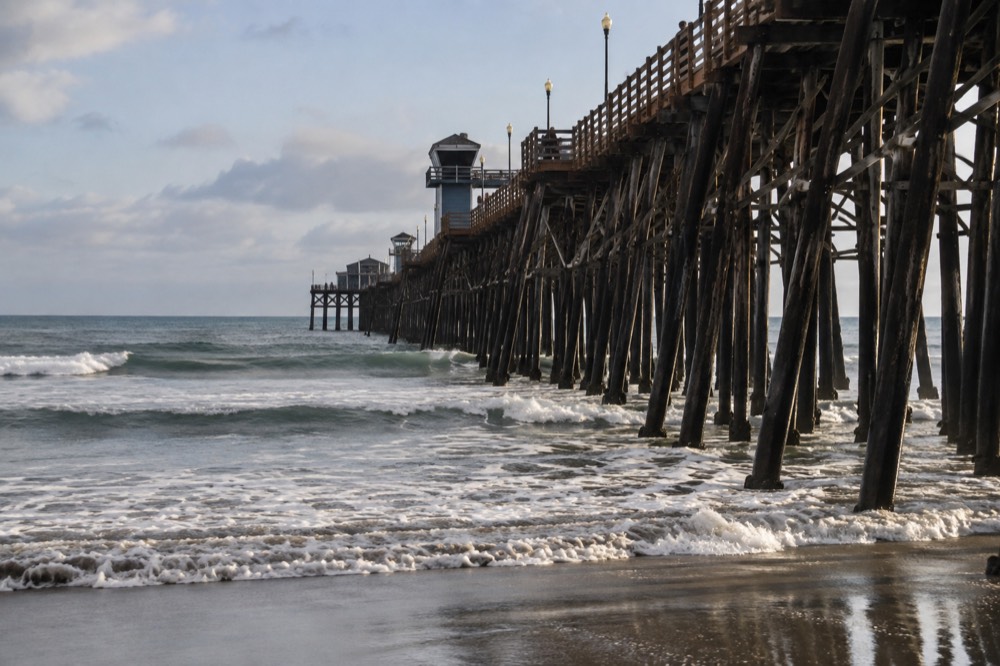
Oceanside sits at the county's northern edge, about 40 miles north of downtown San Diego. Its anchors are the wooden pier, Harbor Beach, the small-craft harbor, and a walkable downtown. The ocean peaks at a mean of 68.7F in August, gray whales pass from mid-December through March, and the MTS day pass is $6.00.
Oceanside is the last city in San Diego County before the Camp Pendleton stretch that separates it from Orange County, and it has spent the past decade turning from a military-adjacent surf town into one of the most interesting beach stops in the region. The city is built around three things that all sit within a mile of each other: a long wooden pier, a small-craft harbor with its own protected beach, and a downtown core that has filled with independent restaurants, surf shops, and museums. The sand here is among the widest in the county, the sunsets face open water, and the whole stretch is walkable in a way that La Jolla or Pacific Beach simply is not.
This guide covers what to do in Oceanside, when the ocean is actually warm, what it offers families, and how to fold it into a wider Things to Do in San Diego itinerary, including the day trips that make more sense from Oceanside's position at the top of the county than from a downtown hotel.
What Are the Main Things to Do in Oceanside?
The four anchors of an Oceanside visit are the wooden pier, Harbor Beach and the harbor village, the downtown walkable core with its surf museums, and the beach itself, which is among the widest in San Diego County. All four sit within roughly a mile of each other, so a single well-planned day covers most of what the city offers. The pier and harbor cost nothing to enjoy, which makes Oceanside one of the better value stops in the county.
Start at the pier, which is the city's center of gravity. Walking its full length is free, the views run south down the county's whole beach chain on a clear day, and the structure doubles as a fishing platform, no license required on a public pier in California. Surfers work the breaks on both sides, and the sand on either side, the Strand side and the beach south toward the pier amphitheater, is where most visitors plant themselves for the day.
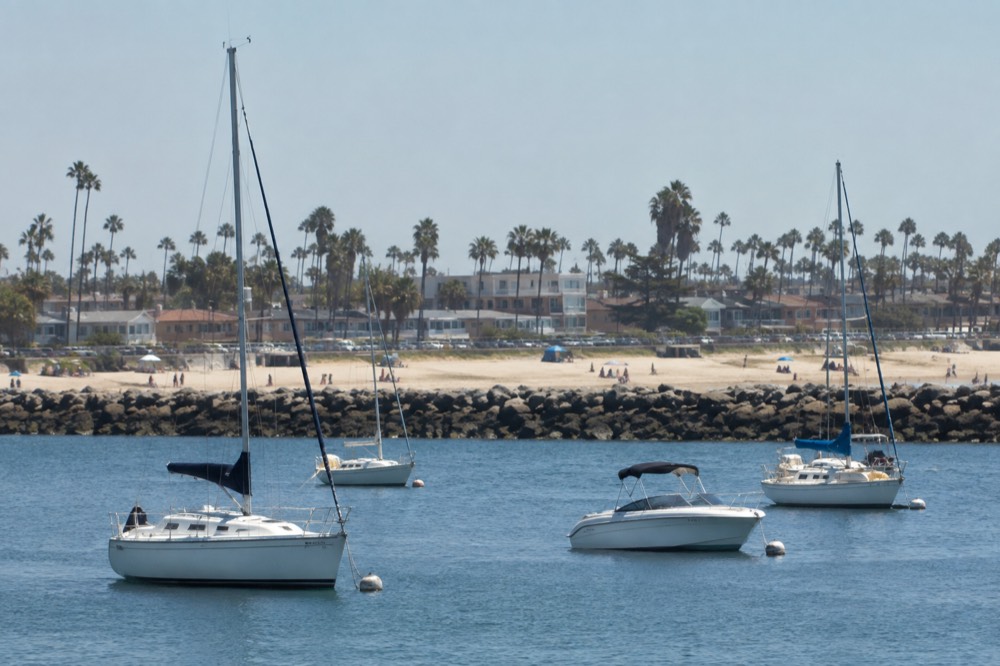
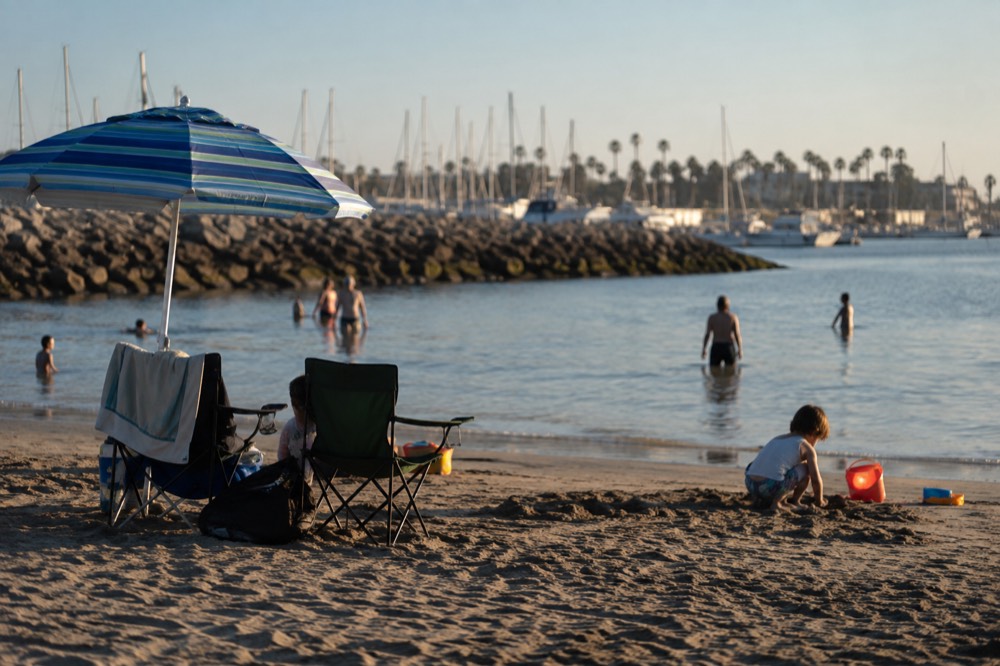
The harbor sits about a mile northwest of the pier. It is a genuine working small-craft harbor, not a themed shopping village, though there is a cluster of shops, restaurants, and a lighthouse-style inn around its edge. Harbor Beach, inside the harbor's protective arm, is the calmest stretch of water in the city, which matters if you are traveling with small children or anyone nervous about surf. The harbor is also where most of the city's water sports operators launch from.
Downtown Oceanside runs inland from the pier along Mission Avenue and South Coast Highway. The California Surf Museum makes its home here, along with the Oceanside Museum of Art, and the blocks between them hold a dense run of taco shops, coffee roasters, and breweries. You can park once and walk the whole circuit: pier, beach, harbor, downtown, in about two hours at a stroll, or spread it across a full day.
Is Oceanside Worth Visiting on a San Diego Trip?
Yes, if your trip has room for a half or full day north, or if you are basing yourselves in the north county at all. Oceanside is about 40 miles from downtown San Diego, so it is a deliberate trip, not a detour. It earns its slot with the pier-and-harbor combination, the county's widest sand, and a downtown that rewards walking. Travelers short on time should weigh it against Carlsbad and Encinitas, which sit directly south.
The honest answer depends on where you are sleeping. If you are staying downtown or in the Gaslamp, Oceanside is the farthest beach from your hotel, and a day there competes with closer options like Mission Beach, Pacific Beach, or La Jolla, all of which are reachable by trolley or a short drive. If you are basing in north county, or road-tripping down the coast from Los Angeles, Oceanside is effectively on your route and skipping it would be the strange choice.
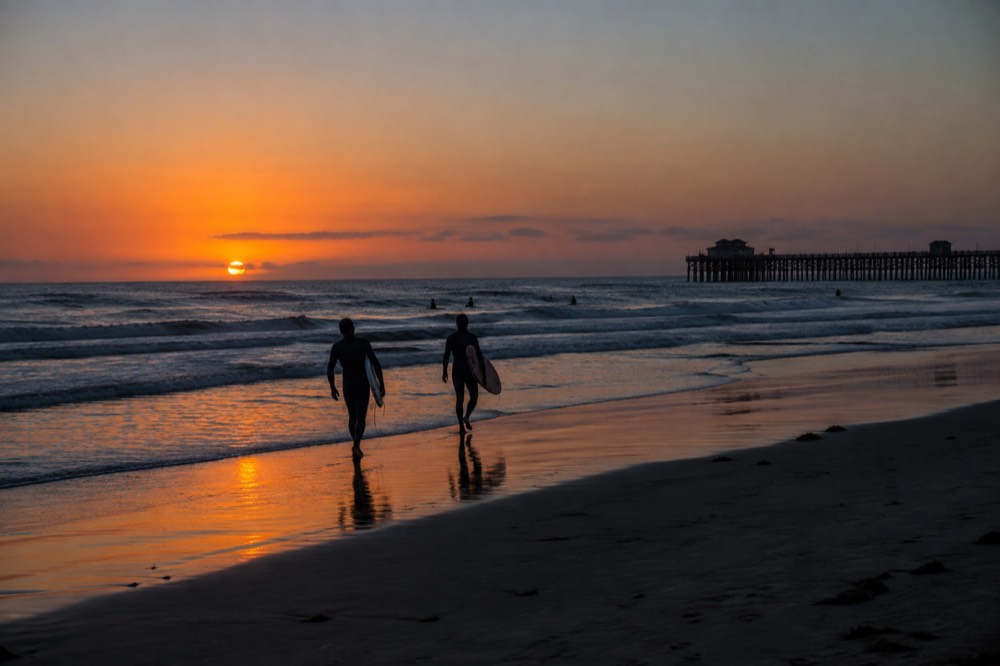
What Oceanside offers that the closer beaches do not is scale and quiet. The beach is wide enough that even busy summer days do not feel packed, the harbor gives you a genuinely calm water option, and the pier gives the coastline a focal point that most San Diego beach towns lack. It also faces dead west, so the sunset over open water is a real event here, and it belongs on any list of San Diego's best sunset spots.
For a first visit to the county, our take is simple: if you have three days or fewer, work the central corridor and save Oceanside for a return trip. If you have four or more days, or you are working through a 3 day San Diego itinerary that includes the north county beaches, give it the day. And if you are planning a wider beach tour, read our guide to the best beaches in San Diego to see where Oceanside's sand ranks against La Jolla and Coronado.
When Is the Best Time of Year to Visit Oceanside?
The best months are September and October, when the ocean is at its warmest and the summer crowds have gone. The mean sea temperature peaks at 68.7F in August and holds 67.6F in September, while normal air highs run 77.3F in August and 77.2F in September. June is the deceptive month: its normal high of 71.7F is lower than October's, thanks to the coastal marine layer locals call June Gloom.
That last point deserves explaining, because it surprises almost everyone. San Diego's coast does not warm up on the calendar's schedule. The marine layer, the low coastal cloud deck that locals name May Gray and June Gloom, sits over the beaches through late spring while the inland valleys stay clear. The 30-year climate normals show it plainly: June's average high at the airport station is 71.7F, cooler than October's 74.6F, and August and September are the real warm months, not July. If you want the classic beach day, the shoulder season delivers it better than midsummer does.
Rain is a winter phenomenon here, and a light one. December through March carry about 7.3 of the year's inches of rain at the official station, and August averages one hundredth of an inch, effectively zero. A winter Oceanside trip is a very reasonable proposition: dry most days, highs in the mid-60s, and the pier and harbor are pleasant walking weather even when the water is too cold for most people.
| Month | Mean sea temperature (F) | Normal high (F) | What it means for your visit |
|---|---|---|---|
| January | 58.1 | 66.4 | Too cold to swim without a wetsuit; walking and whale weather |
| March | 58.7 | 67.0 | Gray whale peak; dry enough for beach walks |
| May | 63.4 | 69.5 | Marine layer mornings; afternoon clearing |
| June | 64.0 | 71.7 | The gloom month; cooler than October on average |
| August | 68.7 | 77.3 | Warmest water and air of the year |
| September | 67.6 | 77.2 | Warm water, thin crowds; the locals' summer |
| October | 64.0 | 74.6 | Warm air, cooling water, quiet sand |
| December | 60.8 | 66.0 | Gray whales arrive; sunny breaks between fronts |
The sea temperatures above come from the Scripps Pier station in La Jolla, the reference station for the whole county's open coast, and they hold for Oceanside's beaches within a degree or so. The National Oceanic and Atmospheric Administration publishes the underlying observations at its La Jolla station page, if you want the live reading before you pack a wetsuit.
Can You See Whales and Dolphins from Oceanside?
Yes. More than 20,000 gray whales pass the Southern California coast each year, with most passing San Diego in late December, January and February, and mid-January the peak of the migration. From shore, you want a high vantage point and calm morning conditions. From the water, dedicated whale watch cruises run out of San Diego's bay, roughly 40 minutes south of Oceanside by car.
The gray whale migration is the county's most reliable wildlife spectacle, and the National Park Service, which tracks it from Cabrillo National Monument on Point Loma, is direct about the timing: whales are visible from mid-to-late December through March, viewing odds are best in January and February on calm days or in the morning before the wind picks up, and cows with calves are the last through, staying until March or April. The park runs a Whale Watch Weekend and Intertidal Festival in late January or early February, and its own whale watching page is the best single source on the migration.
From Oceanside itself, the pier is a legitimate watching platform in season, and any high coastal vantage point works on a calm morning. Bring binoculars, go early, and scan for the blow, a low bush-shaped plume, rather than expecting breaching drama. Dolphins, which live here year round in large pods, are the more common show and will often surf the pier's own break.
If you want a closer look, the dedicated boats leave from San Diego Bay rather than Oceanside's harbor. The standard trip is a three-hour cruise, and January and February are the months to book it, though operators run year round on the strength of the resident dolphin and fin whale activity.
What Is There to Do in Oceanside with Kids?
The harbor is the family play: Harbor Beach's protected water is the calmest swim in the city, the harbor village has an ice cream-and-lunch circuit, and the pier doubles as a free fishing platform and people-watching walk. Add the California Surf Museum for an hour indoors and the wide main beach for sand time, and a family can fill a full day without buying a single attraction ticket beyond parking and lunch.
Harbor Beach deserves the headline. Because it sits inside the harbor's protective arm, the wave energy that makes the main beach good for surfers is largely spent before it reaches this stretch, and the water stays shallow and manageable. It is the same logic that makes our guide to family beaches in San Diego favor protected coves over open sand: with small children, the trade of some scenery for calm water is always worth it. The harbor's edge also gives you a short walking loop past the fishing fleet and the sea lions that sometimes haul out on the docks, which is a reliable hit with the under-ten crowd.
The pier is the second act. Walking it is free, the rails are lined with anglers who are usually happy to show kids what they are catching, and the surf lineup on both sides is a live demonstration of why this coast produces so many professional surfers. If the family wants to try it themselves, Oceanside's surf schools operate year round, and our surfing in San Diego guide covers what a first lesson involves and where the gentle beginner breaks are.
For the tide-pool hour, the rocky edges around the harbor's breakwater and the low shelves south toward Buccaneer Beach hold anemones and hermit crabs at low tide. Our San Diego tide pools guide explains how to read a tide table so you arrive at the low, because the pools are simply underwater the rest of the day.
How Do You Get to Oceanside from Downtown San Diego?
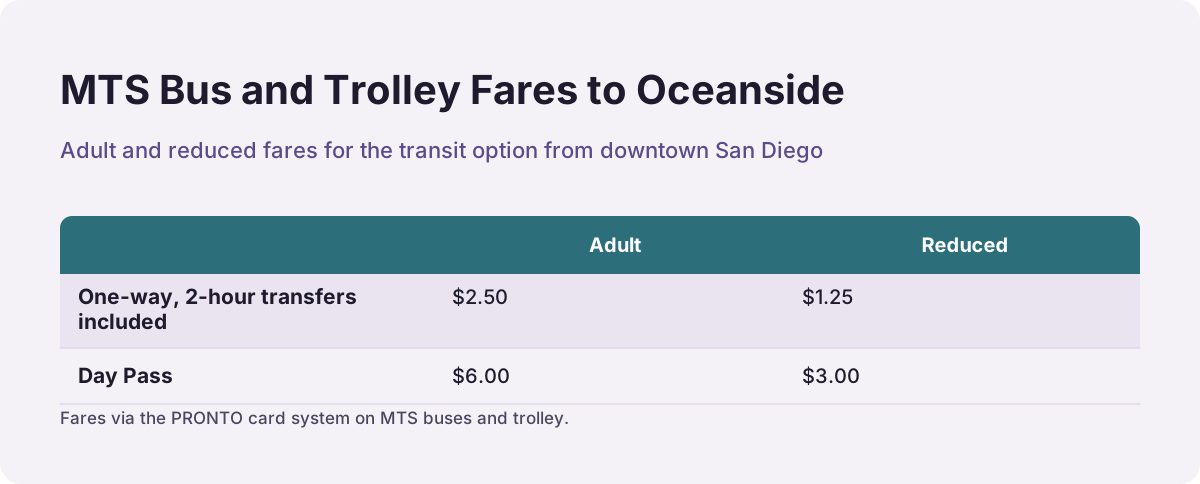
By car, Oceanside is about 40 miles north of downtown San Diego via Interstate 5, typically 45 minutes to an hour depending on traffic. By transit, the region's rail line connects Oceanside's transit center to downtown, and the MTS day pass is $6.00 with a $2.50 one-way fare on buses and trolley. There is no airport anywhere near Oceanside; the region's airport is SAN, south of downtown.
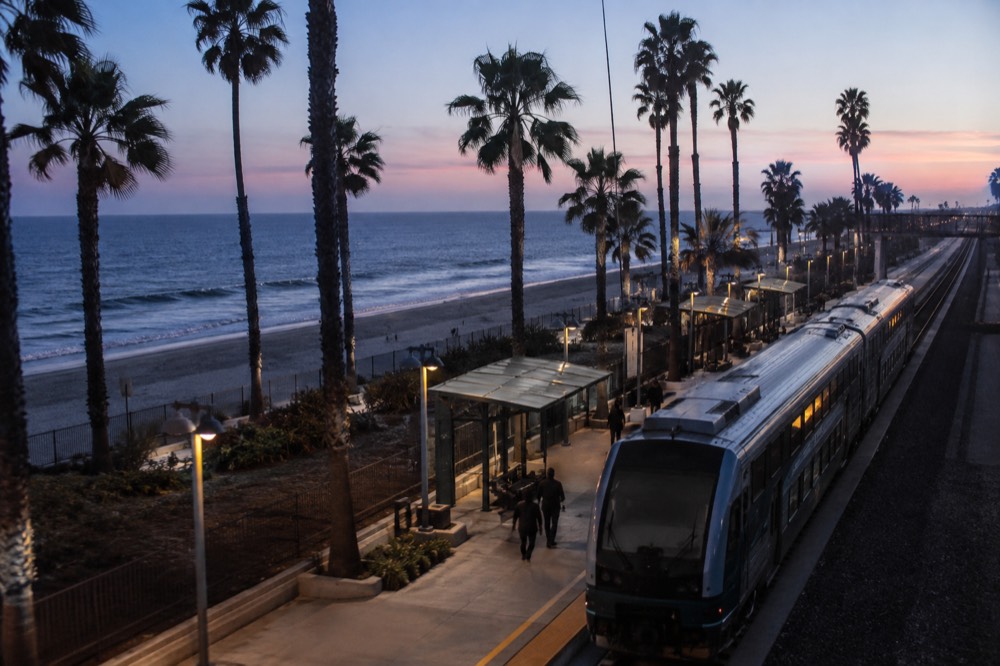
The transit detail matters, because Oceanside is one of the few beach cities in the county where arriving without a car is genuinely workable. The Oceanside Transit Center sits a few blocks from the pier, and the regional rail and bus network connects it down the coast through the north county beach towns and into downtown San Diego. The fare system, PRONTO, is worth understanding before you ride: you load a card or the app, pay as you go, and the system caps you at the day pass automatically once your rides total its value, so there is no reason to buy a day pass up front. The official fare chart lists $2.50 one-way and $6.00 for the day pass, with reduced fares of $1.25 and $3.00 for seniors 65 and over, and youth 18 and under ride free on the region's youth pass.
| Fare (MTS bus and Trolley) | Adult | Reduced (senior 65+, disabled, Medicare, youth with ID) |
|---|---|---|
| One-way, 2-hour transfers included | $2.50 | $1.25 |
| Day Pass | $6.00 | $3.00 |
| Children 5 and under | Free, up to 2 per paying adult | Free |
| Youth 18 and under | Free on the Youth Opportunity Pass | Free |
If you are driving, the honest advice is the same advice that applies across the county's beaches, and it is the single biggest practical question most visitors have: arrive before mid-morning or after the late-afternoon turnover, because beach parking in Oceanside is a mix of free street parking and paid lots, and on summer weekends the free supply is gone by mid-morning. We do not publish beach parking rates, because no city rate table exists for the beach lots, and any specific figure you read elsewhere is a guess. Our parking in San Diego guide covers the downtown meter system, where $2.50 an hour with enforcement to 6:00 or 8:00 pm is the confirmed rule, if your trip includes downtown days.
One more transit note: contactless credit and debit cards are accepted on MTS but are one-way only and do not cap, so if you are riding more than twice in a day, the PRONTO card or app is the cheaper path.
What Day Trips Work Well from Oceanside?
Oceanside's position at the top of the county makes it a strong base for the north county and inland trips: Carlsbad and Encinitas sit immediately south along the coast, Temecula's wine country is roughly an hour northeast, and the Anza-Borrego desert is a longer haul best done with an early start. The border and Tijuana are the one trip that works better from downtown, because the crossing sits at the far southern end of the region.
Working south along the coast, Carlsbad and Encinitas are the natural pair, and both are close enough that you can visit both in one unhurried day. Carlsbad holds the county's flower fields in spring and LEGOLAND California for families, and our LEGOLAND California guide covers the ticket structure, which is date-based dynamic pricing, so always check the official ticket page rather than trusting a flat number. Encinitas is the quieter, surfier sibling, with a garden-by-the-sea character and its own string of beaches.
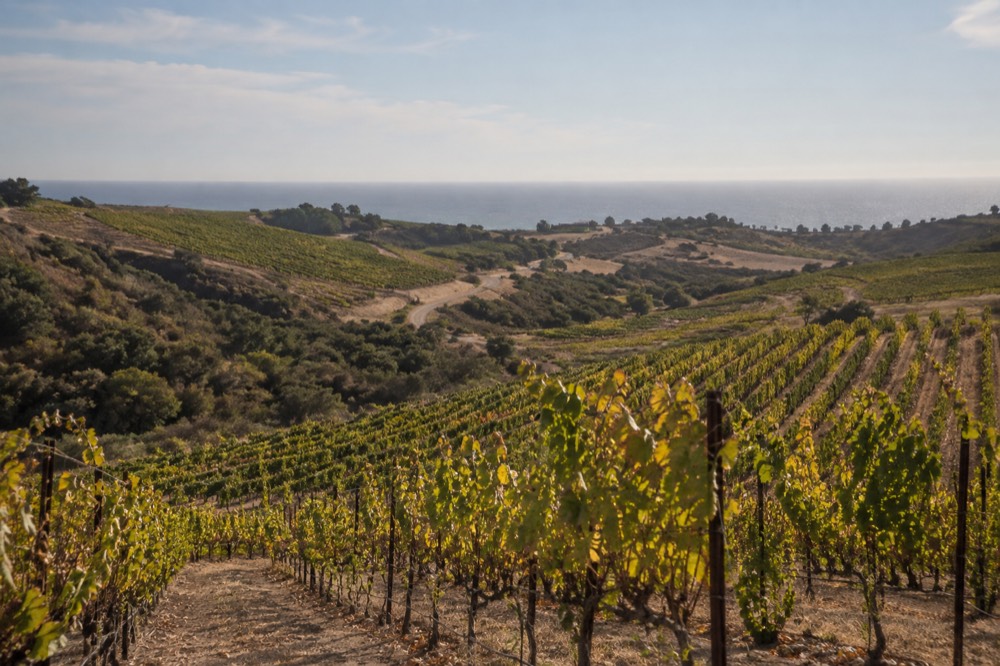
Inland, Temecula wine country is the classic Oceanside-area day trip, close enough that a late-morning start still gets you a full afternoon of tasting. The guided three-winery tours with lunch included are the stress-free version, since they handle the driving between valley tasting rooms, which is the part of a wine day that goes wrong when people plan it themselves.
The desert is the ambitious option. Anza-Borrego is the county's great state park, wildflower country in a good spring and dark-sky country year round, but it is a serious drive from the coast and deserves its own dedicated day rather than a tacked-on afternoon. Our Julian guide covers the mountain town alternative, apple pie and gold-mining history, which pairs better with a Temecula or Cuyamaca loop than with a beach day.
The one trip to plan from elsewhere is Tijuana. The border crossing at San Ysidro is the busiest land crossing in the western hemisphere and sits at the southern end of the region, so a border day from Oceanside means crossing the entire county twice. Base that day from downtown, and if you go, the guided day trips with lunch are the format that removes the crossing's friction.
| Day trip from Oceanside | Direction | Best for | How it fits |
|---|---|---|---|
| Carlsbad | South along the coast | Families, LEGOLAND, flower fields in spring | Combine with Encinitas in one day |
| Encinitas | South along the coast | Surf culture, quieter beaches, gardens | Same coastal day as Carlsbad |
| Temecula wine country | Northeast, about an hour | Wine tasting with lunch | Guided three-winery tours handle the driving |
| Julian | Inland and east, via the mountains | Apple pie, gold-rush history, pie-and-pickaxes walks | Pairs with a Cuyamaca or Temecula loop |
| Anza-Borrego | Far east, a serious drive | Desert, wildflowers in a good spring, dark skies | A dedicated full day with an early start |
| Tijuana | Far south, across the county | Food, culture, the border experience | Plan from downtown instead; the crossing sits at the region's southern end |
How Does Oceanside Compare with La Jolla and the San Diego Waterfront?
Oceanside trades scenery for space: La Jolla has the dramatic coves, sea caves and marine life, while Oceanside has wider sand, easier parking, and a calmer pace. If your coastal day is about getting in and on the water, La Jolla wins on the water itself, with its kayak and snorkel tours inside a protected marine reserve. If it is about a relaxed beach day with a pier and a harbor, Oceanside wins on comfort.
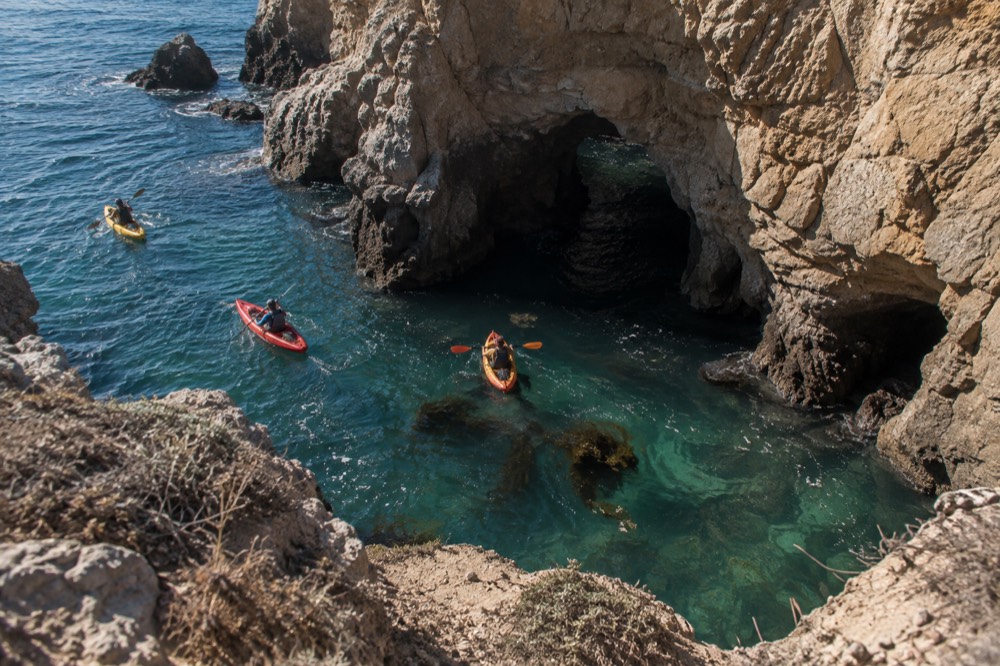
La Jolla Cove is the county's marine-life capital, and the comparison is not close on that axis. The cove sits inside a protected marine reserve, sea lions haul out on the rocks, leopard sharks school in the shallows in summer, and the sea caves are reachable by kayak from La Jolla Shores. The guided kayak tours of the caves are the single most popular water activity in the county, and the combined kayak-and-snorkel format lets you do both the cave paddle and a swim over the reserve in one outing. Snorkelers get the closest version: a guided swim through the cove with sea lions and into the caves, gear included.
What Oceanside offers in exchange is ease. La Jolla in summer is a traffic and parking problem with a beautiful view attached, while Oceanside's width absorbs its crowds. The harbor gives families calm water without the cove's cold upwelling, and the pier gives the coastline a free public promenade that La Jolla, built on bluffs and coves, simply lacks. A reasonable split for a week-long trip is two days: a La Jolla water day for the kayak or snorkel, and an Oceanside beach-and-pier day for the sand and the sunset.
If your heart is set on the water but La Jolla's crowds put you off, the middle path is the bay side of the city. The hour-long harbor cruises out of San Diego Bay give you the waterfront skyline, the naval fleet and the sea lions on the buoys without any swimming involved, and they run daily year round.
How Should You Fit Oceanside Into a San Diego Itinerary?
Give Oceanside a half day if you are based downtown and want the pier, harbor and one beach stretch, or a full day if you are basing in north county or combining it with Carlsbad and Encinitas. Pair a morning on the sand with an afternoon harbor walk and a sunset from the pier. Travelers with four or more days should slot it on the same day as the north county beaches rather than making a dedicated trip.
A sample day that works in any season: arrive mid-morning and walk the pier first, while the lot turnover is happening and the light is still good for photographs. Claim sand on the main beach or, with kids, drive the extra mile to Harbor Beach and set up inside the calm water. Lunch in the harbor village or walk downtown for tacos, and spend the early afternoon at the California Surf Museum or the Oceanside Museum of Art if the marine layer is lingering. Late afternoon, walk the harbor loop, then get back to the pier or the sand for the sunset, which lands over open water here.
For a longer trip, the pattern that works is a north county day that strings Oceanside, Carlsbad and Encinitas together along the coast, since the three sit within 15 miles of each other and share the same transit line. Our San Diego 4 day itinerary and 5 day itinerary both build this day in, and our first time in San Diego guide covers the broader question of how to split days between the central corridor and the north county.
The budget picture is one of Oceanside's quiet strengths. The pier walk is free, the harbor loop is free, the beaches are public, and the museums are modestly priced, so the day's real costs are parking, food, and whatever you add on the water. Our San Diego trip cost guide frames the county-wide numbers, and our cheap things to do in San Diego list includes the free beach-and-pier pattern that Oceanside delivers better than almost anywhere else in the region.
If you are adding a water experience to the day, book it before you drive up, since the coastal tours, especially the La Jolla kayak and snorkel trips, sell out on summer weekends and holiday weeks.
Common Questions About Oceanside
Is Oceanside worth visiting on a San Diego trip?
Yes, if you have a half or full day for the north county. Oceanside pairs the county's widest sand with a free-to-walk pier, a calm harbor beach, and a walkable downtown. If your trip is three days or fewer and based downtown, closer beaches like Mission Beach and La Jolla make more sense.
How far is Oceanside from downtown San Diego?
About 40 miles north via Interstate 5, typically 45 minutes to an hour by car depending on traffic. The regional rail network also connects the Oceanside Transit Center, a few blocks from the pier, with downtown, and the MTS day pass is $6.00.
When is the ocean warm enough to swim in Oceanside?
August and September. The mean sea temperature off the county's coast peaks at 68.7F in August and holds 67.6F in September, then falls through the 60s in October toward winter lows of about 58F. Most locals wear wetsuits outside of late summer.
Can you fish from the Oceanside Pier?
Yes. Public piers in California allow fishing without a license, and the Oceanside Pier is one of the county's most popular fishing platforms. Anglers line the rails year round, and the walk out is free.
Can you see whales from Oceanside?
Yes, in season. More than 20,000 gray whales pass the coast each year, visible from mid-to-late December through March, with mid-January the peak. From shore, use the pier or any high vantage point on a calm morning; from the water, whale watch cruises depart from San Diego Bay.
Is Oceanside good for families?
Yes. Harbor Beach sits inside the harbor's protective arm, giving it the calmest, shallowest water in the city, and the harbor village, the pier and the wide main beach make an easy free circuit. The California Surf Museum adds an indoor hour when the marine layer lingers.