The Best Family Beaches in San Diego: Calm Water, Lifeguards and Easy Sand
San Diego has roughly 24 miles of city coastline, and not all of it suits a toddler with a bucket. This guide picks the stretches where the surf is gentle, the sand is wide and the walk back to the car is short.
Short answer
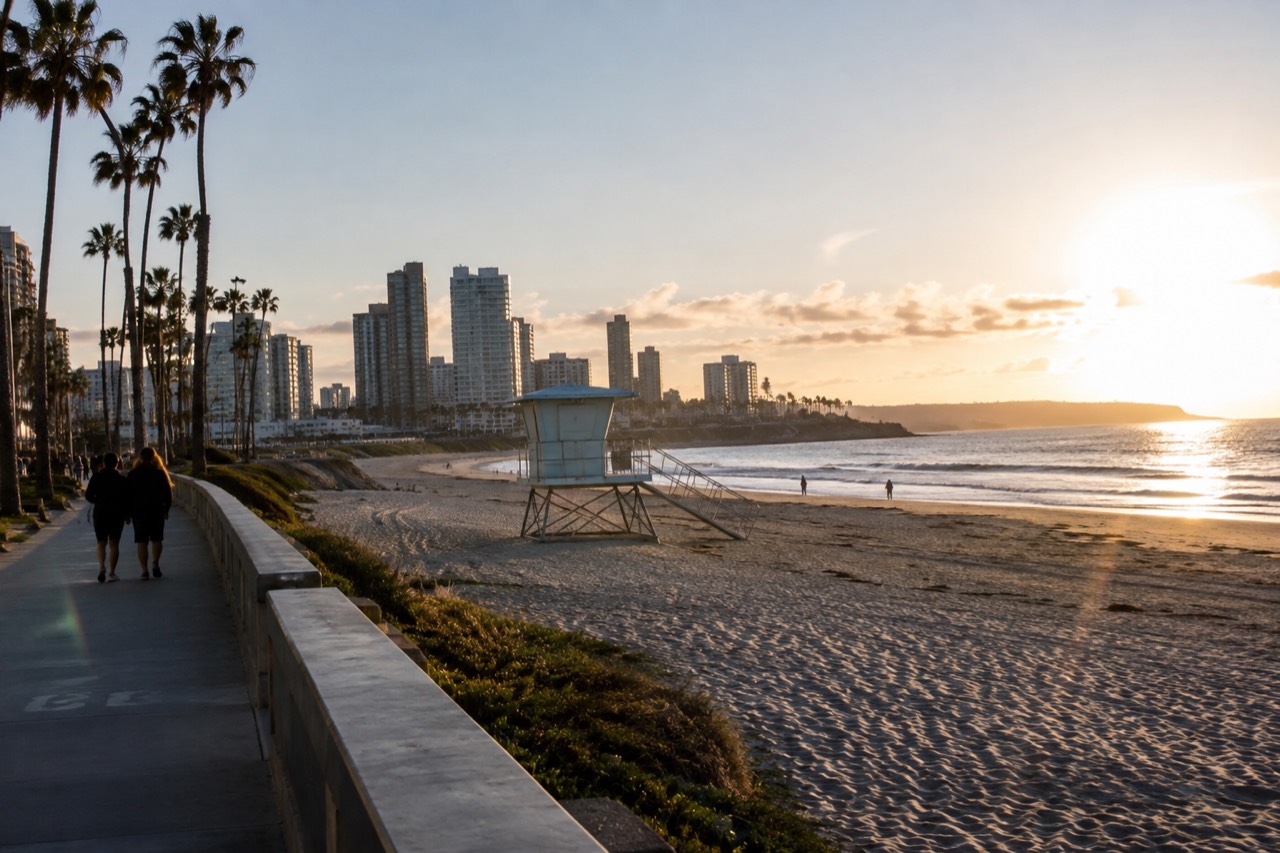
For families, the safest bets are Mission Bay's calm, enclosed water, La Jolla Shores' gentle surf and wide sand, Coronado Beach near the Hotel del, and Pacific Beach south of the pier. The city staffs nine permanent oceanfront lifeguard stations year round, generally from 9:00 am to dusk, and the warmest water arrives in August and September.
San Diego's normal high in September is 77.2F, a tenth of a degree behind August and nearly two degrees above July, which tells you something useful: the beach season here does not end when school starts. The ocean is at its warmest in August at a monthly mean of 68.7F off Scripps Pier, and it holds most of that heat through September at 67.6F. Families who plan around the crowd calendar rather than the thermometer get the best of both.
The catch is that the coastline is not uniform. The same city that offers bathtub-calm water in Mission Bay also has surf breaks at Sunset Cliffs and a rocky shore at Point Loma. Choosing the right stretch of sand matters more here than in most beach cities, and this guide, from the editors at Things to Do in San Diego, is built to make that choice quickly.
What Are the Best Family Beaches in San Diego?
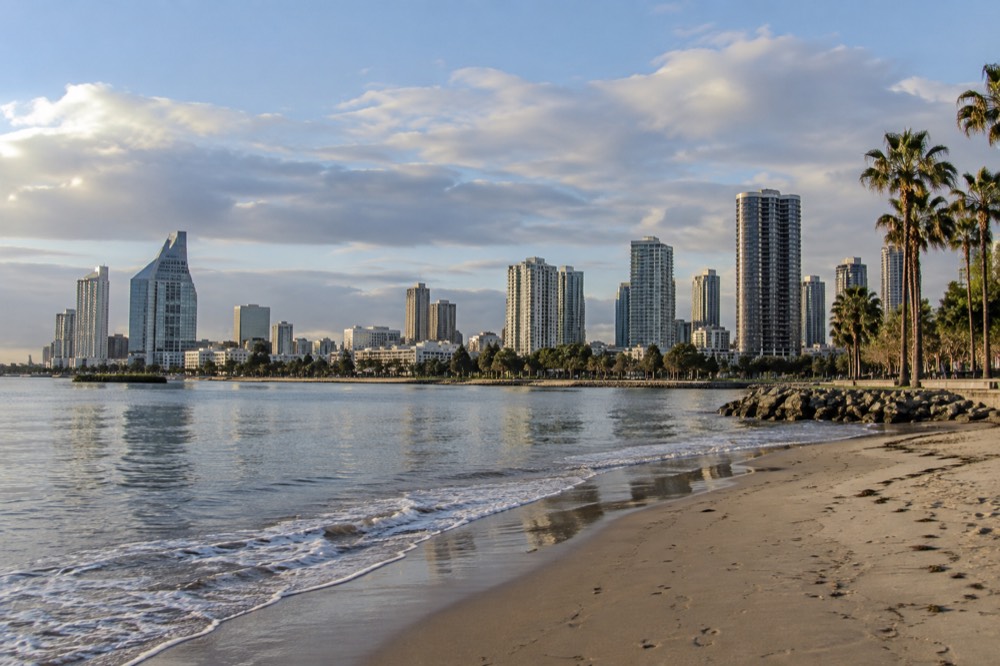
For most families the shortlist is Mission Bay for enclosed, wave-free water, La Jolla Shores for the gentlest open-ocean surf in the city, Coronado Beach for wide sand and sparkling mica, and Pacific Beach south of the pier for boardwalk convenience. Each one pairs a permanent lifeguard presence with restrooms and food within a short walk, which is the practical trio that decides whether a beach day survives past lunch. The city staffs nine permanent oceanfront lifeguard stations year round, covering roughly 24 miles of coastline, with seasonal towers added in summer, so the supervision question is largely solved before you pick a spot.
The real differentiator is water conditions. Mission Bay is an artificial, enclosed lagoon, so there is effectively no surf at all, which makes it the default answer for parents of toddlers and nervous swimmers. La Jolla Shores faces open ocean but sits inside a gentle, sloping cove where the waves dissipate over a long, sandy bottom. Coronado Beach gets soft, rolling waves and enormous space, which spreads crowds thin even in July.
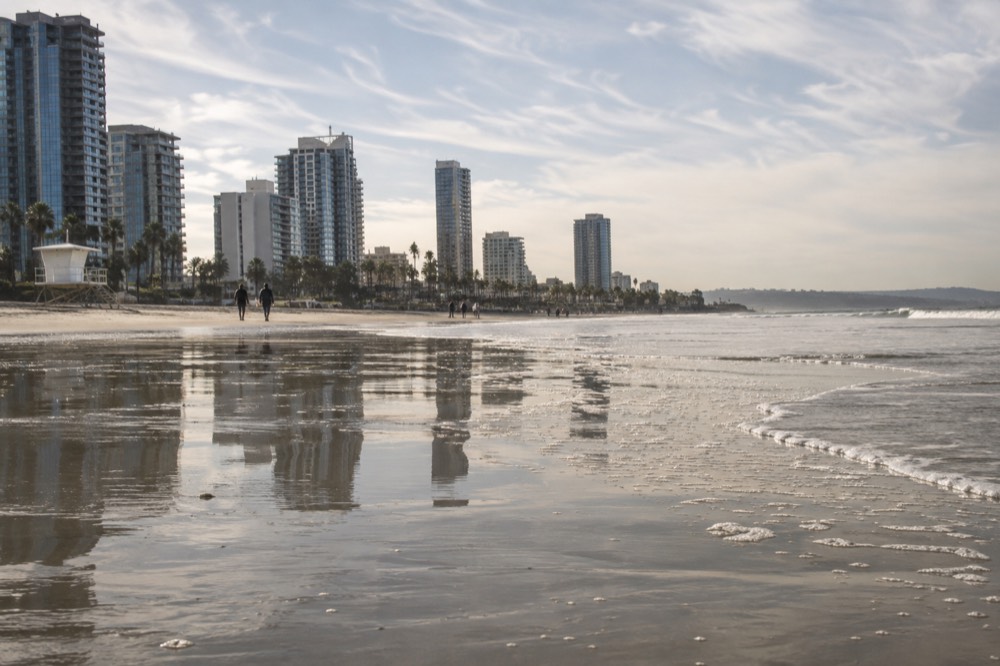
Here is how the main contenders compare on the things parents actually ask about.
| Beach | Water | Sand | Best for | Watch out for |
|---|---|---|---|---|
| Mission Bay (various coves) | Enclosed, no surf | Narrow but soft | Toddlers, first swimmers, kayaking | Busy water traffic in summer afternoons |
| La Jolla Shores | Gentle surf, long sandy drop | Wide, fine | Families with mixed ages, beginner surf | Parking fills early on weekends |
| Coronado Beach | Soft rolling waves | Very wide, sparkly | Space, castles, long walks | Long walk from most parking |
| Pacific Beach (south of pier) | Moderate surf | Wide | Boardwalk access, food nearby | Party reputation is north, not south |
| Mission Beach | Moderate surf | Wide | Belmont Park rides plus sand | Dense summer crowds |
| Imperial Beach | Gentle, sometimes murky | Wide | Quieter days, pier fishing | Occasional water-quality advisories |
One honest note on parking: there is no published city rate table for beach lots, and we do not quote invented numbers. Mission Beach, Ocean Beach, La Jolla and Coronado are street-and-lot parking that is free to park in and very hard to find in summer. Arrive before 10:00 am in July and August or plan to walk. Our full San Diego parking guide covers the downtown and Balboa Park side of the question.
Why Is Mission Bay the Safest Water in San Diego for Small Kids?
Mission Bay is an enclosed lagoon with no ocean swell, no rip currents and no shore break, which removes the three hazards that end most beach days early, and the water is shallow near shore, warms faster than the open ocean, and sits beside a park where a restroom, playground or picnic table is rarely more than a few minutes away. The city's own lifeguard division treats rip currents as the primary hazard on its oceanfront, and its published advice is to swim parallel to the shore until the pull relaxes, then angle in. None of that applies inside the bay, which is why families with toddlers gravitate here first.
The bay also carries activities that ocean beaches cannot offer safely to young children. Protected coves around Vacation Isle and Fiesta Island are popular for beginner kayaking and stand-up paddleboarding, and the Mission Bay guide covers the launch points and the calmest coves in detail. If your children are old enough for a first paddle but too young for surf, this is the water you want.
Families often pair a bay morning with a harbor afternoon, and the geometry works: Mission Bay sits between the ocean beaches and the Embarcadero, so nothing on this list is more than a 20-minute drive away. The one day in San Diego itinerary routes several of these stops into a single workable day if you are short on time.
Is La Jolla Shores Good for Families with Young Children?
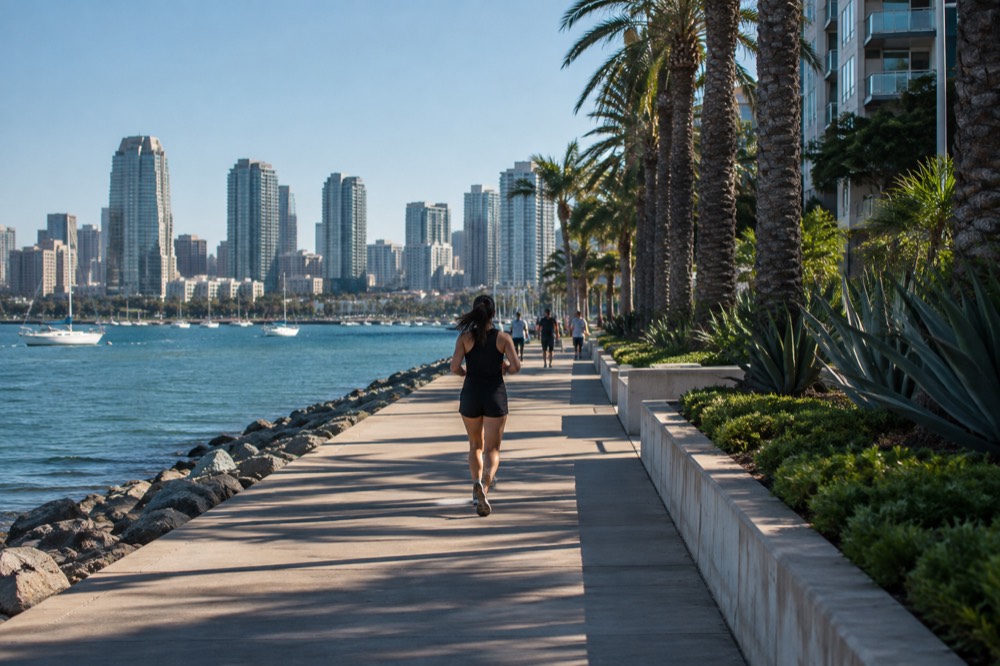
La Jolla Shores is widely considered the gentlest open-ocean beach in San Diego, with a long, gradually shelving sandy bottom that turns big swells into soft, manageable waves, and it has a permanent lifeguard station, restrooms, a playground and a grassy park behind the sand. The drop is so gentle that at low tide the water stays knee-to-waist deep for a long walk out, which is exactly what you want with a four-year-old. Kellogg Park sits directly behind the beach, giving families a shaded picnic escape and a second activity when the sand loses its appeal.
The Shores is also the city's main beginner surf and kayak zone. The surf schools cluster here for the same reason families do, and a first lesson in this cove is a genuinely low-drama experience. The La Jolla Shores guide covers the surf schools and the kayaking the La Jolla sea caves guide covers the paddle side, including the launch channel through the reserve.
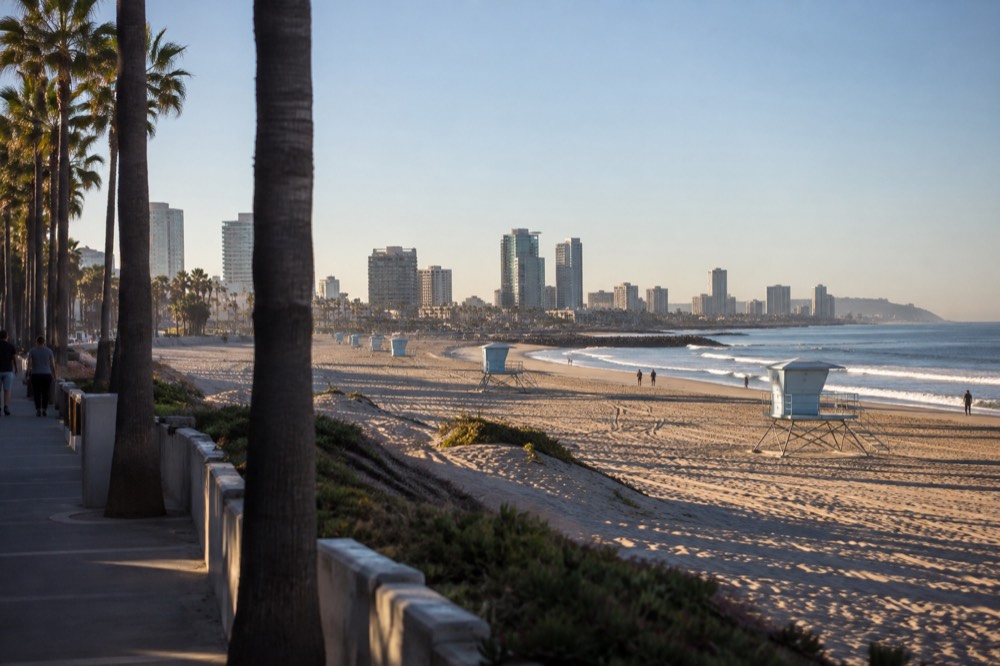
Two honest cautions. First, the neighboring La Jolla Cove area is home to sea lions and harbor seals, and the rules around them, including a seasonal closure at the Children's Pool, change year to year; check signage on the day rather than assuming. Second, parking at the Shores fills very early on summer weekends, often before 9:00 am. The La Jolla guide covers the neighborhood's other parking options.
Is Coronado Beach Worth the Trip with Kids?
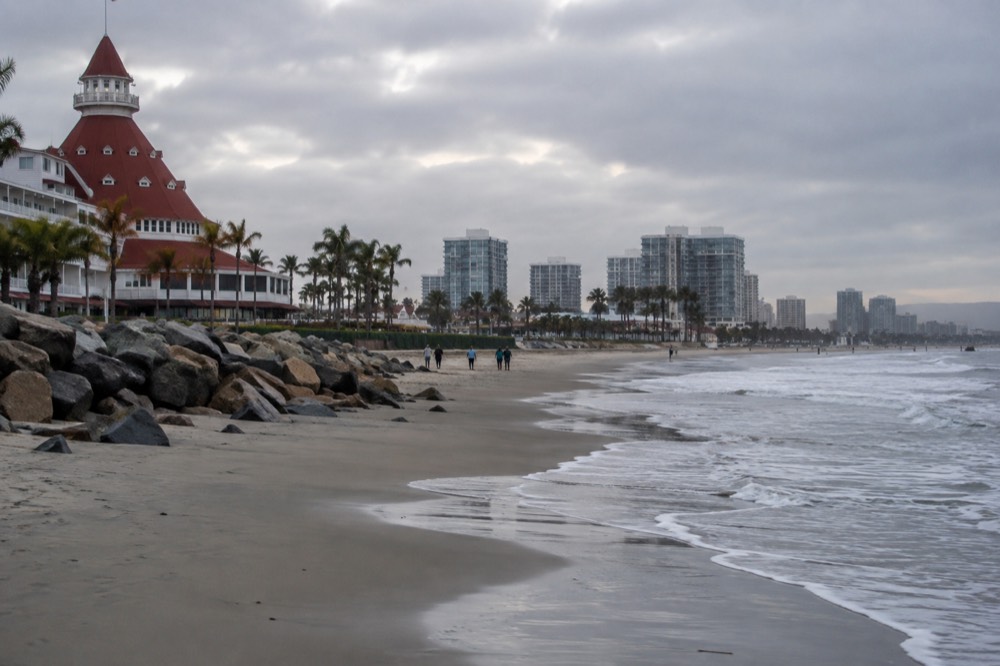
Coronado Beach offers the widest, softest sand in the county, gentle rolling surf and the visual bonus of mica-flecked sand that literally sparkles, and it is the best beach in this guide for a long walk, a big sandcastle project or a day that is more about space than swimming. The surf is real but typically soft, the slope is gradual, and the beach is so wide that even an August Saturday never feels shoulder-to-shoulder. Behind the sand sits the Hotel del Coronado, and the Hotel del Coronado guide covers what is public and what is not.
The practical catch is logistics. Coronado is across the bay from downtown, reached by the San Diego-Coronado Bridge or by ferry, and beach parking is the same story as everywhere else: free street and lot parking that is scarce in summer. Families who stay on the island, or who combine the beach with a walk along Orange Avenue, get far more out of the day than those who dash in and out.
If you would rather leave the driving to someone else, the City and Beaches Highlights Tour runs 5 hours 30 minutes and includes Coronado alongside the downtown sights, which suits families who want the island without the parking hunt.
Which Beaches Have Lifeguards, Restrooms and Easy Access?
All of the main family beaches in San Diego, including Mission Bay, La Jolla Shores, Coronado, Pacific Beach, Mission Beach, Ocean Beach and Imperial Beach, are served by the city's nine permanent oceanfront lifeguard stations, staffed year round, generally from 9:00 am to dusk, with seasonal towers added in summer. Restrooms and outdoor showers are standard at each of these beaches, and the city's beach regulations page carries a per-beach amenity key if you need to confirm a specific facility before you go.
The amenity picture matters more for families than for solo travelers, because a beach day with children is really a logistics operation. Here is the practical rundown.
| Beach | Lifeguard station | Restrooms and showers | Food nearby | Stroller-friendly access |
|---|---|---|---|---|
| Mission Bay coves | Yes, year round | Yes, at major parks | Yes, multiple | Yes, flat promenades |
| La Jolla Shores | Yes, permanent | Yes, at the park | Yes, a short walk | Yes, boardwalk and grass |
| Coronado Beach | Yes | Yes, near Ocean Blvd lots | Yes, on Orange Avenue | Mostly, some soft sand |
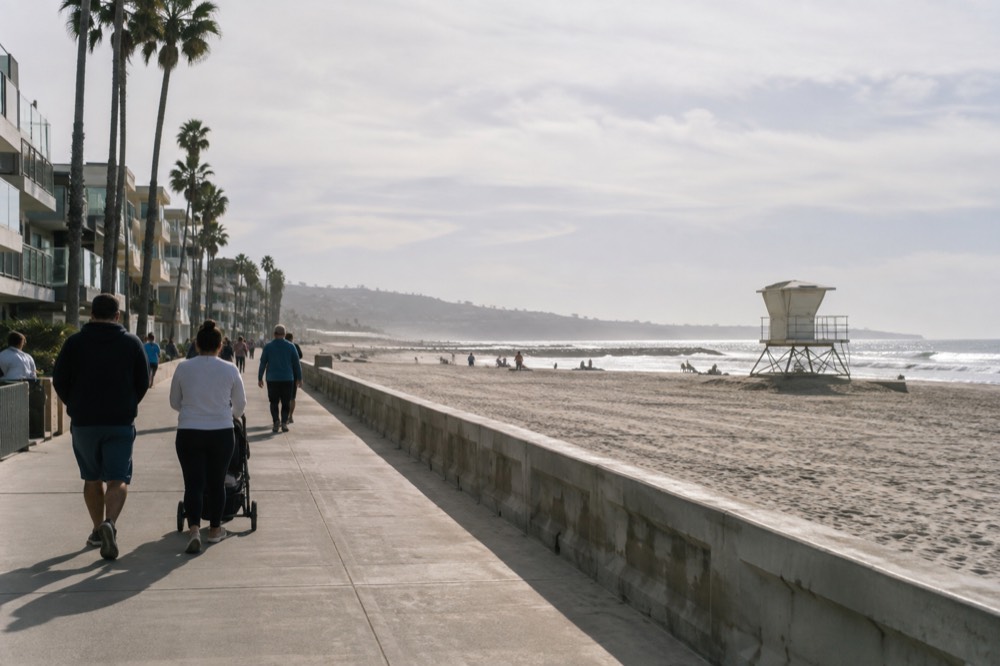
| Pacific Beach | Yes | Yes, at pier and lots | Yes, boardwalk | Yes, concrete boardwalk |
| Mission Beach | Yes | Yes | Yes, boardwalk and Belmont Park | Yes, boardwalk |
| Ocean Beach | Yes | Yes, at the pier | Yes, Newport Ave | Partial, some slopes |
| Imperial Beach | Yes | Yes, near the pier | Yes, near pier plaza | Yes, flat |
Two rules apply citywide and are worth stating plainly. Alcohol is prohibited on San Diego's beaches, boardwalks and parks, so a beach picnic means soft drinks. Glass containers are prohibited too. The city's beach regulations page also lists fire pits in its amenity key, but which specific beaches hold them, and the fuel rules, vary and are not published in one reliable table, so check the city page or the posted signs rather than planning a bonfire on assumption.
When Is the Best Time of Year for a Family Beach Day in San Diego?
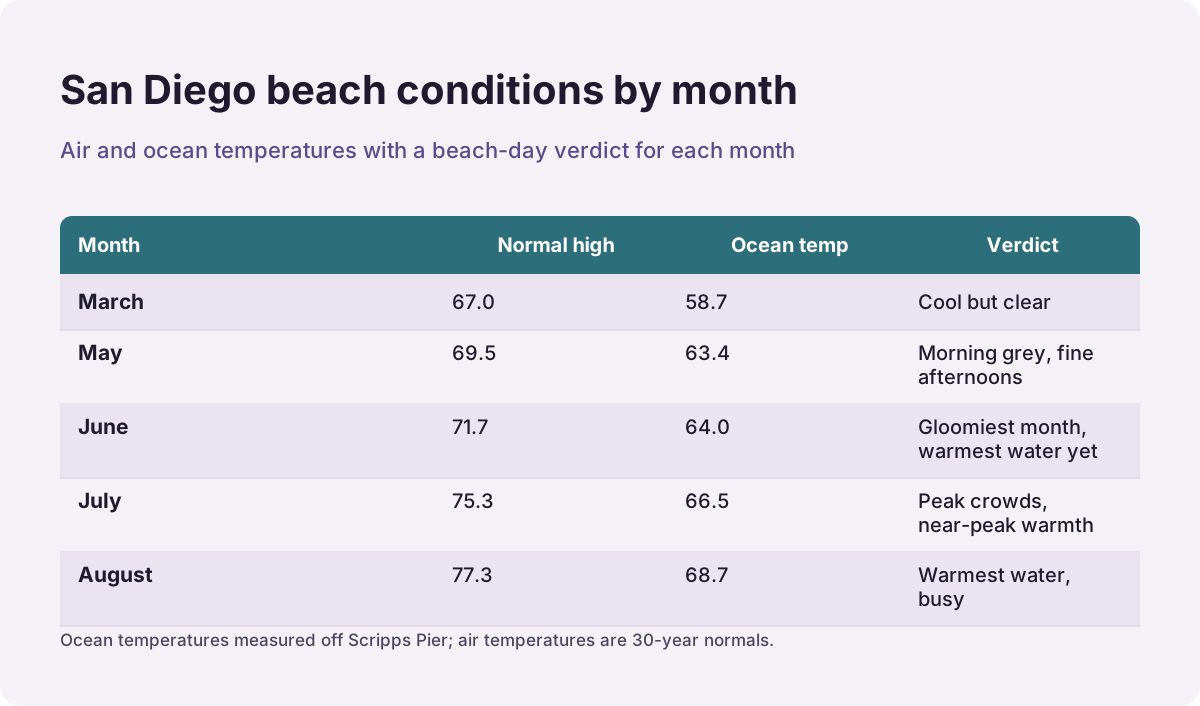
The warmest water and the warmest air arrive in August and September, with a mean ocean temperature of 68.7F in August and 67.6F in September off Scripps Pier, and September's normal high of 77.2F actually beats July's 75.3F, yet September is one of the quietest months at the coast. That combination, warm water and thin crowds, makes early September the single best-value beach window in the city for families whose school calendar allows it. The ocean is roughly ten degrees warmer than it is in March, and you will not be fighting for a patch of sand.
The counterintuitive part is what locals call May Gray and June Gloom. You can see it plainly in the 30-year temperature normals: June's normal high of 71.7F is lower than October's 74.6F. A thick marine layer often greys the coast in late spring and early summer while inland areas stay clear, so a June beach morning can be overcast and cool before burning off in the afternoon. It is not a reason to skip the beach, but it is a reason to plan afternoon sessions in May and June.
| Month | Normal high F | Normal low F | Mean ocean temp F | Beach-day verdict |
|---|---|---|---|---|
| March | 67.0 | 54.5 | 58.7 | Cool but clear |
| May | 69.5 | 60.0 | 63.4 | Morning grey, fine afternoons |
| June | 71.7 | 62.6 | 64.0 | Gloomiest month, warmest water yet |
| July | 75.3 | 66.1 | 66.5 | Peak crowds, near-peak warmth |
| August | 77.3 | 67.5 | 68.7 | Warmest water, busy |
| September | 77.2 | 66.2 | 67.6 | Warm and quiet, the sweet spot |
| October | 74.6 | 61.5 | 64.0 | Warm air, cooling water, calm |
| December | 66.0 | 49.8 | 60.8 | Mild air, cold water |
Rain is a winter phenomenon here: December through March carry most of the year's measurable precipitation, and August's normal rainfall rounds to one hundredth of an inch. Beach days rarely wash out in summer. The month-by-month guides, like things to do in San Diego in September, fold the beach picture into the wider seasonal calendar.
What Should Parents Know About Water Safety in San Diego?
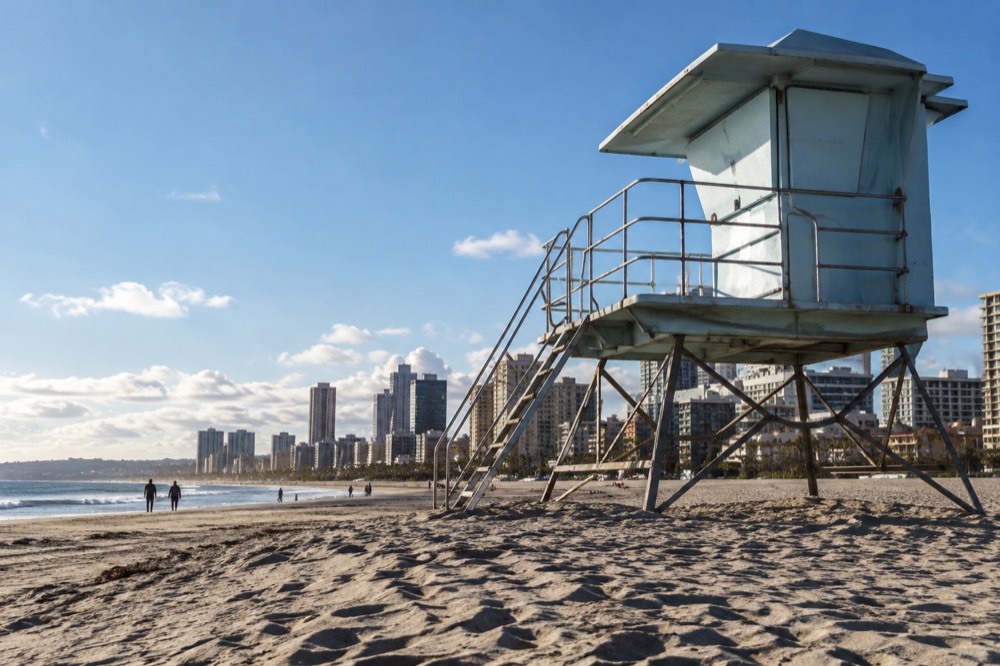
The city's own lifeguard advice is direct: rip currents are the primary hazard, and if you are caught in one you should stay calm, swim parallel to the shore until the pull relaxes, then swim in, and if you cannot make it out, float and wave for help. The standing rules are to never swim alone and to swim near a lifeguard. On that second point San Diego makes it easy, because every beach in this guide has a staffed tower in the areas families use.
A few practical additions for children specifically. Swim within the flags and directly in front of the tower, because lifeguard sightlines are built around them. The morning, before the wind picks up, is when the surf is calmest and the sun is weakest, which suits small children on both counts. Water quality closures are posted by the County of San Diego's environmental health department at its beach status page, with results posted same day or next business day; check it after any rainstorm, especially near creek mouths and Imperial Beach, where advisories occasionally follow storms.
The sun is the hazard families most consistently underestimate. Even under the marine layer, UV exposure is real, and a beach day here runs long because the afternoons are so mild. Reapply, shade the babies, and treat the first hour after lunch as the dangerous one, when the sunscreen applied at home has worn off and everyone is too absorbed in the sand to notice.
What Else Can Families Do Beyond the Sand?
San Diego pairs its beaches with a deep bench of family attractions within a short drive: Belmont Park's rides sit directly on the Mission Beach boardwalk, the Zoo and Safari Park anchor the inland side of a beach-plus-animals day, LEGOLAND California sits 40 minutes up the coast in Carlsbad, and the USS Midway Museum and the harbor cruises sit on the Embarcadero between the downtown beaches and Coronado. The geography is unusually kind to families, because the coast, the bay and the park attractions line up along one north-south corridor rather than scattering.
For a beach-plus-rides day, LEGOLAND is the strongest pairing with this guide's territory. It is aimed squarely at the 2-to-12 age range, it runs a published operating calendar and closes on some weekdays out of season, and its tickets are dynamically priced, so the live listing for your date is the only honest price source. The LEGOLAND California guide covers the park, the SEA LIFE aquarium and the Carlsbad beaches you can bolt onto the same day.
Back on the water, the amphibious SEAL City Tour runs 1 hour 40 minutes and drives through downtown before splashing into the bay, which children treat as the best part of any harbor day. It pairs naturally with the Embarcadero's ships: the USS Midway Museum guide covers the aircraft carrier, where kids can clamber through a real flight deck and the entry ticket is bought online or at the door.
For the full menu, the San Diego with kids itinerary sequences the Zoo, the beaches and the bay attractions into a multi-day plan, and the free things to do in San Diego guide covers the no-cost side, including Balboa Park's gardens and the Sunday organ concerts.
How Do You Plan a Family Beach Day That Does Not Fall Apart?
A reliable San Diego family beach day follows a simple shape: arrive by 9:00 or 10:00 am to solve parking, swim and build in the calm morning hours, eat lunch before the crowds peak, then pivot to a shaded or indoor activity for the afternoon, which in summer is exactly when the marine layer has burned off and the sand gets hot. The beaches that fail are the ones where the family arrives at noon, parks a mile away, and hits the strongest sun of the day with no exit plan.
Here are three tested day shapes, built only from the beaches and attractions in this guide.
| Day plan | Morning | Midday | Afternoon |
|---|---|---|---|
| The calm-water day | Mission Bay cove, toddler swimming | Picnic at the bay park | Belmont Park rides on the Mission Beach boardwalk |
| The classic beach day | La Jolla Shores, early parking | Lunch in the Shores village | Kellogg Park playground, then the La Jolla Cove viewpoint walk |
| The island day | Ferry or bridge to Coronado | Beach morning, Orange Avenue lunch | Hotel del photo stop and the Coronado Beach walk |
Getting around without a car is workable on the beach corridor. The MTS system charges $2.50 one-way with two-hour transfers and a $6.00 day pass, and the PRONTO card caps your fares automatically at the day-pass value as you ride, so there is no reason to buy a day pass up front. Youth 18 and under ride free on the Youth Opportunity Pass, and up to two children aged 5 and under travel free with a paying adult, which makes the trolley and bus a genuinely cheap way to reach Mission Bay and Pacific Beach. The getting around San Diego guide covers the routes.
Common Questions About Family Beaches in San Diego
What are the best family beaches in San Diego?
Mission Bay for enclosed, wave-free water, La Jolla Shores for the gentlest open-ocean surf, Coronado Beach for wide sand, and Pacific Beach south of the pier for boardwalk convenience. All four have permanent lifeguard stations, restrooms and food nearby.
Is Mission Bay safe for toddlers?
Yes, it is the safest water in the city for small children. The bay is enclosed, so there is no surf, no shore break and no rip current, and the water is shallow and warms faster than the open ocean.
Are San Diego beaches staffed by lifeguards year round?
The city staffs nine permanent oceanfront lifeguard stations year round, covering roughly 24 miles of coastline, generally from 9:00 am to dusk, with seasonal towers added in summer.
Can you have a fire or a drink on San Diego beaches?
Alcohol and glass containers are prohibited on all San Diego city beaches, boardwalks and parks. Some beaches have fire pits, but the specific locations and fuel rules vary, so check the city's beach regulations page or posted signs before planning one.
When is ocean water warmest in San Diego?
August, with a mean of 68.7F off Scripps Pier, closely followed by September at 67.6F. September pairs that warm water with the year's thinnest coastal crowds, making it the best-value beach month.
Is parking free at San Diego beaches?
Beach parking is free street-and-lot parking, but it is very hard to find in summer, especially at La Jolla Shores and Mission Beach. Arrive before 10:00 am in July and August or plan a longer walk.