Things to Do in Mission Bay, San Diego: A Complete Guide to the Waterfront Playground
Mission Bay is San Diego's calm-water playground: a sheltered lagoon where beginners learn to sail, families ride jet skis without fighting surf, and the sunset over the water closes nearly every day. Here is how to plan it, from the water sports to the honest parking advice.
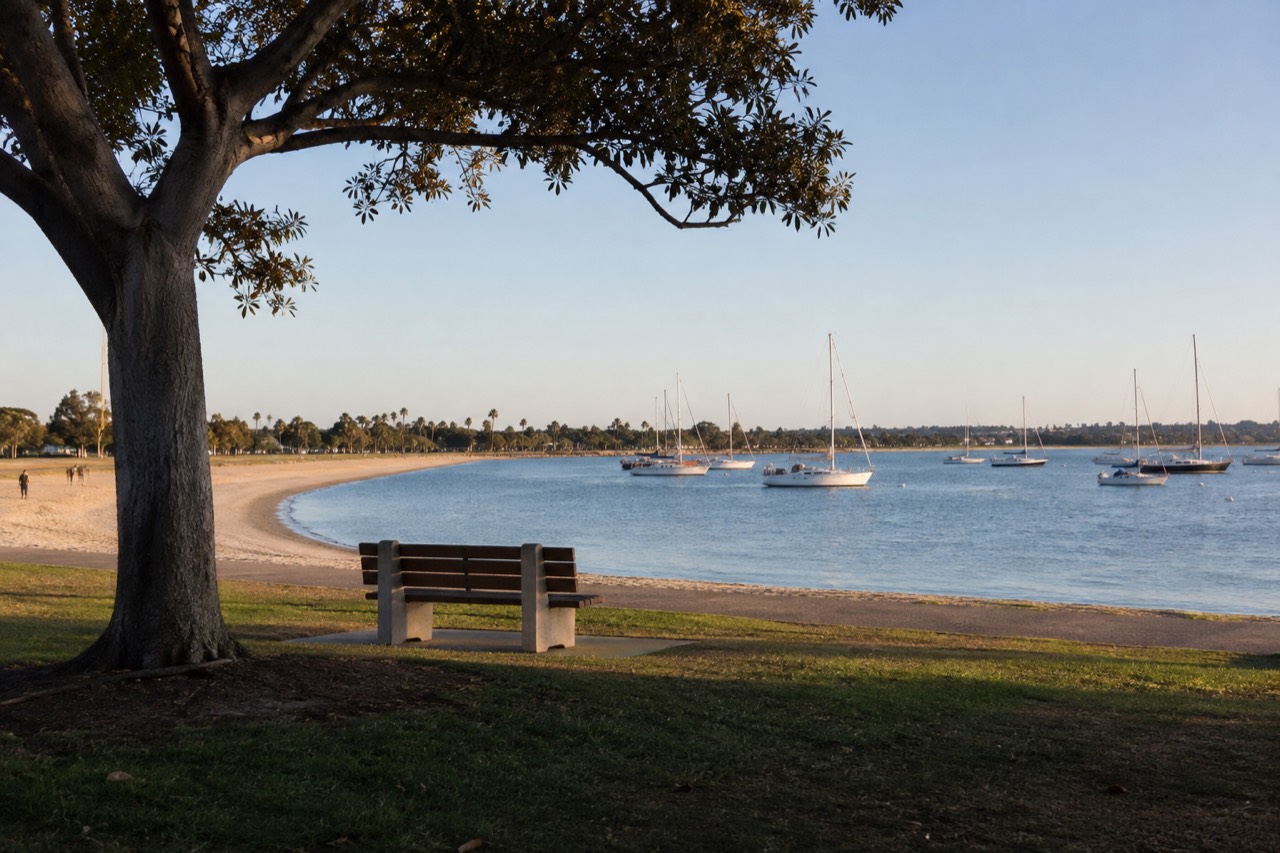
Short answer
Mission Bay is a sheltered aquatic park between Pacific Beach and downtown San Diego, best known for flat-water kayaking, jet skiing, sailing and biking around the shoreline. SeaWorld sits on its eastern shore and Belmont Park is a short walk west. SeaWorld single-day tickets run from $59.99, and the bay's water is warmest in August at a mean of 68.7F.
Mission Bay is where San Diego stops being a surf town and becomes a boating town. The open coast a mile west throws real waves at Ocean Beach and Pacific Beach, but inside the bay the water sits flat and glassy most mornings, which is exactly why beginners rent kayaks here, why sailing schools run their first lessons here, and why families with young kids choose it over the beach. SeaWorld occupies the eastern shore, Belmont Park and Mission Beach sit a short walk west, and the loop path around the bay is one of the most pleasant flat bike rides in the county.
This guide covers the whole picture: what the water activities actually cost and how they work, the family day out at SeaWorld and Belmont Park, where to eat and watch the sunset, how to get there without a car, and when the weather and water temperatures are at their best. Parking is the honest hard part, and there is advice below that will save you an hour of circling.
What Is Mission Bay, and How Is It Different from the Beach Neighborhoods?
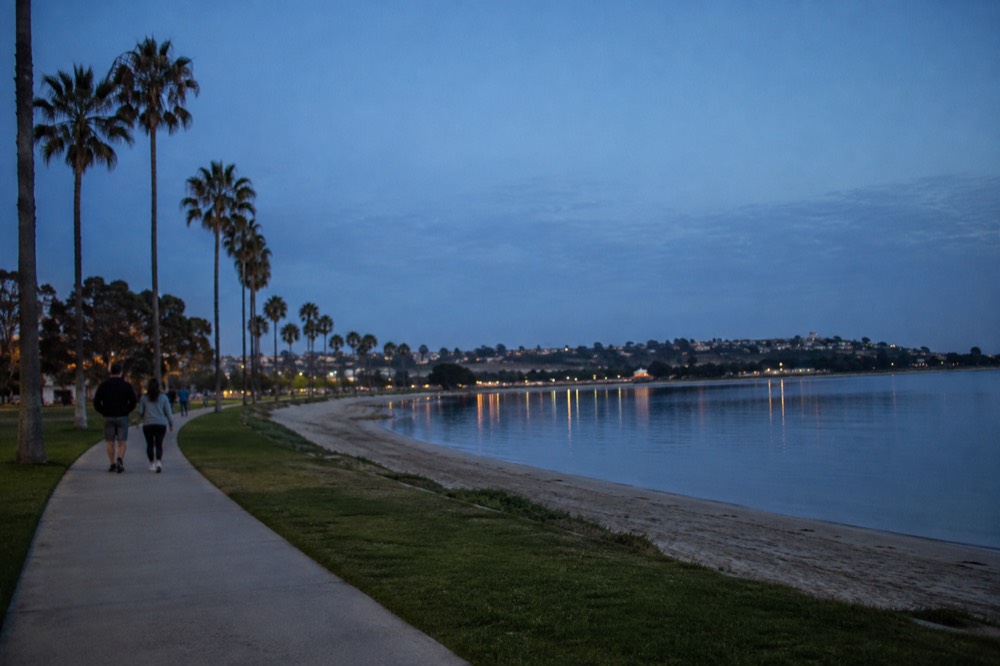
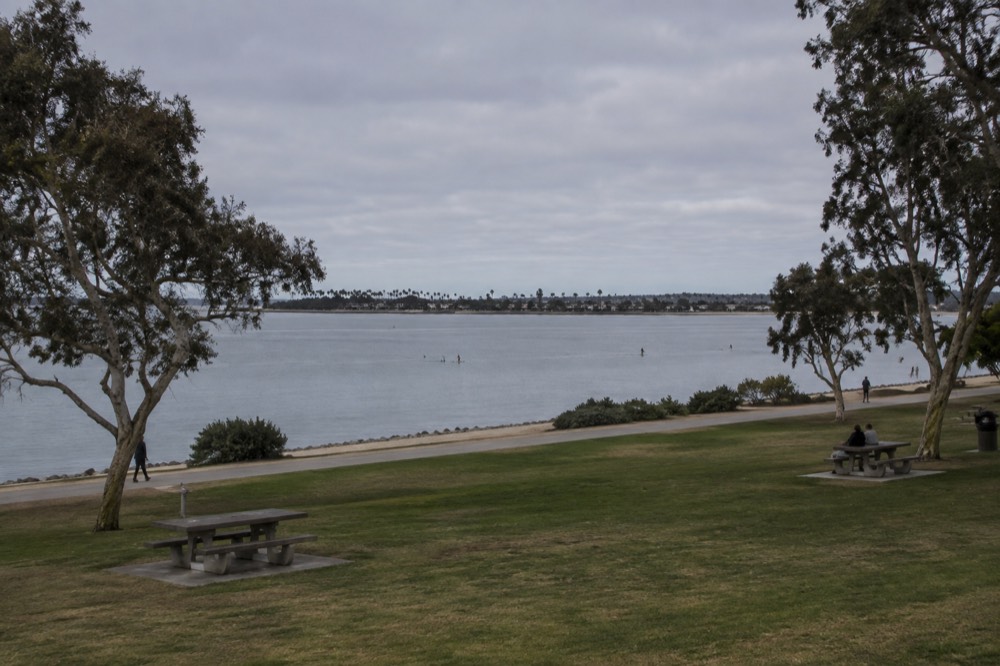
Mission Bay is a sheltered, mostly man-made lagoon immediately south of Pacific Beach and west of downtown, separated from the open ocean by a narrow strip of land that carries Mission Beach and its boardwalk. The bay is the calm-water alternative: no surf to fight, no rip currents, shallow water near the shore, and a paved loop path tying the shoreline together for walkers and cyclists.
The neighborhoods around it, Pacific Beach and Mission Beach, hold the bars and rentals, while the bay side stays quieter and more family-oriented.
The practical difference matters most in the morning. On the coast, the marine layer that locals call May Gray and June Gloom can keep the beaches overcast until midday. The pattern is real and locally universal, and it shows up plainly in the 30-year climate normals: June's normal high of 71.7F is actually lower than October's 74.6F. The bay does not escape the marine layer, but its activities tolerate it. You can kayak or bike the loop under grey skies and lose nothing, whereas a beach day under the same grey feels like a wasted trip.
The geography also concentrates things usefully. SeaWorld is on the bay's eastern shore. Belmont Park, the vintage oceanfront amusement park, sits at the west end near the Mission Beach boardwalk. Fiesta Island, a loop of undeveloped parkland in the middle of the bay, is where dog owners, picnickers and people who want to escape crowds go. Everything is within a 15-minute drive or a 40-minute bike ride of everything else.
If you are splitting your trip between neighborhoods, our Mission Beach neighborhood guide covers the boardwalk side, and Pacific Beach covers the nightlife side. This page stays on the water.
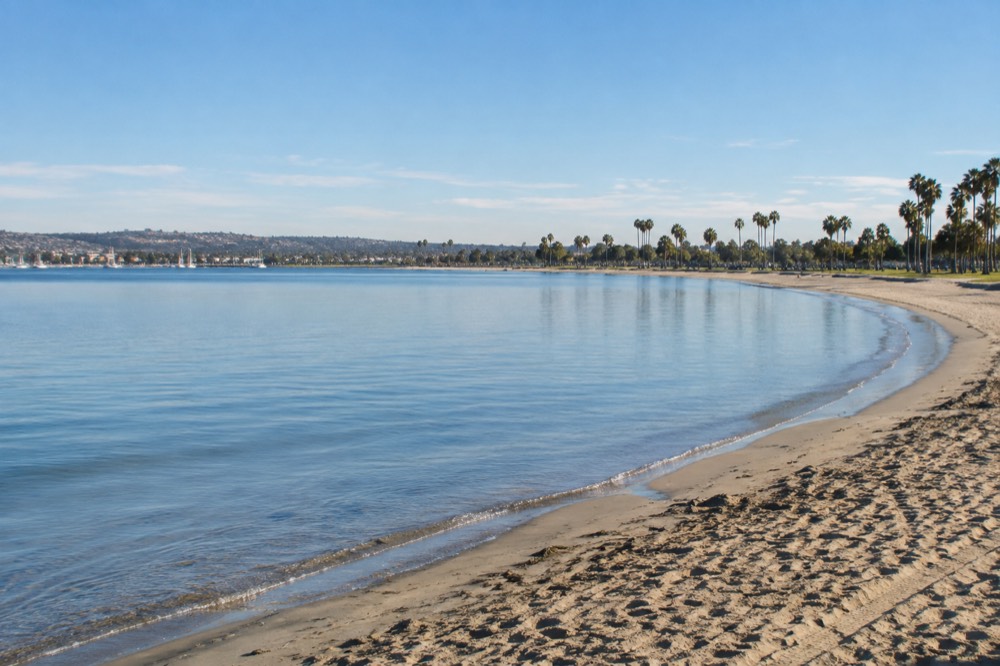
What Are the Best Things to Do on the Water in Mission Bay?
The core Mission Bay activities are kayaking, stand-up paddleboarding, jet skiing, sailing and powerboat rentals, all of which work here precisely because the water is flat and sheltered. Guided options exist for every one of them, and the bay's layout means a first-timer can be on the water within an hour of arriving. The two experiences visitors most often single out in reviews are driving your own speed boat on a guided loop, and the jet ski rentals out of Coronado and the bay's marinas.
Both sell out on summer weekends.
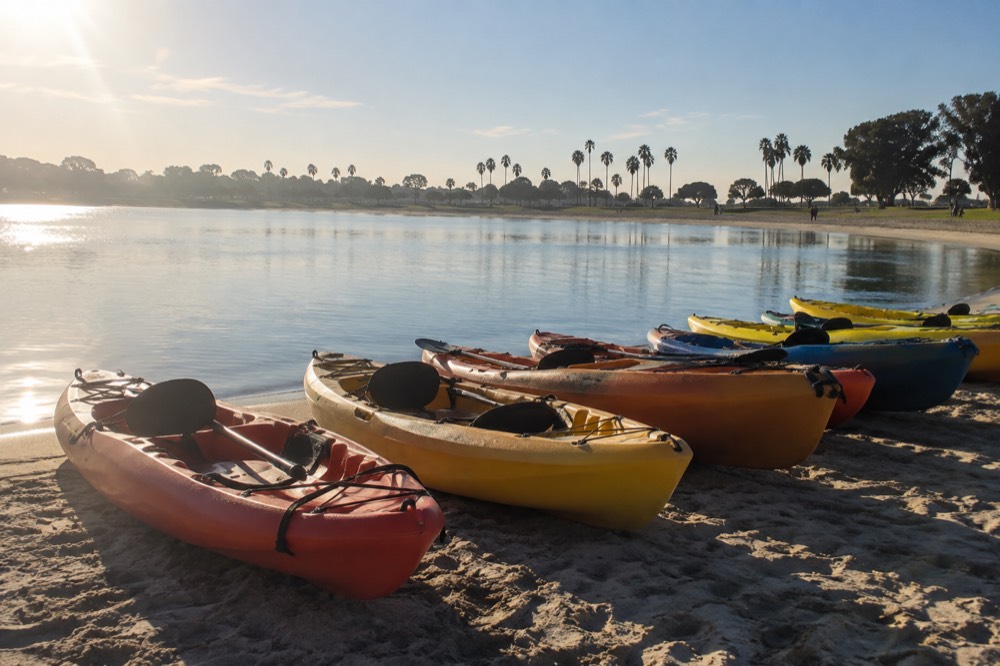
Kayaking is the gentlest entry point. The water near the shore is shallow and warm by California standards, and the sheltered surface means a beginner can paddle without an instructor worrying about swell. If you want a bigger payoff for the effort, the famous La Jolla sea cave kayak trips are the region's headline paddle, and our La Jolla sea caves guide covers how those guided tours work; Mission Bay is the flat-water version of the same idea, better suited to kids and nervous first-timers.
| Activity | What it involves | Best for | Booking reality |
|---|---|---|---|
| Kayaking | Flat-water paddling near shore and around Fiesta Island | Beginners, families, all ages | Rental shops line the bay; guided tours bookable ahead |
| Stand-up paddleboarding | Calm mornings are ideal; wind picks up in the afternoon | Teens and adults | Walk-up rentals common, arrive before 10 am in summer |
| Jet skiing | Open-throttle riding in designated zones of the bay | Adults and confident teens | Book ahead; the Coronado rental is a verified product |
| Sailing | Small-boat and keelboat sailing, sunset and daytime trips | Couples, anyone who wants to steer | Guided sunset sails are the most popular slot |
| Speed boat tour | You drive your own 2-person boat behind a guide | Independent-minded visitors | Guided 2-hour product, bookable ahead |
| Biking the loop | Paved path around the bay's shoreline | Everyone, including kids on their own bikes | Rentals near Mission Beach; no booking needed |
The jet ski option deserves a specific mention because it is the one people ask about most. The Coronado rental product puts you on the bay for a full hour with a brief orientation, and it is the kind of activity you should reserve before you drive in, because summer weekends see the slots go early.
For a slower pace, the sailing experiences on the bay are among the best-value evening activities in the city. The sunset and daytime sailing product runs two hours on San Diego Bay proper, with the city skyline on one side and the Point Loma hills on the other, and it needs no experience from you at all. If you would rather be behind the wheel than the passenger, the drive-your-own-speed-boat tour is the distinctive one: you pilot your own boat and follow a guide around the bay, which reviewers repeatedly describe as the highlight of their trip.
One safety note that applies everywhere on the bay and the coast: San Diego's lifeguards staff nine permanent oceanfront stations year round, and rip currents are the primary hazard on the open coast. If you swim in the ocean rather than the bay, the official advice is to stay calm and swim parallel to the shore until the pull relaxes, then angle in. Inside the bay, the hazard is boat traffic rather than surf, so stay in the designated swim areas.
What About SeaWorld and Belmont Park for a Family Day?
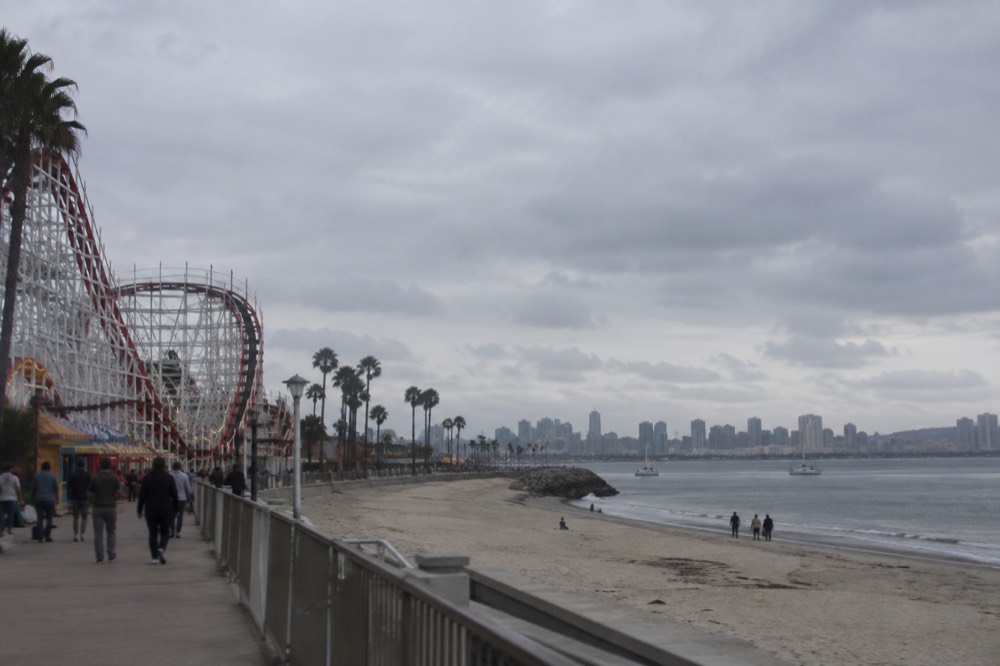
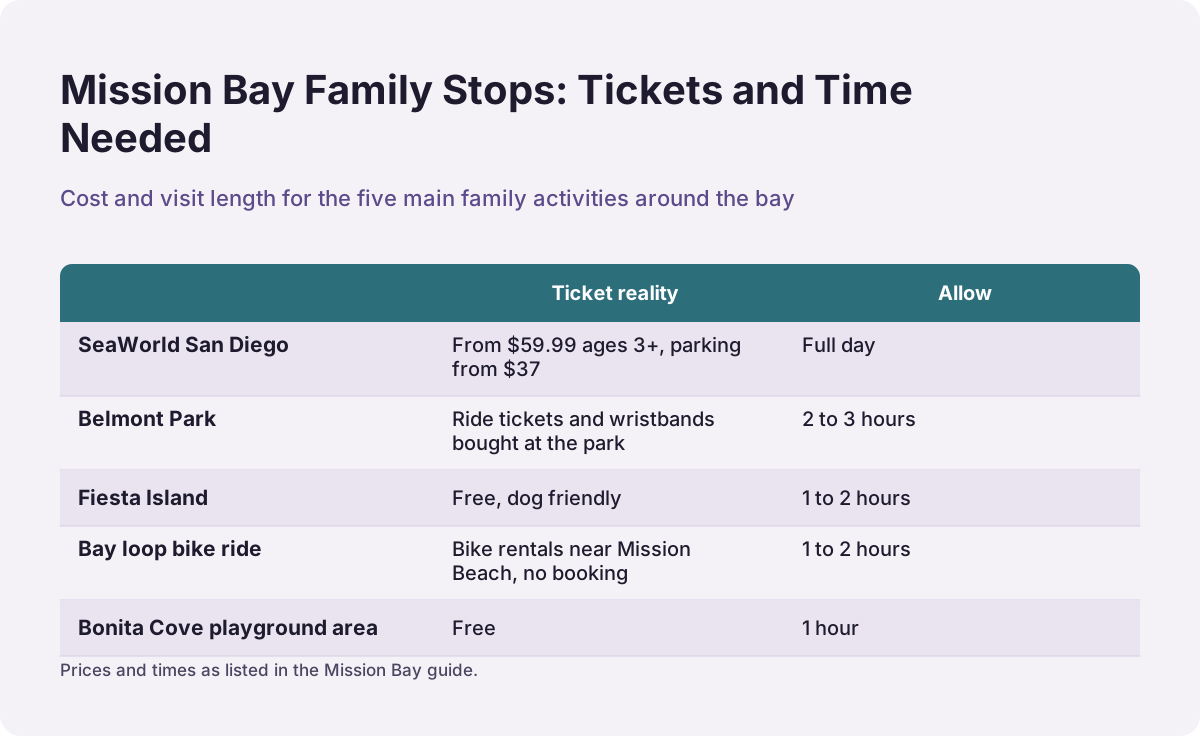
SeaWorld San Diego sits directly on Mission Bay's eastern shore and is the bay's single biggest draw for families, with single-day tickets from $59.99 for ages 3 and up and parking from $37. Belmont Park at the west end is the smaller, cheaper counterpart: a historic oceanfront amusement park with a wooden roller coaster, right on the Mission Beach boardwalk. Doing both in one day is possible but rushed; most families pick one per day and use the bay in between.
SeaWorld's pricing is genuinely dynamic, changing by date the way airline fares do, so treat the from-price as a floor rather than a quote. The park's hours also vary by date, running 10:00 am to 7:00 pm on the day the official pages were checked, so confirm the calendar for your specific date before you plan around an evening show. SeaWorld sells through one booking channel only, so if you see the ticket on the operator's live listing, that is the listing to use.
| Family stop | Location on the bay | Ticket reality | Allow |
|---|---|---|---|
| SeaWorld San Diego | Eastern shore | From $59.99 ages 3+, dynamic by date; parking from $37 | Full day |
| Belmont Park | West end, Mission Beach | Ride tickets and wristbands bought at the park | 2 to 3 hours |
| Fiesta Island | Middle of the bay | Free, undeveloped parkland, dog friendly | 1 to 2 hours |
| Bay loop bike ride | Full shoreline loop | Bike rentals near Mission Beach, no booking | 1 to 2 hours |
| Bonita Cove playground area | Between Mission Beach and the bay | Free | 1 hour |
Belmont Park is the budget-friendly half of the day. The wooden Giant Dipper coaster is the park's centerpiece, and the surrounding boardwalk, arcade and wave machine mean a couple of hours there costs a fraction of a theme-park day. Our full Belmont Park guide covers rides, tickets and timing in detail.
Fiesta Island is the underrated third option, especially for anyone traveling with a dog. It is an island in the middle of the bay with a loop road, picnic areas and off-leash dog areas, and it is where locals go when they want the water view without the Mission Beach crowds. Bring everything you need, because it is deliberately undeveloped.
If the family day is the core of your trip, our San Diego with kids itinerary slots Mission Bay into a full multi-day plan, and the family beaches in San Diego guide explains why this stretch of water beats the open coast for younger swimmers.
Where Should You Eat, and Where Is the Best Sunset Around Mission Bay?
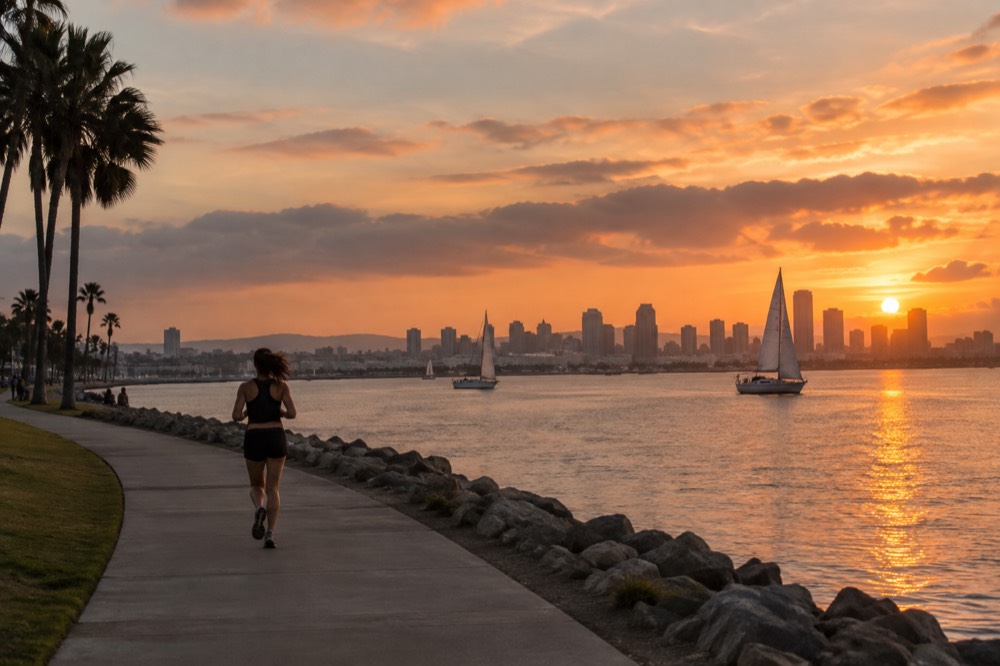
The eating options cluster at the edges rather than the middle: Mission Beach and Pacific Beach hold the casual taco shops and oceanfront bars, the eastern shore has resort restaurants overlooking the water, and the bay itself is best treated as a picnic destination at Fiesta Island. For sunset, the west-facing shoreline along Mission Beach and the bay's western edge is where the sun drops over the ocean, and the sunset sailing trips turn that same view into the main event.
The honest local pattern is this: eat cheap in Pacific Beach, drink with a view on the Mission Beach boardwalk, and picnic on the bay. Alcohol is prohibited on San Diego's beaches, boardwalks and parks, which includes the Mission Bay shoreline, so a beach beer is not just frowned on, it is against the standing city rules. The city's beach regulations page carries the full prohibitions: no glass containers, no smoking, no overnight camping, alongside the alcohol ban.
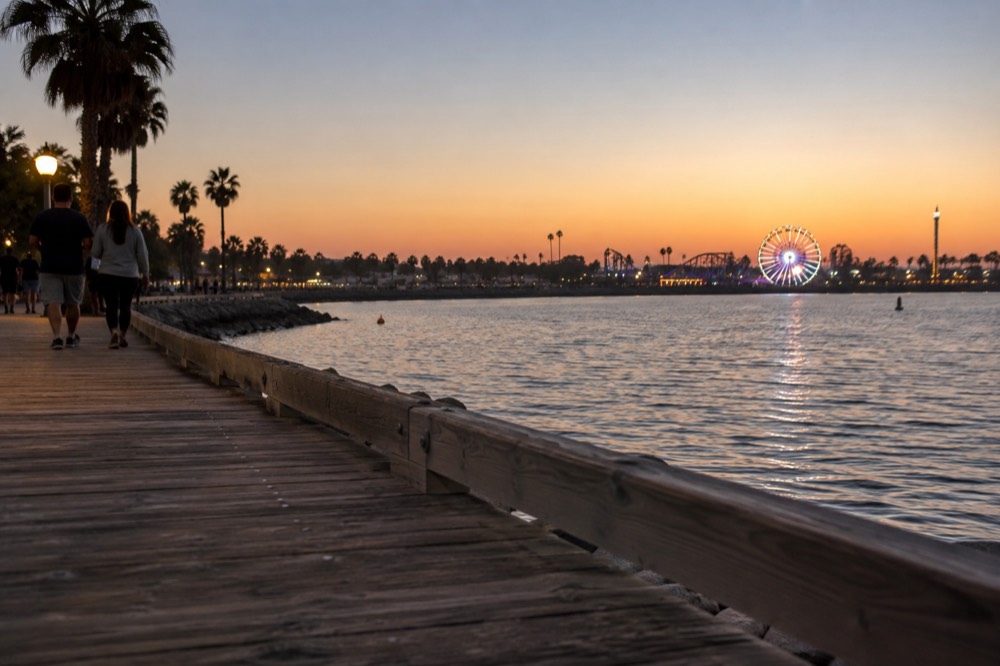
The sunset itself is the reason people end their day here rather than downtown. The sun sets over the ocean to the west, and the bay's western shore faces it directly. Our San Diego sunset spots guide ranks the whole county's viewing locations, and the Mission Bay shoreline makes the list for the same reason it draws photographers: flat water doubles the color.
The guided sunset sail is the premium version of that view. The bay sailing experience runs two hours with a sunset or daytime departure, and the small-group version runs a longer three hours with a smaller passenger count. Both are bookable ahead and both sell their golden-hour slots first.
If your evening runs later and you want the city's darker stories, the ghost tour with exclusive entry into a haunted building is the one that fits. It runs 55 minutes, it is the only San Diego ghost tour with access to a location other tours cannot enter, and it pairs well with a Mission Bay afternoon because it starts after the sun is already down.
How Do You Get to Mission Bay, and Where Do You Park?
Mission Bay sits between Pacific Beach and downtown, roughly 20 minutes from the airport by car and reachable by MTS bus for $2.50 one way with a $6.00 day pass, using the PRONTO card or app. Parking is the real bottleneck: the bay's lots are free but fill very early on summer weekends, and there is no published rate table because there are no meters to feed. The honest strategy is to arrive before 10 am in summer, or take transit and skip the hunt entirely.
On transit, the practical detail is fare capping. PRONTO, the region's fare system, charges $2.50 per ride with two-hour transfers and caps you automatically: once your rides total the day-pass value, the system literally reads "Day Pass Earned" and further rides that day are free. There is no reason to buy a $6.00 day pass up front, because pay-as-you-go reaches the same cap on its own. Youth 18 and under ride free on the Youth Opportunity Pass, and up to two children aged 5 and under travel free with a paying adult.
From the airport, there is no Trolley station at SAN. MTS Route 992 runs downtown every 15 minutes for $2.50, and the free San Diego Flyer shuttle connects the terminals to Old Town Transit Center, where the Blue and Green Trolley lines meet. From there, buses run west toward Mission Beach and the bay. Our getting around San Diego guide lays out the full network, and the San Diego airport guide covers arrivals in detail.
| Way in | Cost | Notes |
|---|---|---|
| MTS bus | $2.50 one-way, $6.00 day pass | PRONTO caps automatically at the day-pass value |
| Car from the airport | About 20 minutes | No toll roads involved |
| Bike | Free once you have one | The bay loop path connects to the Coast Highway path |
| Rideshare | Metered | Drop-offs work at all the main lots |
On parking, the honest answer is that the bay's lots are free and fiercely contested. This site's policy is to never state a beach or bay parking rate, because no published rate table exists for these lots, and inventing one would mislead you. What is true: the lots are free to park in, they fill by mid-morning on summer weekends, and street parking in the surrounding residential blocks is time-limited and patrolled. Downtown meters, by contrast, run $2.50 per hour with enforcement Monday to Saturday, generally 8:00 am to 6:00 pm, so the bay is the better free-parking deal if you win a space. Our parking in San Diego guide covers the whole city, including the time-boxed situation at Balboa Park, where paid parking is live now at $8 to $16 a day but City Council has approved removing it entirely on 1 January 2027.
When Is the Best Time of Year to Visit Mission Bay?
September is the best-kept secret, and August is the best water. The climate normals show September's average high of 77.2F beating July's by nearly two degrees and sitting a tenth of a degree behind August's, while the ocean temperature peaks in August at a mean of 68.7F and stays near 67.6F through September. Yet September is the single lowest visitation month at Cabrillo National Monument across recent years, a roughly 48 percent gap against July, which tells you the crowds leave before the weather does.
The water temperature story comes from real measurements. The NOAA buoy 46258 sits off Mission Bay itself, and the Scripps Pier station data behind the table below gives the monthly shape of the water you would actually swim in. The Pacific here never reaches bathtub temperatures: even the August peak stays below 69F, and the winter months sit in the high 50s. Wetsuits are standard for winter water sports and optional by late summer.
| Month | Mean sea-surface temperature (F) |
|---|---|
| January | 58.1 |
| February | 58.0 |
| March | 58.7 |
| April | 59.2 |
| May | 63.4 |
| June | 64.0 |
| July | 66.5 |
| August | 68.7 |
| September | 67.6 |
| October | 64.0 |
| November | 62.4 |
| December | 60.8 |
The rain answer is simple: winter. December through March carry 7.3 of the year's inches of rain, while August's normal precipitation is one hundredth of an inch with zero days of measurable rain. Summer days on the bay are effectively rain-proof, and the marine layer that greys the mornings in May and June burns off by afternoon, which matters less on the bay than on the beach anyway.
If a winter boat trip is on your mind, the whale watching season is the reason. Gray whales pass San Diego from mid-to-late December through March, with mid-January the peak, and the National Park Service counts more than 20,000 animals in the annual migration. The 3-hour whale watch cruises run from the downtown waterfront, a short drive from the bay, and calm mornings give the best viewing odds.
Can You Do Mission Bay Without Spending Much Money?
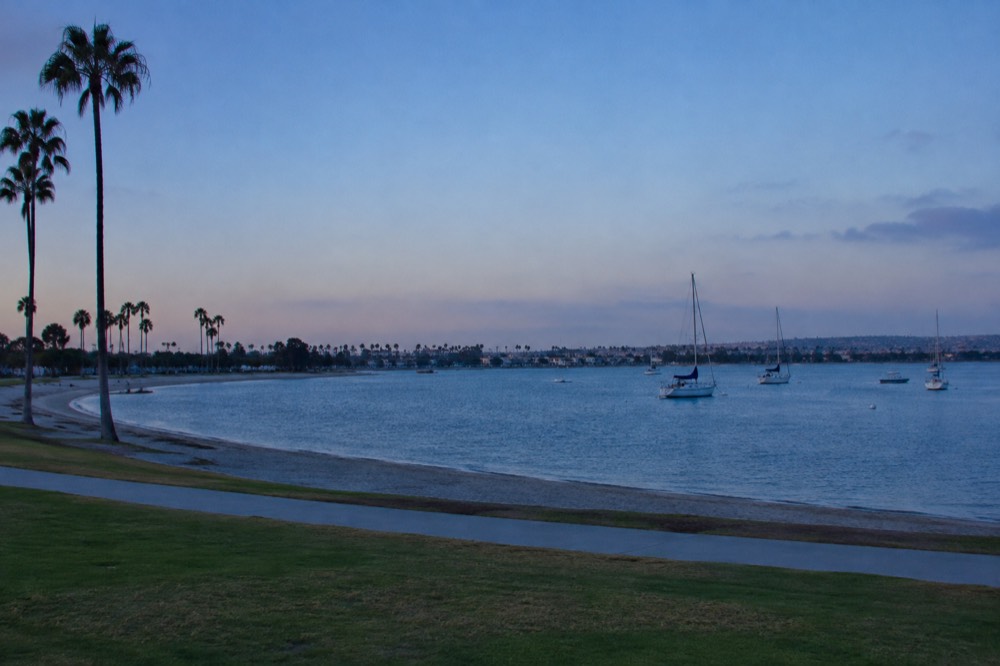
Yes, and easily, because the bay's best free assets are the things other destinations charge for: the loop path, the shoreline parks, Fiesta Island and the sunsets are all free, and the water itself costs nothing to swim in. The paid items are the boats, the park tickets and the food, and each has a free counterpart. A full free day looks like biking the loop, picnicking on Fiesta Island and ending at the west-facing shore for sunset.
The free list is genuinely long. The paved loop around the bay is open to everyone. Fiesta Island's parkland is free. The swim areas cost nothing. The Sunday organ concerts at Balboa Park's Spreckels Organ Pavilion, a 15-minute drive inland, are free year round, rain or shine, from 2:00 to 3:00 pm, and the Botanical Building and Timken Museum of Art in the same park are free as well. Our free things to do in San Diego guide and the cheap things to do in San Diego guide both go deeper, and the San Diego budget itinerary builds a whole low-cost trip around assets like these.
Two cautions keep the free day free. First, the alcohol ban on beaches and parks includes the bay shoreline, so a picnic with wine needs to move to a restaurant patio. Second, the free parking is the scarce resource: a free activity that starts with a long hunt for a space is not a relaxed free activity. In summer, transit or a very early arrival is the difference.
If you want a guided experience that costs nothing up front, the free walking tours listed on GuruWalk run on a pay-what-you-want basis, including a 2 hour 30 minute historic downtown and waterfront walk that ends near the Embarcadero. Those are not our tours, which is why the platform is named here: you tip the guide directly at the end.
What Does a Perfect Day in Mission Bay Look Like?
A full Mission Bay day runs water in the morning, park in the middle, sunset on the western shore, and dinner in Pacific Beach. The sequencing matters more than the specific choices: the wind picks up in the afternoon, so paddle sports belong before noon, SeaWorld needs a whole day to itself if you go, and the sunset slots at the western shore and on the sailing trips fill first in summer. Here is a realistic plan that fits the bay's rhythms.
| Time | Plan | Why this order |
|---|---|---|
| 8:00 to 8:30 am | Arrive and park | Free lots still have spaces; the wind is still calm |
| 9:00 to 11:00 am | Kayak or paddleboard rental | Flattest water of the day, before the afternoon wind |
| 11:00 am to 12:30 pm | Bike the loop path or walk to Mission Beach | Free, and the marine layer is burning off |
| 12:30 to 2:00 pm | Lunch in Pacific Beach or a Fiesta Island picnic | Cheaper than the park food, and the alcohol ban applies either way |
| 2:00 to 5:00 pm | Belmont Park, or SeaWorld if you committed the whole day | Belmont is a 2 to 3 hour stop; SeaWorld is a full day |
| 5:30 to 7:30 pm | Western shore for sunset, or a sunset sailing trip | The golden-hour slots book first in summer |
| 8:00 pm onward | Dinner back in Pacific Beach, or a ghost tour downtown | The 55-minute haunted tour starts after dark |
The one-day version above compresses everything. If you have more time, our San Diego 2-day itinerary positions Mission Bay against the Zoo, Balboa Park and La Jolla so you do not double-book your days. The common mistake is treating Mission Bay and SeaWorld as a half-day each; SeaWorld alone justifies a full day at the park's actual operating hours, and the bay activities deserve a morning of their own.
For travelers who want the evening to carry the day, the night trolley tour of the city lights runs 1 hour 30 minutes from downtown and pairs naturally with a bay afternoon, since it starts after the sunset has finished. And for anyone whose perfect day ends with a story rather than a view, the haunted tour's exclusive building entry is the distinctive closer.
Mission Bay rewards the traveler who plans around its rhythms rather than fighting them: flat water in the morning, free parking to the early, the warm ocean of August and September, and a sunset that costs nothing. This Things to Do in San Diego guide is one piece of a bigger trip, and the bay is the piece that stays calm while the rest of the city rushes.
Common Questions About Things to Do in Mission Bay, San Diego
Is Mission Bay good for swimming?
Yes, especially for kids and weaker swimmers. The bay is sheltered from the open-ocean surf, the water near shore is shallow, and designated swim areas sit away from boat traffic. The Pacific never gets warm by tropical standards, with a mean of 68.7F at the August peak, but the bay is the gentler place to get in the water.
Can you drink alcohol at Mission Bay?
No. Alcohol is prohibited on San Diego's beaches, boardwalks and parks, and the Mission Bay shoreline counts. The standing city beach regulations also ban glass containers and smoking. If you want a drink with your view, the restaurant patios around the bay and in Pacific Beach are the legal option.
Is Mission Bay the same as Mission Beach?
No, and the distinction is practical. Mission Bay is the sheltered lagoon on the inland side, with flat water and the loop path. Mission Beach is the oceanfront strip that separates the bay from the open Pacific, with the boardwalk and Belmont Park. They are a short walk apart and easy to combine in one day.
How much does it cost to park at Mission Bay?
The bay's lots are free to park in, but there is no published rate table because there are no meters. What you pay instead is time: the free lots fill by mid-morning on summer weekends, and the surrounding residential streets are time-limited. Arrive before 10 am in summer or take the bus.
What is the best month to visit Mission Bay?
August and September. August has the warmest water at a mean of 68.7F and the driest normals, essentially zero measurable rain. September's normal high of 77.2F actually beats July's, and the summer crowds have thinned, making it the quietest warm month on the water.
Can you visit Mission Bay without a car?
Yes. MTS buses run to the Mission Beach and bay area for $2.50 one-way, and the PRONTO fare system caps you automatically at the day-pass value of $6.00, so there is no reason to buy a day pass up front. From the airport, the free San Diego Flyer shuttle connects to Old Town Transit Center where the Trolley lines meet.