La Jolla Sea Caves: Kayaking, Snorkeling and Viewing Guide
The La Jolla sea caves are seven sandstone arches and hollows at the base of the cliffs between La Jolla Cove and the Shores, and they are the most paddled half mile of coastline in San Diego.
Short answer
The La Jolla sea caves sit below the cliffs between La Jolla Cove and La Jolla Shores. You can see them from the bluff trail above, paddle into the mouths by kayak on a guided tour, or snorkel the kelp and caves with sea lions. Tours run about 1.5 to 2.5 hours, and the calmest water is usually morning.
The La Jolla sea caves are a chain of sandstone arches and sea-carved hollows at the base of the cliffs between La Jolla Cove and La Jolla Shores, and they anchor the busiest stretch of small-boat paddling anywhere in San Diego. On any calm morning, dozens of sit-on-top kayaks string out along the cliff line while snorkelers drift over the kelp below. It is one of the few places in a big American city where you can be inside a sea cave within a short walk of your parked car.
This guide covers the practical side: what the caves actually are, how to see them from land, what the kayak and snorkel tours involve, when the water is at its best, and how to plan the day so you are not fighting wind chop in the afternoon. The marine mammals that make the Cove famous are here in force, and so are the crowds, so timing matters as much as route choice.
What Are the La Jolla Sea Caves?
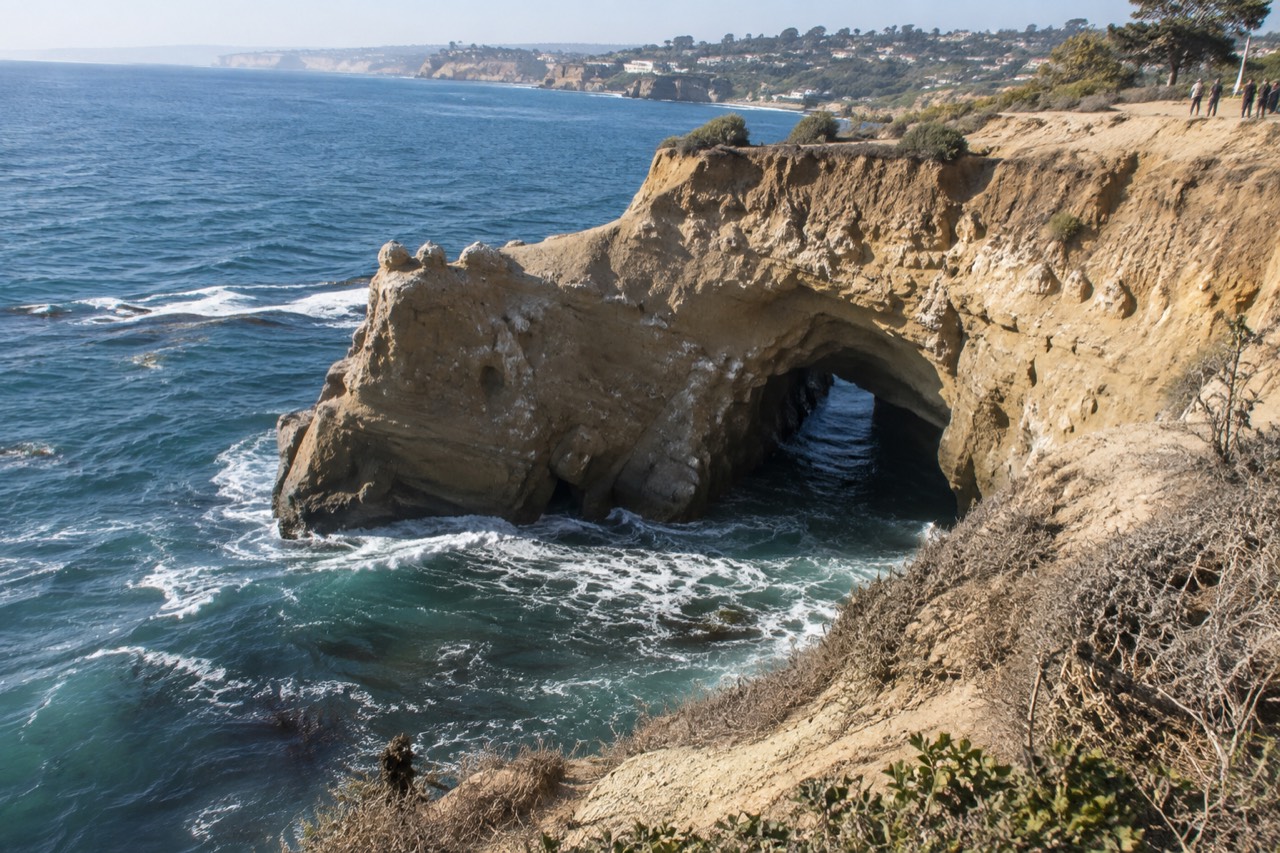
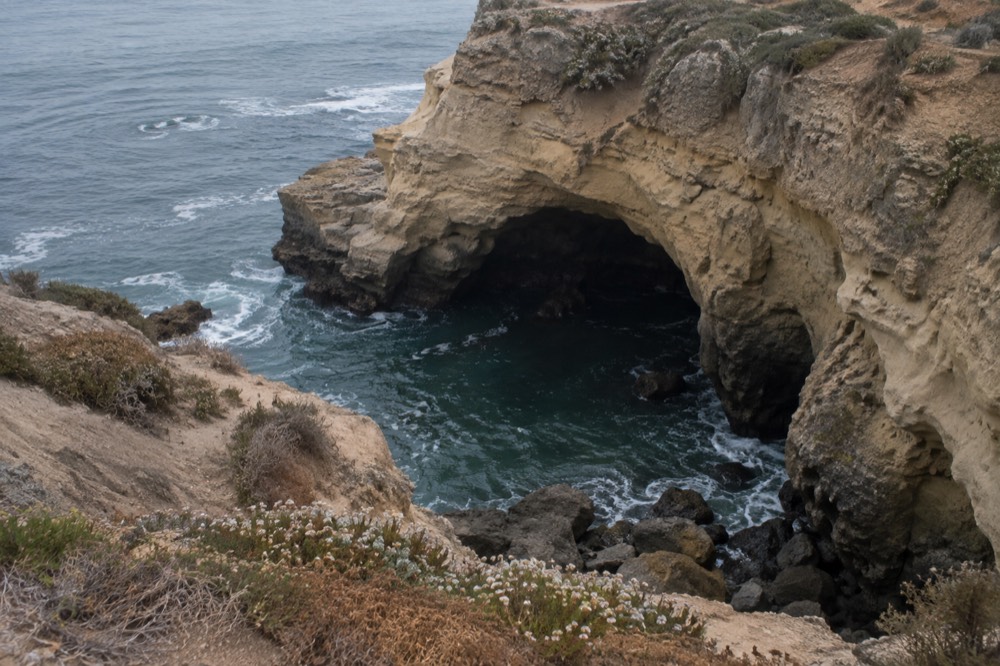
The La Jolla sea caves are seven hollows carved into the 75-million-year-old sandstone cliff face that runs from the Cove north toward La Jolla Shores, formed by waves eating into softer rock layers at the waterline, and only a couple of them are wide enough to actually enter by boat or on foot. The rest are arches and overhangs you paddle past or peer into. The two best known are Clam's Cave, a double-arched opening visible from the Coast Walk bluff trail, and Sunny Jim's Cave, the only one with a man-made tunnel from the land side, reached through the historic Cave Store on Coast Boulevard for a small admission fee at the door.
The caves exist because the cliff here is soft Cretaceous sandstone and the Pacific has been working on it for a very long time. Waves grind out the weaker seams, the roof occasionally collapses, and what is left is the arch-and-cave profile you see today. The same process is still running, which is why the park service and the city both ask visitors to stay off the unstable cliff edges above and not to touch the rock inside the caves.
What surprises most first-time visitors is how small the whole thing is. The paddleable stretch is roughly a half mile end to end. You could drift the entire line in twenty minutes if the water were empty, which it never is. The density is the point: caves, kelp forest, garibaldi, sea lions, leopard sharks in season, all compressed into one short, protected piece of coast.
How Do You Get to the La Jolla Sea Caves?
Getting to the sea caves means getting to La Jolla Cove first, then either walking the Coast Walk trail along the bluff top for free views, descending the Coast Blvd stairs to the small cove beach where the kayak tours launch, or driving to La Jolla Shores beach where most guided tours actually put in and paddle south to the cliff line. The launch of choice depends on which tour you book, not on you: the kayak operators launch from the Shores sand because it is a gentle surf-free entry, then paddle the group down the coast to the caves.
If you are driving, aim for La Jolla Shores Drive or the streets off Coast Boulevard early. Beach parking in La Jolla is street and small-lot parking, free to park in, and famously hard to find in summer, especially on weekends. There is no published rate table because most of it costs nothing, the cost is the hunt. Arrive before 9:00 am in June through September and you will find a spot; arrive at noon and you may circle for half an hour. If you are staying downtown, the MTS Route 30 bus runs to La Jolla, and a day pass on the PRONTO card costs $6.00 with fare capping, so you only pay for the rides you actually take.
The walk from the Shores to the caves is about a mile of sand. From the Cove side, everything is stairs and bluff trail, so wear real shoes if you are going down to the water. Most people do a loop: park at the Shores, walk or paddle the coast, then finish at the Cove for the seals and lunch in the village.
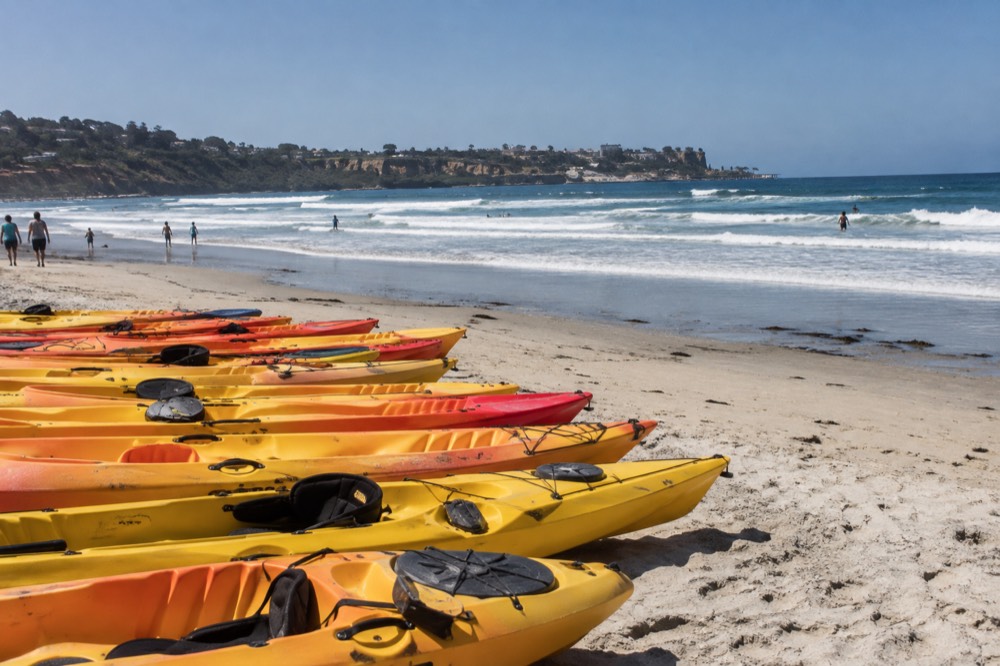
The three easiest ways to actually get in or on the water are a guided kayak tour, a guided snorkel tour, or a combined kayak-and-snorkel trip. All three launch daily in calm weather and include gear and a guide, which matters here because the caves have rules about entry that a guide handles for you.
Can You Kayak Into the La Jolla Sea Caves?
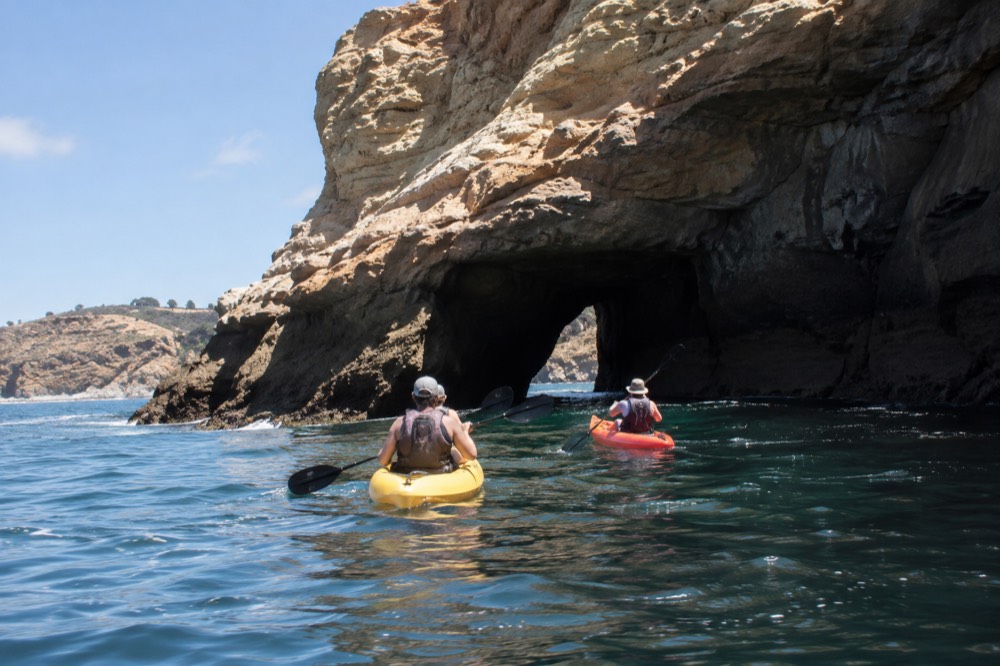
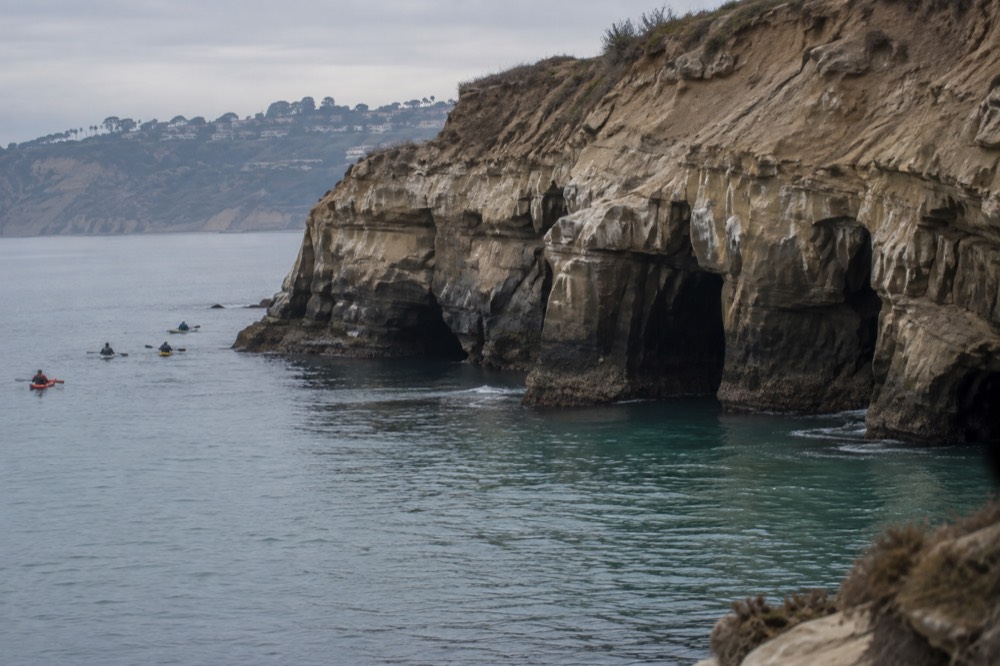
Yes, you can kayak into the mouth of some of the La Jolla sea caves on a guided tour, and entering the caves themselves is only allowed with a guide because of swell and rock-fall risk, while paddling along the cliff line between the caves is open to anyone who rents a kayak and knows the conditions. In practice, almost everyone books a tour. The classic trip is about two hours: a beach briefing at the Shores, a paddle down the coast over the kelp beds, a stop at the cliff base, and often a chance to jump in and swim at the mouth of a cave if the water is flat.
The guided 2-hour sea cave kayak tour is the most popular version, and it is the one families with teenagers usually pick. There is also a shorter 1h 30m guided kayaking tour that covers the same cliff line with less time in the water, which suits younger kids or anyone who does not want a full morning on a boat. Both launch from the Shores and both include the life jacket, the kayak and the guide.
A few honest expectations for the paddle itself. You will get wet from the waist down at minimum. The kayaks are stable sit-on-tops, not the enclosed kind, so tipping is an inconvenience rather than a rescue. Sea lions will appear, usually as fast brown streaks under your hull, and the garibaldi, bright orange and impossible to miss, hold territory all along the kelp. On a calm day the whole thing feels like a swimming pool with wildlife; on a choppy afternoon it is a workout.
The combined kayak-and-snorkel tour, about 2h 30m, splits the difference: paddle the cliff line first, then anchor up and get in the water with a mask near the caves. It is the best single choice if you only have one morning in La Jolla and want both the overhead view of the caves and the underwater one.
If you would rather stay on the boat the whole time, the shorter guided kayaking tour above is the one to pick, and if you already know you want to be in the water instead, the next section is for you.
Can You Snorkel the La Jolla Sea Caves?
Yes, snorkeling the La Jolla sea caves is one of the best-known shore dives on the West Coast, and the water you actually snorkel is the kelp forest and reef along the cliff base rather than the dark cave interiors, with the guided 1h 30m Cove snorkeling tour covering sea lions, kelp and cave mouths in one swim. The visibility is rarely tropical, typically ten to twenty feet on a good day, but the density of life makes up for it: garibaldi, sheepshead, sea bass, leopard sharks in late summer, and the sea lions, which are the whole reason many people book.
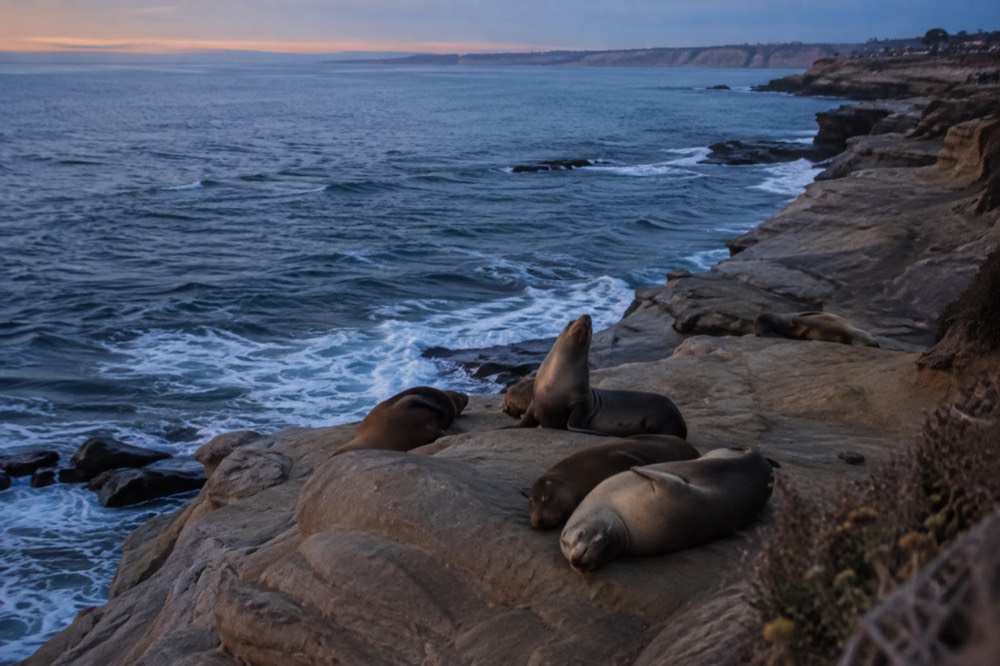
The sea lion interaction is the honest headline. The animals are wild, protected under the Marine Mammal Protection Act, and the rules of engagement are simple: they approach you, you never approach or touch them, and you keep your distance from the rocks where they haul out. A guide keeps all of this inside the rules. Snorkelers who chase or corner a sea lion can change its behavior and can be fined, so the guided version is not just convenience, it is the correct way to do this.
Water temperature is the other thing to plan around. The mean sea-surface temperature at the Scripps Pier station runs from about 58°F in winter to a peak of 68.7°F in August, falling back through 67.6°F in September. Tours provide wetsuits, and you will want one in every month, even August. It is the difference between a ninety-minute swim and a fifteen-minute one.
| Month | Mean ocean temp at Scripps Pier | What it means for snorkeling |
|---|---|---|
| Jan-Mar | 58.0 to 58.7°F | Cold, thin crowds, good visibility after storms |
| Apr-May | 59.2 to 63.4°F | Warming, kelp at its greenest |
| Jun-Jul | 64.0 to 66.5°F | Marine layer mornings, calm afternoons |
| Aug-Sep | 67.6 to 68.7°F | Warmest water of the year, leopard sharks in the shallows |
| Oct-Dec | 60.8 to 64.0°F | Settled fall water, then cooling fast |
If you are pairing the snorkel with a broader beach day, our snorkeling in La Jolla guide covers the Cove, the Shores and the leopard shark season in more depth, and the kayaking La Jolla sea caves guide compares every paddle option on the coast.
Can You See the Sea Caves Without Getting on the Water?
Yes, you can see several of the La Jolla sea caves perfectly well from land, free of charge, by walking the Coast Walk trail along the bluff top between the Cove and the Cave Store, and by descending into Sunny Jim's Cave through the Cave Store tunnel, which is the only cave you can enter on foot. For a lot of visitors this is the better half of the day: the views from the cliff top down into the arches are genuinely spectacular, and you can watch the kayaks thread the cave mouths from directly above.
The bluff walk is short, maybe fifteen minutes end to end at a stroll, and the railings and fences mark where the cliff edge is unsafe, which is worth respecting because the sandstone is actively eroding. Photographers do best in the last two hours of the afternoon when the low sun lights the cliff face and the water inside the arches goes turquoise. Our La Jolla photography spots guide ranks this stretch among the best in the county.
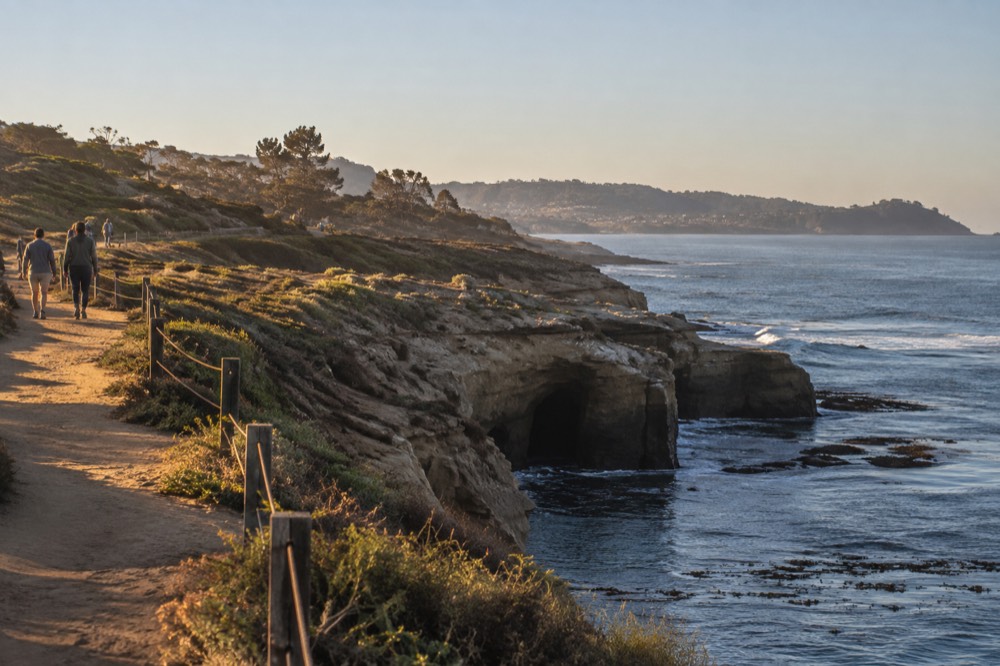
The land-side option also solves the two problems the water options have: it costs nothing and it cannot be canceled by swell. If you are traveling with anyone who cannot swim, gets seasick, or is under about five, the cliff walk plus the Cove seals is the version of the sea caves they will actually enjoy. Combine it with the La Jolla Cove sea lions and lunch in the village and you have a full afternoon without booking anything.
What Is the Best Time of Year and Day to Visit?
The best time to visit the La Jolla sea caves is September for the warmest settled water, or any morning between June and October, because the wind picks up almost every afternoon and turns the cliff line choppy, while winter brings the biggest swell and the gray whales offshore. The single most useful piece of timing advice for this coast is simple: book the earliest tour slot available. Mornings are calmer, clearer, less crowded and cooler. By 1:00 pm the sea breeze has usually arrived, and kayak guides start hugging the sheltered spots.
September deserves its own sentence. San Diego's real summer is September, not July: its normal high of 77.2°F actually beats July's, the ocean is near its annual peak, and September is one of the quietest months on the coast because school is back. The marine layer that locals call May Gray and June Gloom greys the coast in late spring while inland stays clear, and it is visible in the temperature record itself, with June's normal high of 71.7°F sitting below October's 74.6°F. If you want the caves with the fewest other kayaks and the warmest water, September and early October are the sweet spot.
| Season | Water conditions | Crowds | Best plan |
|---|---|---|---|
| Spring (Mar-May) | Cool, occasional storm swell | Moderate | Morning kayak, wetsuit required |
| Early summer (Jun) | Marine layer mornings, calm | Heavy | Earliest tour slot, cliff walk after |
| Peak summer (Jul-Aug) | Warmest water, busy launch | Heaviest | Book ahead, launch before 9:00 am |
| Fall (Sep-Oct) | Warmest settled water of the year | Light in Sep | Best all-round month |
| Winter (Nov-Feb) | Cold, biggest swell, gray whales | Light | Cliff walk, whale watching from Point Loma |
How Long Do You Need, and What Does a Visit Cost?
Plan on half a day for the sea caves themselves, two to three hours of that on the water if you take a tour, and budget roughly the tour price plus parking time and lunch, with the land-side version of the caves costing nothing but the Sunny Jim's Cave admission at the Cave Store. The tours are the main expense, and they are the kind of thing worth booking ahead in summer because the morning slots sell out first.
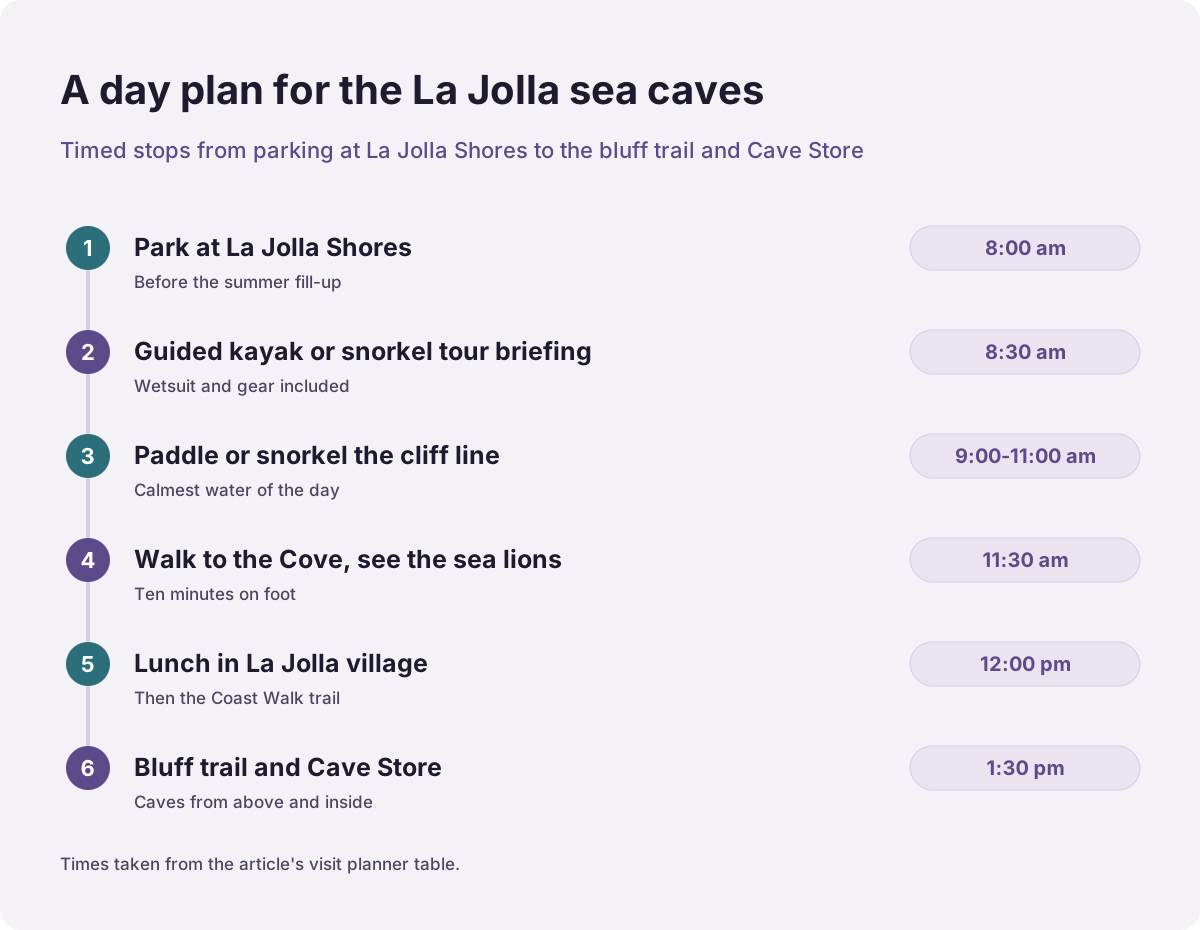
A realistic half-day outline looks like this:
| Time | Activity | Notes |
|---|---|---|
| 8:00 am | Park at La Jolla Shores | Before the summer fill-up |
| 8:30 am | Guided kayak or snorkel tour briefing | Wetsuit and gear included |
| 9:00-11:00 am | Paddle or snorkel the cliff line | Calmest water of the day |
| 11:30 am | Walk to the Cove, see the sea lions | Ten minutes on foot |
| 12:00 pm | Lunch in La Jolla village | Then the Coast Walk trail |
| 1:30 pm | Bluff trail and Cave Store | Caves from above and inside |
If you are building a bigger trip around this, the sea caves slot neatly into a first day: our one day in San Diego itinerary pairs La Jolla with Balboa Park, and the San Diego bucket list puts the paddle on most people's top ten. Things to Do in San Diego covers the whole coast from the caves down to the Coronado ferry landing if you want to keep going south.
Are the La Jolla Sea Caves Safe?
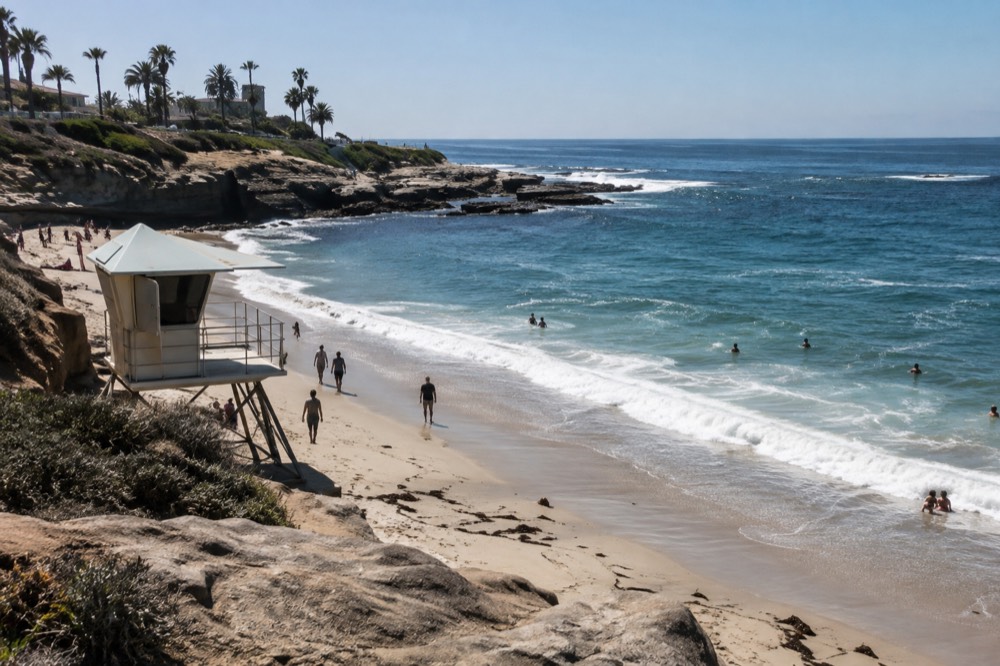
The La Jolla sea caves are safe for the standard guided kayak and snorkel tours in normal conditions, and the real hazards are the afternoon wind chop, the cold water, rip currents along the open stretches, and the unstable cliff rock, which is why unguided cave entry is not allowed and why the city staffs lifeguard towers along this coast. San Diego lifeguards cover roughly 24 miles of coastline from nine permanent oceanfront stations, staffed generally from 9:00 am to dusk, and the La Jolla towers are among the busiest in the city.
The water risks are manageable with ordinary sense. Rip currents are the primary hazard on San Diego beaches, and the official advice from the city's lifeguard division is to stay calm, swim parallel to the shore until the pull relaxes, then angle in, rather than fighting the current head on. Inside the kelp beds the water is often flatter than it looks offshore, but the kelp itself tangles arms and paddles, so a guide's route matters. Cold water is the quiet one: even in August you will feel it after forty minutes without a wetsuit.
The wildlife rules are the other half of safety, and they protect you as much as the animals. Sea lions and harbor seals are wild mammals with teeth and a strong bite reflex when cornered; give hauled-out animals real distance, never block a animal's path to the water, and never touch or feed anything. The Children's Pool and Cove haul-out areas have seasonal protections for seal pupping, and the current closures are posted on site, so read the signs at the beach rather than relying on a website, including this one. Water quality after rain is worth checking too: the county posts beach closures and advisories same-day at sdbeachinfo.com, and the standard advice is to stay out of the ocean for 72 hours after a heavy storm.
What Else Should You Do Around the Sea Caves?
The best add-ons around the La Jolla sea caves are the Cove itself, the Point K Trail and Sunny Jim's on the bluff, the Shores beach and its pier, the leopard sharks at the south end in late summer, and a surf lesson, which turns the same morning into a full water day without moving your car. La Jolla is compact enough that you rarely drive between any of these; you walk.
The surf lesson is the underrated one. The Shores is a gentle beginner beach, and a short lesson fits neatly in the afternoon after a morning tour, when you already have your wetsuit legs. The surfing in San Diego guide ranks the Shores among the best beginner breaks in the county.
Beyond the water, the village handles the rest of the day: the Museum of Contemporary Art, the galleries on Prospect Street, and the restaurants that make La Jolla one of the best eating neighborhoods in the county. If your legs still work after the paddle, the walk out to Sunny Jim's and the Coast Walk is the closing act most people pick, and the best beaches in San Diego guide places the Cove and the Shores near the top for good reason.
Common Questions About the La Jolla Sea Caves
Can you go inside the La Jolla sea caves?
You can enter the mouth of some caves by kayak on a guided tour, and Sunny Jim's Cave is the only one you can walk into, through the tunnel at the Cave Store. Entering the other caves by boat is only allowed with a guide because of swell and rock-fall risk.
Do you need a tour to kayak the La Jolla sea caves?
You can rent a kayak and paddle the cliff line on your own, but entering the caves themselves is a guided-only activity, and most visitors book a tour because it includes gear, a guide and the cave entry in one package.
How long is the La Jolla sea caves kayak tour?
The standard guided sea cave kayak tour runs about 2 hours, with a shorter 1h 30m version and a combined kayak-and-snorkel tour of about 2h 30m also available.
What is the best time of day to visit the sea caves?
Morning, almost always. The wind picks up in the afternoon and the water turns choppy along the cliff line, so the earliest tour slots have the calmest water and the fewest other boats.
Are there sea lions at the La Jolla sea caves?
Yes, sea lions are resident all along the La Jolla coast and are a regular part of both kayak and snorkel tours. They are wild and protected, so let them approach you, keep distance from the haul-out rocks, and never touch or feed them.
Is the water cold for snorkeling at La Jolla?
Yes, in every month. Mean ocean temperature ranges from about 58°F in winter to 68.7°F in August, and tours provide wetsuits because even the warmest water feels cold after an hour in the water.