Snorkeling in La Jolla: Best Spots, Seasons, and What You'll See in the Water
La Jolla gives San Diego its most accessible saltwater: a rocky Cove with sea caves and sea lions on one headland, and a long sandy bay with gentle shallows on the other. Here is how to pick between them, when the water is warmest, and whether a guide earns their fee.
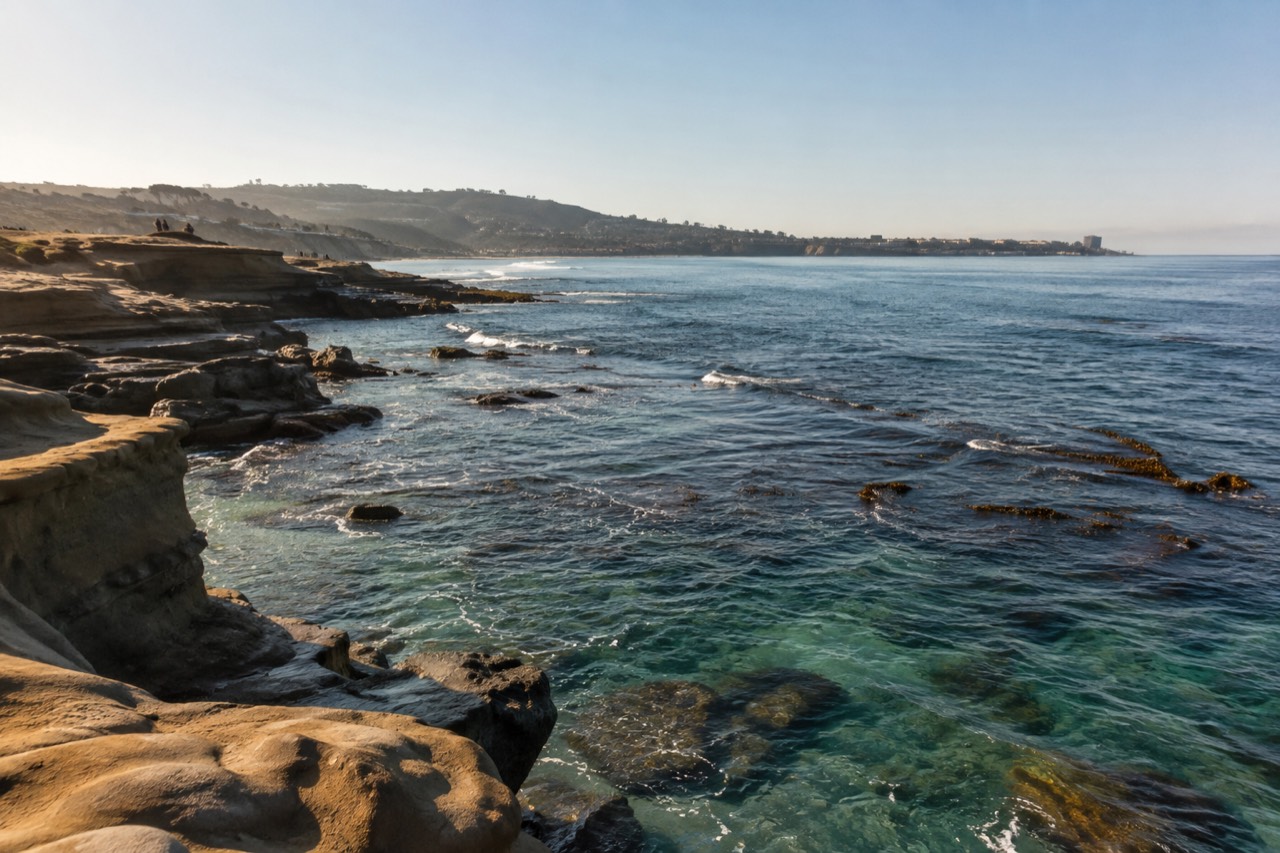
Short answer
La Jolla has two main snorkeling areas: the Cove's rocky reef and sea caves, and the Shores' sandy shallows. Mean ocean temperature at Scripps Pier runs from 58.1F in January to 68.7F in August. City lifeguards staff nine permanent oceanfront stations year round. A guided Cove snorkel tour runs about 1h 30m.
La Jolla is where San Diego's underwater life sits closest to a parking spot. The Cove side is a rocky reef with sea caves, kelp and sea lions hauled out on the rocks; the Shores side is a wide sandy bay with water shallow enough to stand in far from the beach. Both are swimmable from shore, both are free to enter, and both sit inside a state-protected marine area, which is why the fish are so calm around people. This guide covers where to get in, what lives there, when the water is warm, what to wear, and whether a tour is worth booking over going on your own.
One thing worth saying early: this is a real marine reserve, not a theme-park tank. What you see depends on the season, the swell and the hour, and the honest answer to "will I see a sea lion?" is "very likely at the Cove, but the ocean does not take bookings." That cuts both ways, and it is part of why the place is good.
Where Is the Best Place to Go Snorkeling in La Jolla?
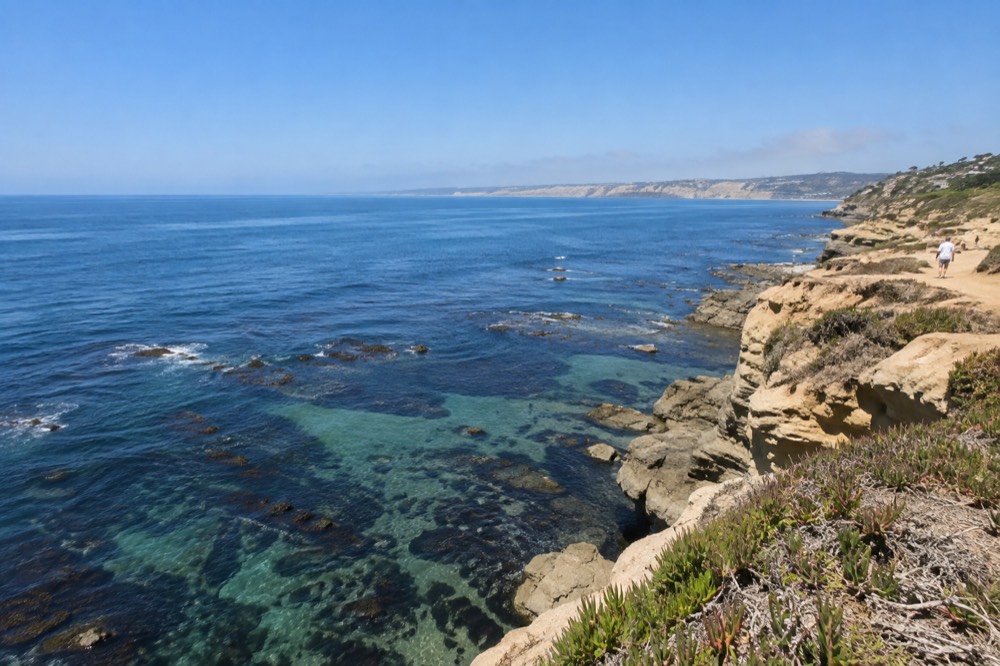
The best snorkeling in La Jolla splits into two zones: the Cove and the sea caves on the rocky headland for kelp, reef fish and sea lions, and La Jolla Shores for sandy shallows, calm entry and beginner-friendly swimming. Most first-time visitors snorkel the Cove; most nervous swimmers and families with small kids start at the Shores. The two beaches are about a mile apart on foot, so you can honestly do both in one day.
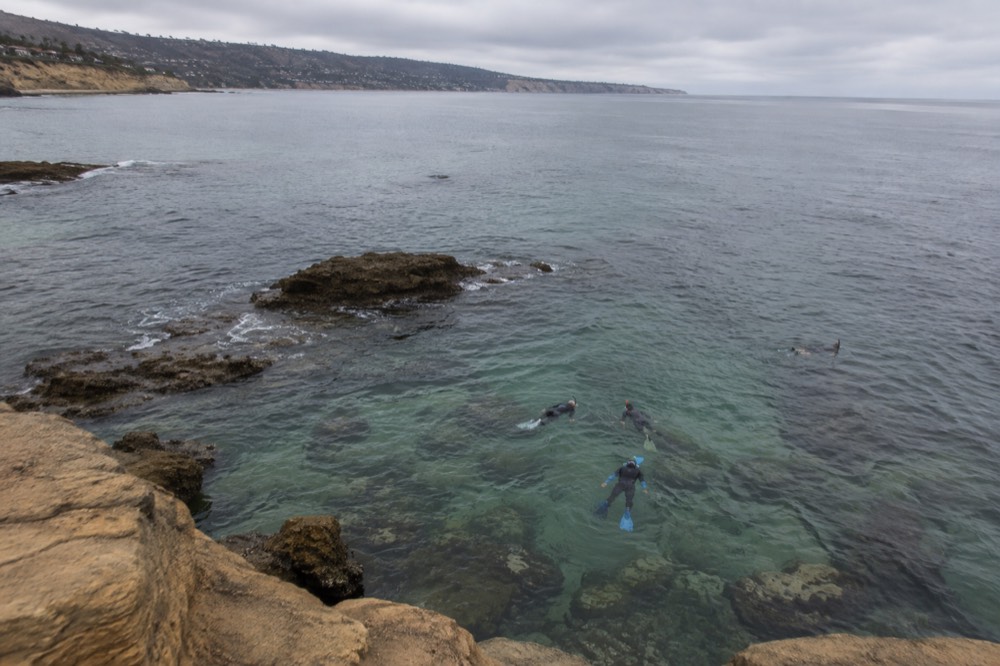
The Cove is the classic. You walk down a set of stairs from the park above, slip into water that goes from waist-deep to 15 feet within a short swim, and you are immediately over reef and kelp. Swim to the right, along the cliff, and you reach the sea caves that give this stretch its name. The water clarity here is usually the best in the city because the headland blocks the south swell, and the sea lions that live on the rocks swim out to inspect nearly everyone. Our page on La Jolla Cove and the caves covers the walk, the viewpoints and the water access in detail.
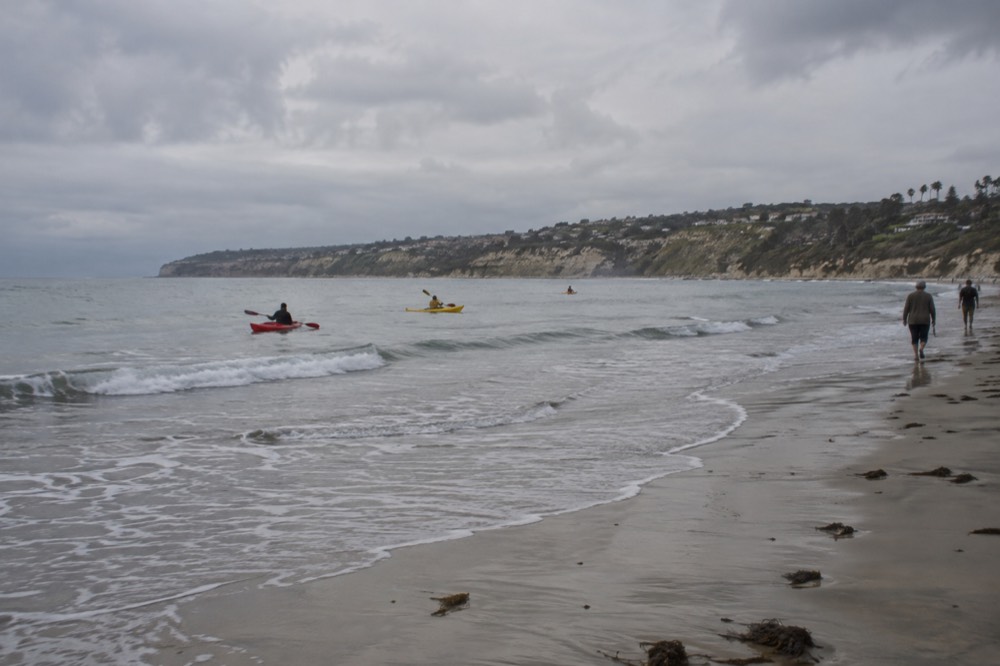
The Shores is the gentler option. The bay faces north, the slope is long and gradual, and for a long way out you are in water you could stand up in. This is where swim lessons, kayak tours and first-time snorkelers all launch, and it is the better call if anyone in your group is uneasy in deep water. Snorkel out toward the south end of the beach, near where the rocks begin, and the sandy bottom gives way to patchy reef. The La Jolla Shores guide has the full beach picture, including the kayak launch.
A third, quieter option is the water off the Marine Room end of the Shores, at the bay's south corner. It is the same bay, reached from a smaller beach entry, and it puts you closest to the reef edge without swimming the whole length. Local snorkelers like it because the crowd thins out past the first hundred yards.
| Spot | Entry | Bottom | Best for | Crowd |
|---|---|---|---|---|
| La Jolla Cove | Stairs from the park, immediate depth | Rocky reef, kelp | Fish, sea lions, caves, confident swimmers | Busy, thins out past the buoys |
| La Jolla Shores | Long gradual sandy slope | Sand, then patchy reef south end | Beginners, families, long easy swims | Busy on sand, quiet in water |
| Marine Room corner | Small beach entry at the bay's south end | Sand to reef edge | Snorkelers avoiding the Cove crowd | Quietest of the three |
What Will You Actually See Snorkeling in La Jolla?
Expect sea lions at the Cove, kelp and reef fish on the rocky headland, and rays and flatfish over the Shores' sand. The protected status of the water means fish gather in numbers you will not see on unprotected coast, and the sea lions are habituated to swimmers. The guided Cove tour is built around exactly this: its listing names sea lions and caves as the headline sights, and it runs about 1h 30m in the water.
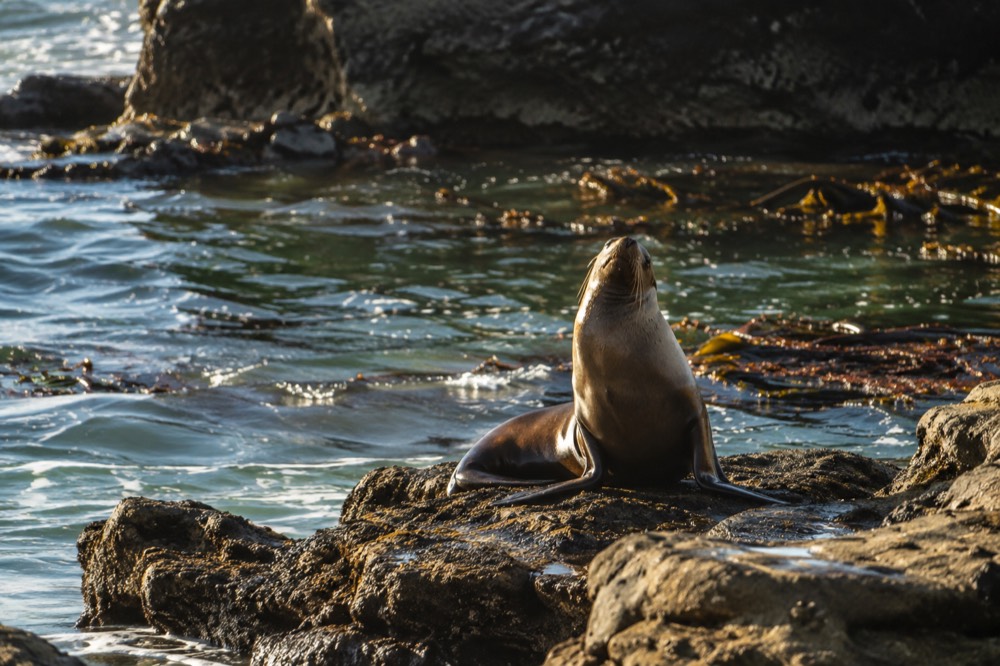
The sea lions are the reason most people remember the Cove. They haul out on the rocks at the base of the cliff, and they come and go through the same water you are swimming in. They are curious, fast and completely unbothered by snorkelers, and a visit where one does not swim past you within arm's reach is unusual. Give them the rocks and keep your distance when they are out of the water; in the water they set the terms.
The fish life is genuinely rich for a city shore dive. The reef holds garibaldi, the bright orange state marine fish, along with surfperch, senorita fish and kelp bass, and the kelp beds on the cave side hold calico bass. Over the sand at the Shores you are more likely to see rays, guitarfish and halibut half-buried in the bottom. In the warm months, leopard sharks gather over the sandy shallows in numbers that draw snorkelers from across the state; they are harmless bottom feeders that grow to a few feet and spend the day cruising inches above the sand.
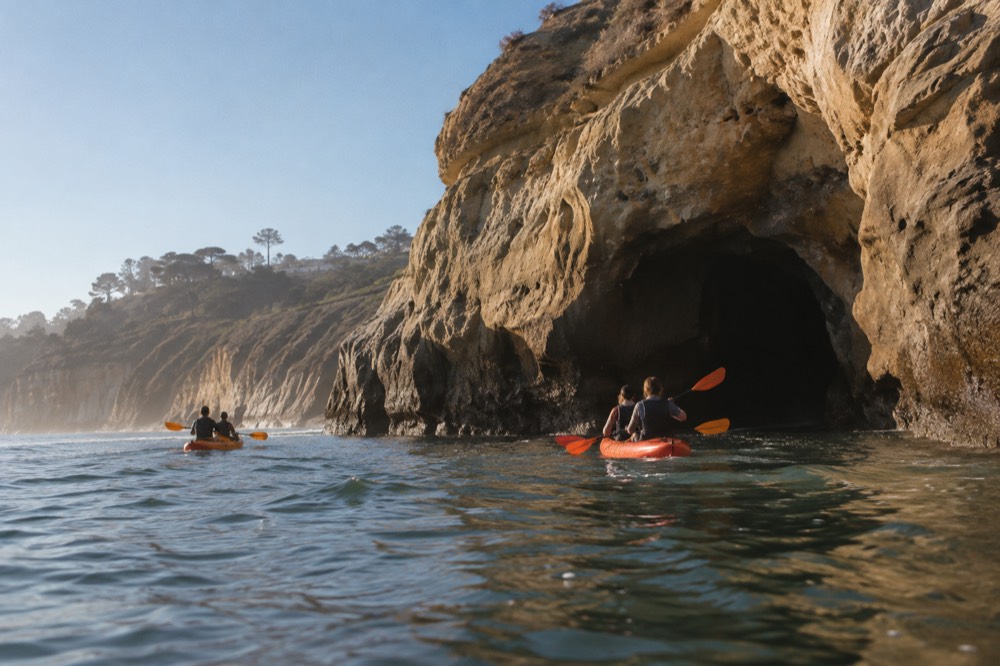
If you are pairing a snorkel with a kayak, the caves are the payoff. Swimming into a sea cave mouth on a calm day is the single most memorable thing you can do in the water here, and the swell decides whether it is possible. That is the honest limit: on a flat morning the caves are open and magical, and on a south-swell afternoon the same caves are closed to everyone, tour or not. The La Jolla sea caves guide covers each cave and how conditions gate them.
All three of those tours put a guide between you and the guesswork. The Cove snorkel tour is the pure water option; the kayak tour paddles the caves and looks down into the water; the combined kayak-and-snorkel trip, about 2h 30m, does both in one booking.
When Is the Best Time of Year and Day to Snorkel La Jolla?
The warmest water is late summer: mean sea-surface temperature at Scripps Pier averages 68.7F in August and 67.6F in September, against 58.1F in January. The best time of day is morning, before the afternoon wind picks up and cuts visibility. Summer brings the leopard sharks and the biggest crowds; fall brings warm water with far fewer people in it.
The temperature numbers come from the NOAA station at Scripps Pier, hourly observations averaged across three recent years, and they tell a story most visitors get backwards. The Pacific here never gets truly warm, but August and September are a full ten degrees above midwinter, and September is the sleeper month: the water is nearly at its annual peak while the beaches empty out after Labor Day. If you can snorkel La Jolla in September, do.
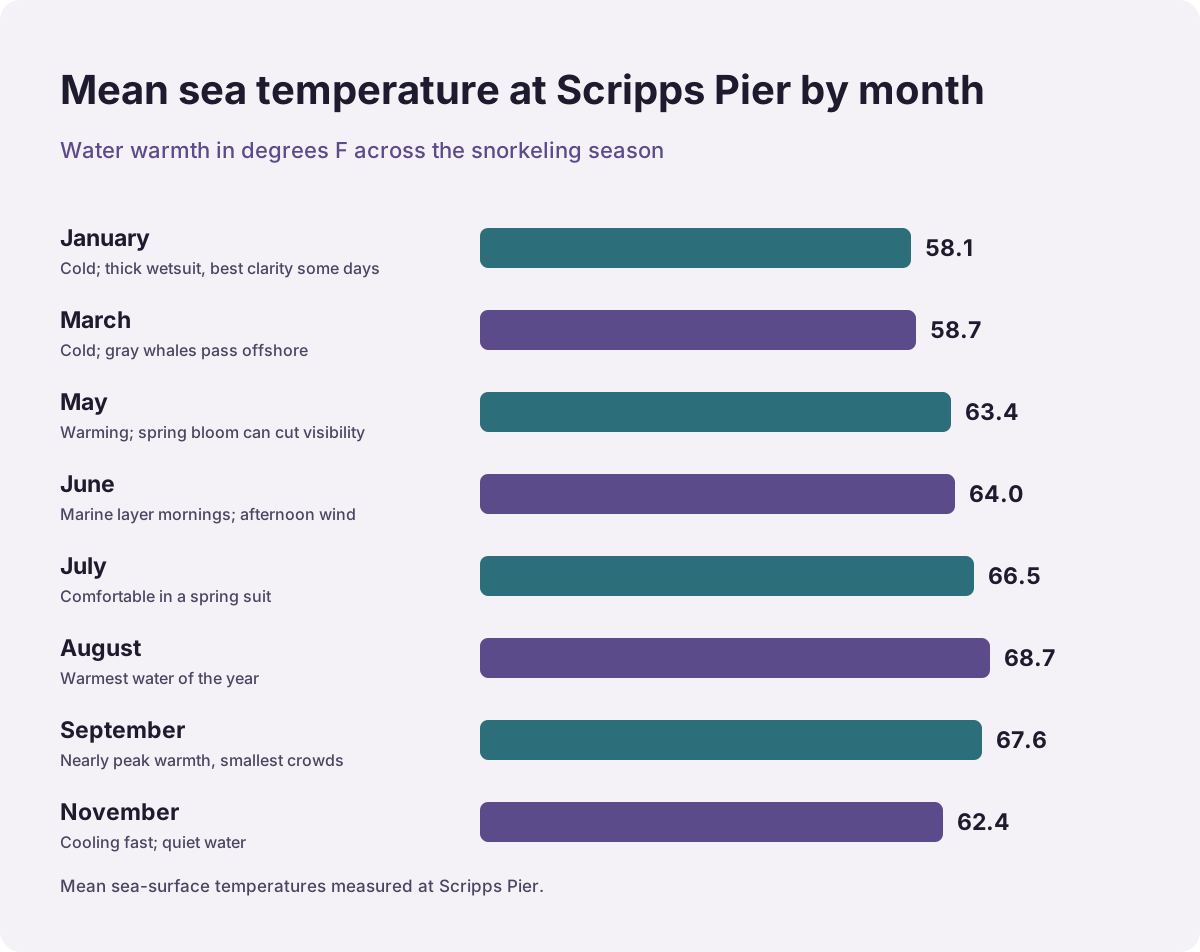
| Month | Mean sea temperature (F) | What it means for snorkeling |
|---|---|---|
| January | 58.1 | Cold; thick wetsuit, best clarity some days |
| March | 58.7 | Cold; gray whales pass offshore |
| May | 63.4 | Warming; spring bloom can cut visibility |
| June | 64.0 | Marine layer mornings; afternoon wind |
| July | 66.5 | Comfortable in a spring suit |
| August | 68.7 | Warmest water of the year |
| September | 67.6 | Nearly peak warmth, smallest crowds |
| November | 62.4 | Cooling fast; quiet water |
The time of day matters as much as the month. Mornings are calmer, the wind is down, the water is at its clearest before the afternoon breeze stirs it, and the parking is actually findable. By mid-afternoon in summer the onshore wind has usually picked up, the surface chop scatters light and cuts visibility, and the swell direction decides whether the cave side is even swimmable. Plan to be in the water before 10:00 am and you will see more than the people who arrive at 2:00 pm, almost regardless of season.
One more seasonal note: if your trip lands between mid-December and March, the same headland you snorkel from becomes one of the best land-based whale-watching spots in California. More than 20,000 gray whales pass offshore each year, with mid-January the peak of the migration, and the National Park Service points to the lighthouse overlooks on Point Loma as the best vantage in the area. It is a different kind of ocean watching, but it pairs well with a cooler-water snorkel on the same trip.
Do You Need a Wetsuit and Gear for La Jolla Snorkeling?
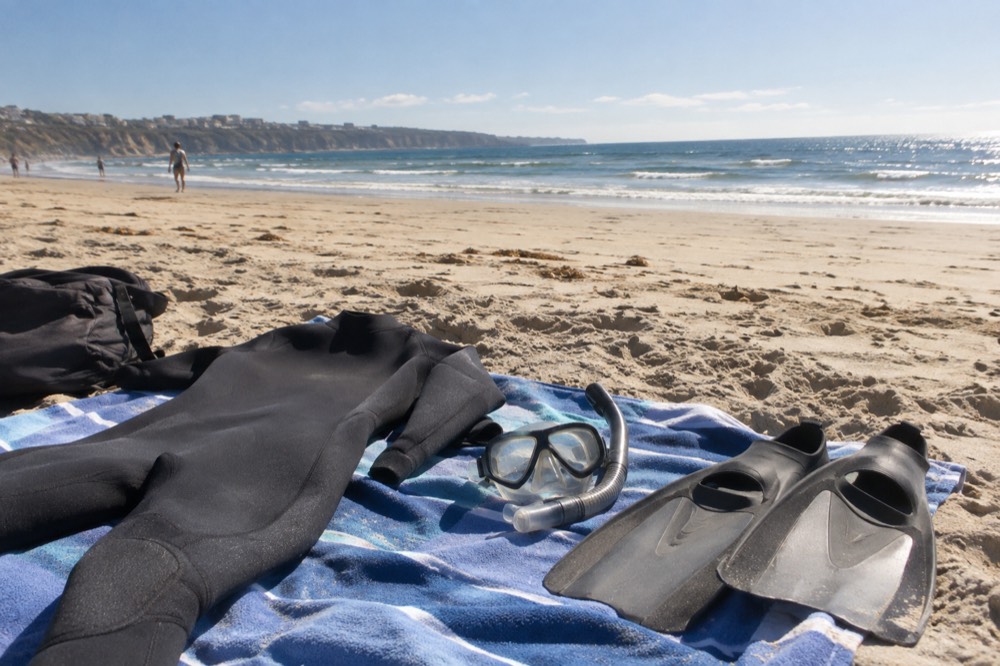
Most people are happier in a wetsuit in every month except late summer, when 68.7F water is tolerable in a swimsuit for a short swim. A 3mm full suit covers every season; a spring suit covers July through September. You need mask, snorkel and fins, and all of it rents from the shops walking distance from both beaches. The guided tours supply gear in the ticket.
The honest gearing advice depends on how long you plan to be in and how easily you get cold. Water in the mid-60s feels pleasant for ten minutes and chilly at forty, and most snorkelers underestimate how much body heat a long session in 64F water pulls out of you. Locals in summer swim suits and no suit are usually the people swimming for fifteen minutes; the snorkelers out for an hour over the reef are almost all in neoprene. In winter, a 3mm or thicker suit is not optional for anything beyond a quick dip.
| Conditions | What most snorkelers wear | Comfort on a long swim |
|---|---|---|
| Water under 60F (Dec-Apr) | 3mm full suit or thicker, hood optional | Fine for an hour |
| Water 60-65F (May-Jun) | 3mm full suit or 2mm spring suit | Fine with a suit |
| Water 65-68F (Jul-Sep) | Spring suit; swimsuit for short swims | Swimsuit gets cold past 20 minutes |
| Afternoon wind, any month | Add a windbreaker for the surface interval | Warm up between swims |
Gear rental is easy. The business blocks at the top of the Shores and along Prospect Street near the Cove both hold dive and kayak shops that rent masks, fins, snorkels and suits by the hour or day, and prices vary enough that walking one extra block is worth it. Check the shop's own board rather than trusting a number from a guide, and inspect the mask seal before you pay: a leaky mask ruins a snorkel faster than cold water ever will.
If you would rather not think about any of this, the guided options bundle it. The combined kayak-and-snorkel tour, about 2h 30m on the water, includes the equipment in the booking, which is the simplest way to arrive with nothing but a towel.
Is Snorkeling in La Jolla Safe?
Yes, with conditions: La Jolla's two main snorkeling beaches are lifeguarded, the Shores is one of the gentlest ocean entries in California, and the Cove's hazards are manageable if you respect the rocks and the swell. Rip currents are the primary hazard on any San Diego beach, and the city's own advice is to swim parallel to the shore until the pull relaxes. Never swim alone, and swim near a lifeguard.
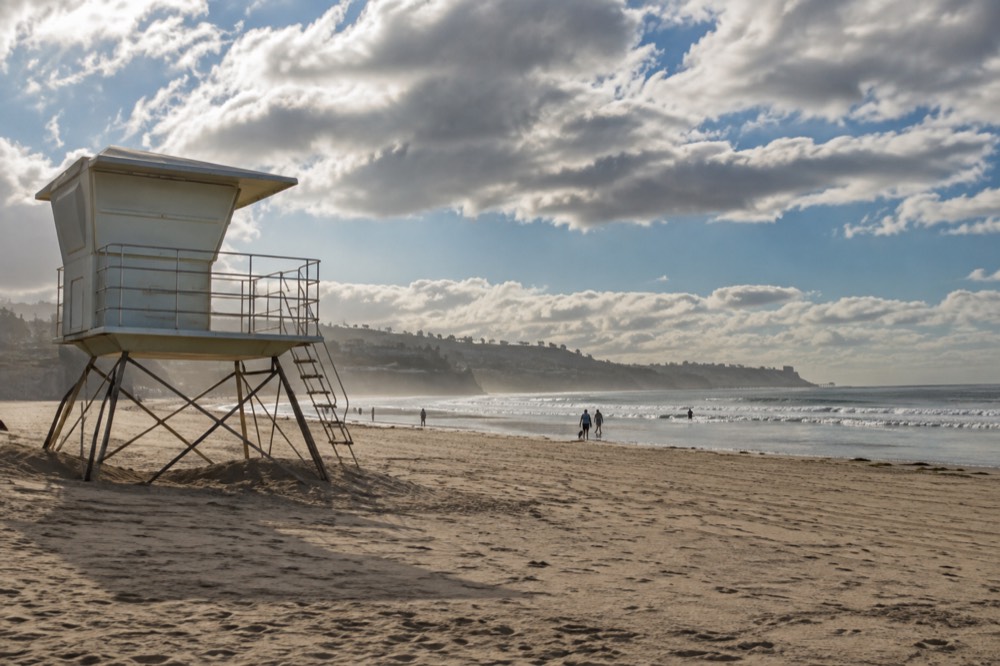
The city staffs nine permanent oceanfront lifeguard stations year round, covering roughly 24 miles of coastline, with extra seasonal towers in summer, generally staffed from 9:00 am to dusk. Both the Cove and the Shores sit inside that coverage, which is a real safety net rather than a marketing line. Still, the lifeguards are watching whole beaches, not individual snorkelers, so the standard ocean rules carry the load: check the surf report, ask the guard about conditions when you arrive, and stay out of the water after rain.
The rip-current advice is worth quoting in substance because it is the one piece of knowledge that saves lives. The city's own safety page says: stay calm, swim parallel to the shore until the pull relaxes, then swim in, and float and wave for help if you cannot. Rip currents do not pull you under; they pull you out, and swimming sideways is how you exit them. Read it once properly on the city's rip current page before your trip and you have done the most useful five minutes of trip prep available.
The Cove has two specific cautions. First, the rocks: entry and exit are over stone that is slick at the waterline, and shoes you do not mind getting wet help more than you would think. Second, the swell: the cave side closes to swimmers when conditions are wrong, and the tour operators will not run into it either, which is itself a useful signal. If the kayakers are all staying on the flat side, snorkelers should too.
Water quality is the last piece. The County of San Diego posts beach closures and advisory results at its beach water quality page, same day or next business day, and the standard advice everywhere on this coast is to stay out of the ocean for 72 hours after rain, when urban runoff makes the nearshore water its worst. It is a two-minute check and it is the difference between a good morning and a miserable one.
Can You Snorkel La Jolla Without a Tour?
Yes, and many locals never take one: both beaches are free to enter, the water starts steps from the sand, and rental gear is walking distance away. A tour earns its fee three ways: it puts a guide in the water who knows where the animals are that day, it supplies all the gear, and it handles the go-or-no-go call on the caves. Confident swimmers lose little by going solo; first-timers gain a lot.
Going on your own is straightforward. Park, walk down, get in. The Shores in particular is about as forgiving as ocean swimming gets, and the Cove's reef starts close enough to the stairs that a solo snorkeler in decent conditions sees plenty without ever swimming far. The costs are the tradeoffs: you carry your own gear, you make your own judgment call on swell and visibility, and if the sea lions are elsewhere that morning, nobody points you to where they went.
The guided Cove snorkel tour, about 1h 30m, is the middle path and the one we would point most first-time visitors at. The listing is built around sea lions and caves, a guide swims with the group, and the operator supplies the equipment. You are paying for local knowledge of where the animals are and for someone else to make the safety call on the cave mouth, which is genuinely worth money when the swell forecast is ambiguous. Check availability through the live listing rather than assuming a spot; the small-group format means the good-weather slots sell out first.
Families should weigh one more factor: attention. A guide means someone else is watching your kid's position in the water relative to the group, which lets you actually look at the fish instead of counting heads. Solo family snorkeling at the Shores is perfectly safe in calm conditions, but it is work, and a guide converts the parent from lifeguard back into a swimmer.
Guided Snorkel Tours vs Kayak Tours: Which Should You Book?
Book the snorkel tour if being in the water with the animals is the point; book the kayak tour if you want the caves and the coastline with the option to look down; book the combined kayak-and-snorkel trip if you want both and have half a day. The pure kayak options run about 2 hours and 1h 30m respectively; the combined trip runs about 2h 30m.
The distinction sounds obvious but it decides the whole morning. Snorkeling puts you at eye level with the reef, slow and close; kayaking covers the whole cave stretch in an hour and puts you above the kelp beds looking down through the surface. On a calm, clear day the kayak view into the water is surprisingly good, and on a choppy day the kayak is the trip that still runs while the snorkeling visibility falls apart.
| Option | Duration | You are | What it delivers | Gear included |
|---|---|---|---|---|
| Cove snorkel tour | About 1h 30m | In the water | Sea lions, reef and caves at eye level | Yes |
| Sea cave kayak tour | About 2 hours | On the water | Full cave stretch, views down into kelp | Yes |
| Guided kayak tour | About 1h 30m | On the water | Tighter cave paddle, shorter commitment | Yes |
| Kayak and snorkel combo | About 2h 30m | Both | Caves from above, reef from below | Yes |
The guided kayak option, about 1h 30m, is the tighter version of the classic cave paddle, and it suits visitors who want the caves without committing a full morning. The full 2-hour sea cave kayak tour covers more coastline and includes beach time inside the cave when conditions allow. Both launch from the Shores, which means parking once and walking your gear a short distance.
For most travelers the honest tiebreaker is swim comfort. If anyone in your group is a weak swimmer, the kayak is the better booking, full stop: they see the caves, they stay dry, and the guide tows them if the paddle gets hard. If everyone swims confidently and the sea lions are the goal, the snorkel tour wins, because the sea lions interact with people in the water, not people on boats.
Where Do You Park and How Do You Get to the Snorkeling Spots?
Parking at both the Cove and the Shores is free street and lot parking that is genuinely hard to find in summer and easy before 9:00 am; there is no published rate table because none of it is metered. The Shores has the larger lots, the Cove has the tighter streets. By transit, the area is served by MTS bus routes, and a one-way MTS fare is $2.50 with a $6.00 day pass.
The honest parking advice for La Jolla is the same as for every beach neighborhood in the city: arrive early or resign yourself to circling. The Shores has the bigger capacity and the earlier fill; the Cove's residential streets fill fastest because the neighborhood is smaller. Nothing here is metered beach parking, so the cost is time, not money, and the same advice appears in our wider parking in San Diego guide. In September, the problem largely evaporates, which is one more quiet argument for the shoulder season.
Transit is a real option. The MTS fare chart lists a $2.50 one-way fare with 2-hour transfers and a $6.00 day pass, and the PRONTO system caps fares automatically: once your rides in a day total the day-pass value, the rest of the day is free, so there is no reason to buy a day pass up front. Routes serving La Jolla connect through Old Town and downtown, and the trip is slow but scenic. If you are staying downtown without a car, this is cheaper than a rideshare each way.
Cyclists have the pleasant option of the paved path along the coast, and the Shores end has racks near the lifeguard tower. Coming from further out, the getting around San Diego guide maps the trolley-plus-bus combinations that reach the beach without a car.
Can You Build a Whole La Jolla Day Around a Snorkel?
Yes, and it is one of the best single-day plans in the city: snorkel or tour in the morning when the water is calm, dry off on the Cove's clifftop lawns at midday, walk the coast path to the village for lunch, and finish with sunset at the cliffs. The whole loop is about two miles on foot and needs no car once you have parked once.
The shape of the day follows the light. Morning belongs to the water: the wind is down, the visibility is up, and the tour slots are at their best. Book the earliest snorkel or kayak slot you can, or be in the water solo before 10:00 am, and you have banked the day's highlight before the crowds arrive.
Midday is for the clifftops. The park above the Cove is a grassy shelf with some of the best free ocean views in California, and the walk along the rail toward the caves passes the sea lion haul-out, which is entertainment in itself for anyone in your group who stayed dry. Lunch is a ten-minute walk into the village, which our La Jolla neighborhood guide covers along with the galleries and the shopping streets.
The afternoon belongs to the coast path. Walk north from the village toward the Shores, or drive five minutes to the other end of the peninsula for the bluffs. Sunset from the sandstone cliffs over the Pacific is the standard finish, and the sunset spots guide ranks where the light lands best. If you have energy left, the tide pools at the north end of the Shores are worth a low-time visit, and our San Diego tide pools guide explains how to read a tide table so you arrive when the pools are exposed.
It is a day that justifies the drive from anywhere in the county, and it is the reason La Jolla anchors so many of our itineraries, including the one day in San Diego plan. Things to Do in San Diego exists for exactly this kind of page: pick the water window, build the land around it, and leave before the afternoon wind ruins the memory.
Common Questions About Snorkeling La Jolla
Where is the best place to go snorkeling in La Jolla?
The Cove for rocky reef, kelp, sea lions and the sea caves; La Jolla Shores for sandy shallows and the gentlest entry. The two are about a mile apart, and the Marine Room corner at the Shores' south end is the quieter third option.
When is the best time of year and day to snorkel La Jolla?
August and September, when mean sea-surface temperature at Scripps Pier averages 68.7F and 67.6F. Within any day, morning: the afternoon wind picks up, cuts visibility and can close the cave side.
Do you need a wetsuit to snorkel in La Jolla?
Most of the year, yes. A 3mm full suit covers every season; a spring suit covers July through September. Rental shops sit walking distance from both beaches, and the guided tours include gear in the ticket.
Can you snorkel La Jolla without a tour?
Yes. Both beaches are free to enter, gear rents nearby, and the reef at the Cove starts close to the stairs. A guided tour adds local knowledge of where the animals are that day, all equipment, and the safety call on the caves.
Is snorkeling in La Jolla safe?
Yes, with normal ocean respect. Both main beaches are lifeguarded year round. Rip currents are the primary hazard: swim parallel to the shore until the pull relaxes. Stay out of the water for 72 hours after rain and check the county's beach water quality page before swimming.
Will you see sea lions while snorkeling the Cove?
Very likely. Sea lions haul out on the rocks at the base of the cliff and swim through the same water as snorkelers, and the guided tour is built around them. They are wild animals, so give them the rocks and let them set the distance.