La Jolla Cove: Sea Lions, Snorkeling, and the Best Small Beach in San Diego
La Jolla Cove is a tiny, curved pocket of sand boxed in by sandstone cliffs, and it is the single best place in San Diego to share the water with sea lions, garibaldi, and leopard sharks. Here is how to plan a visit that actually works: when to go, what the rules are, and where the water is safest.
Short answer
La Jolla Cove is a small, protected swimming beach at the foot of the cliffs in La Jolla, famous for its unusually clear water, its sea lions, and its snorkeling. The beach itself is free, the water is calmest in the morning, and the sea caves are reachable on foot at low tide. Expect crowds on weekends and a memorable smell near the rocks.
What Is La Jolla Cove and Why Is It Famous?
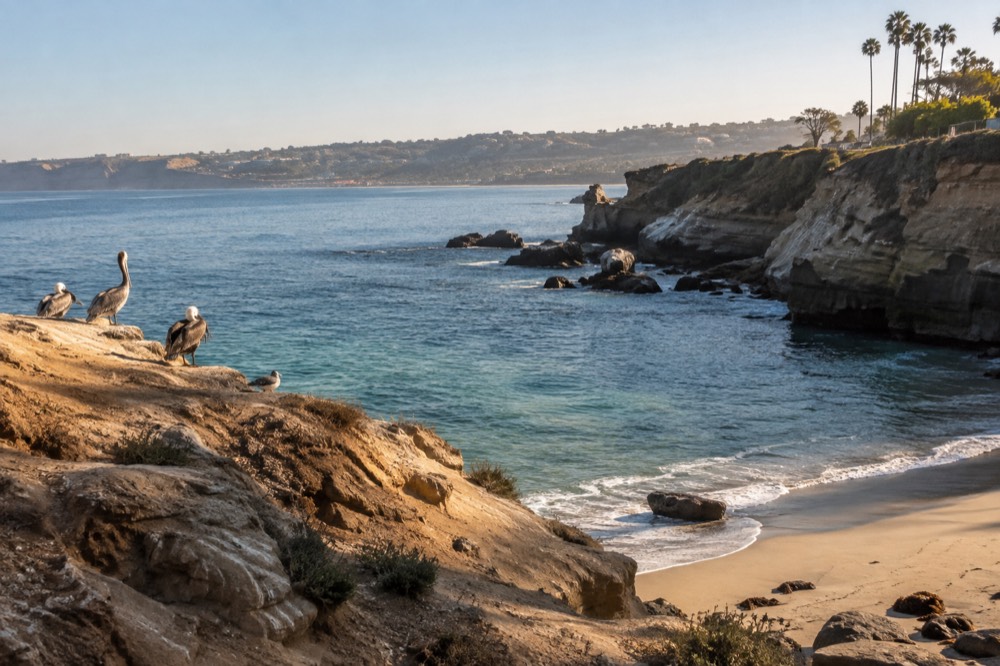
La Jolla Cove is a small, west-facing swimming beach tucked between sandstone cliffs at the south end of La Jolla, about 15 minutes by car from downtown San Diego. It is famous for three things: unusually clear water for a city beach, a resident population of sea lions and harbor seals on the adjacent rocks, and the seven sea caves carved into the cliffs just to the east. The beach is free, protected from most surf, and sits inside a marine refuge.
The Cove is genuinely tiny. At high tide the usable sand shrinks to a sliver, and on a summer weekend the towel-to-towel spacing gets tight by mid-morning. What it gives up in size it pays back in what is under the water: the site sits inside the San Diego-La Jolla Underwater Park Ecological Reserve, a no-take marine zone, which is why the fish here are abundant, calm around people, and easy to watch even in waist-deep water.
The beach is also the anchor point for a whole walkable stretch of coast. Within ten minutes on foot you can reach the sea caves, the grassy cliff parks above, the La Jolla Underwater Park lookout, and the start of the Coast Walk. Most visitors treat the Cove as a half-day anchor and build the rest of the day around it, which is the right instinct.
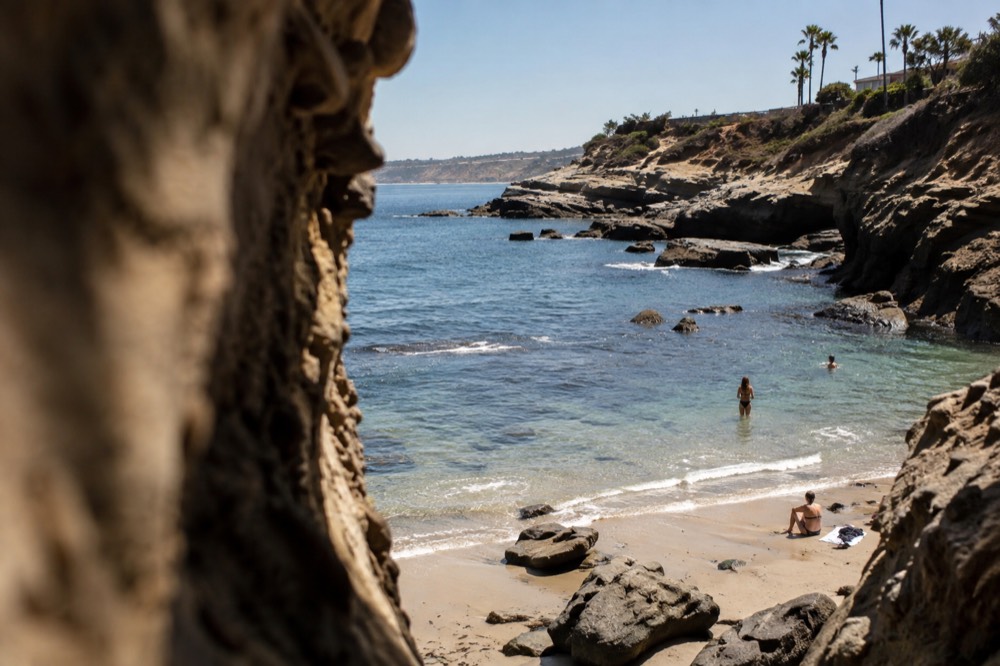
One thing worth setting expectations on before anything else: the sea lions are wild animals and the smell near their haul-out rocks is real. Reviews regularly mention it, and it is the trade-off for having a colony of marine mammals within swimming distance of a public beach. Go in the morning, before the sun bakes the rocks, and it is far less noticeable.
What Can You Actually Do at La Jolla Cove?
The core activities are swimming, snorkeling, kayaking through the sea caves, tide pooling at low tide, and wildlife watching from the cliff paths above. Snorkeling is the headline act: the calm, clear, protected water holds garibaldi, sea bass, leopard sharks in late summer, and sea lions that will swim within a few feet of you. Kayaking reaches the caves from the water, and at low tide you can walk into Clam Cave, the only one of the seven sea caves accessible from land.
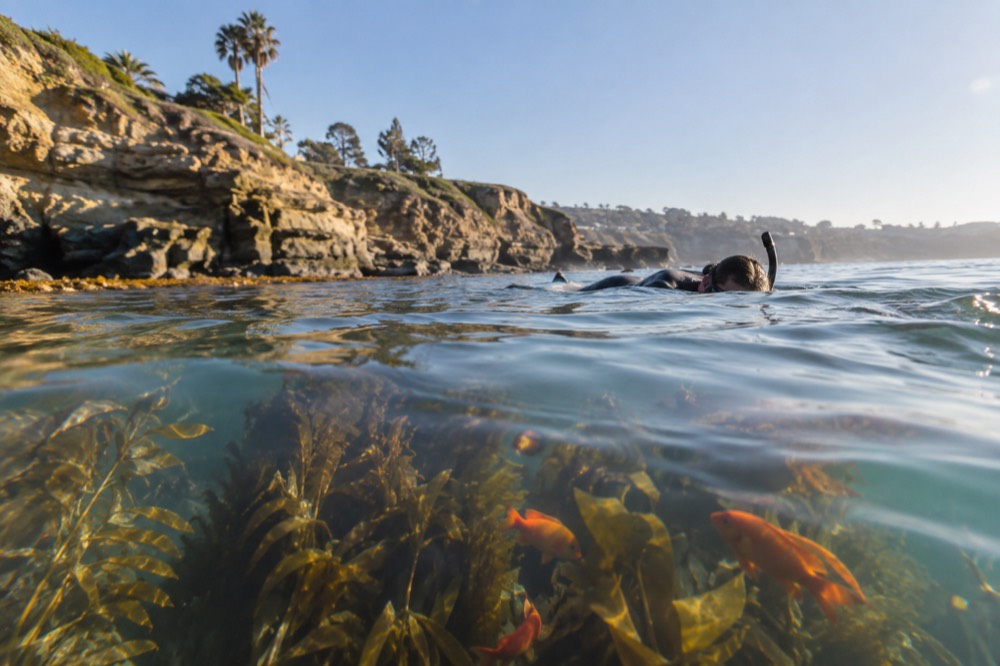
Snorkeling is the reason many people make the trip. The water inside the Cove is almost always calmer than the open coast nearby, and the reserve status means you are looking at a mature ecosystem rather than a fished-out one. Bright orange garibaldi are everywhere, and the kelp beds just outside the swim area hold bigger animals. A guided tour solves the two hard parts, gear and knowing where it is safe to be, and the water entry from the sand is gentler than the rocky launches kayakers use.
Kayaking gives you the caves from the sea side. The seven sea caves are carved into the 75-million-year-old sandstone point between the Cove and La Jolla Shores, and from a kayak you can paddle along their mouths, and when conditions are calm, through some of the arches. This is a genuinely conditions-dependent activity: the launch is open ocean, and operators cancel or reroute when the swell is up.
Between those two big-ticket activities there is plenty that costs nothing. The cliff-top path from the Cove toward the caves is one of the best free walks in the city, the tide pools at the east end come alive at low water, and the sunset from the grass at Scripps Park, the lawn directly above the beach, is a reliable show. If you are building a whole day around the area, our La Jolla sea caves guide covers the caves in detail, and the best beaches in San Diego roundup puts the Cove in context against the rest of the coast.
Here is how the main activities compare on effort, cost, and who they suit:
| Activity | Where it happens | Best conditions | Typical cost shape | Suits |
|---|---|---|---|---|
| Swimming | Inside the Cove | Morning, before wind | Free | Everyone, including kids |
| Snorkeling | Cove and kelp edge | Calm water, good visibility | Free solo, tour adds gear and guide | Confident swimmers |
| Sea cave kayaking | From the Cove launch | Low swell, calm morning | Tour or rental | Most ages, tour recommended |
| Tide pooling | East end rocks | Low tide | Free | Families, all ages |
| Cliff walk and sunset | Scripps Park and Coast Walk | Any time, clear evening | Free | Everyone |
If you only have a few hours, the sequence that works is this: snorkel or swim in the morning while the water is glassy, dry off and walk the cliff path to the cave overlook around midday, and be back on the grass with food for sunset. That single arc covers the Cove's three best modes without rushing any of them.
Is Swimming at La Jolla Cove Safe, and What Are the Rules?
Swimming inside the Cove is generally safe because the cliffs block most of the swell and the city staffs the beach with lifeguards year round, but the water outside the protected pocket is open ocean. The hard rules are simple: you may not touch, chase, or feed the sea lions, seals, or any marine life, and you may not take anything from the reserve. Never enter the water near the haul-out rocks, and if caught in a rip current, swim parallel to shore.
The lifeguard tower at the Cove is a permanent station, part of the network of nine year-round oceanfront lifeguard stations the city staffs along roughly 24 miles of coastline, generally from 9:00 am to dusk. That is a real level of protection for a beach this size, and it is why families treat the Cove as a swim beach rather than a look-at beach. Still, the protection has a boundary: once you swim east past the point toward the caves, you are in open water where swell, current, and boat traffic all become factors.
The wildlife rules matter more here than at most beaches, and they are enforced. The marine mammals at the Cove are protected under federal law, and the practical line is this: if a sea lion approaches you in the water, that is fine, enjoy it, but you may not close the distance yourself. On land, give the hauled-out animals the rocks they are on and never get between a mother and a pup. The city's beach regulations page carries the full set of prohibitions, including the no-alcohol and no-glass rules that apply to every city beach, and it is worth a read before a first visit: the City of San Diego's beach regulations.
A guided snorkel tour is the safest way to get the famous version of the experience. The operator brings the gear, handles the timing around tides and visibility, and knows which parts of the kelp edge hold animals without putting you anywhere the mammals would rather you not be. For swimmers who want to go it alone, the standard advice holds: stay inside the buoyed area, never swim alone, and check the county's water quality page before you go, since results after rain can close beaches to swimming: the County of San Diego posts beach water quality and closures here.
One more honest note: the Cove has no shark problem in the sense people fear, but leopard sharks do gather here in shallow water in late summer, and they are harmless. They gather to breed in the warm shallows and are a genuine draw for snorkelers. The animals to give space to are the sea lions on the rocks, not the fish under your fins.
When Is the Best Time to Visit La Jolla Cove?
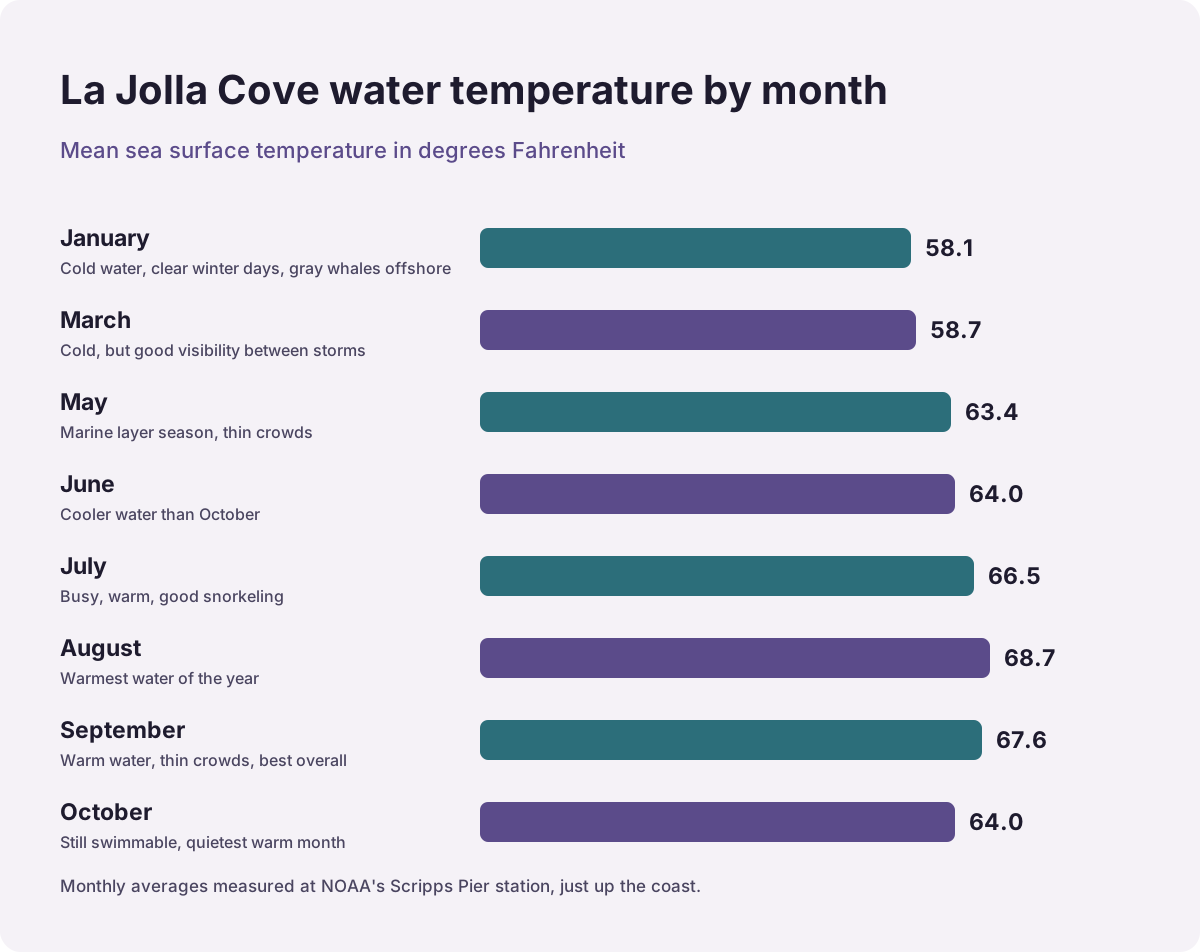
The best time of day is morning, before about 11:00 am, when the water is calmest, the wind is lightest, and the animals are active. The best months for water warmth are August through October, when the ocean averages around 67 to 69°F, and September is the sweet spot: the sea surface averages 67.6°F, the air is as warm as August's, and summer crowds have thinned. Weekday mornings in September and October are the best window of the year.
The ocean temperature story is the one that surprises people. San Diego's water is cold for most of the year, and the monthly averages measured at NOAA's Scripps Pier station, just up the coast, show the shape of it clearly. The water peaks in August at about 68.7°F and holds near that through September before sliding fast. June, despite being summer by the calendar, is cooler than October, which is the marine layer effect locals call June Gloom showing up in the numbers themselves.
| Month | Mean sea surface °F | What it means for the Cove |
|---|---|---|
| January | 58.1 | Cold water, clear winter days, gray whales offshore |
| March | 58.7 | Cold, but good visibility between storms |
| May | 63.4 | Marine layer season, thin crowds |
| June | 64.0 | Warmest air crowds, cooler water than October |
| July | 66.5 | Busy, warm, good snorkeling |
| August | 68.7 | Warmest water of the year |
| September | 67.6 | Warm water, thin crowds, best overall |
| October | 64.0 | Still swimmable, quietest warm month |
| December | 60.8 | Cold water, winter light, seals pupping nearby |
The time-of-day question is almost as important as the month. The Cove faces roughly west, so the beach gets full sun in the afternoon, but the wind typically picks up midday and chops the water up, which hurts both swimming and photography. Locals snorkel before 10:00 am. Tide matters too: low tide opens the tide pools and lets you walk toward Clam Cave, while high tide shrinks the sand and pushes everyone closer together. Check a tide chart for the day you go and plan the water activities around the morning, the tide pools around the low.
There is one seasonal wildlife note to be careful about. Harbor seals pup at nearby Children's Pool Beach, and the area around the Cove and Children's Pool has seasonal protections around the pupping window, but the specific dates and boundaries change and should be checked on the city's pages rather than assumed. Do not plan around a date you read in a general article, including this one: the city and the National Oceanic and Atmospheric Administration publish the current rules, and the seasonal closure notices are posted on-site.
Where Do You Park at La Jolla Cove?
There is no dedicated parking lot for the Cove itself. Parking is street and small-lot parking in the surrounding village blocks, free to park in but genuinely hard to find from late morning onward in summer and on weekends. The realistic strategy is to arrive before 9:00 am, or to park further up the hill in La Jolla and walk down. Allow 20 to 30 minutes of circling if you arrive midday in peak season, and treat any spot within a 10-minute walk as a good one.
Being direct about what we do not know: there is no published rate table for beach parking in this part of the city, and we will not invent a price. What is verifiable is the pattern. The streets closest to the Cove, along Coast Boulevard and the adjacent residential blocks, are a mix of free and metered spaces with time limits, and posted signs always win over any general advice. On weekdays outside summer, finding a spot within a few blocks is usually easy. On a July Saturday, it is not.
The alternatives are straightforward. The MTS system serves La Jolla with bus routes, and the fare is $2.50 one-way or a $6.00 day pass with the PRONTO card, which caps your rides automatically so there is no reason to buy a day pass up front. Rideshare works well here because the drop-off point at the top of the Cove's stair access is compact. If you are combining the Cove with the sea caves or a La Jolla Shores visit, our getting around San Diego guide lays out the trolley and bus options, and the parking in San Diego guide covers the citywide picture, including which zones enforce on Sunday evenings.
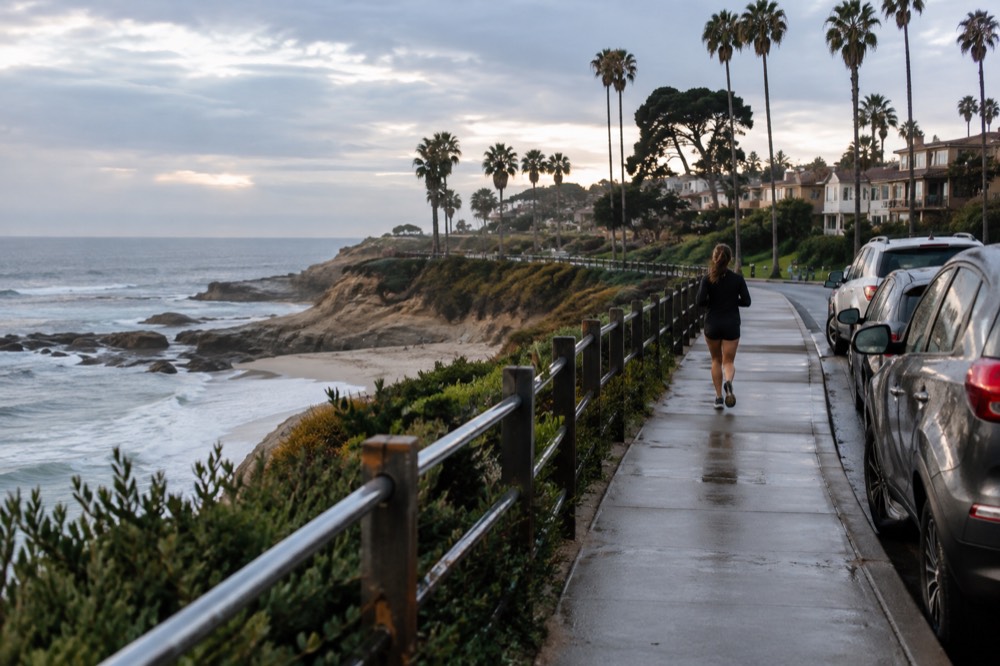
A note on the walk down: the access from Coast Boulevard to the sand is via stairs and a ramp, and the return trip is uphill. It is short, but it matters if you are carrying a cooler, a kayak, or a toddler. The cliff-top street level also has the best of the free amenities, public restrooms, showers, and the wide lawn of Scripps Park, so you do not need to haul everything to the sand.
How Close Do the Sea Lions and Seals Get?
Very close, and closer than most first-time visitors expect. Sea lions haul out on the rocks just east of the Cove and swim freely through the swimming area, and snorkelers routinely find themselves within arm's reach, though touching them is illegal. Harbor seals are more often seen at Children's Pool Beach, a short walk south. The animals are wild, unbothered by people at a respectful distance, and entirely capable of being curious about swimmers, which is the experience the Cove is famous for.
The dynamic is unusual for an American city beach. Because the water is a protected reserve, the animals here have decades of calm encounters with humans behind them, and a sea lion swimming a slow circle around a snorkeler is normal behavior, not an incident. The rule is that the choice to approach must always be theirs. Reaching toward them, blocking their path to the rocks, or following a hauled-out animal that moves away from you are all violations of federal marine mammal protections, and the fines are real.
Photography works best from the cliff path above the haul-out rocks, where you can frame animals against the water without approaching them. A modest zoom lens does the job. If your main goal is underwater photos of the animals, a guided snorkel tour is the practical route, since guides know which spots give you drift time near the colony without ever crowding it. For the land-based version, our La Jolla neighborhood guide and the snorkeling in La Jolla guide both go deeper on where the animals actually congregate through the year.
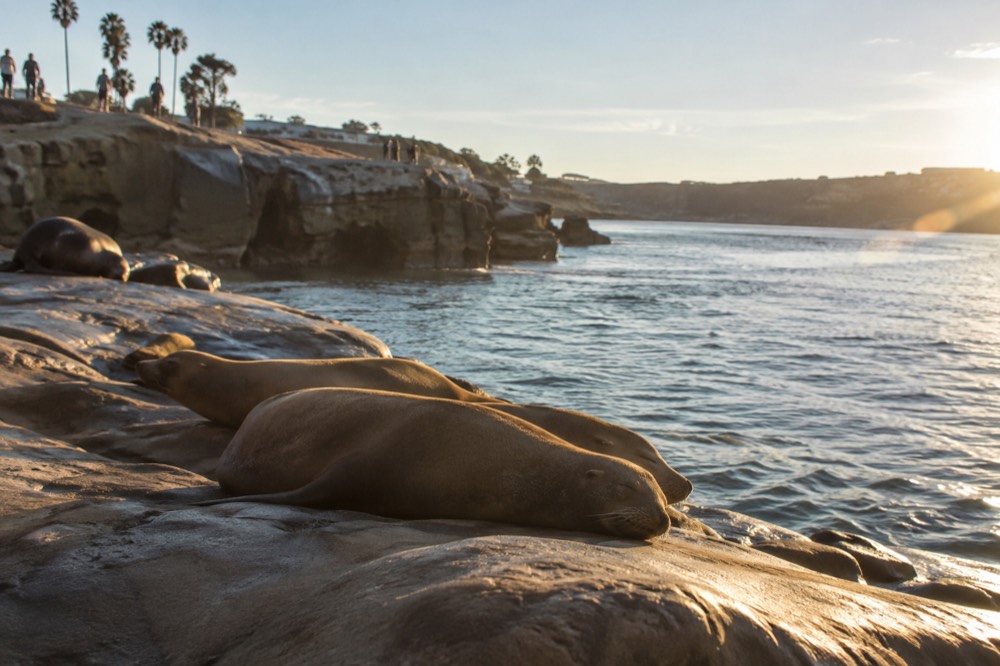
Two practical warnings from the reviews. First, do not leave food or bags unattended on the sand near the rocks, gulls here are bold and fast. Second, keep dogs away entirely: dogs are not permitted on San Diego city beaches, and the combination of a dog and a sea lion colony is a bad one for everyone involved.
What Else Is Within Walking Distance of the Cove?
Within a 15-minute walk you can reach the seven sea caves and their cliff overlooks, the Coast Walk path along the bluff top, Scripps Park, the tide pools at the point, Children's Pool Beach, and the shops and restaurants of Prospect Street and Girard Avenue in the village. That density is the Cove's second selling point after the water: it is a full half-day or more without moving the car, and the village's food options run from quick taqueria lunches to serious seafood dinners.
The walk east from the Cove along the bluff is the best free hour on this coast. The Coast Walk traces the cliff edge above the sea caves, with overlooks down into the blue water where kayaks drift through the arches. Low tide adds the tide pools, and our San Diego tide pools guide explains how to read a tide chart so you actually catch them at their best. South along the boulevard, Children's Pool Beach sits behind its historic seawall, and the seawall walk itself is a good vantage for the seal colony.
Northwest of the Cove, the sandstone continues toward Shell Beach and the long curve of La Jolla Shores, which is the better beach for a full sandy day with small kids, since the Cove's sand is limited. The Shores is also the calmer kayak launch for the caves when the Cove-side swell is up, and many tours put in there instead.
| Nearby stop | Walk from the Cove | What it is best for |
|---|---|---|
| Scripps Park lawn | On site | Picnics, sunset, kids' room to run |
| Sea cave overlooks | 5 to 10 minutes | Photos, viewing kayaks in the arches |
| Clam Cave at low tide | 10 minutes | The only walk-in sea cave |
| Children's Pool Beach | 10 minutes | Seals, the seawall walk |
| Prospect Street village | 10 to 15 minutes | Lunch, coffee, galleries |
| La Jolla Shores | 25 minutes, drive better | Big sand day, alternate kayak launch |
For food, the village does not disappoint. The taco and burrito options in central La Jolla are strong, and the fish taco is San Diego's signature dish, so a post-swim lunch of fish tacos within a short walk of the water is about as on-brand as this city gets. Our best fish tacos in San Diego guide names names, and the best restaurants in San Diego roundup covers the splurge tier in the village.
What Should You Know Before You Go?
Bring water shoes or reef sandals, a wetsuit or rash guard if you plan more than a quick dip outside of August through October, reef-safe sunscreen, and less stuff than you think you need, because the sand is small and the walk back up is uphill. There are public restrooms and showers at the top of the beach access. Alcohol and glass are prohibited, and drones are not welcome over the marine reserve.
Between late December and March, bring binoculars: more than 20,000 gray whales pass offshore each migration season.
The gear question deserves specifics. The water is cold enough that a full swim without a wetsuit is a short proposition outside of the warmest months, and most snorkel tours include a wetsuit in the package. Water shoes help on the rocky edges and the tide pool approach. Reef-safe sunscreen is both the law in California and basic respect for a marine reserve. And the wind picks up in the afternoon, so a light layer for the post-swim walk is genuinely useful even in summer.
The whale note is one of the quieter bonuses of a winter visit. Gray whales pass San Diego from mid-to-late December through March, with mid-January the peak of the migration, and the National Park Service, which tracks the same migration at Cabrillo National Monument a few miles south, reports more than 20,000 gray whales passing offshore each year. You will not see them from the Cove sand often, but the bluff walk is a legitimate land-based whale watching spot on a calm winter morning, and the dedicated boat trips run all season. Our Cabrillo National Monument guide covers the park's own whale watching overlooks if the migration is your main reason for coming.
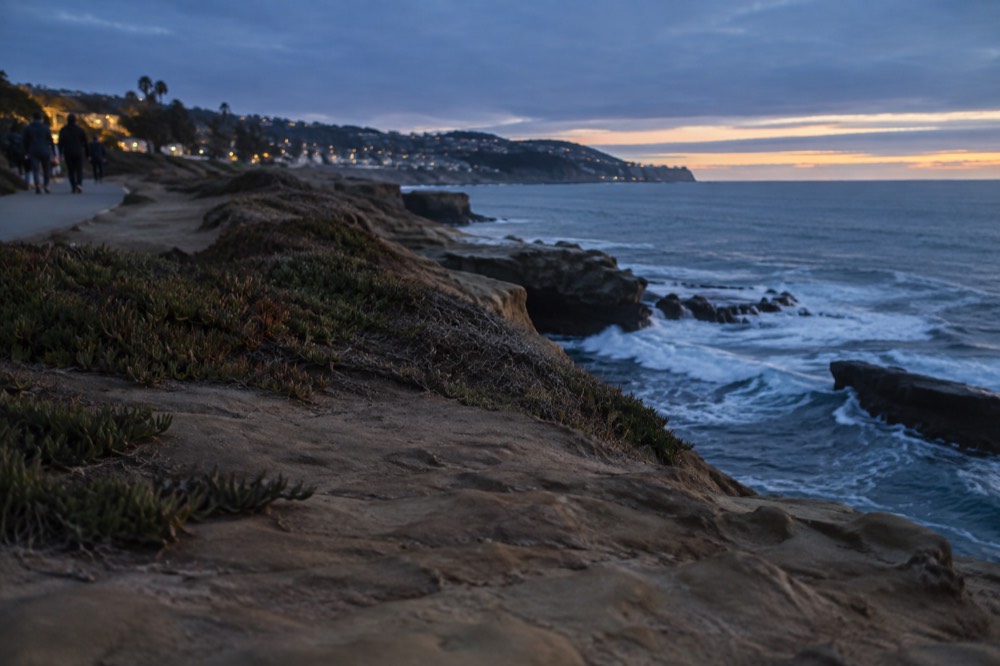
A final planning note on crowds and courtesy. The Cove is small and beloved, and the locals who swim here every morning are protective of it in the best way: they will help a lost snorkeler and glare at someone chasing a sea lion in the same minute. Follow the posted rules, keep your distance from the animals, and you will fit right in. The city's lifeguard service publishes the beach regulations and safety advice that govern all of this, including the rip current guidance worth reading before any open-water swim: the city's rip current safety page.
Common Questions About La Jolla Cove
Is La Jolla Cove free to visit?
Yes. The beach, the cliff walk, Scripps Park, and the tide pools all cost nothing. You pay only for optional extras like a guided kayak or snorkel tour, or parking if you drive and use a metered space.
Can you swim with sea lions at La Jolla Cove?
You can swim in water where sea lions swim, and they often approach snorkelers on their own. You may not touch them, chase them, or close the distance yourself: they are protected under federal marine mammal law. A guided snorkel tour is the safest way to have the encounter.
Is La Jolla Cove safe for beginner swimmers and kids?
Inside the Cove, generally yes: the cliffs block most swell and a lifeguard tower is staffed year round. The water outside the protected pocket is open ocean with real currents, so beginners should stay inside the buoyed swim area and never swim alone.
What is the best time of day to visit La Jolla Cove?
Morning, before about 11:00 am. The water is calmest, the wind is lightest, the marine layer has usually lifted, parking is dramatically easier, and the sea lions are most active. Afternoons bring chop, full sun, and crowds.
How cold is the water at La Jolla Cove?
It depends on the month. The sea surface off La Jolla averages about 58°F in winter, 66.5°F in July, peaks near 68.7°F in August, and holds around 67.6°F in September before cooling through fall. A wetsuit makes longer swims comfortable outside of late summer.
Where do you park for La Jolla Cove?
There is no dedicated lot. Parking is free street and small-lot parking in the surrounding village blocks, hard to find from late morning in summer. Arrive before 9:00 am, or expect to circle for 20 to 30 minutes midday in peak season. Posted signs always win.
Can you walk to the sea caves from La Jolla Cove?
Partly. The cliff walk above the caves takes five to ten minutes and gives you the overlooks. At low tide you can walk to the mouth of Clam Cave, the only one of the seven sea caves reachable on foot. The rest are seen from the water, by kayak or on a snorkel tour.
Whether the Cove ends up as a quick photo stop on a wider tour of the coast or the whole reason you came to Things to Do in San Diego, the planning math is the same: morning light, calm water, respectful distance from the animals, and a fish taco afterward. It is a small beach that over-delivers, and it earns its reputation every single day the sun is out.