The Best Beaches in San Diego, CA: A Local-Logic Guide to All 24 Miles of Coast
San Diego runs roughly 24 miles of lifeguarded oceanfront, and no two stretches of it behave alike. This guide sorts the coast by what you actually want to do: swim, surf, spot wildlife, or watch the sun go down.
Short answer
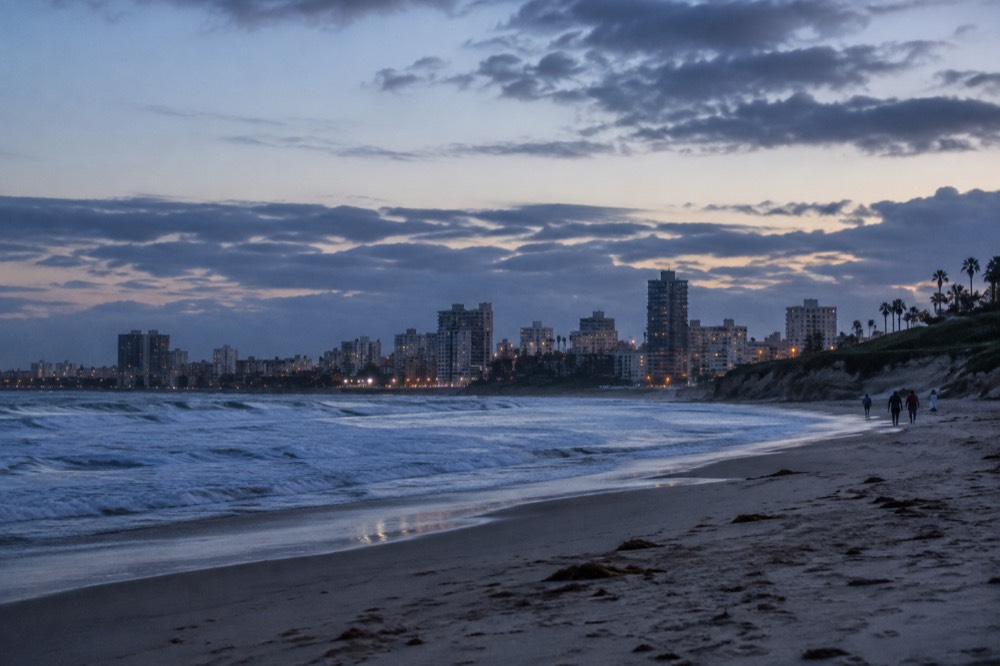
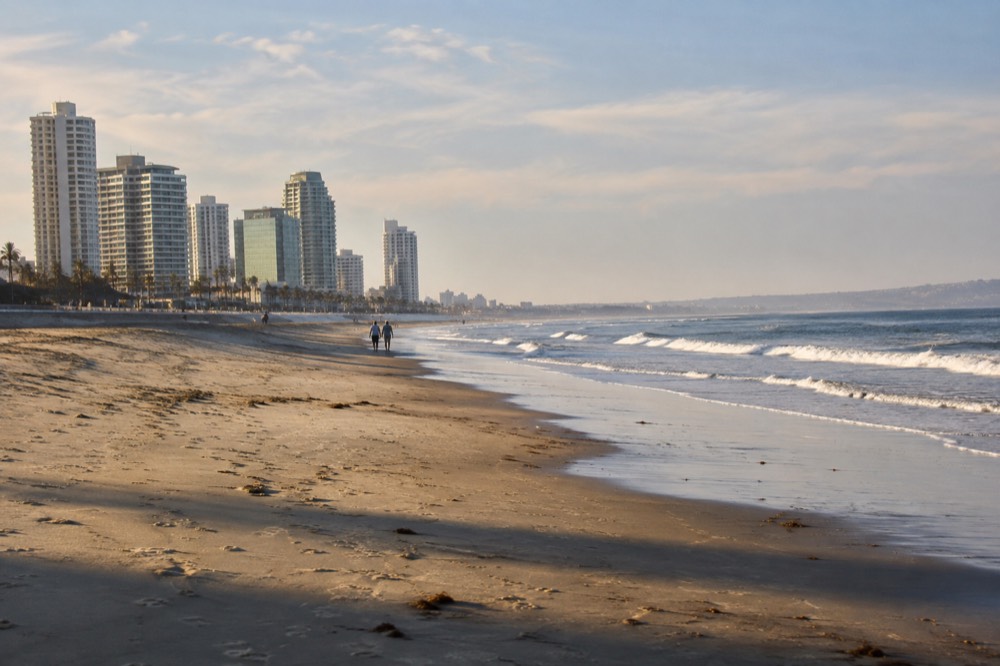
The best beaches in San Diego, CA depend on the day and the goal: Coronado and Mission Bay for calm family swimming, La Jolla Shores for gentle surf entries, Sunset Cliffs for evening views, and Ocean Beach for a loose local mood. Ocean water runs from about 58F in winter to 68.7F in August, and September is the coast's warmest, emptiest month.
San Diego's coastline is not one beach but a chain of them, and the differences matter more than most visitors expect. The water off La Jolla averages 58.1F in January and 68.7F in August, the sand ranges from powder at Coronado to cobble at some Point Loma stretches, and the crowds spread unevenly enough that the "busy" beaches have quiet ends if you know where to look. This guide, from the editorial desk at Things to Do in San Diego, sorts the coast by what you actually came to do rather than by which name you heard first.
What Are the Best Beaches in San Diego, CA?
The short list is Coronado Beach, La Jolla Shores, La Jolla Cove, Pacific Beach, Mission Beach, Ocean Beach, Sunset Cliffs and Imperial Beach, each for a different reason: Coronado for calm water and clean sand, La Jolla Shores for families and first-time surfers, Pacific and Mission Beach for the boardwalk scene, Ocean Beach for the pier and the dog beach, Sunset Cliffs for the evening show, and Imperial Beach for a quiet far-south stretch near the border.
That list is deliberately not a ranking. A beach that is perfect for a swimmer is wrong for a surfer, and the best wildlife beach is a poor place to play catch with a toddler. City of San Diego lifeguards staff nine permanent oceanfront stations year round, covering roughly 24 miles of coastline, with seasonal towers added in summer, and those nine stations mark the beaches where swimming is actively watched the rest of the year.
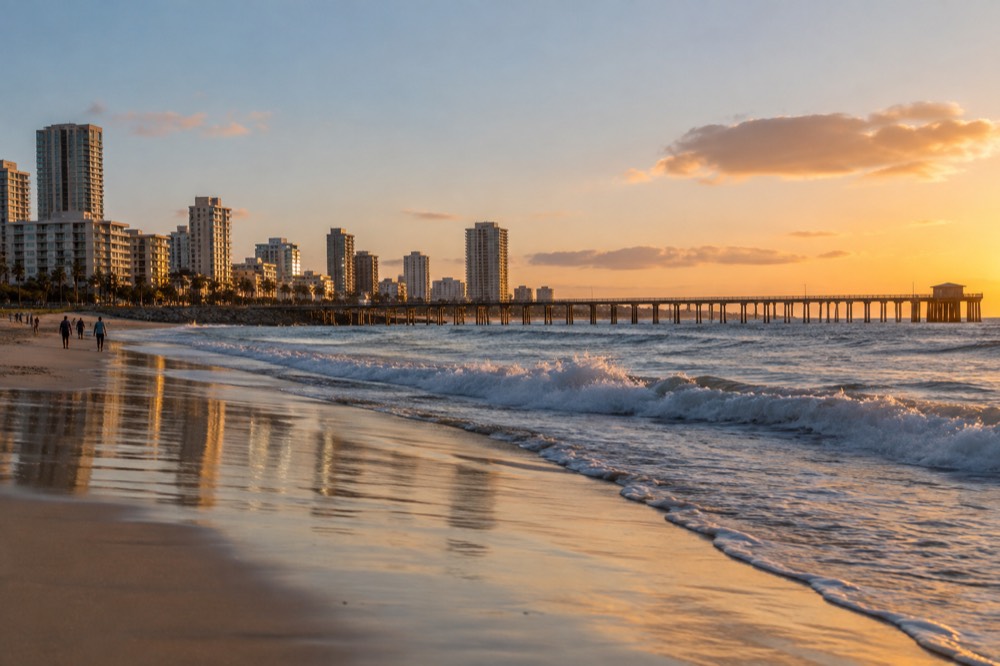
The table below is the honest one-page version of the whole coast. Read the "best for" column first, because that is where most itineraries go wrong: people drive to La Jolla Cove expecting a swimming beach and find a rocky marine reserve instead.
| Beach | Neighborhood | Best for | The catch |
|---|---|---|---|
| Coronado Beach | Coronado | Calm water, wide sand, families | Popular; arrive before mid-morning in summer |
| La Jolla Shores | La Jolla | Beginner surfing, families, kayaking | Paid and street parking fills fast |
| La Jolla Cove | La Jolla | Snorkeling, sea lions, scenery | Not a swimming or lay-out beach |
| Pacific Beach | Pacific Beach | Boardwalk, bars, people-watching | Loudest stretch of the coast |
| Mission Beach | Mission Beach | Belmont Park, rental bikes, groups | Same scene as PB, denser |
| Ocean Beach | Ocean Beach | Pier, dog beach, sunset crowd | Water is rockier than it looks |
| Sunset Cliffs | Point Loma | Sunsets, bluff walks, photography | Narrow cliff paths, no real sand |
| Imperial Beach | Imperial Beach | Quiet, wide sand, border views | Farthest from downtown hotels |
Two neighborhoods deserve their own pages before you commit: La Jolla's beaches and coves span four distinct experiences within two miles of each other, and Coronado pairs its beach with the most photographed hotel in the county. If you are traveling with kids, the dedicated family beaches in San Diego guide goes deeper on calm water and restrooms than this overview can.
Which Beach Is Best for Swimming and Families?
Coronado Beach and the Mission Bay shoreline are the safest, calmest swimming in the city, because both face sheltered water rather than the open Pacific: Coronado's curve softens the surf and Mission Bay has none at all, which is why swim lessons and rental kayaks cluster there. La Jolla Shores is the best open-ocean family beach, with a gentle, gradual bottom and a year-round lifeguard station.
Coronado's sand is the famous part, fine and light enough to sparkle, but the water behavior is what matters with children. The beach faces mostly south inside a big bight, so the prevailing west swell arrives weakened. The trade-off is exposure on the walk from wherever you parked: there is no honest published rate table for beach or Coronado parking, and the practical truth is that it is street-and-lot parking that is free to park in and very hard to find in summer. Go early or go home.
Mission Bay is the answer for anyone who wants zero surf. It is a man-made, enclosed bay with long shoreline miles, so even on the windiest afternoon the water stays manageable near the shore. This is where the Mission Bay guide sends families with very small kids, and it is the one stretch where the rip-current advice below barely applies.
La Jolla Shores deserves its reputation. The bottom slopes so gradually that at chest depth you are still 60 yards from deep water, which is exactly what a nervous swimmer wants, and it is the standard launch point for kayak tours heading to the sea caves. The beach sits inside a marine reserve, so the fish you swim over are the ones snorkelers pay to see at the Cove a mile south.
What Are the Best La Jolla Beaches?
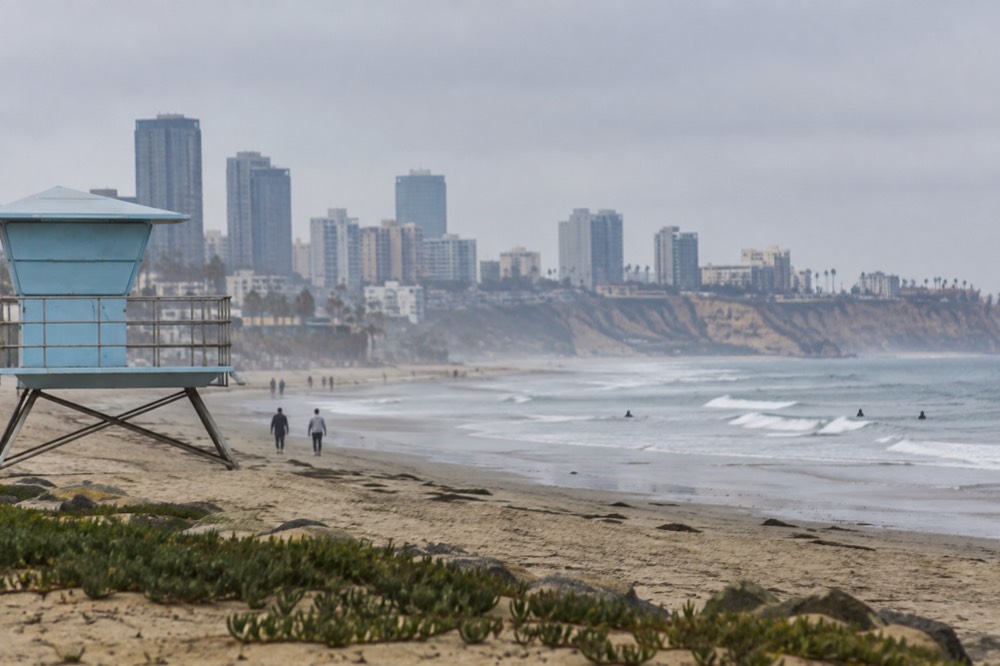
La Jolla holds four different beach experiences in two miles: La Jolla Shores for sandy swimming and surfing lessons, La Jolla Cove for snorkeling in a protected marine reserve, the Cove's cliff walk for sea lions and pelicans, and Windansea for rocky, local-heavy surf, and the one thing they share is that parking is scarce and the marine reserve rules are strict about what you can touch.
Start at the Shores end if swimming is the goal and work south as the coastline turns rocky. The Cove itself is small, framed by sandstone cliffs, and its water is the clearest in the city because it sits inside the San Diego-La Jolla Underwater Park, a no-take marine reserve. Garibaldi, sea bass and the resident sea lions are the draw, and the sea lions are genuinely everywhere: on the rocks, in the surf, occasionally on the sand.
Two honest cautions. The harbor seals at nearby Children's Pool are subject to a seasonal pupping closure, and the exact dates change, so check the posted signage at the beach itself rather than any calendar a website gave you. And the sea lion rules at the Cove are enforced: keep distance, never approach or feed, and let them come to the water on their own path.
The sea caves are the one part of this coast you cannot reach on foot, which is why the guided kayak tours launch from the Shores and paddle south along the cliff line. The 2-hour La Jolla Sea Cave Kayak Tour is the standard option, and you can Check availability on the operator's live listing. Conditions decide whether you can paddle inside a cave or only past its mouth, and guides call that on the day.
If you would rather be in the water than on it, the Cove snorkeling tour covers the same reserve from below, with sea lions and cave swim-throughs on the itinerary. For a combined day, the kayak-and-snorkel tour does both in one outing, which is the efficient choice if your trip is short. More detail on all of this lives in the snorkeling La Jolla and kayaking the sea caves guides.
The choice between those formats usually comes down to time and confidence in the water. Strong swimmers who are happy on the surface for a couple of hours tend to pick the pure kayak tour; anyone who has snorkeled before and wants the fish-eye view tends to prefer the combined outing. Neither requires experience, and both launch from the same beach with the same parking problem, so book whichever fits your morning.
Once you have picked a date, the practical question is whether to reserve ahead, and the answer is yes for summer mornings, when the Shores launch zone fills with tours and walk-ups can miss out on the first, calmest window. The caves are also the kind of thing that sells out around school holidays.
Which San Diego Beaches Are Best for Surfing?
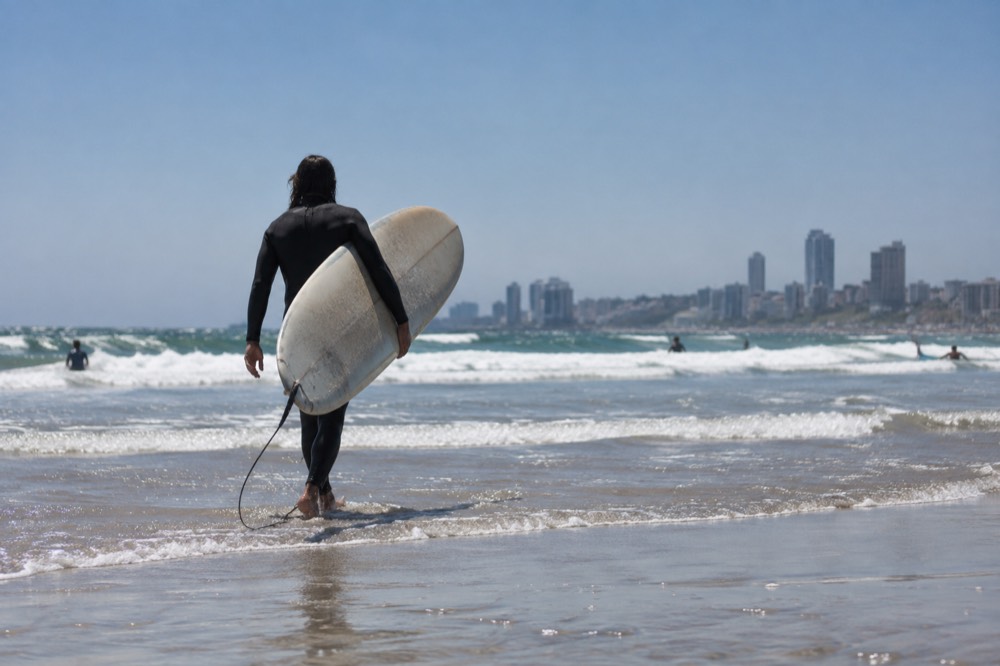
La Jolla Shores is the standard beginner break, Pacific Beach and Mission Beach hold the crowded, fun mid-range waves, Ocean Beach works for longer boards and a looser crowd, and Windansea in La Jolla is the local, rocky, shortboard spot that visitors should watch rather than join, so where you surf depends entirely on ability and board length.
San Diego's surf is friendly by California standards, mostly beach break with a few reef points, and the water is warm enough in late summer that a 3/2 wetsuit is plenty and a spring suit works. Lessons cluster at the Shores for the same reason families do: soft, gradual, forgiving. The 1.5-hour surfing lesson format is the common entry point, board and wetsuit included, and first-timers stand up more often than not in those conditions.
For independent surfers, the honest local advice is to check the surfing in San Diego guide's break-by-break breakdown before dawn-patrolling a spot you do not know, because the crowds are territorial at the better waves and the parking at the beach lots is the real constraint. Ocean Beach's north end and the cliffs south of Sunset Cliffs hold quieter peaks for those willing to walk.
Where Are the Best Sunset Spots on the Coast?
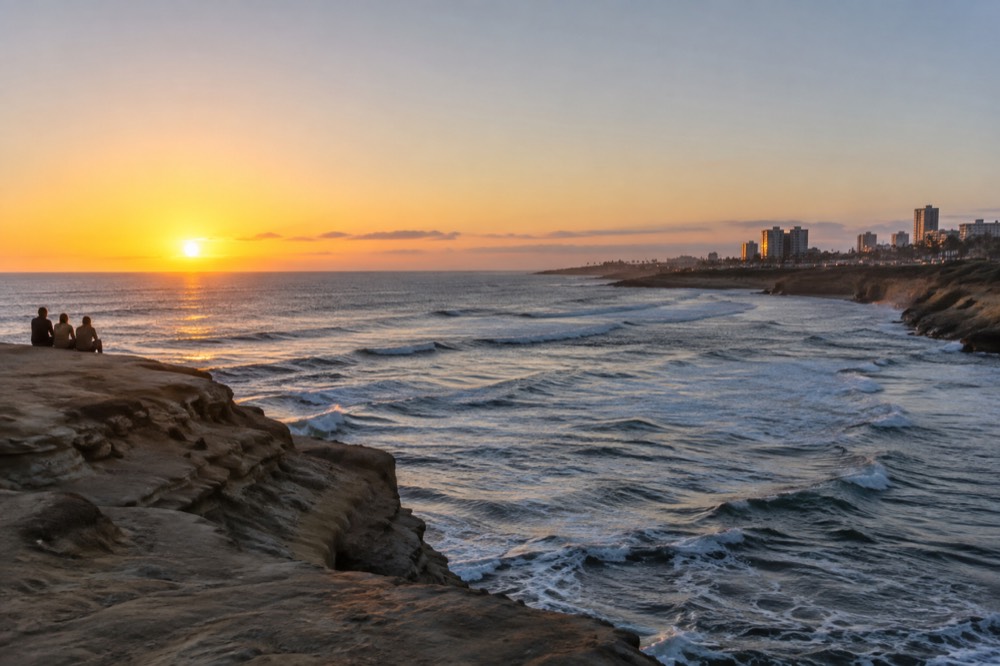
Sunset Cliffs Natural Park is the definitive answer, a bluff-top strip where the sun drops straight into the open Pacific with sea caves and arches below, followed by Ocean Beach's pier and Coronado's wide west-facing sand, and the practical rule is to arrive 45 minutes early in summer because every viewpoint and its parking fill completely.
Sunset Cliffs is the one that looks like the postcards, and it earns that honestly: a long stretch of bluffs, arches and tidepools at the western edge of Point Loma, with the sun setting over open ocean rather than behind land. The cliff-edge paths are narrow and unsigned in places, so keep children close and stay behind the natural edge, because the sandstone is soft and undercut in spots. The full Sunset Cliffs Natural Park guide covers the trail options and the best arch viewpoints.
Ocean Beach is the sociable sunset. The pier gives you a raised platform over the water, the dog beach and the adjacent bars mean the after-sunset crowd has somewhere to go, and the mood is loose in a way Pacific Beach's boardwalk is not. The Ocean Beach guide covers the pier, the tide pools at its north end and the Sunday farmers market.
Coronado's beach faces almost due west, which makes it the best sit-in-the-sand sunset on the list, and the Coronado Beach guide explains where to sit so the Hotel del Coronado's lights are behind you rather than in the frame.
Where Can You See Wildlife from a San Diego Beach?
The reliable wildlife is marine: sea lions and harbor seals at La Jolla, pelicans and cormorants along the whole coast, tidepool invertebrates at Cabrillo National Monument and Sunset Cliffs, and gray whales passing offshore from mid-December through March with mid-January the peak, when more than 20,000 gray whales migrate past San Diego on their way between Alaska and Baja.
The gray whale season is the big one and it is fully documented by the National Park Service: the park's own whale-watching page notes that most whales pass San Diego in late December, January and February, with mid-January the peak, and that the best viewing inside Cabrillo National Monument is from the Kelp Forest Overlook and the Old Point Loma Lighthouse on calm mornings before the wind picks up. Entry to the monument is $20 per private vehicle, valid for 7 days, and the park closes its tidepool area at 4:30 pm, so a whale-and-tidepool afternoon needs an early start. The park runs a Whale Watch Weekend and Intertidal Festival in late January or early February.
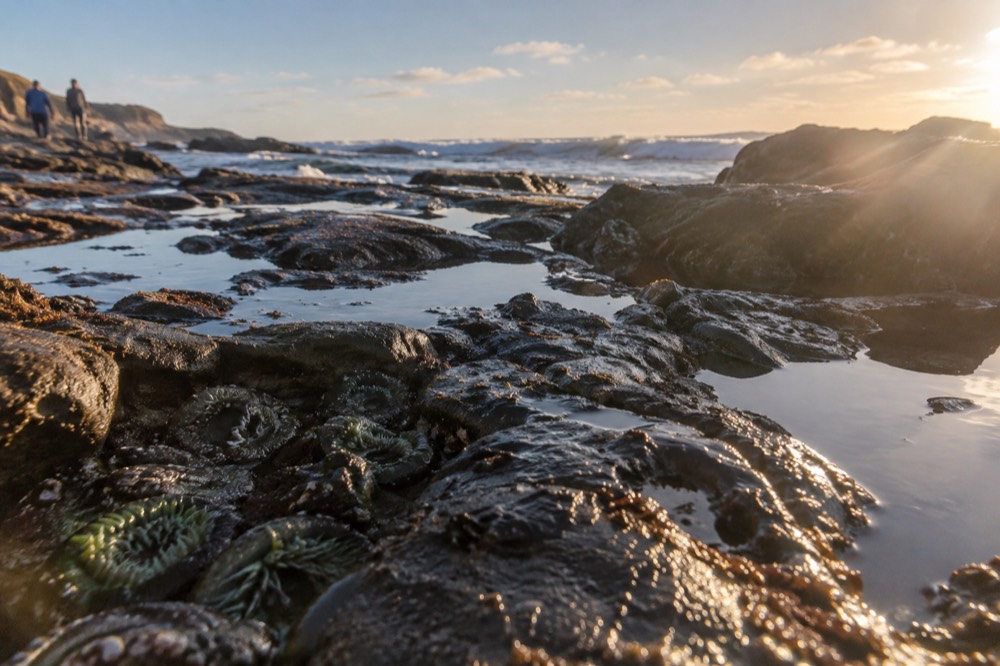
The tide pools at Cabrillo are the county's best, and the San Diego tide pools guide explains why a negative low tide matters more than the time of day. Closer to town, the sea lions at La Jolla Cove are the most accessible marine mammals in California; you will hear them before you see them. From the water, the snorkeling tour at the Cove is the closest legal, respectful encounter, and a harbor cruise out of the bay puts you on the same water the whales pass.
For a faster, louder version of the same bay, the 30-minute Patriot jet boat thrill ride runs out of the harbor and is the option for teenagers who found the cruise too slow. It books on the operator's live listing like everything else on this coast, and same-day slots are often available outside summer weekends.
When Is the Best Time of Year for San Diego Beaches?
September is the best-kept secret on this coast: its normal high of 77.2F beats July's by 1.9 degrees and sits a tenth behind August's, the ocean at La Jolla averages 67.6F, and yet September is the single lowest-visitation summer month at Cabrillo National Monument, roughly 48 percent quieter than July, so you get the year's warmest air and near-warmest water with the year's thinnest crowds.
The counterintuitive part is worth spelling out. July is the month everyone visits and it is not even the warm one. The 30-year climate normals for San Diego show August at 77.3F and September at 77.2F against July's 75.3F, and the ocean follows: 68.7F in August, 67.6F in September, against 66.5F in July. Yet across 2022 to 2024, September logged 56,876 recreation visits at Cabrillo against July's 83,999. School calendars, not weather, decide this coast's crowds.
| Month | Normal high | Ocean temp at La Jolla | Verdict |
|---|---|---|---|
| January | 66.4F | 58.1F | Sunny but cold water; gray whale season |
| March | 67.0F | 58.7F | Spring break crowds, chilly surf |
| May | 69.5F | 63.4F | May Gray marine layer, thin crowds |
| June | 71.7F | 64.0F | June Gloom; October is actually warmer |
| July | 75.3F | 66.5F | Peak crowds, not peak warmth |
| August | 77.3F | 68.7F | Warmest water, busy |
| September | 77.2F | 67.6F | Warm, nearly empty: the pick |
| October | 74.6F | 64.0F | Warm air, warm-ish water, quiet |
| December | 66.0F | 60.8F | Gray whales arrive, wettest month |
Ocean temperatures are monthly means from NOAA's La Jolla (Scripps Pier) station, hourly observations averaged over recent years, and the air figures are the 1991-2020 climate normals for San Diego International Airport. The San Diego weather and best time to visit guide carries the full month-by-month picture.
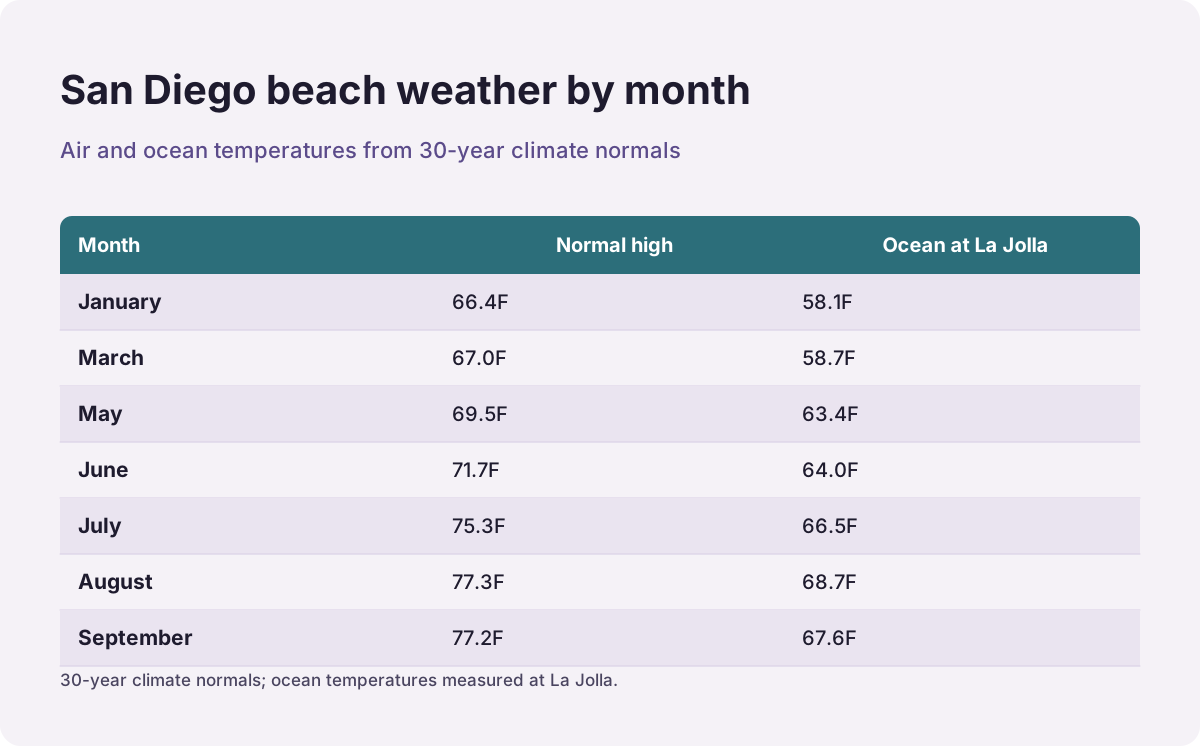
One thing this coast is not, is relentlessly sunny. The marine layer locals call May Gray and June Gloom grey the beaches in late spring while inland stays clear, and it is visible in the normals themselves: June's average high of 71.7F is lower than October's 74.6F. The gray usually burns off by midday, so plan beach time for the afternoon in those months.
What Are the Beach Safety and Rules You Should Know?
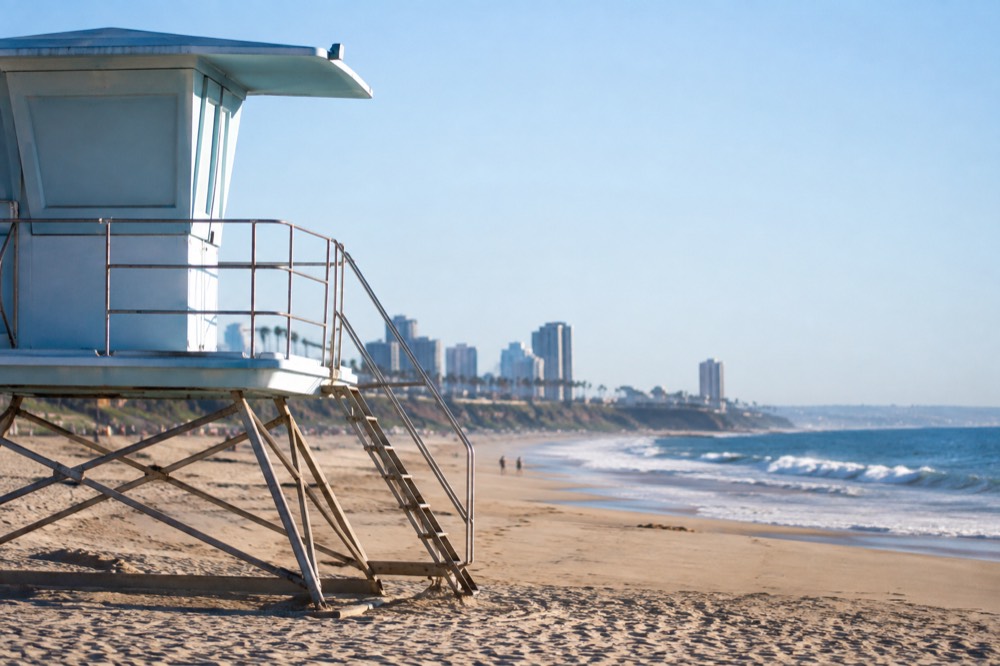
Rip currents are the primary hazard on this coast, and the official advice is to stay calm, swim parallel to the shore until the pull relaxes and then swim in, never against it; alcohol is banned on all San Diego city beaches, boardwalks and parks; lifeguards staff nine permanent stations roughly 9 am to dusk; and water-quality closures are posted same-day by the county at sdbeachinfo.com, which is the page to check after any rain.
The rip-current rule is the one to actually memorize, because it is counterintuitive under panic. The City of San Diego's own lifeguard page is blunt: rip currents are the primary hazard, swim parallel to the shore until you are out of the pull, and float and wave for help if you cannot make it in. Swim near a lifeguard, never alone, and ask the tower about conditions when you arrive; the guards would rather answer that question than make the rescue.
The standing prohibitions on city beaches are simple and enforced: no alcoholic beverages, no glass containers, no smoking, no overnight camping. The county posts beach water-quality results at sdbeachinfo.com the same day or the next business day, and the honest habit is to check it after any storm, since urban runoff follows rain into the ocean here as it does everywhere.
| Rule or hazard | What it means for you |
|---|---|
| Rip currents | Swim parallel to shore to escape, never against the pull |
| Alcohol ban | No drinks on any city beach, boardwalk or beach park |
| Lifeguard hours | Nine permanent stations, roughly 9 am to dusk, year round |
| Glass and smoking | Both prohibited on the sand |
| Water quality | Check the county closure page after rain |
| Cliffs | Stay behind the edge at Sunset Cliffs; sandstone is undercut |
| Marine mammals | Keep distance from seals and sea lions; closures are posted on site |
Parking is the practical question that no guide can price for you honestly, because no published rate table exists for the beach lots, and inventing a number would be worse than silence. The truth: beach parking in San Diego is street-and-lot, free to park in, and very hard to find on summer weekends. Arrive before 9 am, use the parking in San Diego guide for the meter rules downtown, or take the trolley-plus-bus combination described in getting around San Diego, where a $6 day pass covers the whole system.
How Do You Pick a Beach Base for Your Trip?
Stay in Coronado or La Jolla if the beach is the whole point of your trip, Mission Beach or Pacific Beach if you want the boardwalk scene walkable from your door, Ocean Beach if your budget is tighter and your vibe is mellower, and downtown or Little Italy only if you accept that every beach day starts with a drive or a bus ride, because none of the city's best sand is within walking distance of the Gaslamp.
The [where to stay](https://booking.tpk.ro/737WL7iF) in San Diego guide does this properly, but the beach-specific version is short. Coronado costs more and delivers the calmest water and cleanest sand. La Jolla delivers the most coastline variety per square mile. Pacific and Mission Beach deliver the scene, and their shared boardwalk means you can rent a bike and cover both in an afternoon. Budget travelers should read the San Diego budget itinerary before booking anything, because the coastal hotels are where a San Diego trip's cost concentrates.
If your days are short and you want the coast handled for you, the guided city-and-beaches tour covers Coronado and the highlights in one 5h 30m outing, which is a reasonable trade when you would otherwise spend that time circling for parking.
Common Questions About San Diego Beaches
What is the best beach in San Diego for swimming?
Coronado Beach for open-water swimming in calm surf, Mission Bay for water with no surf at all, and La Jolla Shores for a gentle, gradual ocean bottom. All three sit near year-round lifeguard stations. The Cove is not a swimming beach despite its postcard look; it is a rocky marine reserve built for snorkeling.
What is the warmest month for San Diego beaches?
August has the warmest ocean water at a monthly average of 68.7F, and September has the warmest air at a 77.2F normal high, just a tenth of a degree behind August. September is also far less crowded than July, which makes it the best overall month: warm, swimmable and quiet.
Are San Diego beaches free?
Yes, every city beach is free to access and free to sit on. The costs are around the edges: parking is free but scarce in summer, downtown meters run $2.50 per hour, and attractions like Cabrillo National Monument charge $20 per vehicle. There is no beach entry fee anywhere on this coast.
Can you swim in the ocean in San Diego in winter?
Plenty of people do, but the water averages 58.1F in January, so you need a full wetsuit unless you are a hardened local. The air is still pleasant, often in the 60s, and winter is prime gray whale season, so the coast is worth visiting even when the water is not worth entering.
Which beach is closest to downtown San Diego?
Coronado and the Embarcadero-side parks are closest across the bay, but for real sand, Ocean Beach and Mission Beach are the shortest drives from downtown at roughly 15 minutes outside rush hour. The trolley does not serve the beaches directly; you connect by bus.
Are dogs allowed on San Diego beaches?
Dogs are welcome at Ocean Beach's dedicated dog beach, one of the largest off-leash dog beaches in the county, and at Fiesta Island in Mission Bay. Most other city beaches restrict dogs during daytime hours, so check the posted signage at the specific beach before you bring one.