The Best Surfing Beaches in San Diego: A Local Breakdown by Skill Level
San Diego has more than 70 miles of coastline and surfable waves somewhere on almost every day of the year. This guide breaks down which beach fits which surfer, what the water actually feels like month by month, and how to get to the sand without a rental car.
Short answer
San Diego's best beginner surf beaches are La Jolla Shores and Pacific Beach, while Ocean Beach and Sunset Cliffs suit more experienced surfers. The ocean warms from about 58F in winter to 68.7F in August, so most surfers wear a wetsuit year round. MTS buses and trolleys reach several breaks for $2.50 each way.
San Diego sits at the bottom of California and catches swell from both the north and the south, which is why its beaches hold rideable waves somewhere along the coast nearly every day of the year. The city's nine permanent lifeguard stations cover roughly 24 miles of oceanfront, so the popular breaks are watched year round. That combination of consistent surf and staffed beaches is unusual, and it shapes everything below: where you surf here depends less on whether waves exist and more on your skill, the season, and how you plan to get to the sand.
This guide covers the breaks worth knowing, the water you will actually be paddling in, what a wetsuit needs to be, the safety rules the city enforces, and the bus and trolley routes that reach the coast without a car. Where a tour can carry you onto the water with a guide, it is marked with a live availability link.
Where Are the Best Surfing Beaches in San Diego?
The strongest all-around surf beaches in San Diego are La Jolla Shores for beginners, Pacific Beach for a lively mix of levels, Ocean Beach for a laid-back longboard scene, and Sunset Cliffs for experienced surfers who want punchier waves. Mission Beach, Imperial Beach, Del Mar and Encinitas round out the list, each with its own character and crowd. Every one of these sits inside the city's lifeguard coverage or within a short drive of it, and all of them are free to access. The honest summary is that San Diego does not have one best beach, it has a best beach for the kind of wave you can already handle, and the table below maps that out.
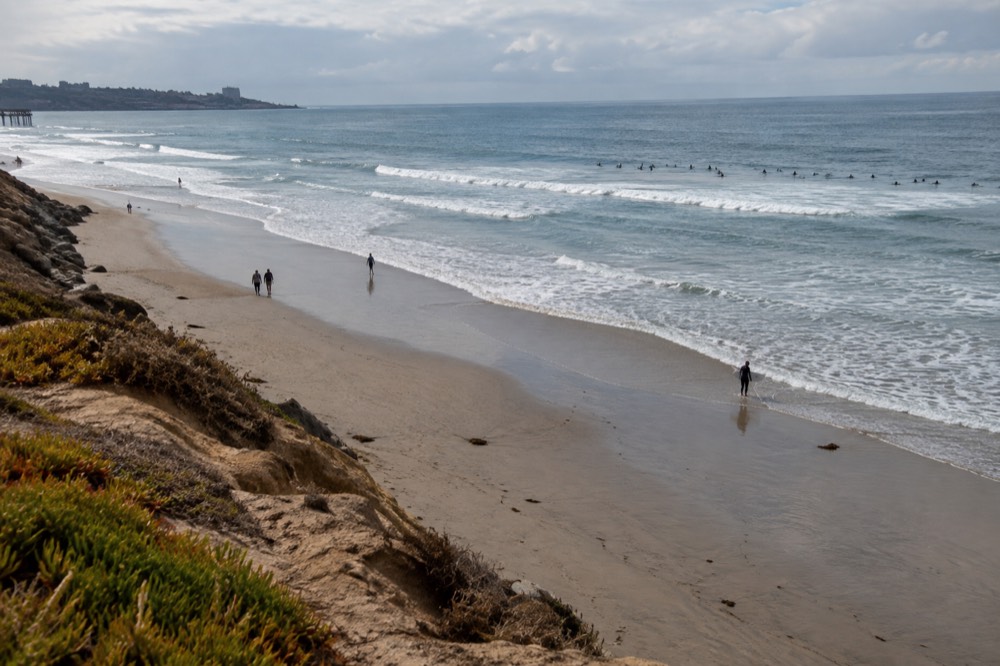
La Jolla Shores is the gentlest of the main breaks. The beach faces almost due west but the wide, shallow bay in front of it flattens swell into slow, forgiving waves, which is why the surf schools cluster here. The beach is also a short walk from the shops and parking along Avenida de la Playa, and it sits beside the same marine reserve that makes the La Jolla Cove area such a draw for snorkelers and kayakers.
Pacific Beach, everyone's PB, is the social hub. The beach is long, the sandbar shifts with the seasons, and the crowd runs from first-day beginners near the pier to competent shortboarders at the north end near Mission Beach. Expect company in the water, especially on weekends, and expect the shoreline to be busy with everyone else's idea of a beach day.
| Beach | Typical wave character | Best for | Crowd level |
|---|---|---|---|
| La Jolla Shores | Slow, soft, spilling | Beginners, lessons | Moderate, thickest mid-morning |
| Pacific Beach | Varied sandbar peaks | Mixed abilities | Busy on weekends |
| Mission Beach | Beach break, consistent | Intermediates | Busy |
| Ocean Beach | Mellow longboard waves | All levels, longboarders | Moderate |
| Sunset Cliffs | Reef and beach breaks, faster | Experienced surfers | Lighter, spread out |
| Imperial Beach | Open beach break | Intermediates | Light |
| Del Mar | Beach break near river mouth | Intermediates | Moderate |
| Encinitas | Several distinct point and reef breaks | Experienced | Moderate |
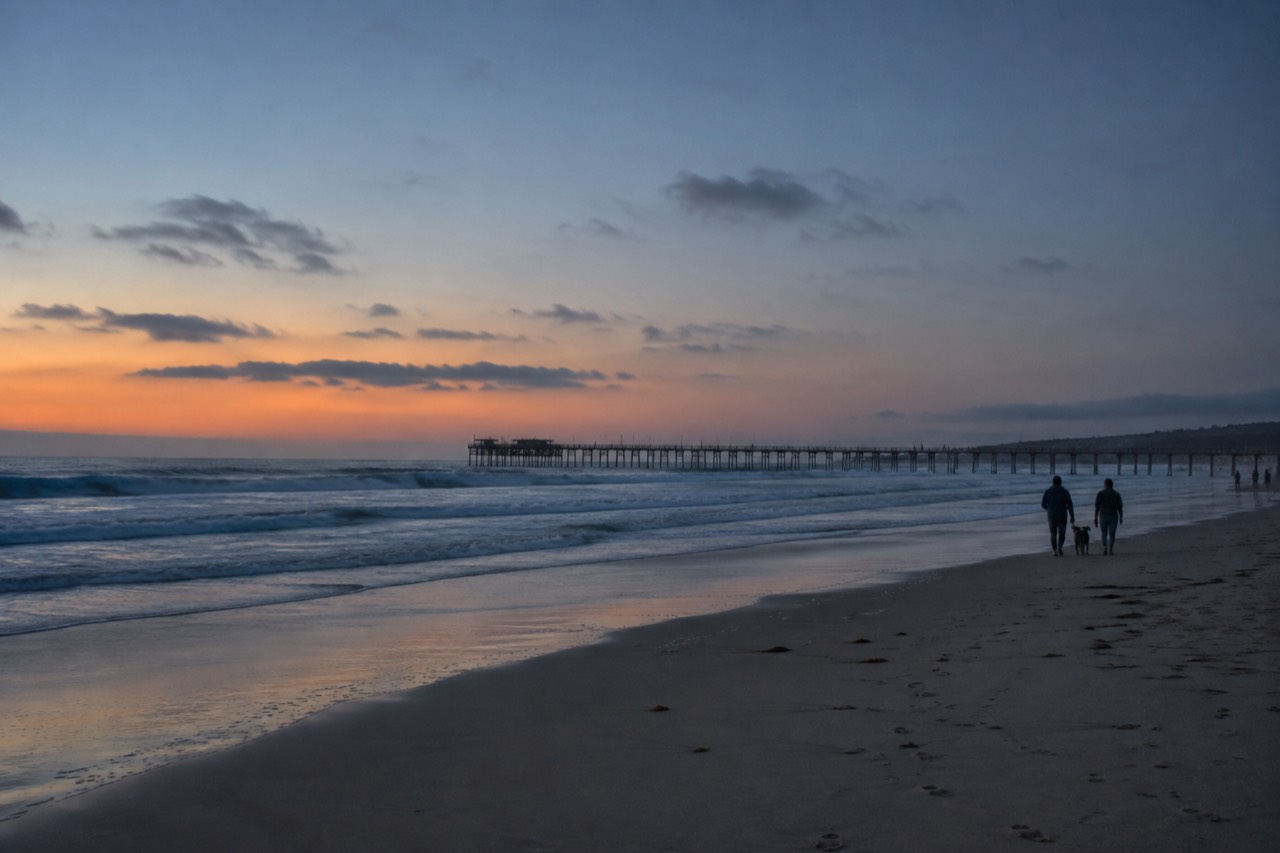
Ocean Beach deserves its own sentence because its vibe differs from the rest. The pier is one of the longest concrete piers on the West Coast, the waves in front of it favor long, gliding rides, and the neighborhood around it, covered in the Ocean Beach guide, is the most deliberately unhurried corner of the city. Sunset Cliffs is the opposite temperament: the reef breaks along the point produce faster, hollower waves over rock, and the walk down to the water is longer, so the crowd self-selects for ability. The cliffs themselves are covered in detail in the Sunset Cliffs Natural Park guide.
Which Beach Should a Beginner Actually Learn On?
Learn at La Jolla Shores, and if it is crowded, move to the north end of Pacific Beach or to Ocean Beach. Those three give you the softest waves, the most forgiving sand bottoms, and lifeguard coverage, which together matter far more than wave size on your first few sessions. Do not start at Sunset Cliffs or the Encinitas reef breaks: rocks, faster waves and thinner crowds are the wrong combination for someone still learning to pop up. A lesson with an instructor compresses the learning curve dramatically, and San Diego has several listed options.
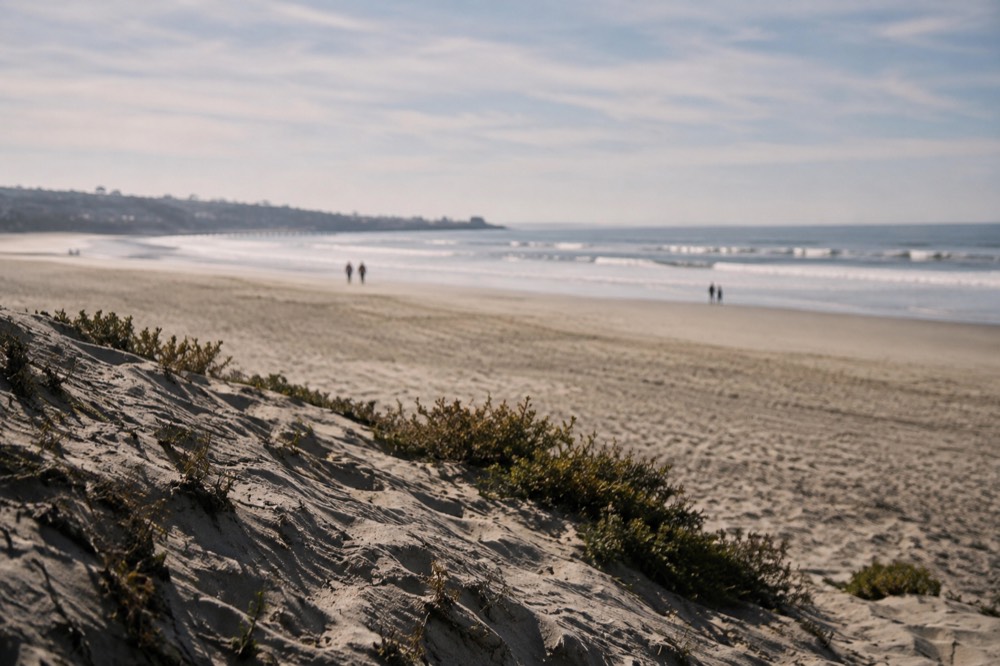
The reason La Jolla Shores works for beginners is physics, not fashion. The gently shelving bottom forces waves to spill rather than dump, so a beginner spends more time standing and less time getting driven into the sand. The same geography that makes the surf gentle also makes the water just offshore excellent for wildlife, which is why guided kayak and snorkel trips launch from the same stretch. If you would rather watch the coastline from the water than fight the white water on a board, the La Jolla Sea Cave Kayak Tour covers the caves and reefs that sit a few hundred paddles from the surf zone.
Structured lessons are the fastest route from lying on the board to standing on it. A guided 1.5-hour surfing lesson in La Jolla puts an instructor in the water beside you at exactly the kind of beach described above, and the operator's live listing shows current availability. Shorter and cheaper intro sessions exist too, including a 30-minute learn-to-surf session in La Jolla, which works as a taste test before committing to a full course.
One practical note on timing: the marine layer that locals call May Gray and June Gloom keeps June mornings grey and mild along the coast, and the surf is often cleanest early before the afternoon wind textures the water. Plan a morning session, and check the San Diego weather and best time to visit guide for how the coast and inland areas behave differently in the same week.
What Is the Water Temperature, and Do You Need a Wetsuit?
Yes, you need a wetsuit for most of the year. San Diego's ocean runs from a mean of about 58F in winter to 68.7F in August at La Jolla, per NOAA's Scripps Pier station, so most surfers wear a 3/2mm wetsuit from roughly October through June and a lighter spring suit in the warmest weeks. Air warmth is misleading here: the ocean is what you feel. The table below gives the monthly means so you can plan by travel date rather than by guesswork.
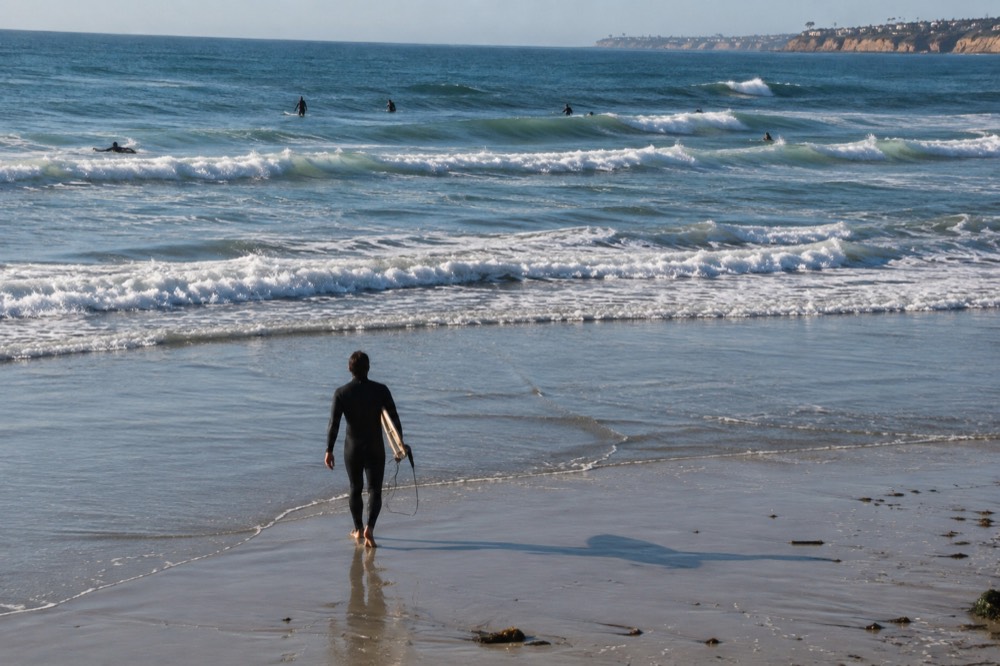
The figures below come from NOAA station 9410230 at La Jolla, hourly observations averaged by month. One trap to avoid: some sites quote a San Diego Bay station, which reads several degrees warmer because it is inside the bay. The open-coast numbers at Scripps Pier are the ones that describe what a surfer actually paddles into, and they are published at NOAA's station page for La Jolla.
| Month | Mean sea surface temp (F) | Month | Mean sea surface temp (F) | |---|---|---| | January | 58.1 | July | 66.5 | | February | 58.0 | August | 68.7 | | March | 58.7 | September | 67.6 | | April | 59.2 | October | 64.0 | | May | 63.4 | November | 62.4 | | June | 64.0 | December | 60.8 |
A 3/2mm wetsuit, meaning 3mm on the torso and 2mm on the limbs, is the standard recommendation for water in the low 60s, which is most of the San Diego year. In the warmest window from late July into September, many surfers drop to a 2mm spring suit, and a few go without, though the mornings still feel cool. Booties are rarely needed, and gloves and hoods are for winter sessions when the water sits near 58F. Rental shops along Pacific Beach and La Jolla carry the full range, so there is no reason to fly with a wetsuit.
The counterintuitive part worth knowing: September is arguably San Diego's best surf-and-swim month. Its normal air high of 77.2F sits just a tenth of a degree behind August's, the ocean is barely off its peak warmth, and the summer beach crowds have gone home. The same pattern shows in the climate data, where August averages one hundredth of an inch of rain and zero days of measurable precipitation.
What Are the Surf Safety Rules in San Diego?
The core rules are simple: swim and surf near a lifeguard, never alone, and know what to do in a rip current, which is the primary hazard on San Diego beaches. Rip currents pull you away from shore, not under it, and the official advice is to stay calm and swim parallel to the beach until the pull relaxes, then angle back in. Alcohol is banned on all city beaches, boardwalks and parks. Those three rules prevent almost every serious incident the city's lifeguards respond to.
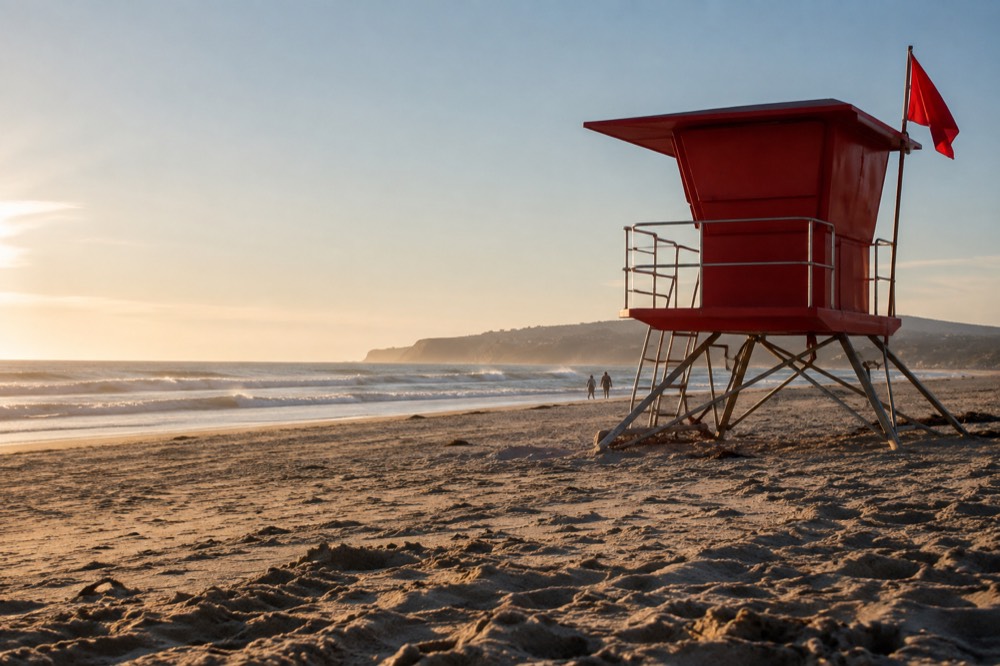
The City of San Diego staffs nine permanent oceanfront lifeguard stations year round across roughly 24 miles of coastline, generally from 9:00 am to dusk, with additional seasonal towers in summer. The city publishes its rip-current guidance at the lifeguards' rip current page, and it is worth sixty seconds of your time before your first session. If you cannot swim out of the pull, float on your back and wave for help. Lifeguards would rather wave back early than make a rescue late.
| Situation | What to do |
|---|---|
| Caught in a rip current | Stay calm, swim parallel to shore until the pull eases, then angle in |
| Too tired to swim out of it | Float on your back and wave for help |
| Choosing where to surf | Pick a stretch within sight of a staffed lifeguard tower |
| Leash snaps or board lost | Do not chase it through the surf, signal and walk in |
| Alcohol at the beach | Prohibited on beaches, boardwalks and parks, plan accordingly |
| Glass containers | Prohibited on all city beaches |
Two etiquette rules matter as much as the official ones. First, do not drop in on someone already riding a wave: the surfer closest to the breaking peak has priority, and violating that rule is the fastest way to make enemies in a lineup. Second, hold on to your board. A loose board in the white water is a hazard to everyone within twenty feet of you, and the leash that keeps it attached is cheap insurance.
The seasonal closure worth checking before a La Jolla session: the Children's Pool area a short way south of the Shores is subject to an annual harbor seal pupping closure, and the exact dates vary by year, so check posted signage rather than assuming. The seals and sea lions that make La Jolla's snorkeling so memorable are protected wildlife, and surfers are expected to give resting animals a wide berth.
Can You Get to the Surf Without a Car?
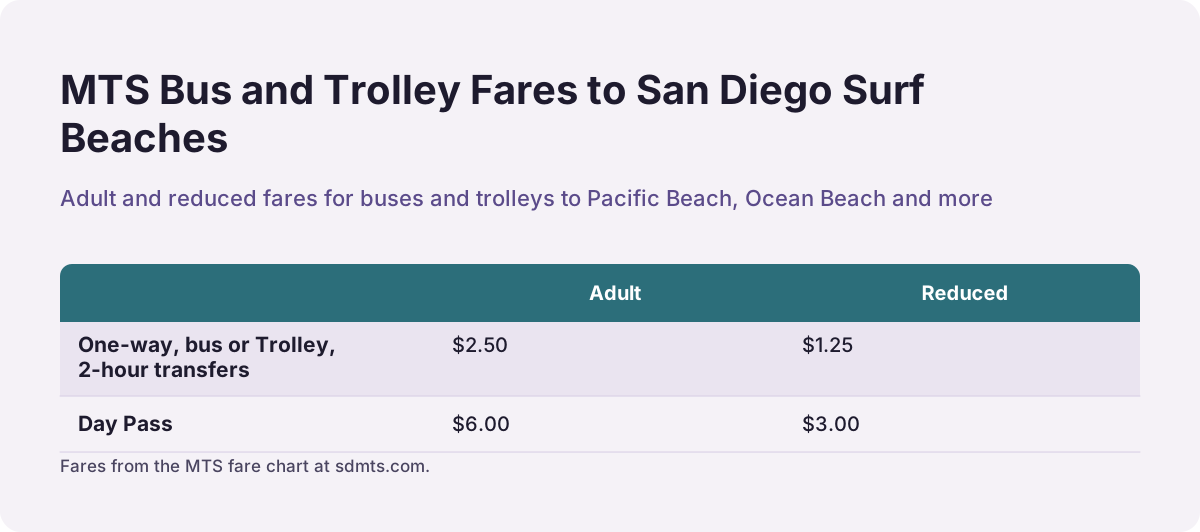
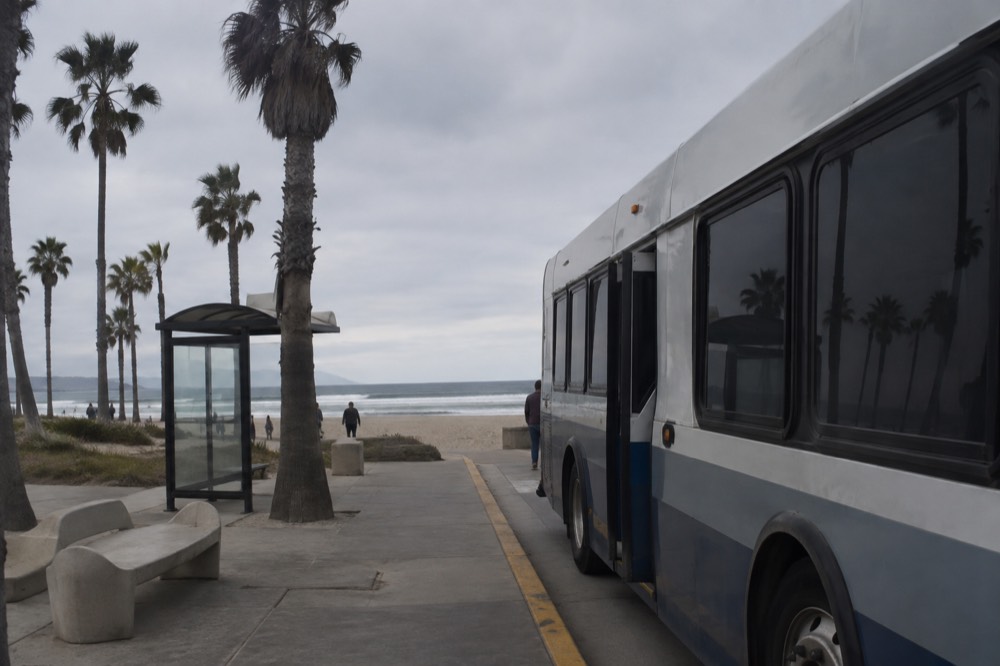
Yes, and it is cheap. MTS buses and trolleys reach Pacific Beach, Ocean Beach, Mission Beach and Imperial Beach, with an adult fare of $2.50 one way or a $6.00 day pass, and the PRONTO system caps your rides automatically at the day-pass value, so there is no reason to buy a pass up front. La Jolla and Sunset Cliffs are reachable by bus too, with a slightly longer ride from downtown. Traveling car-free to the surf is genuinely practical here, not a compromise.
The fare details come straight from the MTS fare chart: $2.50 adult one-way with two-hour transfers, $6.00 for the day pass, and reduced fares of $1.25 and $3.00 for seniors 65 and over, disabled riders and eligible youth. Riders 18 and under travel free on the Youth Opportunity Pass, and up to two children aged five and under ride free with a paying adult. The official MTS fare chart is the page to check before you travel, since fares can change.
| Fare | Adult | Reduced |
|---|---|---|
| One-way, bus or Trolley, 2-hour transfers | $2.50 | $1.25 |
| Day Pass | $6.00 | $3.00 |
The practical detail most visitors miss: PRONTO, the fare system, works as a pay-as-you-go card or app with fare capping. Once your taps in a day add up to the day-pass value, the chart literally reads "Day Pass Earned" and further rides that day are free. Contactless bank cards work for single rides but do not cap, so regular riders should use PRONTO. The full picture, including the airport connection, is in the getting around San Diego guide.
Parking, if you do drive, is the honest problem. Beach lots and street parking near the popular breaks are free to park in but very hard to find in summer, and no published rate table exists for the beach lots, so treat any confident-sounding price you read elsewhere with suspicion. Arrive before mid-morning or plan to walk a few blocks. Downtown meters run $2.50 per hour with enforcement generally Monday to Saturday, 8:00 am to 6:00 pm, and Sunday is no longer free everywhere in the commercial zones. The rest of the planning pages sit on Things to Do in San Diego.
What Else Can You Do When the Surf Is Flat?
When the surf goes small, La Jolla's water is still the main event: guided kayak tours paddle the sea caves, snorkel tours swim with sea lions over the reef, and the harbor cruises leave from the Embarcadero year round. Flat days are also the best days for beginners, since gentle spilling waves are exactly what a first lesson needs. The same coastline that surfers judge by wave quality, everyone else can enjoy by boat, board or mask.
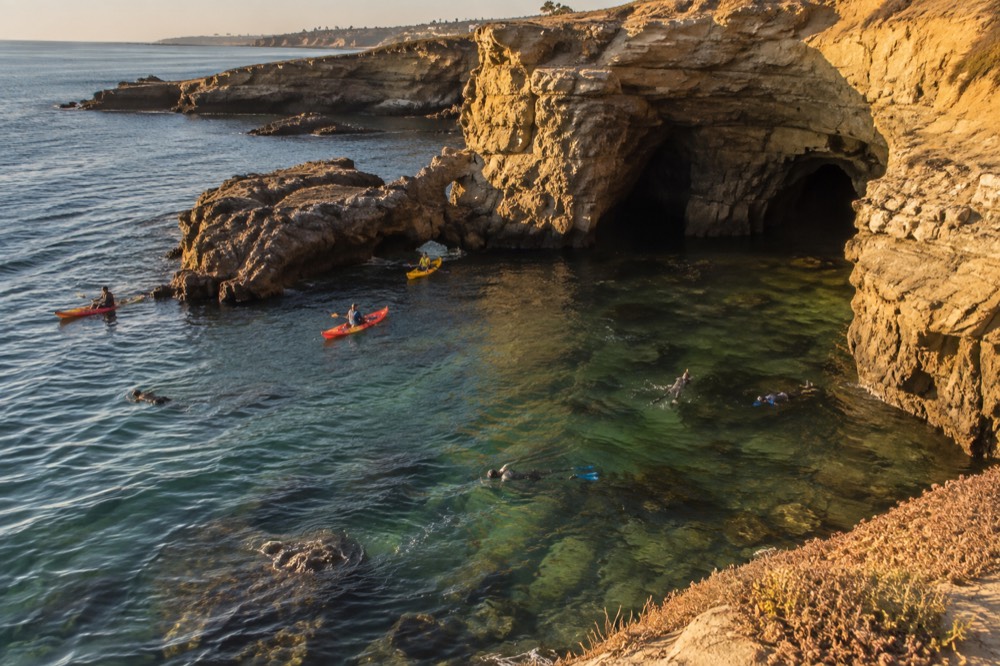
The La Jolla Ecological Reserve sits directly offshore from the Shores, and its kelp forest and cave arches are why the area draws paddlers on nearly every calm day. A guided sea cave kayaking tour takes about an hour and a half, launches from the same beach the surf schools use, and needs no experience. The full rundown of routes, rentals and what the caves actually look like is in the kayaking La Jolla sea caves guide.
If you would rather be under the water than on it, the La Jolla Cove snorkeling tour with sea lions and caves runs about an hour and a half and swims the same reef from the Cove side. And if the coast is grey with the marine layer, a harbor cruise from downtown gives you the city from the water, one hour, no wetsuit required.
When Is the Best Season to Surf in San Diego?
Surf arrives year round, but the character changes: winter brings the largest and most consistent northwest swell, late summer and early fall bring the warmest water at 67 to 69F with smaller, cleaner waves, and spring sits in between with variable conditions. September stands out as the sleeper pick, warm water, warm air, thin crowds, while the gray whale migration makes winter the season with a bonus spectacle offshore. There is no bad month, only different trade-offs.
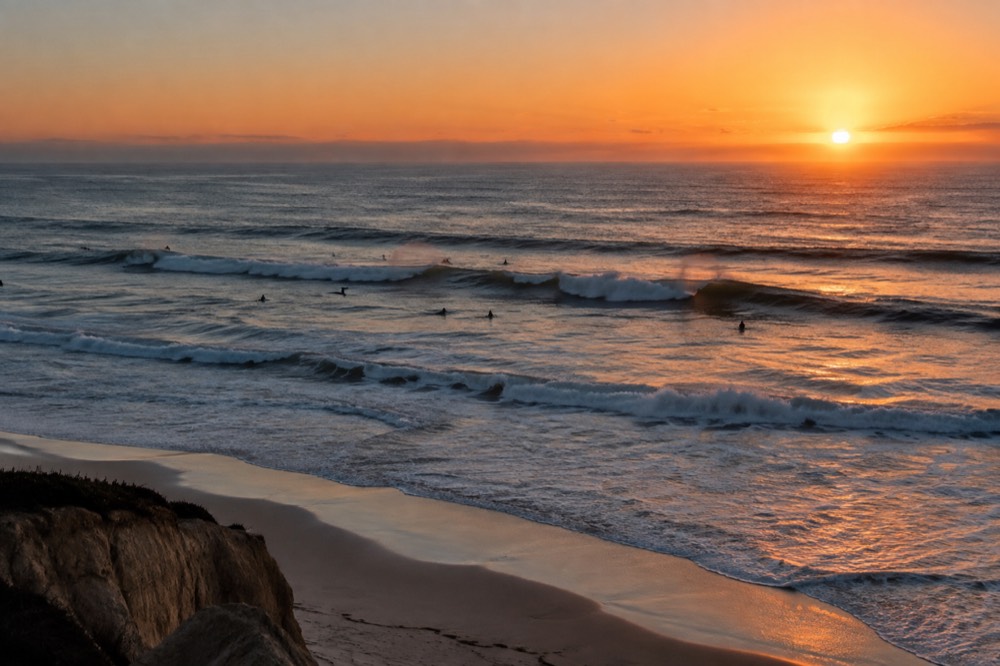
Winter is when experienced surfers earn their sessions. Northwest groundswell marches down the coast from December through February, lighting up the west-facing beaches and the point breaks, and the water sits near its annual floor of about 58F, so a full 3/2mm suit with maybe booties is the call. The same months bring more than 20,000 gray whales past San Diego each year, with mid-January the peak of the migration, per the National Park Service, so a long wait between sets occasionally comes with a spout on the horizon.
Summer is the beginner season, with two caveats. The water is at its warmest, climbing from 63.4F in May to 66.5F in July, but the marine layer keeps many mornings grey along the coast while inland areas sit in sunshine. The surf is also at its smallest and most crowded, which is fine for learning and frustrating for anyone chasing size. The monthly breakdown of what the city feels like is in the things to do in San Diego in September and the other month guides.
Fall is the local favorite. The northwest swell starts returning in October, the water is still 64F or better through the month, and the crowds thin dramatically after Labor Day. August's climate normals show one hundredth of an inch of rain and zero days of measurable precipitation, and September is nearly as dry, so a fall trip rarely gets rained out. The one planning note: rain is a winter phenomenon here, with December through March carrying 7.3 of the year's inches, so winter surfers should check water quality advisories after storms, which the county posts at sdbeachinfo.com.
How Do You Pick a Surf School or Tour?
Pick by instructor ratio and beach, not by price alone: a lesson at La Jolla Shores with a small group and a guide in the water beats a cheap large-group session anywhere else. Check that the operator's live listing shows free cancellation, since surf conditions and travel plans both change, and read recent reviews for mentions of patience with first-timers. The tours linked through this site all carry live availability and cancellation terms on their listings.
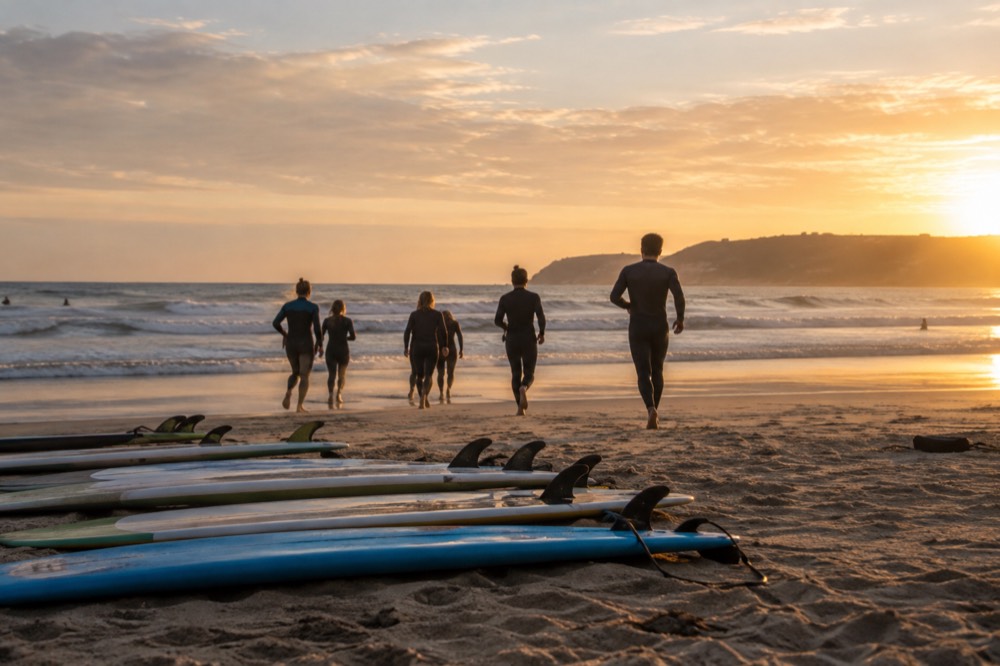
The realistic expectations for a first lesson are worth setting. Most beginners stand up within the first hour at a gentle beach, and most are pleasantly sore the next day in muscles they did not know they used. A 1.5-hour lesson covers the pop-up on the sand, the paddle out, and a string of attempts with the instructor pushing you into waves, which is genuinely the fastest way to feel the board under your feet. Reviews for the San Diego lessons repeatedly mention exactly that progression, so plan a first session as a success even if you never make it to unbroken waves.
What to bring is short: a swimsuit to wear under the wetsuit, a towel, sunscreen applied before the suit goes on, and water. Boards and wetsuits are included with lessons, and rental shops along the beachfronts rent them separately if you would rather practice alone after a lesson. Book a morning slot if you can, both for the cleaner surf before the afternoon wind and for the parking, which any Pacific Beach or La Jolla visitor will tell you disappears well before noon in summer.
If your trip is more about being on the water than on a wave, the three options below cover the coast from a kayak seat, a mask and a boat deck, and every one of them runs from launch points a short walk from the breaks described above.
Common Questions About Surfing in San Diego
Where are the best surfing beaches in San Diego?
La Jolla Shores for beginners, Pacific Beach for a social mixed-level session, Ocean Beach for longboarding, and Sunset Cliffs for experienced surfers who want faster reef waves. Mission Beach, Imperial Beach, Del Mar and Encinitas fill out the list.
Do you need a wetsuit to surf in San Diego?
For most of the year, yes. The ocean runs from about 58F in winter to 68.7F in August, so a 3/2mm wetsuit is standard from roughly October through June, with a lighter spring suit enough in the warmest late-summer weeks.
Can beginners learn to surf in San Diego?
Yes, and it is one of the better beginner cities on the West Coast because La Jolla Shores produces slow, forgiving waves and the popular beaches are lifeguard-staffed year round. A guided lesson at the Shores is the fastest way to stand up on your first day.
What is the best month to surf in San Diego?
September is the sleeper pick: the water is barely off its August peak, the air is as warm as July, and the crowds have thinned. Winter brings the biggest swell for experienced surfers, but the water sits near 58F.
How much does it cost to get to the beach by bus?
MTS charges $2.50 per adult one-way ride with two-hour transfers, or $6.00 for a day pass, and the PRONTO system caps your rides at the day-pass value automatically. Riders 18 and under travel free on the Youth Opportunity Pass.
Is surfing in San Diego safe?
The popular breaks sit within the city's year-round lifeguard coverage, and the main hazard is rip currents. Swim parallel to shore if caught in one, float and wave if you cannot get out, and never surf alone or near nobody.