Things to Do in Pacific Beach, San Diego: A Complete Neighborhood Guide
Pacific Beach is San Diego's most walkable beach town: a concrete boardwalk, a vintage pier, a bay side for calm water, and a nightlife strip that runs late into the night.
Short answer
Pacific Beach centers on a 3-plus mile oceanfront boardwalk connecting the sand to Mission Beach, with Crystal Pier as its landmark. Swim near the nine year-round lifeguard stations, surf the breaks near the pier, and use the $2.50 MTS bus or a $6 day pass to arrive without a car. August and September bring the warmest water and air.
Pacific Beach, almost always shortened to PB by locals, is the neighborhood that puts San Diego's beach culture within walking distance of everything else. A concrete boardwalk runs along the sand, Crystal Pier juts out over the surf, Garnet Avenue holds the bars and taco shops, and Mission Bay sits one block inland with flat water for kayaking. The team behind Things to Do in San Diego rates it the single best base for travelers who want a beach vacation without renting a car, and this guide explains why, section by section.
What Is Pacific Beach Known For?
Pacific Beach is known for three things: the oceanfront boardwalk that links it to Mission Beach, Crystal Pier stretching over the surf at the north end of the sand, and a concentration of bars and casual restaurants along Garnet Avenue that makes it the loudest of San Diego's beach towns. Add the bay side, where Mission Bay offers calm, warm-adjacent water one block from the ocean, and you get a neighborhood where a single stay covers surfing, paddle sports, cycling and nightlife without moving hotels. It draws a younger crowd than neighboring La Jolla and a louder one than Ocean Beach, and that mix is exactly why people choose it or skip it. Knowing the character before you book saves a mismatched trip.
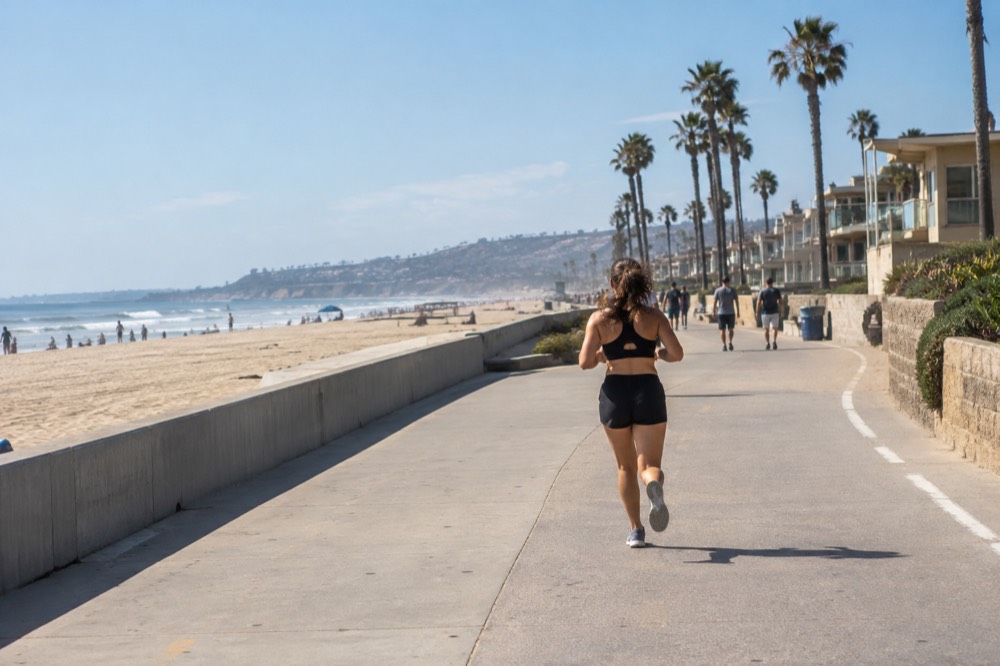
The boardwalk is the spine of the neighborhood. It is a paved, car-free path running along the beach, used by walkers, joggers, skaters and cyclists from early morning until the crowds thin after sunset. You can walk it south all the way into Mission Beach and Belmont Park without ever leaving the sand, which effectively doubles the length of your beach. Renting a bike or a skateboard for a few hours is one of the default PB activities, and the shops along the boardwalk and Mission Boulevard rent by the hour.
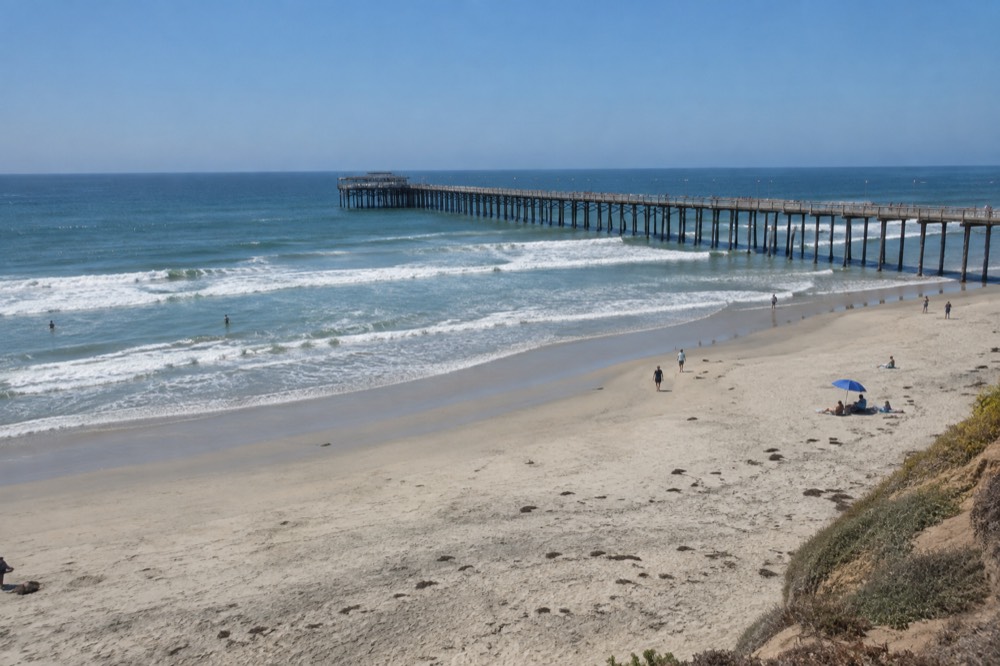
Crystal Pier is the postcard view. It is a wooden pier at the north end of the beach, unusual because it carries small cottages along its length rather than being a plain fishing structure. You cannot walk its full length unless you are a guest, but from the sand it frames the classic PB photograph, especially at sunrise when the light comes up behind it. The pier also marks the main surf break, so the water around it is where boards concentrate.
Inland, the neighborhood stacks up in clean layers. Garnet Avenue is the commercial strip, Mission Boulevard runs north-south through the middle, and Cass Street toward the north end holds a quieter, more local stretch of coffee shops and bars. One block east of the oceanfront streets the neighborhood meets Mission Bay, where the water is flat and the vibe is families and paddleboards rather than surfers.
What Are the Best Things to Do in Pacific Beach?
The best things to do in Pacific Beach are walking or cycling the boardwalk to Mission Beach, swimming and surfing near the lifeguard stations, watching sunset from the sand or a pier-adjacent bar, paddling on Mission Bay, and spending an evening on Garnet Avenue. All of them are free or cheap, none require a booking more than a day ahead except the guided water tours, and most sit within a ten minute walk of any oceanfront hotel. A visitor with two full days can do the entire list without a car and without rushing. The order below roughly matches how a day actually unfolds: beach in the morning, bay in the afternoon, bars after dark.
Start with the boardwalk, because it is the thing PB has that the other beach towns only partly share. A round trip on foot from the Crystal Pier end down to Belmont Park at the south edge of Mission Beach takes a couple of hours at a strolling pace, with the whole way running between sand and beach houses. Belmont Park at the far end is a classic oceanfront amusement park with a vintage roller coaster right on the boardwalk, and it makes a natural turnaround point. Cyclists and skaters share the path, so keep to the right and expect the flow to be busy on weekend afternoons.
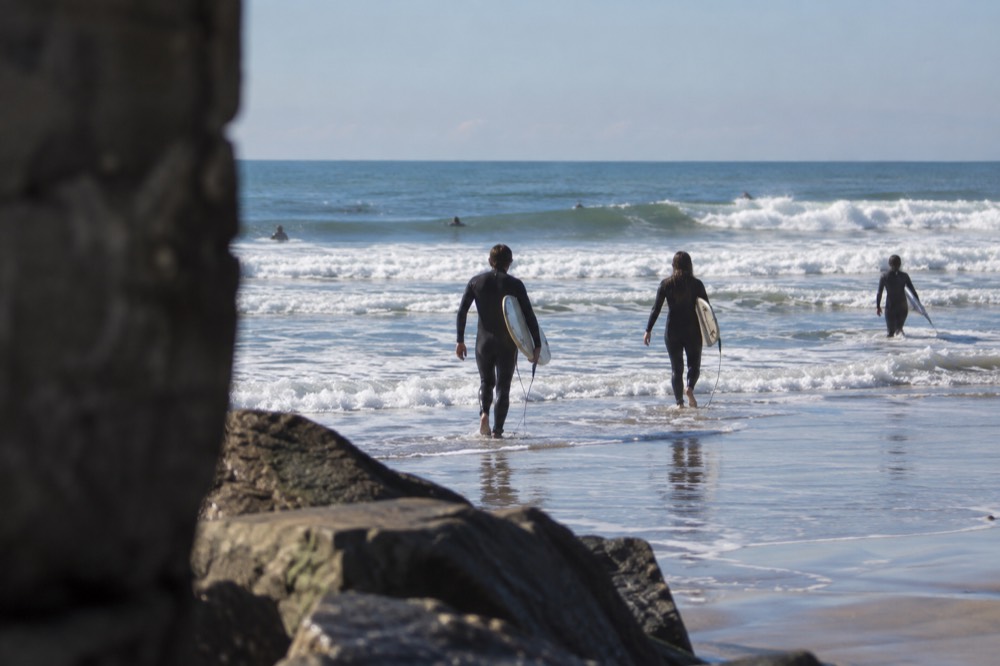
The beach itself is the second act. City of San Diego Lifeguards staff nine permanent oceanfront stations year round, covering roughly 24 miles of coastline, with additional seasonal towers in summer, and staffed hours are generally 9:00 am to dusk. Swimming between the flags near a staffed tower is the standard advice, and it matters here because the surf is real: PB is a genuine surf break, not a gentle swimming bay. That is a feature, not a flaw. Surfers spread out along the beach with the heaviest concentration near the pier, and beginners take lessons in the softer whitewater closer to the sand.
Afternoons belong to the bay side. Mission Bay's flat water suits paddleboards, kayaks and jet skis in a way the open ocean does not, and rental outfits line the bayfront. It is also where the family-friendly energy concentrates: calm water, grass parks, picnic tables and playgrounds, all a short walk from the ocean. If you are planning a trip around kids, the family beaches guide compares this stretch with the other calm-water options.
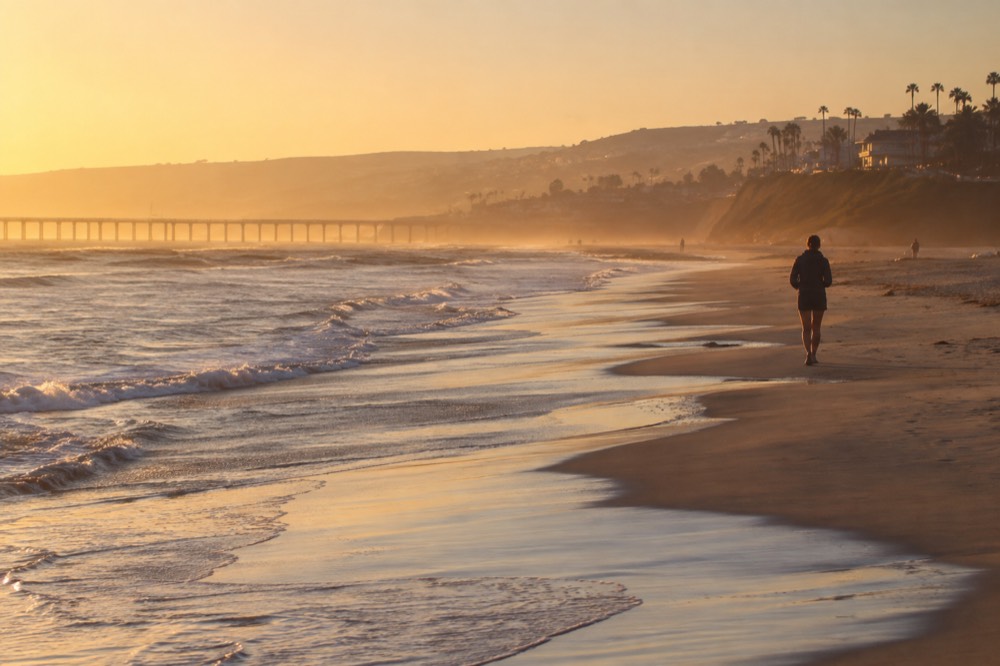
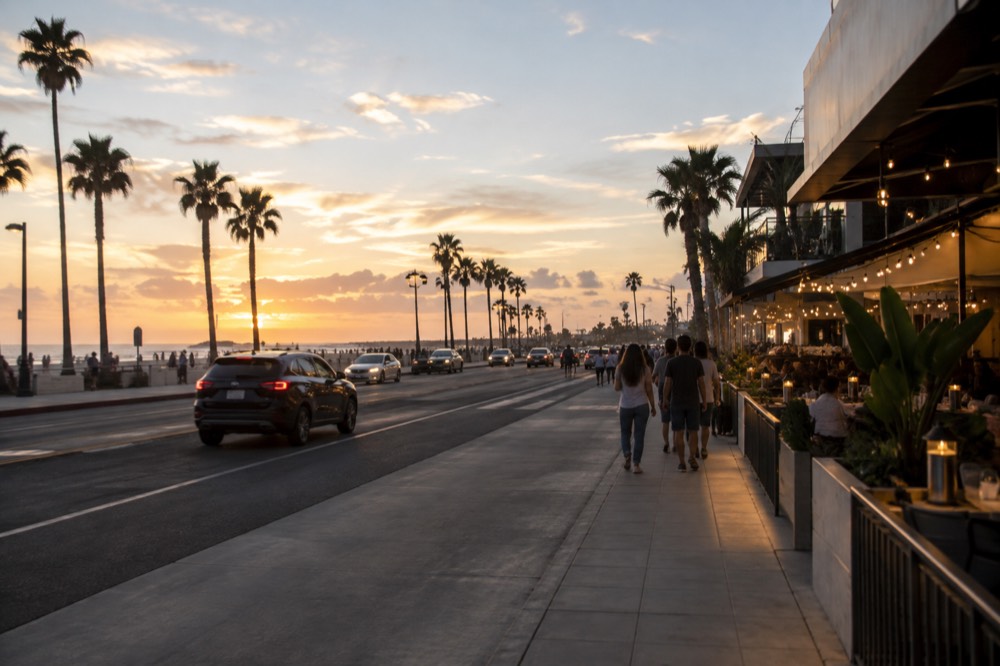
Evenings run in two directions. Sunset from the sand is a genuine event here because the beach faces open ocean to the west, and the sunset spots guide ranks the PB stretch among the city's reliable ones. After dark, Garnet Avenue takes over. It holds the densest collection of bars and casual restaurants of any San Diego beach neighborhood, running from dive bars to taco shops to cocktail rooms, and it is walkable from essentially the entire oceanfront strip. Alcohol is prohibited on the beach, boardwalks and parks themselves, so the drinking happens indoors, which is worth knowing before you plan a beach cooler.
Can You Swim and Surf at Pacific Beach?
Yes, and it is one of the better swim-and-surf beaches in the city, with a real surf break near Crystal Pier, whitewater closer to the sand for beginners, and year-round lifeguard coverage, though the ocean is cold enough that most people surf in wetsuits outside of late summer. Mean sea temperature off La Jolla, the nearest long-term NOAA station, runs from about 58 degrees in winter to a peak of 68.7 in August, so the comfortable swimming window is July through September and the rest of the year is a wetsuit proposition. Rip currents are the primary hazard, and the official advice is to stay calm and swim parallel to the shore until the pull relaxes. None of this makes the beach dangerous, it makes it a surf beach with rules worth following.
The water temperature story is the one visitors from Florida or the Gulf consistently underestimate. Here is the monthly picture from the La Jolla station, hourly observations averaged by month:
| Month | Mean sea temp °F | Month | Mean sea temp °F |
|---|---|---|---|
| January | 58.1 | July | 66.5 |
| February | 58.0 | August | 68.7 |
| March | 58.7 | September | 67.6 |
| April | 59.2 | October | 64.0 |
| May | 63.4 | November | 62.4 |
| June | 64.0 | December | 60.8 |
August is the warmest month in the water, September is a close second, and by November the ocean has dropped back six degrees. A traveler visiting in March will find 58 degree water, which is swimmable for a few minutes and surfable only in a full wetsuit. A traveler visiting in late August gets the best ocean of the year, which is one reason the September guide is worth reading even for a beach-only trip.
For surfing, PB works for every level. The break near the pier holds the more experienced surfers, the mid-beach peaks spread the crowd, and the whitewater near the sand is where surf schools run first-timers. Lessons are the fastest route in if you have never surfed, and the La Jolla surfing lesson covers the fundamentals in an hour and a half with gear included, a short drive up the coast.
The safety rules are simple and published by the city. Swim near a lifeguard, never swim alone, and if you are caught in a rip current do not fight it toward shore: swim parallel until the pull relaxes, then angle in, and float and wave for help if you cannot make it. The city's own rip current guidance is worth a minute of reading before a first swim. Glass containers, alcohol and smoking are all prohibited on San Diego beaches and boardwalks, and the full regulation list is on the lifeguards' beach regulations page.
How Do You Get to Pacific Beach Without a Car?
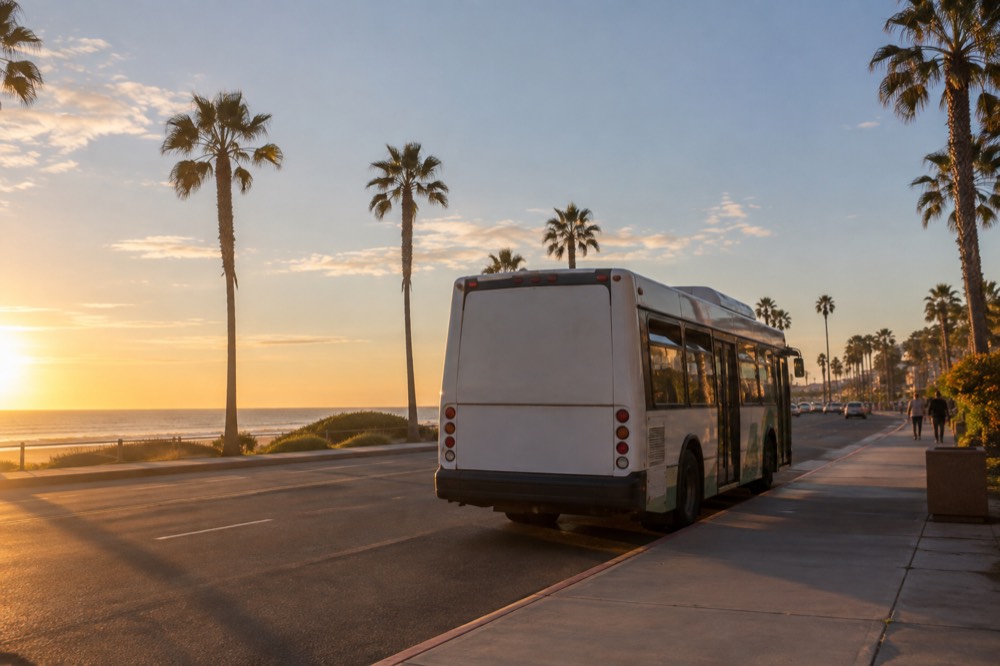
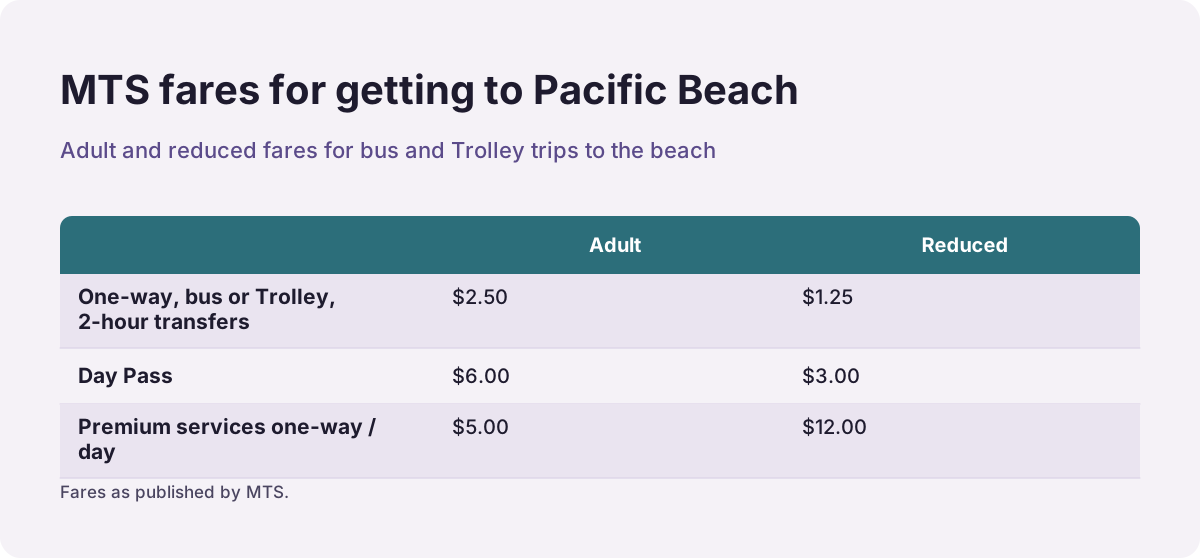
You take an MTS bus: the one-way fare is $2.50 and the day pass is $6.00, PB is served by several routes from downtown and Old Town, and paying with the PRONTO card or app caps your fares automatically so a day pass never needs to be bought up front. There is no Trolley line to the beach itself, the Trolley runs inland, so the last leg is always a bus or a short rideshare. From downtown the trip runs roughly half an hour, from Old Town a bit less. Travelers landing at the airport should know there is no Trolley station there either: the Route 992 bus runs every 15 minutes from both terminals to the Trolley interchange at Broadway and Kettner for $2.50, and the free San Diego Flyer shuttle runs to Old Town Transit Center, where you transfer toward the beach.
The fare structure rewards pay-as-you-go. Load money on PRONTO, tap on each ride, and once your taps in a day reach the day-pass value the system simply stops charging you, the chart literally reads "Day Pass Earned." Contactless bank cards work too, but they are one-way only and do not cap, so regular riders should use the card or app.
| Fare | Adult | Reduced (senior 65+, disabled, Medicare, youth with ID) |
|---|---|---|
| One-way, bus or Trolley, 2-hour transfers | $2.50 | $1.25 |
| Day Pass | $6.00 | $3.00 |
| Premium services one-way / day | $5.00 | $12.00 |
Youth 18 and under ride free on the Youth Opportunity Pass, and up to two children aged 5 and under travel free with a paying adult. The full fare chart is published by MTS.
Driving is the other option, and parking is the honest catch. Beach parking in PB is street-and-lot parking that is free to park in and very hard to find in summer, particularly on weekend afternoons. No published rate table exists for the beach lots, and this site does not guess at one. Downtown meters elsewhere in the city run $2.50 per hour, but the beach neighborhoods are a different animal: the play is to arrive before mid-morning, park a few blocks east of the oceanfront where the streets are residential, or come by bus and skip the hunt entirely. The parking guide covers the citywide picture if you are touring beyond the beach.
When Is the Best Time to Visit Pacific Beach?
The best time to visit Pacific Beach is September, when the normal high is 77.2 degrees, the ocean is at 67.6 degrees, its second-warmest month, and the summer crowds have gone, followed closely by August, which has the warmest water of the year at 68.7 degrees. July is the busiest month, June is greyer than visitors expect, and October delivers a 74.6 degree normal high with thinner crowds. Winter is mild, with January highs of 66.4, but the ocean sits near 58 and the water is strictly for wetsuits. The counterintuitive part is the marine layer: locals call the spring and early summer pattern May Gray and June Gloom, and it is visible in the 30-year climate normals themselves, June's normal high of 71.7 is lower than October's 74.6.
The full temperature picture, from the official 1991-2020 climate normals at the San Diego airport station:
| Month | Normal high °F | Normal low °F | Rain days (0.10 in+) |
|---|---|---|---|
| January | 66.4 | 50.3 | 4.0 |
| March | 67.0 | 54.5 | 3.1 |
| May | 69.5 | 60.0 | 0.7 |
| June | 71.7 | 62.6 | 0.1 |
| July | 75.3 | 66.1 | 0.1 |
| August | 77.3 | 67.5 | 0.0 |
| September | 77.2 | 66.2 | 0.2 |
| October | 74.6 | 61.5 | 1.1 |
| December | 66.0 | 49.8 | 3.1 |
Rain is a winter phenomenon in San Diego, and this matters for trip planning more than most visitors realize. December through March carry the bulk of the year's rain, August averages one hundredth of an inch with zero days of measurable rain, and September is nearly as dry. A September trip combines the year's warmest air, its second-warmest water and almost no rain risk, which is why locals quietly consider it the real summer.
Where Should You Stay and Eat in Pacific Beach?
Stay oceanfront between Crystal Pier and the Mission Beach line if you want the boardwalk at your door, a block or two east on the bay side if you want quiet and family-friendly, and along Garnet Avenue only if nightlife is the point of the trip, because the bar strip runs loud late into the night. The neighborhood's hotel stock skews toward smaller independent properties, motels and vacation rentals rather than resort towers, and prices swing hard between February and August. For eating, Garnet Avenue and the boardwalk hold most of the casual options, taco shops and burger stands dominate, and the coffee-and-brunch cluster sits toward Cass Street at the north end. Nothing here needs a booking far ahead except a holiday weekend.
The location trade-off is the real decision. Oceanfront puts you on the sand in one minute and in the noise until late. The bay side, one block east, is where families and early risers do better: flat water, playgrounds, and a short walk over to the ocean whenever you want it. The where to stay guide compares PB against La Jolla, Coronado and downtown if you are still choosing a base for the whole trip.
If you want the bay at sunset rather than the bars, a small-group sunset sailing excursion out of the harbor is the calmer evening on the water, three hours with a handful of other passengers.
For the practical side of a longer stay, the budget itinerary and the free things to do guide both lean heavily on this stretch of coast, since the boardwalk, the sand and the bay parks cost nothing.
What Is Near Pacific Beach for a Day Trip?
The closest day trips are Mission Beach and Belmont Park on foot or by bike, La Jolla five to ten minutes up the coast for sea caves, snorkeling and kayaking, Ocean Beach to the south for a quieter pier-and-dog-beach vibe, and downtown's harbor about twenty minutes away by bus or rideshare. None of these need a car. La Jolla is the standout: its shoreline is legally protected water where sea lions haul out and leopard sharks gather in summer, and the sea caves are only reachable from the water. The harbor side balances it with the USS Midway, the Embarcadero and sightseeing cruises. A one-week stay can alternate beach days with one trip up the coast and one downtown.
The La Jolla sea cave kayak tour is the natural first pick. It runs two hours with a guide through the caves and the protected reserve, launching from a beach a short drive, bus or rideshare north of PB, and it pairs with the La Jolla Cove snorkeling tour for a full water day. The caves sit in an area where swimming alone is awkward and a guide handles the logistics.
For contrast, the one-hour harbor cruise out of the downtown waterfront is the low-effort version of being on the water: naval ships, the downtown skyline and the Coronado Bridge from the deck, no wetsuit required.
Common Questions About Pacific Beach
What is Pacific Beach known for?
The oceanfront boardwalk that connects it to Mission Beach, Crystal Pier at the north end of the sand, and the Garnet Avenue bar and restaurant strip. Mission Bay one block inland adds flat-water paddling and family parks to the ocean surf.
Can you swim at Pacific Beach?
Yes, with lifeguards staffing nine permanent oceanfront stations year round and seasonal towers in summer. The ocean runs from about 58 degrees in winter to 68.7 in August, so the comfortable swimming window is July through September and a wetsuit is standard for surfing outside it.
Is Pacific Beach walkable?
Very. The boardwalk, the sand, Garnet Avenue and the bay front are all within a flat twenty minute walk of each other, and the walk south along the boardwalk into Mission Beach and Belmont Park takes about an hour each way at a strolling pace.
How do you get to Pacific Beach from downtown San Diego?
By MTS bus, with a $2.50 one-way fare or a $6.00 day pass, roughly half an hour's ride. There is no Trolley line to the beach, so the final leg is always a bus or a short rideshare. Paying with PRONTO caps your fares automatically, so there is no reason to buy a day pass up front.
Is parking free at Pacific Beach?
Street and lot parking in the beach neighborhoods is free to park in but very hard to find in summer, and no published rate table exists for the beach lots. Arrive before mid-morning, park a few blocks east, or take the bus.
When is the best month to visit Pacific Beach?
September: a 77.2 degree normal high, the second-warmest ocean of the year at 67.6 degrees, almost no rain, and thinner crowds than July and August. August has the warmest water; June is greyer than visitors expect because of the marine layer.