Where to Stay in San Diego: Best Neighborhoods and Hotels for Every Trip
The right place to stay in San Diego depends less on hotels and more on which neighborhood you pick, because the city spreads its good parts across a long stretch of coast and mesa. This guide matches each area to a type of trip.
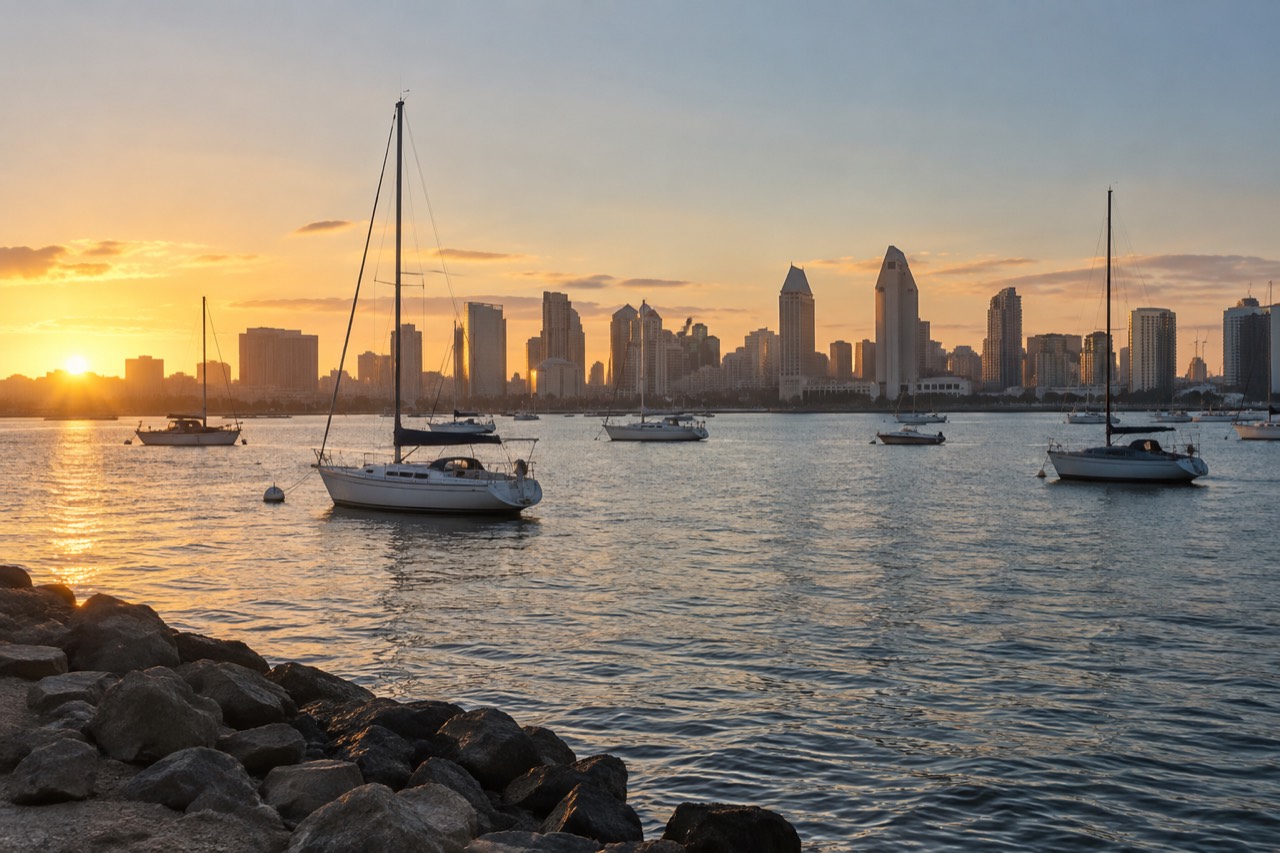
Short answer
First-time visitors do best downtown or in the Gaslamp Quarter, close to the bay, the USS Midway and the trolley. Beach travelers should look at La Jolla or Coronado, budget travelers at neighborhoods along the Blue Line trolley, and families at Mission Bay. San Diego County runs about 74.2 percent hotel occupancy, so summer and holiday weekends book out early.
San Diego does not have one center. It has a downtown grid pressed against the bay, a string of beach towns up the coast, a park the size of a small city in the middle, and neighborhoods that each feel like separate small towns. Where you sleep decides how much of it you actually see, because crossing the city takes real time and parking is its own project. This guide walks through every area worth booking, matches each one to a type of traveler, and covers the transport and booking-timing questions that matter once you have chosen.
Where Is the Best Place to Stay in San Diego for a First Visit?
For a first trip, downtown San Diego or the Gaslamp Quarter is the strongest base, because it puts you within walking distance of the Embarcadero, the USS Midway Museum, Seaport Village and Petco Park, with the trolley two blocks away for everything else. You can walk to dinner, ride the trolley to Old Town or Balboa Park, and finish on the waterfront without ever starting a car. A downtown stay trades beach access for convenience, and for two or three days that trade is usually worth it.
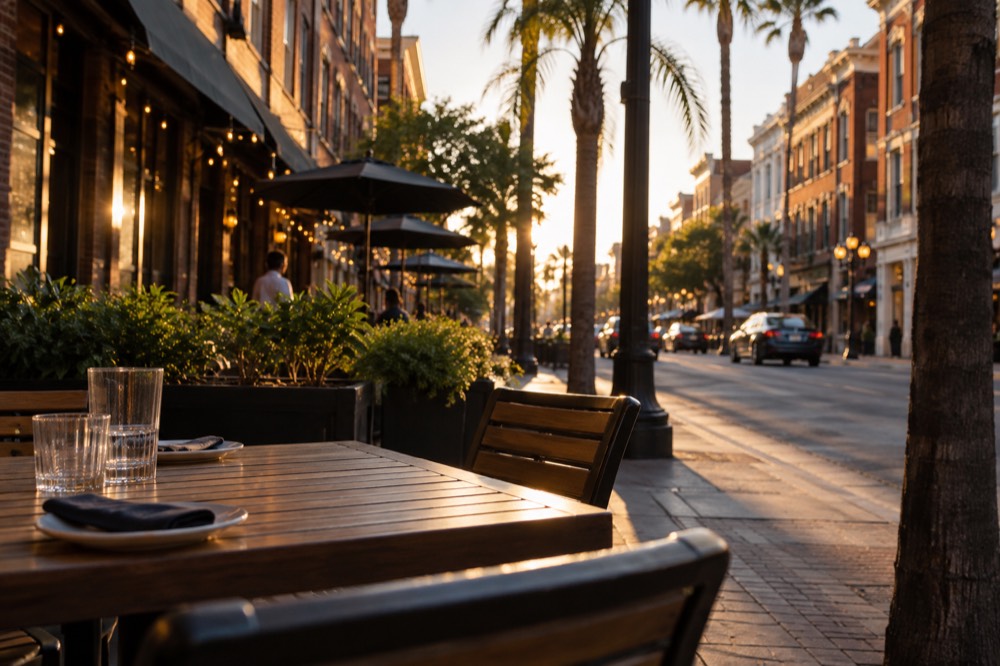
The practical case for downtown is simple. The attractions that define a short visit, the bay, the Midway, the Gaslamp nightlife, Little Italy's restaurant row, all sit inside a walkable strip along the water. The downtown San Diego guide covers the blocks in detail, but the short version is that anything between the Embarcadero and the Gaslamp keeps you on foot for most of a first day.
The Gaslamp Quarter deserves its own mention because it splits opinion. It is loud on weekend nights, genuinely so, and travelers who sleep lightly should ask for a room on an upper floor facing away from Fifth Avenue. On the other hand it puts you inside the city's best-known dining and nightlife district, and the trolley station at Fifth and Harbor connects you to the rest of the city in minutes. If you are weighing that exact trade, the question of whether it is better to stay in Gaslamp or downtown breaks down along noise and price lines, and the Gaslamp loses on the first while winning on the second.
One thing downtown does not give you is the ocean. The nearest swimmable beach is a trolley or rideshare ride away, and if your mental image of San Diego is a morning swim, base yourself by the water instead and accept a longer ride into town.
Which San Diego Neighborhood Is Right for Your Trip?
La Jolla suits travelers who want dramatic coastline and upscale calm, Coronado suits families and beach purists, Pacific Beach and Mission Beach suit the nightlife-and-surf crowd, North Park and Hillcrest suit food and beer lovers, and Old Town and Little Italy suit visitors who want walkable, quieter bases near the trolley. None of these is a wrong answer; each one simply optimizes for a different trip, and the table below matches them up.
| Neighborhood | Best for | Main trade-off |
|---|---|---|
| Downtown / Gaslamp | First visits, nightlife, walkable sightseeing | Weekend noise, no beach on foot |
| Little Italy | Restaurants, quieter nights, trolley access | Fewer hotel bargains |
| La Jolla | Coastline, kayaking, upscale stays | Furthest from downtown, priciest area |
| Coronado | Families, beach days, low-key pace | Ferry or bridge to everything else |
| Pacific Beach | Surf, boardwalk, bars | Party-adjacent in summer |
| Mission Bay | Families with kids, bay activities | Car useful for anything inland |
| North Park | Craft beer, restaurants, local feel | Trolley does not reach it |
| Old Town | History, transit hub, day trips south | Quiet after dark |
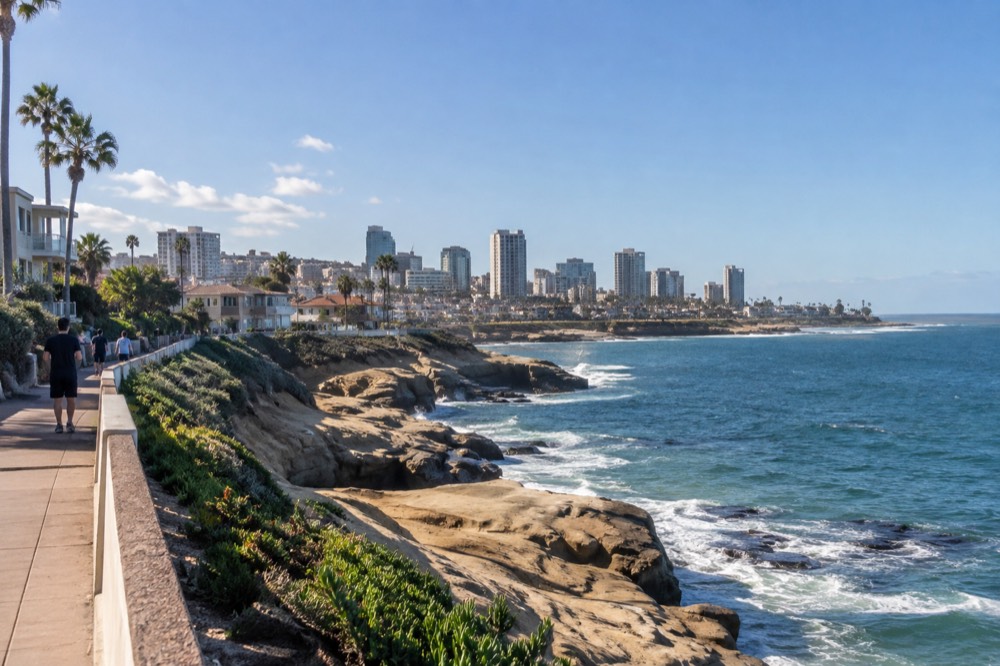
The two coast picks reward different travelers, and the comparison piece on La Jolla versus Coronado goes deeper than a table can. La Jolla gives you the Cove, the sea caves and a village you can wander for a full day. Coronado gives you a wide, gentle beach and the Hotel del Coronado as a neighbor, at the price of being an island commute from downtown.
If your trip is built around food and beer rather than sand, flip the whole calculation. North Park is the city's brewery heartland, and Hillcrest sits right beside it with a denser restaurant scene. Neither is on the trolley, so a stay there means rideshares or buses for sightseeing, in exchange for the neighborhoods where locals actually spend their weekends.
Whichever base you pick, a couple of well-chosen tours do more for a short trip than a car does. A narrated trolley loops the headline sights, a GoCar route lets you drive yourself through downtown and Old Town or out to the beaches, and the USS Midway ticket is the single most reliable half day on the Embarcadero.
Where Should You Stay in San Diego on a Budget?
Budget travelers should look along the Blue Line trolley rather than at the beach, because neighborhoods south and north of downtown, from Barrio Logan and Chula Vista up toward Old Town, carry noticeably lower room rates while keeping a two-dollar-and-fifty-cent ride into the center. The trade is simple: you give up walking-distance access to the bay and gain a transit commute of ten to twenty minutes, plus money saved on the room itself, which is the single biggest line in a San Diego travel budget.
The honest framing matters here. San Diego is not a cheap hotel city in high season, and the county runs around 74.2 percent occupancy year round, which means the good-value rooms disappear first. The lever you control is location. Staying one or two trolley stops out of the core routinely costs less per night than the downtown equivalent, and the site's budget itinerary is built around exactly that logic.
Old Town is the classic value pick. It sits on a transit hub where the Blue and Green trolley lines meet, the Old Town state park itself is free to wander, and the San Diego Flyer shuttle from the airport drops at its transit center for nothing. You can land, ride to your hotel free, and never touch a taxi until the day you leave.
The cheap-things-to-do roundup pairs well with a budget base, since half of it, Balboa Park's free grounds, the beaches, the Sunday organ concerts, costs nothing at all and sits on transit lines from every affordable area.
If you have settled on a downtown or Old Town base and want the simplest possible sightseeing day, the two-day hop-on hop-off trolley is the one booking that saves both money and effort.
Is It Better to Stay in Gaslamp, on the Bay, or at the Beach?
Stay in the Gaslamp if nightlife and restaurants are the point of the trip, stay on the bay front if you want walkable sightseeing with calm evenings, and stay at the beach if the ocean is the reason you came, accepting that every downtown sight becomes a twenty to forty minute ride. The bay front around the Embarcadero and Seaport Village splits the difference best, giving waterfront walks with the trolley one block inland.
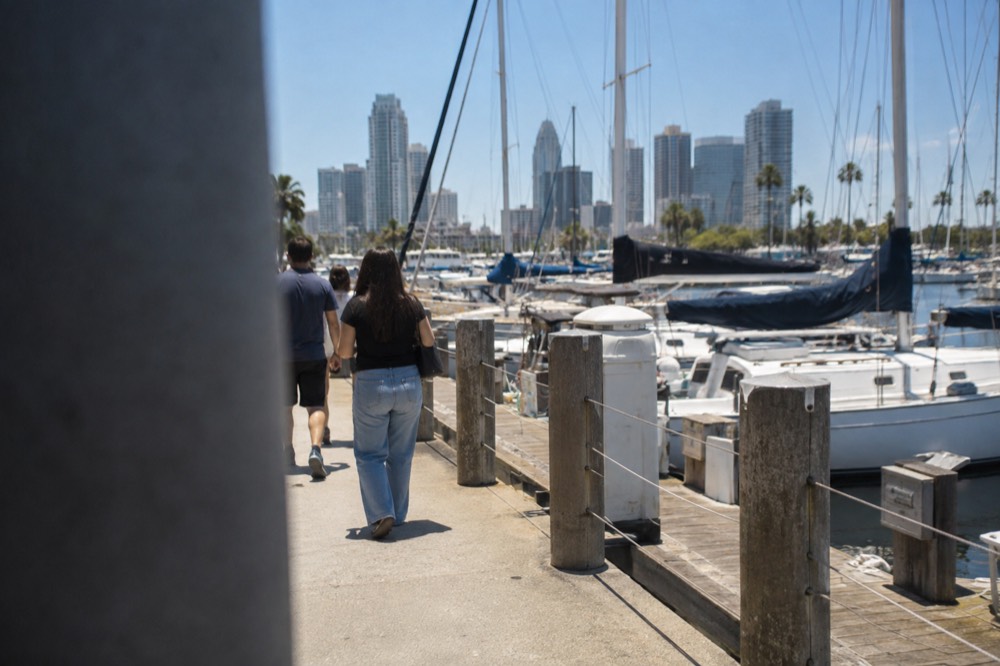
The bay front case is the one travelers under-rate. Rooms around the Embarcadero put the USS Midway Museum and Seaport Village at your door, and the harbor cruise docks are a short walk north. Evening noise is minimal compared with the Gaslamp, and the airport is close enough that the approach path is part of the soundscape, which light sleepers should factor in.
The beach case depends on which beach. Pacific Beach and Mission Beach share a boardwalk and a bar scene, so they suit travelers who want both. Ocean Beach is the laid-back, dog-friendly, sunset-watchers end of the strip. All three are far from the trolley, which means buses or rideshares for anything downtown, and summer parking near the sand is scarce enough that a hotel with a space is worth a premium.
Wherever you land inside the city core, the Gaslamp food and drink walking tour is a good early-evening orientation, since it walks you through the quarter's restaurant blocks with a guide who knows which doors are worth returning to.
How Much Does a Hotel in San Diego Cost, and When Should You Book?
Hotel pricing in San Diego swings on season, events and weekends rather than on a fixed rate card, so treat any nightly figure you see online as a snapshot, not a fact. The reliable pattern is that summer, holiday weekends and major conventions push rates and availability hard, while late fall and the weeks after New Year are the softest windows. Book downtown and Gaslamp rooms two to three months ahead for summer trips, and expect the best-value properties to be gone first.
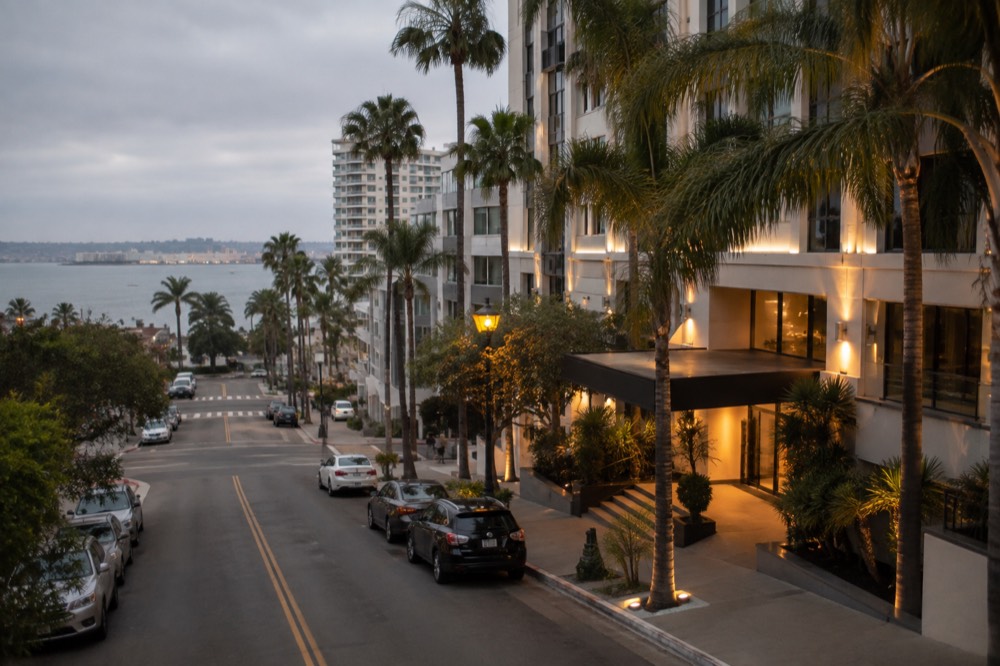
Two structural facts drive the market. The county received about 32.5 million visitors in 2024, split roughly between 18 million overnight and 14.5 million day visitors, and hotel occupancy countywide runs around 74.2 percent. A market that full does not discount into summer. The convention calendar matters too: when large events fill the San Diego Convention Center, downtown rates spike and the spillover reaches beach hotels within days.
The booking-timing advice that follows from all this: for June through August, lock the room early and accept that free-cancellation rates let you rebook if prices drop. For September, the city's secret shoulder month, warm ocean water and thin crowds line up, and the things to do in San Diego in September guide shows why it rewards a gamble. For the cheapest airfares to match, the cheapest month to fly is usually the same shoulder stretch, which the site's airfare question covers on the airport side.
| Season | Demand level | Booking advice |
|---|---|---|
| June to August | Highest, with 74.2 percent baseline occupancy tightening further | Book two to three months out, favor free-cancellation rates |
| September | Warm weather, lowest coastal visitation of the summer months | Best value window, book four to six weeks out |
| Late fall | Soft, outside events | Last-minute deals are realistic |
| Holiday weeks | Spiky, event-driven | Book as soon as dates are known |
Which Neighborhoods Are Best for Families?
Families do best in Mission Bay, Coronado and Carlsbad, in that order of convenience. Mission Bay puts you beside calm water, bike paths and Belmont Park, Coronado adds a wide, gentle beach with a village pace, and Carlsbad trades proximity for space and sits minutes from LEGOLAND. Downtown works for families who plan to tour rather than swim, but it is the weakest of the four for a trip built around kids.
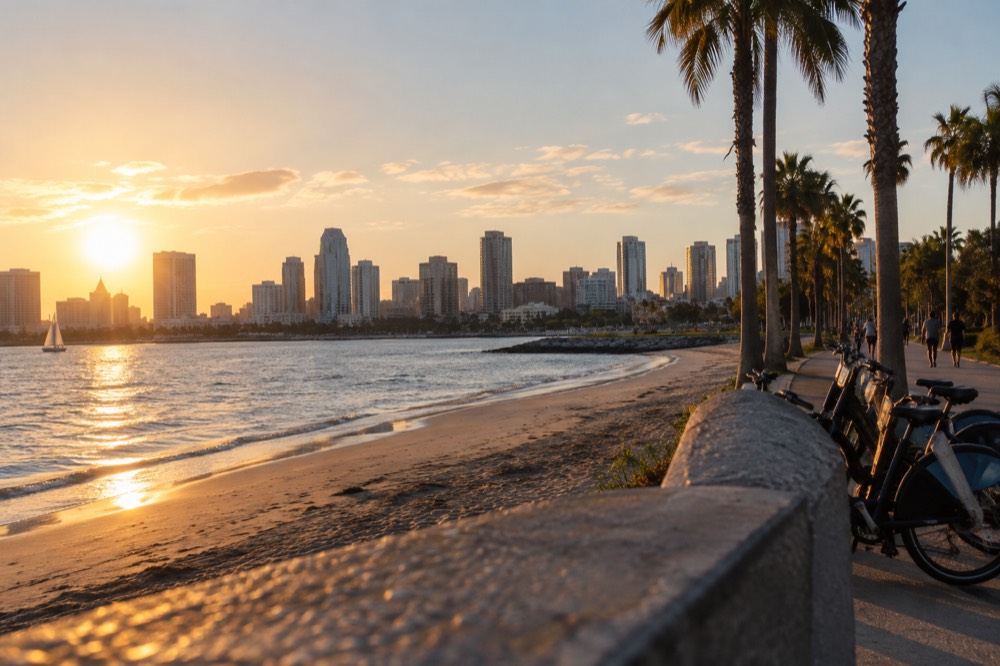
Mission Bay is the practical winner. The water is flat, the shoreline is a park, and the site's family-beaches roundup points families toward exactly these coves as the safest water in the city. The San Diego with kids itinerary builds a full family trip around a bay-side base, and it is worth reading before you commit to a neighborhood.
Coronado runs a close second and wins on charm. The ferry connects it to the downtown Embarcadero, the beach is wide and shallow for a long way out, and the island's own page covers the practicalities. The trade is that evening dining options are quieter and fewer than downtown's.
Carlsbad suits families whose trip centers on LEGOLAND California. It is a real commute to downtown, so treat it as a base for a north-county trip rather than a city trip, and check the trip-cost guide when budgeting, since park tickets and a rental car change the arithmetic.
On Coronado, once you are settled, the island segway tour is a surprisingly family-friendly way to cover the full loop, from the hotel district to the beach and back, without tiring out younger legs.
How Do You Get Around San Diego from Each Neighborhood?
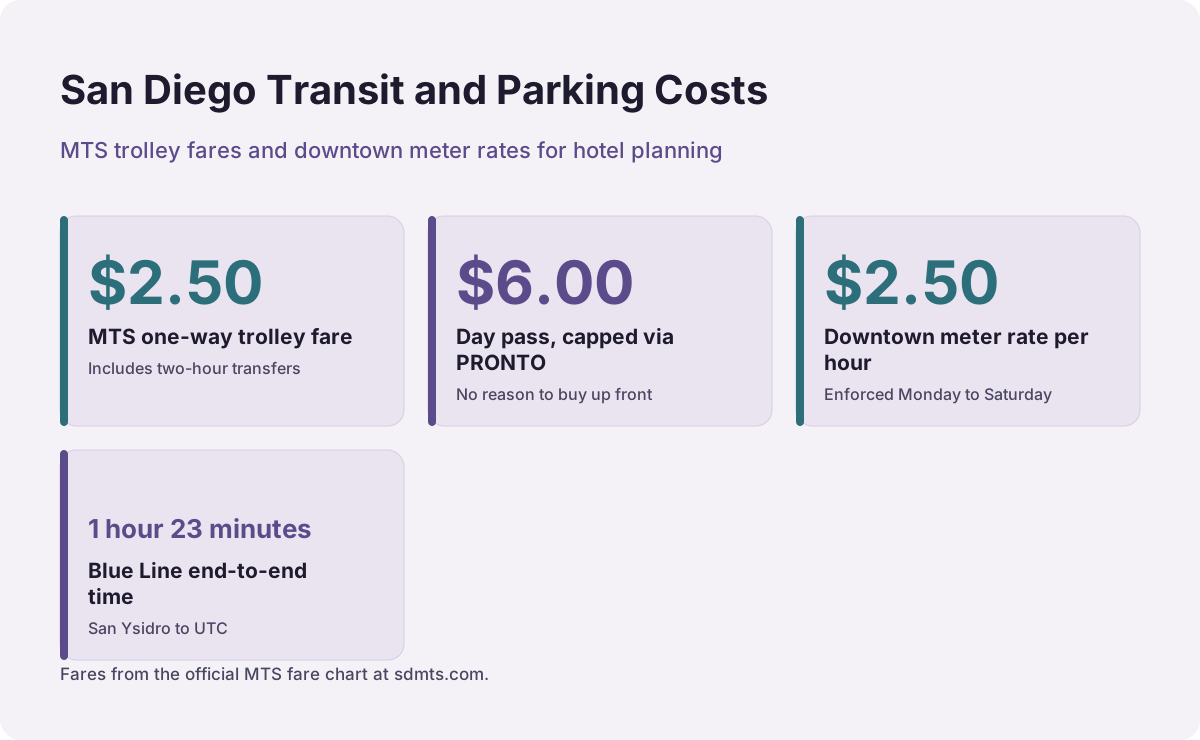
Most visitors do not need a rental car if they stay downtown, in Little Italy, in Old Town or anywhere along the Blue Line trolley, because MTS runs a $2.50 one-way fare with a $6.00 day pass and fare capping through the PRONTO card. Beach neighborhoods, North Park and La Jolla are the exceptions, where buses work but rideshares save real time. Parking downtown costs $2.50 per hour at meters, so a car you leave at the hotel is usually the smarter arrangement.
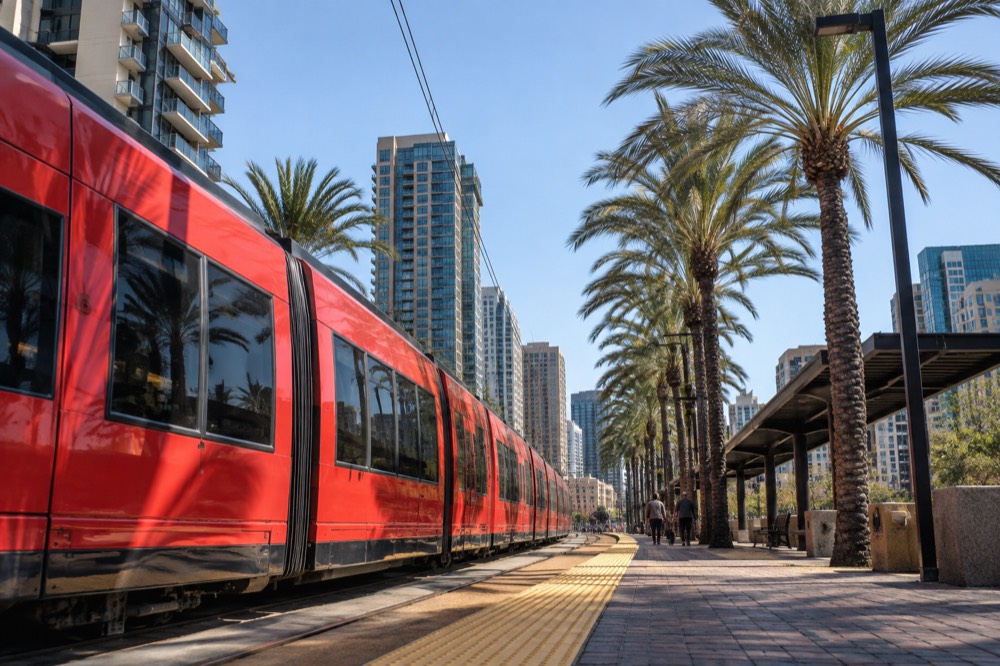
The transit backbone is the trolley, and the fare math favors pay-as-you-go. The official fare chart lists $2.50 one-way with two-hour transfers and a $6.00 day pass, but PRONTO applies fare capping, so you never pay more than the day-pass value no matter how many rides you take, and there is no reason to buy a day pass up front. The chart is published at the MTS fare chart. Youth 18 and under ride free, and up to two children aged 5 and under travel free with a paying adult.
The Blue Line matters for choosing a hotel. It runs from San Ysidro at the border, through downtown, Old Town and up to UC San Diego and UTC, with a published end-to-end time of 1 hour 23 minutes. Any hotel within a few blocks of a Blue Line station gives you a car-free path to downtown, Old Town, Balboa Park via a short connection, and even the border. The getting around San Diego guide maps the full system.
Downtown parking is metered at $2.50 per hour, enforced Monday to Saturday and now in some commercial areas on Sunday as well, so posted signs always win over any general rule. The city's parking FAQ at sandiego.gov carries the zone detail, and the parking in San Diego guide translates it for visitors. If you do rent a car, the airport pickup logistics are covered in the site's airport guide, and note there is no trolley station at the airport, just the Route 992 bus and the free San Diego Flyer shuttle to Old Town.
| Base neighborhood | Car needed? | Best transit option |
|---|---|---|
| Downtown / Gaslamp | No | Walk plus trolley |
| Little Italy | No | Trolley at the edge of the district |
| Old Town | No | Blue and Green Line hub, airport shuttle |
| La Jolla | Helpful | Buses exist, rideshares faster |
| Coronado | No | Ferry to downtown, buses on island |
| Pacific / Mission Beach | Helpful | Buses slow, rideshares practical |
| North Park / Hillcrest | Helpful | No trolley, buses and rideshares |
For a first visit built on the headline sights, the narrated hop-on hop-off trolley is the bridge between a downtown base and everything you cannot walk to, with a ticket valid for two days.
When Is the Best Time of Year to Book a San Diego Hotel?
September is the sleeper answer. Its normal high of 77.2F sits a tenth of a degree behind August's and nearly two degrees above July's, the ocean is near its warmest, and it is the single lowest visitation month at Cabrillo National Monument across recent years, with 56,876 visits against July's 83,999. You get peak weather with shoulder-season crowds, and hotel rates in the beach towns respond to that empty coast.
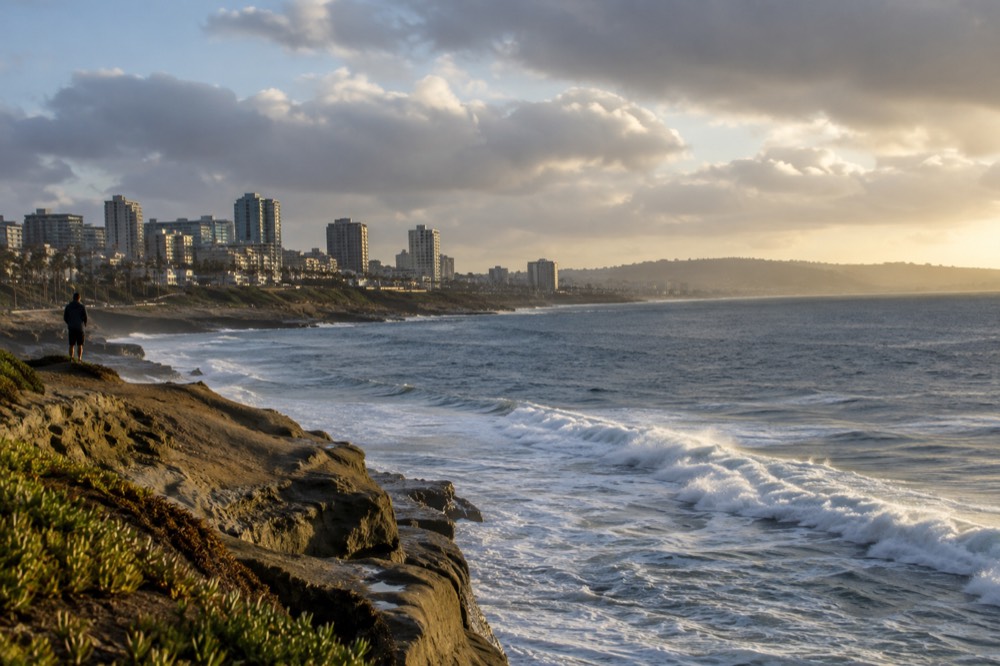
The counterintuitive part is worth dwelling on, because most booking advice gets San Diego's seasons backwards. People assume July is the warm month. The 30-year climate normals from NOAA's National Centers for Environmental Information say otherwise: July's normal high is 75.3F, August's is 77.3F and September's is 77.2F. The locals' marine layer, the gray the coast calls May Gray and June Gloom, shows up in the same table, since June's normal high of 71.7F is lower than October's 74.6F.
What this means for a hotel booking is a calendar with three real windows. June through August is the crowded, expensive, marine-layer-prone stretch, with the coast gray many mornings and inland clear. September and early October deliver the best weather of the year at the lowest summer-season demand. December through March is the rainy season, when the city takes 7.3 of its annual inches of rain, but rates drop and the gray whale migration passes offshore, which the Cabrillo National Monument whale-watching page documents in the park's own words.
The month-by-month guides on this site, from September's events through the December holiday calendar, carry the detail for each window, and the San Diego weather and best time to visit guide goes deeper on the climate side. This site, Things to Do in San Diego, keeps the whole set updated as dates firm up.
If your dates are flexible and your priority is value, the pattern to remember is one line: September gives you August's weather with a fraction of its crowds, and the hotel market prices the coast accordingly.
Common Questions About Where to Stay in San Diego
Where is the best place to stay in San Diego for a first visit?
Downtown or the Gaslamp Quarter. Both put the Embarcadero, the USS Midway Museum, Seaport Village and Petco Park within walking distance, with the trolley a few blocks away for Balboa Park, Old Town and points north. Light sleepers should ask for an upper-floor room facing away from the Gaslamp's main drag.
Which San Diego neighborhood is right for your trip?
La Jolla for dramatic coastline and upscale calm, Coronado for families and beach days, Pacific Beach and Mission Beach for surf and nightlife, North Park and Hillcrest for food and craft beer, and Old Town or Little Italy for quiet, walkable, transit-connected bases.
Where should you stay in San Diego on a budget?
Along the Blue Line trolley, one or more stops out of the downtown core. Neighborhoods south and north of the center carry lower room rates while keeping a $2.50 trolley ride to the middle. Old Town is the classic pick because the free airport shuttle drops at its transit center.
Is it better to stay in Gaslamp, on the bay, or at the beach?
The bay front splits the difference best: waterfront walks and calm evenings with the trolley one block inland. Choose the Gaslamp for nightlife, the beach if the ocean is the point of the trip, and accept a twenty to forty minute ride into downtown from any beach base.
Do you need a rental car to stay in San Diego?
Not if you stay downtown, in Little Italy, in Old Town or near any Blue Line station. The trolley runs $2.50 one-way with fare capping through PRONTO. La Jolla, the beach neighborhoods and North Park are the exceptions, where a car or rideshares save real time.
When is the cheapest time to book a San Diego hotel?
September offers the best value relative to weather, with a normal high of 77.2F and the lowest summer-season visitation at the coast. Late fall and the weeks after New Year carry the softest rates overall, while summer and convention weeks fill the county's roughly 74.2 percent baseline occupancy fastest.