Best San Diego Sunset Spots: Where to Watch the Sun Go Down
San Diego faces west, which means almost the entire county gets a front-row seat to the sunset. The hard part is not finding a sunset, it is finding the right one for the evening you have planned.
Short answer
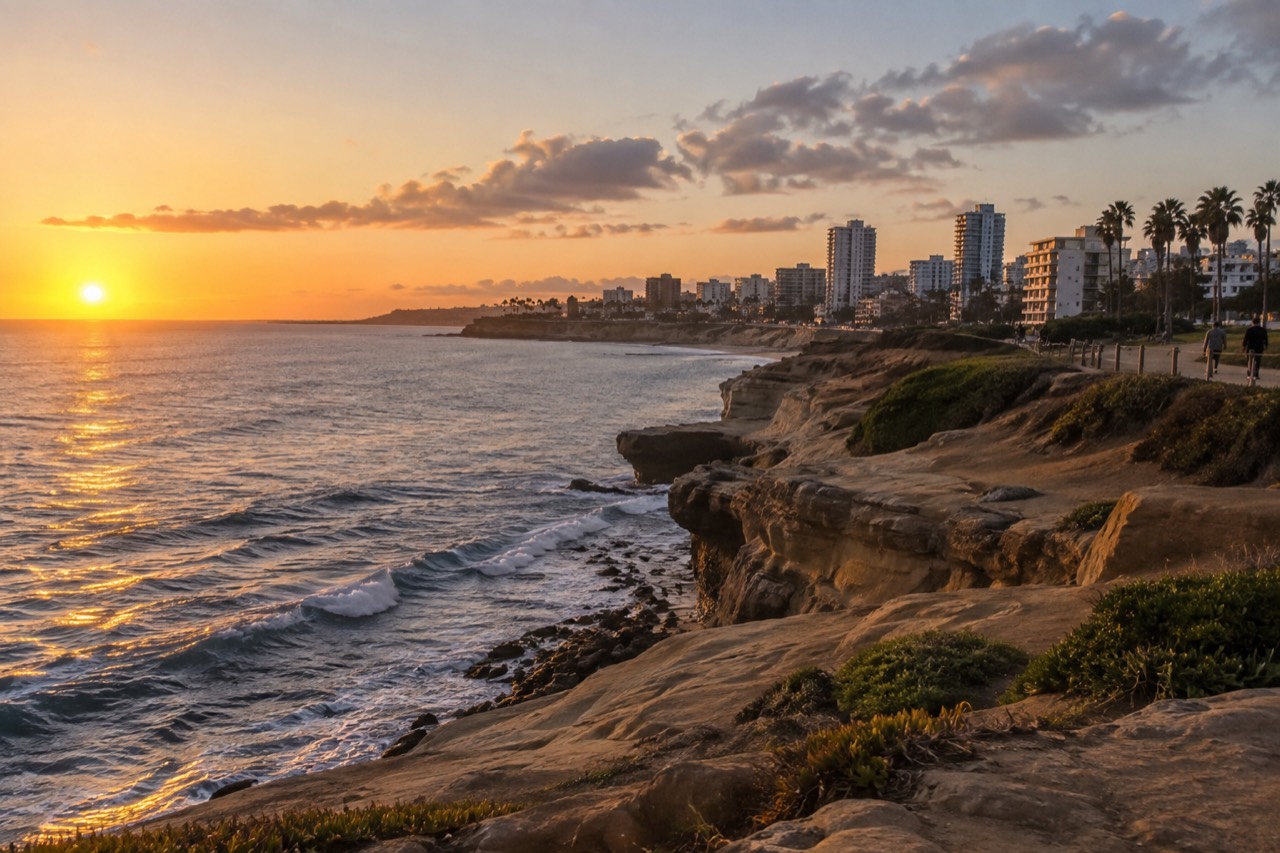
The best San Diego sunset spots are Sunset Cliffs Natural Park for the classic ocean drop, La Jolla Cove for sea lions and rock silhouettes, Mount Soledad for a high panorama, Coronado Beach for wide sand, and a bay sunset sail for the water view. Cabrillo National Monument closes at 5:00 pm, so it works only in winter.
San Diego runs along a coast that faces almost dead west, so the sun drops into the Pacific somewhere along the county's roughly 24 miles of lifeguarded oceanfront nearly every evening of the year. That abundance is the trap. Visitors cluster at one or two obvious spots, locals quietly take the others, and the difference between a good sunset evening and a great one usually comes down to timing, parking and knowing which direction the marine layer is sitting.
This guide covers the spots that earn their reputation, the spots that only work in certain months, and the honest practical details, including which famous sunset viewpoint actually closes before the sun goes down for most of the year.
Where Are the Best Sunset Spots in San Diego?
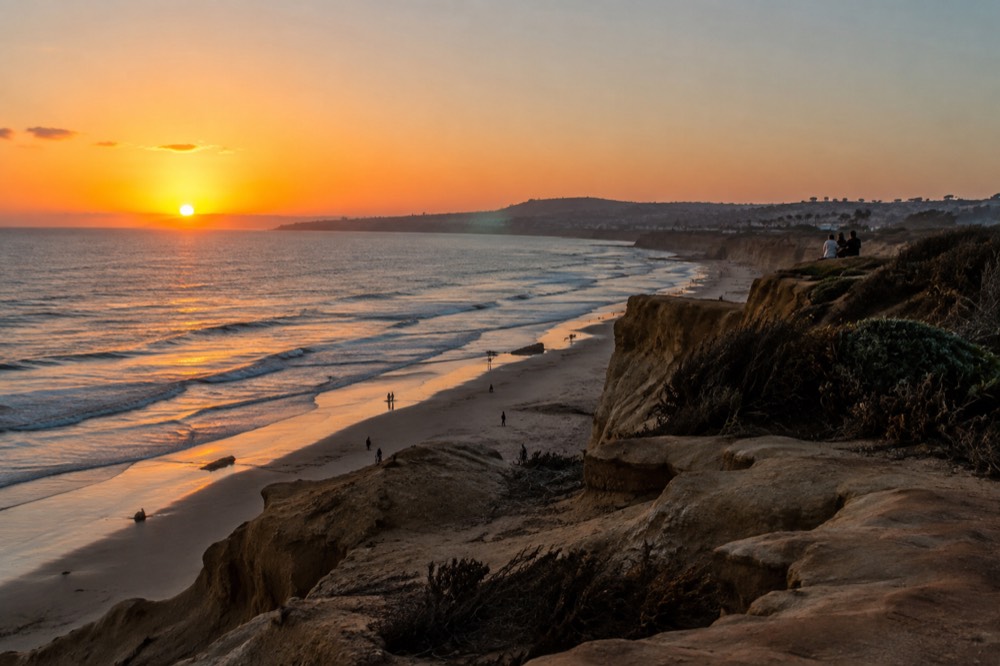
The best sunset spots in San Diego are Sunset Cliffs Natural Park for the classic ocean horizon drop, La Jolla Cove for sea lions and rock silhouettes, Mount Soledad for a full-circle panorama, Coronado Beach for wide open sand, Crystal Pier in Pacific Beach for a pier-over-water frame, and the bay itself, best seen from a small-group sunset sailing excursion. Cabrillo National Monument is the famous exception: the main gate closes at 5:00 pm, so it only works for winter sunsets.
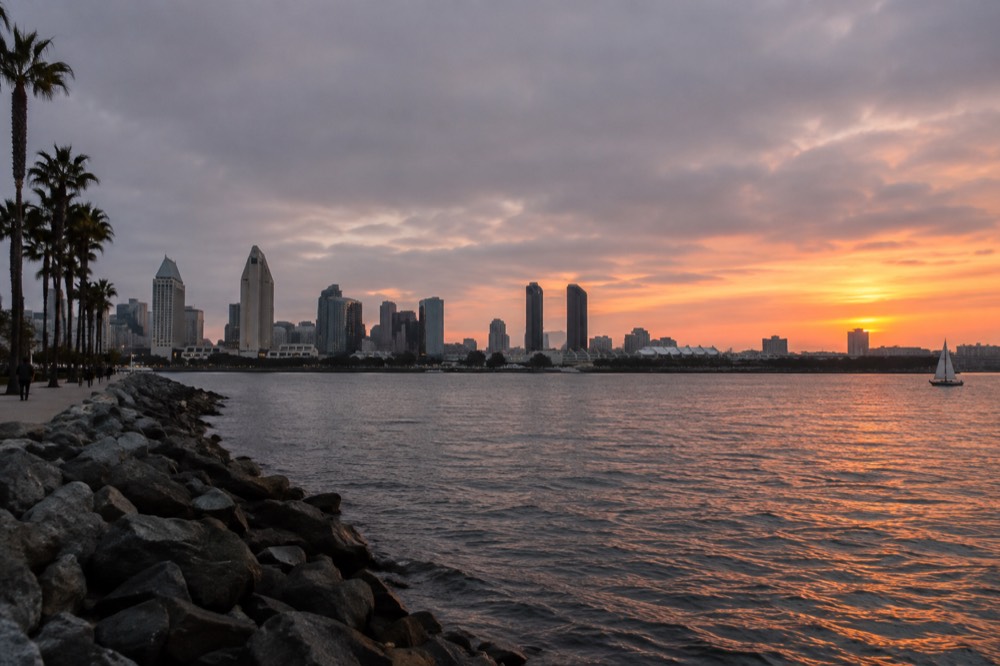
That list splits cleanly into two kinds of evening. The ocean spots, Sunset Cliffs, La Jolla, Coronado, Pacific Beach, give you the full Pacific drop, a sun that sinks into water. The bay and elevated spots, Mount Soledad, Harbor Island, a sail on the bay, give you color over the water and the skyline lighting up behind you.
Neither is objectively better. If you want the postcard, the one where the sun flattens into a bright line on the horizon, you need a west-facing ocean spot. If you want the evening that turns into a night out, the bay and downtown-facing spots put you minutes from dinner. The individual spot guides linked below go deeper on each one.
Here is the honest comparison, up front:
| Spot | What you see | Best for | Main drawback |
|---|---|---|---|
| Sunset Cliffs Natural Park | Full Pacific drop over sandstone cliffs | The classic postcard sunset | Parking is very hard in summer |
| La Jolla Cove | Sun over water with sea lions and caves | Wildlife plus sunset in one stop | Crowded at golden hour |
| Mount Soledad | Full panorama, ocean to mountains | Photos and a quick visit | Not a water-level view |
| Coronado Beach | Wide sand, Hotel Del silhouette | Families and easy parking relative to beaches | Flat, less dramatic |
| Crystal Pier, Pacific Beach | Sun setting beside a pier | A beach walk that ends at a bar | Party atmosphere |
| Bay sunset sail | Skyline and water color from offshore | A planned, ticketed evening | Costs money, books out |
What Makes San Diego Sunsets Different from Most of California?
San Diego's sunsets are shaped by the marine layer, a coastal cloud deck that can grey out the beach at golden hour while the sky five miles inland stays clear. The counterintuitive part: September is actually the city's warmest month, with a normal high of 77.2F, a full 1.9F above July's, and the warmest ocean water of the year, yet it is the lowest-visitation month at Cabrillo National Monument. Fewer crowds, better light.
The marine layer is the whole game and locals have names for it: May Gray and June Gloom. You will not find an official cloud statistic for it, but the 30-year temperature normals show the fingerprint plainly. June's normal high is 71.7F, which is lower than October's 74.6F, a reversal that only makes sense if something is blocking the sun in early summer. The practical version for sunset chasers: in May and June, the coast can be overcast at golden hour while Mission Valley or North Park is clear, so a flexible plan beats a fixed one.
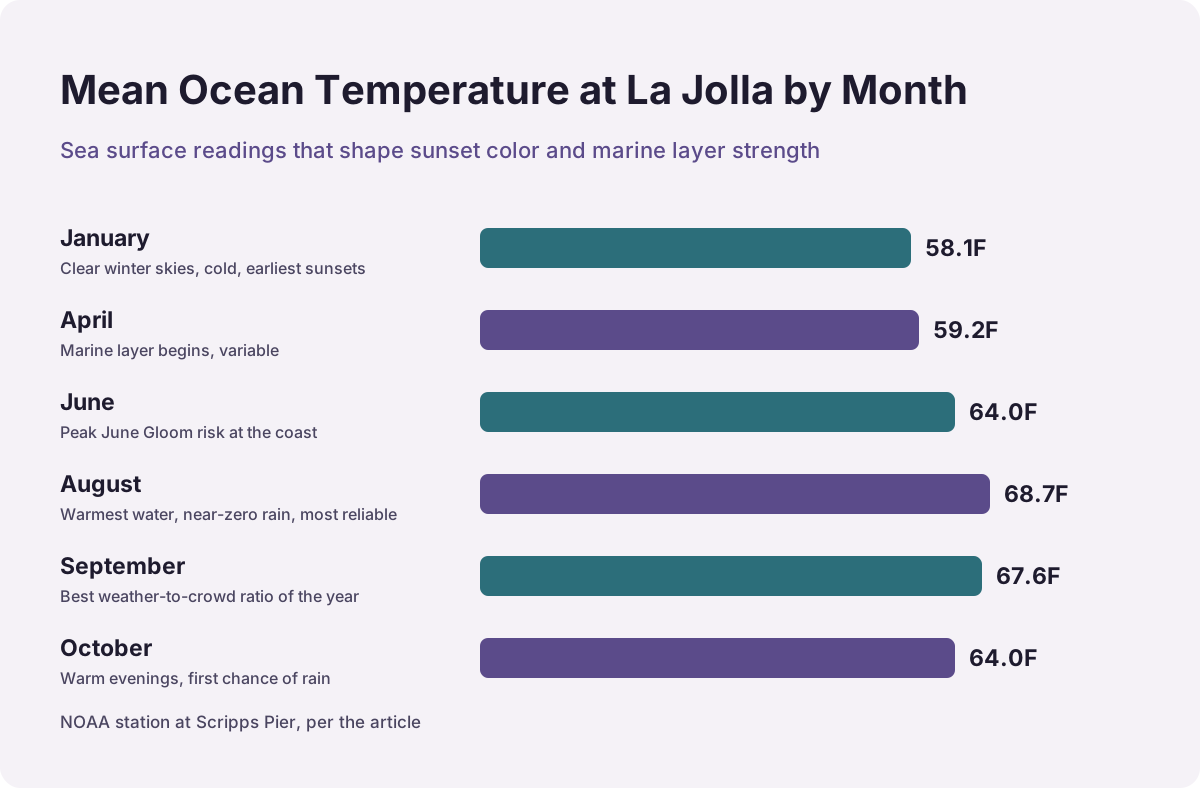
The other thing worth knowing is that the ocean warms all summer. The sea surface at La Jolla averages 58.1F in January but 68.7F by August, per NOAA's station at Scripps Pier, and that warm water matters for more than swimming: it feeds the evening color. Late summer and early fall, August through October, are when the marine layer is weakest and the sunsets are most reliably dramatic.
| Month | Mean ocean temp (F) | Sunset character |
|---|---|---|
| January | 58.1 | Clear winter skies, cold, earliest sunsets |
| April | 59.2 | Marine layer begins, variable |
| June | 64.0 | Peak June Gloom risk at the coast |
| August | 68.7 | Warmest water, near-zero rain, most reliable |
| September | 67.6 | Best weather-to-crowd ratio of the year |
| October | 64.0 | Warm evenings, first chance of rain |
If you are planning the whole trip around good evenings rather than one good evening, our San Diego weather and best time to visit guide breaks the marine layer down month by month.
Is a Sunset Sail on San Diego Bay Worth It?
A sunset sail is the one sunset spot in San Diego that does not depend on finding parking, and it is worth it for the angle: you watch the sun drop behind the skyline and the ocean color at the same time, from the deck of a boat. The small-group sunset sailing excursion runs about 3 hours, which covers the full golden hour and the transition into city lights.
The bay has a different light than the open coast. The sun sets behind Point Loma from most of the bay, so you get the warm color on the water and the downtown towers catching the last of it, rather than the raw horizon drop. Photographers call it the difference between a sunset and a sunset show, and the bay does the show better.
The small-group sunset sailing excursion is the pick for this. It is a 3-hour small-group trip, which means you are on the water well before golden hour, you get the wind and the quiet that a motorized cruise does not give you, and the small-group format keeps the deck from feeling like a ferry. If you would rather have a shorter, cheaper taste of the bay, the 1-hour Harbor Cruise also runs in the evening hours and gives you the skyline view in a smaller time commitment.
The honest comparison is simple. The sail is the experience: three hours, wind, quiet, a small group, the full arc from daylight to dark. The harbor cruise is the sampler. Both put you on the water for the color; only one makes the sunset the whole point of the evening.
Why Sunset Cliffs Natural Park Is the Classic San Diego Sunset?
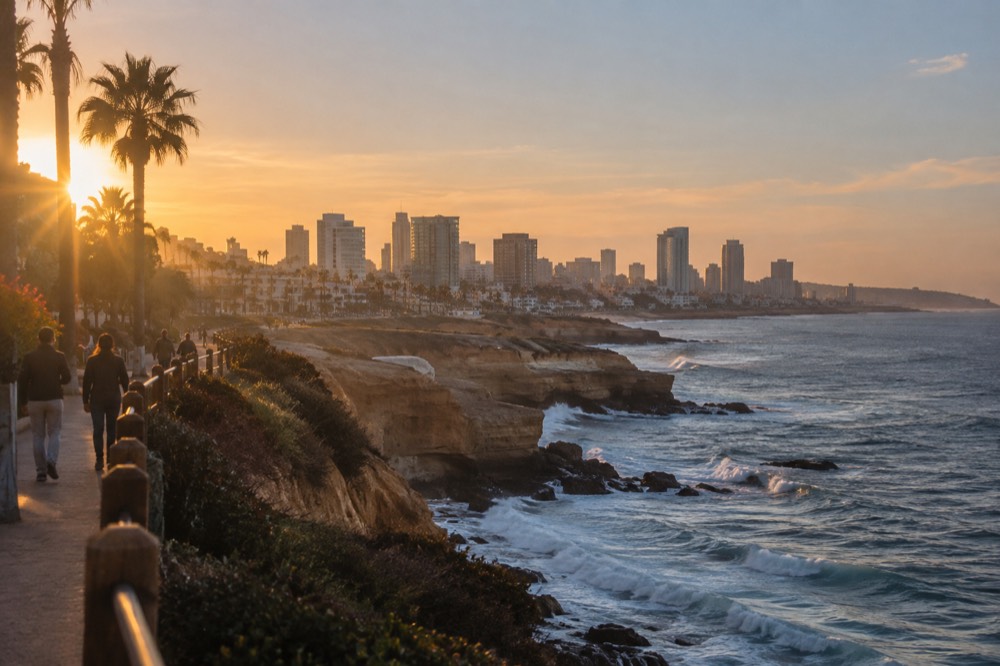
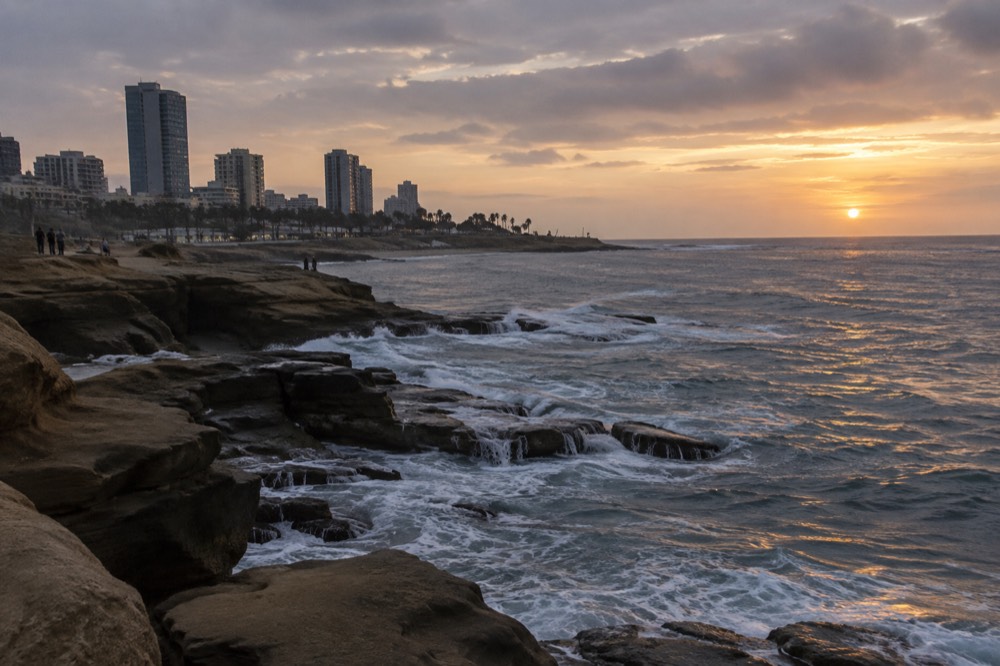
Sunset Cliffs Natural Park is the classic because it is the only major spot where the sun sets over open ocean from the top of dramatic sandstone cliffs, an oceanfront park where the coastline drops straight into the Pacific. It is free, it needs no ticket, and the golden-hour crowd gathers along the cliff-edge trail every clear evening.
The park sits at the western edge of Point Loma, and the cliff-edge walk runs roughly north to south with continuous ocean views. The sun drops into the water in front of you, and the cliffs themselves catch the low light, which is what photographers come for: layered rock, waves hitting the base, and a clean horizon line.
Practical honesty. There is no published rate for parking here, and there does not need to be one: the honest description is street parking along the residential streets at the top of the cliffs that is free to park in and very hard to find in summer. Arrive early, meaning a full hour before the sun goes down in June through August, or come in September when the crowds thin out and the weather is better anyway. Our full Sunset Cliffs Natural Park guide covers the trails and the best stretch of cliff edge.
One safety note that matters: stay on the established paths. The cliff edges are soft sandstone, and the park's own terrain is unstable in places. People step off-trail for a photo angle every week, and the drop is real. The view from the trail is the view.
Is La Jolla a Good Place to Watch the Sunset?
La Jolla works as a sunset spot in two completely different ways: at water level, La Jolla Cove gives you the sun setting into the ocean behind sea-carved rocks and, most evenings, sea lions on the outcrops, while Mount Soledad, ten minutes uphill, gives you a full-circle panorama from one of the highest coastal points in the city. You can do both in one evening if you time it.
The Cove is the wildlife sunset. The sea lions and harbor seals that make La Jolla famous haul out on the rocks in the late afternoon, and the low sun turns the whole cove gold. The walk along Coast Boulevard gives you the view without climbing down, and the La Jolla Cove guide covers where to stand and what to expect from the animals. One thing we will not tell you is closure dates for the nearby Children's Pool seal pupping season or the Cove sea lion rules: those rules change and are enforced seasonally, so check posted signage on the day rather than any guide's calendar, including this one.
Mount Soledad is the opposite experience. It is a drive or a stiff uphill walk to the veterans memorial at the top, and from there the sunset is a panorama: the ocean to the west, the city lights starting up to the east, Mexico's hills to the south. It is the spot for a photo of everything at once rather than a photo of the sun itself. The Mount Soledad guide covers the drive up and the viewing areas.
Between the two, and downhill from both, the village of La Jolla is where you eat afterward, which is the quiet advantage of the whole area: the sunset spots and the dinner options are a five-minute drive apart.
Does Coronado Have the Best Beach Sunset in San Diego?
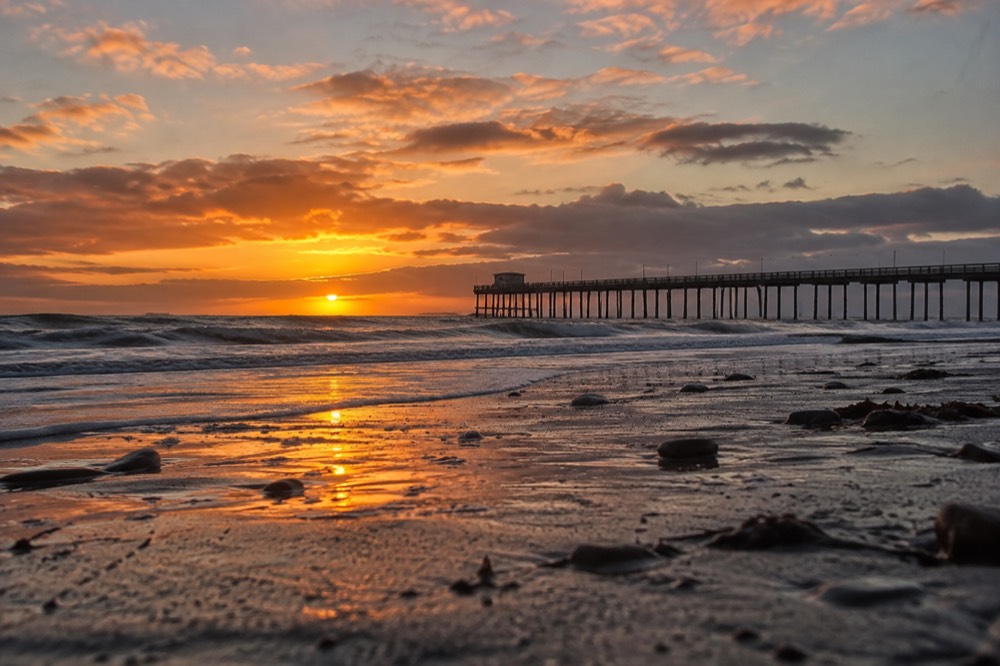
Coronado Beach is the best wide-sand sunset in the county, a long, flat, family-friendly stretch facing dead west with the Hotel del Coronado silhouette at its north end. It lacks the drama of cliffs, but it makes up for it with space: even on a busy evening you can find a hundred yards of empty sand, which Sunset Cliffs can never offer.
The classic Coronado sunset walk starts anywhere along Ocean Boulevard and heads north toward the Hotel Del, whose Victorian silhouette against the setting sun is one of the most photographed scenes in the region. The Hotel del Coronado guide covers the hotel itself, and the Coronado Beach guide covers access points.
Getting there is the honest part. The Coronado page covers the options, including the bridge drive and the ferry, and we will not quote you a ferry fare because no confirmed published rate exists. Beach parking is the same story as everywhere on the coast: free street and lot parking that is scarce in summer, with no published rate table, so arrive early or come outside peak weeks.
What Coronado gives you that the cliff spots cannot is a sunset you can sit down inside of. Bring a towel, sit on the sand, and the whole western sky is yours. The flatness that makes it less photogenic makes it more livable.
Can You Watch the Sunset from Cabrillo National Monument?
No, not for most of the year, and this is the single most common San Diego sunset mistake. Cabrillo National Monument's main gate closes at 5:00 pm daily, and everyone must be out, so from spring through early fall the sun sets long after the park has emptied. Only in the short winter window, when sunset falls before the 5:00 pm closing, does the park's famous west-facing viewpoint actually work.
The park's own hours page is explicit: the main park runs 9:00 am to 5:00 pm daily, closed only on Thanksgiving and Christmas Day, the tidepools and the whole coastal area close at 4:30 pm, and the Bayside and Oceanside Trails close at 4:00 pm, per the National Park Service hours page. There is no public access at all before 9:00 am or after 5:00 pm, including for walkers and joggers.
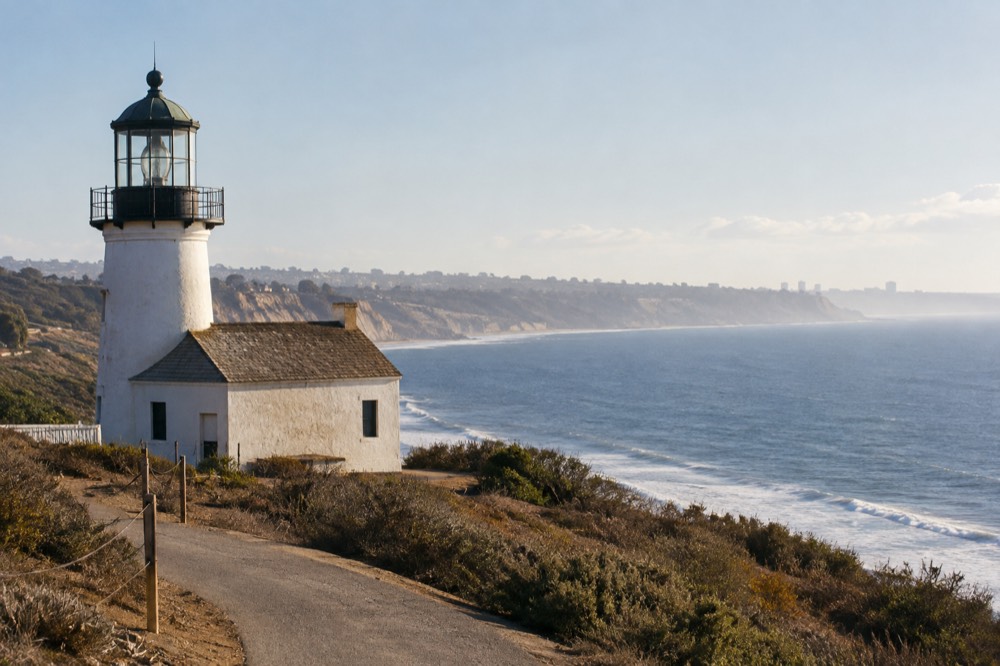
So the honest advice is to flip your plan. Cabrillo is one of the best morning and midday viewpoints in the county, the Old Point Loma Lighthouse and the Kelp Forest Overlook face open ocean, and the Cabrillo National Monument guide covers the entrance fees and the tidepool timing. Come for the late afternoon light on the cliffs and the gray whales in season, more than 20,000 pass offshore between mid-December and March, with mid-January the peak, and save the actual sunset for Sunset Cliffs a few miles north.
What About Watching the Sunset from the Water Without Sailing?
If a 3-hour sail is more evening than you want, the 1-hour Harbor Cruise is the short version of the same idea: a full loop of the bay that catches the water color and the skyline without the commitment. You trade the wind, the quiet and the small group for a lower price point and a schedule you can slot between other plans.
The bay cruise runs year round and boards from the Embarcadero, which puts it within a short walk of the Gaslamp Quarter and Seaport Village, so the typical evening writes itself: cruise at golden hour, dinner after, no driving. That walkability is a real advantage over every ocean sunset spot on this list, all of which involve a drive and a parking hunt.
The comparison that matters is sail versus cruise, not good versus bad. The cruise is a viewing platform that moves; the sail is a small boat doing a thing. If your group includes people who get restless, or you are fitting the sunset into a packed day, the cruise is the right call. If the sunset is the evening's main event, take the sail.
What Should You Do in San Diego After the Sun Goes Down?
The best post-sunset move in San Diego is the City Lights Night Trolley Tour, a 1h 30m narrated ride through downtown, the Embarcadero and the lit-up districts that starts as the sky goes dark. It converts the tail of your sunset evening into a city tour, and it boards from the same downtown core where the bay cruises dock.
The night trolley is the natural pairing with any bay-side sunset: you finish on the water as the color fades, then the trolley picks up the story as the city lights come on. Downtown San Diego after dark is genuinely walkable, and the San Diego nightlife guide covers the bars and rooftops if the trolley ends your evening too early.
The other classic after-dark options: the Ghosts and Gravestones trolley tour runs 1.5 hours of haunted San Diego after dark, and a gourmet dinner cruise makes the sunset-to-dinner transition entirely on the water. For a slower ending, the Gaslamp's restaurant row is a ten-minute walk from the Embarcadero.
How Do You Plan a Sunset Evening Without the Parking Stress?
Plan around the trolley and the timing, not the car. The MTS trolley and bus system charges $2.50 one-way with a $6.00 day pass, PRONTO fare capping means you never need to buy the day pass up front, and every ocean sunset spot is reachable by transit plus a walk. The single biggest decision is arriving an hour early in summer versus twenty minutes early in September.
The transit math is better than most visitors expect. The fare chart at sdmts.com confirms $2.50 one-way with two-hour transfers and a $6.00 day pass, and the PRONTO system caps fares automatically, so a loaded card simply stops charging once you have hit the day-pass value. Youth 18 and under ride free. If you do drive, the honest parking picture is this: beach and coastal parking is free street-and-lot parking that is brutally contested in summer, and no published rate table exists for the beach lots, so any confident-sounding price you read elsewhere should be treated with suspicion.
| Spot | Transit-friendly? | Parking reality | Arrive before sunset |
|---|---|---|---|
| Sunset Cliffs | Bus plus a walk | Free street parking, very scarce in summer | 60 min (summer) |
| La Jolla Cove | Bus plus a walk | Paid lots and scarce street parking | 45 min |
| Mount Soledad | Car or a stiff walk | Small lot at the top | 20 min |
| Coronado Beach | Ferry or bus | Free street parking, moderate | 30 min |
| Bay cruise or sail | Trolley direct to the Embarcadero | Skip the car entirely | Boarding time |
| Cabrillo | Car needed | $20 per vehicle entrance fee | Closed at 5:00 pm |
The September trick deserves repeating because it is the site's signature finding: the county's best weather, 77.2F normal highs and the warmest water of the year, arrives in the month with the fewest visitors. If your dates are flexible, September gives you the same sunsets with half the parking fight.
Which Sunset Spot Should You Actually Pick?
Pick Sunset Cliffs if you want the postcard and can arrive early, Coronado if you want to sit on the sand, La Jolla if you want wildlife in the frame, Mount Soledad if you want the panorama, and the small-group sunset sail if you want the evening to feel like an event rather than a stop. Cabrillo is a morning spot, not a sunset spot, for most of the year.
The pattern across everything on Things to Do in San Diego is that the best plan is the one that matches the rest of your evening. A sunset you have to drive to and then drive away from is a different experience than a sunset you sail out of and walk to dinner from. The bay-side options cost money but delete the two worst parts of a San Diego sunset, the parking hunt and the drive home in the dark.
For trip-level planning rather than evening-level, the San Diego bucket list and the one day in San Diego itinerary slot a sunset stop into a full day, and the romantic things to do guide covers the couples' version of this same question.
Common Questions About San Diego Sunset Spots
Where is the best place to watch the sunset in San Diego?
Sunset Cliffs Natural Park is the classic answer: a free, west-facing cliff park where the sun drops into open ocean. La Jolla Cove adds sea lions and rock silhouettes, Coronado Beach offers wide sand, and a bay sunset sail puts you on the water for the whole golden hour.
Can you see the sunset from Cabrillo National Monument?
Only in winter. The park closes at 5:00 pm daily and everyone must be out, so from spring through early fall the sun sets after closing time. In the short winter window, when sunset falls before 5:00 pm, the west-facing overlooks work beautifully.
What time does the sun set in San Diego?
We do not print sunset times because they shift week by week. The practical rule: check a weather app the morning of your evening, then arrive at a cliff or beach spot a full hour early in summer, when parking is the bottleneck, and twenty to thirty minutes early outside peak season.
Is a sunset sail in San Diego worth it?
For most visitors, yes. The small-group sunset sailing excursion runs about 3 hours, covers the full golden hour and the transition into city lights, and removes the parking problem entirely. The 1-hour Harbor Cruise is the shorter, cheaper alternative if three hours is too much evening.
Does the marine layer ruin San Diego sunsets?
Sometimes, mainly in May and June. The coastal cloud deck locals call May Gray and June Gloom can grey the beach at golden hour while inland areas stay clear. August, September and October are the most reliable months, with near-zero rain and the warmest ocean water of the year.
Is parking free at San Diego sunset spots?
Coastal parking is free street-and-lot parking, and no published rate table exists for the beach lots. The honest advice is that it is free but very hard to find in summer. The exception on this list is Cabrillo National Monument, which charges a $20 per-vehicle entrance fee, and the bay cruises, which let you skip the car entirely.