Coronado Beach: A Complete Visitor Guide to San Diego's Widest Stretch of Sand
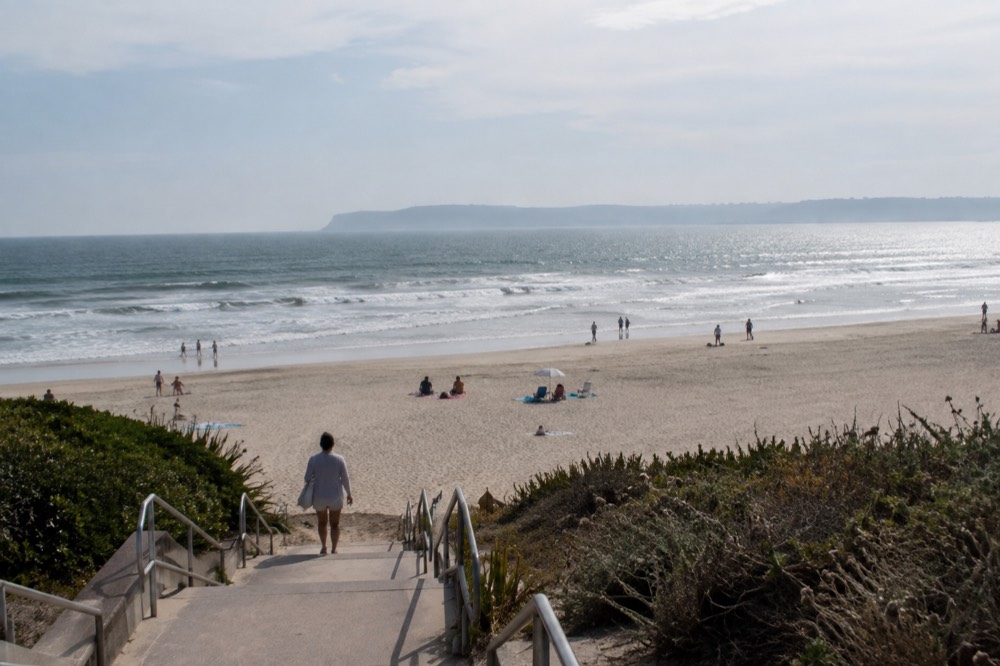
Coronado Beach runs for a mile and a half along the ocean side of Coronado Island, facing open water rather than the bay, with mica-flecked sand that glitters and one of the flattest, most family-friendly shorelines in San Diego.

Short answer
Coronado Beach sits on the ocean side of Coronado, a short drive over the San Diego-Coronado Bridge or a ferry ride across the bay from downtown. The beach is free, lifeguard patrolled, and wide enough that it rarely feels crushed even in summer. Bring what you need for the day, arrive early in peak season, and expect ocean water around 66 to 69 degrees in late summer.
Coronado Beach is the long ocean-facing stretch of sand on the seaward side of Coronado, the peninsula that curls around San Diego Bay directly across from downtown. It is not a bay beach. The waves here come straight in from the Pacific, the sand is famously flecked with mica that catches the light, and the shoreline slopes so gently that at low tide the wet sand runs out tens of yards toward the water. The Hotel del Coronado anchors the southern end, and the beach rolls north from its red roofs toward the dog beach and the naval station boundary.
For most visitors, the appeal is simple: this is the roomiest, flattest, easiest beach in the county, and it comes with one of the best skyline views in California, looking back across the bay at downtown San Diego. This guide from Things to Do in San Diego covers how to get there, where to park, what the water is actually like, and the rules that catch people out.
What Makes Coronado Beach Worth the Trip?
Coronado Beach combines three things almost no other San Diego beach offers at once: a mile and a half of unusually wide sand, a gentle surf that suits swimmers and small children, and a front-row view of the downtown skyline across the bay. The sand itself is a draw, speckled with mica that glitters in the sun, and the beach is backed by the Hotel del Coronado at one end and quiet residential streets at the other. It is lifeguard patrolled year round and never charges admission.
Plenty of San Diego beaches are beautiful. Few are this forgiving. The beach at Mission Beach is a narrower ribbon sandwiched between boardwalk and bars; La Jolla Cove is dramatic rock and reef rather than open sand; Ocean Beach is a scene as much as a shoreline. Coronado is the one you pick when the plan is a plain, generous day of sand, water, and a walk with nothing to work around.
The skyline view deserves more credit than it usually gets. From the wet sand you look straight across the bay at the downtown towers, with the Coronado Bay Bridge sweeping off to the east. At sunset the whole view turns gold, which is why this stretch appears on nearly every list of San Diego's best sunset spots. Photographers set up along the dunes at the north end of the Hotel del Coronado stretch for exactly this shot.

The beach is divided into named zones locals use as shorthand: the main tourist stretch in front of the Hotel del Coronado, the quieter North Beach toward the dog beach, and the area around the Coronado Shores towers. All of it is the same wide, flat sand. The difference is crowds, and the further north you walk from the hotel, the thinner they get.
How Do You Get to Coronado Beach from Downtown San Diego?
You have three realistic options: drive over the sweeping San Diego-Coronado Bay Bridge, which takes about ten minutes from downtown; take the passenger ferry across the bay, which lands a walk from the beach; or ride public transit, which reaches Coronado but takes longer. There is no Trolley station on Coronado itself, so transit visitors transfer to a bus. Drivers should know the bridge is toll-free heading onto the island.
The bridge is the famous approach, a high curve that tops out well above the bay and delivers one of the great arrival views in Southern California. It is a toll road in the westbound direction only, meaning the drive off the island back toward downtown, and tolls are collected electronically, so rental car drivers should make sure their toll payment arrangement covers it. Coming onto Coronado from downtown costs nothing.
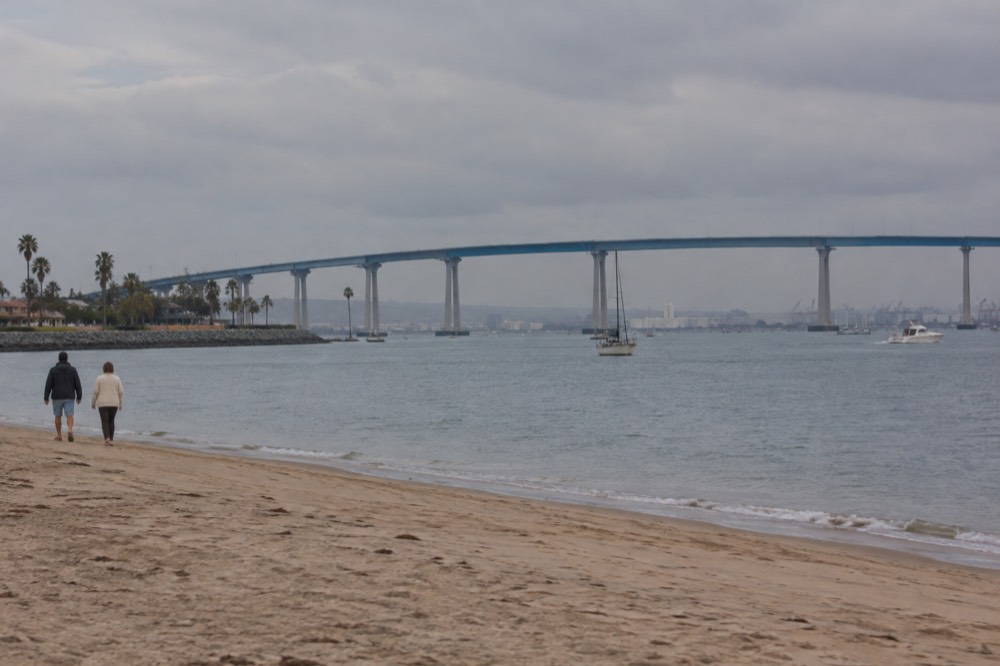
The ferry is the option most visitors underuse. A passenger ferry runs across the bay between downtown and Coronado, landing at the Coronado ferry landing, which sits at the northern end of the island within a longish walk or short ride of the beach. It is a genuinely pleasant crossing, with the skyline behind you and the bridge overhead. Do not expect to bring a car: this is a foot ferry.
| Option | Best for | Time from downtown | Watch out for |
|---|---|---|---|
| Drive over the Bay Bridge | Families with gear, day trips | About 10 minutes | Bridge traffic at peak summer weekends |
| Passenger ferry | Visitors without a car | Roughly 15 minutes on the water | It is foot passengers only, and the landing is not at the beach |
| Public transit | Budget travel | Allow an hour door to door | No Trolley on the island; you transfer to a bus |
| Rideshare | Speed and simplicity | About 10 to 15 minutes | Surge pricing after beach hours on summer days |
If your day is built around the water rather than the sand, it is worth knowing what else the bay offers. A one-hour harbor cruise departs from the Embarcadero on the downtown side and puts the Coronado shoreline, the bridge and the naval carriers into one loop, which many visitors combine with a beach day on the island itself.
For visitors staying downtown without a car, the honest summary is this: the ferry plus a walk or a short rideshare hop is the pleasant route, and the bus is the cheap one. Cyclists have a fourth option worth considering, since the Silver Strand on the island's ocean side is one of the flattest, most pleasant rides in the county, and Coronado itself is compact enough that a bike covers everything.
Where Do You Park at Coronado Beach, and When Should You Go?
Parking at Coronado is a mix of free street parking and city lots near the beach, and it fills early on summer weekends and holiday weeks. There is no published rate table for the beach lots, so treat any specific price you read elsewhere with suspicion. The reliable strategy is to arrive before mid-morning in July and August, or to come on a weekday, when finding a space within a few blocks of the sand is rarely a problem.
This is one of the biggest practical questions visitors have, and the honest answer is that nobody can quote you a rate with a straight face. The practical facts are these: the streets around Ocean Boulevard and the residential blocks behind the Hotel del Coronado carry free street parking with time limits, the city operates lots near the main beach entrances, and the whole supply is first come, first served. In late June through August, the closest spaces are usually gone by mid-morning. The site's full San Diego parking guide covers the citywide picture, including the downtown meters you will pass through on the way over the bridge.
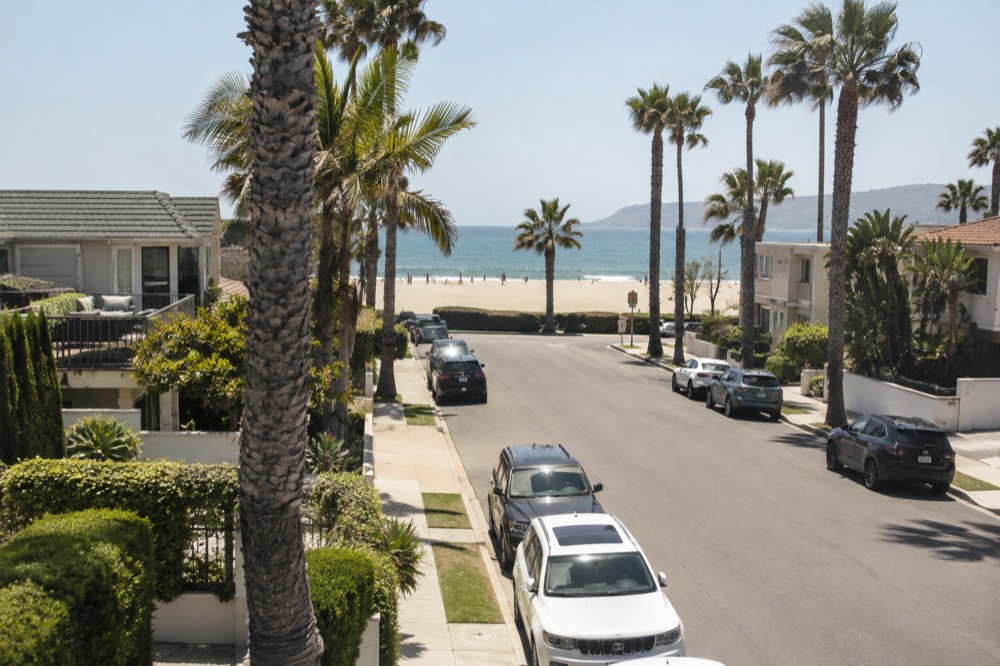
Timing matters more than location here. A weekday in September can feel almost private along North Beach, while a July Saturday is a different beach entirely. The local pattern that surprises people is that September is actually the better beach month: the normal high temperature in San Diego in September sits within a tenth of a degree of August's, and the ocean is still near its annual peak, yet the summer crowds have gone home. Cabrillo National Monument's own visitation counts show September as its single quietest month across recent years, a gap of nearly half against July, and Coronado's sand follows the same rhythm.
If you are planning a full coastal itinerary rather than a single beach day, the timing question gets bigger than one beach. The site's best time to visit San Diego guide breaks down the marine layer pattern, the month-by-month temperatures, and why the "May Gray" and "June Gloom" the locals talk about is real enough to show up in the 30-year climate normals themselves.
How Warm Is the Water at Coronado Beach?
The ocean at Coronado follows the same curve as the rest of San Diego's open coast: cold in winter, in the high 50s, and at its warmest in August, when the mean sea-surface temperature off La Jolla reaches about 69 degrees. September stays nearly as warm, July and October bracket it in the mid-60s, and the depth of winter sits around 58 degrees. Most visitors swim comfortably from July through early October without a wetsuit.
Those figures come from NOAA's long-running monitoring station at La Jolla, which is the standard reference for San Diego's open-ocean water temperature. Coronado faces the same Pacific, and its water tracks within a degree or so of the La Jolla readings. One caution worth knowing: a station inside San Diego Bay itself reads dramatically warmer, sometimes ten degrees warmer on the same afternoon, because bay water is shallow and sheltered. If you see a San Diego water temperature that looks too good to be true, it is almost certainly a bay reading.
| Month | Approximate ocean temperature |
|---|---|
| January | 58°F |
| March | 59°F |
| May | 63°F |
| July | 66°F |
| August | 69°F |
| September | 68°F |
| November | 62°F |
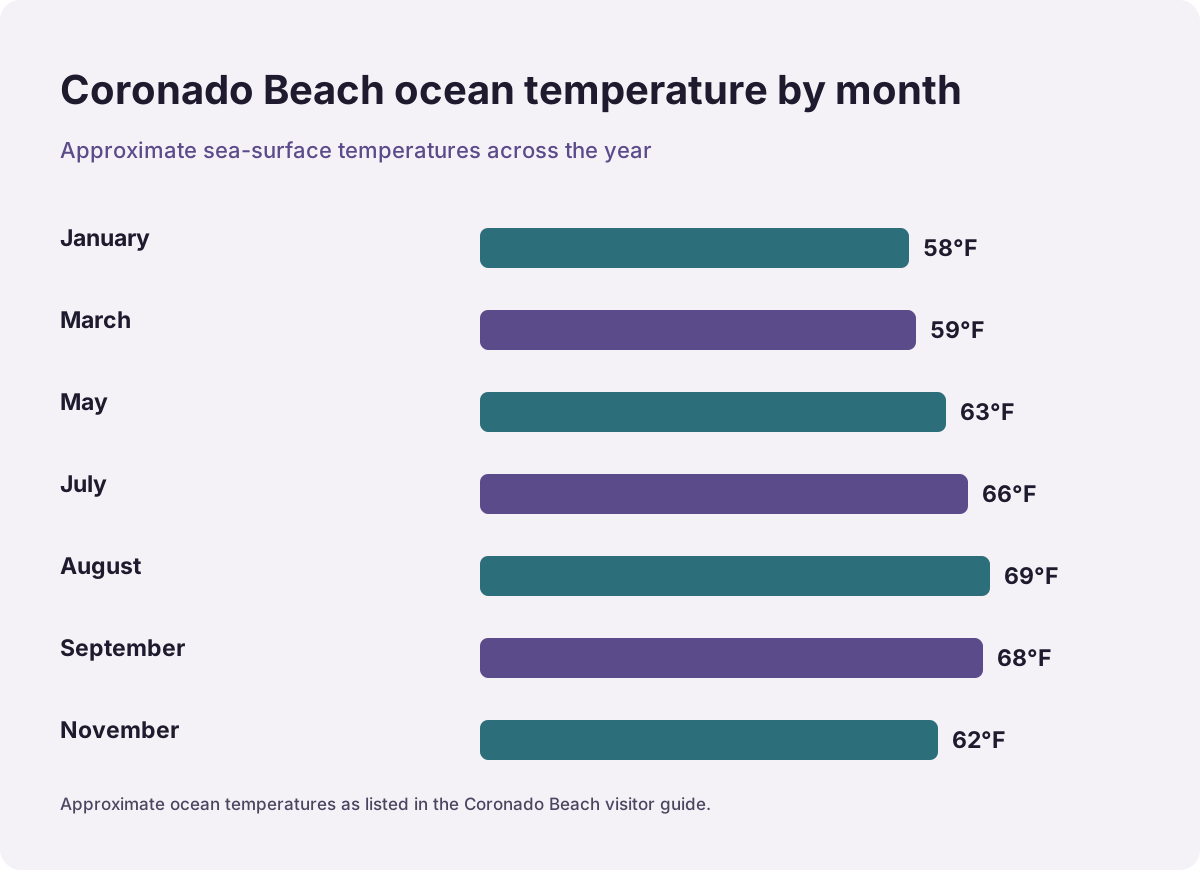
What that means in practice: a swimsuit is fine in late summer, and short of heroic in January. Surfers in wetsuits ride Coronado's gentle peaks year round, but swimmers mostly confine themselves to the warm half of the year. The gentle slope of the beach helps enormously, since the shallows warm in the sun and the waves lose their energy far from shore.
If your ideal beach day involves water you can actually play in rather than look at, Coronado is one of the friendliest places to do it, and it pairs well with a more adventurous water day elsewhere. The La Jolla sea cave kayak tour is the county's most popular way to get on the ocean, a two-hour guided paddle through the caves and kelp beds of the La Jolla Ecological Reserve, and it makes a good companion to a calmer Coronado afternoon.
What Can You Do on and Around Coronado Beach?
The core activities are swimming, boogie boarding, surfing the gentle peaks at North Beach, sunbathing on the wide sand, and walking the full mile and a half from the Hotel del Coronado to the dog beach. Around the beach itself you can tour the Hotel del Coronado, cycle the Silver Strand, watch Navy ships pass in the bay channel, and take a Segway or bike loop around the island's quiet streets. Sunset on the dunes is the unofficial closing ceremony.
The beach handles all the basics better than most. The surf at North Beach is where the local surfers go, a mellow, forgiving peak that suits longboards and beginners far more than the heavier breaks further north in the county. The main stretch in front of the hotel is where families set up for the day, close to food and restrooms. The dog beach at the far north end is the legal off-leash zone, one of the few in the city, and it is a happy chaos of retrievers most weekends.
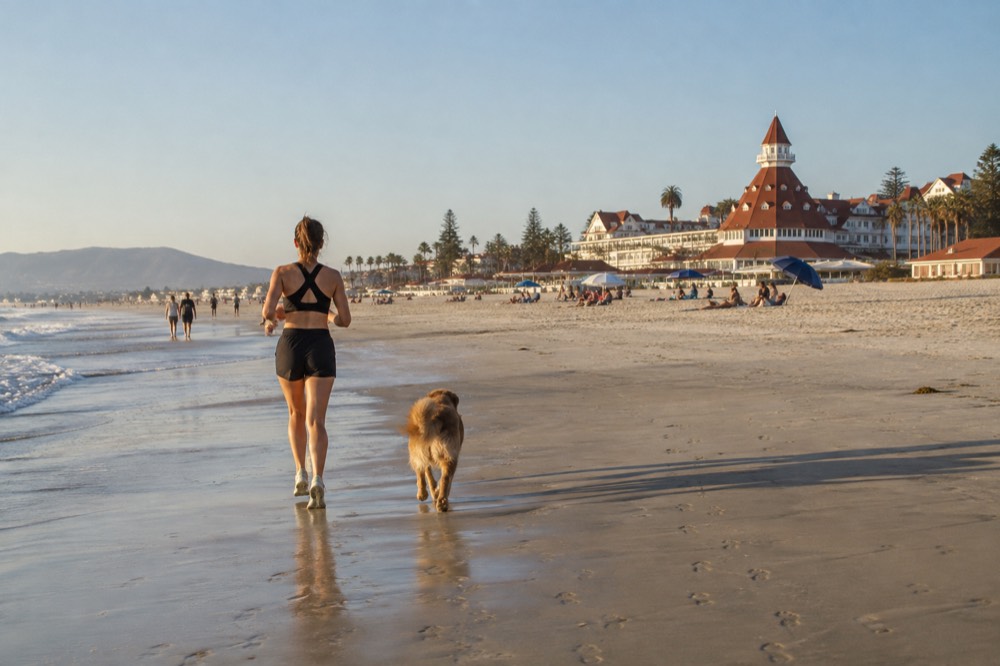
Beyond the sand, Coronado itself is small enough to see in an afternoon. Orange Avenue, the main street, runs from the ferry landing to the hotel and holds the island's restaurants, ice cream shops and boutiques. The Coronado neighborhood guide covers the town side in full, including the ferry landing market and the historic downtown blocks.
For visitors who want a structured way to see the island without walking it, a three-hour guided Segway tour loops Coronado's beachfront and landmarks with a local guide, and it is one of the few tours that actually operates on the island. The rest of the guided options cluster on the water. A two-hour guided sea cave kayaking tour in La Jolla and a ninety-minute La Jolla Cove snorkeling tour with sea lions are the two most-booked water experiences in the county, and both are covered in the site's kayaking La Jolla sea caves and snorkeling La Jolla guides.
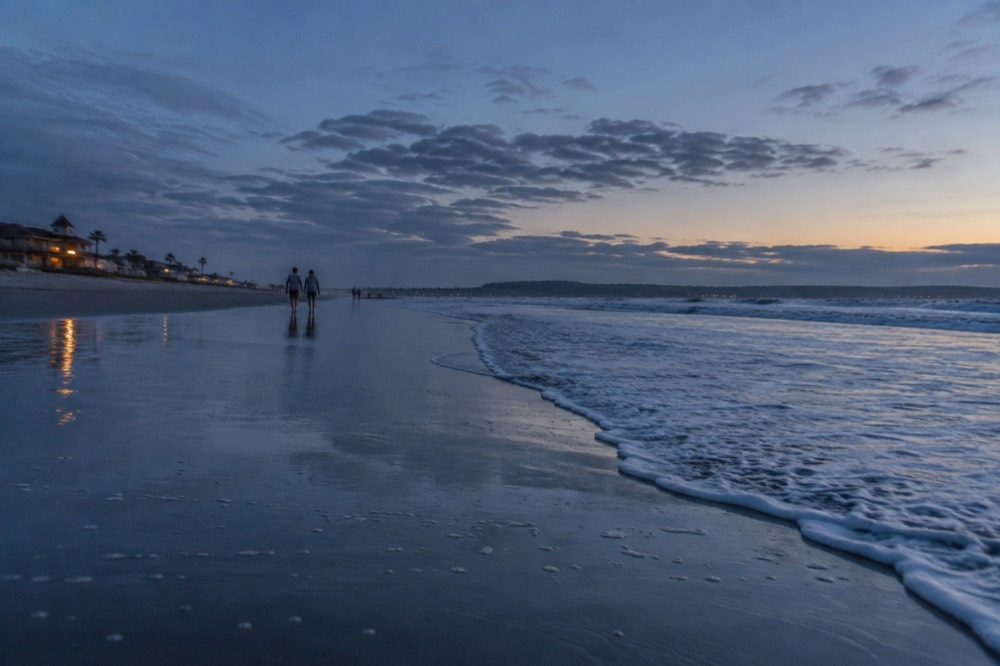
The quieter pleasures should not be skipped. The walk from the hotel north along the dunes at golden hour, with the skyline lighting up across the bay, is the single best free hour on the island. Bring a layer even in summer: the marine layer that locals call May Gray and June Gloom can keep May and June mornings grey and cool on the coast while inland stays bright, and the evening onshore breeze is constant.
Is Coronado Beach Good for Swimming and Families?
Yes, and it is arguably the best family beach in San Diego County. The beach slopes so gradually that small children can wade far from deep water, the waves are normally gentle, lifeguards staff the beach year round, and the sand is wide enough that a family can find space even on crowded days. The main cautions are the ordinary ocean ones: rip currents exist on every San Diego beach, and the city's lifeguard division says to swim near a staffed tower and never alone.
City of San Diego lifeguards staff nine permanent oceanfront stations year round across roughly 24 miles of coastline, generally from 9:00 am to dusk, with extra seasonal towers in summer. Coronado's main beach sits inside that coverage. The city's official rip current advice is worth internalizing before any San Diego beach day: if you are caught in a pull, stay calm, swim parallel to the shore until the current relaxes, then angle back in. If you cannot make it, float and wave for help. The full guidance lives on the city lifeguards' rip current page.
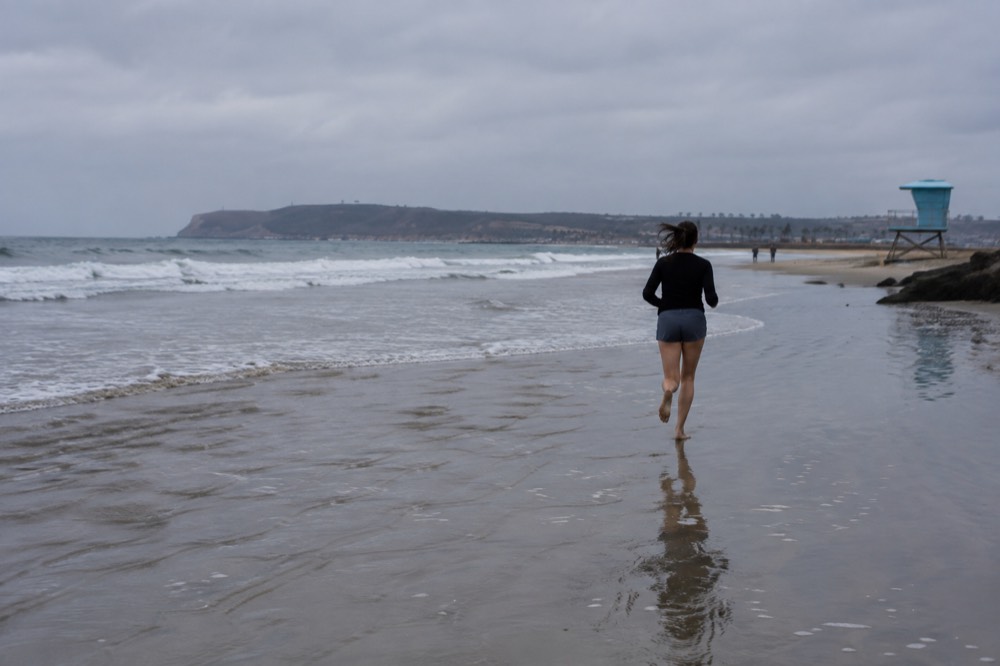
For families comparing beaches, the site's family beaches in San Diego guide ranks the options, and Coronado usually wins on the combination of calm water, clean restrooms, food within walking distance and sheer room. The trade-off is access: it is the hardest of the major beaches to reach without a car, which is exactly why it stays calmer than Mission Bay's shoreline on the same afternoon.
What Are the Beach Rules You Should Know Before You Go?
The standing rules on San Diego city beaches apply in full at Coronado: no alcohol, no glass containers, no smoking, no littering, no overnight camping, and no disturbing noise. Dogs are only permitted off-leash at the designated dog beach at the north end. Fires are only allowed in city-provided containers where they exist, and the specific beach-by-beach fire ring list is not published in one place, so check signs on site. Posted signage always wins over any guide, including this one.
The prohibitions come straight from the city's beach regulations, which also carry a per-beach amenity key covering fire pits and other facilities. The practical reading for Coronado: plan on no bonfire unless you find a sanctioned container, keep the cooler glass-free, and leave the beer at the hotel. Enforcement is real, especially on summer weekends.
| Rule | What it means for your day |
|---|---|
| No alcohol | Applies on the sand, boardwalks and parks citywide |
| No glass | Bring cans or plastic for the cooler |
| No smoking | Includes the beach and the dunes behind it |
| Fires | Only in city-provided containers where present; check signage |
| Dogs | Off-leash only at the designated dog beach at the north end |
One more caution that applies to any San Diego beach day: check the water quality before you swim. The County of San Diego posts closure and advisory information same-day at its beach monitoring page, and after rain the county routinely posts advisories. The city's full beach regulations page is the authoritative source for the rules above.
Where Should You Eat and Stay Near Coronado Beach?
The dining cluster is Orange Avenue, the island's main street, which runs the length of downtown Coronado and holds everything from taquerias and ice cream counters to hotel dining rooms, all within a walk of the sand. For staying overnight, the choice is between the Hotel del Coronado itself, the island's landmark property right on the beach, and a small set of inns and hotels along Orange Avenue, which the site's where-to-stay guide ranks by budget and trip type.
You do not need to leave the island to eat well between swims. The blocks of Orange Avenue near the hotel and around the ferry landing hold the densest collection of restaurants within walking distance of any San Diego beach, and the ice cream shops do a trade that suggests most beach days end the same way. For a splurge meal with the same view, the hotel's own dining rooms face the ocean and the sunset.
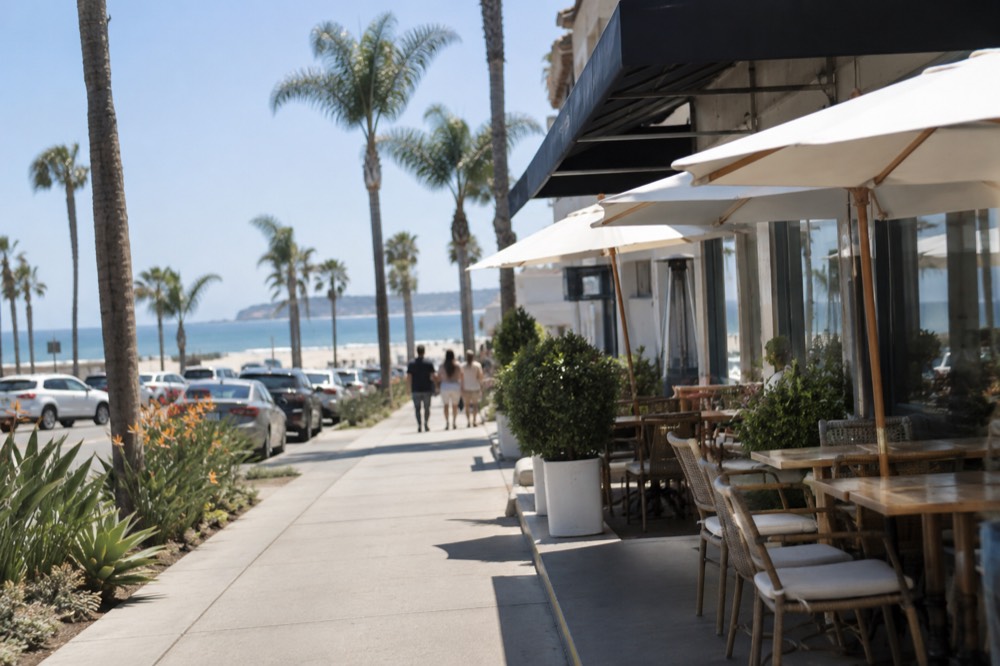
Staying on the island changes the character of the trip entirely. Guests at the Hotel del Coronado get the beach at their doorstep, which in summer means skipping the parking problem altogether, and the island's smaller inns put you on the quiet residential streets a few blocks from the sand. The trade-off is price: Coronado is one of the pricier places to sleep in the county. The site's where to stay in San Diego guide compares it honestly against downtown, and the La Jolla vs Coronado comparison covers which suits a beach-first trip.
For visitors whose trip is beach-first rather than hotel-first, the water tours are where the memorable part of the itinerary tends to come from. The La Jolla sea cave kayak tour, a two-hour guided paddle through the caves of the La Jolla Ecological Reserve, is the single most popular water experience in the county and pairs naturally with a Coronado beach day on the same trip.
What Is the Best Time of Year for Coronado Beach?
Late August through September is the sweet spot: the ocean is at or near its annual temperature peak, the normal daytime high sits around 77 degrees, and the summer crowds have largely gone. July is the most popular month and feels like it. May and June bring the coastal marine layer that can keep mornings grey until midday, while winter brings the year's clearest, calmest days but water in the high 50s.
The counterintuitive fact about San Diego's seasons is that September, not July, is the real summer. The 30-year climate normals show September's average high of 77.2 degrees running 1.9 degrees above July's, and the ocean holding near its August peak. Yet visitation collapses after Labor Day, which is why a September weekday on Coronado can feel half-empty while the water is at its warmest. Anyone with schedule flexibility should take that trade.
May and June deserve their caution. The marine layer the locals call May Gray and June Gloom is a real, repeated pattern where the coast stays grey into the afternoon while inland areas sit in sunshine, and it is visible in the climate normals themselves, in which June's average high is actually lower than October's. It burns off most days, but a beach day planned for 9 am in June can start grey. Plan the beach for the afternoon those months.
Winter, December through March, is the underrated season for walkers and photographers: the storms are few, the air is clear, and the beach is nearly empty. Swimming is a wetsuit proposition, but for a long walk along a mile and a half of glittering sand with the skyline across the bay, there is no bad month at Coronado.
Common Questions About Coronado Beach
Is Coronado Beach free to visit?
Yes. The beach itself is public and free, with no admission and no gate. The costs are getting there and parking, and while street parking near the beach is free, it fills early on summer weekends, so the real price of a peak-season visit is arriving before mid-morning.
How do you get to Coronado Beach without a car?
Take the passenger ferry from downtown across the bay to the Coronado ferry landing, then walk or take a short rideshare to the beach, or ride public transit with a bus transfer, since no Trolley line serves the island. The ferry is foot passengers only, and the landing is at the north end of the island, not at the beach itself.
Is Coronado Beach good for swimming?
Yes, it is one of the gentlest swimming beaches in the county, with a very gradual slope and normally soft waves. The water is swimmable without a wetsuit from roughly July through early October, when the ocean off San Diego runs in the mid-to-high 60s. Swim near a staffed lifeguard tower and follow the city's rip current guidance.
Can you see the Hotel del Coronado from the beach?
Yes, the hotel's red-roofed silhouette sits directly behind the southern end of the beach, and it is one of the most photographed backdrops in San Diego. The hotel grounds and shops are open to visitors, and the dunes just north of the property are the classic spot for the sunset skyline view across the bay.
What is the best time of year for Coronado Beach?
Late August through September. The ocean is at its warmest, the normal daytime high is around 77 degrees, and the summer crowds have gone. July has the fullest beach, May and June often start grey under the coastal marine layer, and winter offers empty sand and clear skies but water in the high 50s.
Are dogs allowed on Coronado Beach?
Dogs are allowed off-leash at the designated dog beach at the north end of Coronado's ocean beach. On the rest of the beach, standard city rules apply and posted signage governs. The dog beach is one of the few legal off-leash zones on San Diego's coastline and is popular most weekends.