Imperial Beach: San Diego's Quiet Southern Shoreline
Imperial Beach sits at the quiet southern end of San Diego's coastline, close enough to the border that the Tijuana hills frame the view. Here is how to plan a day there without the guesswork.
Short answer
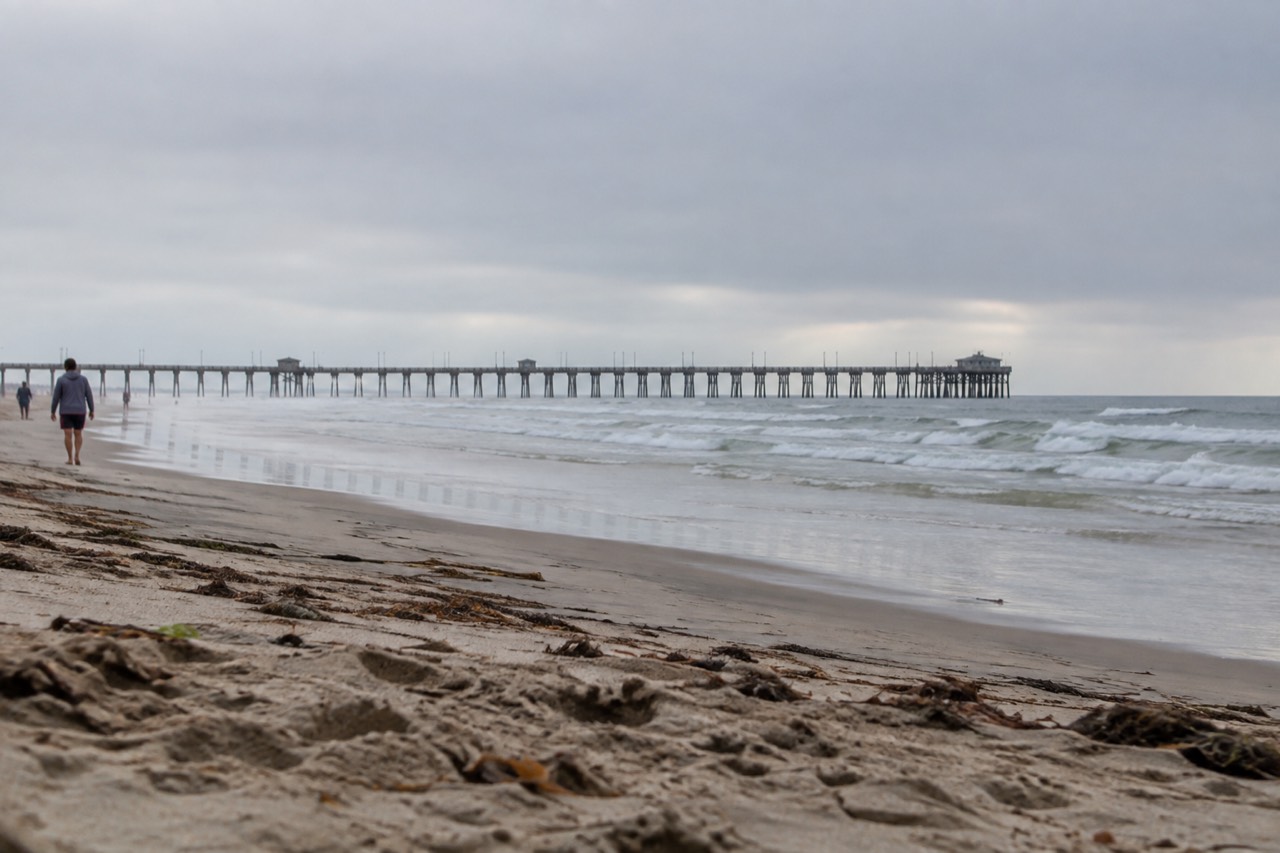
Imperial Beach is the laid-back, local-facing stretch of sand at the southern edge of San Diego County, a short drive west of the San Ysidro border crossing. Expect a wide beach, a long pier, some of the warmest late-summer ocean water on the coast, and none of the crowds of Mission Beach. The MTS trolley reaches San Ysidro for $2.50 one-way, and the beach itself costs nothing.
Imperial Beach is where San Diego's beach culture stops performing for tourists. The city sits at the southern end of the county's coastline, west of the San Ysidro border crossing, and the view from the sand takes in the hills of Tijuana a few miles to the south. The beach is wide, the pace is slow, and the crowd skews local: surfers at dawn, families on weekends, dog walkers at dusk. If Mission Beach is the postcard, Imperial Beach is the neighborhood.
This guide from Things to Do in San Diego covers the practical side of a visit: getting there without a car complication, picking the right month, swimming safely, parking honestly, and understanding how close the border really is. It also suggests how to fold Imperial Beach into a bigger day, because most visitors pair it with Coronado, the South Bay, or a crossing into Mexico.
What Is Imperial Beach, and Why Do People Go?
Imperial Beach is the southernmost beach community on San Diego County's coastline, sitting a few miles west of the San Ysidro border crossing and framing its views with the hills of Tijuana. People go for a wide, unhurried stretch of sand, a long pier, a local rather than resort atmosphere, and the sense of standing at the quiet end of a very busy region. It is the counterweight to the boardwalk energy of Mission Beach and Pacific Beach, and it costs nothing to enjoy.
The appeal is mostly negative space, in the best sense. Where the central coast is built up with hotels, rental shops and volleyball courts, Imperial Beach keeps a low skyline, a residential feel and long sightlines down the sand. Visitors who want a beach where they can hear the waves instead of the crowds tend to end up here, and so do locals who have given up on fighting summer traffic farther north.
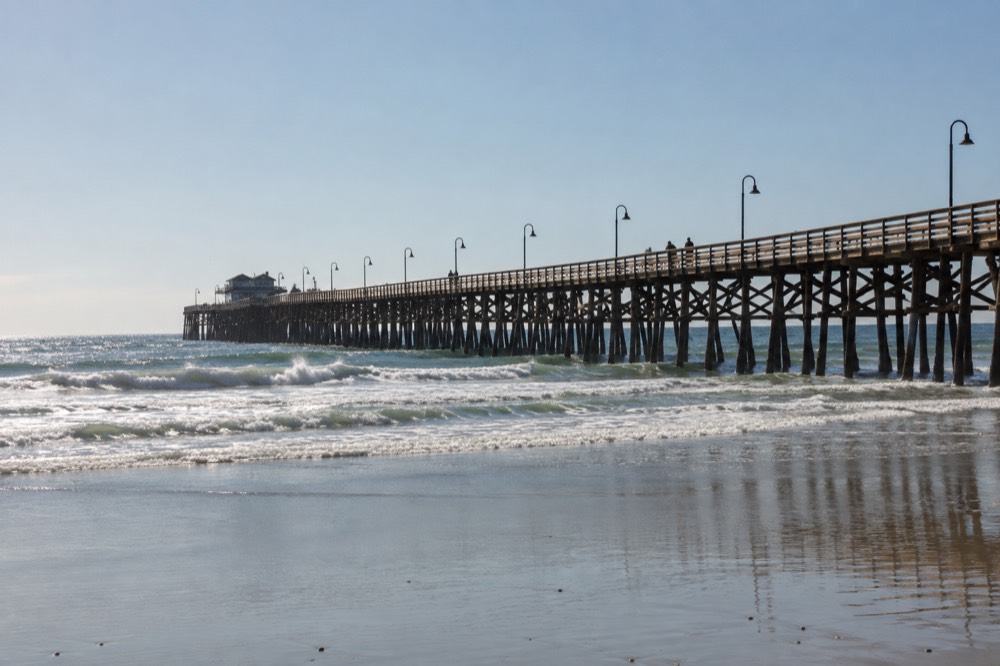
The pier is the natural anchor of a visit. It is one of the classic wooden piers on the San Diego County coast, and it gives you a raised view over the whole shoreline, a place to watch surfers, and a walk that ends over open water. You do not need a plan for Imperial Beach. The pier, the sand and the sunset are the plan.
It also works as a geography lesson. On a clear day you can see Mexico from the beach, and the border's presence shapes everything about the area: the trolley line that serves it, the traffic on Interstate 5, and the mix of languages on the sidewalk. For travelers curious about how San Diego and Tijuana sit against each other, this is the beach where you feel it.
How Do You Get to Imperial Beach from Downtown San Diego?
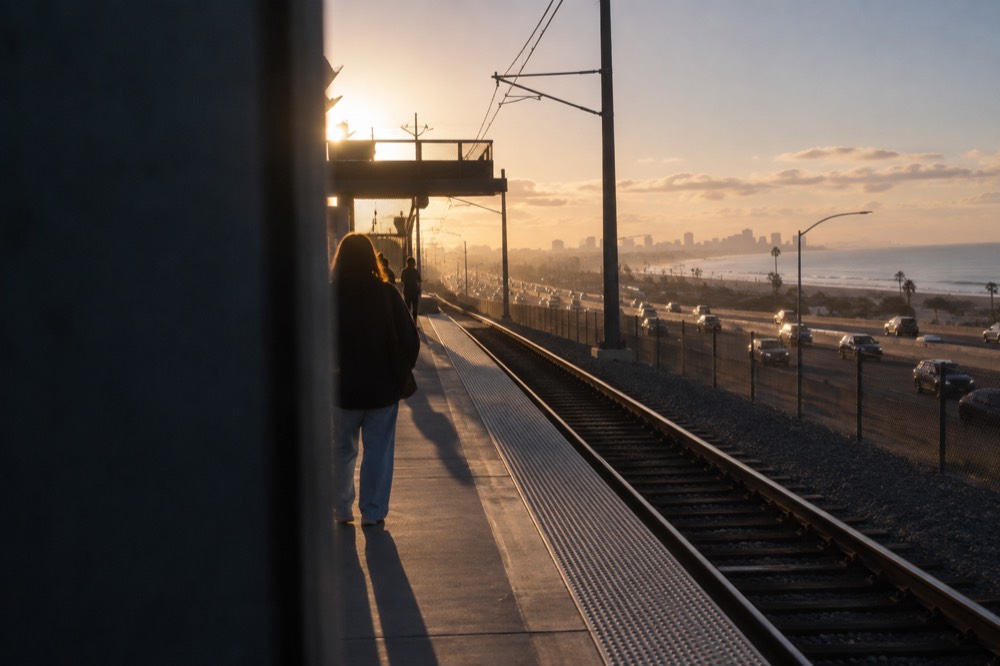
Driving from downtown San Diego takes roughly 20 to 25 minutes via Interstate 5 south, exiting at Palm Avenue or Imperial Beach Boulevard and following the road west until it ends at the ocean. Without a car, the Blue Line trolley runs south from downtown to San Ysidro for a $2.50 one-way fare, and the beach sits a short taxi or rideshare trip west of there.
There is no trolley station at the beach itself, so the last few miles always involve a bus, a bike or a car.
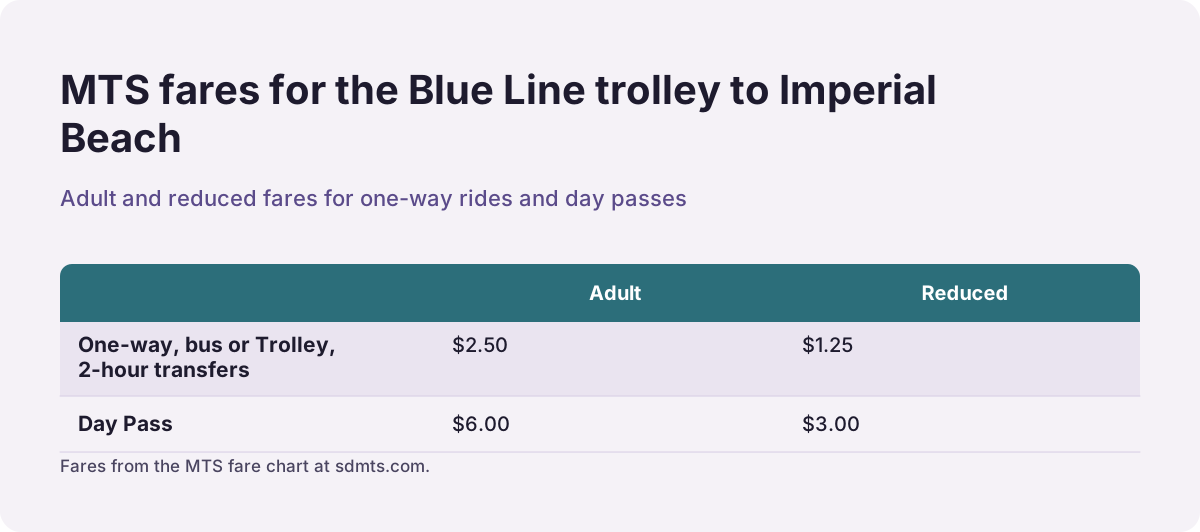
The transit detail worth knowing is the fare system. MTS charges $2.50 for a one-way ride with two-hour transfers, and a day pass is $6.00, with reduced fares of $1.25 and $3.00 for seniors 65 and over, disabled riders, Medicare cardholders and youth with ID. The fare chart is published at the MTS fare page. The system uses PRONTO, a card or app that caps your spending automatically: once your individual rides add up to the day-pass value, the rest of the day is free, so there is no reason to buy a day pass up front. Contactless bank cards work for single rides but do not cap.
| Fare | Adult | Reduced |
|---|---|---|
| One-way, bus or Trolley, 2-hour transfers | $2.50 | $1.25 |
| Day Pass | $6.00 | $3.00 |
If you are staying downtown and want a car-free half day, the honest version is this: take the Blue Line toward San Ysidro, get off, and use a rideshare for the short hop west to the beach. It is not a one-seat ride, but it is cheap and the trolley runs frequently. Our getting around San Diego guide breaks down the whole network, including the airport connection.
Drivers should know two things. First, southbound Interstate 5 near the border can slow badly at commuter hours and on weekends, because the freeway funnels toward the busiest land border crossing in the western hemisphere. Second, the last stretch of the drive is flat, fast and simple: every major road in the area runs east-west, and the beach is where the west ends. Arrive before 10 am on a summer weekend and the whole trip feels easy.
If your Imperial Beach day is one stop inside a longer coastal itinerary, a narrated tour can carry the logistics for you. These are the most popular options travelers compare:
When Is the Best Time of Year to Visit Imperial Beach?
September is the best month, and it is not close. September's normal high of 77.2°F beats July's 75.3°F, the ocean is warmer than it is in July, and the summer crowds have gone home, which makes late summer the sweet spot for swimming and for empty sand. June, despite its reputation as peak summer, has a normal high of just 71.7°F, below even October's 74.6°F, because the coastal marine layer greys the beaches in late spring while the beaches stay quiet.
The marine layer is the seasonality story on this coast, and the 30-year temperature normals show it without any need for folklore. June's normal high sits lower than October's, which surprises most visitors, and the grey mornings locals call May Gray and June Gloom are the reason. The pattern burns off toward midday more often than not, but a beach morning in June can be overcast while inland areas stay sunny. Plan afternoon beach time in late spring, and do not book a sunrise photo session in June expecting gold light.
| Month | Normal high °F | Normal low °F | Rain days |
|---|---|---|---|
| May | 69.5 | 60.0 | 0.7 |
| June | 71.7 | 62.6 | 0.1 |
| July | 75.3 | 66.1 | 0.1 |
| August | 77.3 | 67.5 | 0.0 |
| September | 77.2 | 66.2 | 0.2 |
| October | 74.6 | 61.5 | 1.1 |
Rain barely exists between May and October, which is the other half of the answer. August normals to one hundredth of an inch of rain, and September to about a tenth of an inch, so a beach day in that window is close to a sure thing. Winter is the rainy season by San Diego standards, with December through March carrying most of the year's precipitation, but even a February day at 66°F is a perfectly good walking-the-pier day. The full picture is in our San Diego weather and best time to visit guide.
The water deserves its own paragraph. Mean sea-surface temperature at the NOAA station at Scripps Pier in La Jolla runs 66.5°F in July, peaks at 68.7°F in August, and holds 67.6°F in September, before sliding to 58°F by January. In other words, the ocean is at its warmest in the back half of summer, not the front, which is one more reason September wins. Surfers wear wetsuits year round on this coast; swimmers will find August and September genuinely pleasant and June bracing.
What Is There to Do at Imperial Beach?
The core activities are simple and free: walk the pier, spread out on a beach that is far less crowded than the central coast, watch surfers at the breaks along the shore, and stay for a sunset that faces open water. Beyond the sand, the area sits beside the Tijuana River estuary, one of the last intact coastal wetlands in Southern California, with flat walking trails and serious birdwatching. Plan on a half day for the beach itself, longer if you add the estuary or a meal.
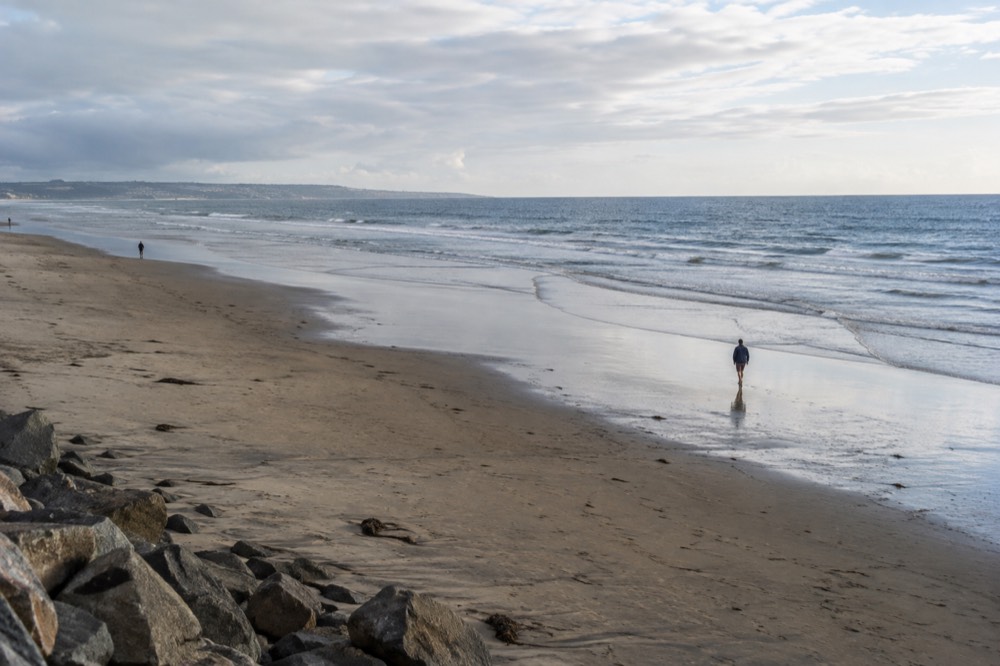
The pier walk is the thing to do first. It orients you: south toward Mexico, north up the silver strand of sand toward Coronado, west over the surf line. Anglers fish off the rail, pelicans work the updrafts, and the view back at the beach shows you just how much open sand there is. If you only have an hour in Imperial Beach, spend it on the pier.
The sand itself is the draw for most visitors. Because this coast faces mostly west and southwest, the sunsets are the event of the evening, and the beach's low profile means nothing blocks them. It is one of the better entries in our sunset spots in San Diego roundup, precisely because there is no backdrop of high-rises. Bring a jacket even in summer: once the sun drops, the onshore breeze turns cool fast.
Surfing is a local institution here, and the breaks suit beginner-to-intermediate riders more than the famous reefs farther north. If you are starting from zero, lessons cluster around the La Jolla breaks instead, where a 1.5-hour session covers the fundamentals in water that is protected from the worst of the swell. Our surfing in San Diego guide compares the main spots and explains why the southern beaches and the northern ones suit different ability levels.
For travelers who want a guided water experience rather than a do-it-yourself swim, the strongest option in the county is the kayak trip through the La Jolla sea caves, a 2-hour guided paddle through the caves and kelp beds of the La Jolla ecological reserve. It is the single most-booked water tour in the region, and it pairs naturally with a southern beach day if you are willing to drive 40 minutes north for it.
The snorkeling alternative covers similar water from below instead of above: a 1.5-hour tour of La Jolla Cove with sea lions and caves, in a protected area where the wildlife comes to you. Between the two, kayaking suits families and first-timers who want the cave pass from the surface, while snorkeling suits confident swimmers who want the underwater view. Whichever you pick, book the morning slot: the wind picks up in the afternoon on this coast, and operators cancel or reroute more often after lunch.
Is It Safe to Swim at Imperial Beach?
Swimming is generally safe at Imperial Beach on a normal summer day, with the standard coastal hazards applying: rip currents are the primary danger, so swim near a lifeguard and never alone. The two things that genuinely matter here are checking water quality before you go, because the beach sits near the mouth of the Tijuana River, and respecting posted closure signs, which are put up for health reasons rather than decoration. On a clear, open-status day, the water is as swimmable as anywhere in San Diego.
Rip current advice is the same on every San Diego beach, and it is worth reading once carefully. If you are caught in a pull away from shore, stay calm, swim parallel to the beach until the current relaxes, then angle back in. If you cannot make it, float and wave for help. The City of San Diego publishes this guidance at its rip current safety page, and the rule that matters most is simple: swim near a lifeguard. The city staffs nine permanent oceanfront stations year round, covering roughly 24 miles of coastline, with extra seasonal towers in summer and staffed hours generally from 9 am to dusk.
Water quality is the local nuance. The County of San Diego's environmental health department tests beach water and posts results and closures at sdbeachinfo.com, with same-day or next-business-day posting after rain. Because Imperial Beach sits near a river mouth that drains a cross-border watershed, it is one of the beaches where checking the county page before a swim is genuinely worth the thirty seconds, especially in the days after winter storms. A closure sign after rain is not bureaucratic caution; it is a health advisory, and the county is the authoritative source.
The rest of the safety picture is ordinary beach sense. Alcohol is prohibited on San Diego city beaches, boardwalks and parks, a rule enforced across the county's coastline, and glass containers and smoking are prohibited as well. Imperial Beach is its own incorporated city with its own ordinances, so posted local signs always win over general rules. Our is San Diego safe guide covers the broader picture, but the beach-specific answer is that the main risks here are ocean hazards and sun, not crime.
| Check | Where to look | What it tells you |
|---|---|---|
| Water quality status | County beach postings online | Open, advisory or closed for swimming |
| Rip current conditions | Lifeguard towers and posted flags | Whether to stay in the shallows |
| Rain timing | Forecast, plus county page after storms | Runoff can close beaches near river mouths |
| Lifeguard hours | On-site signage, generally 9 am to dusk | When and where swimming is watched |
Where Do You Park at Imperial Beach?
Parking at Imperial Beach is street-and-lot parking that is free to park in and genuinely hard to find on warm summer weekends, because no published rate table exists for the beach lots here, exactly as with the beaches farther north. The practical strategy is to arrive before 10 am on any weekend between June and September, or to come on a weekday morning when the side streets near the pier are half empty. Timing is the whole game.
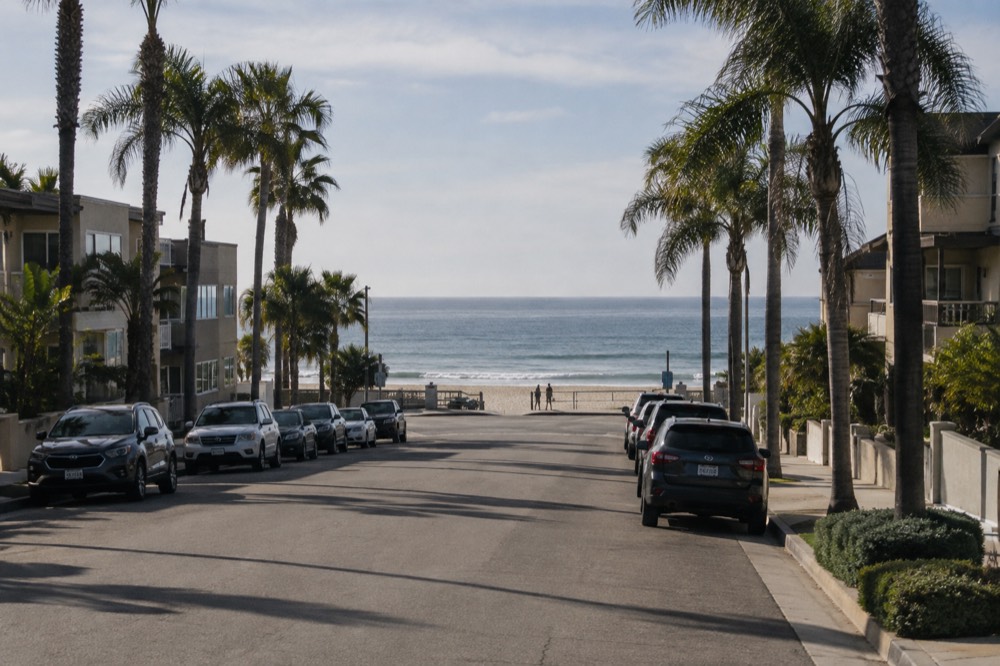
This is the biggest practical question a San Diego visitor has, and the honest answer is the same at Mission Beach, Ocean Beach, La Jolla and here: the parking is free or cheap and the supply is the problem. Summer weekends fill the closest streets to the pier by mid-morning, and the overflow spreads inland block by block. Locals know the rhythm, which is why the surf crowd is in the water at dawn and gone before the hunt for spaces begins.
Two things make it easier. First, weekday mornings are a different world: even in August, a Tuesday at 9 am has open curb space within a short walk of the sand. Second, the sunset crowd turns over quickly, so an arrival after 5 pm in summer often lands spaces left by departing beachgoers. If you are combining Imperial Beach with an evening elsewhere, the late slot is the forgiving one.
Do not plan to park at the border and walk. The San Ysidro crossing area is its own parking universe, aimed at cross-border travelers, and it is a few miles from the beach with no pleasant walking route between. Our parking in San Diego guide covers the citywide picture, including downtown meters at $2.50 per hour and the zones where Sunday enforcement now applies.
One last note for winter visitors: parking pressure here is a warm-month phenomenon. From November through March, outside of holiday weekends, you can usually drive up and park within sight of the pier at any hour, which is one of the quiet luxuries of the off-season coast.
How Close Is Imperial Beach to the Mexican Border?
Imperial Beach sits a few miles west of San Ysidro, the busiest land border crossing in the western hemisphere, and on clear days the hills of Tijuana are visible from the sand. PedEast, the main pedestrian crossing, is open 24 hours a day, and US Customs and Border Protection publishes live wait times hourly, so the honest planning move is to check the live feed rather than to rely on any rule of thumb about typical waits, because no official historical table of typical waits exists.
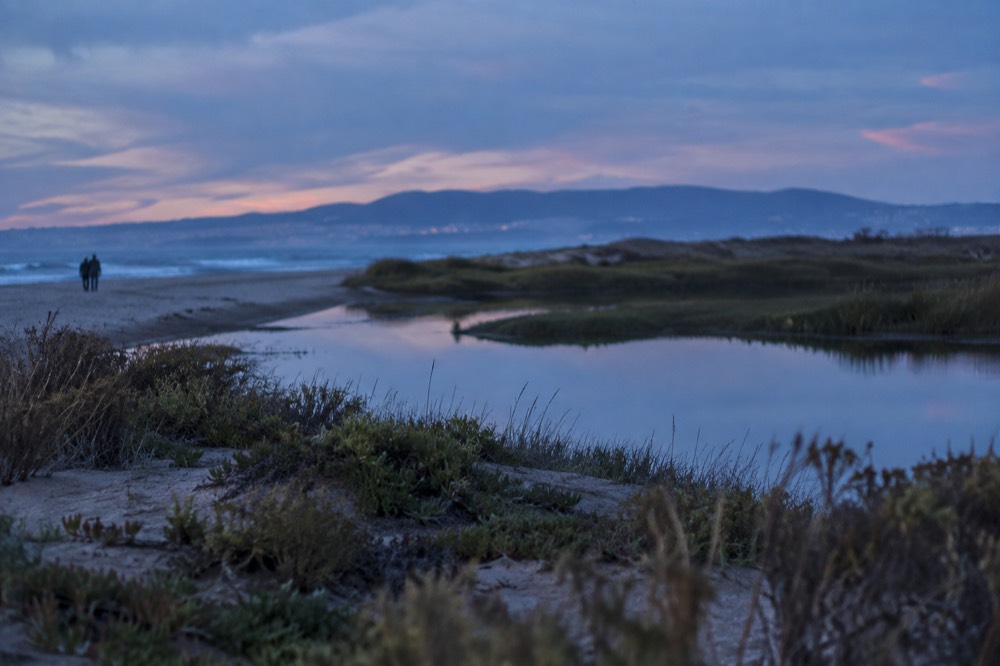
The documents depend on who you are, and the distinction matters. US citizens re-entering by land need a passport book, a passport card, an enhanced driver's license from a participating state, or a Trusted Traveler card such as SENTRI, NEXUS or Global Entry, under the Western Hemisphere Travel Initiative. Visitors traveling on the Visa Waiver Program need a valid, approved ESTA even for a land crossing, a requirement at land borders since October 2022. Travelers should verify their own status against CBP's official requirements page rather than relying on secondhand advice, because the rules differ by citizenship and visa type.
The pedestrian infrastructure is better than most people expect. PedEast runs around the clock, while PedWest runs limited weekday hours, 6 am to 2 pm Pacific. A Ready Lane exists for travelers carrying RFID-enabled documents, a passport card or a Trusted Traveler card among them, and it reads the document at kiosks before you reach the officer, which makes it meaningfully faster than the standard lane. The live feed at bwt.cbp.gov is the only reliable source for what the wait actually is right now, and it is the tool to check before you walk over.
If a crossing is on your itinerary, the guided option removes the document and navigation guesswork: a 5-hour guided day trip from San Diego to Tijuana with lunch included, which handles the border logistics and pairs naturally with a morning at Imperial Beach, since both sit at the same southern end of the city.
For planning the DIY version, our Tijuana day trip guide covers the crossing in detail, including the trolley connection: the Blue Line runs from downtown San Diego to San Ysidro in well under an hour, and the published end-to-end time from San Ysidro up to the UTC terminus is 1 hour 23 minutes. The border is a real subject here, not a novelty, and treating it with a live feed and the right documents is what separates a smooth crossing from a ruined afternoon.
What Can You Combine with a Visit to Imperial Beach?
The natural pairings are Coronado, which sits up the same silver strand of coastline to the north, the tide pools and viewpoints of Point Loma on the drive back toward downtown, and the South Bay's flat walking trails if you want to stay local. A classic one-day arc is Imperial Beach in the morning, Coronado for lunch and the Hotel Del's beachfront in the afternoon, and downtown or the Embarcadero for sunset. With a car, all of it fits inside a single relaxed day.
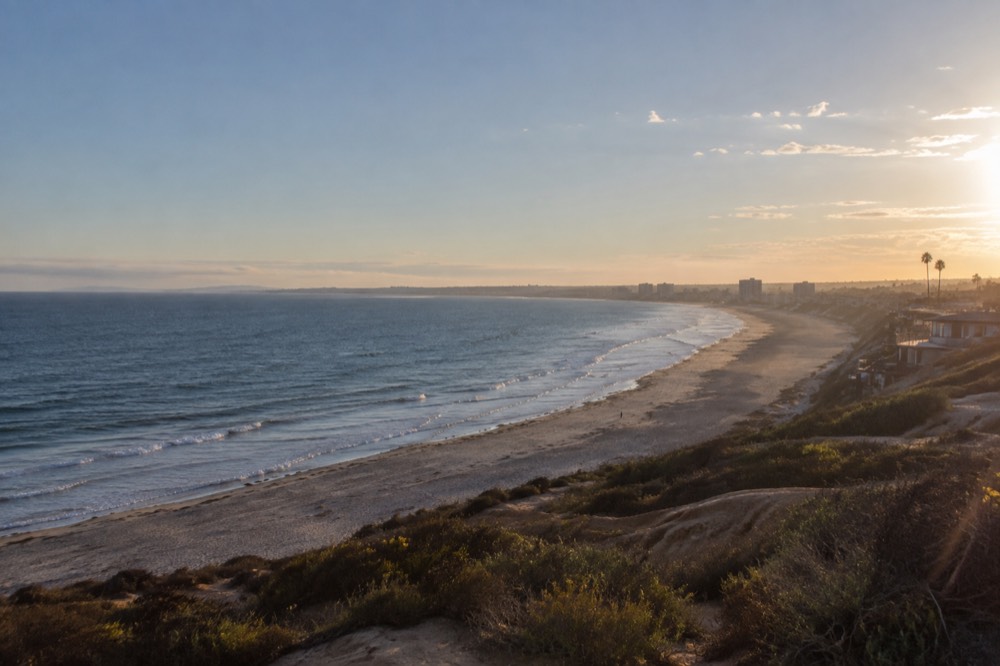
Coronado is the obvious first add. The drive north from Imperial Beach runs along the coast with the water in view for much of the way, and Coronado's wide, flat beach ranks near the top of our best beaches in San Diego roundup. Our Coronado Beach guide covers parking and the famous Hotel del Coronado, and the honest comparison is simple: Coronado is the polished postcard, Imperial Beach is the working beach, and seeing both in one day tells you which you prefer.
Point Loma makes a strong middle stop if you are heading back toward downtown. Cabrillo National Monument sits on the point with a $20 per-vehicle entrance fee valid for seven days, tide pools that close at 4:30 pm, and one of the best harbor views in the county. The tide pool detail matters for sequencing: the whole coastal area of the park closes at 4:30 pm, so it is an earlier stop, not a sunset one. Our tide pools around San Diego guide explains the timing rules.
If you would rather let someone else drive, the harbor cruise from the Embarcadero is the easiest add-on: a 1-hour loop of San Diego Bay that puts the skyline, the naval ships and the Coronado Bridge in one frame, and it runs from the downtown waterfront that is only about 25 minutes from Imperial Beach by car.
For a fuller plan, our one day in San Diego itinerary and the free things to do in San Diego guide both slot Imperial Beach into larger routes, and the beach itself is one of the better free entries in the county: the sand, the pier walk and the sunset cost nothing, which is why locals defend it so fiercely.
If you are still weighing the guided options for the water side of your trip, these three are the ones San Diego travelers compare most often:
Common Questions About Imperial Beach
Is Imperial Beach worth visiting?
Yes, if what you want is a quiet, local, uncrowded beach rather than a boardwalk scene. The sand is wide, the pier is a genuinely good walk, and the sunsets face open water. It is not the beach for amusement rides, rental rows or nightlife; those live farther north. Go in September and you get the warmest water and the thinnest crowds of the year.
Can you get to Imperial Beach without a car?
Partly. The Blue Line trolley runs from downtown San Diego to San Ysidro, the southern terminus, for a $2.50 one-way fare, but there is no trolley station at the beach itself, so the last few miles require a bus, a bike or a short rideshare trip. It works fine as a car-light half day, not as a one-seat ride.
Is it safe to swim at Imperial Beach?
On a normal open-status day, yes, with the usual coastal hazards: rip currents are the primary danger, so swim near a lifeguard and never alone. The local nuance is water quality near the Tijuana River mouth, which the county tests and posts at its beach status page. Check that page before swimming, especially in the days after rain, and respect any posted closure.
How far is Imperial Beach from the Mexican border?
A few miles. The beach sits west of San Ysidro, the busiest land border crossing in the western hemisphere, and Tijuana's hills are visible from the sand on clear days. PedEast, the main pedestrian crossing, is open 24 hours, and CBP publishes live wait times hourly, so check the live feed rather than planning around a typical wait.
What is the best month to visit Imperial Beach?
September. Its normal high of 77.2°F beats July's, the ocean averages 67.6°F, and the summer crowds have gone. August is a close second with the warmest water of the year at 68.7°F. June is the overrated month: the marine layer keeps its normal high at 71.7°F, below October's, with grey mornings common.