Is San Diego Safe? What Visitors Should Actually Know
San Diego is a big American city wrapped around a waterfront, and the honest answer about safety is that the risks worth planning for are rip currents, parking rules and border logistics, not the things most worry pages warn about.
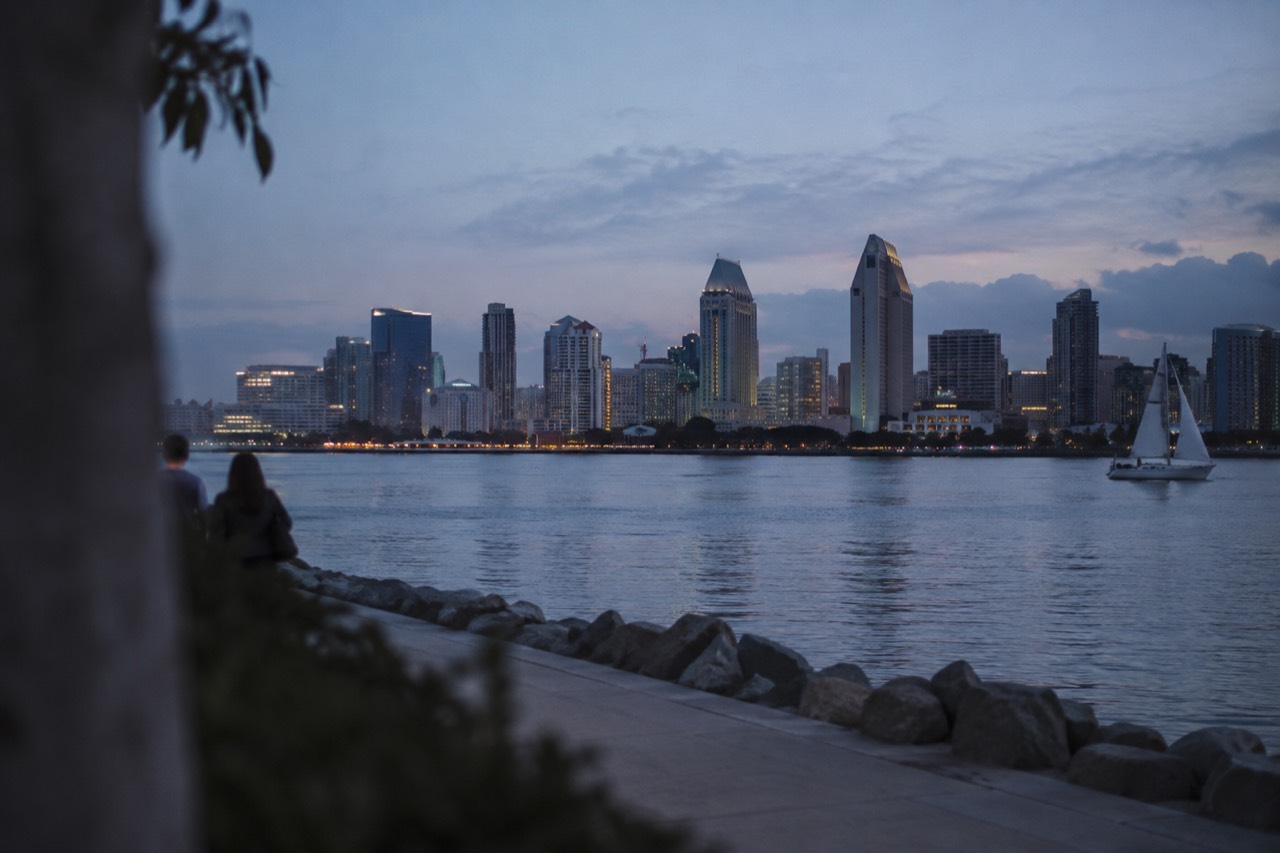
Short answer
Yes, San Diego is comfortable to visit in the way most large American tourist cities are. The City staffs nine year-round lifeguard stations across roughly 24 miles of coastline, the transit system is a normal urban network with a $2.50 fare, and the visitor districts along the bay are busy day and night. The hazards to actually plan for are the ocean, the sun and car break-ins.
Is San Diego Safe to Visit Right Now?
Yes, in the way most large American tourist cities are: the places visitors actually go are busy, well-used and straightforward, and the risks worth planning for are ocean, sun and car break-ins rather than violent crime. San Diego's visitor districts sit on a waterfront most people walk day and night, and the practical hazards the City itself publishes guidance on are rip currents, parking rules and border logistics.
That answer is deliberately specific, because "is it safe" questions deserve better than a shrug. San Diego County received 32.5 million visitors in 2024, split roughly 18 million overnight and 14.5 million day visitors, per the San Diego Tourism Authority. A destination does not move those numbers by being hostile to strangers. What it does have is a real ocean, a real international border at its southern end, and the ordinary property crime that any city with crowded beach lots and rental cars experiences.
The editorial desk behind Things to Do in San Diego treats safety the way it treats parking: as the biggest practical question visitors actually ask, and one that deserves honest answers rather than reassurance theater. So this page separates the three subjects people usually blur together. Neighborhood comfort, which is mostly about where you walk and when. Ocean safety, which is the one place San Diego can genuinely hurt you, because rip currents do not care how safe the city around them is. And logistics like the border and transit, which feel like risk questions but are really planning questions.
One thing worth saying early: nothing in this article should be read as a claim that nothing bad ever happens. Any city of this size has crime, and no guide can promise otherwise. What a good guide can do is tell you where the city's own published guidance points, which rules catch visitors out, and which worries are better spent on sunscreen and hydration. The sections below take each of those in turn.

Which San Diego Neighborhoods Are Comfortable for Visitors?
The main visitor neighborhoods, the Gaslamp Quarter, the Embarcadero, La Jolla, Coronado, Old Town and the beach communities, are all walkable, high-foot-traffic areas where the ordinary rules of any city apply: keep bags closed, keep phones out of back pockets, and take everything out of a parked car. None of them requires a guide or a car to feel manageable, and several are best explored entirely on foot.
The pattern across San Diego is that visitor activity hugs the water. Downtown's bayfront, from the Convention Center past Seaport Village to the USS Midway, is a continuous promenade that people stroll at all hours. The downtown San Diego overview covers how it all connects. A block or so inland sits the Gaslamp Quarter, the nightlife core, which is loud and crowded on weekends and quieter by day. La Jolla, Coronado and Old Town each have their own self-contained visitor zones where the walk between shops, viewpoints and restaurants is short.
The beach communities deserve a slightly longer note because they are where the car break-in problem lives. Pacific Beach, Ocean Beach and Mission Bay have street-and-lot parking that is free to park in and very hard to find in summer, and a parked rental car with luggage visible is a target in every beach town on this coast, not a San Diego special. The Pacific Beach guide and the La Jolla guide both go deeper on where to base yourself if the beach is the point of the trip.
| Area | What it feels like | Practical note |
|---|---|---|
| Gaslamp Quarter | Busy nightlife core, crowded on weekend evenings | Loud late; walk the main lit streets |
| Embarcadero / bayfront | Continuous waterfront promenade, strolled at all hours | Flat, well-lit, connects most downtown sights |
| La Jolla | Upscale village feel around the Cove and shops | Parking is the hard part, arrive early |
| Coronado | Small-town, low-key, family-heavy | Reached by bridge, ferry or bus |
| Old Town | State historic park with restaurants and museums | Busy by day, calmer after dinner |
| Pacific Beach | Boardwalk, bars, young crowd | Street parking fills fast in summer |
| North Park | Local breweries and restaurants, a few blocks of nightlife | Less touristy, more neighborhood logic |
If you would rather scout the whole spread before committing to walking any of it, the narrated hop-on hop-off trolley loops the main visitor stops over two days, and the two-hour GoCar tour covers downtown plus either Old Town or the beaches with a vehicle you drive yourself. Both are sightseeing products rather than safety products, but they answer a real first-day question: which neighborhoods feel like yours.
Is Public Transit in San Diego Safe for Tourists?
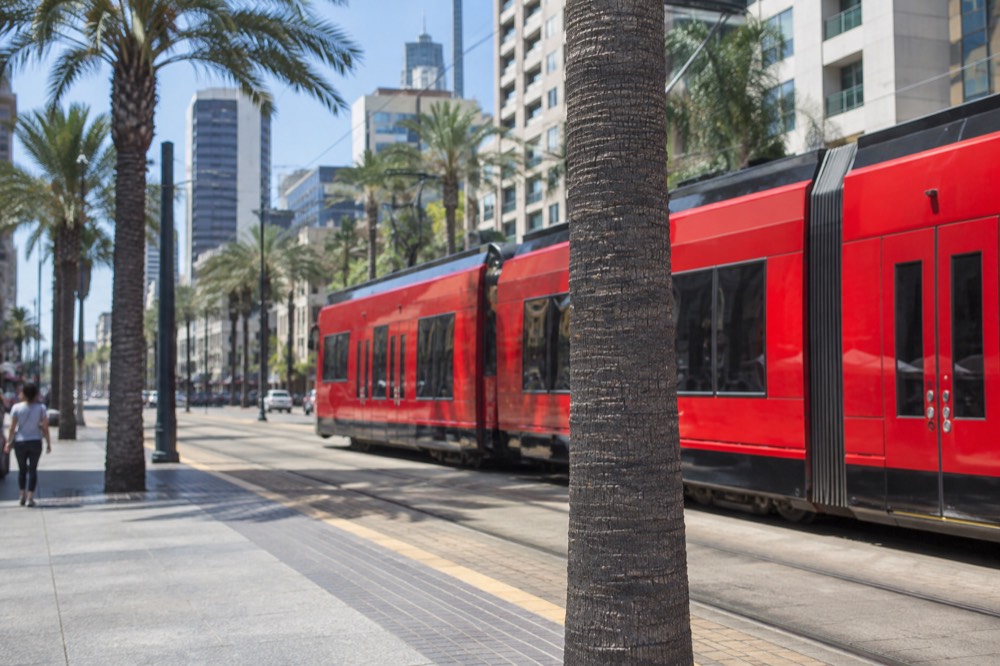
Yes, and it is simpler than most visitors expect. The trolley and bus network is a normal urban system with a $2.50 adult one-way fare and a $6.00 day pass, the Blue Line runs all the way from the border at San Ysidro to UC San Diego, and the fare system caps what you pay automatically. Transit in San Diego is a planning question, not a risk question, and the airport connection runs every 15 minutes.
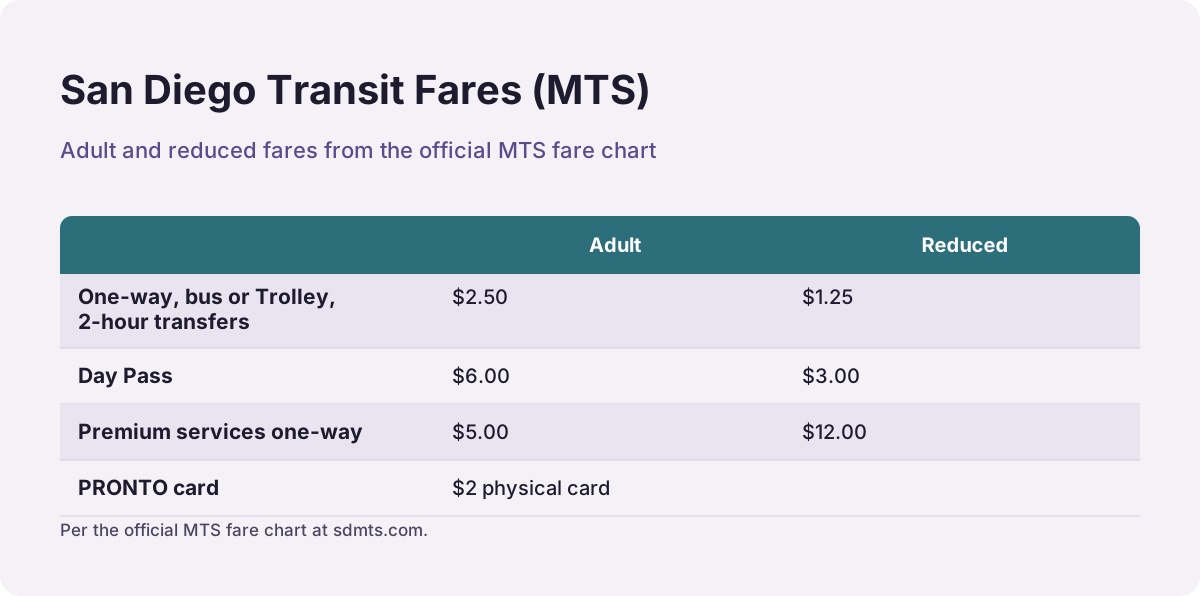
The basics come straight from the MTS fare chart: $2.50 one-way for adults with two-hour transfers included, $1.25 reduced for seniors 65 and over, disabled riders, Medicare cardholders and youth with ID, and a $6.00 day pass against $3.00 reduced. Premium services run $5.00 one-way. The fare system is called PRONTO, available as a $2 physical card or an app, and it applies fare capping: once your rides total the day-pass value, the chart literally reads "Day Pass Earned". There is no reason to buy a day pass up front. Youth 18 and under ride free on the Youth Opportunity Pass, and up to two children aged 5 and under travel free with a paying adult.
| Fare | Adult | Reduced |
|---|---|---|
| One-way, bus or Trolley, 2-hour transfers | $2.50 | $1.25 |
| Day Pass | $6.00 | $3.00 |
| Premium services one-way | $5.00 | $12.00 |
The getting around San Diego guide covers the network in full, and the official fare chart at sdmts.com is the page to check before you ride, since fares are the kind of thing that changes. Two practical notes matter more than any safety framing. There is no Trolley station at the airport: MTS Route 992 runs every 15 minutes from both terminals to Broadway and Kettner, the Trolley interchange, from 4:30 am to 1:00 am daily. And the free San Diego Flyer shuttle runs from the airport to Old Town Transit Center roughly every 20 to 30 minutes.
For a first-day orientation, the narrated hop-on hop-off trolley is the product that fits transit thinking: it stays on a fixed route through the visitor neighborhoods, a driver narrates what you are passing, and the ticket is valid for two days so you can hop off where a stop interests you.
The trolley's own Blue Line is worth knowing separately, because it is the line that reaches the border. It runs from San Ysidro at the southern end north through downtown to UC San Diego and UTC, with a published end-to-end time of 1 hour 23 minutes. Riding it is ordinary. The thing to plan for at its southern terminus is paperwork, not the ride, and the border section below covers that in full.
Is It Safe to Swim at San Diego Beaches?
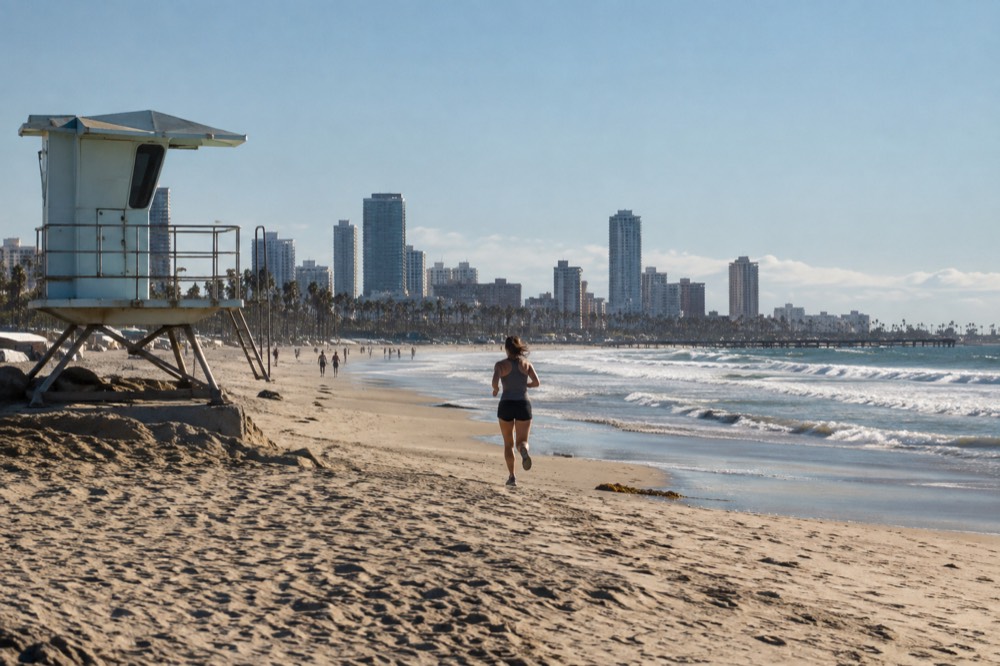
This is the one part of San Diego that can genuinely hurt a visitor, and the City treats it the same way. San Diego staffs nine permanent oceanfront lifeguard stations year round, covering roughly 24 miles of coastline, with seasonal towers added in summer, generally staffed from 9:00 am to dusk. Rip currents are the primary hazard, and the City's own advice is to swim near a lifeguard and never alone.
The rip current guidance published by the City lifeguards is worth reading once and remembering: if you are caught, stay calm and swim parallel to the shore until the pull relaxes, then swim in. If you cannot get out, float and wave for help. Never swim alone, and swim near a lifeguard. That last instruction is doing most of the work. The city's beaches are swimmer-friendly by design, but the ocean off them is the Pacific, and the difference between a calm morning and an afternoon with wind is the difference the lifeguards are watching for.
Two rules catch visitors out. Alcohol is prohibited on San Diego city beaches, boardwalks and parks, along with glass containers and smoking. And water quality closures are real: the County of San Diego Department of Environmental Health posts results at sdbeachinfo.com same day or next business day, and the honest move is to check that page rather than assume, especially after rain. The county's beach program FAQ explains how the testing works.
| Ocean safety fact | Detail |
|---|---|
| Year-round lifeguard stations | 9 permanent, roughly 24 miles of coastline |
| Staffed hours | Generally 9:00 am to dusk, seasonal towers in summer |
| Primary hazard | Rip currents; swim parallel to shore to escape |
| Beach rules | No alcohol, no glass, no smoking, no overnight camping |
| Water quality | Posted same day or next business day by the county |
The water itself is warmer than most visitors expect, which is its own minor trap. Mean sea temperature off La Jolla peaks at 68.7F in August and holds 67.6F in September, against 58.1F in January. People stay in longer than they planned. Add sun and you have the real San Diego safety story: heat, glare and a long swim, not crime.
If you want the water without the open ocean, the bay is the calmer option, and a one-hour harbor cruise keeps you on it with a crew onboard. The La Jolla Cove guide covers the swimming and snorkeling side of the coast in detail, including where the protected water sits.
Is It Safe to Visit Tijuana from San Diego?
Yes, as a planned day trip, and the part that actually decides how it goes is paperwork, not the city across the line. US citizens need a passport book, passport card, enhanced driver's license or Trusted Traveler card to re-enter by land, and Visa Waiver visitors need an approved ESTA before land entry. CBP publishes live border wait times hourly, so check the feed on the day rather than trusting any "usual" wait.
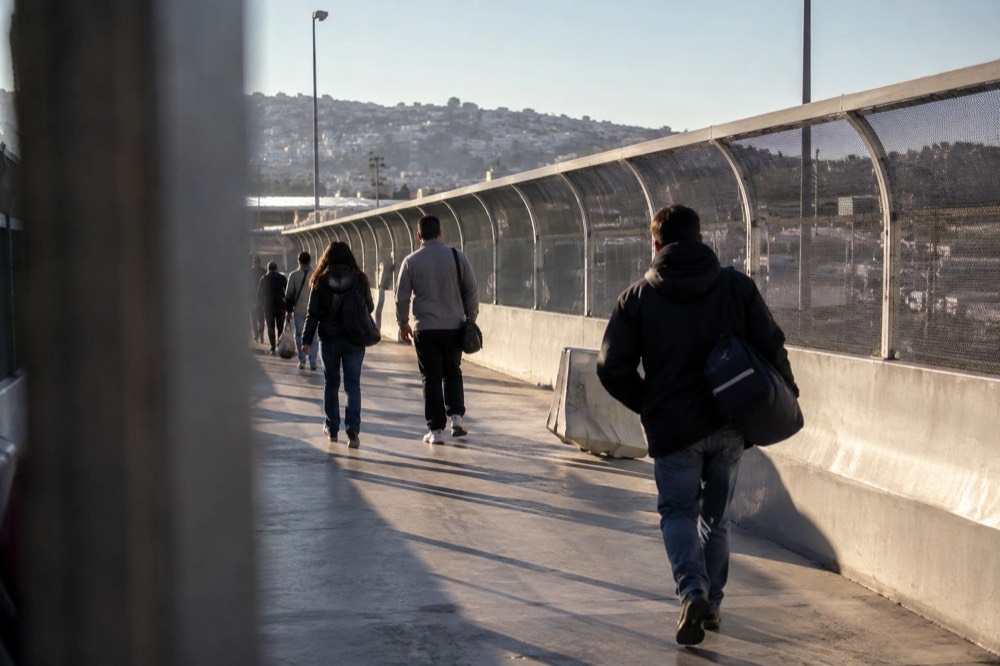
San Ysidro is the busiest land border crossing in the western hemisphere, and it sits at the southern end of the Blue Line trolley, which makes it the rare international border you can reach on a $2.50 fare. The crossing itself is a logistics exercise. PedEast, the main pedestrian crossing, is open 24 hours a day, seven days a week. PedWest runs limited hours, 6:00 am to 2:00 pm Pacific, Monday to Friday. A Ready Lane is set aside for travelers carrying an RFID-enabled document, a US passport card, a SENTRI, NEXUS or Global Entry card, a post-2008 Border Crossing Card or a Permanent Resident Card, and it is meaningfully faster: on one early-morning check the pedestrian Ready Lane read 5 minutes against 40 in the standard lane.
| Traveler | Document needed to re-enter by land |
|---|---|
| US citizen | Passport book, passport card, enhanced driver's license, or SENTRI, NEXUS or Global Entry card |
| Visa Waiver / ESTA visitor | Valid approved ESTA, required at land borders |
| Any traveler | Physical pass or document at the booth; photos of passes are not valid for entry |
The live feed at cbp.gov and the Border Wait Times app are the only honest sources for how long the line is, because no official historical typical-wait table exists and any guide quoting one is guessing. The Western Hemisphere Travel Initiative page on the CBP site lists the accepted documents in full.
For the day itself, a guided option removes most of the friction: a five-hour guided day trip from San Diego to Tijuana with lunch crosses with a group and a guide who does this regularly. The Tijuana day trip guide covers the independent version, including the trolley ride down and what to bring.
Is Downtown San Diego Safe at Night?
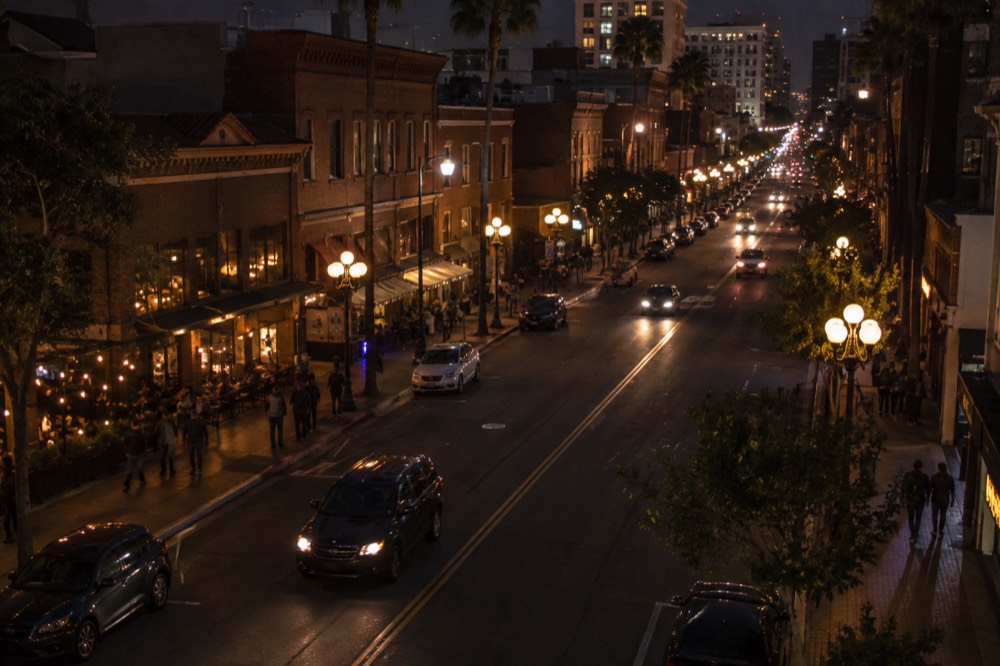
Yes, in the visitor core, with the ordinary caveats of any entertainment district. The Gaslamp Quarter on a weekend night is loud, crowded and busy until late, the bayfront promenade stays active with people walking to dinner and cruise departures, and the practical advice is the same as in any city: stay on lit, populated streets, keep drinks accounted for, and use a rideshare rather than a long walk at closing time.
Downtown San Diego at night is really two zones. The bayfront, from the Convention Center past Seaport Village and the USS Midway to the maritime ships, is a promenade that hotels, restaurants and the cruise terminal keep populated. The Gaslamp Quarter, a few blocks inland, is the nightlife core the Gaslamp Quarter guide covers in full. It is at its busiest and most crowded on Friday and Saturday nights, which cuts both ways: crowds mean company, and they also mean the standard big-city attention to your phone and your bag.
Night is also when San Diego offers some of its calmer sightseeing. A city lights night trolley runs 90 minutes through the lit downtown, and the harbor dinner cruises and sunset sails put you on the water as the skyline turns on. None of these are safety products, but a scheduled evening activity answers the question most visitors are really asking at night, which is what to do with the hours after dark besides wander.
The one night-specific rule worth knowing is transit timing. The trolley and MTS buses thin out late, and the Route 992 airport bus stops at 1:00 am. If your plan ends after midnight, the rideshare pickup points are marked: Terminal 1 cross at the pedestrian crosswalk from baggage claim, Terminal 2 use the main crosswalk to the Transportation Plaza, second lane. Drop-off stays curbside at both.
What Everyday Risks Should Visitors Actually Plan For?
Three things ruin more San Diego trips than crime ever does: the sun, the parking rules and the marine layer's effect on expectations. August and September are the warm months, not July, June's normal high of 71.7F is lower than October's 74.6F, and the coast can sit under gray mornings in late spring while inland stays clear. Plan for heat and glare, read the posted parking signs, and take valuables out of the car.
Start with the sun, because the numbers surprise people. September's normal high, 77.2F, beats July's by 1.9F and sits a tenth behind August's 77.3F, yet September is the single lowest visitation month at Cabrillo National Monument across 2022 to 2024, a 48 percent gap against July. The comfortable month most people skip is the warm one. Rain is a winter phenomenon, December through March carry 7.3 of the year's inches, and August averages one hundredth of an inch. What that means practically: you will not need a rain plan in summer, and you will need water, sunscreen and a hat on any beach day.
The marine layer is the seasonality story locals call May Gray and June Gloom, and it is visible in the 30-year temperature normals themselves: June's high sits below October's. The pattern is real and locally universal, gray mornings on the coast that burn off later than visitors expect, so a gloomy 8 am in La Jolla says nothing about the afternoon.
Parking is the second trip-ruiner, and the honest advice is in the parking in San Diego guide. Downtown meters run $2.50 per hour, enforced generally Monday to Saturday, 8:00 am to 6:00 pm, with some zones including the downtown Hospitality Zone running to 8:00 pm, and Sunday enforcement has been extended into commercial areas of Downtown, Uptown, Mid-City and Pacific Beach, so Sunday is no longer free everywhere. Posted signs always win. At Balboa Park, paid parking is live now at $8 to $16 a day depending on the lot, and City Council has formally approved a settlement removing paid parking entirely effective January 1, 2027, so check the city page rather than trusting either version. Zoo parking is $16 per vehicle, and Safari Park general parking is $20.
| Practical item | The number or rule |
|---|---|
| Downtown meters | $2.50 per hour, generally Mon-Sat 8:00 am to 6:00 pm, some zones to 8:00 pm |
| Balboa Park lots | Paid now at $8 to $16 a day; scheduled to end January 1, 2027 |
| San Diego Zoo parking | $16 per vehicle per day |
| Safari Park general parking | $20 per vehicle per day, no in-and-out privileges |
| ADA parking | Free with no time limit in Balboa Park lots and at meters |
The third is expectations. San Diego's visitor infrastructure is genuinely easy: a flat bayfront, a trolley that reaches the border, lifeguards on the beaches and a county page that tells you the water quality the same day. The trips that go wrong are the ones that treated it as a theme park with no rules. Read the beach signs, check the border feed, put the luggage in the trunk before you park, and the safety question answers itself.
Common Questions About Safety in San Diego
Is San Diego safe for tourists?
Yes, in the ordinary way of large American tourist cities. The visitor districts along the bay are busy and walkable, the beaches are lifeguarded year round by nine permanent stations, and transit is a normal network with a $2.50 fare. The risks worth planning for are rip currents, sun and car break-ins, and all three are managed with ordinary precautions.
Is San Diego safe at night?
The visitor core is. The Gaslamp Quarter is crowded and lively on weekend nights, the bayfront promenade stays active, and the standard advice applies: stay on lit, populated streets and use a rideshare rather than a long walk late. Scheduled evening activities, from a night trolley tour to a harbor dinner cruise, are the easiest way to spend the after-dark hours.
Is it safe to walk around downtown San Diego?
Yes, the bayfront and Gaslamp core are walkable day and night, and the Embarcadero connects most downtown sights on one flat promenade. Keep the ordinary city habits: closed bags, phones out of back pockets, and nothing visible in a parked car, especially near the beach lots.
Is it safe to swim at San Diego beaches?
Swim near a lifeguard and never alone, because rip currents are the primary hazard. If caught, stay calm and swim parallel to the shore until the pull relaxes. Nine permanent lifeguard stations cover roughly 24 miles of coastline year round, generally staffed 9:00 am to dusk, and the county posts water-quality results same day or next business day.
Is it safe to visit Tijuana for the day?
As a planned day trip, yes. The deciding factor is paperwork: US citizens need a passport book, passport card, enhanced driver's license or Trusted Traveler card to re-enter by land, and ESTA visitors need an approved ESTA. Check the live CBP wait-time feed on the day, since no official "usual" wait exists. A guided day trip with lunch removes most of the friction.
Is San Diego public transit safe?
The trolley and bus network is a normal urban system, and the Blue Line runs from the border to UC San Diego. Fares are $2.50 one-way with two-hour transfers and $6.00 for a day pass, and the PRONTO system caps your spending automatically. It is a planning question rather than a risk question, and the airport bus runs every 15 minutes.