Tijuana Day Trip from San Diego: Border Crossing, Transport and What to Do
San Ysidro, the border at the southern end of the Blue Line trolley, is the busiest land crossing in the western hemisphere. Here is how to cross it, what papers you need and what to do on the other side.
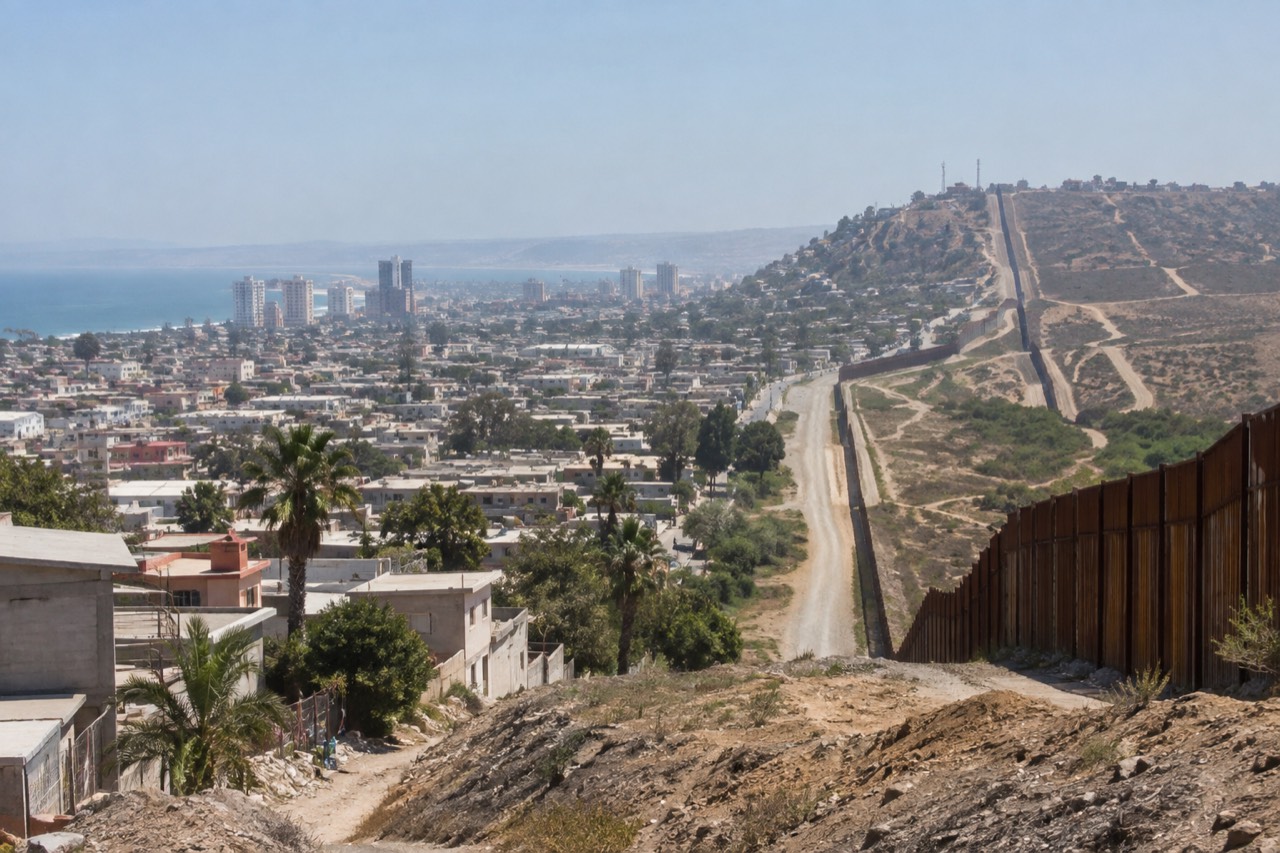
Short answer
A Tijuana day trip from San Diego is a 40 minute trolley ride to San Ysidro on the Blue Line, at $2.50 one way or $6 for a day pass. US citizens need a passport, passport card or Trusted Traveler card to re-enter. Cross at PedEast, which is open 24 hours, and check the live CBP wait feed before you go rather than trusting a typical wait time.
San Ysidro is the busiest land border crossing in the western hemisphere, and it sits at the southern end of the Blue Line trolley, about 40 minutes from downtown San Diego. That single fact shapes every Tijuana day trip: the crossing is big, it is busy, and it is closer than most visitors expect. Tijuana is not a novelty day out. It is a city of roughly two million people with its own food scene, its own cultural district and a border that more people walk across than drive. This guide covers the logistics that actually decide whether your day works: which documents you carry, which crossing you use, how long the wait is, and what to do once you are through.
The honest starting point is that the crossing is the trip. Get that part right and everything on the Mexican side is easy. Get it wrong, with the wrong document or the wrong hour, and the day collapses into a queue. Everything below is written from official sources: the MTS fare chart, CBP's own port pages and the City of San Diego's transit information.
Why Take a Tijuana Day Trip from San Diego?
A Tijuana day trip gives you a genuinely foreign city, a different currency, a different food tradition and a border crossing story, all for a $2.50 trolley fare each way, and you can be back at your San Diego hotel the same evening. No other day trip from this city changes country, and none is cheaper to attempt. The trolley drops you within walking distance of the crossing, the pedestrian gates run around the clock, and the return trip puts you on the same line that serves downtown, Old Town and the airport connector at Santa Fe Depot.
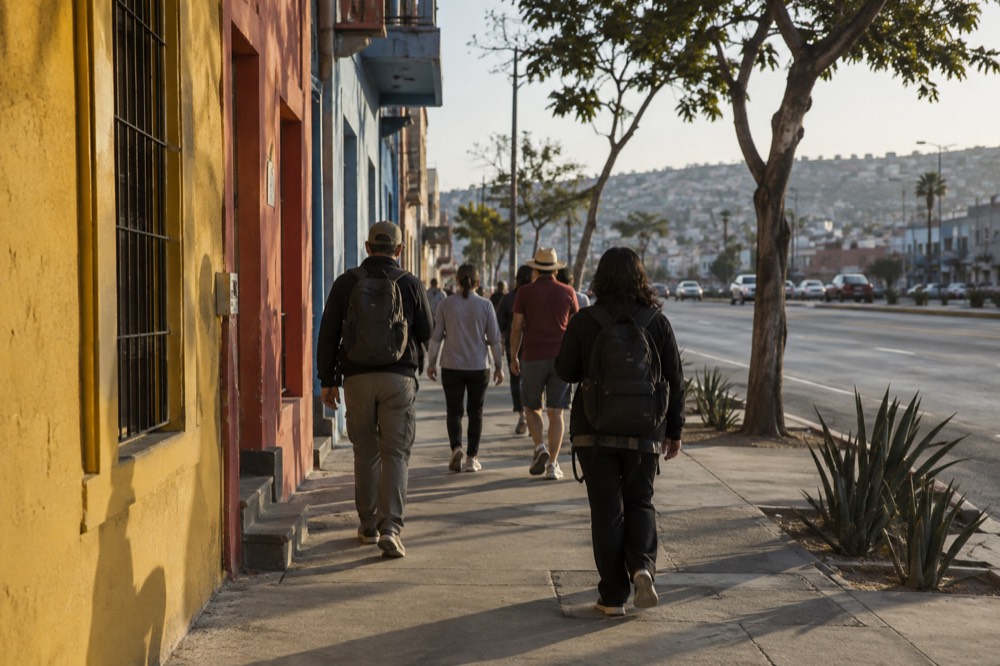
The appeal is partly the contrast. San Diego runs on beach time and craft beer; Tijuana runs on street tacos, Baja-Med restaurant kitchens and a commercial strip that starts the moment you clear the Mexican side. Revolución Avenue, the old tourist spine, is walkable from the border. The city's newer cultural quarter, around the Centro area and Pasaje Rodríguez, has bookshops, coffee and murals within a 15 minute walk of the gate. You do not need a car, you do not need a plan beyond lunch, and the whole thing fits inside the same day.
It is also the day trip with the most homework. A trip to Julian needs pie and a jacket; a trip to Tijuana needs a passport and a working knowledge of two border stations. That homework is what the rest of this page does. If you want the fuller picture of the Mexican side, our Tijuana neighborhood and attractions guide goes deeper on the city itself, while this page stays on the logistics of getting there and back.
How Do You Get from San Diego to Tijuana?
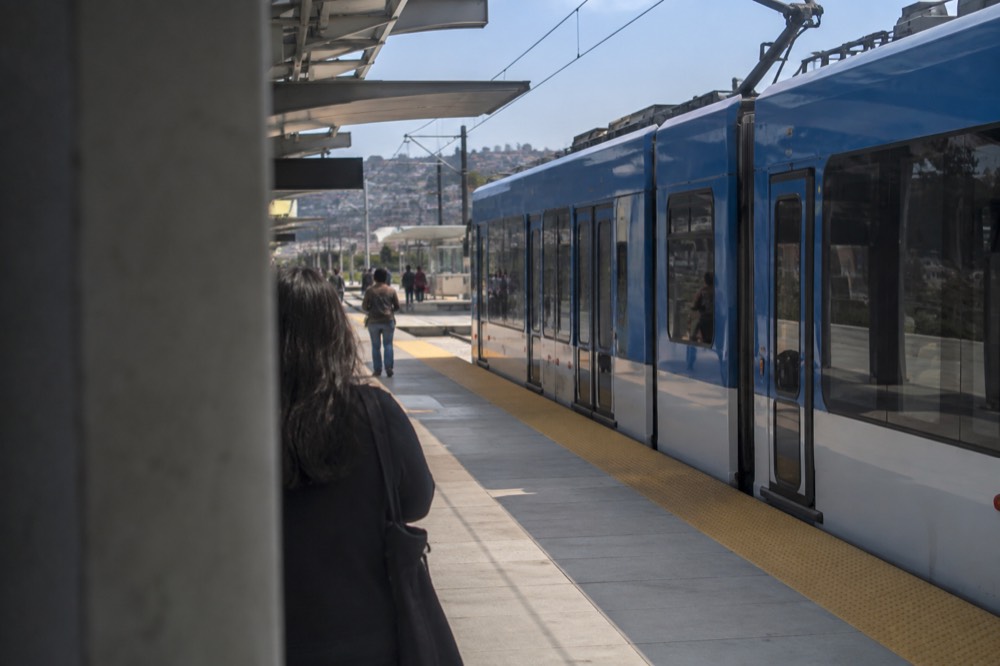
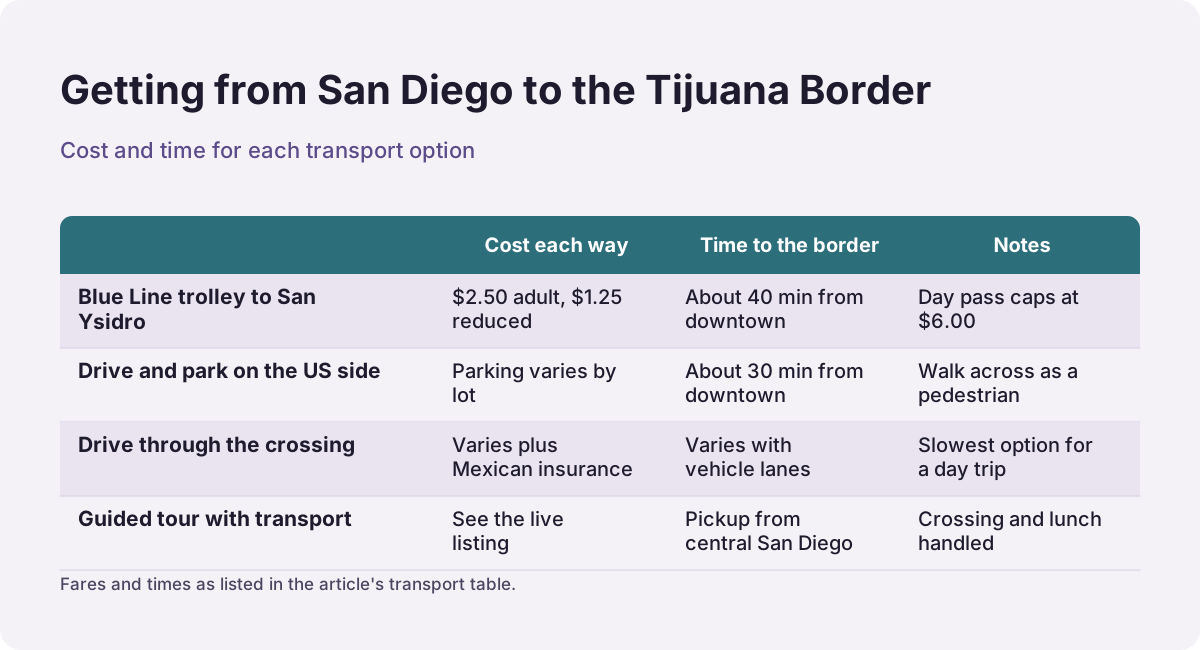
The Blue Line trolley runs from downtown San Diego to San Ysidro, the border station, for $2.50 one way or $6.00 for a day pass, and the walk from the trolley platform to the PedEast crossing is a few minutes. There is no Trolley station at the airport, so most visitors start at Santa Fe Depot, America Plaza or Old Town Transit Center. The published end-to-end Blue Line time from San Ysidro to UTC is 1 hour 23 minutes, but you are only riding the southern half, roughly 40 minutes from downtown.
The fare system is PRONTO, and it is friendlier than most. You load money on a $2 physical card or the app, pay as you go, and the system caps you automatically: once your one-way rides in a day total the day-pass value, the chart literally reads "Day Pass Earned." There is no reason to buy a day pass up front. Contactless credit and debit cards are accepted but they are one-way only and do not cap, so a card tap each way is fine while a family of four should use PRONTO. Youth 18 and under ride free, and up to two children aged 5 and under travel free with a paying adult.
Driving is possible and popular with locals, but it changes the trip completely. You park on one side or drive through, and the vehicle lanes at San Ysidro carry their own queues and insurance questions that the pedestrian crossing does not. Mexican auto insurance is a separate purchase and your US policy typically stops at the fence. For a first day trip, the trolley plus walking is the combination the transit system was practically built for. Our getting around San Diego guide covers the trolley network, the PRONTO card and the airport connection in full.
| Option | Cost each way | Time to the border | Notes |
|---|---|---|---|
| Blue Line trolley to San Ysidro | $2.50 adult, $1.25 reduced | About 40 min from downtown | Walk from the platform to PedEast; day pass caps at $6.00 |
| Drive and park on the US side | Parking varies by lot | About 30 min from downtown | Walk across as a pedestrian; check lot hours before committing |
| Drive through the crossing | Varies plus Mexican insurance | Varies with vehicle lanes | Insurance and vehicle permit questions apply; slowest option for a day trip |
| Guided tour with transport | See the live listing | Pickup from central San Diego | Crossing, transport and lunch handled in one booking |
What Documents Do You Need to Cross the Border?
A US citizen re-entering by land needs a passport book, a passport card, an enhanced driver's license from a participating state, or a Trusted Traveler card such as SENTRI, NEXUS or Global Entry, and visa-waiver visitors need a valid approved ESTA before land entry, a requirement at land borders since October 2022. These are the Western Hemisphere Travel Initiative documents, and CBP enforces them on the way back in, not on the way out. Walking into Mexico is quick. Walking back into the United States is where the paper matters.
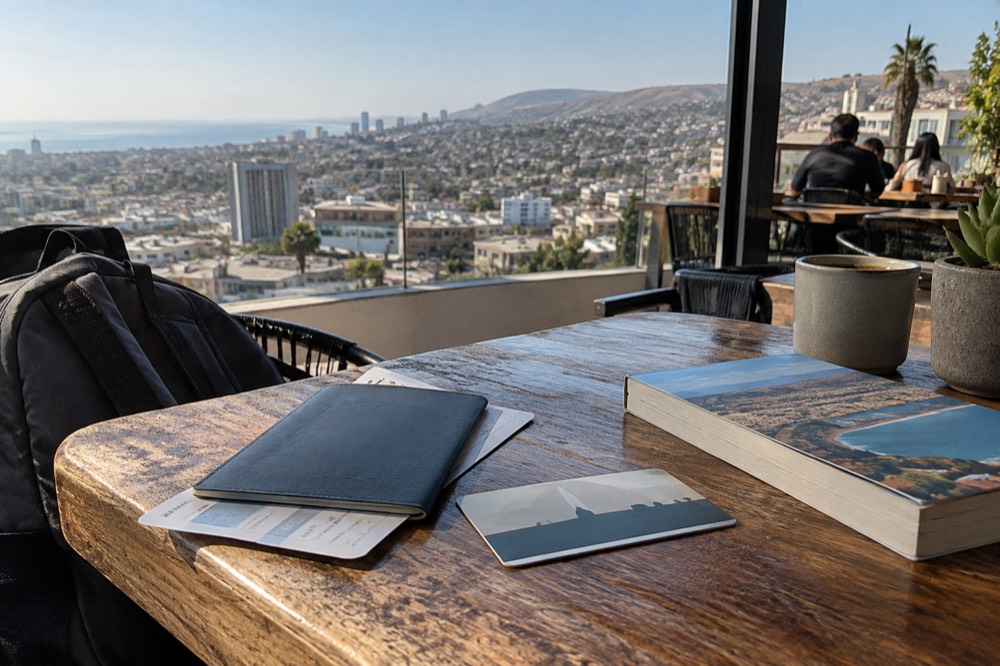
The ESTA point catches a lot of international visitors out. If you entered the United States on the Visa Waiver Program, a short hop to Mexico does not by itself invalidate your ESTA, and you need that ESTA approved before you cross by land. Separately, a rule called automatic revalidation lets certain nonimmigrant visa holders re-enter the US on an expired visa after a trip of under 30 days to Mexico, provided the I-94 is still valid and the other conditions are met. If any of that sentence describes your situation, check your status against CBP's published guidance before you cross, not after.
A plain US driver's license alone is not enough to re-enter, whatever a bar in Tijuana tells you about needing ID only for drinks. Take the actual travel document, take a photo of it as backup for your own records, and leave a copy of your day plan with whoever is not coming. Children crossing without both parents should carry a notarized consent letter; it is rarely asked for and always better to have.
| Traveler type | Document needed to re-enter the US by land |
|---|---|
| US citizen | Passport book, passport card, enhanced driver's license, or SENTRI, NEXUS or Global Entry card |
| Visa Waiver / ESTA visitor | Valid approved ESTA, required at land borders since October 2022 |
| Nonimmigrant visa holder | Valid visa, or automatic revalidation after a stay under 30 days if the I-94 is valid |
| Child traveling without both parents | Their own travel document plus a notarized parental consent letter |
How Long Is the Wait at San Ysidro?
Nobody can honestly quote you a typical wait, because no official historical table of San Ysidro wait times by hour or weekday exists; CBP publishes live and recent-average waits at bwt.cbp.gov, and checking that feed on the morning of your trip is the only reliable method. The waits move with commuter flows, holidays and staffing, and a figure that was true last Tuesday tells you almost nothing about next Saturday. This site treats the live feed as the source and quotes nothing else.
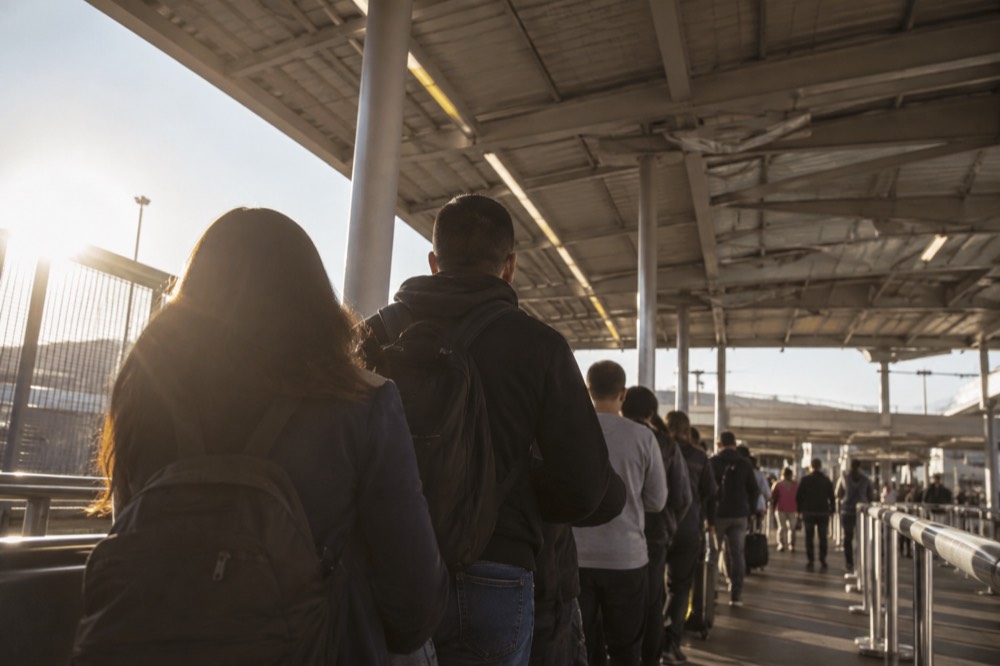
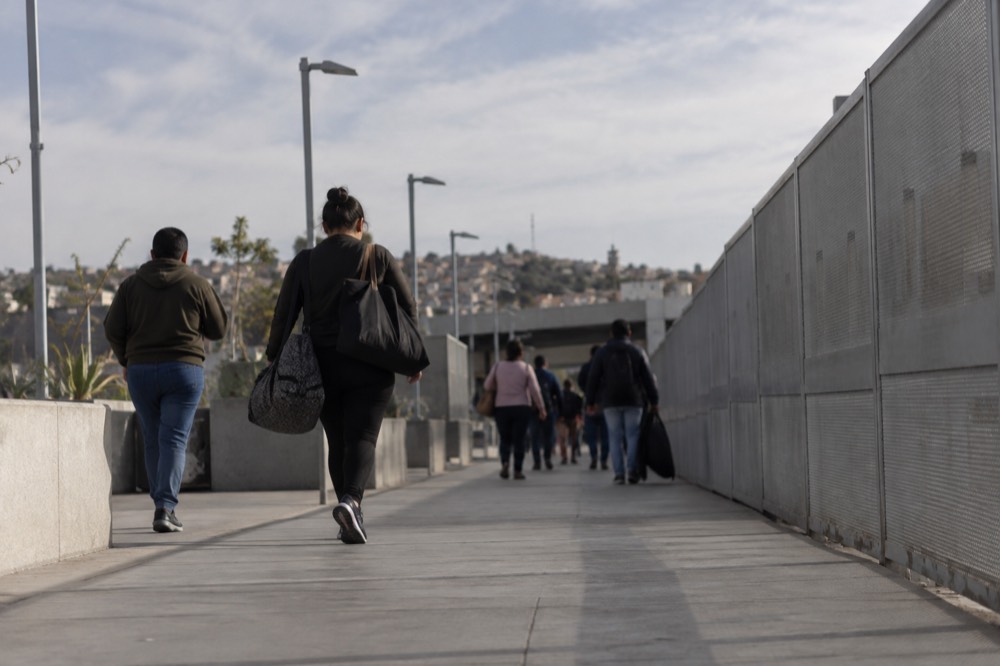
What you can plan around is the shape of the infrastructure. PedEast, the main pedestrian crossing, is open 24 hours a day, 7 days a week. PedWest runs limited hours, 6:00 am to 2:00 pm Pacific, Monday to Friday only, so an afternoon return cannot use it. The Ready Lane is the upgrade worth knowing about: it is a dedicated lane for travelers carrying an RFID-enabled document, meaning a US passport card, a SENTRI, NEXUS or Global Entry card, or a post-2008 Border Crossing Card or Permanent Resident Card. Kiosks pre-read the document and the lane moves faster. On one observed 6:00 am morning the pedestrian Ready Lane ran 5 minutes against 40 minutes in the standard lane, which tells you the gap is real even though the numbers themselves will not repeat.
Practical reading of all that: cross south in the morning before the commuter crush, keep your return flexible, and if you hold any RFID document, use the Ready Lane both ways. A guided tour has an advantage here that is worth naming plainly: the operators who run this route every week know which gate and which hour are working that day, and a tour with lunch builds the buffer into the schedule so you are not watching the clock.
What Are the Best Things to Do in Tijuana in One Day?
Most first visits fit into a walkable loop: lunch on Revolución Avenue or in the Centro dining scene, a wander through Pasaje Rodríguez and the cultural quarter, street tacos and churros in the afternoon, and a return crossing by mid evening, all within a 15 to 20 minute walk of the border. You do not need a taxi for any of it, though rides within Tijuana are cheap and the drivers at the gate are used to day trippers.
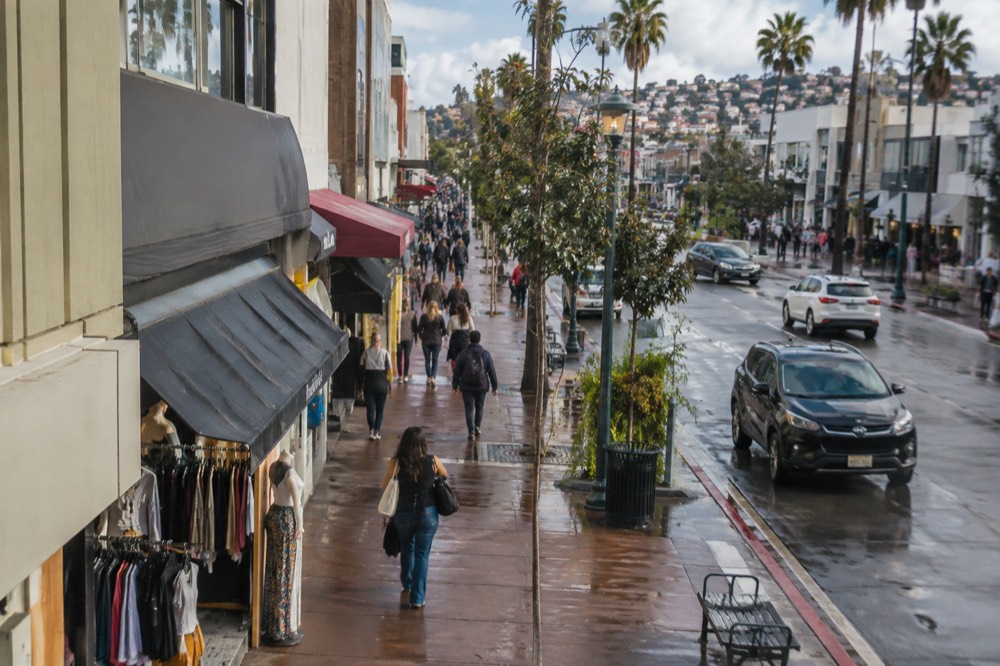
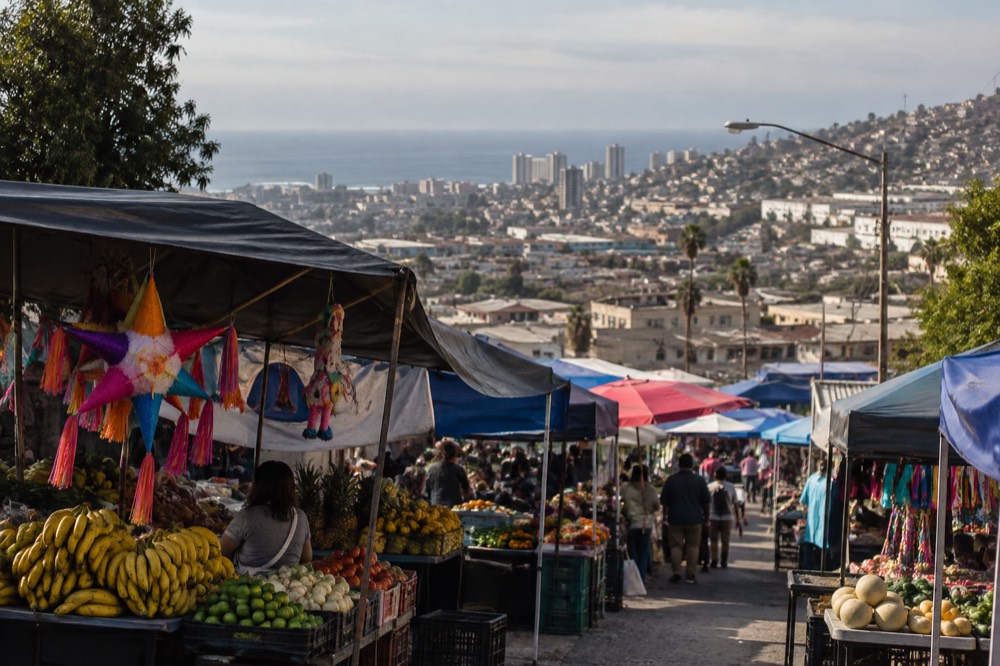
Start with food, because Tijuana is a food city first. The Baja-Med tradition, a fusion of Mexican technique, Mediterranean ingredients and Asian touches, was largely invented in this city, and its best-known kitchens sit a short ride from the border. Street tacos and the city's famous Caesar salad, which was born here, need no booking at all. Markets like Hidalgo Market give you the ingredient side of the culture, and the coffee and bookshop scene in the passages off Revolución has quietly become the reason younger travelers cross. If you want the full San Diego side of the food story, our best fish tacos in San Diego guide picks up where the border leaves off, since the fish taco itself traveled north from Baja.
The shopping question deserves honesty. The old border-bazaar Tijuana of leather goods and pharmacies still exists on Revolución, but the day is better spent in the cultural streets, the murals and the markets. Bring pesos in small notes for tacos and coffee; cards work in the restaurants but cash is faster at the stalls. Skip anything that requires you to carry it back across a border checkpoint awkwardly, and remember US customs allowances apply on the way in.
Wine is the one exception to the walk-everywhere rule, and it is a big one. The Guadalupe Valley, Baja's wine country, sits about 90 minutes south of the city, which makes it a stretch for a single day trip that also includes the border. Travelers who want both usually split them, and travelers who want the wine without the driving book a private tour. If that idea appeals, the luxury private wine tasting tour to Guadalupe Valley is the version that handles the crossing and the valley in one day.
Is Tijuana Safe for Day Trippers?
For a daylight trip in the border-adjacent zones of Revolución and Centro, the practical safety picture is ordinary city caution: stay in the walked tourist corridors, use reputable rides, keep your documents on your body rather than in a bag, and be back across the line in the evening rather than late at night. Millions of people cross this border every month, including tens of thousands of San Diego residents who do it weekly for work, family and dinner.
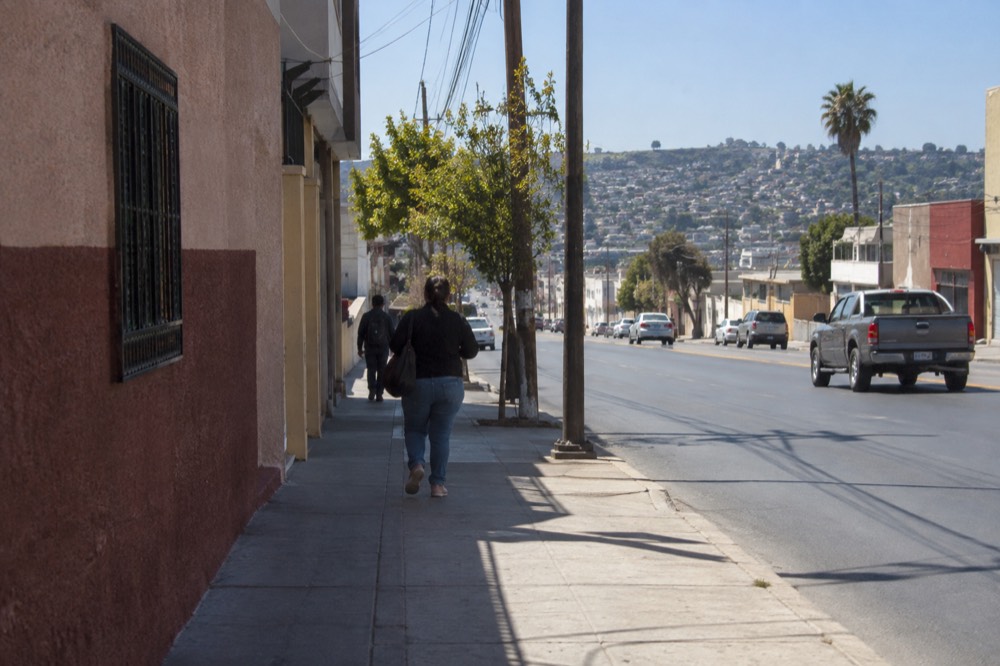
The honest framing is zone-based, like any big city. The pedestrian corridors around the crossing, Revolución and the Centro cultural blocks are the areas built for visitors and they behave that way. Wandering far afield, flashing valuables, or accepting unsolicited guides at the gate are the behaviors that cause problems, and they cause the same problems in any large city. Take the same precautions you would take downtown at home, add the border-specific ones, and the day is unremarkable in the best way.
Two border-specific rules matter. First, do not carry firearms or ammunition into Mexico, even accidentally, even a single round left in a bag; this is the single most serious mistake an American day tripper can make and it has ended trips very badly. Second, US citizens cannot bring Cuban-origin goods back, and customs allowances for alcohol and purchases apply on re-entry, so keep receipts for anything expensive. Our is San Diego safe guide covers the home side of the question for travelers comparing the whole region.
Should You Take a Guided Tour or Cross on Your Own?
Crossing on your own is cheaper and fully workable with a PRONTO card and a passport, while a guided tour buys you a handled crossing, a planned food route and a driver who knows which gate is moving, which is worth real money on a tight one-day schedule. The trolley-and-walk version costs you the $2.50 fare each way plus whatever you eat. The tour version costs more and removes the two failure points: the document check and the return queue.
The guided option on this route is a 5 hour day trip from San Diego with lunch included, running to Tijuana and back with the transport and the crossing organized. For a traveler whose Spanish is thin, whose documents are complicated, or whose day has no slack in it, that structure is the product. For a confident traveler with a passport card and a morning, the independent version is genuinely fun, and the border infrastructure is built for it. The one group that should almost always take a tour is families with kids, where a planned return time and a known lunch stop beat improvisation.
If you like the guided format but Tijuana is not the day you want, the same model runs across the region. The Temecula 3-winery tour with tastings and lunch is the wine-country equivalent north of the border, and the Julian and Anza-Borrego trips cover the mountain and desert directions. All of them share the same logic: a day trip is best when one booking covers the driving.
| Factor | Cross on your own | Guided day trip |
|---|---|---|
| Border crossing | You manage documents, gates and queues | Operator handles the route and timing |
| Cost basis | Trolley fare plus your food | One tour price including lunch |
| Flexibility | Total; stay as long as the return gate is open | Fixed schedule, usually around 5 hours |
| Food | You choose, street level upward | Planned stops, included lunch |
| Best for | Confident travelers with a passport card | First-time crossers, families, tight schedules |
How Much Does a Tijuana Day Trip Cost?
Count on $5.00 in trolley fares for the round trip at the $2.50 one-way rate, or $6.00 if you also ride the trolley that day in San Diego and hit the PRONTO day-pass cap, plus your food and shopping on the Mexican side, which is where the real range sits. There is no entrance fee to cross in either direction as a pedestrian. The variables are lunch, coffee, souvenirs and any taxi rides inside Tijuana.
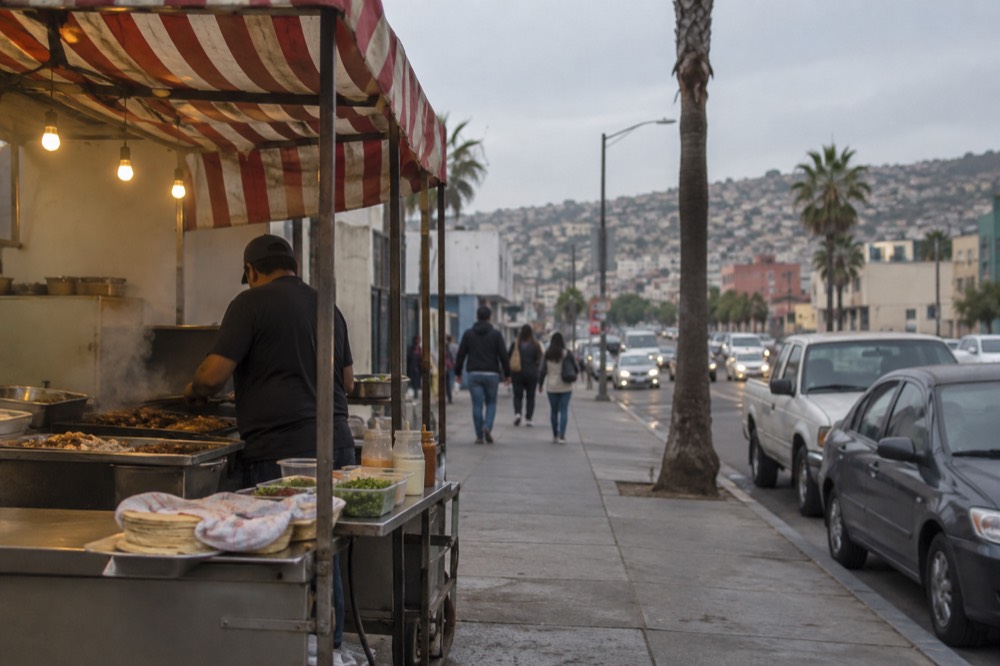
Food is the honest swing item. A street-taco lunch with a drink is a few dollars; a sit-down Baja-Med dinner in a named restaurant is a proper meal at proper restaurant prices, still generally below US equivalents. Planning ranges rather than promises: budget a modest per-person amount for a street-food day and several times that for a restaurant day, and check the current menu at any specific place you are excited about. Tasting fees and fixed menus in the valley, if you extend to wine country, are a different budget entirely and belong to the tour pages that cover them.
Parking, if you drive to the border instead of taking the trolley, is the one cost nobody can quote you honestly. Lots near San Ysidro set their own rates and change them with demand, and no official rate table exists, so check the lot's posted price before you leave your car. The trolley avoids the question entirely, which is one reason it is the default recommendation on this page.
When Is the Best Time of Year for a Tijuana Day Trip?
Any month works, because the crossing and the city run year round, but the comfortable walking months are October through April, when San Diego's normal highs sit in the mid sixties to mid seventies Fahrenheit and the summer's peak heat is off the streets. The coastal marine layer that locals call May Gray and June Gloom shows up in the temperature normals themselves: June's normal high of 71.7°F is lower than October's 74.6°F, which surprises visitors who assume summer runs hot here.
Rain is a winter phenomenon on this coast, with December through March carrying most of the year's inches, but a wet day is rare enough that it should shape your packing, not your dates. August normals to a hundredth of an inch of rain and zero days of measurable rain. The bigger seasonal factor for this specific trip is holiday traffic at the border itself: the weeks around Christmas and Easter see heavy cross-border family travel, and waits move with it. Check the live feed with extra care in those windows. Our San Diego weather and best time to visit guide has the month-by-month detail if you are building a longer itinerary around the trip.
One timing note that belongs to this page alone: September is San Diego's real summer, with a normal high of 77.2°F that beats July's by nearly two degrees, yet it is the single lowest visitation month at Cabrillo National Monument across recent years. The same logic applies here. A September border day means warm streets and thinner crowds than the peak summer school-holiday weeks, and the trolley is not standing-room only.
What Should You Know Before You Go?
Carry your re-entry document on your body, keep pesos in small notes, start south in the morning, plan your return before PedWest's 2:00 pm cutoff matters, and check the live CBP wait feed on the day itself. That short checklist covers the whole border half of the trip. Everything else, from lunch to murals to shopping, is preference rather than logistics. Dress for walking, not for a border inspection; there is no dress code, but comfortable shoes matter because the crossing plus the Revolución loop is a real distance on foot. Phone service generally works on both sides for US plans, but confirm roaming with your carrier or use wifi in the restaurants. Bring water for the queue in summer. Do not carry more than you need: one card, some cash, your document and a phone is the day-trip loadout. A final word on the way home: the return line is where tired travelers make mistakes, so keep the document accessible rather than buried, and if you bought anything declarable, declare it. The officers have seen every version of your day and the process is routine when you are.
The planning payoff is real. A day in Tijuana costs less than most San Diego attractions, delivers a border crossing story very few American cities can offer from a train platform, and puts you back in time for dinner on the harbor. For travelers building a full week, it slots naturally beside the other big day trips from this site, and Things to Do in San Diego covers every one of them.
Common Questions About a Tijuana Day Trip from San Diego
How do you get from San Diego to Tijuana?
Take the Blue Line trolley south to San Ysidro for $2.50 one way, or let the PRONTO fare cap build you a $6.00 day pass automatically. The ride from downtown is about 40 minutes, and the PedEast pedestrian crossing is a short walk from the platform.
What documents do you need to cross the border?
US citizens need a passport book, passport card, enhanced driver's license or Trusted Traveler card to re-enter by land. Visa Waiver visitors need a valid approved ESTA, required at land borders since October 2022. A plain driver's license alone is not enough for re-entry.
How long is the wait at San Ysidro?
There is no honest typical figure, because no official historical wait table exists. CBP publishes live and recent-average waits hourly at bwt.cbp.gov, and checking that feed on the morning of your trip is the only reliable method. The Ready Lane is the fast option if you hold an RFID-enabled document.
Is Tijuana safe for day trippers?
For a daylight trip in the border-adjacent corridors of Revolución and Centro, the picture is ordinary city caution: stay in the walked zones, keep documents on your body, and return in the evening rather than late at night. Do not carry firearms or ammunition into Mexico under any circumstances.
Should you take a guided tour or cross on your own?
Cross on your own if you have a valid document and a free morning; it is cheap and the infrastructure is built for pedestrians. Take a guided day trip with lunch if your documents are complicated, your Spanish is thin, your schedule is tight, or you are crossing with kids.
How much does a Tijuana day trip cost?
Count on $5.00 in trolley fares for the round trip, or $6.00 if the PRONTO cap kicks in on a day you also ride in San Diego. Crossing on foot carries no fee in either direction. Food is the swing item, from a few dollars for street tacos to full restaurant prices for a Baja-Med sit-down meal.