Anza-Borrego Desert State Park: A Day Trip from San Diego
Anza-Borrego Desert State Park is the emptiest, quietest landscape within reach of San Diego, and it makes one of the most rewarding day trips in the county. Here is how to plan it.
Short answer
Anza-Borrego Desert State Park is a desert park east of San Diego, reached by car via Escondido and CA-78 or I-8. Spring is the classic season for wildflowers and mild temperatures, but fall and winter are excellent too. Bring far more water than feels reasonable, fill up on fuel in Borrego Springs, and start early to beat the heat.
Why Anza-Borrego Makes an Easy San Diego Day Trip
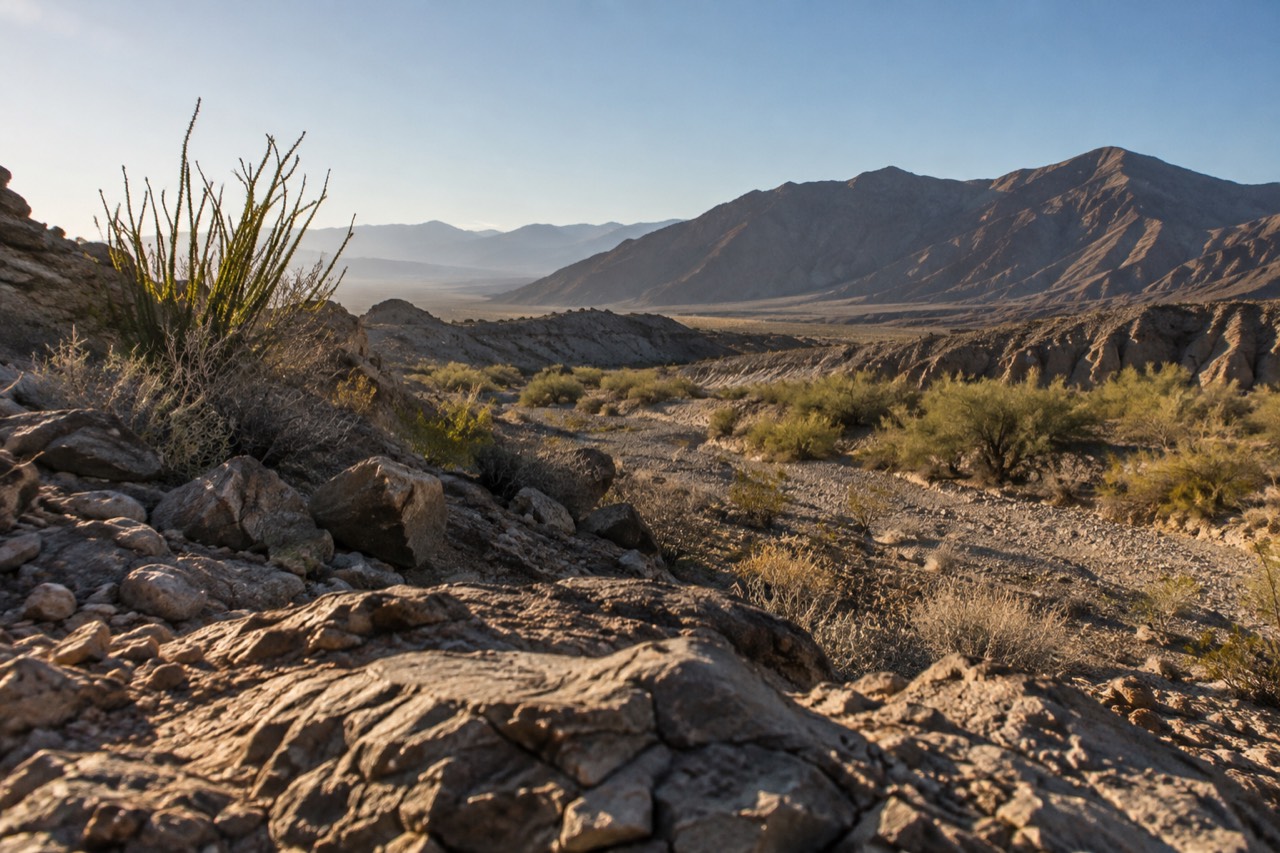
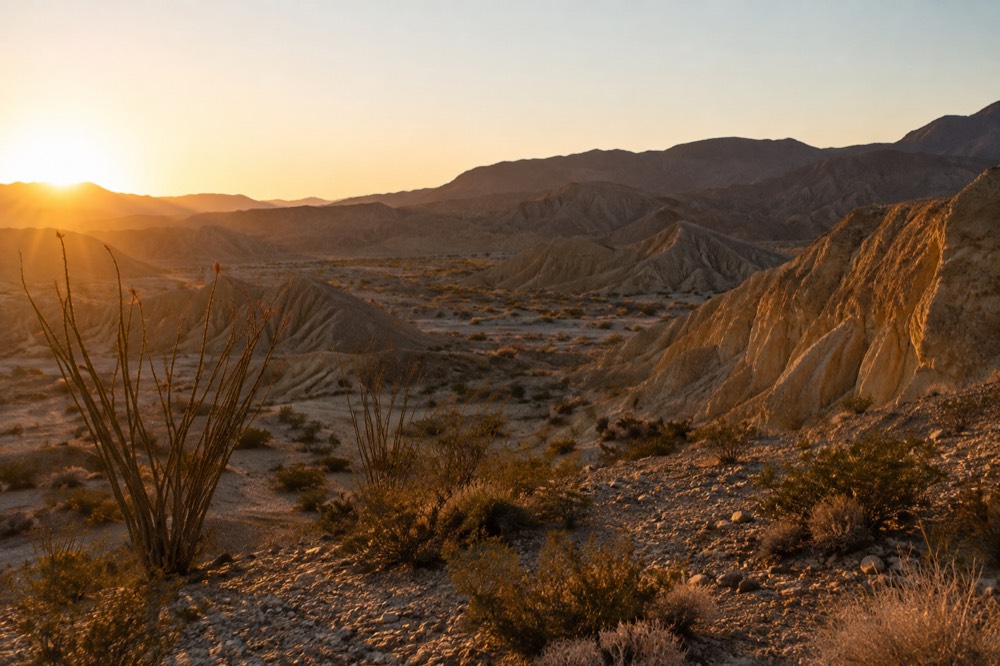
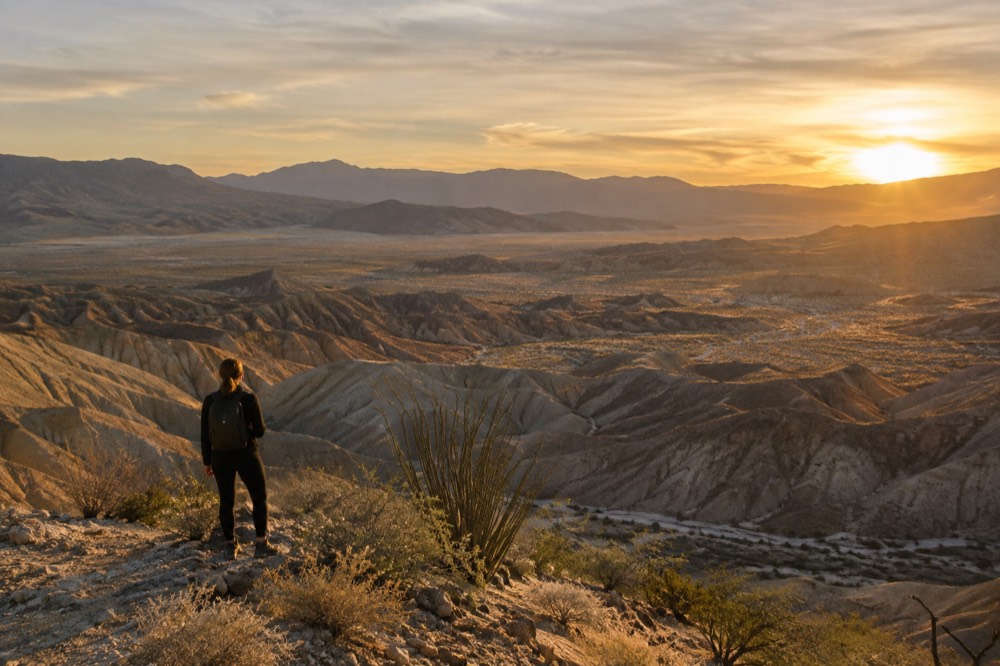
Anza-Borrego Desert State Park is the big-sky answer to San Diego's coastline: a vast desert of badlands, washes and palm oases east of the mountains, reachable on a straightforward drive from the city. It is the kind of place where the landscape does the entertaining, and the main planning questions are the season, the fuel gauge and the water supply. It costs nothing at the trailhead beyond your time and a tank of gas.
Most San Diego itineraries cluster along the water: the Zoo, the harbor, La Jolla's coastline, the Gaslamp. That is exactly why a desert day lands so well. The contrast is the point. You leave a city where the morning marine layer is greying out the beach, climb through scrubby mountains, and drop into a basin where the sky opens up and the light turns hard and clean. Locals call the coastal gloom May Gray and June Gloom, and the 30-year temperature normals show it plainly: June's normal high at the airport, 71.7F, is actually lower than October's 74.6F, per the NOAA climate normals. Drive east on a grey June morning and you will often break into sunshine before you reach the desert floor.
The park anchors the county's empty southeast corner, and everything a visitor needs sits in or around the small town of Borrego Springs at its center. You do not need a permit, a reservation or a timed entry for a day visit. You need a vehicle, a plan for the sun, and a willingness to drive dirt roads at a sensible speed.
It is also one of the genuinely under-visited corners of a county that received 32.5 million visitors in 2024, per the San Diego Tourism Authority. The overwhelming majority of those visitors never leave the coast. If you want a day that feels nothing like the postcard, this is the easiest one to pull off.
How to Get to Anza-Borrego from San Diego
The drive from San Diego to Borrego Springs runs east through Escondido and up over the mountains, and a car is effectively mandatory: there is no transit link and no tour shuttle that replaces one. Most travelers take I-15 north to CA-78 east through Ramona and Santa Ysabel, or I-8 east to CA-79 and down into the basin, and both routes are paved the whole way. Fill the tank before the final descent and start early.
Because this is a day-trip page, one piece of practical advice matters more than any other: rent the car for the day if you arrived in San Diego without one. A desert park is the single clearest case for it, unlike downtown, where the Getting around San Diego logic of the $2.50 MTS one-way fare and the $6 day pass makes a car a liability. Out here it is the opposite. Compare rental options before you go, and check pickup points near the airport or downtown.
The route through Escondido has a bonus worth knowing about: the San Diego Zoo Safari Park sits right there on the way north. Plenty of travelers split the difference, spending the morning with the animals and the afternoon in the desert, though doing both fully in one day is ambitious. If the full desert run feels like too much, the Safari Park alone is a spectacular day out, and it is the one stop on this route that you can book ahead.
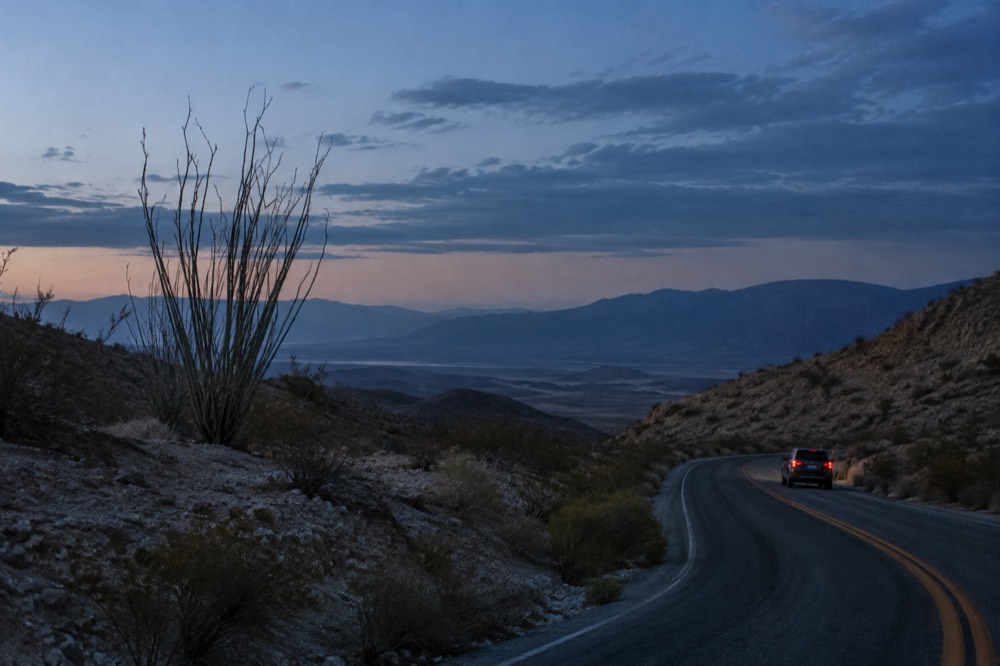
Timing matters more than routing. Leave the city by 8:00 am and you arrive with the morning light still good and the temperature still reasonable; leave at 11:00 am and you will walk straight into the hottest part of the desert day. The return drive after sunset is dark, winding in places, and shared with wildlife that comes down to the roads after dark, so plan to be back on the pavement before full nightfall or take it slow.
There is no cell service across much of the basin, so download an offline map before you leave Escondido. Do not count on a navigation app to reroute you once you are inside the park boundaries.
What to Do Once You Are Inside the Park
The park's core experiences are scenic drives, short walks into washes and palm canyons, and the famous metal sculptures scattered across the desert floor north of Borrego Springs. You do not need a four-wheel-drive vehicle for the headline stops: the sculptures, the visitor center and the main canyon trailheads are all reachable on paved or well-graded roads. Give the middle of the day to the shaded or seated activities, and save the open walking for morning and late afternoon.
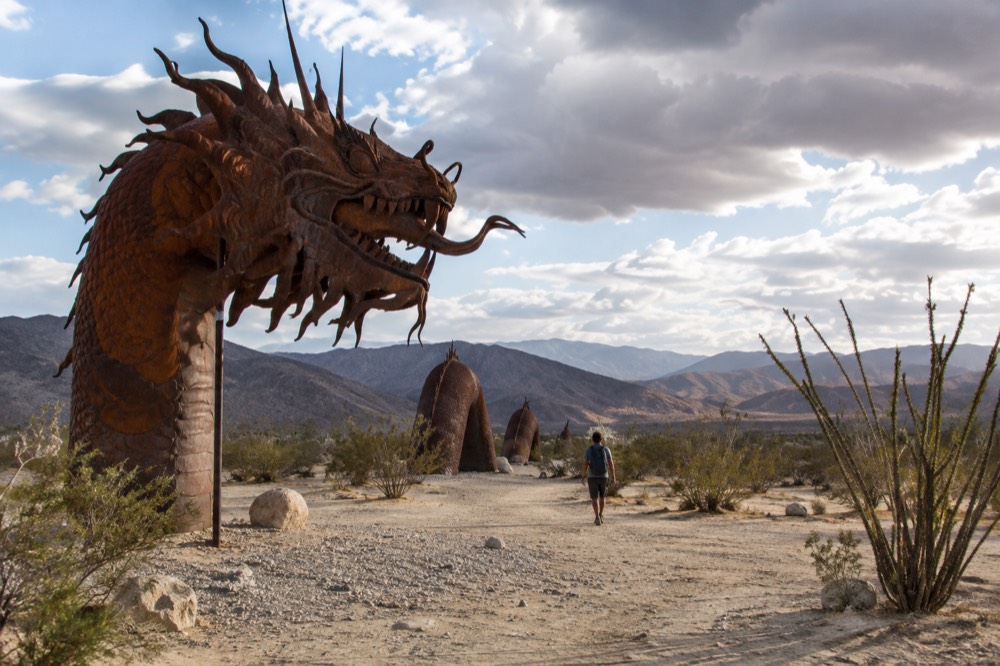
The metal sculptures are the park's most photographed oddity: a collection of enormous prehistoric-animal figures rising out of the flat, best in the low light of early morning or sunset. They sit just north of Borrego Springs and cost nothing to visit. From there, the classic loop is a drive out past the badlands overlooks, where you can read millions of years of exposed sediment from the roadside without walking more than a few steps, and a walk into one of the palm oases, where shade and water make the desert briefly feel tropical.
Spring is the famous season, when rainfall in the preceding months can trigger a wildflower bloom that draws people from across the state. Blooms are never guaranteed and never on a schedule, so check the park's own flower information before promising anyone a carpet of color. Desert bighorn sheep, the park's namesake animal, are real and present but shy; most sightings happen from a distance in the early morning along rocky slopes.
If wildlife is the reason you are considering the trip at all, be honest with yourself about the trade. The desert's animals are wild, dispersed and unpredictable. The Safari Park in Escondido is the guaranteed-wildlife version of the same instinct, with herds roaming wide field enclosures, and a 1-day ticket is the straightforward way in. General parking there is $20 per vehicle per day, per the official plan-your-visit page, with no in-and-out privileges, so arrive once and stay. Hours run roughly 9:00 am to 5:00 pm seasonally, and the page is the place to confirm your date.
The honest summary: do the desert for the landscape, the silence and the light, and do the Safari Park for the animals. Trying to make the desert deliver a zoo experience is how people end up disappointed at noon with nothing but heat and a distant bighorn-shaped rock.
Best Time of Year to Visit the Desert
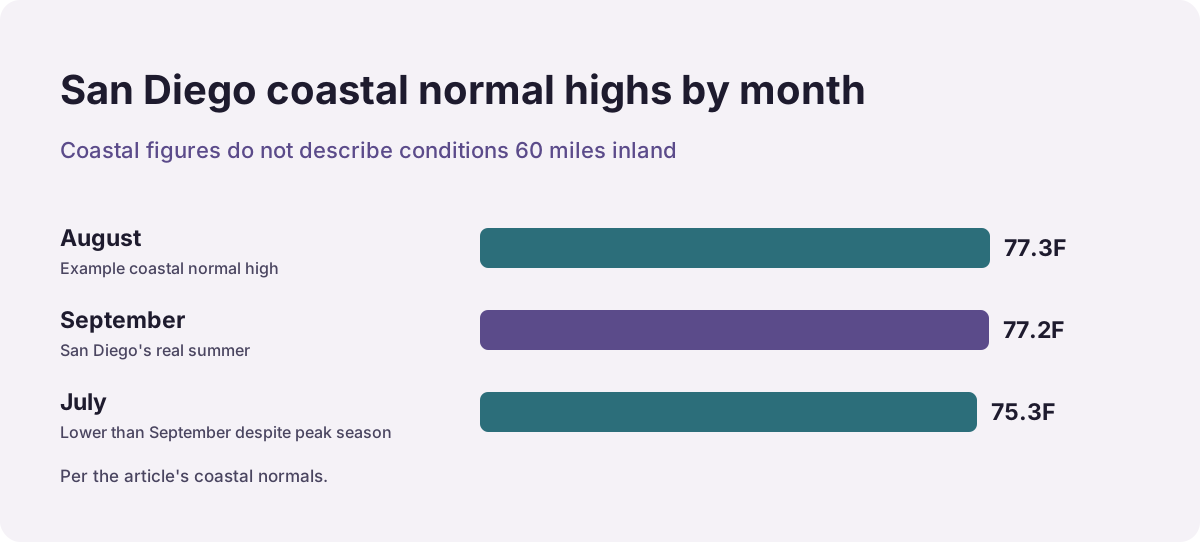
Spring, fall and winter are the seasons for Anza-Borrego; summer is for people who genuinely understand heat. The desert runs hotter than the coast at every point in the year, and the coastal normals that make San Diego famous, August's 77.3F normal high, for instance, tell you nothing about conditions 60 miles inland. Plan around the sun, not the calendar: winter days are mild and walkable, spring adds the wildflower lottery, and September and October deliver long warm days without the summer extremes.
The coastal-versus-desert contrast is worth understanding before you pick a date. San Diego's real summer is September: its normal high of 77.2F beats July's 75.3F, and the ocean is at its warmest, yet September is the single lowest visitation month at Cabrillo National Monument across recent years, a gap of nearly half against July. The coast is empty and at its best in September. The desert in September is a different proposition: still hot, still demanding the early-morning schedule. If you are visiting San Diego in September, enjoy the coast at its peak and save the desert for a cooler trip. Everything else covered here is indexed on Things to Do in San Diego.
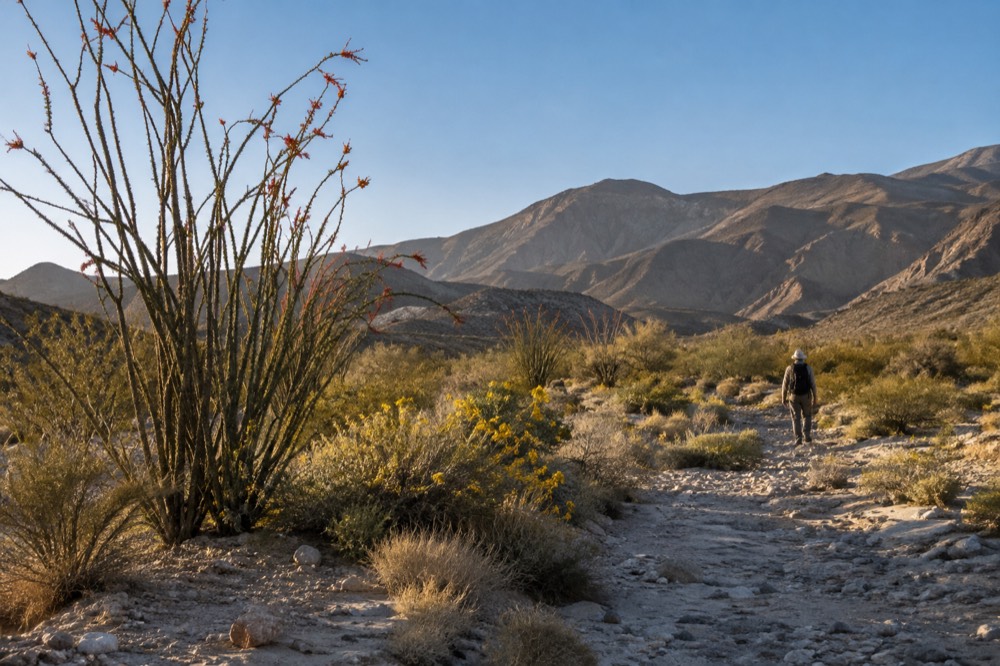
Winter deserves more credit than it gets. A January or February day in the desert is often sunny, cool enough for a long walk at midday, and the low-angle light makes the badlands look their best. The same months are gray-whale season on the coast, so a winter trip can genuinely pair a morning of desert hiking with an afternoon harbor town, and the San Diego weather and best time to visit logic holds: there is no bad month to be in San Diego, only badly planned activities.
| Season | Desert conditions | Best use of the day | Watch out for |
|---|---|---|---|
| Winter (Dec-Feb) | Mild days, cold nights | Long midday walks, badland overlooks | Short daylight, cold after sunset |
| Spring (Mar-Apr) | Warm days, bloom lottery | Wildflower hunting, palm oases | Crowds if a bloom lands, wind |
| Summer (May-Sep) | Hot to extreme | Sculptures at dawn, drives, indoor stops | Midday heat, no shade |
| Fall (Oct-Nov) | Warm, cooling fast | Full-day hiking, photography | Occasional late-season heat |
Where to Eat and Refuel: Borrego Springs and Julian
Borrego Springs is the only real services hub inside the basin, and Julian, the historic mountain town on the western approach, is the classic stop on the drive in or out. Eat a real meal before you enter the park, carry more water than you think you need, and treat Julian's famous apple pie as the reward at the end of the return drive. Fuel, food and cell service all thin out fast once you leave town, so the refueling stops are part of the plan, not an afterthought.
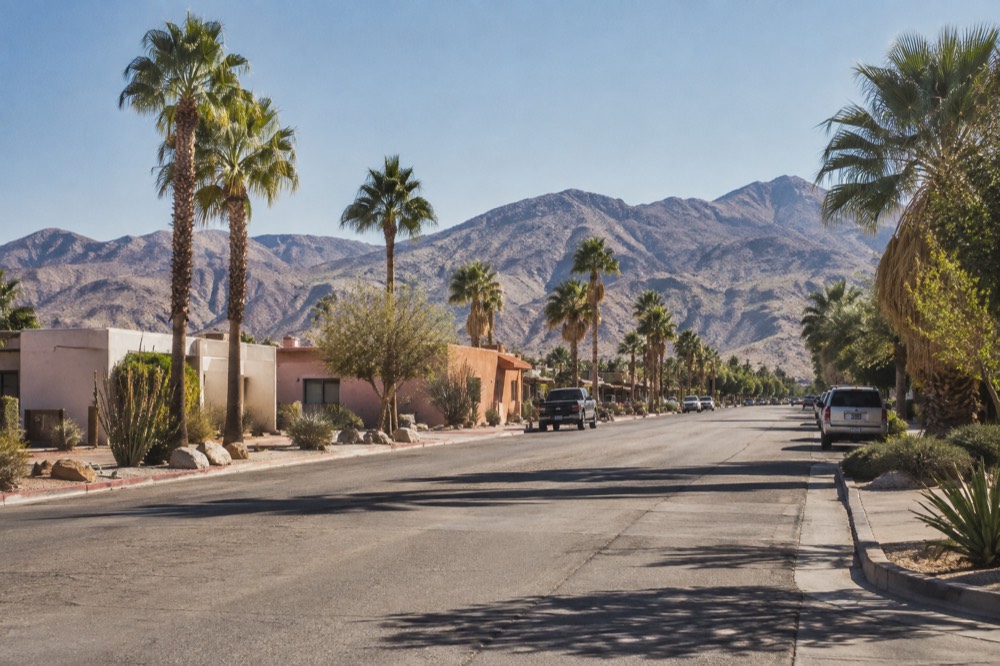
Borrego Springs has a modest set of restaurants, cafes and shops, plus the park visitor center just outside town, and it is where you should top off the tank and buy water. The town sits at the center of everything, so most itineraries loop out from it in the morning and return for a late lunch. Julian, by contrast, is a destination in its own right: a gold-rush-era mountain town known for apple pie, and the subject of its own Julian day trip guide. Coming from San Diego via CA-78, you drive right through it.
If you would rather have someone else handle the mountain-town logistics, there is a guided option that covers the Julian side with lunch and pie built in: a 7-hour Julian gold mine day trip from San Diego. It is the low-effort version of the same territory, and it pairs a historic mine visit with the town's signature dessert.
For a fuller sense of the region's other escapes, the Temecula wine country and Joshua Tree guides cover the two day trips that most often compete with Anza-Borrego for a traveler's single free day. Temecula is the relaxed, food-and-wine version; Joshua Tree is the otherworldly desert one; Anza-Borrego is the closest and emptiest of the three.
What to Pack and How to Stay Safe
Desert safety is mostly water, sun and fuel discipline. Carry more water than the weather suggests, one liter per person per hour of walking as a planning range and more in heat, and never rely on a single bottle split between two people. Tell someone where you are going, keep the fuel tank above half after Borrego Springs, and do not drive a standard rental car down roads you would hesitate to walk. The desert is not dangerous if you respect it, and it is unforgiving if you do not.
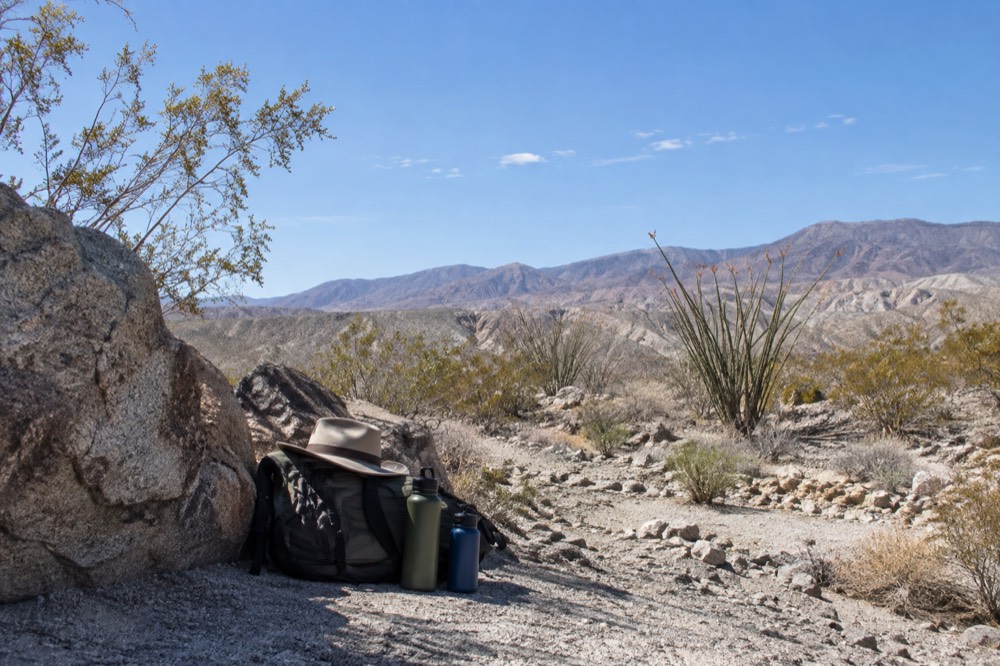
The practical list is short and non-negotiable. Sun protection comes first: a wide-brim hat, sunscreen, sunglasses and loose long sleeves work better than exposed skin in direct sun. Shoes matter more than they do on the coast, since desert ground is sharp, loose and full of things that stick. A paper map or a downloaded offline map is essential, because the basin's cell coverage is patchy to nonexistent away from town.
| Item | Why | Planning note |
|---|---|---|
| Water, 1 liter per person per hour of walking | Heat exhaustion is the park's main hazard | Buy in Borrego Springs, not en route |
| Hat, sunscreen, sunglasses | Desert sun is unrelenting even in winter | Reapply sunscreen after sweating |
| Closed shoes with grip | Sharp rock, loose gravel, spiny plants | Sandals stay in the car |
| Offline map or paper map | No reliable cell service in the basin | Download before Escondido |
| Full tank of fuel | Services are sparse and distant | Fill at the last town, not the last station |
| Layers for evening | Desert temperatures drop fast after sunset | Even summer nights can surprise you |
A few hard rules keep the day safe. Do not hike at midday in the warmer half of the year; the morning and the last two hours before sunset are the walkable windows. Keep to established roads and trails, both for your own safety and because the desert surface is a living landscape that vehicle tracks scar for years. If you feel dizzy, nauseated or stop sweating, that is heat illness, and the correct response is shade, water and ending the day, not pushing on to the next overlook.
A Realistic One-day Itinerary
A good Anza-Borrego day leaves San Diego by 8:00 am, reaches the basin mid-morning, spends the middle of the day on shaded or seated stops, and gets the driver back over the mountains before full dark. Trying to add a second major stop, like the Safari Park, makes it a very long day. The version below is the comfortable single-focus plan, with the optional Safari Park insert marked where it fits.
| Time | Stop | Notes |
|---|---|---|
| 8:00 am | Leave San Diego via I-15 | Coffee and breakfast before the mountains |
| 9:30 am | Optional: Safari Park in Escondido | Skip if the desert is the point of the day |
| 11:00 am | Borrego Springs: fuel, water, visitor center | Last full services |
| 11:30 am | Metal sculptures | Best light early or late; midday is fine for shade-less photos |
| 1:00 pm | Lunch in Borrego Springs | Sit-down break during peak heat |
| 2:30 pm | Badlands overlooks by car | Scenic, shaded-by-the-vehicle touring |
| 4:30 pm | Palm oasis walk | Angled light, cooling air |
| 6:00 pm | Drive out via Julian | Pie stop if the kitchen is still open |
| 8:00 pm | Back in San Diego | Mountain roads after dark: take it slow |
If the itinerary leaves you back in the city with energy to spare, the waterfront is the natural evening: the Embarcadero, dinner in Little Italy, or a look at the USS Midway Museum lit up at its berth. The Midway's admission is valid any date on the flexible ticket, adults $39 online against $41 at the door, and it closes at 5:00 pm with last admission at 4:00 pm, so it belongs to a different day than this one, but it is the classic city bookend to a desert morning.
One last pairing note for families weighing the whole menu of big-ticket days: LEGOLAND California, up in Carlsbad, is the kid-focused alternative to everything on this page, with 1-day tickets on dynamic pricing from $119, per the official ticket page. A desert day and a LEGOLAND day are opposite temperaments, one quiet and free at the trailhead, one loud and booked in advance, and most traveling families have room for exactly one of each. More on that in the LEGOLAND California guide.
Common Questions About Anza-Borrego Day Trips
Do you need a reservation or permit to visit Anza-Borrego?
No reservation or timed entry is needed for a day visit. You drive in, park at the trailheads or overlooks and go. That simplicity is part of the appeal compared with the city's ticketed attractions.
Can you visit Anza-Borrego without a car?
Not realistically. There is no transit link to the basin and no shuttle replacing one, so a rental car is effectively mandatory. This is a day trip where renting for the day makes clear sense, unlike downtown San Diego where the trolley and bus network does the job.
What is the best month for wildflowers at Anza-Borrego?
Spring, typically March into April, is the bloom window, but a bloom depends on the preceding winter's rainfall and is never guaranteed. Check the park's own current flower information before you go rather than promising anyone a carpet of color.
Is Anza-Borrego too hot in summer?
Midday in the warmer months is genuinely hot, and heat illness is the park's main hazard. Summer visits work if you restructure the day around them: sculptures and walking at dawn, drives and shaded stops in the middle, and nothing strenuous between late morning and late afternoon.
Can you combine Anza-Borrego with the Safari Park in one day?
You can, but it is a long day and the Safari Park deserves hours of its own. The park sits in Escondido on the approach, so the workable version is Safari Park in the morning and the desert's scenic drives in the afternoon, skipping the longer walks.
Where do you fill up on gas and water?
Borrego Springs, at the center of the basin, is the last full-services stop. Fill the tank there, buy more water than feels necessary, and do not count on anything, fuel, food or cell service, once you are out on the far roads.