Joshua Tree from San Diego: Planning the Desert Day Trip
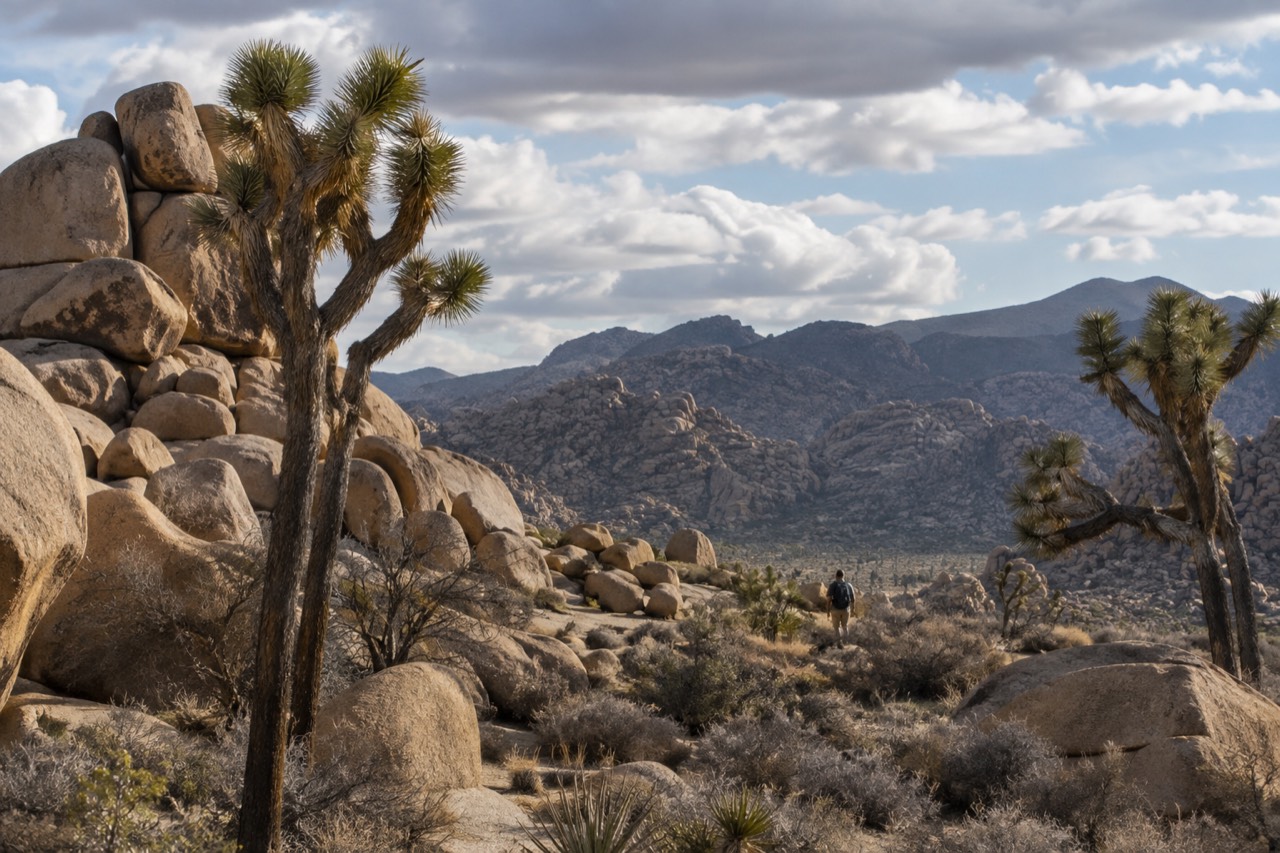
Joshua Tree is the strangest landscape within a single day's reach of San Diego, a high desert of stacked boulders and Dr. Seuss trees that sits close enough for a guided tour to run it in about ten hours and still get you back to the coast for a late dinner.
Short answer
Yes, Joshua Tree works as a day trip from San Diego. A private guided tour runs about 10 hours round trip, and self-driving gives you the same day with full control of the stops. Go between late fall and early spring, when the desert is comfortable, and start early so you are inside the park by mid morning.
San Diego gives you the ocean, and then, two hours inland, it gives you the opposite of the ocean. Joshua Tree National Park is where the Mojave and the Colorado deserts meet, a sweep of granite boulder piles and shaggy, forked trees that look like nothing else within a day's drive of the coast. The park is far enough to feel like a real expedition and close enough that a private guided tour from San Diego runs the whole thing in about 10 hours, door to door.
This guide lays out how to make the trip work: whether to drive yourself or take a tour, what the park actually contains, when the desert is comfortable instead of punishing, and how Joshua Tree stacks up against the other inland day trips covered across Things to Do in San Diego, from Julian's apple country to the badlands of Anza-Borrego.
Can You Do Joshua Tree as a Day Trip from San Diego?
Yes, comfortably, as long as you treat it as a full-day commitment. The private guided tour of Joshua Tree from San Diego runs about 10 hours round trip, which tells you the honest shape of the day: several hours of driving wrapped around several hours inside the park. That is a big day, but it is a normal one for this park, and travelers who start early get the best light, the coolest temperatures and the quietest trails before the crowds thicken at midday.
The key decision is not whether the trip is possible, it is whether you want to spend the day driving or the day being driven. Both work. The self-drive version gives you total control over timing and lets you linger wherever the light is good, at the cost of a long road log on each end and the mental overhead of working out park roads you have never seen. The guided version trades a little flexibility for a driver who knows the route and a guide who can explain what you are looking at, which matters in a park whose geology is half the point.
What the day looks like matters more than the headline duration. A ten hour day typically means a morning pickup, the drive inland through the mountains, the middle of the day inside the park, and a return that lands you back in San Diego in the evening. That leaves roughly the heart of the day, the hours between late morning and mid afternoon, for the park itself. Plan around that window rather than around a fantasy of a leisurely full day among the boulders.
One honest caveat: this is not a trip to improvise. The desert punishes bad timing. A traveler who arrives at 2 pm in July has a miserable, briefly survivable visit, and the same traveler at 9 am in March has one of the best days Southern California can offer. The rest of this guide is mostly about landing on the right side of that line.
Driving Yourself Versus a Guided Joshua Tree Tour
Driving yourself is the cheaper option for a group and the more flexible one for photographers, while the guided tour wins on convenience and interpretation. The private Joshua Tree day tour from San Diego runs about 10 hours and removes every logistical decision from your day. Self-driving means you plan the route, the parking and the timing yourself, which is genuinely easy once you know the park's shape, but it also means a long drive home after a long day of walking.
The case for the tour is simple arithmetic. A ten hour day is mostly windshield time, and handing that to someone else converts five or six hours of driving into five or six hours of napping, chatting or watching the landscape change from coastal scrub to high desert. The private format means the pace bends to you: more time at the boulder piles if you want to climb, less at the visitor center if you do not. It also means the guide handles the parts of a desert day that first-timers get wrong, like when to turn around and which pullouts are worth the stop.
The case for self-driving is control. You leave when you want, stop at the date shakes and the weird roadside attractions on the way, and stay for sunset if the sky is doing something interesting. If your group is four people, the per-person math on a private tour changes too, and a rental car you might already have for your San Diego week costs nothing extra for this day. For a day trip of this length, [renting a car for the desert run](https://discovercars.tpk.ro/zHs3EuUg) is the standard move; this is one of the few San Diego days where a car is genuinely the right tool, unlike downtown, where it is a liability.
There is a middle path worth naming: drive yourself but plan the park portion like a tour would. Pick three stops, not ten. Give each one a real hour. Be inside the park by mid morning and out before the afternoon heat or the closing light, depending on season. Travelers who do that report the same satisfaction as tour guests, minus the commentary.
If the tour route appeals, the private option is the one this site carries, and you can compare it against the other big-ticket San Diego days further down this page.
The selection above is deliberately mixed: the Joshua Tree private tour for this exact day, plus two very different San Diego anchors in case the desert turns out to be the wrong fit for your group. A family with small children may find LEGOLAND a better use of a day, and a traveler who wants history over hiking may prefer the USS Midway. The rest of this guide assumes the desert still has its hooks in you.
What Is Actually Inside Joshua Tree National Park?
Joshua Tree is two deserts stacked on top of each other, and the park's famous look, the stacked granite boulders and the twisted trees, belongs to the higher, cooler Mojave half. The Colorado Desert below it is creosote flats and cholla cactus gardens, a completely different landscape inside the same boundary. Most first visits spend their time in the Mojave side, where the rock formations and the namesake trees concentrate, and dip into the cholla garden if time allows.
The trees themselves are the headline, and they are stranger in person than in photographs. Joshua trees are a species of yucca, not a true tree, and they grow in bizarre forked shapes that early travelers reportedly found more like a Dr. Seuss illustration than a forest. They exist almost entirely in the Mojave, which makes this park one of the few places on earth where they appear in numbers, and the densest stands sit at the western, higher end of the park.
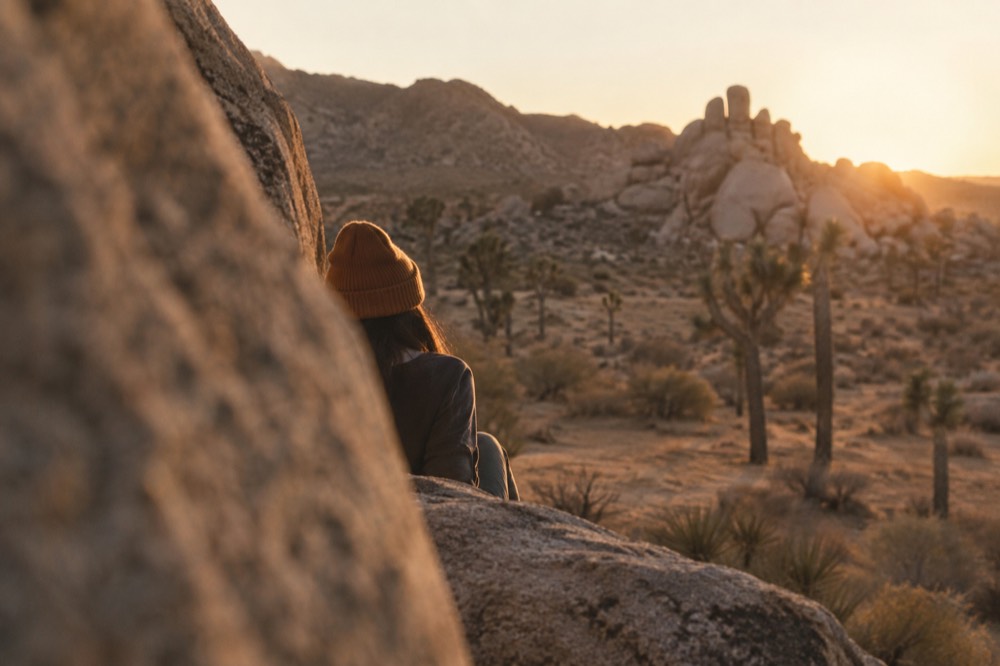
The boulders are the other half of the identity. The granite piles scattered across the park are what draw climbers from all over the world and what give casual visitors the park's most photogenic scenes: rounded monzogranite domes stacked like a giant's playthings, with Joshua trees growing straight out of the gaps. You do not need to be a climber to enjoy them. Half the pleasure of the park is simply walking among the rocks and finding your own pocket views.
Then there is the sky. Joshua Tree's darkness is a real feature, and the park is a designated dark sky destination that runs astronomy programs. That matters less for a day trip, which will have you back on the road well before the stars come out, but it explains why the light inside the park feels so hard and clean during the day. The same clarity that makes the night sky famous makes the afternoon sun serious business.
If you are weighing this day against a city day in San Diego, the honest comparison is between two completely different kinds of day out. The USS Midway Museum entry ticket buys you a self-paced walk through a carrier; Joshua Tree buys you open horizon. Some groups split their week and do both, and the ten hour desert day is a strange but real companion to a quiet morning on the harbor.
The Stops Worth Your Limited Hours
With roughly the middle of the day inside the park, three stops is the realistic maximum, and the classic trio is a boulder area, a Joshua tree grove and the cholla cactus garden. Each stop rewards an hour rather than a drive-by. The park's pullouts are close together along the main roads, so the driving between stops is short, and the temptation to add a fourth and fifth stop is how day trips run out of daylight.
Barker Dam and the surrounding rock piles are a common first stop because they bundle everything into one short walk: boulders, trees, a historic dam and a good chance of spotting bighorn sheep at distance. The Hidden Valley area is the other classic, a rock-enclosed basin that was reportedly used by cattle rustlers and that now serves as the park's natural amphitheater of granite. Either one gives you the postcard version of the park within a short loop.
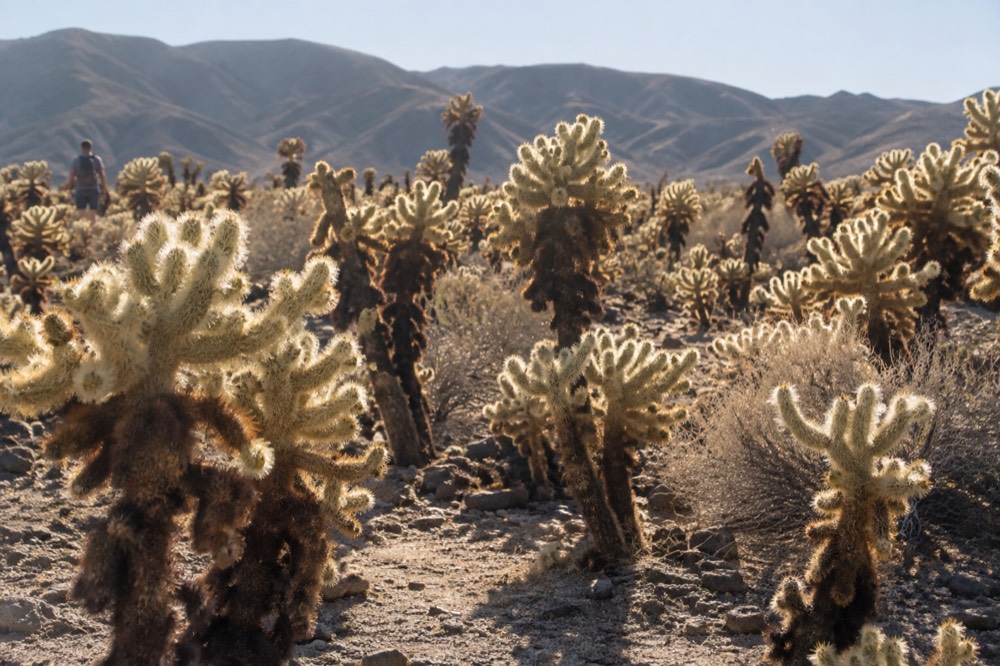
The cholla cactus garden sits on the Colorado Desert side, and it is the best argument for crossing between the park's two halves. A flat, short trail wanders through a dense stand of teddybear cholla, which look soft and are anything but; keep a respectful distance, because the spines attach on the lightest contact. The garden is at its best in the low light of morning or late afternoon, when the needles glow.
Keys View, an overlook at the end of a spur road, is the panorama stop. On a clear day it takes in the Coachella Valley, the Salton Sea and the San Andreas fault line running through the valley floor, all from a wheelchair-accessible viewpoint. It is a drive-to stop rather than a hike, which makes it an easy add if your group is tiring, and it is the one place in the park where the geology of the whole region arranges itself in a single frame.
Cap the day with a proper plan rather than a list. Pick one walk among the rocks, one grove or garden, and one overlook. Skip the visitor center if the line is long and you are short on hours, and treat the drive between stops as scenery rather than lost time, because the transition from boulder country to flat desert is the park's whole story told in a windshield.
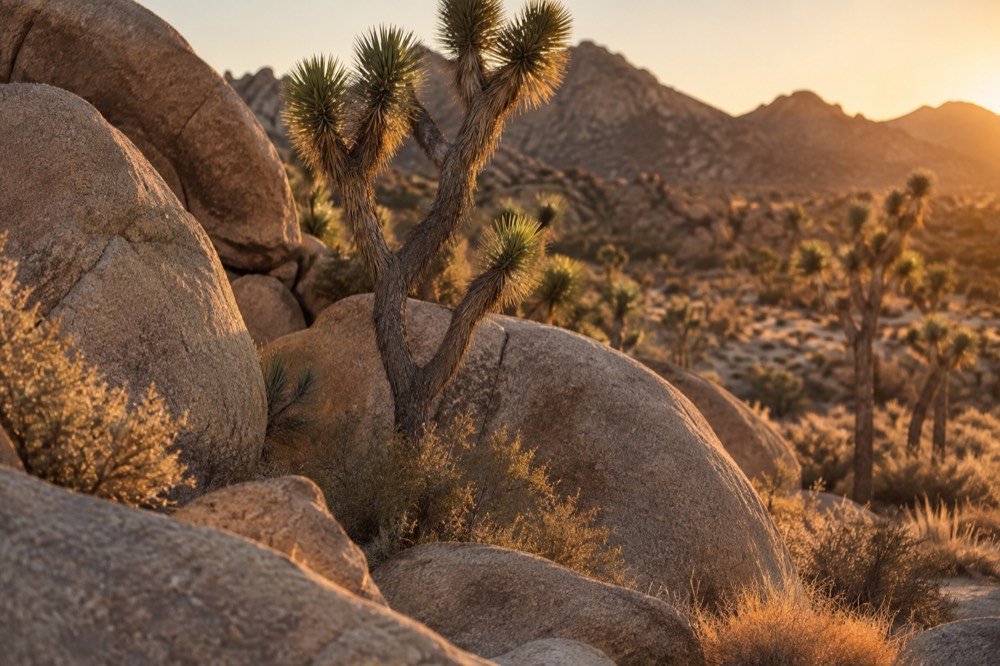
When to Go: The Seasons, and the Coastal Cloud Trick
Late fall through early spring is the desert season, full stop. Summer days in the low desert are dangerous for casual hiking, and even the higher Mojave section of the park gets brutally hot by midday. The quiet advantage of planning from San Diego is that the coast's gray months are the desert's best months: the marine layer that locals call May Gray and June Gloom keeps coastal June cool while the inland desert stays clear.
The temperature pattern behind that is visible in the long-term climate record for San Diego itself. June's normal high at the airport is 71.7°F, which is actually lower than October's 74.6°F, and that inversion is the marine layer's fingerprint. The coast sits under gray through late spring while the desert, above the marine layer's reach, runs clear and warm. A day trip inland in May or June is the classic local move for exactly this reason.
Winter is the other prime window, with a caveat about short days. December through February gives the desert its most comfortable hiking temperatures, but the sun sets early enough to compress a day trip, and the park's higher elevations can see cold nights and occasional wind. Spring adds the wildflower possibility, which varies enormously year to year and is never a promise, plus the best combination of warm days and green growth.
What to avoid is equally plain. July and August in the park are for sunrise starts and short walks near the car, not for a ten hour tour day built around being outside at midday. If your San Diego trip falls in high summer and the desert is on your list, flip the plan: be inside the park at opening, be out by early afternoon, and spend the hottest hours driving home in air conditioning. The National Park Service publishes the park's current conditions and any closures, and it is the only source to trust for weather-related alerts.
The seasons at a glance:
| Season | Desert conditions | Verdict for a day trip |
|---|---|---|
| Late fall (Oct-Nov) | Warm days, cooling nights, thin crowds | Excellent; one of the two best windows |
| Winter (Dec-Feb) | Comfortable hiking temperatures, short days, cold nights | Excellent; start early, bring a layer |
| Spring (Mar-May) | Warm days, possible wildflowers, growing crowds | Excellent; the busiest good-weather stretch |
| Early summer (Jun) | Hot but manageable with a morning-first plan | Good, and the coast is gray anyway |
| Midsummer (Jul-Aug) | Brutal midday heat, dangerous for casual walking | Avoid, or restructure around a sunrise start |
What to Pack for a Desert Day
Water is the whole packing list, and everything else is secondary. Carry far more than feels reasonable, drink before you feel thirsty, and treat sun protection as gear rather than vanity: hat, sunglasses, long sleeves in light fabric and real sunscreen. The desert air is so dry that you dehydrate without noticing, and the boulder walks have stretches without shade of any kind. Sturdy closed shoes matter more on the rocks than on the flats, because the granite is rough and the cholla spines are not a joke.
The practical layer of the list is short:
| Item | Why it matters | Notes |
|---|---|---|
| Water, more than you think | Dry air dehydrates silently | Plan on roughly a liter per person per hour of walking, and keep more in the car |
| Hat and sunglasses | There is almost no shade on the trails | A wide brim beats a cap in open desert |
| Long-sleeve light layer | Sun protection beats sunscreen alone | Also covers you for wind and cool mornings in winter |
| Closed walking shoes | Granite is abrasive, cactus is sharp | Trail runners are fine; sandals are not |
| Snacks and a real lunch | Food options near the park are thin | A tour day normally builds in a meal stop; self-drivers should pack |
| Offline map or download | Cell coverage inside the park is unreliable | Download the park map before the drive inland |
Two desert-specific notes deserve their own sentences. First, the cholla: those teddybear cactus in the garden look plush, and the spines detach at the lightest touch, so never step near one in sandals and never lean in for a photo. Second, the wildlife rule that surprises people: if you see a desert tortoise, give it distance and never pick it up, and the same goes for any rattlesnake you encounter on a trail, which is a real possibility in warm months. Both are standard National Park Service guidance for this park, and both are easy to honor.
Timing your food is its own small discipline. Eat a real breakfast before the drive, because the park is not a place to discover you are hungry, and keep the main meal for after the park rather than in the middle of your walking hours. The towns near the park's northern boundary have the food and coffee options; inside the park there are essentially none, which is part of the point.
How the Drive Itself Becomes Part of the Day
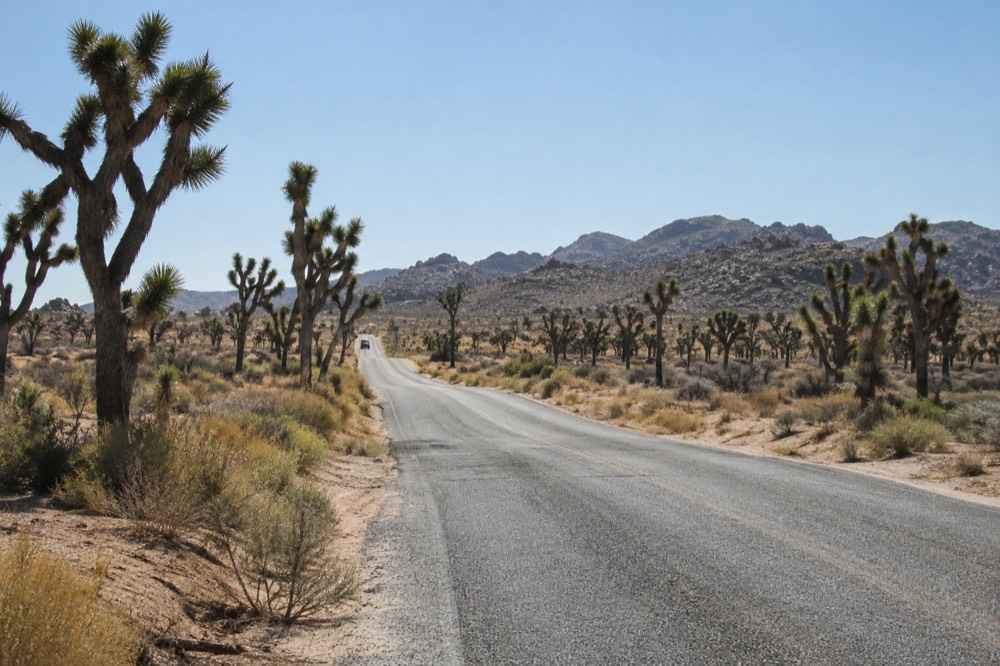
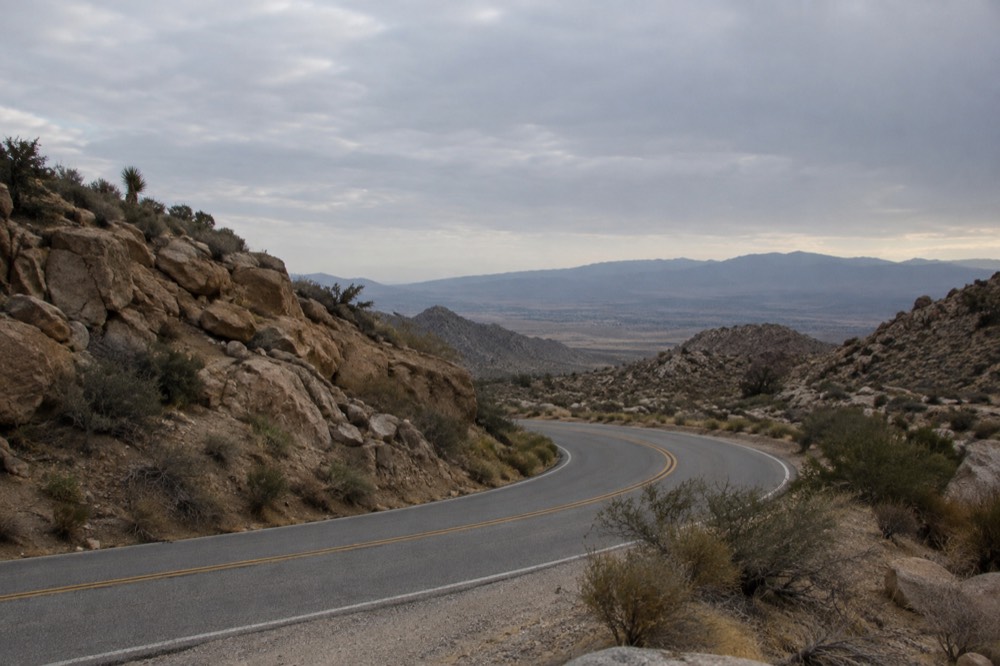
The road from San Diego to Joshua Tree is a landscape tour in its own right, climbing from the coast through mountains and dropping into high desert, and the transition is the day's narrative. The drive is long enough that it should be planned, not endured: leave early, expect mountain sections, and treat the change from coastal scrub to yucca and boulder as the first act of the trip rather than dead time. Travelers who fight the drive hate the day.
The route runs inland from the coast and gains real elevation before the desert, which has two consequences worth knowing. The first is temperature: the mountains between the coast and the desert can be noticeably cooler than either end, so a jacket in the car is not paranoia, especially outside of summer. The second is that the last stretch of the drive, once you descend toward the desert floor, is where the Joshua trees start appearing along the roadside before you ever reach a park entrance, a preview that reliably lifts the energy in the car.
This is also where the guided tour quietly earns its keep. On a ten hour day, the driver-guide's knowledge of the route, the good rest stops and the timing is the difference between a smooth arc and a series of anxious map checks, and the private format means the schedule flexes around your group rather than the reverse. The private Joshua Tree National Park day tour from San Diego covers the full round trip in about 10 hours, and Check availability for your dates if you would rather ride than drive.
The return leg deserves respect too. It lands in the evening, and the honest move is to plan a late dinner in San Diego rather than pretending you will go out. If your trip includes a three day San Diego itinerary, slot the desert day in the middle rather than the last day, so the return drive is not fighting your departure logistics.
Joshua Tree Versus the Other San Diego Day Trips
Joshua Tree is the most dramatic of San Diego's inland day trips, but it is not automatically the best fit for every group. Julian is the easy half day with apple pie and gold rush history, Anza-Borrego is the wilder desert with badlands and borrego, and Temecula is the wine country run. The right choice depends on whether your group wants scenery, food, wildlife or tastings, and the desert parks demand the most energy while rewarding it the most.
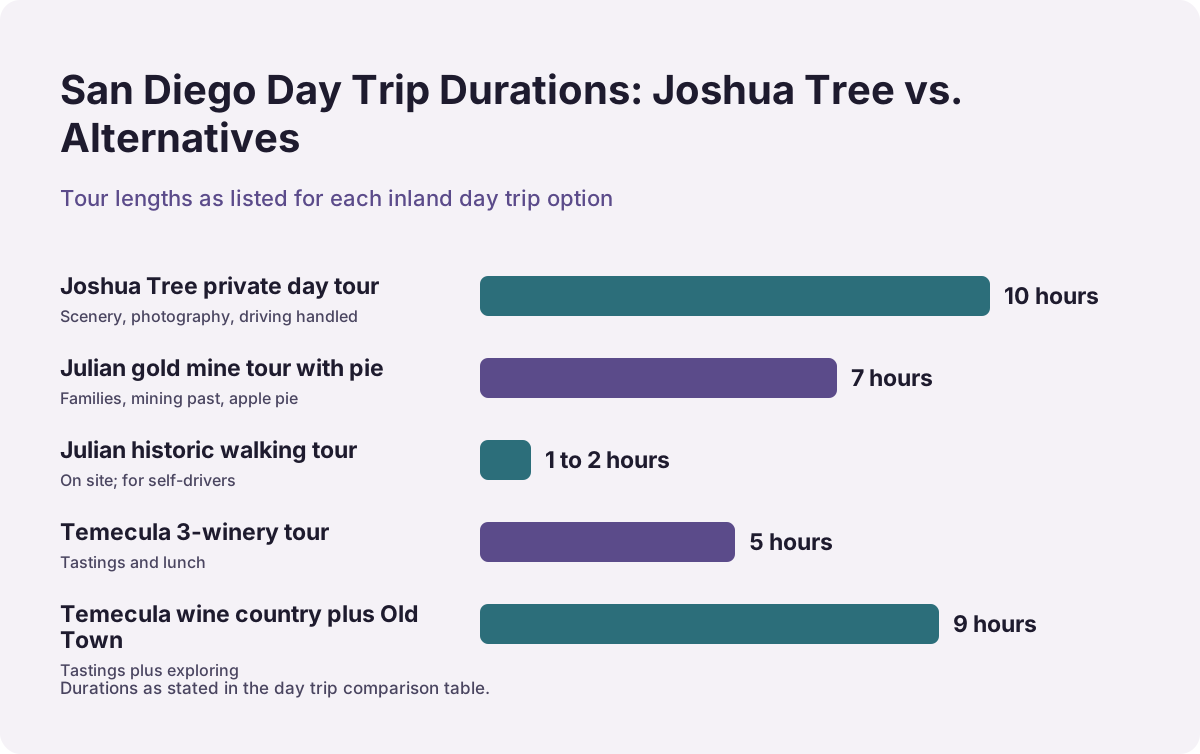
The comparison, using the tours this site actually carries:
| Day trip | Tour format | Duration | Best for |
|---|---|---|---|
| Joshua Tree | Private day tour from San Diego | 10 hours | Scenery, photography, first-time desert visitors who want the driving handled |
| Julian | Gold mine tour with pie | 7 hours | Families, history, a gentler pace with a food payoff |
| Julian | Historic walking tour (Pies and Pickaxes) | 1 to 2 hours on site | Self-drivers who want an organized walk through the town |
| Temecula | 3-winery tour with tastings and lunch | 5 hours | Couples and groups who want wine over walking |
| Temecula | Wine country tour plus Old Town | 9 hours | A fuller day combining tastings with exploring |
Julian deserves the special mention because it is the natural companion or alternative. The mountain town sits on the road logic between the coast and the desert, and the Julian gold mine tour with pie runs a 7 hour day that includes the town's two signature pleasures, its mining past and its famous apple pie. Our Julian guide covers the town in depth if you would rather build your own day around it.
Anza-Borrego is the other desert, and the contrast is instructive: where Joshua Tree is rocks and trees, Borrego is space and silence, with the Anza-Borrego guide covering the badlands, the sculptures and the spring bloom. If your San Diego week only has one desert day and you want the famous photographs, Joshua Tree wins. If you want emptiness, Borrego wins. There is no wrong answer, only a wrong season.
Can You Combine Joshua Tree with Palm Springs?
Yes, and it is one of the best pairings in Southern California, because the two sit on the same inland arc and the drive between them is short once you are already in the desert. The realistic version for a day trip is to pick one as the main event and give the other a brief stop, not to split the day evenly. A Joshua Tree morning followed by a Palm Springs afternoon works well.
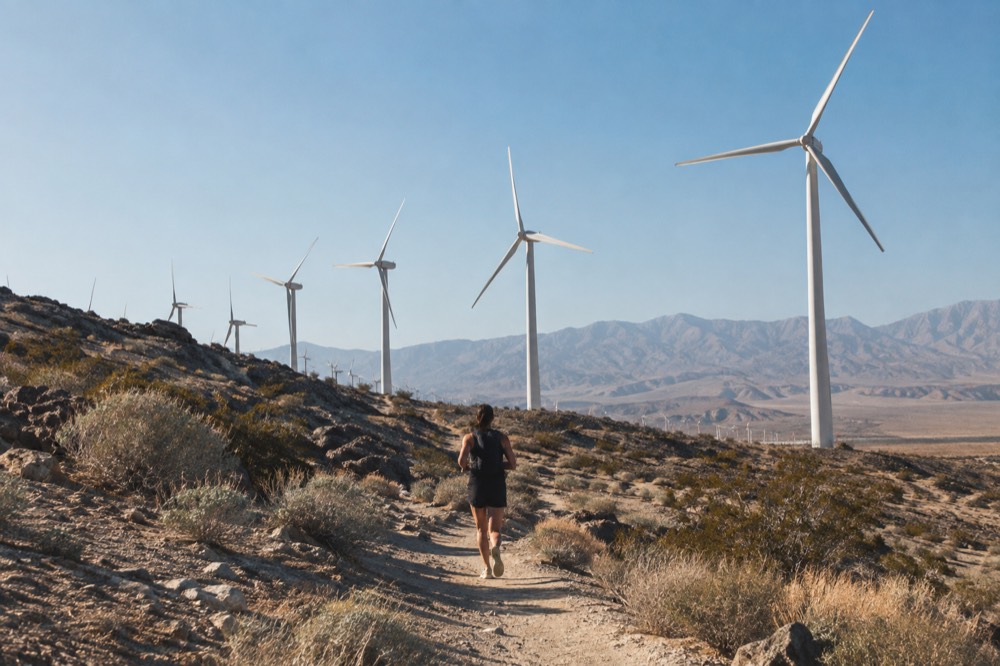
The geography makes the pairing natural. Joshua Tree's southern entrances sit above the Coachella Valley, where Palm Springs spreads along the valley floor, so a day trip can descend from the park into town for a late lunch without much additional driving. The famous wind turbines at the valley's western pass are on the route and are a legitimate photo stop in their own right. Our Palm Springs guide lays out the town's mid-century architecture, the aerial tramway and the dining, all of which make a strong case for stretching the day trip into an overnight.
The honest warning is about daylight and energy. A same-day combination means you are doing the park's walking in the morning and the town in the heat of the afternoon, and by evening you still have the full drive back to San Diego. Travelers who try to do both fully in one day tend to shortchange the park, which is the part that cannot be replicated anywhere else. The better structure is Joshua Tree as the day trip, with Palm Springs as the lunch-and-stroll coda, and a real trip to Palm Springs saved for another visit.
For groups who fall in love with the desert and want more of it, the escalation path is clear: come back for a spring weekend, stay inside or near the park, and catch the dark sky the day trip always misses. The park's astronomy events are the thing a ten hour day structurally cannot include, and they are the single best reason to return.
Is a Joshua Tree Day Trip Worth It from San Diego?
For most travelers, yes, and it is the day trip most likely to produce the photos and the story people actually talk about after the trip. The cost is honest: it is the longest day trip San Diego offers, roughly ten hours with a tour, and it demands an early start and desert-smart preparation. The payoff is a landscape that does not exist anywhere else on your itinerary, a day that makes a San Diego week memorable instead of merely pleasant.
The travelers who regret it are predictable, and they are worth naming so you can avoid being one of them. They are the ones who go in high summer and walk at midday. They are the ones who try to squeeze the park between a late start and an early dinner reservation. They are the ones who arrive without water or with sandals. Every one of those mistakes is a planning error, not a park problem, and every one is fixed by the advice above: right season, early start, short stop list, serious water.
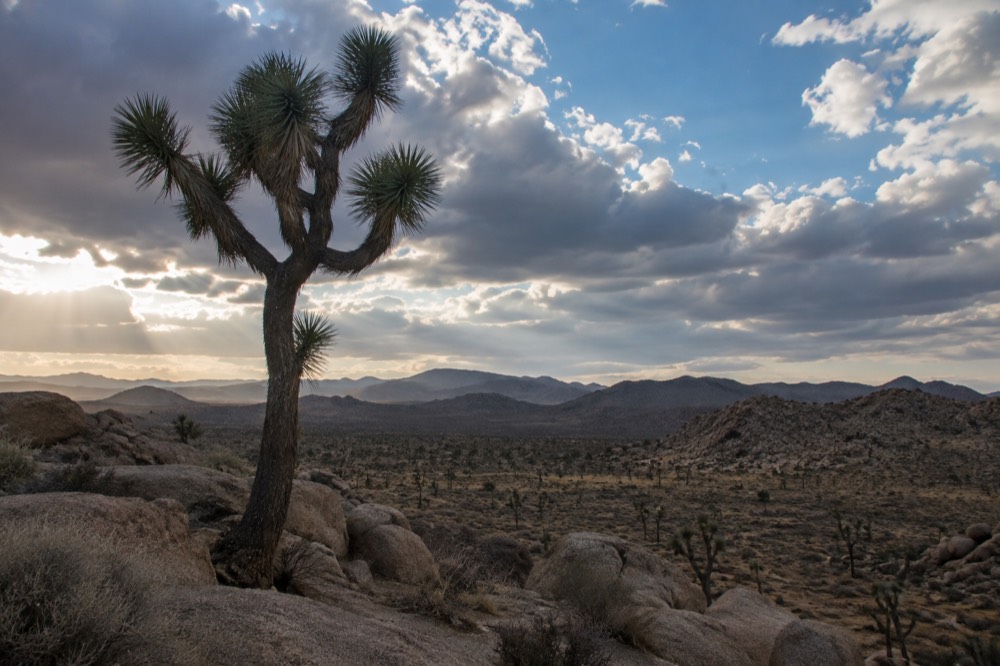
The travelers who love it are equally predictable. They wanted something different from the beach, they gave the desert the full day it asks for, and they let the drive be part of the experience instead of an obstacle to it. If your group includes keen photographers, hikers or anyone who has simply seen enough ocean for one week, this is the day trip that answers that itch. It also pairs well with a slower San Diego day on either side, so plan it mid-week of your trip rather than against a departure.
If the planning still feels heavy, the guided version exists precisely for that. The private tour covers the road, the route and the timing in one booking, and the rest of the selection below gives you the desert day alongside two alternatives in case your group's real appetite turns out to be an aircraft carrier or a theme park.
However you run the day, Joshua Tree is the San Diego day trip that feels least like San Diego, which is exactly the point. The coast will still be there tomorrow.
For travelers who want to keep the inland momentum going, the Julian walking tour above is the gentlest follow-up: a short historic stroll through the mountain town, easy to fit on a self-drive day or a separate outing entirely. And if you are still weighing the desert against the classics, the final selection below puts the Joshua Tree tour back alongside the Midway and LEGOLAND tickets for one last side-by-side.
Common Questions About a Joshua Tree Day Trip from San Diego
Can you do Joshua Tree as a day trip from San Diego?
Yes. The private guided tour runs about 10 hours round trip, and self-driving is equally practical with an early start. Plan on the middle of the day inside the park, with the driving on either end.
How long does it take to get from San Diego to Joshua Tree?
The private tour covers the full round trip, park time included, in about 10 hours, which tells you the drive is a multi-hour commitment each way. Leave early enough to be inside the park by mid morning.
What is the best time of year to visit Joshua Tree from San Diego?
Late fall through early spring. The desert is dangerously hot for casual walking in midsummer, while the cooler months are ideal. May and June are a local favorite because the coast's marine layer season is the desert's clear season.
Is a guided tour or self-driving better for Joshua Tree?
Self-driving is cheaper for a group and more flexible for photographers. A guided tour removes a multi-hour road log from your day and adds interpretation, which matters in a park whose geology is the main attraction. Both work with the right plan.
What should I pack for a Joshua Tree day trip?
Water well beyond what feels necessary, a hat, sunglasses, sunscreen, closed walking shoes, snacks and an offline map. There is essentially no food or reliable cell coverage inside the park.
Can you combine Joshua Tree and Palm Springs in one day?
Yes, as a light combination: Joshua Tree in the morning, then descend into the Coachella Valley for lunch and a stroll in Palm Springs. Doing both fully in one day shortchanges the park, so treat Palm Springs as the coda or plan an overnight.