San Diego Farmers Markets: A Local's Planning Guide to the Best Market Mornings
San Diego's farmers markets are a neighborhood affair: a handful of stalls, a coffee cart, and a street closed to cars. This guide covers which markets to plan around, how to reach them without driving, and what to buy when.
Short answer
San Diego runs farmers markets in nearly every walkable neighborhood, from Little Italy to North Park, Coronado to La Jolla. Most are weekend or once-weekly street markets selling produce, flowers, prepared food, and coffee. A trolley day pass costs $6.00 and reaches several of the best ones, and a market morning with coffee and a bag of produce usually runs $20 to $40 per person.
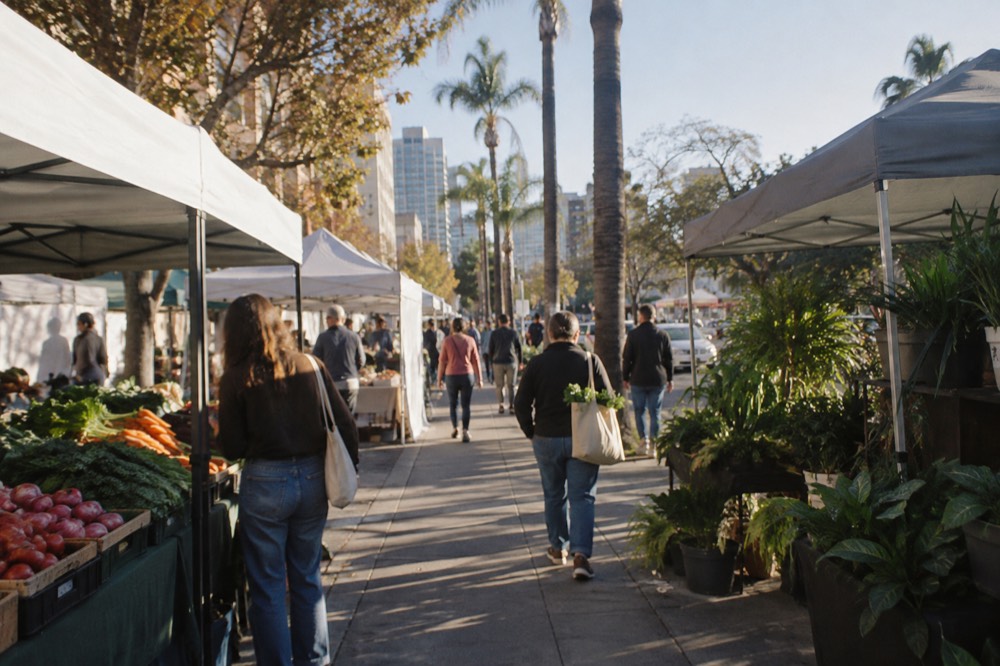
San Diego grows produce twelve months a year, and the city's farmers markets reflect that. There is no single flagship market the way some cities have one. Instead there are dozens of small, neighborhood-specific street markets, each with its own personality: the produce-heavy stalls in Little Italy, the plant and craft mix in North Park, the beach-town sprawl in Ocean Beach. The city's climate does the heavy lifting. With mild temperatures in every month of the year, and measurable rain concentrated almost entirely in December through March, a market morning is a safe bet in any season.
The planning problem is not whether to visit a market. It is which one, on which morning, and how to get there without paying for parking. This guide walks through the neighborhoods worth building a morning around, the transit that connects them, what to buy by season, and what it should cost. If you are mapping a wider trip, our first time in San Diego guide covers the city's bigger picture, and Things to Do in San Diego publishes planning guides for every neighborhood in this article.
Which San Diego Farmers Markets Should You Visit First?
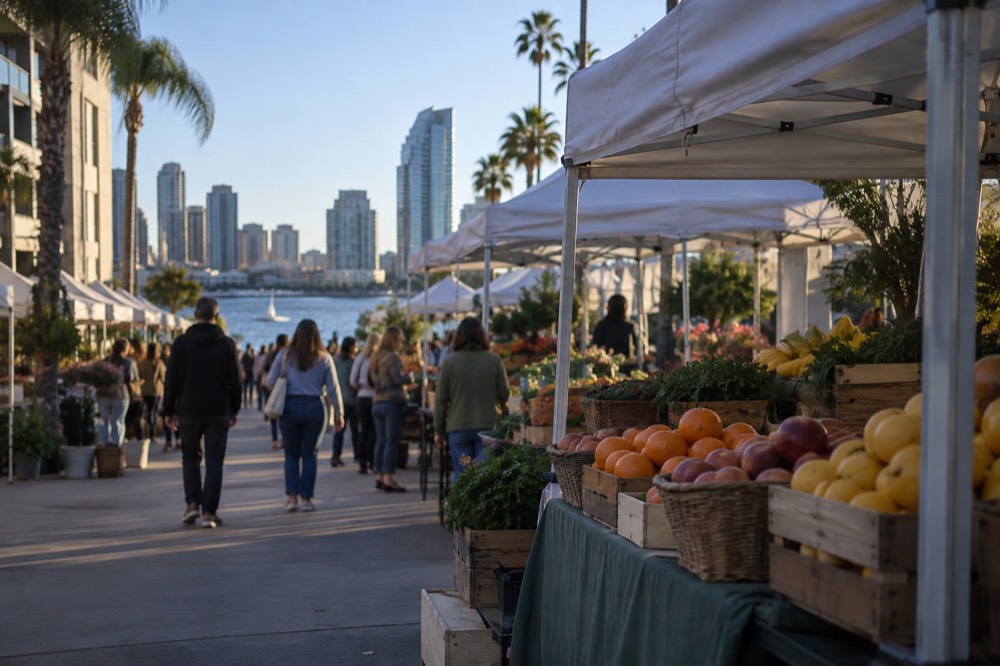
The markets most worth planning around are the big weekly ones in Little Italy, North Park, and Ocean Beach, plus the small-town markets in Coronado and La Jolla. Little Italy's is the largest and most food-focused, North Park's leans local and crafty, Ocean Beach's is a farmer-first market next to the pier, and Coronado's runs like a small town fair. Each sits in a walkable neighborhood, so the market is really the anchor for a half day, not a twenty-minute stop.
Little Italy, just north of downtown, hosts the city's best-known market. It fills several blocks of India Street with produce stalls, flower vendors, prepared food, and coffee, and the surrounding blocks are full of cafes and restaurants if you want to extend the morning. The neighborhood deserves more than the market itself, and our Little Italy guide covers the restaurants and the waterfront walk nearby.
North Park's market has a different character. The neighborhood is San Diego's craft beer and indie shopping heart, and the market matches: local produce alongside plant sellers, bakers, and prepared food stands. It sits in the middle of one of the city's most walkable commercial districts. Our North Park guide maps the breweries and taco shops around it.
Ocean Beach runs a genuinely agricultural market, with more actual farmers and fewer craft stalls, set beside the pier and the dog beach. It pairs naturally with a morning walk on the sand. See our Ocean Beach guide for the full neighborhood. La Jolla and Coronado both run smaller markets that suit a slower, small-town pace, and both sit in neighborhoods that fill a whole day on their own; our La Jolla guide and Coronado guide cover the rest.
| Market neighborhood | Character | Best paired with |
|---|---|---|
| Little Italy | Largest market, produce plus prepared food and flowers | Waterfront walk, lunch on India Street |
| North Park | Local, crafty, plant-heavy | Breweries and indie shops |
| Ocean Beach | Farmer-first, laid-back, next to the pier | Beach morning, dog beach walk |
| La Jolla | Small, upscale, quick to walk | Cove, sea caves, coastal trail |
| Coronado | Small-town fair feel | Ferry landing, beach, Hotel del grounds |
| Hillcrest | Long-running, diverse food stalls | Cafes and vintage shops on University Ave |
Market days and hours change season by season and stall by stall, so confirm the day on the market's own or the neighborhood association's page before you build an itinerary around one. Treat every schedule you read on a travel site, including this one's neighborhood list, as a starting point rather than a timetable.
The good news is that San Diego's markets cluster in neighborhoods you would want to visit anyway. If the market you planned turns out to be dark, you are standing in Little Italy or North Park with a full morning of alternatives in every direction. Build the neighborhood first and the market second, and no schedule surprise can ruin the plan.
If you would rather let someone else handle the navigation between neighborhoods, the hop-on hop-off trolley is the most flexible option: it runs a narrated loop past downtown, the waterfront, and Balboa Park, and the ticket is valid for two days, so you can hop off wherever a street market or a taco shop catches your eye.
The trolley pairs well with a market morning because most of the big markets sit a short walk from a stop or a stop's connecting bus. The GoCar option below suits travelers who want to drive themselves between neighborhoods at their own pace, and the Midway ticket rounds out a downtown day once the market closes.
How Do You Get to San Diego's Markets Without a Car?
You do not need a car for most of San Diego's best markets. The MTS trolley and bus network charges $2.50 per one-way ride with free transfers for two hours, or $6.00 for a day pass, and the PRONTO card or app caps your rides automatically so a day pass is never bought in advance. Little Italy, downtown, Old Town, and the communities along the Blue Line are all reachable by rail.
The fare system rewards pay-as-you-go. Load money onto PRONTO, tap on each ride, and once your fares add up to the day-pass value the system stops charging you for the rest of the day. The fare chart states this plainly as "Day Pass Earned." Contactless bank cards are accepted for single rides but do not cap, so use the card or app if you plan to ride more than twice. Youth 18 and under ride free, and up to two children aged 5 and under travel free with a paying adult. The full fare table is published by MTS on its official fare chart.
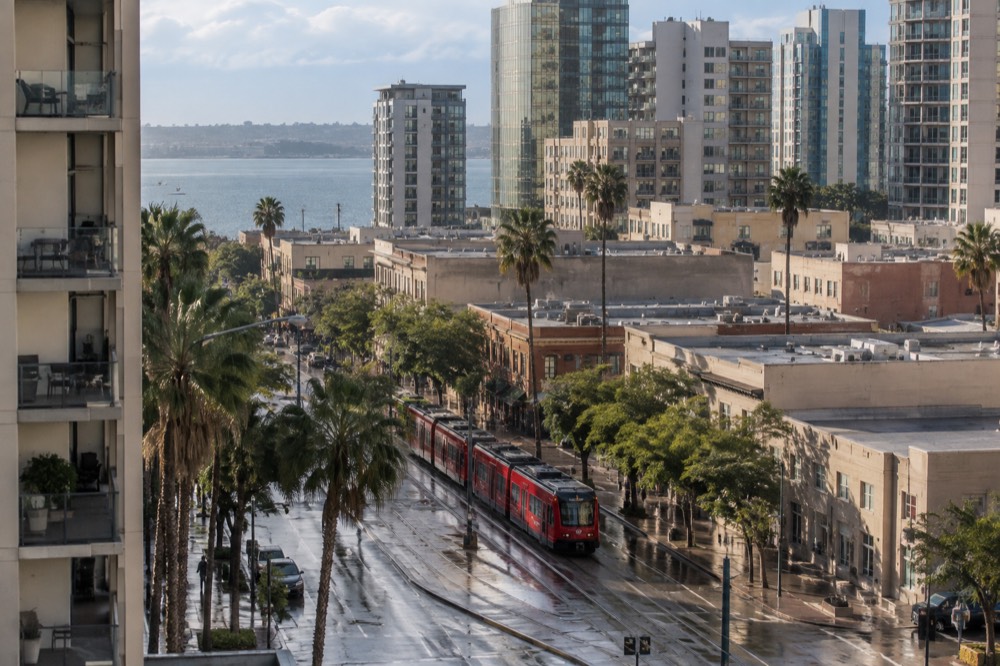
The Blue Line runs from the border at San Ysidro through downtown and up the coast to UC San Diego and UTC, with a published end-to-end time of one hour and 23 minutes. The Orange and Green lines cover the east side of the city and connect at the downtown interchange. For market purposes, the practical pattern is simple: ride to the stop nearest your market neighborhood, walk the last few blocks, and ride back with your bags.
| Fare | Adult | Reduced (senior 65+, disabled, Medicare, youth with ID) |
|---|---|---|
| One-way, bus or trolley, 2-hour transfers | $2.50 | $1.25 |
| Day pass | $6.00 | $3.00 |
Parking, if you do drive, is the honest downside of a market morning. Downtown meters run $2.50 per hour with enforcement Monday to Saturday, generally 8:00 am to 6:00 pm, and Sunday is no longer free everywhere in the commercial areas of downtown, Uptown, and Pacific Beach under recent reforms. Posted signs always win, and the city's own parking FAQ is the source for the current rules: the San Diego parking FAQ states the enforcement zones directly. Beach neighborhoods like Ocean Beach and Pacific Beach are free street parking that is very hard to find on a weekend morning, which is the real argument for arriving before the market gets busy or taking transit. Our parking in San Diego guide covers the whole city, and our getting around San Diego guide covers every transit option including the airport connection.
A two-day trolley ticket is a natural companion to a market plan: you can ride the loop to scout a neighborhood on day one, then return for the market on day two without paying again.
What Should You Actually Buy at a San Diego Market?
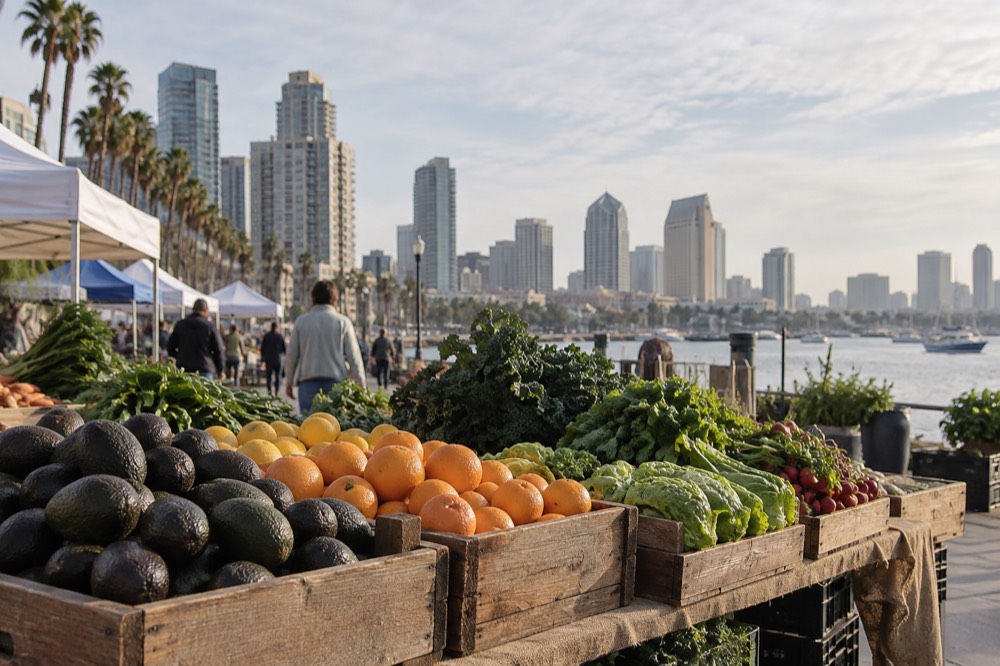
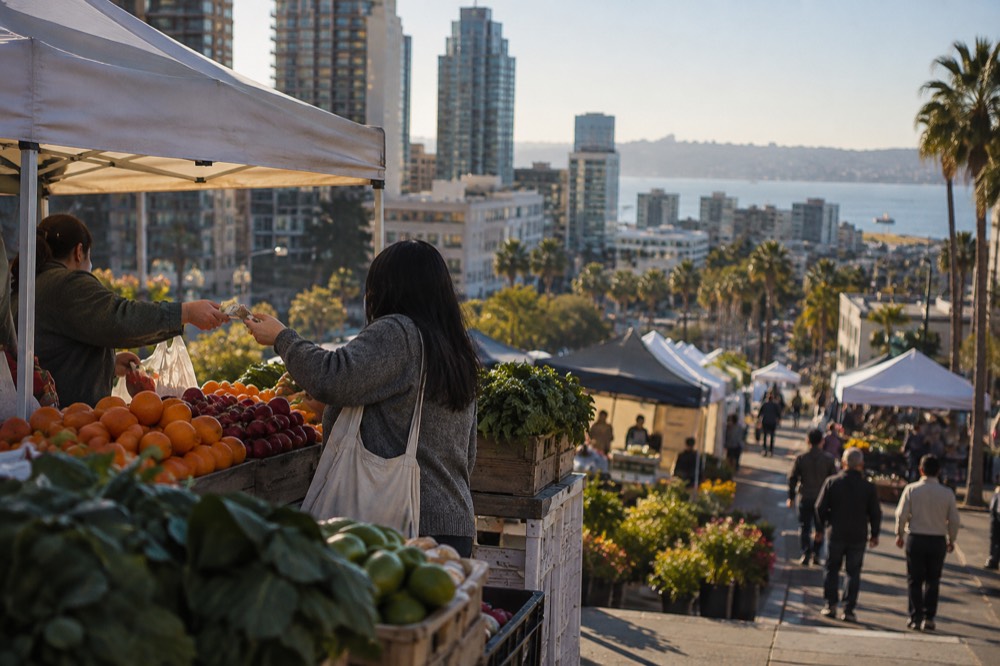
Buy what is in season locally: avocados, citrus, berries, tomatoes, and stone fruit in summer and fall, plus flowers, which are dramatically cheaper at market stalls than at shops. The prepared food is half the point, so plan for a breakfast or lunch from the hot stalls rather than treating the market as a grocery run. Baja-style fish tacos, fresh juices, and local honey are reliable staples across the city's markets.
The produce reflects the county's agriculture rather than a greenhouse calendar. Avocados are the emblematic purchase and the quality at a good stall beats any supermarket. Citrus runs through the cooler months, berries and stone fruit through summer, and heirloom tomatoes from late spring into fall. Because the growing season never fully stops, the stalls change month to month rather than emptying out in winter, which is one of the quiet pleasures of a San Diego market in January.
Flowers are the best value on the street. Bundles that would cost three times as much at a florist sell for a few dollars, and sellers will often build a mixed bouquet on the spot. If you are staying in a hotel, a market bouquet is the cheapest way to make the room feel less like a hotel.
Prepared food deserves a plan of its own. Most big markets have a row of hot food stands, and the standard move is a breakfast or lunch from one of them rather than a restaurant. San Diego's taco culture reaches into its markets, and the fish taco, the city's signature dish, shows up in credible form at several of them. Our best fish tacos in San Diego guide and our best tacos in San Diego guide cover the restaurant side if a market taco leaves you wanting more.
| Buy | Why here | Rough planning range |
|---|---|---|
| Avocados | Local, tree-ripened, better than supermarket fruit | $2-$4 each, cheaper by the bag |
| Flower bundles | The best value on the street | $5-$15 per bouquet |
| Citrus | Peak in the cooler months | $3-$6 per basket |
| Hot food lunch | Tacos, juices, baked goods from the stalls | $8-$15 per person |
| Local honey and preserves | Souvenirs that survive the flight home | $8-$20 per jar |
Treat those ranges as planning figures, not promises: stall prices vary by market and season, and the honest way to shop is to walk the full street once before buying anything. The first stall you pass is rarely the best-priced one, and vendors at the far end often discount toward closing time.
When Is the Best Time of Year for San Diego's Markets?
Every month is a market month in San Diego, but the best produce and the best weather overlap in late summer and early fall. September's normal high of 77.2 degrees Fahrenheit is 1.9 degrees above July's and a tenth behind August's, and the ocean is near its warmest, yet September is the city's quietest month for visitors. Winter markets are smaller but run through the rainiest weeks without closing.
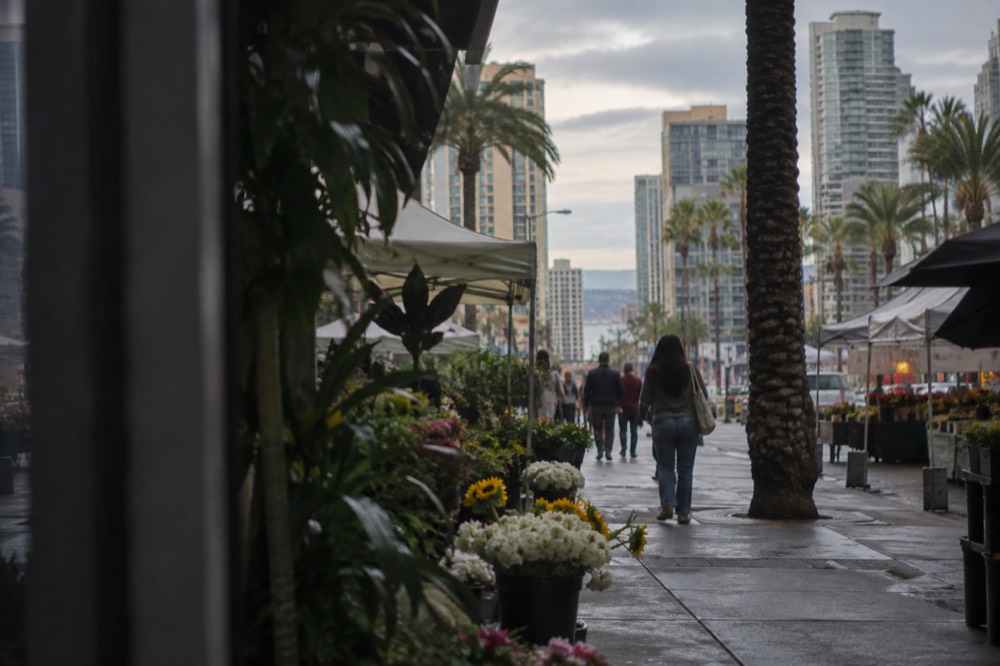
The climate data makes an unusual case. August and September are the warm months here, not July, and June's normal high of 71.7 degrees is actually lower than October's. The marine layer locals call May Gray and June Gloom greys the coast in late spring while inland stays clear, so a coastal market morning in June can start overcast and burn off by mid-morning. That is not a reason to skip June; it is a reason to bring a light layer and not panic at 9 am.
| Season | What the stalls look like | Weather context |
|---|---|---|
| Winter (Dec-Mar) | Citrus, greens, honey, smaller stall count | The rainiest months, 7.3 of the year's inches fall here |
| Spring (Apr-May) | Berries arrive, flowers peak | Cool mornings, marine layer on the coast |
| Summer (Jun-Aug) | Stone fruit, tomatoes, full stall rows | June grey on the coast, July warm, August warmest |
| Fall (Sep-Nov) | Everything at once, best produce of the year | Warmest, driest, and the quietest visitor month |
The counterintuitive pick is September. The stalls are at their fullest, the weather is at its warmest, and the crowds that fill the city in July have gone home. If your dates are flexible, that is the month to build a market itinerary around. If they are not, go anyway: there is no bad month, only a different stall mix.
How Much Should a Market Morning Cost?
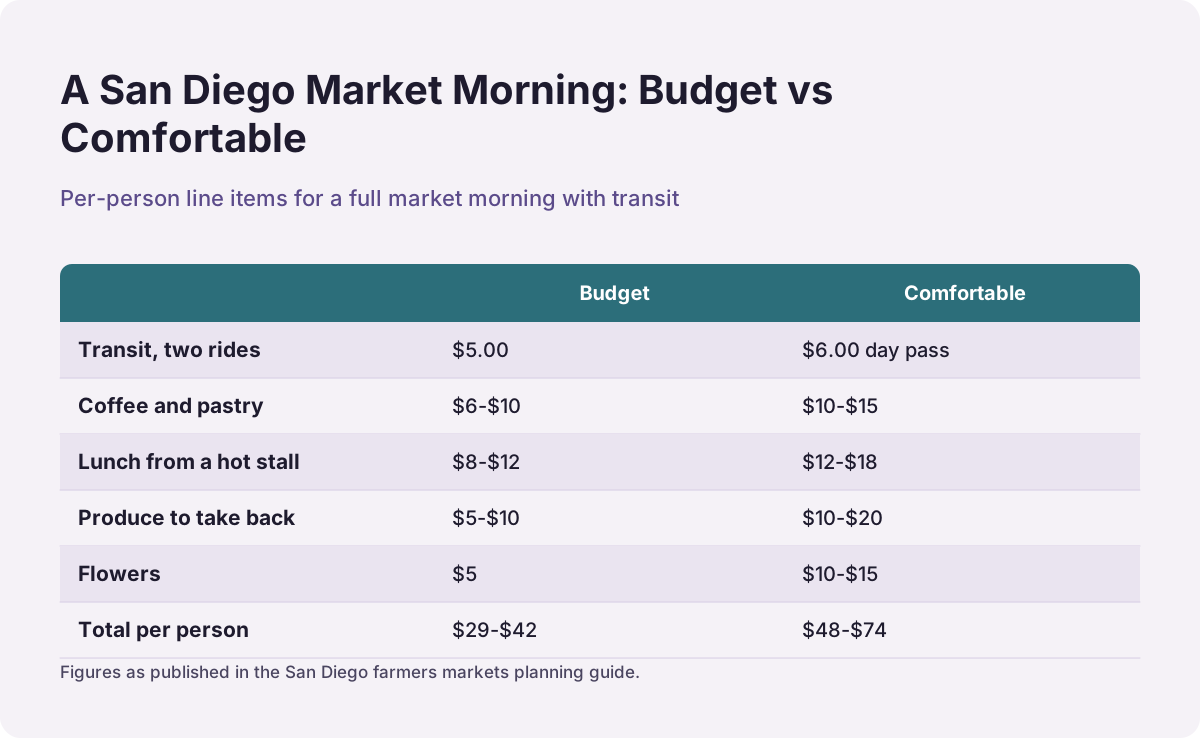
Plan on $20 to $40 per person for a full market morning: coffee and a breakfast item from a prepared food stall, a lunch bite, and a bag of produce or a bouquet to take back. The market itself is free to enter, transit there and back on PRONTO caps at $6.00 for the day, and the only real budget risk is the prepared food row, where a stall-crawl can quietly double your spend.
The floor is genuinely low. If you eat breakfast at the market, buy nothing but a bag of avocados and a bouquet, and ride the trolley, you can have a complete San Diego morning for under $25. The ceiling is self-inflicted: hot food, fresh juice, coffee, honey, and a second coffee add up fast, and markets are engineered to make that easy.
| Line item | Budget | Comfortable |
|---|---|---|
| Transit, two rides | $5.00 | $6.00 day pass |
| Coffee and pastry | $6-$10 | $10-$15 |
| Lunch from a hot stall | $8-$12 | $12-$18 |
| Produce to take back | $5-$10 | $10-$20 |
| Flowers | $5 | $10-$15 |
| Total per person | $29-$42 | $48-$74 |
Bring cash. Many produce and flower stalls take cards now, but the small vendors, and the ones you most want to buy from, are often cash-only, and the nearest ATM is usually a block away with a fee. Small bills also make the transaction faster for the vendor, which matters when the line behind you is ten people deep at a good avocado stall.
For the wider budget picture, our San Diego trip cost guide and our cheap things to do in San Diego guide put the market morning in context with the rest of a visit. A market is one of the few San Diego activities that is cheap, local, and uncrowded at the same time.
What Are the Unwritten Rules of a San Diego Market?
Arrive early for the best produce and late for the discounts, walk the whole street before buying, bring your own bag, and do not photograph stall holders' setups without asking. San Diego's markets are working markets for the city's restaurants and residents, not photo sets, and the vendors remember regulars and polite visitors. Cash, small bills, and a little patience at busy stalls carry you a long way.
The early rule matters more here than in most cities because so many stalls sell out. Avocado sellers, the best bakers, and the flower vendors are frequently packed up an hour before the official close, and the fish taco stand with a line at 11 am may be done by 12:30. If a specific stall is your reason for coming, arrive within the first hour.
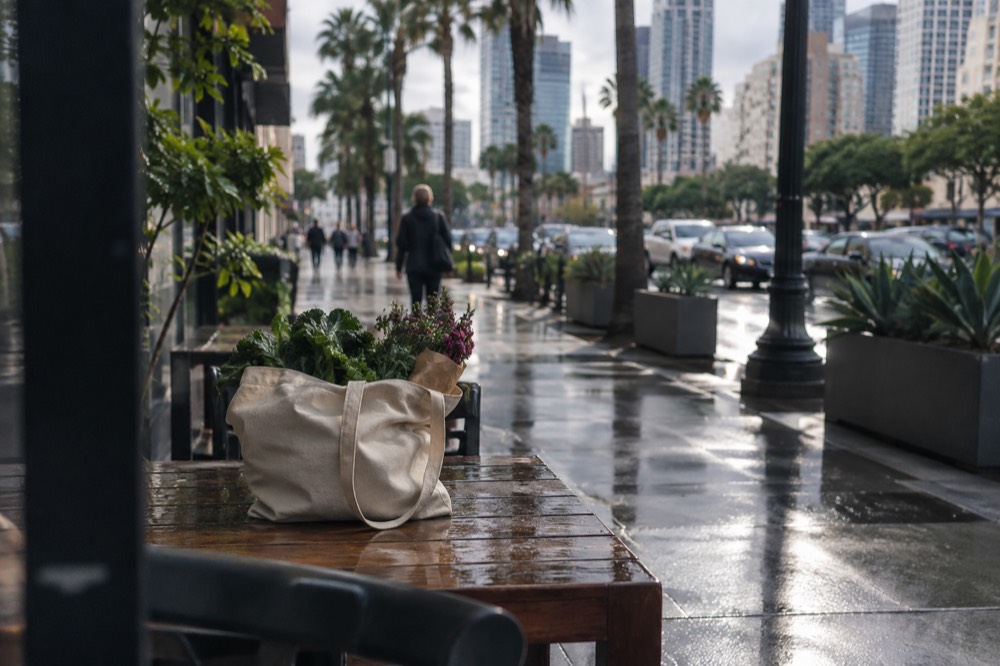
The late rule is the mirror image. Produce that does not travel well gets discounted in the final hour, and vendors would rather sell a flat of strawberries cheaply than drive them back to the farm. If you are shopping for tonight's dinner rather than the week, the last hour is the best hour.
A few practical notes on the beach markets specifically. Alcohol is prohibited on San Diego's city beaches, boardwalks, and parks, so a market beer stays inside the market footprint or does not happen. Glass containers are banned on the sand, which is worth remembering if you are heading from a market to Ocean Beach or Pacific Beach with a jar of something. And if you are staying near the water, our family beaches in San Diego guide and best beaches in San Diego guide cover where to take the afternoon after your market morning.
Can You Build a Whole Day Around a San Diego Farmers Market?
Yes, and that is the right way to do it. Every major market sits in a neighborhood that fills a full day: Little Italy pairs with the waterfront and the Embarcadero, North Park with breweries and tacos, Ocean Beach with the pier and the beach, and Coronado with the ferry landing and the Hotel del grounds. The market is the anchor, not the destination, so plan the neighborhood around it and let the market set the start time.
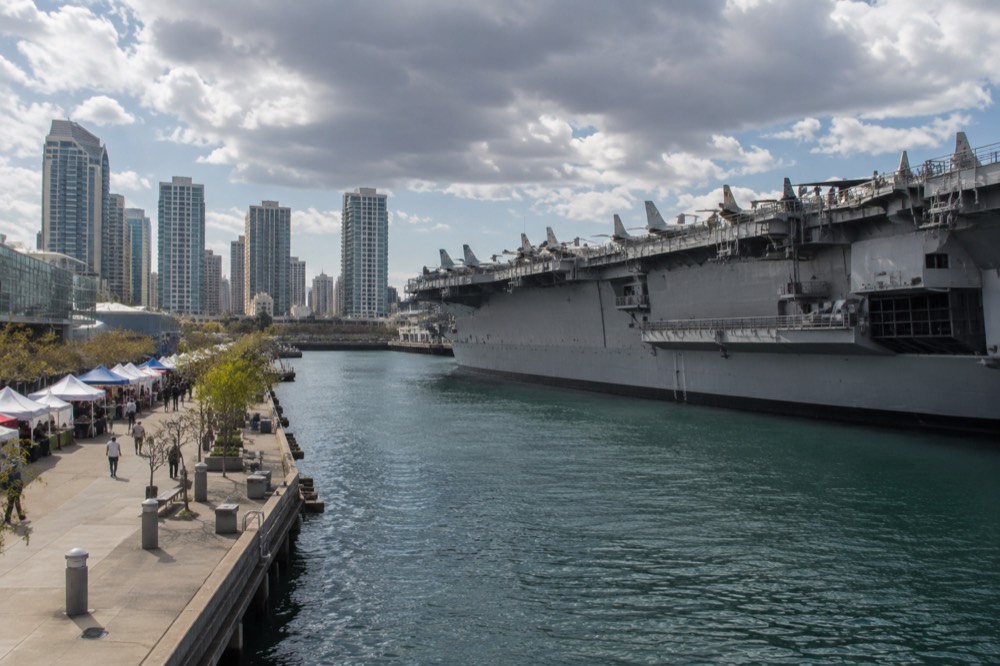
A downtown day is the easiest version. Start at the Little Italy market, walk down to the Embarcadero, and spend the afternoon on the USS Midway Museum, whose flight deck is one of the city's signature sights. Adult admission is $39 online and $41 at the door, and the museum is open 10:00 am to 5:00 pm with last admission at 4:00 pm, so a market morning feeds a Midway afternoon without any rush.
The Midway ticket is the natural companion to a Little Italy market day: the museum is a 15-minute walk down the waterfront from the market street, and the entry ticket covers the audio tour that most visitors spend two to five hours on.
A North Park day runs on a different clock. The market starts it, then the neighborhood's breweries take over, and the evening ends at a taco shop. San Diego's craft beer scene is the city's other signature product, and our San Diego breweries guide maps the ones within walking distance of the market street.
The Coronado version is the slowest and the most scenic. Take the market morning at the island's small-town pace, walk the beach, and spend the afternoon on the Hotel del Coronado grounds and the ferry landing. Our Coronado Beach guide covers the sand, and the island is flat, compact, and walkable end to end, which makes it the one market day that genuinely needs no plan at all.
If food is the theme of your trip rather than a side note, a guided food tour is a shortcut to the neighborhoods' best kitchens. The Little Italy food and drink walking tour covers the market neighborhood's restaurants with a guide who knows the block, and the Old Town tequila and tacos tour pairs the city's oldest neighborhood with its signature dish.
Old Town is the other food anchor. It is the site of the city's founding, it sits on the trolley's Blue and Green line interchange, and its food tour is built around tequila and tacos, which is to say around the two things San Diego does best. Our Old Town guide covers the state historic park and the neighborhood around it.
Common Questions About San Diego Farmers Markets
Which San Diego farmers markets should I visit?
Little Italy's is the largest and most food-focused, North Park's is the most local and crafty, Ocean Beach's is the most farmer-first, and Coronado and La Jolla run smaller markets with a small-town pace. Pick the neighborhood you want to spend the morning in, not the market itself.
Are San Diego farmers markets open year round?
Yes. San Diego's growing season never stops, so the markets run in every month, though stall counts shrink in the winter and the produce mix shifts to citrus, greens, and honey in the cooler weeks. Confirm the specific day and hours on the market's own page before you go.
How much does a San Diego farmers market cost?
Entry is free. A full morning with coffee, a lunch bite from a hot stall, and a bag of produce or flowers usually runs $20 to $40 per person. Bring cash in small bills, since many produce and flower vendors are cash-only.
Can I get to San Diego's markets by public transit?
Yes. MTS charges $2.50 per one-way ride with two-hour transfers, or $6.00 for a day pass, and the PRONTO card or app caps your fares automatically once your rides reach the day-pass value. Little Italy, Old Town, and the neighborhoods along the Blue Line are all reachable by trolley.
What is the best month for San Diego farmers markets?
September. The stalls are at their fullest, the normal high of 77.2 degrees Fahrenheit makes it the warm month alongside August, and the summer crowds have gone home. Every other month still works: the produce mix changes, but the markets do not close.
Should I go to a San Diego farmers market early or late?
Early for selection and late for discounts. The best avocados, breads, and flowers sell out before the official close, while produce that does not travel well gets marked down in the final hour. If one specific stall is your reason for going, arrive within the first hour.
If you are planning the rest of your trip around your market mornings, the hop-on hop-off trolley remains the easiest way to connect the neighborhoods, and the GoCar and Midway options below round out a downtown day.