Is San Diego Expensive? A Realistic Trip Cost Breakdown
San Diego has a reputation for being pricey, and the big tickets are real. But the city's core experiences, its beaches, parks, and waterfront, cost nothing, and the transit is unusually cheap. Here is what a trip actually runs.
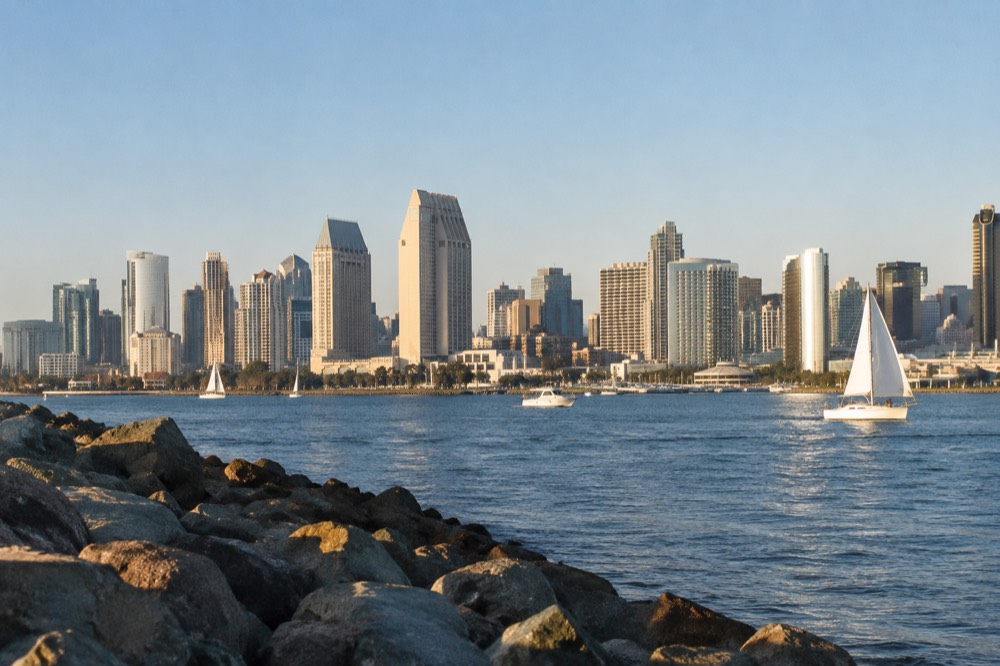
Short answer
A mid-range San Diego trip costs roughly $150 per person per day and up, depending on the room, including one paid attraction, transit, and meals. The Zoo runs $76 adult admission, the USS Midway $39 online, and MTS transit is $2.50 a ride or $6 a day. Budget travelers can cut that sharply because the beaches and Balboa Park grounds are free.
Is San Diego Expensive?
San Diego is expensive at the headline attractions and cheap almost everywhere else, and the gap between those two halves is wider than in most American cities. A one-day Zoo ticket is $76 for an adult, SeaWorld starts from $59.99, and downtown meters charge $2.50 an hour. But the things that define the city, the beaches, Balboa Park's grounds, the Embarcadero, La Jolla's coastline, cost nothing at all. A traveler who plans around the free core and pays selectively for two or three big tickets spends far less than the city's reputation suggests, and the sections below show exactly where the money goes and where it does not have to.
The honest answer depends on what kind of trip you are building. San Diego rewards two specific behaviors: walking, and buying tickets online in advance. It punishes two others: driving downtown, and buying tickets at the gate, where the USS Midway charges $41 at the door against $39 online.
This guide breaks the cost into its real pieces: daily budgets, attraction tickets, getting around, food, passes, and timing. Every figure here comes from official sources, the venues' own ticket pages, the National Park Service, and the MTS fare chart, not from guesswork.
What Does a San Diego Trip Cost per Day?
A mid-range traveler should budget from roughly $150 per person per day, and a budget traveler can hold the line well below that, because the two biggest cost lines, lodging and attractions, are both ones you control directly. The mid-range figure assumes a hotel room in the walkable core, one paid attraction, transit, and restaurant meals. The budget figure assumes a cheaper room further out on the trolley, free attractions, and casual food. Families should add child tickets at roughly two-thirds of adult rates at most venues, plus parking if driving, which at the Zoo now means $16 per vehicle per day.

The lodging line is the one that moves everything. San Diego County received 32.5 million visitors in 2024, split roughly 18.0 million overnight and 14.5 million day visitors, so summer rates in the walkable neighborhoods, the Gaslamp, Little Italy, and the waterfront, climb fast. Staying a trolley stop or two out, in Old Town or Mission Valley, routinely saves a third off the downtown price for the same dates.
The getting-around line deserves its own headline: $6 is the MTS day pass, and it covers the trolley and every city bus. Very few American cities let you see this much for six dollars. Our getting around San Diego guide covers the network in detail.
If your plan is a first visit hitting the classic sights, a narrated hop-on hop-off trolley ticket is one of the few paid transport options that makes financial sense, because it replaces transit and a sightseeing tour in one purchase. Here are the three city tours that give the best cost-to-coverage ratio:
The trolley option runs two full days of hop-on hop-off access across downtown, Balboa Park, and the bay. The GoCar is the splurge alternative for travelers who want to self-drive a route, and the Balboa Park walking tour is the cheapest structured way to see the park's best ground.
How Much Do the Big Attractions Cost?
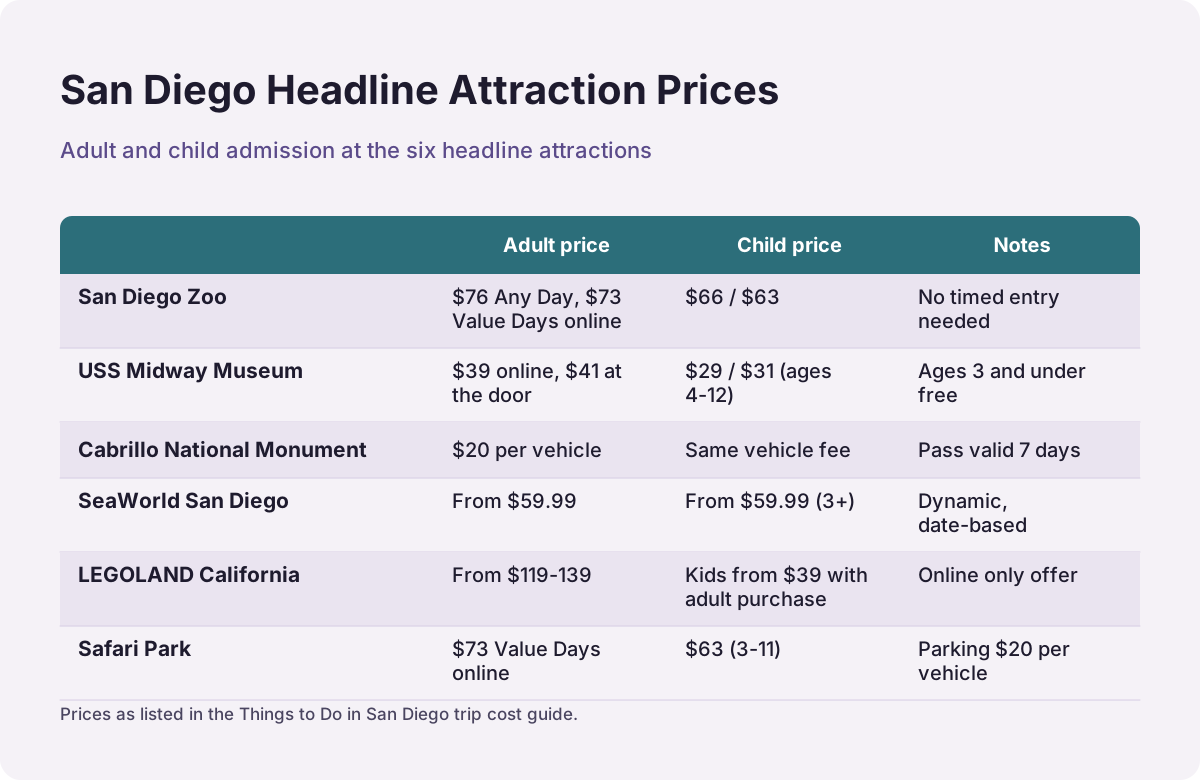
The five headline attractions run from $20 to $139 per adult, and every one of them is either cheaper online than at the gate or priced by date, which means the price you see in a guide may not be the price you pay on your travel day. Cabrillo National Monument is $20 per vehicle, the Zoo is $76 adult, the USS Midway is $39 online, SeaWorld starts from $59.99, and LEGOLAND's dynamic pricing showed starting prices of both $119 and $139 on the official page on the same day. The pattern to plan around: buy ahead, and treat LEGOLAND and SeaWorld prices as date-based, not fixed.

Here are the verified numbers from the venues' own pages:
| Attraction | Adult price | Child price | Notes |
|---|---|---|---|
| San Diego Zoo | $76 Any Day, $73 Value Days online | $66 / $63 | No timed entry needed |
| USS Midway Museum | $39 online, $41 at the door | $29 / $31 (ages 4-12) | Ages 3 and under free |
| Cabrillo National Monument | $20 per vehicle | Same vehicle fee | Pass valid 7 days |
| SeaWorld San Diego | From $59.99 | From $59.99 (3+) | Dynamic, date-based |
| LEGOLAND California | From $119-139 | Kids from $39 with adult purchase | Online only offer |
| Safari Park | $73 Value Days online | $63 (3-11) | Parking $20 per vehicle |
A few details that save real money. The Zoo charges $16 per vehicle for parking, a policy that began in January 2026, so arriving by trolley or bus is now a genuine saving, not just a virtue. The Midway's free categories are unusually generous: children 3 and under and active duty military with ID get in free, and veterans pay $26. Cabrillo's $20 covers everyone in your car for seven days, and the National Park Service accepts America the Beautiful passes, including Senior and Military passes, at the gate.
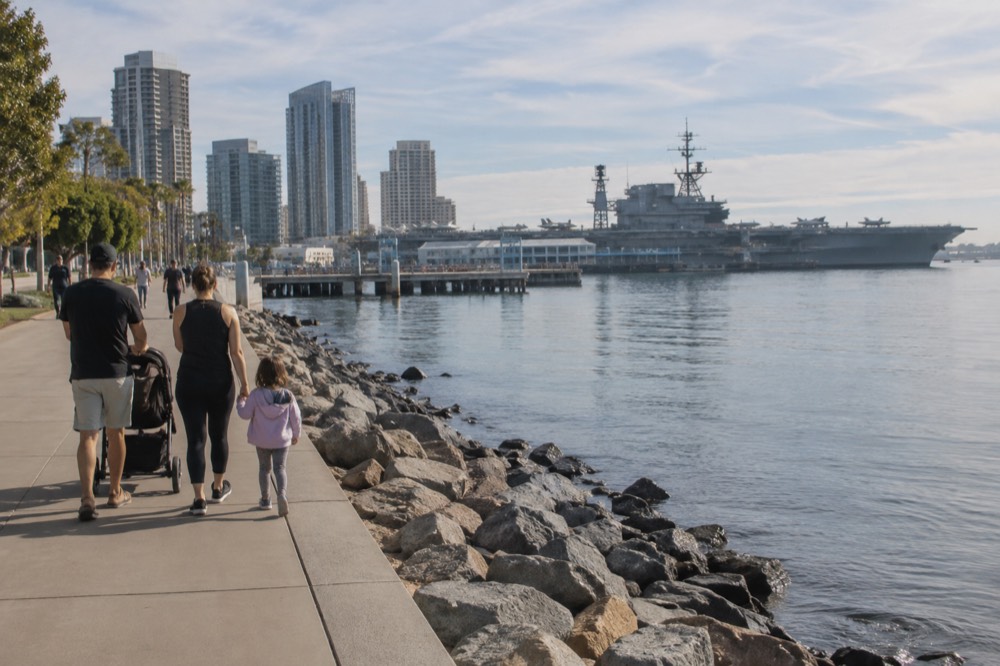
The Midway sits beside several other Embarcadero options that cost nothing to look at, and the USS Midway Museum guide explains how to pair it with the free waterfront. For a fuller comparison of the animal parks, see our San Diego Zoo vs Safari Park breakdown.
One attraction pairs naturally with a paid ticket: the whale watch. More than 20,000 gray whales pass San Diego each year, with mid-January the peak, and a three-hour cruise is one of the few experiences you cannot get free from shore.
If you are set on the trolley-plus-attractions plan, this is the moment to lock it in: the ticket is valid two days, cancels free, and the operator's live listing shows current availability.
Is Getting Around San Diego Expensive?
No, and this is where San Diego undercuts most California cities by a wide margin, because the transit system is cheap, frequent, and shaped around the places a visitor actually wants to go. The MTS fare chart sets a one-way trolley or bus ride at $2.50 with two-hour transfers, and a day pass at $6. The PRONTO card caps fares automatically, so once your rides total the day-pass value, everything after it that day is free. There is no reason to buy a day pass up front. Youth 18 and under ride free entirely on the Youth Opportunity Pass.
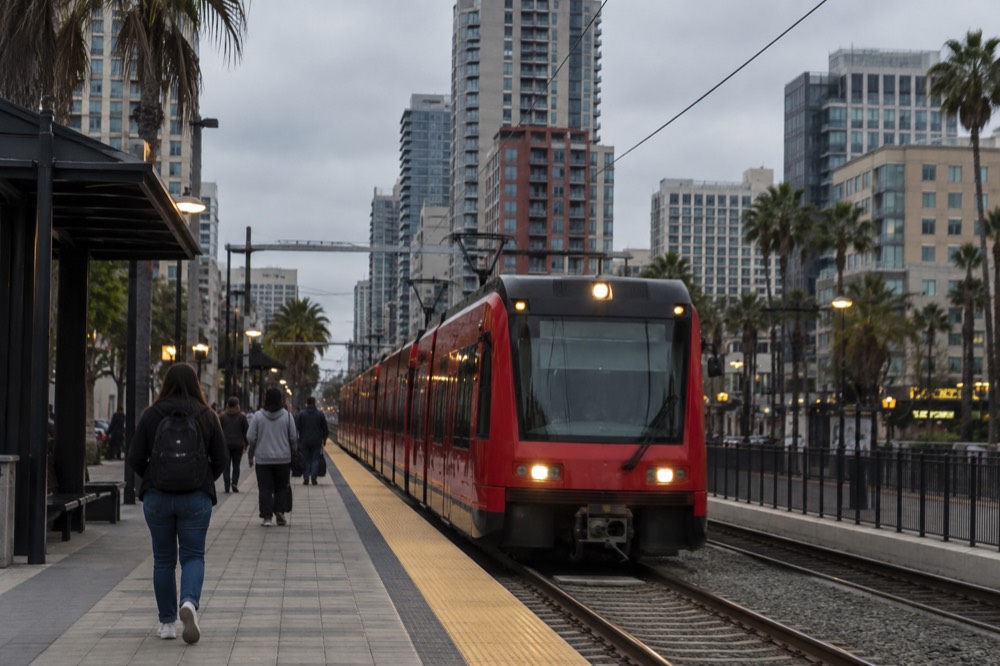
The Blue Line runs from the border at San Ysidro through downtown to UC San Diego, end to end in 1 hour 23 minutes. The airport has no trolley station, but Route 992 runs every 15 minutes from both terminals to the downtown transit interchange for the same $2.50, and the free San Diego Flyer shuttle connects the terminals to Old Town Transit Center.
Parking is the expensive part. Downtown meters run $2.50 per hour, enforced Monday to Saturday and, since recent reforms, in many commercial zones on Sundays too. Balboa Park's paid lots currently charge $8 to $16 a day, but City Council has approved removing paid parking there entirely on 1 January 2027, so check the City's parking page rather than trusting either version of this paragraph. The parking in San Diego guide tracks the details, and ADA parking is free with no time limit in every Balboa Park lot.
The hop-on hop-off trolley is the one paid transport worth weighing against the $6 day pass, because it bundles narration and two-day access into the ride. The official fare chart is published by MTS at the agency's fare page.
What Is Free in San Diego?
The city's best assets are free: every beach, Balboa Park's grounds and gardens, the Botanical Building, the Timken Museum, and the Sunday organ concerts, and that list is long enough to build entire trip days from without a single ticket purchase. The park grounds, gardens, and trails carry no admission at all. The Botanical Building and Lily Pond are free after their restoration, open roughly 10:00 am to 4:00 pm daily except city holidays. The Timken Museum of Art is always free, and the Spreckels Organ Pavilion runs free one-hour concerts every Sunday from 2:00 to 3:00 pm, year round, rain or shine.
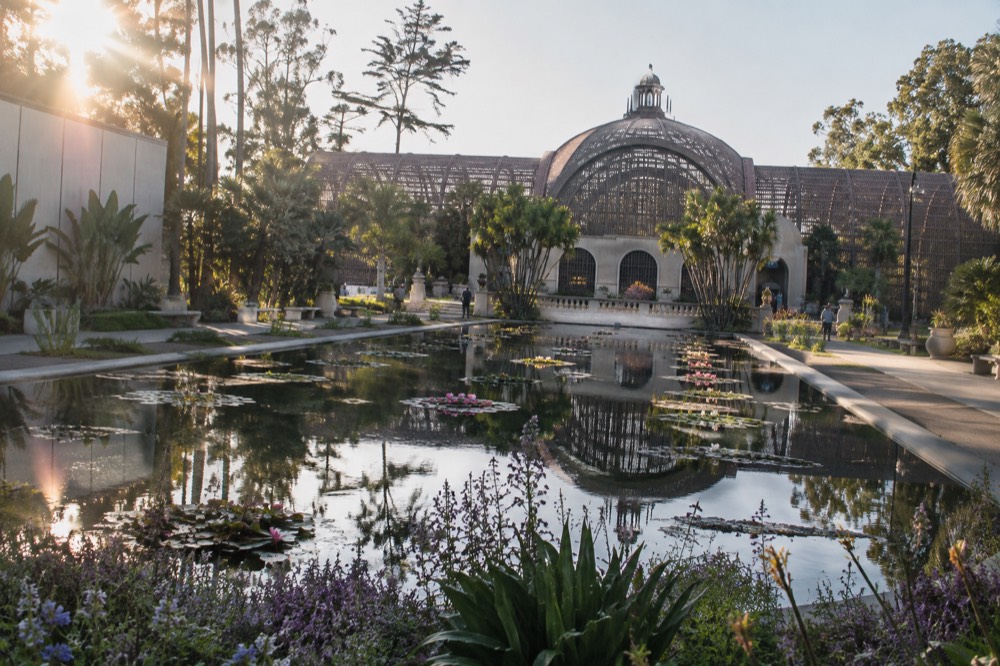
The free list runs long enough to build whole days from. Sunset Cliffs, La Jolla Cove, Torrey Pines' beach and the trail network, Ocean Beach Pier, Mount Soledad's viewpoint, and the Embarcadero walk from Seaport Village to the Midway all cost nothing. Our free things to do in San Diego guide is a full itinerary of them, and the cheap things to do roundup adds the near-free layer.
One caution that trips up visitors: Balboa Park's famous free Tuesdays are a residency benefit, not a visitor perk. The rotating free admission applies to residents of the City and County of San Diego plus active military and their dependents, with photo ID showing an address. If you are visiting from out of town, that program does not apply to you, and the museums' regular admission stands.
The museums themselves are mostly not bookable through tour sellers at all. Fleet Science Center, the Air and Space Museum, the Museum of Art, the Museum of Us, and theNAT sell official-only tickets, so buy those at the gate or on the venues' own sites. The Balboa Park museums guide has the full rundown.
Is Food Expensive in San Diego?
Restaurant meals run close to any big US city, but San Diego's taco and brewery culture makes eating well cheap unusually easy, which is a genuine structural feature of the city rather than a happy accident of a few cheap spots. A sit-down dinner in the Gaslamp or Little Italy runs what you would expect downtown anywhere. But the city's defining food, the fish taco, sells for a few dollars from counters in Ocean Beach, Logan Heights, and North Park, and lunch at a taco shop is a $10 to $15 affair that beats most tourist menus on quality.

A few structural facts help. Alcohol is prohibited on the city's beaches and boardwalks, so the picnic-and-sunset dinner is a legal, cheap classic. The farmers market scene is strong enough that a self-catering traveler eats very well, and our San Diego farmers markets guide maps the weekly rotation. For the cheap-eats shortlist, the best tacos in San Diego guide is the one to read before booking anything.
Food tours are the one food expense worth a hard look, because they convert a dinner budget into a guided sweep of a neighborhood. The Gaslamp Quarter food and drink walking tour runs 2 hours 30 minutes and covers several stops that would cost more piecemeal.
Do Attraction Passes Actually Save Money in San Diego?
Sometimes, and the difference between the passes is the whole game, because the two main products cover completely different attraction sets and a pass only pays off when your pace honestly matches its window. The San Diego CityPASS runs $169 to $239 per adult depending on the package and is valid 9 consecutive days. Go City's standard All-Inclusive Pass starts at $99 for one adult day but does not include the Zoo, Safari Park, SeaWorld, LEGOLAND, or Knott's, those five only come with the pricier Plus tier. The Balboa Park Explorer Pass, from $66 for a day, covers the park's museums but not the Zoo.
The arithmetic only works if you honestly count your pace. A pass pays off when you hit three or more covered attractions in its window. Two attractions, buy the tickets individually. The Go City San Diego pass guide works the numbers attraction by attraction, and the CityPASS listing shows the current packages:
One trap worth naming: the Zoo and Safari Park sell their own 2-Visit Pass at $128 adult against a $152 list price, which can beat the multi-attraction passes if those two parks are your whole animal plan.
When Is San Diego Cheapest to Visit?
September is the city's best-kept value window, and the data is strange enough to be worth trusting, because the warmest-adjacent month of the year is also the emptiest one on the coast. September's normal high, 77.2°F, actually beats July's by 1.9°F and sits a tenth of a degree behind August's, and the ocean at La Jolla averages 67.6°F, warmer than July's 66.5°F. Yet September was the single lowest visitation month at Cabrillo National Monument across 2022 to 2024, with 56,876 visits against July's 83,999, a 48 percent gap. You get the warmest water and the emptiest trails, at shoulder-season prices.
The other timing facts that move cost: June's normal high, 71.7°F, is lower than October's 74.6°F, because the marine layer locals call May Gray and June Gloom greys the coast in late spring while inland stays clear. And rain is a winter phenomenon, with December through March carrying most of the year's precipitation and August essentially dry.
Hotel rates track the visitation curve, not the weather curve. The best time to visit San Diego guide lays out the month-by-month tradeoffs, and the San Diego budget itinerary shows how to run a low-cost week in any season.
What Does a Full 3-Day San Diego Trip Cost?
A realistic 3-day trip for one adult, mid-range, runs from a few hundred dollars in the budget build to well past that once you add a downtown room, and the spread between the two builds is almost entirely lodging and ticket choices rather than food or transport. The mid-range build assumes two paid attractions, a trolley or transit pass, one food tour or cruise, and a room in the walkable core. The budget build assumes a cheaper room further out on the trolley, the free core of the city, one headline ticket, and taco-counter meals.
| Line item | Budget 3-day | Mid-range 3-day |
|---|---|---|
| Lodging | Varies by season, cheapest on the trolley lines | The single biggest line, downtown core |
| Attractions | $39-$76, one headline ticket | $150-$230, Zoo plus Midway plus a cruise |
| Food | $10-$15 lunch counters, picnic dinners | Restaurant meals in the walkable core |
| Getting around | $18, three MTS day passes | $18-$60, day passes plus one tour ride |
| Extras | Free waterfront and beaches | Food tour or harbor cruise |
Two levers bend the total more than any others. First, the room: dropping from a Gaslamp waterfront-adjacent hotel to an Old Town or Mission Valley property saves a large share of the nightly rate with no loss of access, since both sit on the trolley. Our where to stay in San Diego guide ranks the neighborhoods by value. Second, the ticket mix: the Zoo plus Cabrillo plus the free waterfront is a world-class 3 days for under $100 in admission per adult.
For first-time visitors who want the structure handled, the first time in San Diego guide sequences exactly this kind of budget build, and the one day in San Diego plan shows the cheapest viable single day.
The trolley, GoCar, and walking tours below are the three paid experiences that most reliably earn their price on a short trip, whether you are seeing the city once or building a full week around them:
Common Questions About San Diego Trip Costs
Is San Diego expensive?
San Diego is expensive at the headline attractions, with Zoo admission at $76 and LEGOLAND from $119, but cheap in its core. The beaches, Balboa Park's grounds, and the waterfront are free, and MTS transit is $2.50 a ride or $6 a day. A mid-range traveler spends from roughly $150 per day; a budget traveler can hold well below that.
How much should I budget per day in San Diego?
Budget from roughly $150 per person per day for a mid-range trip covering a hotel, one paid attraction, meals, and transit. Budget travelers can manage well below that by staying outside the downtown core, eating at taco counters, and building days around the free beaches and parks.
What is the cheapest way to get around San Diego?
The MTS trolley and buses. A one-way ride is $2.50 with two-hour transfers and a day pass is $6, and the PRONTO card caps fares automatically so you never overpay. The airport connects free via the San Diego Flyer shuttle to Old Town, and Route 992 runs to downtown for $2.50.
Is parking expensive in San Diego?
Downtown meters run $2.50 per hour, and the Zoo charges $16 per vehicle per day. Balboa Park's lots currently cost $8 to $16 a day, but City Council has approved removing paid parking there on 1 January 2027, so check the City's page before you go. Beach parking is free where you can find it, which in summer is the real problem.
Do I need a car in San Diego?
Not for a downtown-and-Balboa-Park trip. The trolley covers downtown, Old Town, Balboa Park's edge, and the border, and the day pass is $6. A car only pays for itself on trips to Julian, Anza-Borrego, or Temecula, which is why our day-trip pages, not the downtown ones, recommend renting.
When is San Diego cheapest to visit?
September. It is the warmest-adjacent month, with a normal high of 77.2°F that beats July's, and the ocean near La Jolla averages 67.6°F, yet it was the lowest-visitation month at Cabrillo National Monument across 2022 to 2024. Shoulder-season rates plus empty trails make it the value window.
Planning a trip around the numbers is exactly what Things to Do in San Diego is for, and the budget itinerary above is the natural next page.