Balboa Park Explorer Pass and Museum Guide: What's Worth Buying
Balboa Park holds more than a dozen museums inside one of the largest urban parks in the country, and almost none of them sell tickets through this site. Here is how to figure out what to buy, what to skip, and what is free.
Short answer
The Balboa Park Explorer Pass costs $66 for a 1-day adult pass, $78 for a 7-day Parkwide pass and $149 for an annual pass, and covers 16 participating venues but not the San Diego Zoo. The park grounds, gardens, the Botanical Building and the Timken Museum of Art are always free. Resident free Tuesdays are a benefit for San Diego residents and active military only.
Balboa Park is a huge urban park holding roughly 16 museums and cultural venues, plus a zoo, gardens, an outdoor organ pavilion and a set of Spanish Colonial buildings that were built for a world's fair and never taken down. It is the cultural center of the city, and it is also the single most confusing place to buy tickets in San Diego. Some museums are cheap, some are surprisingly expensive, several are free, one pass covers most of them, and none of the big museums sell through tour platforms at all.
This guide sorts all of it out. It covers how the Balboa Park Explorer Pass actually works, which museums are worth your money, the resident free-day rotation that gets misread constantly, and the parts of the park that cost nothing. If you are planning a wider trip, our one day in San Diego itinerary slots Balboa Park into a full first day, and our Balboa Park overview covers the gardens and grounds side of the park.
How Many Museums Are in Balboa Park?
Balboa Park holds about 16 museums and cultural venues, spread across the Central Mesa around the Prado, plus satellite institutions toward the park's edges. The headline cluster includes the San Diego Museum of Art, the Fleet Science Center, the San Diego Natural History Museum, the Air and Space Museum, the Museum of Us, the Mingei, the Comic-Con Museum and the Japanese Friendship Garden. No single ticket covers the whole park, and the San Diego Zoo sits inside the grounds but is ticketed completely separately.
The honest first step is accepting that you will not see all of them. Even the most efficient museumgoer manages three or four institutions in a day, and that is with lunch on a bench in between. The park is long north to south, and while the core museums cluster within a ten minute walk of one another near the Plaza de Panama, the Air and Space Museum and the Automotive Museum sit further east, and the Japanese Friendship Garden sits below the Organ Pavilion. Distances are walkable but they add up, especially in the middle of the day.
The mix is unusually wide for a single park. You have a serious art museum, a planetarium-style science center aimed at kids, a natural history museum with dinosaurs and a working research staff, a folk art museum, an anthropology museum in the California Tower, a model railroad museum that is genuinely beloved by adults, and a comic art museum that leans hard into the city's convention identity. There is also the Old Globe theatre, which is a working professional theater complex rather than a museum, though it participates in the park's free-day rotation with behind-the-scenes tours.
A practical way to triage is by who you are traveling with. Families with kids under about 10 gravitate to the Fleet Science Center and theNAT, and the model railroad museum is a quiet win with that same crowd. Adults traveling without kids tend to get the most out of the San Diego Museum of Art, the Mingei and the Museum of Us. The Air and Space Museum is the big-spectacle pick, with actual aircraft inside a giant hall, and it is the one to choose if your group has mixed ages and you need something everyone agrees on.
Is the Balboa Park Explorer Pass Worth It?
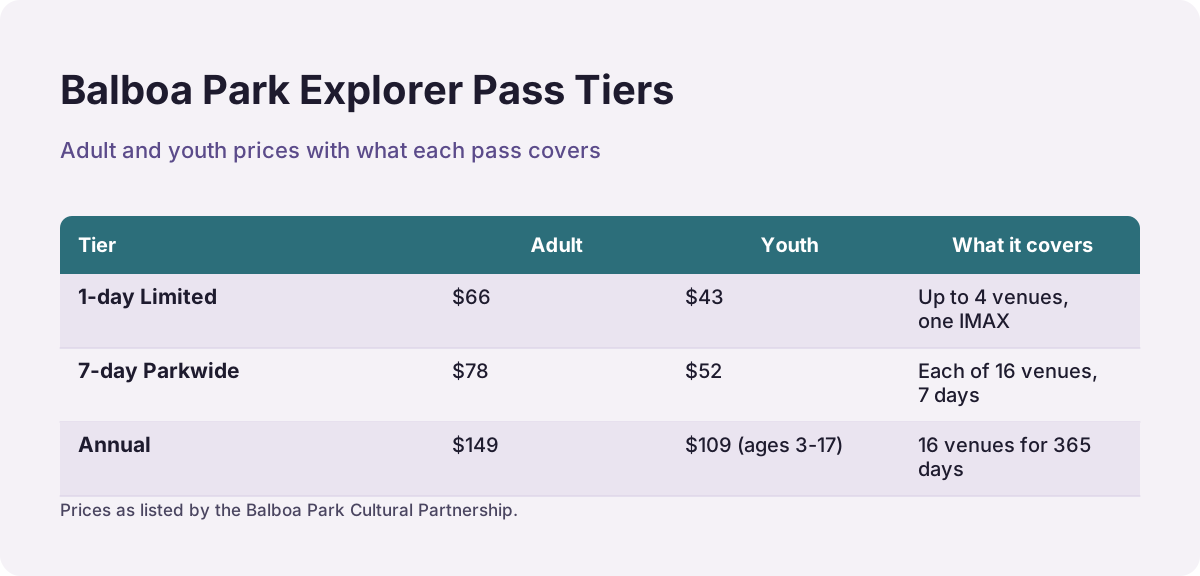
The Explorer Pass is worth it if you plan to visit three or more participating venues in a short window. The 1-day adult pass costs $66 and individual museums typically charge $25 to $30 at the door, so two museums roughly breaks even and four in a day pays for itself clearly. The 7-day Parkwide pass at $78 adult is the better buy on a multi-day trip, covering one admission to each of 16 venues over seven consecutive days.
The pass is sold by the Balboa Park Cultural Partnership, the nonprofit that runs the park's cultural institutions, and it exists precisely because the museums are otherwise a wall of separate ticket counters. It does not include the San Diego Zoo, which has its own ticketing, and it does not include special exhibitions or films at every venue. The 1-day Limited tier covers one admission to up to four participating venues on the day of first use, and it includes one IMAX documentary at the Fleet Science Center, though major IMAX releases are excluded.
Here is the full tier structure:
| Tier | Adult | Youth 3-11 | What it covers |
|---|---|---|---|
| 1-day Limited | $66 | $43 | Up to 4 participating venues in one day, plus one IMAX documentary at the Fleet (major releases excluded) |
| 7-day Parkwide | $78 | $52 | One admission to each of 16 venues, valid 7 consecutive days from first use |
| Annual | $149 | $109 (ages 3-17) | Unlimited general admission to 16 venues for 365 days; senior 65+ and college students with ID $109 |
The annual tier looks expensive until you do the math on a family: the family option, two adults plus up to four children, starts at $259, which is less than four 7-day Parkwide passes. That tier only makes sense if you live here or visit repeatedly within a year, but for locals it is one of the better cultural deals in California.
The pass also stacks with the free-day rotation in a way most visitors miss: residents get free Tuesdays at rotating museums, and the pass covers the venues that are not free that week. If you qualify for the resident benefit, you would rarely buy a 1-day pass at all. Everyone else, meaning the overwhelming majority of readers, is choosing between the 1-day and the 7-day, and the 7-day wins unless your trip is genuinely one day long.
One warning that trips people up: the Explorer Pass covers general admission, and several museums hold back their best content behind separate charges. Special exhibitions at the art museum, films at the Fleet and theNAT beyond the included documentary, and tower tours at the Museum of Us are all add-ons. Budget for the possibility of one or two of those even with the pass in hand.
A pass also does not solve the seeing-the-park problem. The museums are spread out enough that a first-time visitor spends real time orienting, and that is where a guided format earns its keep. These three are the formats that work inside the park:
Which Balboa Park Museums Can You Book Online, and Which Are Gate-only?
The big Balboa Park museums, including the Fleet Science Center, the Air and Space Museum, the San Diego Museum of Art, the Museum of Us and the Natural History Museum, do not sell through tour platforms at all. Their tickets are bought at the door or through the museums' own channels. What you can book ahead for the park are guided experiences: walking, e-bike and Segway tours, plus the Zoo ticket, which is sold separately.
This is worth stating plainly because the internet is full of pages implying you can bundle the museums. You cannot, at least not through the platforms travelers usually use. The Explorer Pass is the closest thing to a bundle, and it is sold by the park partnership itself. For individual museums, you buy at the gate, and in practice the lines move quickly except during December Nights and major special exhibition openings.
What is bookable through this site is the guided layer, and it is a genuinely good layer here. The two hour walking tour of Balboa Park with a local guide is the format we recommend most for first visits, because a guide who knows the park solves the orientation problem in the first twenty minutes and the architecture and history of the Prado buildings are better with narration than without. You can also Check availability for the guided walk before you commit your day to it.
For the museums themselves, here is what is confirmed on pricing. Note that we deliberately do not list prices for the Fleet Science Center, the Air and Space Museum, the Museum of Us or the Japanese Friendship Garden, because their admission figures are not published in a form we can verify, and we will not guess:
| Venue | Confirmed admission | Notes |
|---|---|---|
| San Diego Museum of Art | Adults $25, seniors 65+ $15 | Youth 17 and under free; students with ID free; active and retired military plus one guest free; sculpture garden free |
| San Diego Natural History Museum (theNAT) | Adults $24.95, youth 3-17 $16.95 | Ages 2 and under free; films included in general admission; Nat at Night is half price Fridays after 5:00 pm |
| Museum of Us | On the listing at the door | California Tower tours are $10 even on the venue's free resident day |
| Fleet Science Center, Air and Space Museum, Japanese Friendship Garden | Buy at the gate | Prices are not published in a verifiable form, so we do not print them |
The San Diego Museum of Art is the best pure value among the paid museums for adults, largely because of how many people in a typical group get in free: kids, students and military all walk past the ticket counter. The theNAT is the best value for families with young kids, since admission includes the films, and the Friday evening Nat at Nights half-price window is a genuinely pleasant way to see the place, quieter and cooler than midday.
If you are deciding between the Explorer Pass and buying two or three museum tickets at the door, count your party first. A family of two adults and two kids under 12 pays $166 for a 7-day Parkwide pass, or roughly $100 for a single museum visit for four at the art museum's family pricing. The pass wins the moment you add a second or third venue, and the pass loses for a solo adult who only wants one museum.
When Are Balboa Park Museums Free?
Balboa Park museums are free on a rotating Tuesday schedule, but only for residents of the City and County of San Diego, active military and their dependents, with photo ID showing an address required at the door. There is no free-day program for regular visitors from out of town. The rotation runs first through fourth Tuesdays with a different set of museums each week, excludes special exhibitions and films, and pauses entirely in December.
This is the single most misread fact about the park, and half the travel content on the internet states it as "free Tuesdays" without the residency requirement. If you are visiting from Los Angeles, Phoenix or anywhere else, the rotation does nothing for you. It exists as a community benefit, funded on the logic that locals subsidize the park through taxes and should get access to their own institutions.
For those who do qualify, here is the current rotation, straight off the park's official resident free days page:
| Tuesday | Free museums and venues |
|---|---|
| First | Fleet Science Center (no films); theNAT (no films) |
| Second | Air and Space Museum (no special exhibitions); Veterans Museum; Comic-Con Museum |
| Third | San Diego Museum of Art (no special exhibitions); Japanese Friendship Garden; Mingei International Museum; The Old Globe (free one-hour behind-the-scenes tours, ages 8+, subject to availability and registration) |
| Fourth | Automotive Museum; Museum of Us (California Tower tours still cost $10) |
| Fifth Tuesday of a month | Regular admission everywhere |
| Second Thursday | Model Railroad Museum |
Even the resident program has carve-outs that catch people. The Japanese Friendship Garden skips its free day in March, when it shifts to the first Tuesday. The Automotive Museum skips September and December. The Museum of Us free day does not include the California Tower tour, which stays at $10, and the tower is the reason many people go to that museum in the first place. Free admission covers permanent collections only, so a marquee traveling exhibition at the art museum will still charge.
What Is Always Free in Balboa Park?
The park grounds, gardens and trails are always free, and so are the Botanical Building and Lily Pond, the Timken Museum of Art, the weekend Lawn Programs at the International Cottages, and the free one-hour Spreckels Organ Pavilion concerts held every Sunday from 2:00 to 3:00 pm, year round, rain or shine. You can spend an entire excellent day in Balboa Park without buying a single ticket.
The Timken is the quiet secret in that list. It is a small, serious museum of European old masters and American painting, it charges nothing, and it sits right on the Plaza de Panama in the middle of everything. Visitors walk past it on their way to buy tickets at the art museum next door. If your budget is tight, the honest pairing is the Timken plus the free gardens, and you have seen world-class art and the park's best architecture for zero dollars. The full index of guides sits on Things to Do in San Diego.
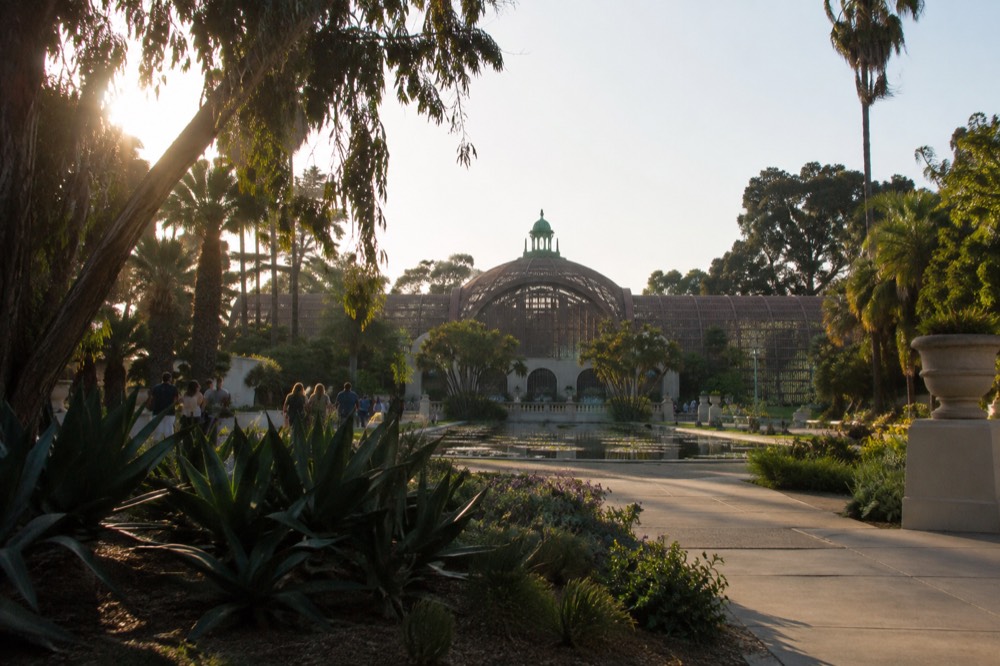
The Botanical Building is the other must-see freebie. It is one of the largest lath structures in the world, a soaring wood-slatted greenhouse holding a vast plant collection, and it frames the lily pond that appears in half the photographs ever taken of San Diego. It reopened after a restoration and keeps hours of roughly 10:00 am to 4:00 pm daily except city holidays, so it is a morning-or-lunch stop rather than an evening one.
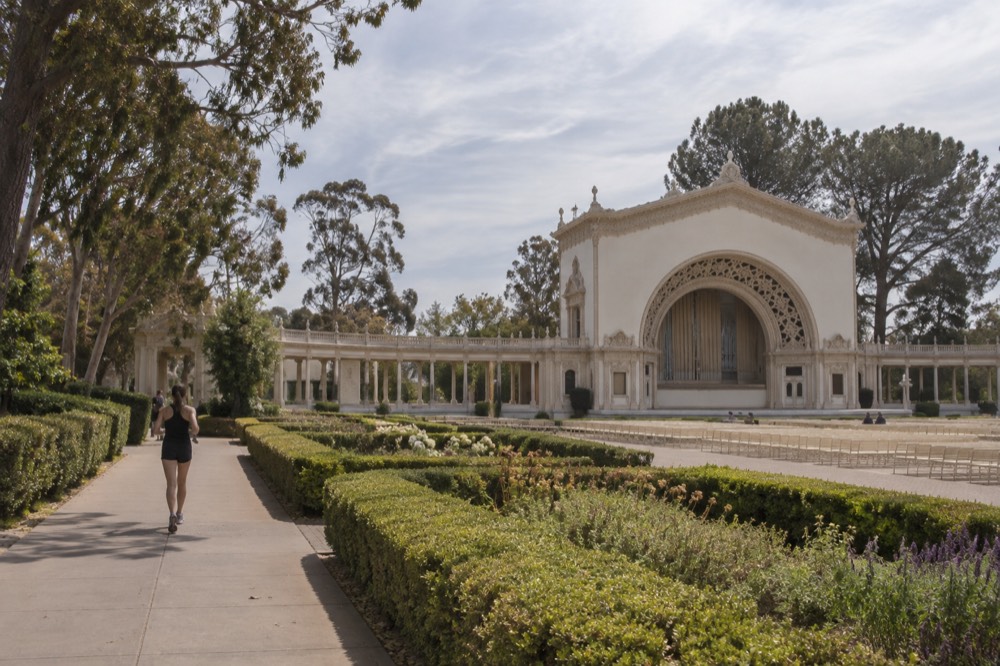
The Sunday organ concert deserves more attention than it gets. The Spreckels Organ is one of the largest outdoor pipe organs in the world, the concerts are genuinely free with no ticket or reservation, and they happen every single Sunday afternoon regardless of weather. Locals bring folding chairs and lunches. If your trip includes a Sunday, this is the single best free hour in the park, and it pairs naturally with the Lawn Programs at the International Cottages on the same weekend afternoons, where the cottage houses representing different nations put on music and food events.
Beyond those, the grounds themselves are the attraction. The Cabrillo Bridge approach, the Alcazar Garden, the desert garden, the walking trails through the canyons on the park's east side, all of it is open and free. Our free things to do in San Diego guide covers the park's free layer in more depth alongside the rest of the city.
How Do You Get Around Balboa Park?
The free park tram runs 8:00 am to 8:00 pm and loops the main lots and museum core, and the museum core itself is entirely walkable, with the Prado, the Plaza de Panama and the Organ Pavilion all within ten minutes on foot of one another. The outliers, the Air and Space Museum, the Automotive Museum and the Japanese Friendship Garden, each sit a 10 to 15 minute walk from the center.
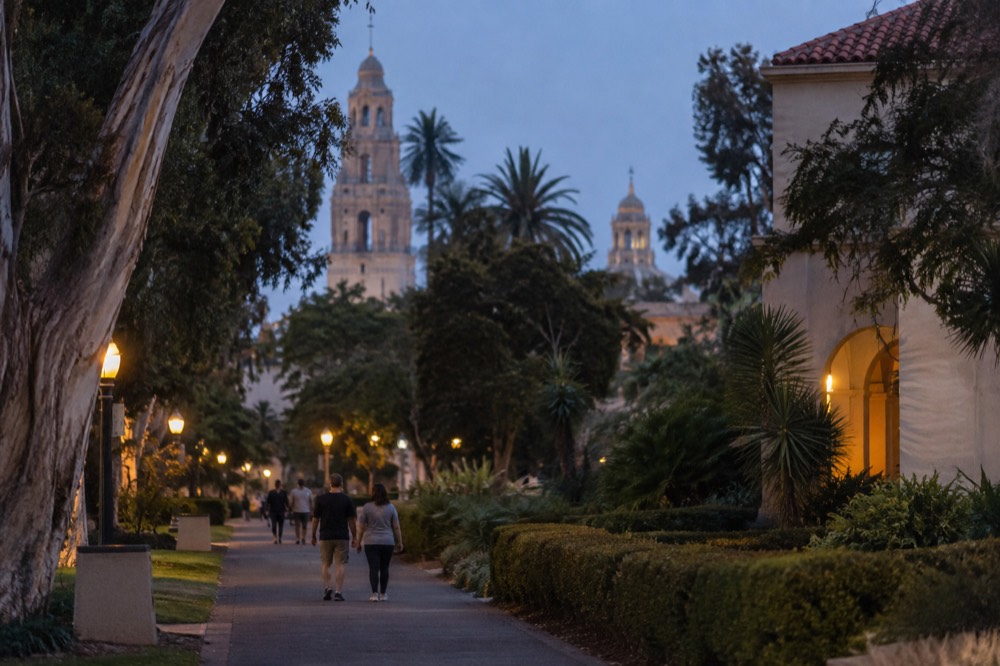
Walking is the right answer for most people, and the museum core rewards it. The Prado, the central promenade lined with the park's most photogenic buildings, is pedestrian, and the whole central mesa is laced with arcades, gardens and side paths that a vehicle would only skip. Plan on walking two to three miles across a full museum day, and wear shoes that agree with that.
The tram matters mostly for parking. While paid parking is still in force in the park, the outer lots are the cheaper or free ones, and the tram connects them to the center every few minutes during its operating window. If you park at the Zoo lot or at the far east lots, the tram saves you a half mile each way. It is free, needs no ticket, and runs on a loop with stops at the major destinations.
For a faster, narrated pass over the whole park, the private Segway tour is the format that covers the most ground. It runs two hours with a private guide, which means the route flexes to what you want to see, and it is the one format that comfortably reaches the outliers as well as the core. It is also the pick for teenagers, who tolerate museums for about ninety minutes and then need something that moves.
The e-bike option splits the difference between walking and the Segway. The guided e-bike tour covers Balboa Park and the Gaslamp Quarter in two and a half hours, which makes it the right choice if you want the park and downtown in one outing rather than a deep museum day. The hills between the park and downtown are exactly the terrain e-bikes were invented for, and Balboa Park sits high enough above the Gaslamp that a regular bike tour of the two is a genuinely sweaty proposition.
How Much Time Do You Need for the Balboa Park Museums?
A half day, roughly four hours, covers two museums plus the free highlights like the Botanical Building and the Timken, walked at a normal pace. A full day covers three to four museums plus gardens and lunch, and that is the sweet spot for most visitors. Two days is the right budget if you want the museums plus the Zoo, since the Zoo alone absorbs most of a day, or if you are traveling with kids whose museum stamina runs short.
The sequencing matters more than the count. Start at whichever museum opens your interest most, because the morning is when your attention is worth the most, then break for the free layer at midday when the museums are most crowded, then finish with a second museum in the late afternoon when crowds thin. The theNAT's Nat at Nights on Fridays gives you a late option, and the art museum's sculpture garden is a good free decompression stop at any hour.
For families, the realistic day is two paid venues, not four. The Fleet Science Center alone can absorb a full morning with kids, and the model railroad museum is a compact 45-minute stop that pairs well with lunch. If the children are small, one museum plus the Botanical Building plus the playground time is a complete and happy Balboa Park day, and pushing past that tends to end in tears rather than culture.
Here is a comparison of the realistic day shapes:
| Day shape | Time | What fits | Best for |
|---|---|---|---|
| Half day | 4 hours | Two museums plus Botanical Building and Timken | Travelers with a full city itinerary |
| Full day | 7-8 hours | Three to four museums, gardens, lunch on the Prado | First-time visitors |
| Full day plus Zoo | Not recommended | The Zoo alone takes most of a day | Split across two days instead |
| Two days | 2 days | Museums one day, Zoo the next | Families and museum lovers |
If you are folding the park into a bigger trip, our San Diego 3-day itinerary gives the museums a full day and our San Diego 2-day itinerary compresses it into a half day with the walking tour doing the heavy lifting. Both work; the only real mistake is trying to do the museums and the Zoo in the same day and doing both badly.
Where Do You Park for the Balboa Park Museums, and What Does It Cost?
Balboa Park parking is paid right now at $8 to $16 a day depending on the lot and residency, with non-residents paying $16 a day at the premium lots closest to the museums, but City Council has approved removing paid parking entirely on 1 January 2027, after which the lots go free. Residents get discounted or free rates but must register online in advance, since the discount is not available at the kiosk. ADA parking is free with no time limit in every lot and at every meter.
The lot tiers are straightforward once you see them. The premium Level 1 lots, the ones ringing the museum core, cost non-residents $16 a day or $10 for four hours. The general Level 2 and Level 3 lots further out cost non-residents $10 a day, and Lower Inspiration Point gives the first three hours free. Residents pay $8 at the premium lots and park free at the outer lots, but only after registering their vehicle online beforehand, a step that trips up plenty of locals who assume the kiosk will sort it out.
The practical advice for visitors is unchanged by the rates: park at the outer lots and ride the free tram. Lower Inspiration Point is the best combination of cheap and connected, and the tram that runs 8:00 am to 8:00 pm closes the distance to the Prado in a few minutes. Arriving before 10:00 am matters more than which lot you choose, because the premium lots fill on weekends and event days regardless of price. We cover the whole city picture, including the downtown meters at $2.50 an hour, in our parking in San Diego guide.
After 1 January 2027, every sentence about paid parking in the park becomes false, so treat any rate you read anywhere, including ours above, as having an expiry date. The passes are already winding down on a schedule, with monthly passes ending 30 November 2026 and quarterly passes ending 30 September 2026, which is the administrative confirmation that the program is genuinely being retired rather than reshuffled.
What Is the Best Plan If You Only Have One Day for the Museums?
Buy the 1-day Limited Explorer Pass at $66 adult if you will hit three or four venues, start at the San Diego Museum of Art or theNAT when they open, break at midday for the Botanical Building and the Timken, both free, then finish with a second paid museum in the late afternoon and the Sunday organ concert if it is a Sunday. Book a morning walking tour on a separate day, or skip the pass entirely and do two museums at the door if your group is small.
The single-day plan works because the park's geography cooperates. The art museum, the Timken, the Botanical Building and the Mingei all sit within a two minute walk of the Plaza de Panama, so the middle of your day, the part where energy dips, is exactly when you are moving between the closest-spaced venues. Save the Air and Space Museum, the long walk east, for either the morning when legs are fresh or the very end when you are walking back toward the outlying lots anyway.
December changes the calculus completely. During December Nights, the park's huge two-day holiday festival, the museums open free or discounted in the evenings and the whole park turns into a light-and-crowd spectacle. Our December Nights in Balboa Park guide covers that weekend, and if your trip lands on it, plan for crowds rather than museum depth. The resident free-day program also pauses in December, so none of the usual Tuesday rotation applies that month.
Whatever shape your day takes, the guided layer is the part worth booking ahead, because the tour time slots, especially the private Segway and the small-group walks, fill on weekends while the museums never sell out. A two hour guided walk in the morning followed by an afternoon of museums you chose yourself, using the guide's recommendations, is the pattern we would hand to a friend.
Common Questions About Balboa Park Museums
Is the Balboa Park Explorer Pass worth it?
Yes, if you will visit three or more participating venues. The 1-day Limited pass is $66 adult and the 7-day Parkwide pass is $78 adult, against roughly $25 to $30 at the door at the major museums, so the break-even point is around two venues and the pass clearly wins from three up. It does not include the San Diego Zoo, and it does not cover special exhibitions or most films.
When are Balboa Park museums free?
On a rotating Tuesday schedule, but only for residents of the City and County of San Diego, active military and their dependents, with photo ID showing an address required. First Tuesdays cover the Fleet Science Center and theNAT, second Tuesdays the Air and Space Museum and Comic-Con Museum, third Tuesdays the art museum, Japanese Friendship Garden and Mingei, and fourth Tuesdays the Automotive Museum and Museum of Us. Out-of-town visitors do not qualify.
Can you buy Balboa Park museum tickets online?
Not through tour platforms. The major museums, including the Fleet Science Center, the Air and Space Museum, the San Diego Museum of Art, the Museum of Us and theNAT, sell at the door or through their own channels, and this site does not carry their tickets. The Explorer Pass, sold by the park partnership, is the closest thing to a bundle. Guided tours of the park, and the Zoo ticket, are the bookable products.
What is free in Balboa Park without any ticket?
The park grounds, gardens and trails, the Botanical Building and Lily Pond, the Timken Museum of Art, the weekend Lawn Programs at the International Cottages, and the free Sunday organ concerts at the Spreckels Organ Pavilion, 2:00 to 3:00 pm every week of the year, rain or shine.
How many museums should you see in one day at Balboa Park?
Three is the realistic maximum for a full day, four if you move fast and skip the gardens. Most visitors do best with two paid museums plus the free highlights, the Botanical Building and the Timken, broken up with lunch. Families with young kids should plan on one or two paid venues at most.
Does the Balboa Park Explorer Pass include the San Diego Zoo?
No. The Zoo is operated by the San Diego Zoo Wildlife Alliance and ticketed completely separately from the park's cultural institutions, and the Explorer Pass covers none of it. If you want both, budget the Zoo as its own day, and our San Diego Zoo tickets guide covers that side separately.