December Nights at Balboa Park: A Complete Visitor Guide
December Nights is Balboa Park's biggest weekend of the year, when the museums stay open late, the organ pavilion plays, and half of San Diego shows up. Here is how to actually enjoy it.
Short answer
December Nights is Balboa Park's annual holiday festival, held over an early-December weekend when museums offer discounted or free evening entry and the park fills with lights, food stalls and performances. Balboa Park parking runs $8 to $16 per day for now, but paid parking is scheduled to end on 1 January 2027, and the free park tram runs 8:00 am to 8:00 pm.
December Nights turns Balboa Park into the single busiest weekend on San Diego's cultural calendar. Museums that normally close at 5:00 pm stay open into the evening, food vendors line the Plaza de Panama, and the Spreckels Organ Pavilion hosts performances under strings of lights. It is genuinely one of the best free things to do in San Diego, but it demands planning: parking, timing and museum strategy all change when a quarter of the city descends on one park.
This guide covers what the festival actually is, how to get there without losing an hour, what the museums cost during the event, and what you can do in the park that costs nothing at all.
What Is December Nights at Balboa Park?
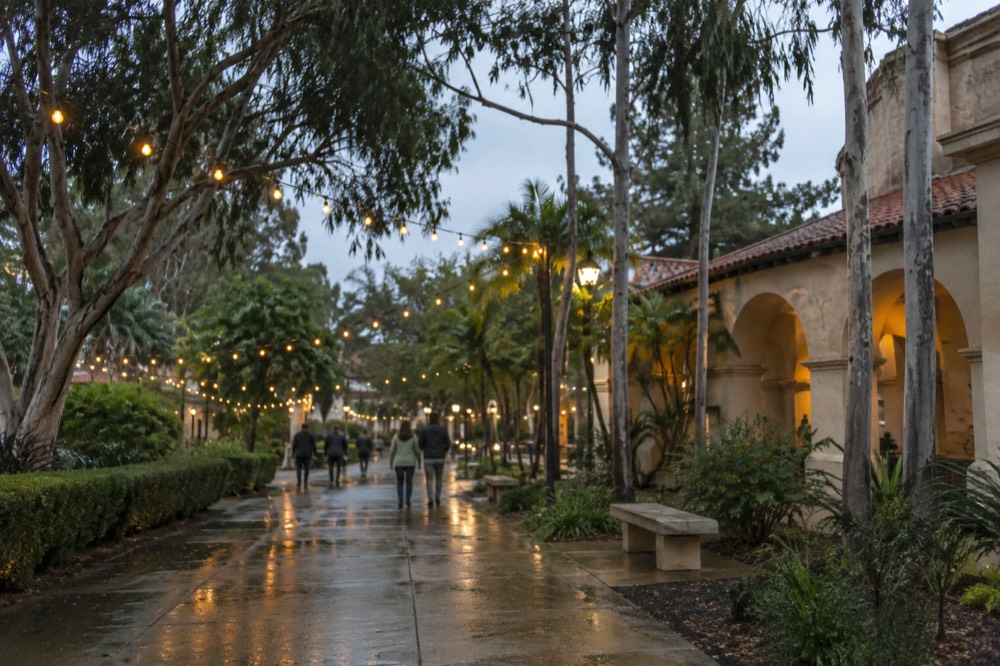
December Nights is Balboa Park's annual holiday festival, a weekend-long celebration in early December when participating museums open their doors in the evening, often with discounted or free admission, while the park itself fills with food vendors, craft booths, live music and holiday lights. The park grounds, gardens and trails are always free, so the festival's lights and outdoor entertainment cost nothing to enjoy, and the museum buildings are the part you pay for, at rates each venue sets for the event. It is the one weekend of the year when Balboa Park feels less like a museum campus and more like a city-wide street party, and it draws families, date-night crowds and out-of-town visitors in roughly equal measure.
The event has run for decades and has become as much a local tradition as a tourist draw. San Diegans treat it as the unofficial start of the holiday season, and the park's own Balboa Park institution, the Spreckels Organ Pavilion, anchors the programming with free concerts.
What makes it unusual among San Diego events is how much of it is genuinely free. The lights, the performances, the people-watching and the park's permanent gardens all cost nothing. The spend comes from museum entry, food, and getting there, and each of those is a decision you can plan in advance.
When Does December Nights Happen Each Year?
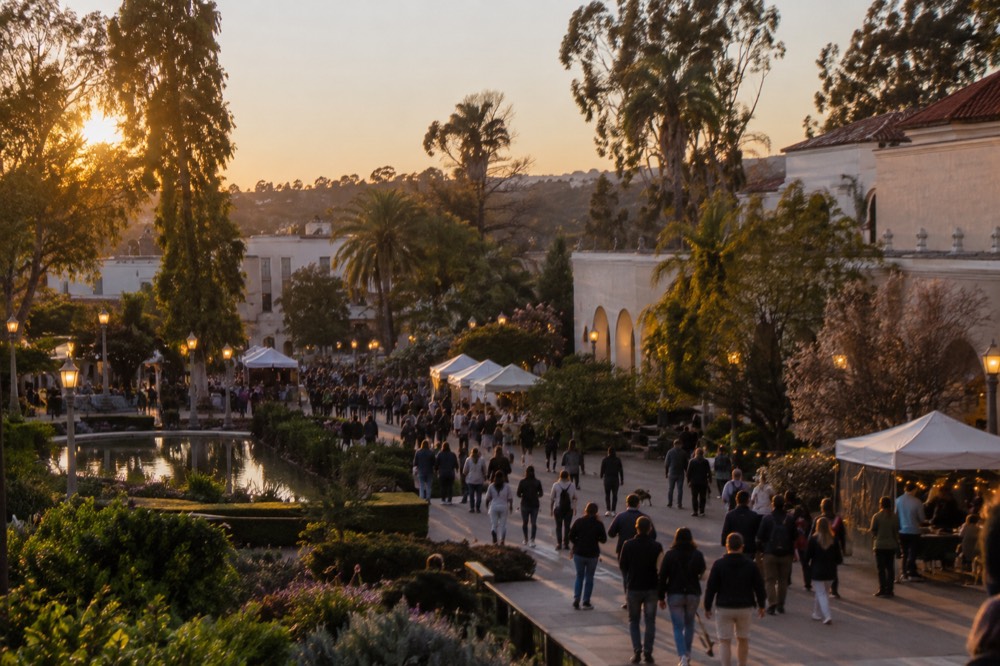
December Nights runs across a weekend in early December, with the exact dates shifting from year to year, so the single most important planning step is checking the park's official event page before you build your itinerary around it. The festival typically occupies a Friday evening and a full Saturday, with Sunday sometimes added, and the museum evening hours apply only during the event itself. Because the dates move, everything downstream of them moves too: hotel prices, parking pressure and even the trolley schedule all spike that weekend, and a visit planned for the wrong weekend will feel like a normal, quiet December day in the park, which is pleasant but not the festival.
The timing is worth understanding rather than just accepting. Early December is a shoulder-season sweet spot in San Diego: the December normal high is 66.0F with a normal low of 49.8F, cool enough for a jacket after dark but very rarely cold enough to threaten an outdoor event. Rain is a real but modest risk, with December averaging 1.67 inches spread over about 3.1 days with measurable precipitation, so an evening shower is possible and a washout is unlikely. Layers and a water-resistant shell cover you.
If your dates are flexible, the trade-off is straightforward. Festival weekend gives you lights, crowds and late museum hours. Any other December weekend gives you the park's normal schedule, thin crowds and no lines, plus the December in San Diego season around it, from the bay's whale migration starting mid-to-late December to the quieter holiday lights elsewhere in the city. Some visitors deliberately do both: December Nights for the spectacle, and a calm weekday for the museums they missed.
A guided tour is one of the better ways to see the park outside festival hours, and the trio above covers three formats: a private Segway tour that covers a lot of ground in two hours, a two-hour walking tour with a local guide, and an e-bike tour that links Balboa Park with the Gaslamp Quarter. All three are worth booking before festival weekend rather than during it, when guide availability tightens.
How Do You Get to December Nights and Where Do You Park?
Driving to Balboa Park during December Nights means either arriving very early or expecting a long walk, because the park's lots fill fast on festival days, and paid parking currently runs $8 to $16 per day depending on the lot and your residency, though City Council has approved removing paid parking entirely on 1 January 2027. The honest advice is that transit beats driving on festival weekend: the MTS trolley and bus network reaches the park's edges for a $2.50 one-way fare or a $6.00 day pass, and the free park tram runs 8:00 am to 8:00 pm to shuttle you between lots and the museum core. Anyone who drives should study the lot tiers in advance, because the price differences are large and the cheap lots are the first to fill.
The current parking structure, published by the City of San Diego on its Balboa Park parking page, looks like this:
| Lot level | Lots | City of San Diego resident | Non-resident |
|---|---|---|---|
| Level 1, premium | Space Theater, Casa de Balboa, Alcazar, Organ Pavilion, South Carousel | $8/day; $5 per 4 hours | $16/day; $10 per 4 hours |
| Level 2, general | Pepper Grove, Federal, Upper Inspiration Point, Marston Point, Bea Evenson, Palisades | Free | $10/day |
| Level 3, general | Lower Inspiration Point | Free | $10/day, first 3 hours free |
Two things to act on. First, the resident rate is not available at the kiosk: residents must register online in advance to get the free or discounted rate. Second, this whole structure has an expiry date. The City Council has formally approved removing paid parking effective 1 January 2027, so a December 2026 visit is one of the last festival weekends under paid parking, and anything you read afterward should be rechecked. ADA parking is free with no time limit in every lot and at every meter, with a Disabled Person plate or placard.
For transit, the fare math favors the PRONTO card or app: load money, pay as you go, and the system caps your spend at the day-pass value automatically, so there is no reason to buy a $6.00 day pass up front. Contactless bank cards work for single rides but do not cap. Youth 18 and under ride free, and up to two children aged 5 and under travel free with a paying adult, which makes a family trolley trip to the festival remarkably cheap. The park's main transit-adjacent access points put you within a walk of the museum core, and on festival nights the volume of riders is heavy in both directions, so build in patience.
Which Museums Are Open During December Nights, and What Do They Cost?
During December Nights, participating Balboa Park museums stay open into the evening and most offer discounted or free entry for the event, but each venue sets its own December Nights terms, so treat the official festival page and each museum's own site as the source of truth rather than assuming a blanket free night. The permanent collections are generally what you get at event pricing, with special exhibitions and films usually excluded, the same pattern the park's resident free-day program follows year round. None of the Balboa Park museums sell tickets through this site, so the practical answer is: buy at the gate or on the museum's own page, and decide in advance which two or three buildings are worth your limited festival evening.
The museums in question are a deep roster. The cluster includes the Fleet Science Center, the San Diego Air and Space Museum, the San Diego Natural History Museum (theNAT), the San Diego Museum of Art, the Museum of Us, the Japanese Friendship Garden, the Mingei International Museum, the Comic-Con Museum and more, and our Balboa Park museums guide covers what each one holds in detail. For festival strategy, pick by interest rather than by proximity: the buildings are close enough together that walking between them is trivial, and the lines, not the distances, are what limit you.
A point that trips up visitors in December generally: the park's resident free-Tuesday rotation, which gives free general admission to City and County of San Diego residents plus active military on a rotating schedule, carries December exclusions for several venues precisely because of December Nights, and the program pauses over the holiday period before resuming in January. It is a residency benefit, not a visitor perk, and it requires photo ID showing an address. If you are a local, check the official resident free-days page before assuming anything about your date.
| Museum | Normal adult admission | December Nights entry |
|---|---|---|
| San Diego Museum of Art | $25 | Discounted or free per event terms; check the venue's page |
| theNAT (Natural History Museum) | $24.95 | Discounted or free per event terms; films may be excluded |
| Fleet Science Center | Not confirmed on the official page | Discounted or free per event terms; films excluded |
| San Diego Air & Space Museum | Not confirmed on the official page | Discounted or free per event terms; special exhibitions excluded |
| Museum of Us | Not confirmed on the official page | Discounted or free per event terms |
| Timken Museum of Art | Always free | Free, as always |
If you plan to visit museums seriously rather than sample them at a festival, the Balboa Park Explorer Pass is the better instrument: a 1-day Limited pass at $66 adult covers one admission to up to four participating venues, and the 7-day Parkwide pass at $78 adult covers one admission to each of sixteen venues over seven consecutive days. It does not include the San Diego Zoo. During December Nights itself, with event pricing in effect, the pass is usually less relevant, but for the rest of a December week in the park it is the cheapest legitimate way to see a lot of museums.
One way to scout the park before festival night is a private Segway tour, which covers the full museum core, the gardens and the organ pavilion in two hours with a guide. It is the fastest orientation to a park whose layout genuinely confuses first-time visitors, and knowing where everything is before December Nights means you spend the festival looking at the lights instead of the map.
What Is Free at Balboa Park During the Festival?
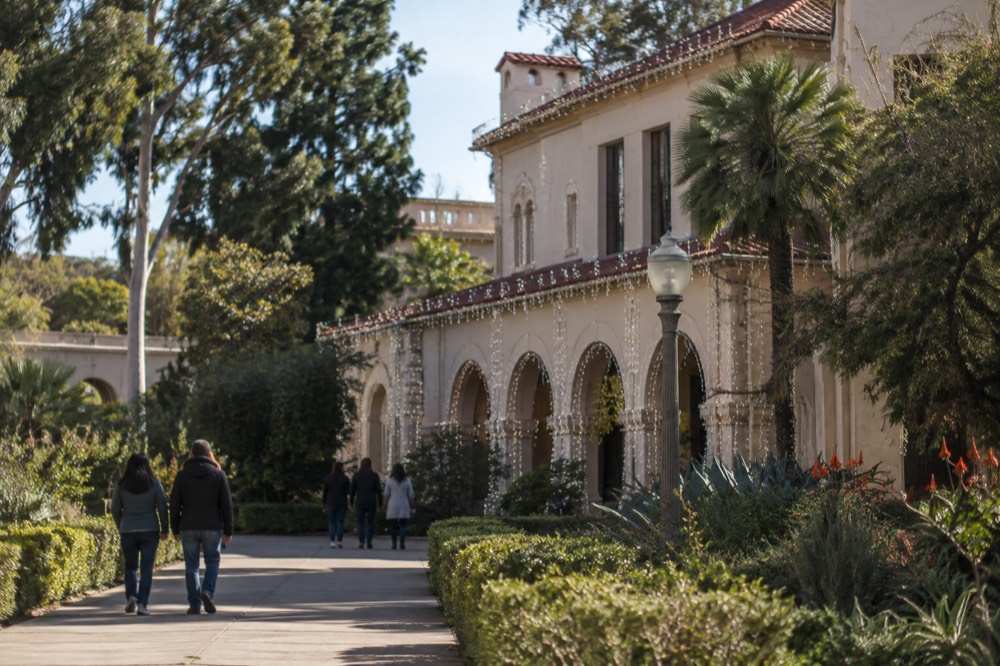
The park grounds, gardens, lights, outdoor performances and the Spreckels Organ Pavilion concerts are all free during December Nights, and the always-free venues, the Botanical Building, the Timken Museum of Art and the International Cottages' programs, cost nothing on festival weekend just as they do every other day. In practice you can have a complete December Nights evening, lights, music, food if you buy it, and people-watching, without entering a single paid museum, and many locals do exactly that. The free layer of the festival is not a consolation prize; it is the event.
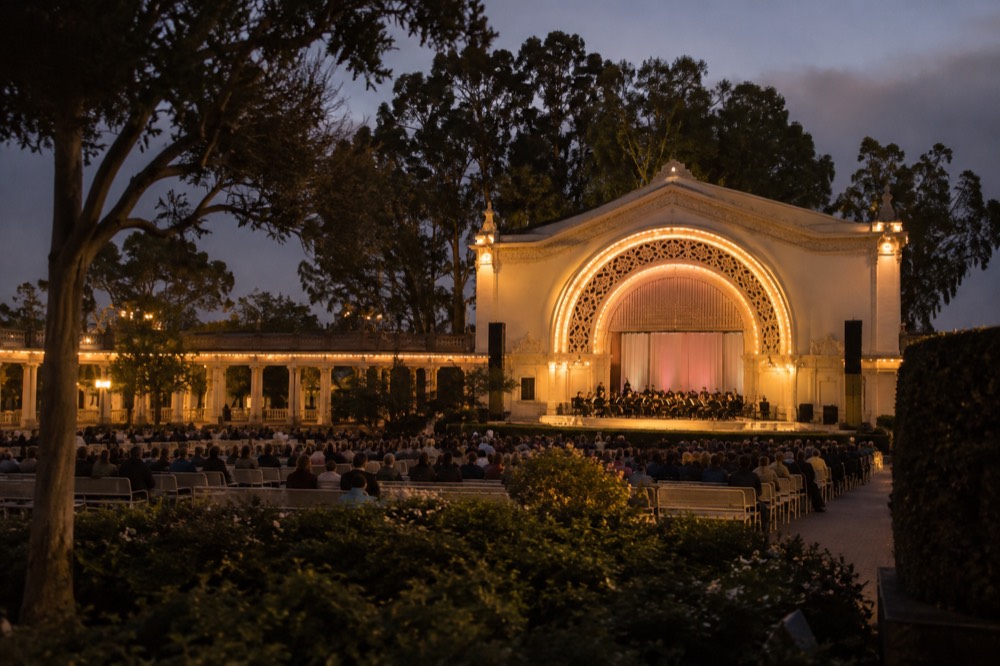
The Spreckels Organ Pavilion deserves its own paragraph. The park runs free one-hour concerts there every Sunday from 2:00 to 3:00 pm, year round, rain or shine, and during December Nights the pavilion becomes the festival's main stage, hosting performances that spill onto the surrounding lawn. Arrive early if you want a seat under the pavilion itself; the lawn fills with blankets and folding chairs well before showtime. Details are on the organ pavilion's page.
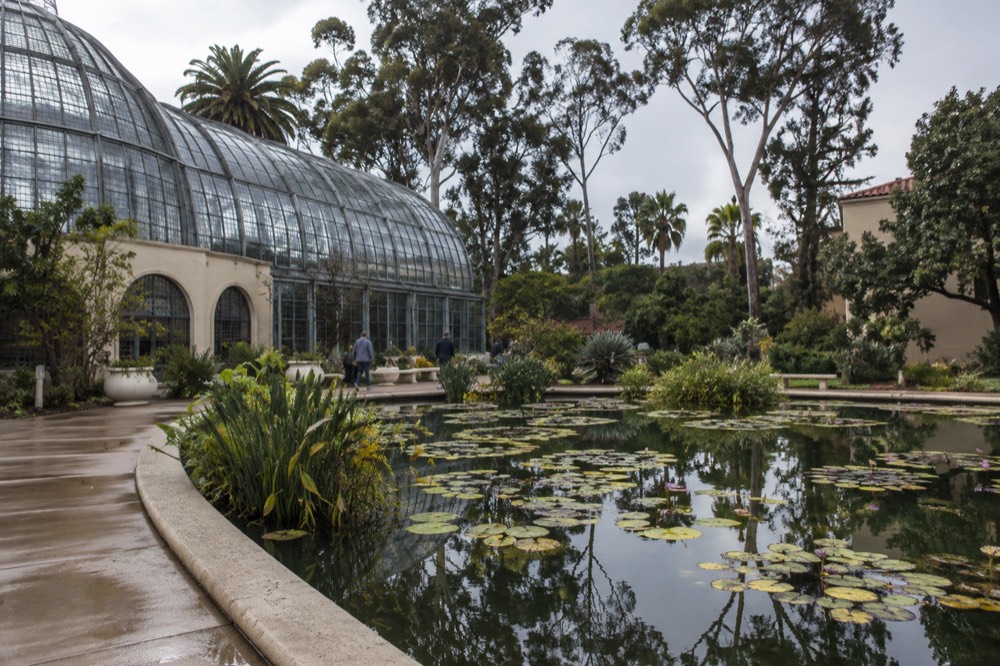
The Botanical Building and Lily Pond, reopened after a major restoration, is free and open roughly 10:00 am to 4:00 pm daily except city holidays, so it is a daytime stop rather than an evening one during the festival. The Timken Museum of Art is always free, one of the quietest great deals in the park. And the House of Pacific Relations International Cottages run their weekend Lawn Programs, which during December shift toward holiday traditions from the many cultures the cottages represent, a genuinely charming slice of the festival that most tourists never find. The wider set of guides lives on Things to Do in San Diego.
What Food and Entertainment Can You Expect?
December Nights is as much a food event as a museum event, with food booths from the park's cultural organizations and local vendors lining the central plazas, plus continuous live performances on multiple stages ranging from choirs and dance groups to the organ pavilion's headline concerts. The food stalls are the part of the festival locals argue about, in a good way: the International Cottages' groups traditionally sell dishes from their own heritages, so a single walk through the festival can take you across a dozen cuisines without leaving the Prado. Expect lines at the most popular booths by early evening, and expect the food to be priced as festival food, not restaurant food.
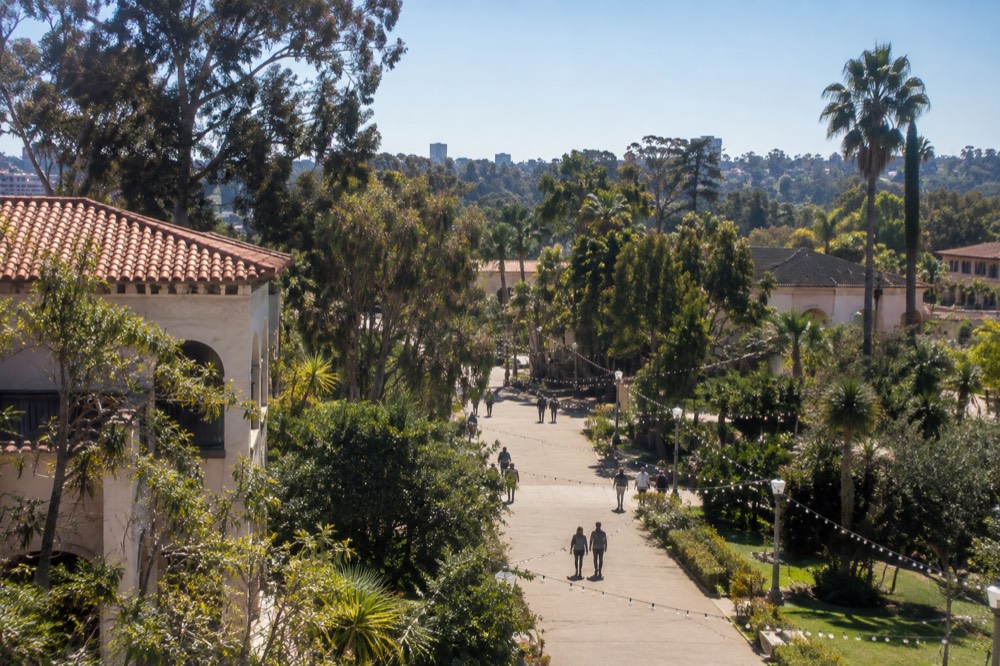
The entertainment runs on a published schedule that the park releases before each festival, and it is worth pulling it up on your phone when you arrive. Stages are spread across the central core, and the acoustics of the colonnades mean you will hear performances you cannot see. The headline events cluster around the organ pavilion and the Plaza de Panama, and the lights themselves, strung through the trees and along the colonnades, are the visual spine of the whole evening.
If the festival food scene hooks you, San Diego rewards the interest all year. The city's best restaurants scene is one of the strongest in California, and the tacos alone justify a return trip. But on festival night, eat in the park: the booth food is the tradition, and leaving for dinner means fighting the crowds back in.
If you want the stories behind what you are looking at, the two-hour Balboa Park walking tour with a local guide runs through the same colonnades and gardens the festival lights up, and the guides carry the park's history in a way no plaque does. Doing it on a non-festival day means you can actually hear them.
How Do You Beat the Crowds at December Nights?
The crowd-beating playbook is simple: arrive before late afternoon on festival days, pick one or two museums rather than five, eat early or late rather than at peak dinner time, and use transit or the free park tram instead of trying to park in the museum core. The festival's peak is the early evening, when the lights come on and the after-work crowd arrives, so the difference between a 3:00 pm arrival and a 6:00 pm arrival is the difference between a stroll and a shuffle. Locals who go every year treat it like a tide: they either come early and leave before the crest, or arrive late and lean into the density as part of the show.
Museum strategy matters more than people expect. The lines at the most popular buildings form early and stay long, and festival evenings are short: even with extended hours, you have perhaps four good hours. Pick the two buildings you care most about, do one before dark and one after, and spend the time between at the organ pavilion or the food booths. Visitors who try to do everything end up doing nothing but waiting.
The transit math also rewards planning. A $2.50 one-way fare or a $6.00 day-pass cap on PRONTO covers a family's round trip for less than one hour of downtown parking, and the walk from the surrounding neighborhoods, Hillcrest to the west, North Park to the northeast, is flat and pleasant on a December evening. Our parking in San Diego guide covers the citywide picture, including the fact that downtown meters run $2.50 per hour and that Sunday is no longer free everywhere downtown.
| Approach | Best for | Trade-off |
|---|---|---|
| Arrive 2:00-3:00 pm | Museums before lines form | You miss the first hour of lights |
| Arrive after 7:00 pm | Lights at full power, thinner museum lines | Parking is hardest, food booths sell out |
| Trolley or bus in | Families, anyone who hates circling | A walk at the end of the night |
| Park in a Level 2 or 3 lot | Drivers who arrive early | A longer walk to the core, $10/day non-resident |
| Weekday visit instead | Seeing the museums properly | No festival at all |
Is December Nights Good with Kids, and What Are the Alternatives?
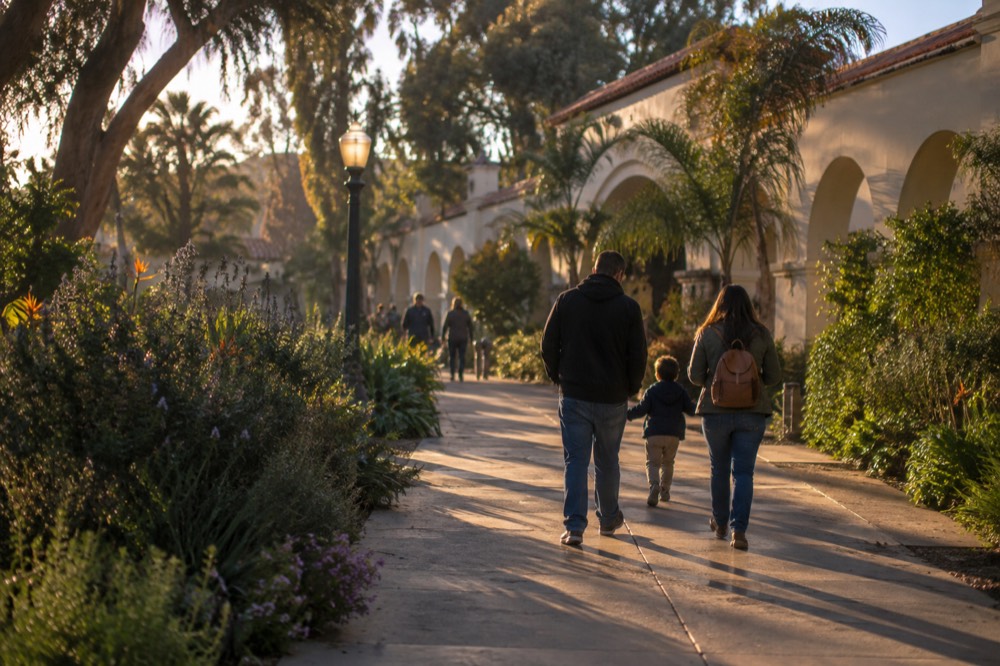
December Nights works well with kids precisely because so much of it is outdoors and free, lights, music, food booths and open lawns, but the crowds are dense after dark, so families with young children should target the early evening and leave before the peak, or consider the park's calmer everyday offerings instead. The festival's density is its one real drawback for parents: strollers and dense crowds mix poorly, and the museum lines are hard on small attention spans. The counterweights are the cottages' holiday programs, the organ pavilion lawn where kids can run, and food that arrives on a stick, which children regard as a personal gift.
The alternatives depend on what your family actually wants. If it is animals, the San Diego Zoo sits inside the same park and runs 9:00 am to 6:00 pm, and its own holiday-season programming is a separate, ticketed tradition; note that Zoo parking is $16 per vehicle per day now. If it is the sea, the La Jolla Cove and its neighbors are at their quietest in December, with harbor seals visible from the walkway. And if it is simply lights without the masses, the whole county lights up in December, from Coronado to North Park's own holiday displays.
For teenagers and adults who find the festival's density exhausting, the honest recommendation is to split the visit: do December Nights for one evening, then come back on a weekday for the museums you missed, when the park is quiet and the Explorer Pass does its best work. The park rewards both modes.
The two-and-a-half-hour guided e-bike tour linking Balboa Park with the Gaslamp Quarter is a good fit for the split-visit approach: it covers the park's layout in the daylight and ends downtown, where the Gaslamp Quarter gives you a second evening scene with restaurants and bars that do not close at festival time.
What Should You Know Before You Go?
Bring layers, charge your phone, carry the payment method each museum specifies, and set expectations to 'festival' rather than 'museum': December Nights is crowded, loud, partly outdoors and weather-dependent, with December normals of 66.0F highs and 49.8F lows meaning you will want a real jacket after dark. The park's own event page publishes the year's dates, the museum participation list and the performance schedule, and it is the only source for those specifics because they change annually. Everything else is preparation.
A few practical notes that come up every year. Wear shoes you can walk a few miles in, because even with the free tram running 8:00 am to 8:00 pm, the festival's footprint is large and the tram queues at closing time are long. Decide your exit before you arrive, since cell networks slow under festival density and a pre-agreed meeting point is worth more than a phone. Alcohol is prohibited in the park, as it is on all San Diego city beaches and parkland, so this is a cocoa-and-churros event, not a wine event. And if rain threatens, check the forecast rather than assuming a cancel: December averages only about 3.1 days of heavier rain, and the festival historically runs through drizzle.
For visitors building a longer stay around the festival, the rest of the city is in its quiet season, which is the secret advantage. Hotel demand is soft before the holidays, the best beaches are empty, and gray whales begin passing offshore from mid-to-late December, visible from the Kelp Forest Overlook at Cabrillo National Monument, where a private vehicle pass is $20 and valid for seven days. December Nights plus a quiet weekday coastline is about as good as a San Diego December gets.
If you would rather see the park in its festival best with a guide who can move faster than the crowds, the private Segway tour remains the most efficient option, and booking it for the morning before a festival evening gives you the layout, the history and the lights in a single day.
Common Questions About December Nights at Balboa Park
What is December Nights at Balboa Park?
It is Balboa Park's annual holiday festival, held over an early-December weekend, when participating museums stay open into the evening with discounted or free entry and the park fills with lights, food booths, craft vendors and live performances on multiple stages.
Is December Nights free?
The festival itself is free: the grounds, gardens, lights and outdoor performances cost nothing. Museum entry during the event is discounted or free at participating venues on terms each museum sets, and food and drink are pay-as-you-go.
When does December Nights happen?
Across a weekend in early December, with the exact dates changing each year. The park publishes the dates, the museum participation list and the performance schedule on its official event page, and that page is the only reliable source since the dates shift annually.
Where do you park for December Nights?
Prefer transit if you can: the trolley and bus reach the park's edges for a $2.50 one-way fare or a $6.00 day-pass cap on PRONTO, and the free park tram runs 8:00 am to 8:00 pm. If you drive, Balboa Park's paid lots currently run $8 to $16 per day depending on lot and residency, though paid parking is scheduled to end on 1 January 2027, and the lots fill early on festival days.
Which museums are free during December Nights?
Participation and terms vary by venue and by year, so check the official festival page and each museum's own site. The Timken Museum of Art is always free, and the resident free-Tuesday rotation is a separate residency benefit, not a festival perk, with several venues excluded in December because of the event.
Is December Nights good for kids?
Yes, especially in the early evening: the lights, the organ pavilion lawn, the cottages' holiday programs and the food booths all work for children. The crowds get dense after dark, so families usually do best arriving early and leaving before the peak.