First Time in San Diego: A Practical Planning Guide
San Diego rewards first-timers who plan around three things: a warm-water season that peaks in September, a downtown you can walk, and parking rules that change by neighborhood.
Short answer
Plan four or five days for a first San Diego trip. Stay downtown or near the waterfront for the first half, buy attraction tickets online, and ride the MTS trolley at $2.50 a trip or $6 a day. Visit in September for the warmest normal highs and the thinnest crowds at Cabrillo National Monument.
What Should First-time Visitors Know Before They Go?
San Diego is a city of neighborhoods rather than one dense downtown, the warmest weather of your trip will likely arrive in September rather than July, and the single biggest day-to-day headache is parking, not tickets or crowds. A first visit goes best when you accept all three early. The city spreads along roughly 24 miles of coastline, from La Jolla in the north down to the border at San Ysidro, and the things you came for sit in clusters: Balboa Park's museums, the Embarcadero's ships, La Jolla's cliffs, Coronado's beach. You will not walk between them. You will drive, or ride the trolley, or both.
Start with the honest climate picture. The 30-year normals from NOAA show August and September as the warm months, with normal highs of 77.3 and 77.2 degrees Fahrenheit, while July sits at 75.3. June's normal high, 71.7, is actually lower than October's 74.6. Locals call the grey coastal stretch in late spring May Gray and June Gloom, and the temperature table makes the pattern visible without any cloud statistics: inland clears while the coast stays under a marine layer. Plan at least one inland or museum day as insurance against a grey beach morning.
Then there is the border. San Ysidro, at the southern end of the Blue Line trolley, is the busiest land border crossing in the western hemisphere. Even if Mexico is not on your itinerary, the crossing shapes traffic and crowds in the South Bay, and a day trip to Tijuana is a genuinely popular first-visit add-on. Customs and Border Protection publishes live wait times hourly, and that live feed is the only honest source: there is no official "typical wait" table, so never plan a crossing around a number someone quoted you.
Finally, park the car once and leave it. Downtown meters run $2.50 an hour, Balboa Park's lots charge $8 to $16 a day for non-residents, and the free park tram loops the park from 8:00 am to 8:00 pm. The planning pages on Things to Do in San Diego cover each of these in depth; this guide is the short version of how they fit together.
How Many Days Do You Need for a First San Diego Trip?
Four days is the realistic minimum for a first visit, and five is comfortable: two days for the downtown core and Balboa Park, one for the coast at La Jolla or Coronado, and one for a bigger excursion such as the Zoo Safari Park, a whale watch or a trip south to Tijuana. Three days works if you cut ruthlessly, but first-timers almost always underestimate driving time between neighborhoods. What looks adjacent on a map can be 40 minutes of parking and traffic in practice.
A sensible split looks like this:
| Day | Base | What it holds |
|---|---|---|
| 1 | Downtown / Embarcadero | USS Midway, Seaport Village, harbor cruise, Gaslamp dinner |
| 2 | Balboa Park | Zoo, gardens, two or three museums, Spreckels Organ concert if it is Sunday |
| 3 | Coast | La Jolla Cove and the sea caves, or Coronado Beach and the Hotel del |
| 4 | Excursion | Safari Park, Temecula wine country, Julian, or a guided Tijuana day trip |
| 5 | Flex | Whatever the marine layer cancelled, plus Petco Park or a sunset sail |
The flex day matters more here than in most cities. Cabrillo National Monument, the Zoo and La Jolla are all outdoor-first, and a grey June morning can quietly ruin a plan built entirely around sunshine. Build the itinerary so day five can absorb anything.
If you only have a weekend, keep the radius tight: downtown, Balboa Park and one beach. The San Diego 3-day itinerary shows how to do that without feeling rushed, and the one day in San Diego version exists for layovers.
Two of the easiest ways to cover the downtown core on a first trip are the narrated hop-on hop-off trolley, which runs for two days of hopping, and a self-drive GoCar tour that steers itself between downtown, Old Town and the beaches. The trolley suits families and anyone who wants to sit back; the GoCar suits travelers who want the independence without reading a map. A CityPASS can stack several headline attractions at a discount if your list matches its roster.
What Are the Must-see Attractions on a First Visit?
Balboa Park, the USS Midway Museum, La Jolla Cove and Cabrillo National Monument form the first-visit core, with the San Diego Zoo as the single biggest half-day commitment and Coronado as the easy beach add-on. These five names cover gardens, ships, cliffs, wildlife and sand, a wider spread of experiences than most American cities can offer in one week. Each deserves a half day at minimum, and the Zoo wants longer, so treat them as anchors rather than drive-bys.

Balboa Park is the anchor. The grounds, gardens and trails cost nothing, the Botanical Building and Lily Pond are free after their restoration, and the Timken Museum of Art is always free. The big museums are another matter: Fleet Science Center, the Air and Space Museum, the Museum of Art, the Museum of Us and the Natural History Museum all sell tickets at their own gates, and none of them are bookable through this site. Say it plainly: buy those at the door, or check the Balboa Park Explorer Pass, which covers 16 venues from $66 for a one-day adult pass. The Balboa Park museums guide sorts out which ones match your interests.
The USS Midway Museum sits on the Embarcadero and is open 10:00 am to 5:00 pm daily, with last admission at 4:00 pm and closures only on Thanksgiving and Christmas Day. Active duty military enter free with ID, and children 3 and under are free. Two hours on the flight deck goes by fast; the USS Midway Museum guide covers the boarding sequence.
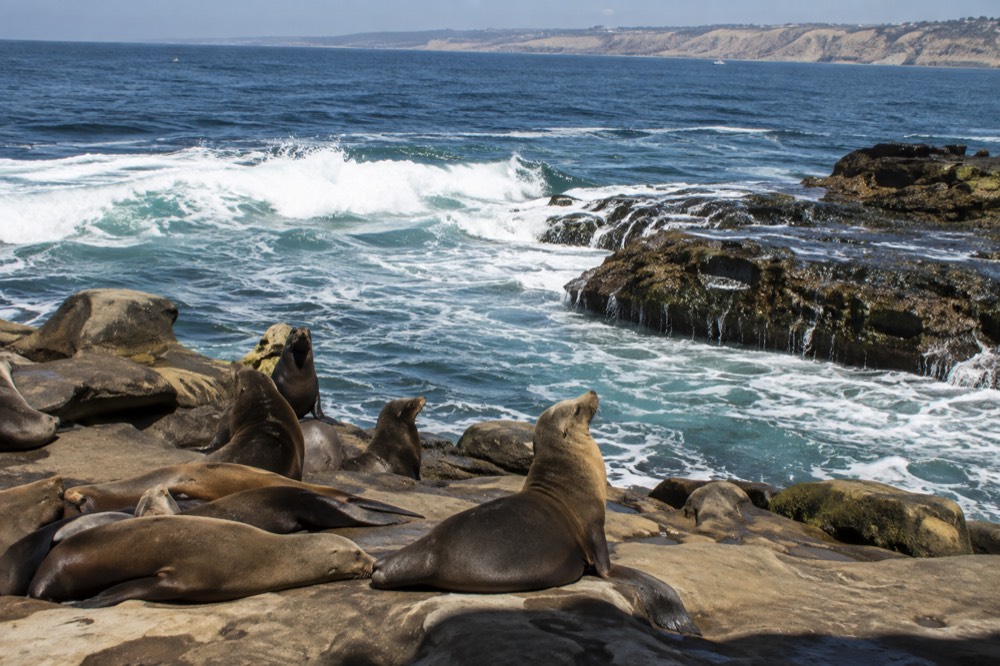
La Jolla Cove is the coastal headline: sea lions, cliffs and the sea caves, with kayaking and snorkeling tours running from the Shores. The pupping-season closures around the Children's Pool change the viewing rules, so check current conditions rather than assuming year-round access. The La Jolla Cove guide has the detail.
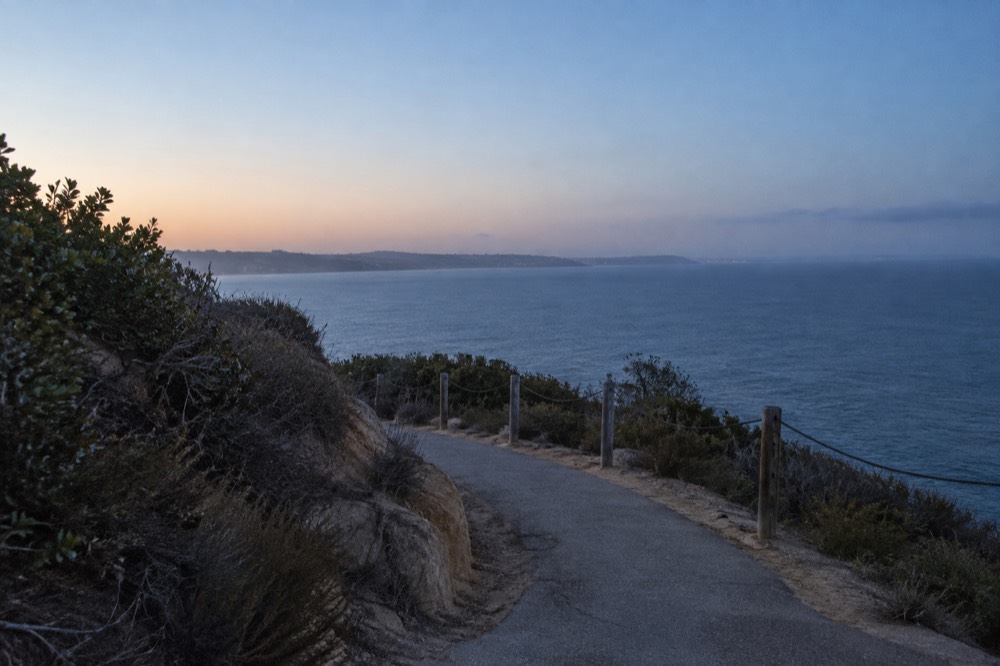
Cabrillo National Monument, out on Point Loma, charges $20 per private vehicle for a pass valid seven days, opens 9:00 am to 5:00 pm, and closes its tidepools at 4:30 pm, a staggered closing sequence that catches out late arrivals. From mid-December through March, more than 20,000 gray whales pass offshore, and mid-January is the migration's peak.
The narrated trolley is the efficient way to tie the downtown half of this list together, since it links the Midway, the Gaslamp, Balboa Park, Old Town and Coronado with live commentary instead of parking hunts.
If you are weighing it against the alternatives, the calculus is simple. A trolley pass covers two days of unlimited hopping, which is enough to see the Embarcadero, Balboa Park and Coronado at a pace you set, and the narration fills in the history you would otherwise walk straight past. Families with kids in strollers and travelers who dislike parking garages get the most out of it.
How Do You Get Around San Diego Without a Car?
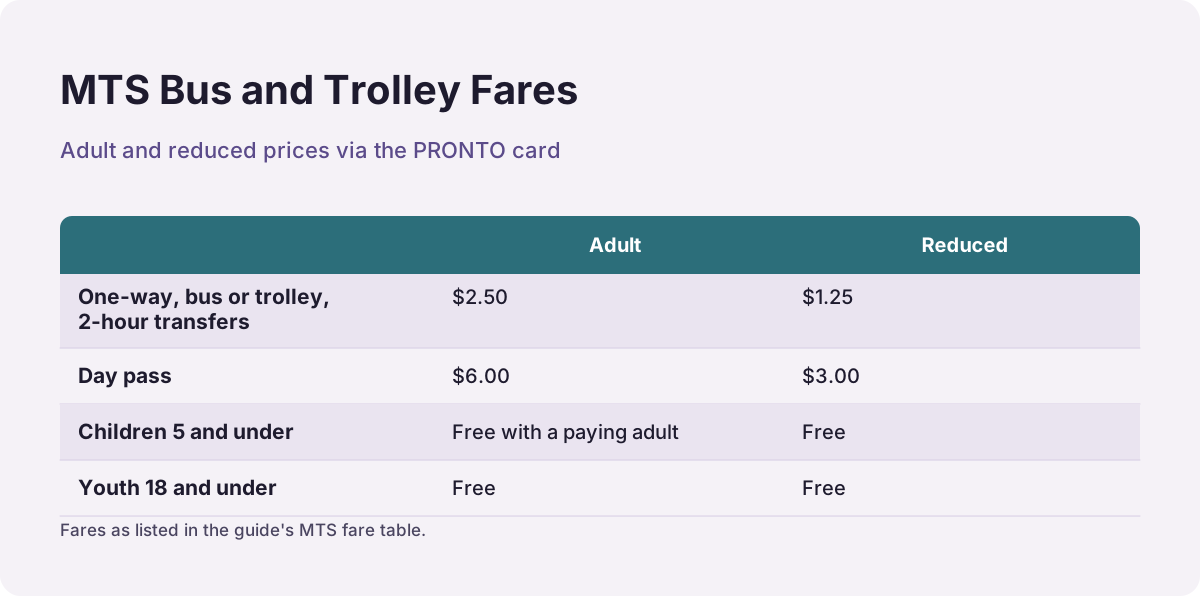
You do not need a rental car for the downtown half of a first visit: the MTS trolley and bus network runs on a $2.50 one-way fare with a $6.00 day pass through the PRONTO card, and the free San Diego Flyer shuttle connects the airport to the Old Town Transit Center. Downtown, Balboa Park, Old Town, the Embarcadero and the border all sit on transit lines. La Jolla, Coronado and the Safari Park are where a car, or a tour bus, starts earning its keep.
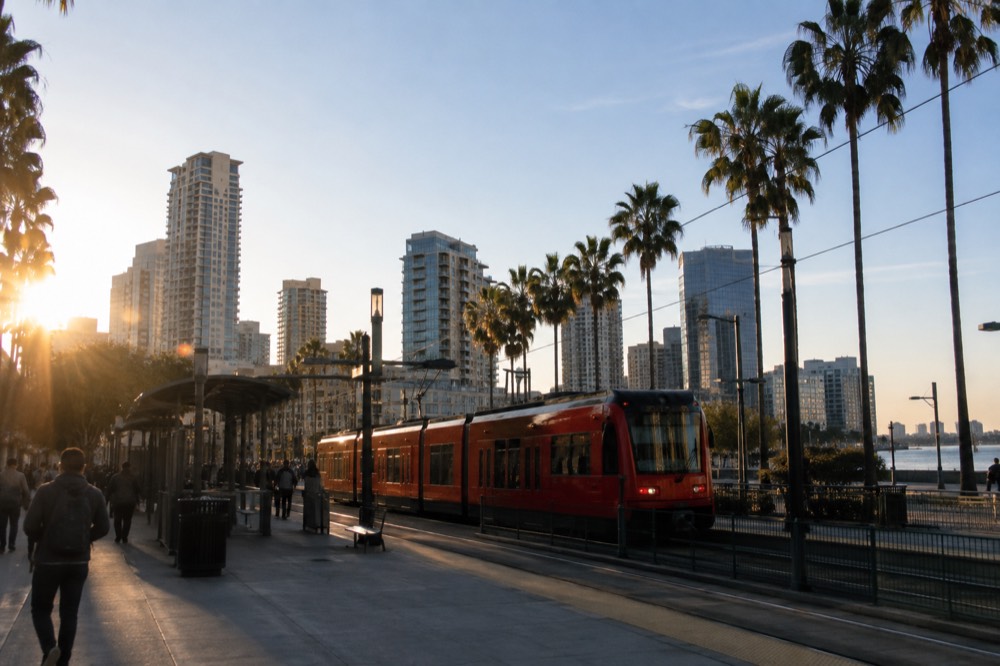
The fare mechanics are worth getting right on day one. PRONTO is the fare system: a $2 physical card or the app. Load money, pay as you go, and the system caps you automatically once your rides total the day-pass value, so there is no reason to buy a day pass up front. One caution: contactless bank cards are accepted for single rides but do not cap, so use PRONTO if you plan to ride more than twice. Reduced fares of $1.25 one-way and $3.00 for a day pass apply to seniors 65 and over, and youth 18 and under ride free.
| Fare | Adult | Reduced |
|---|---|---|
| One-way, bus or trolley, 2-hour transfers | $2.50 | $1.25 |
| Day pass | $6.00 | $3.00 |
| Children 5 and under | Free with a paying adult | Free |
| Youth 18 and under | Free | Free |
The airport has no trolley station, which surprises people. MTS Route 992 runs from both terminals to the Santa Fe Depot trolley interchange every 15 minutes from 4:30 am to 1:00 am at the standard $2.50 fare, and the free San Diego Flyer shuttle loops to Old Town roughly every 20 to 30 minutes from early morning to about 12:30 am. Rideshare pickup at Terminal 2 is at the Transportation Plaza across the main crosswalk, not curbside.
The Blue Line trolley runs from San Ysidro at the border all the way north through downtown to UC San Diego, with a published end-to-end time of 1 hour 23 minutes. That single line is why a Tijuana day trip is feasible without a car. The getting around San Diego guide maps the rest of the network, and the parking in San Diego guide covers what to do on the days you do drive.
Where Should a First-timer Stay?
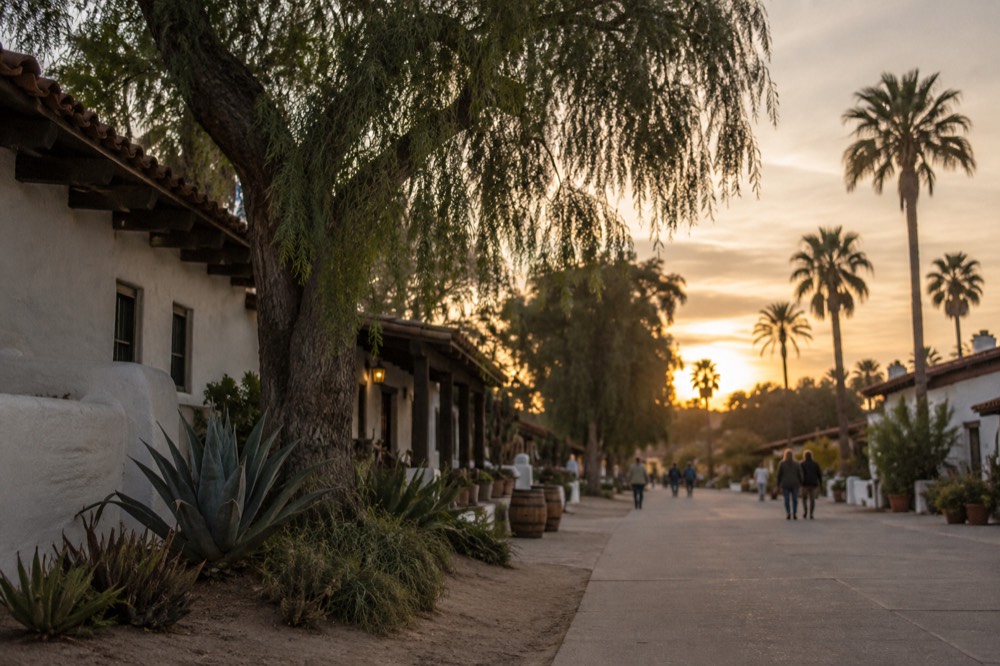
Stay downtown or on the Embarcadero for a first visit if transit and walkability matter most, in La Jolla if the coast is the point of the trip, in Coronado for a calmer beach base, or in Old Town for the cheapest convenient position on the trolley lines. The Gaslamp Quarter is the nightlife district inside downtown, loud on weekends and central to everything; the Gaslamp or downtown comparison is a real question first-timers ask, and the honest answer depends on how late you plan to be out.
A quick read of the districts:
| Base | Best for | Trade-off |
|---|---|---|
| Downtown / Embarcadero | Midway, harbor cruises, trolley access, Gaslamp dining | Night noise near the Gaslamp; paid parking |
| Old Town | Transit hub, budget-friendly, history | Fewer views; quieter at night |
| La Jolla | Cove, kayaking, upscale dining | Farther from downtown; parking is scarce |
| Coronado | Beach, the Hotel del, family calm | A bridge or a ferry from the action |
| Mission Bay / Pacific Beach | Beach vacation feel, boardwalk | Car recommended; party-adjacent in summer |
The where to stay in San Diego guide goes deeper, including the neighborhoods first-timers are better off avoiding late at night. One rule holds across all of them: do not pick a hotel for its free parking and then discover the parking is irrelevant because you never move the car.
What Does a First-timer's Day-by-day Itinerary Look Like?
Anchor day one around the Embarcadero and the Gaslamp, give day two entirely to Balboa Park and the Zoo, spend day three on the coast at La Jolla or Coronado, and hold day four for one big excursion. The order matters less than the pairing: never schedule two parking-heavy destinations in one day, and never put the Zoo and Safari Park in the same 24 hours. They are 35 miles apart and each one is a full outing on its own.
Day one is the walkable downtown. The Midway opens at 10:00 am; do it first, before the flight deck heats up. From there the Embarcadero stretches to Seaport Village, and a one-hour harbor cruise gives you the skyline from the water. Evening belongs to the Gaslamp or Little Italy, and the Little Italy food and drink walking tour is a good way to eat your way through a neighborhood you would otherwise just photograph.
Day two is Balboa Park. The Zoo opens at 9:00 am and needs no timed entry or reservation, so go at opening, do the animals until early afternoon, then trade the stroller crowds for the gardens and one or two museums. Parking at the Zoo is $16 per vehicle per day, first come first served, so arriving early solves two problems at once. On Sundays the Spreckels Organ Pavilion holds free one-hour concerts at 2:00 pm, year round, rain or shine, which is a genuinely San Diego way to end the afternoon.
Day three is the coast. La Jolla means the Cove, the caves and usually a kayak or snorkeling tour; Coronado means the beach, the Hotel del Coronado and a slower tempo. Pick one, not both, unless you enjoy spending your holiday in a car.
Day four is the excursion. The Safari Park in Escondido, a Temecula wine tour, gold-rush-era Julian with its famous apple pie, or a guided Tijuana day trip with lunch are the four standard moves, and each is a full day. A self-drive GoCar tour works as a compressed alternative if day four got eaten by travel delays: two hours, downtown and Old Town or the beaches, on your own schedule.
For anyone stretching to five days, the San Diego 5-day itinerary adds the second-coast day most first-timers wish they had booked.
When Is the Best Time for a First Visit?
September is the statistically best month for a first San Diego trip: its normal high of 77.2 degrees sits just behind August's 77.3 and ahead of July's 75.3, the ocean at La Jolla averages 67.6 degrees, its warmest water overlaps August's 68.7, and yet it is the quietest month at Cabrillo National Monument. Across 2022 to 2024, September drew 56,876 recreation visits to Cabrillo against July's 83,999, a gap of roughly 48 percent, despite September's weather being better. That inversion is the single most useful thing a first-time planner can know about this city.
The rest of the year has clear patterns. December through March carries 7.3 of the year's rain inches, so winter trips trade grey skies for gray whales: more than 20,000 pass offshore, with mid-January the peak and viewing best on calm mornings. June is the trap month. Its normal high of 71.7 is lower than October's, because the marine layer greys the coast while inland stays clear, so a June itinerary should always hold an indoor or inland fallback. August normals to one hundredth of an inch of rain and zero days of measurable rain, if you want a near-guarantee of dry.
The best time to visit guide and the month-by-month pages carry the full breakdown, including which events, from Comic-Con in July to December Nights in Balboa Park, will eat your hotel availability if you book blind.
What Does a First San Diego Trip Cost?
Budget roughly $45 to $75 per person per day beyond lodging and flights: $6.00 covers a day of MTS transit, Cabrillo is $20 per vehicle for seven days, Balboa Park's grounds and gardens are free, museum admission runs about $25 at the Museum of Art and $24.95 at the Natural History Museum, and food is the wild card, from taco counters to Gaslamp steakhouses. A pass can compress the attraction line sharply if your list matches its roster.
The honest planning ranges, before lodging:
| Line item | Planning range | Notes |
|---|---|---|
| MTS transit | $6.00/day | PRONTO caps automatically; no need to prebuy a pass |
| Cabrillo National Monument | $20 per vehicle | Pass valid 7 days; tidepools close 4:30 pm |
| Balboa Park parking | $8 to $16/day non-resident | Scheduled to end 1 January 2027 |
| Zoo parking | $16 per vehicle | First come first served; arrive at opening |
| Balboa museums | $24.95 to $25 adult | theNAT and Museum of Art; buy at the gate |
| Explorer Pass | From $66 adult 1-day | Up to 4 venues; 7-day Parkwide $78 |
| Downtown meters | $2.50/hour | Enforced to 6:00 pm, later in some zones |
| Casual meals | $15 to $30 per person | Taco shops at the low end, sit-down at the high |
Two structural notes. First, the Balboa Park museum cluster is not bookable through this site: Fleet Science, Air and Space, the Museum of Art, the Museum of Us and theNAT sell at their own gates, and the Explorer Pass is the only bundle. Second, the multi-attraction passes only pay off against your actual list. The CityPASS saves up to 48 percent at its must-see attractions, but only if those attractions are the ones you already wanted; the Go City San Diego pass guide and the trip cost breakdown do the arithmetic for both.
What Mistakes Do First-time Visitors Make?
The five recurring first-timer mistakes are underestimating distances between neighborhoods, planning an all-beach itinerary in June, assuming museum tickets can be bought through a tour site, treating the border crossing as predictable, and skipping the online ticket discount at venues that charge more at the door. None of these are exotic errors. They are the predictable result of a city that markets itself on sunshine while functioning as a spread-out collection of towns.
Distance is the big one. La Jolla to the Safari Park is not a quick hop; the Zoo and the Safari Park are different properties 35 miles apart, and the Zoo versus Safari Park comparison exists precisely because people conflate them. Budget drive times like a local, not like a map.
The June trap follows. A first-timer who books an all-outdoor week in June, based on San Diego's reputation, can meet a week of marine layer. Keep a museum day in your back pocket, and know that the grey burns off later in the day, so plan beaches for the afternoon and Balboa's indoor options for the morning.
The border deserves respect. US citizens re-entering by land need a passport book or card, an enhanced driver's license from a participating state, or a Trusted Traveler card; ESTA visitors need a valid approved ESTA before land entry, a rule in force since October 2022. PedEast is open 24 hours; PedWest runs weekday mornings only. Never plan around a quoted wait time: check the live CBP feed on the day, and consider a guided Tijuana day trip if you want the logistics handled.
Finally, buy online where online is cheaper. The USS Midway, for example, charges less for an online ticket than at the door, and the pattern repeats across the city's big attractions. Check the live listing before you queue at a booth.
Common Questions About First Time in San Diego
How many days do you need for a first San Diego trip?
Four days is the realistic minimum and five is comfortable: two for downtown and Balboa Park, one for the coast at La Jolla or Coronado, and one big excursion such as the Safari Park, Temecula, Julian or Tijuana. A three-day version works if you keep the radius tight and accept that you will come back.
What is the best month for a first visit to San Diego?
September. Its normal high of 77.2 degrees beats July's, the ocean is near its warmest at 67.6 degrees at La Jolla, and it is the quietest month at Cabrillo National Monument, with roughly 48 percent fewer visits than July across 2022 to 2024. August is the only month with comparable weather.
Do you need a car in San Diego?
Not for the downtown half of the trip. The MTS trolley and buses run at $2.50 one-way with automatic day-pass capping at $6.00 through PRONTO, the free San Diego Flyer shuttle connects the airport to Old Town, and the Blue Line reaches the border. You will want a car, or a tour, for La Jolla, the Safari Park and the inland day trips.
Is Balboa Park free?
The grounds, gardens and trails are free, as are the Botanical Building, the Timken Museum of Art and the Sunday organ concerts at 2:00 pm. The museums charge their own admission at the gate, and the resident free-Tuesday rotation is a benefit for City and County residents with ID, not for visitors.
Can you visit Tijuana on a first San Diego trip?
Yes, and the Blue Line trolley runs straight to the border at San Ysidro, the busiest land crossing in the western hemisphere. US citizens need a passport book or card, an enhanced driver's license or a Trusted Traveler card to re-enter; ESTA visitors need a valid approved ESTA for land entry. Check the live CBP wait-time feed on the day rather than any quoted average.
What is the biggest first-timer mistake in San Diego?
Underestimating distances. San Diego is a city of neighborhoods spread over roughly 24 miles of coastline, and pairing two parking-heavy destinations in one day, or booking the Zoo and Safari Park back to back, is what wrecks itineraries. One anchor per day, with a transit-friendly backup, is the fix.