Chula Vista, California: A Practical Guide to San Diego's South Bay
Chula Vista sits between downtown San Diego and the Mexican border, on the Blue Line trolley, with a bayfront of its own and some of the most underused coastline in the county. Here is how to plan a visit that actually works.
Short answer
Chula Vista is San Diego's second-largest city, sitting about 8 miles south of downtown along the Blue Line trolley, which runs all the way to the San Ysidro border crossing. A one-way trolley ride costs $2.50 and a day pass $6.00. It works best as a relaxed base for downtown San Diego, the bay, Coronado, and a border day trip, with its own bayfront parks and easy access to Imperial Beach.
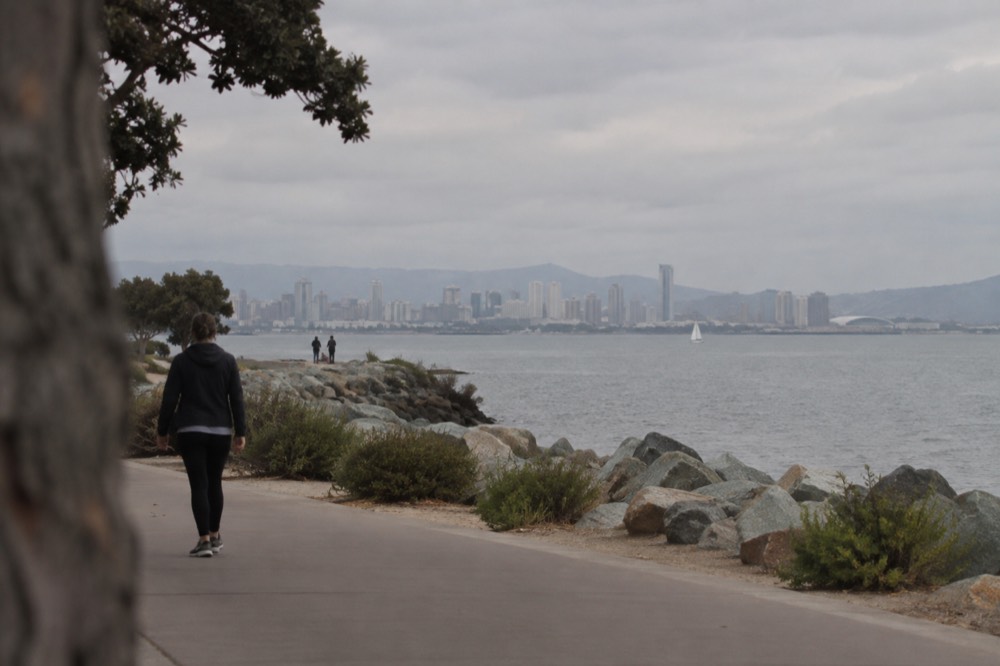
Chula Vista, California is the city most San Diego visitors drive past without meaning to. It stretches along the east side of San Diego Bay, roughly 8 miles south of downtown, and its southern edge runs almost to the border fence at San Ysidro, the busiest land border crossing in the western hemisphere. The Blue Line trolley threads the whole length of it, which makes Chula Vista one of the few places in the county where a car-free visit is genuinely practical. The name is Spanish for "beautiful view," and the view in question is the one across the bay toward downtown's skyline, a sight you get from the bayfront parks for free.
This guide is written by the editorial desk at Things to Do in San Diego, and it sticks to what can be verified: fares off the official MTS chart, climate off the NOAA normals, and honest advice on the things nobody sells you, like parking. Chula Vista does not have the headline attractions of Balboa Park or La Jolla. What it has is position, and position is what you should plan around.
Where Is Chula Vista, and What Kind of Place Is It?
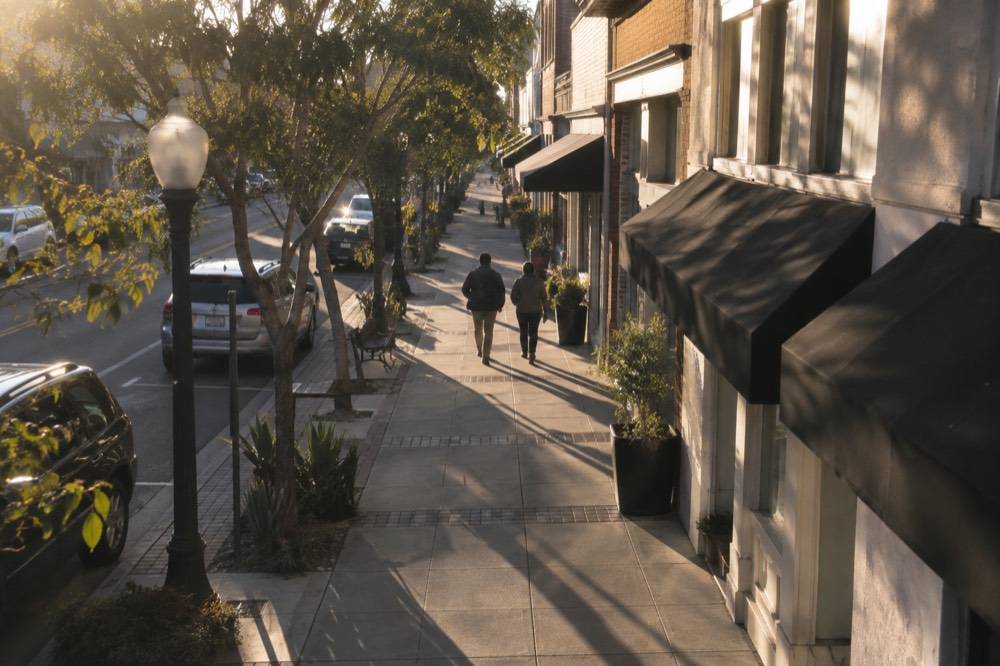
Chula Vista is San Diego County's second-largest city, lying along the eastern shore of San Diego Bay about 8 miles south of downtown and ending just short of the San Ysidro border crossing. It is a working, residential city rather than a resort town, and that is exactly why it can be useful to a visitor: the hotels sit closer to the border and the bay than almost anywhere else in the county, at a remove from downtown's tourist pricing. The city divides roughly into three parts. The west side faces the bay, with waterfront parks, marshland, and the Sweetwater channel. The center is the historic core around Third Avenue, a traditional downtown main street with a farmers market and a walkable strip of shops and restaurants. The east side, the newer Chula Vista built inland over recent decades, is of little interest to a short-stay visitor. Your time belongs on the west and center.
The bayfront is the piece worth knowing about. San Diego Bay's eastern shore here is shallow, quiet, and lined with parks and protected wetland rather than high-rises, which means the sunsets face the water and the downtown skyline rather than the open ocean. The county's water-quality monitoring covers these shorelines like any other, and the results are posted same day or next business day at the county's beach and bay status page, which is the page to check before any swim, kayak session, or shoreline walk after rain.
What Chula Vista is not: it is not a beach town in the Mission Beach sense. The bayside water is calm and shallow, good for paddling and birdlife rather than surfing. For waves you drive or ride west to Imperial Beach, covered in our Imperial Beach neighborhood guide, which is the county's southwesternmost corner and only a short hop south.
How Do You Get to Chula Vista Without a Car?
The Blue Line trolley is the answer, running from San Ysidro at the border, through Chula Vista, and north to downtown San Diego and onward to UC San Diego, with a one-way fare of $2.50 and a day pass at $6.00. The published end-to-end time from San Ysidro to UTC is 1 hour 23 minutes, and Chula Vista's stations sit in the middle of that line, so downtown San Diego is a short, cheap ride away. There is no reason to buy a day pass up front: the PRONTO fare system, a $2 physical card or the phone app, caps your spending automatically, and the official fare chart literally prints "Day Pass Earned" once your individual rides total the day-pass value. Load money, tap, and let the cap do the work. Contactless bank cards are accepted but they are one-way only and do not cap, so use PRONTO if you will ride more than twice.
The fare table, from the official MTS chart:
| Fare | Adult | Reduced (senior 65+, disabled, Medicare, youth with ID) |
|---|---|---|
| One-way, bus or Trolley, 2-hour transfers | $2.50 | $1.25 |
| Day Pass | $6.00 | $3.00 |
| Premium services one-way / day | $5.00 | $12.00 |
Two extras that matter for families: youth 18 and under ride free on the Youth Opportunity Pass, and up to two children aged 5 and under travel free with a paying adult. A family with teenagers is therefore looking at two adult fares, full stop. The full fare rules sit on the MTS fare chart page, which is the only source to trust if a fare ever looks different at the machine.
From the airport, there is no trolley station at SAN itself. The San Diego Flyer, a free shuttle, runs from the terminals to Old Town Transit Center roughly every 20 to 30 minutes from early morning to past midnight, and from there the Blue Line heads south through downtown toward Chula Vista. Alternatively, MTS Route 992 runs from both terminals into downtown for $2.50 every 15 minutes, from about 4:30 am to 1:00 am. Either way, the airport-to-Chula-Vista trip is one shuttle plus one trolley, and it costs nothing beyond the trolley fare.
If you are staying in Chula Vista and touring the big sights, a car is optional for downtown and the bay but useful for everything else. Our getting around San Diego guide breaks down when the trolley beats driving and when it does not, and our San Diego airport guide covers the arrival logistics in more depth.
What Is the Weather Like in Chula Vista?
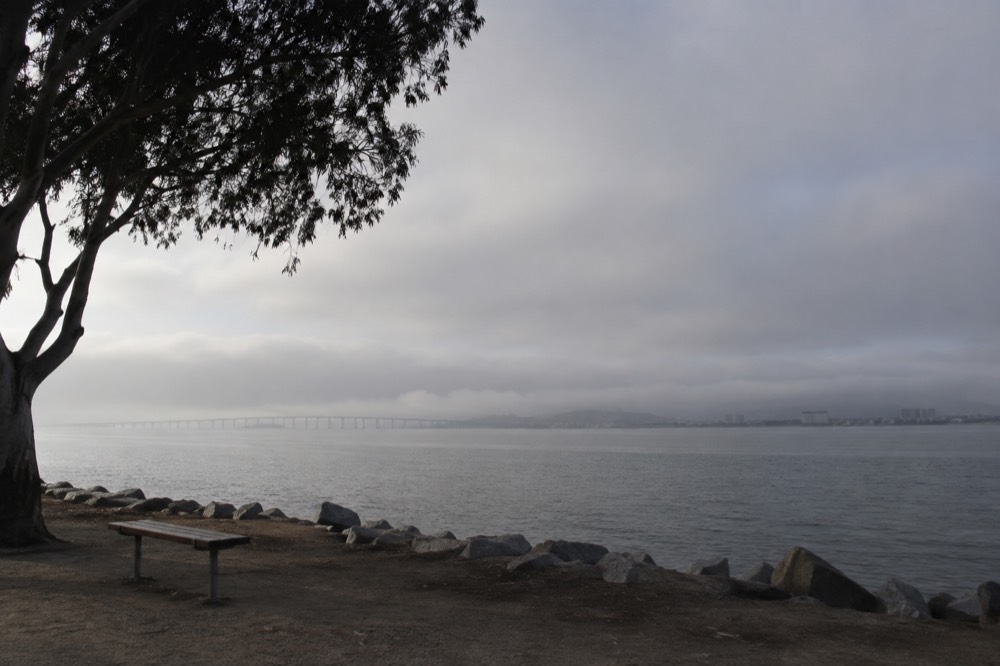
Chula Vista shares San Diego's coastal climate, with normal highs peaking in August and September, June famously greyer than its temperature suggests, and almost all of the year's rain falling between December and March. The marine layer is the story everyone underestimates. Locals call the grey May and June mornings May Gray and June Gloom, and you can see it plainly in the 30-year NOAA normals: June's normal high of 71.7°F is lower than October's 74.6°F, which makes no sense at first glance for a summer month. The reason is that low coastal cloud that burns off late, or some days not at all. Chula Vista sits on the bay rather than the open ocean, and the layer still reaches it, though it often clears an hour or so ahead of the beaches.
The normals, from NOAA's 1991-2020 series for San Diego:
| Month | Normal high °F | Normal low °F | Rain days (0.10 in or more) |
|---|---|---|---|
| January | 66.4 | 50.3 | 4.0 |
| March | 67.0 | 54.5 | 3.1 |
| June | 71.7 | 62.6 | 0.1 |
| August | 77.3 | 67.5 | 0.0 |
| September | 77.2 | 66.2 | 0.2 |
| December | 66.0 | 49.8 | 3.1 |
The counterintuitive takeaway, and the one that should shape your dates: September is San Diego's real summer. Its normal high of 77.2°F beats July's by nearly 2 degrees, and the ocean is warmer in September than in July, yet September is the single lowest-visitation month at Cabrillo National Monument across the last few years of counted visits. The crowds have gone home and the best weather has not. If your trip has any flexibility, September is the month to take it, and a South Bay base like Chula Vista is at its best then, because the bay water is at its warmest for paddling.
Rain, for planning purposes, is a winter phenomenon: December through March carry the bulk of the year's inches, and August's normal precipitation rounds to one hundredth of an inch with zero days of measurable rain. A summer or early-fall trip does not need an indoor plan. A winter trip does, and our indoor and rainy day San Diego guide is built for exactly those weeks.
What Is There to Actually Do in Chula Vista?
The honest answer is that Chula Vista's own draw is its bayfront: calm, shallow water, waterfront parks, protected marsh full of birdlife, and a walkable historic downtown around Third Avenue, best taken at a slow pace rather than as a checklist. The bayside parks are where locals spend weekends, with wide paths along the water and the downtown skyline sitting across the bay like a postcard. Because the water here is bay rather than open ocean, it is a forgiving place to paddle, and the protected wetland areas attract herons, egrets, and shorebirds in numbers the tourist beaches never see. Check the county's water-quality page linked above after any rain before you get in.
The historic downtown core around Third Avenue is the other half of a Chula Vista day. It is a classic main-street layout, one of the few left in the county, with a regular farmers market and a strip of independent restaurants and shops. Our San Diego farmers markets guide covers which markets run which days if you want to build a morning around one. The newer, inland Chula Vista east of the freeways is mostly residential, and there is no reason to spend visitor time there.
What you should not do is treat Chula Vista as a destination for the big-name attractions. Those are a trolley or a drive away, and the pairing works well in that direction: sleep in the South Bay, ride north for the day. The USS Midway Museum on the Embarcadero is a short Blue Line ride plus a walk, open 10:00 am to 5:00 daily with last admission at 4:00 pm, and adult tickets run $39 online against $41 at the door, with active duty military and children 3 and under free. It is a full aircraft carrier you walk through, flight deck included, and it anchors the downtown waterfront about as well as anything in the county. Our USS Midway Museum guide covers how to structure a visit.
For the bay itself, the water-based tours leave from the downtown Embarcadero, not from Chula Vista, but the trolley puts you there cheaply. A one-hour harbor cruise is the low-commitment version, and a longer scenic tour covers more of the bay's working waterfront, including the naval ships and the Coronado Bridge from the water. If you want the South Bay seen from the water rather than the shore, these are the tours that do it.
Is Chula Vista a Good Base for Seeing San Diego?
Yes, with one condition: it is a trolley-based base, not a walking base, so it rewards visitors who plan around the Blue Line and accept a 20-to-30-minute ride to the downtown sights in exchange for easier border access and a quieter, cheaper stay. The trade is straightforward. Downtown San Diego, the Gaslamp Quarter, the Embarcadero, and Petco Park all sit on or near the Blue Line, one flat fare away. Balboa Park and the Zoo need a short transfer or a bus at the downtown end, and our Balboa Park guide and San Diego Zoo tickets guide cover the arrival logistics. The beach communities, La Jolla, and the north county are all genuine drives, and if your trip is mostly beaches, base yourself near them instead; our where to stay in San Diego guide sorts the neighborhoods by trip type.
Parking is the practical question, and the honest answer is that this site earns nothing from telling you about it. If you keep the car and drive to attractions, know that the free-parking era is over at the big venues: Zoo parking is $16 per vehicle, Safari Park general parking is $20, and Balboa Park's lots run $8 to $16 a day depending on the lot and whether you are a city resident, with that entire paid-parking program approved for removal on 1 January 2027. Downtown meters run $2.50 an hour, and Sunday is no longer reliably free since enforcement was extended into commercial districts. The trolley, at $6.00 for a capped day pass, is frequently cheaper than the parking at the far end, which is the strongest argument for a South Bay base there is.
A base comparison, using verified figures only:
| Base question | Chula Vista as the answer | What it costs you |
|---|---|---|
| Border day trip | 15 minutes by trolley or car to San Ysidro | Nothing; this is the best position in the county for it |
| Downtown sights | Direct Blue Line, $2.50 each way | 20-30 minutes each way |
| Beaches and La Jolla | Drive required | 25-40 minutes by car |
| Balboa Park and Zoo | Transfer or bus at the downtown end | About 45 minutes door to door |
| Evening dining | Third Avenue locally, or ride to the Gaslamp | The Gaslamp means a late trolley back |
How Does Chula Vista Work for a Tijuana or Border Day Trip?
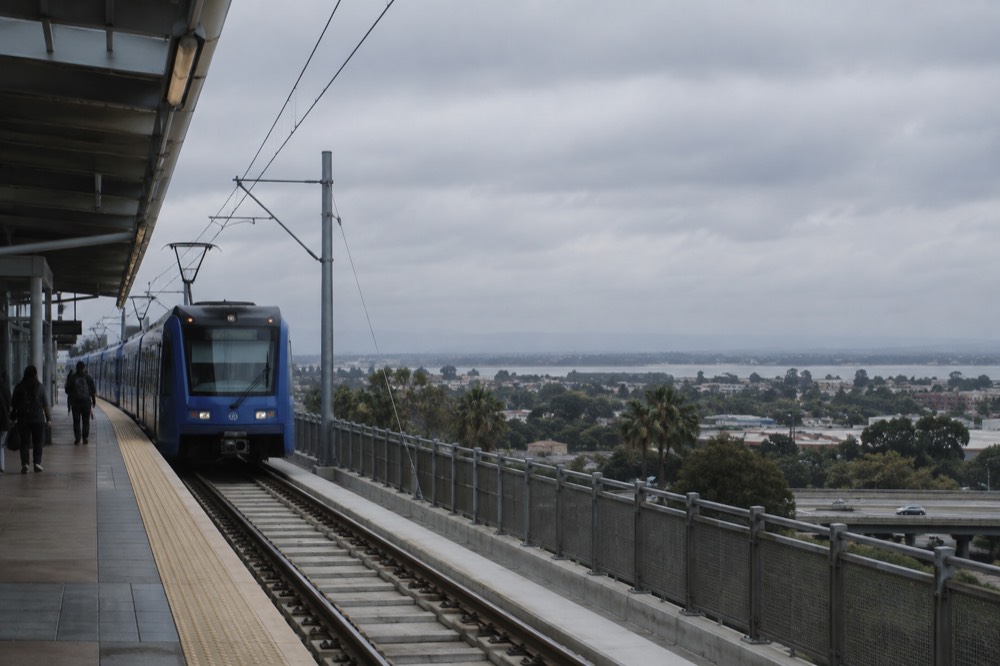
Perfectly, and it is the single best reason to stay here: San Ysidro, the busiest land border crossing in the western hemisphere, sits at the southern end of the Blue Line, a few minutes from Chula Vista, and the trolley spares you both the drive and the border-adjacent parking question entirely. The practical version is simple. Ride the Blue Line south to San Ysidro, walk across at PedEast, which is open 24 hours a day, seven days a week, and walk back the same way. PedWest runs limited weekday hours, 6:00 am to 2:00 pm, so PedEast is the default.
Documents first, because this is where day trips die. US citizens re-entering by land need a passport book, a passport card, an enhanced driver's license from a participating state, or a Trusted Traveler card such as SENTRI, NEXUS or Global Entry. Visa Waiver visitors need a valid, approved ESTA before land entry, a requirement at land borders since October 2022. If you carry an RFID-enabled document, use the Ready Lane: on the day this desk's research lane tested it, the pedestrian Ready Lane at 6:00 am moved in 5 minutes against 40 in the standard lane. That gap is not a promise, it is one observation, and no honest guide quotes a "usual" wait because no official historical table exists. CBP publishes live wait times hourly, and checking that feed before you walk back is the only reliable method. Our Tijuana day trip guide covers the whole crossing in depth, and a guided day trip with lunch removes the navigation entirely if you would rather not think about lanes and documents at all.
Which Nearby Areas Pair Well with a Chula Vista Stay?
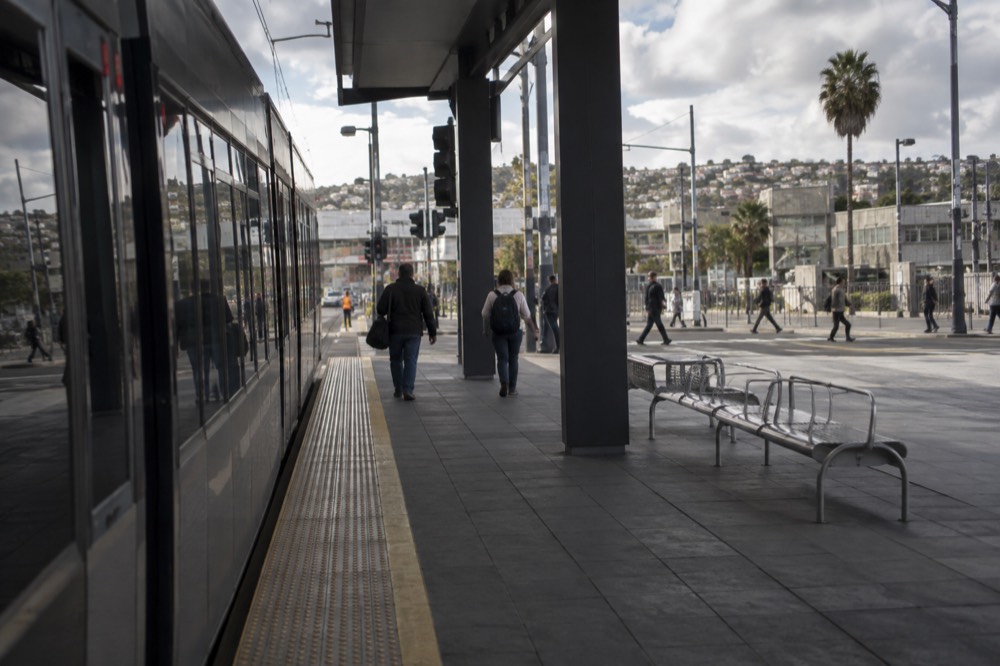
The natural pairings are Coronado and the downtown waterfront to the north, Imperial Beach to the west, and the border to the south, all within a short drive or a single trolley line, which lets you build varied days without ever crossing the whole county. Coronado is the showpiece: a bridge or a ferry ride away, with its famous hotel and a wide, flat beach that families love, and our Coronado guide plus our Coronado Beach guide cover it properly. Imperial Beach is the low-key surf alternative, the last stretch of US coastline before the fence, with a pier and a much slower pace than the northern beaches.
Downtown San Diego itself is the third pairing and the easiest, because the Blue Line ends up in the middle of it. The Gaslamp Quarter, the Embarcadero, Seaport Village, and Petco Park are all walkable from the trolley's downtown stations. A guided city-and-beaches highlights tour is the efficient way to see Coronado and the coastal neighborhoods in one five-and-a-half-hour pass if you do not want to plan the individual legs, and it pairs naturally with a South Bay base since it handles the driving you would otherwise do.
For a free introduction to the downtown side, the historic downtown and waterfront walking tour is worth booking early in your trip. It runs about two and a half hours, it is pay-what-you-want, and it is listed on GuruWalk, which is worth naming plainly because it is not our tour and the platform is where the reservation lives. A local guide walks the Gaslamp and the Embarcadero and covers the waterfront history that most visitors walk straight past. Doing it on day one orients you for everything you ride north to see afterward, and the price structure means there is no risk in trying it.
What Does a Good Chula Vista Day Actually Look Like?
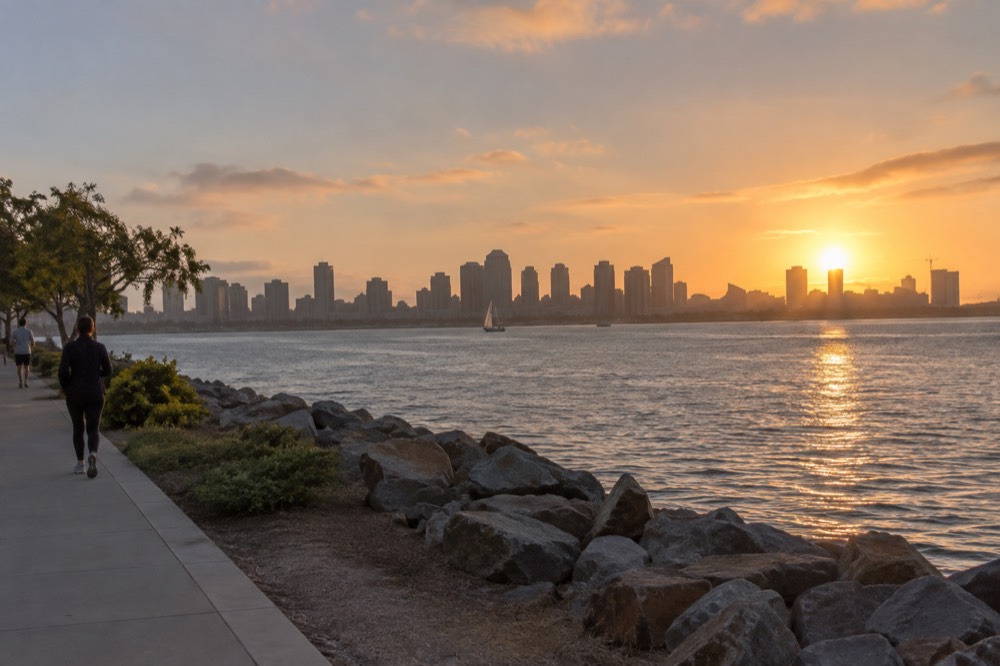
A good day here runs slow in the morning, rides the trolley north around midday, and finishes on the bayfront at sunset, using the $6.00 capped day pass to cover every leg without ever thinking about fares or parking or traffic. The shape below is a template, not a schedule; the point is the rhythm, which is what Chula Vista does well. You start with coffee and a walk where the pace is local, you spend the expensive hours at the attractions everybody comes to the county for, and you come home to the quiet side of the bay when the skyline lights up across the water.
| Time | Where | What you are doing |
|---|---|---|
| Morning | Third Avenue | Coffee, breakfast, the farmers market if it is a market day |
| Late morning | Bayfront parks | Walk or paddle the calm bay side; check water quality first |
| Midday | Blue Line north | $2.50 ride to downtown; lunch in the Gaslamp or Little Italy |
| Afternoon | Embarcadero | USS Midway, harbor cruise, or the free waterfront walk |
| Evening | Blue Line south | Ride back as the skyline lights up across the bay |
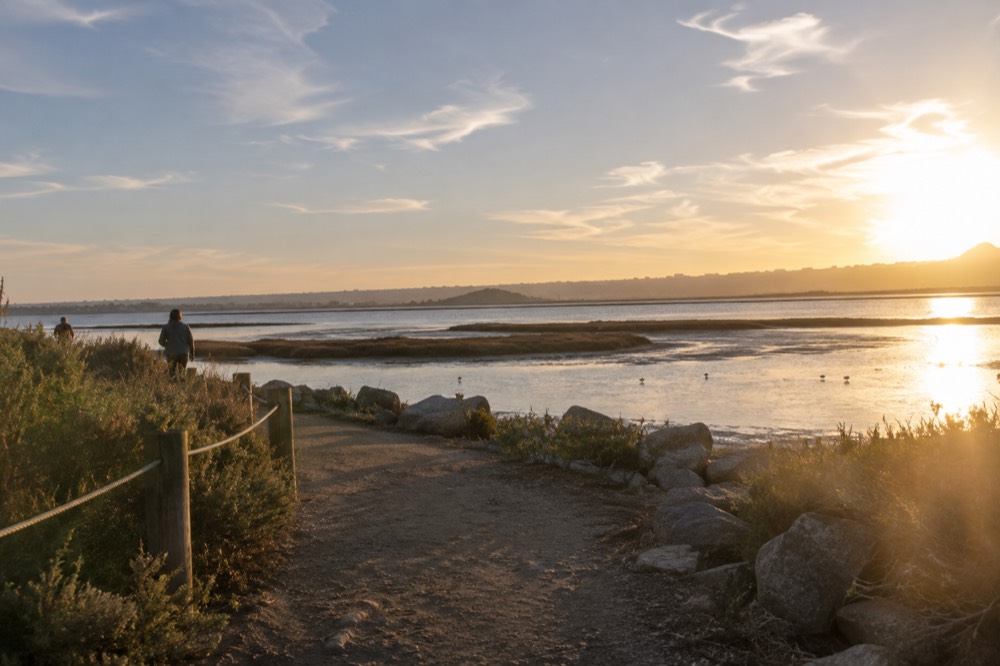
| Sunset | Bayfront | The view Chula Vista is named for, facing downtown |
Swap the afternoon for a Coronado or Imperial Beach leg on a second day, and the border for a third, and you have the outline of a full South Bay trip. Families should read our San Diego with kids itinerary before committing, and anyone stretching to a week should start from the San Diego 5-day itinerary and slot Chula Vista in as the base rather than adding it as a day trip.
Common Questions About Chula Vista
Is Chula Vista worth visiting?
As a destination in itself, it is a half-day place: the bayfront, the Third Avenue core, and not much more. As a base, it is genuinely good, because the Blue Line trolley puts downtown San Diego 30 minutes away for $2.50 and the San Ysidro border crossing a few minutes beyond that. Value it for position and calm, not for attractions.
How far is Chula Vista from downtown San Diego?
Roughly 8 miles. The Blue Line trolley covers it directly, with a one-way fare of $2.50, and the published end-to-end San Ysidro to UTC time of 1 hour 23 minutes puts Chula Vista's stations comfortably in the first half of that ride. Driving it takes 15 to 25 minutes depending on traffic on Interstate 5.
How do you get from San Diego airport to Chula Vista?
There is no trolley station at the airport. Take the free San Diego Flyer shuttle to Old Town Transit Center, roughly every 20 to 30 minutes, then the Blue Line south. Alternatively, MTS Route 992 runs from both terminals to downtown for $2.50 every 15 minutes, and you transfer to the Blue Line there.
Can you visit Tijuana from Chula Vista without a car?
Yes, and it is the easiest place in the county to do it from. The Blue Line runs to San Ysidro, and the PedEast crossing is open 24 hours a day. US citizens need a passport or equivalent document to re-enter, and ESTA visitors need an approved ESTA for land entry. Check the live CBP wait-time feed before walking back north.
Does Chula Vista have beaches?
It has a bayfront, not a surf beach. The water along the eastern shore of San Diego Bay is calm and shallow, good for paddling and shoreline walks. For surf and sand, Imperial Beach is the nearest ocean beach to the south and west, a short drive away.
When is the best time of year to visit?
September. Its normal high of 77.2°F is nearly 2 degrees warmer than July's, the bay water is near its annual peak, and the county's visitation has dropped after summer, so the attractions and roads are quieter while the weather is at its best. Avoid nothing, but bring a layer for June mornings, when the marine layer is at its thickest.