Hiking in San Diego: Best Trails, Coast and Desert Routes
San Diego is a hiking city in a way most visitors never expect. The county holds ocean bluff trails, canyon paths, mountain climbs and desert washes, often within an hour of downtown, and the climate normals say you can walk something almost any month of the year.
Short answer
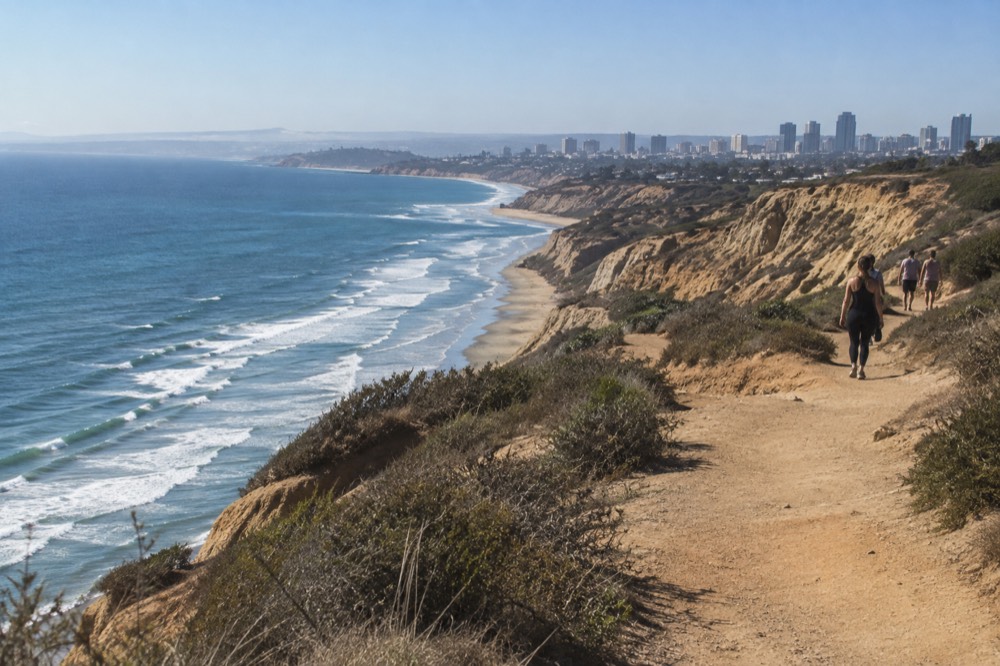
The best hiking in San Diego splits into three bands: coastal bluff walks at Torrey Pines and Sunset Cliffs, canyon and city-edge trails around Mission Trails and Mount Soledad, and desert routes in Anza-Borrego. MTS gets you to trailheads for $2.50 each way with a $6.00 daily cap. September is the warmest hiking month at a 77.2F normal high.
San Diego's trail network is bigger than its beach reputation suggests. The same county that sells you a harbor cruise also holds a state natural reserve on a bluff, a national monument on a point, one of the largest urban parks in the country, and a desert an hour and a half east where spring wildflowers draw crowds. The city's own lifeguard division staffs nine permanent oceanfront stations along roughly 24 miles of coastline, and much of that coast is walkable on footpaths rather than sand.
What surprises first-time visitors is the seasonality, and it runs backwards from what the postcards imply. The 30-year climate normals for San Diego International Airport put September's normal high at 77.2F, warmer than July's 75.3F, while June sits at just 71.7F, cooler than October. Locals call the grey coastal stretch May Gray and June Gloom, and it shows up in the temperature record itself. If you plan a hiking trip around "summer," you will pick the wrong month.
This guide covers where to actually walk, what the trails cost, how to reach trailheads without a car, and how to read the coastal closures and hours that catch people out. It leans on sources like the National Park Service for Cabrillo National Monument and the city's own pages for beach and safety rules, because trail misinformation travels fast in this town.
Where Are the Best Hikes in San Diego?
The strongest hiking in San Diego clusters in four areas: the coastal bluffs of Torrey Pines and Sunset Cliffs on the northwest edge, the canyons and parkland around Mission Trails and Mount Soledad inside the city, the bayside and point trails of Cabrillo National Monument on Point Loma, and the desert and mountain country east of the city in Anza-Borrego and the Laguna range. Each suits a different fitness level and a different amount of driving.
The coastal band is the easiest sell. Torrey Pines State Natural Reserve protects a rare pine found almost nowhere else, perched on sandstone bluffs above a beach that has appeared in more photographs than any other stretch of the county. The reserve's trails are short, well signed and heavily used, which makes them the best choice for a first hike or for families. Our full Torrey Pines reserve guide covers the trail layout and the parking situation in detail.
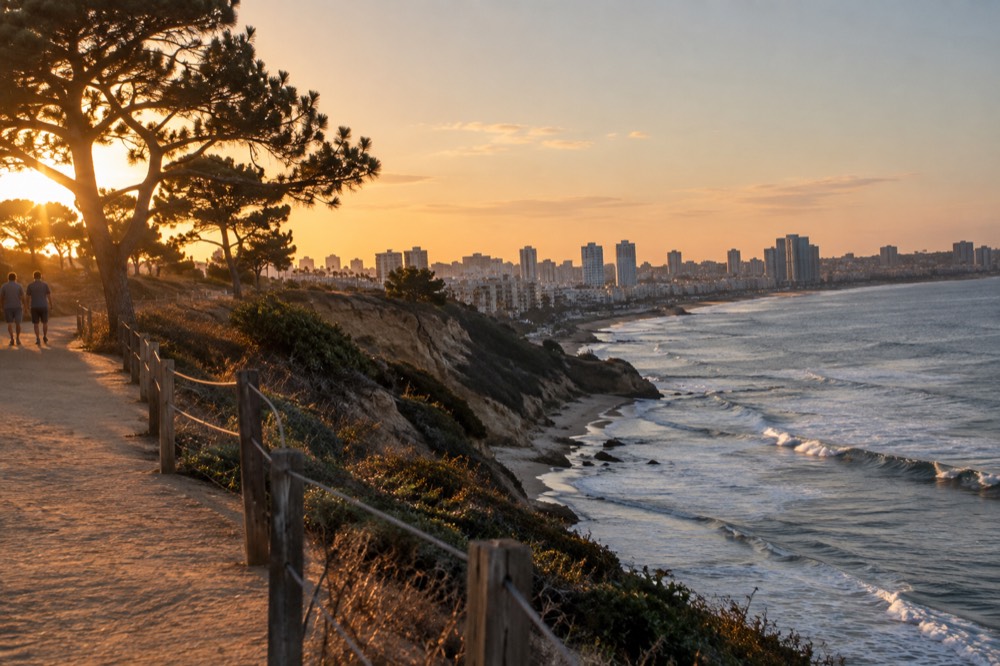
Sunset Cliffs Natural Park works differently. It is a bluff-top walk rather than a loop trail, and its appeal is the raw edge: unstable sandstone, arches visible at low tide, and a sunset that empties the parking areas by late afternoon. The Sunset Cliffs park guide explains where to enter and what the cliff closure signs mean.
Inland, the city's canyon system gives you trails without a car in some neighborhoods, and Mission Trails Regional Park holds serious climbing within city limits. Cabrillo National Monument, at the tip of Point Loma, is the one place where the trail, the tidepools and the history share a single entrance fee, and its staggered closing hours catch hikers every week. The Cabrillo National Monument guide has the full breakdown.
Which San Diego Trails Should a Beginner Start With?
A beginner should start with Torrey Pines' bluff-top loops, the Sunset Cliffs walk, the Old Town-adjacent Presidio Hills paths, or the bayside trail at Cabrillo National Monument, in that order. All four are under two hours on foot, all have restrooms or visitor facilities nearby, and none require anything beyond water, sun protection and closed-toe shoes. Save Potato Chip Rock and the desert washes for when you know how you handle heat and elevation.
Torrey Pines is the ideal first hike because the grade is gentle and the payoff arrives within the first quarter mile: the pine-covered bluff face and the long view down the coast. Go early. The small on-site lot fills on weekends and the overflow means street parking with a longer walk, which is the honest description rather than any dollar figure, since no published rate table exists for beach-adjacent street parking in San Diego.
Cabrillo suits a beginner who wants a destination, not just a walk. The entrance fee is $20 per private vehicle and the pass is valid for seven days, which is unusual among day-use sites. The Bayside Trail is the park's signature walk and it closes at 4:00 pm, a full hour before the main gate, so an afternoon arrival means you will be turned back at the trailhead while the lighthouse stays open. The National Park Service publishes the full staggered closing schedule at its Cabrillo hours page.
For something with zero driving, the free walking options around Old Town and the Embarcadero are not hikes in the trail sense, but they get a reluctant companion moving. The Wild West Stories of Old Town walk, a pay-what-you-want tour listed on GuruWalk, runs about two hours through the historic district and pairs well with a Presidio Hills stroll afterward.
What Do the Hard Hikes Look Like, and What Do They Cost in Effort?
The hardest popular hikes near San Diego are the Potato Chip Rock climb on Mount Woodson, the summit and gorge routes inside Mission Trails Regional Park, and anything in Anza-Borrego Desert State Park once temperatures pass 80F. All three punish unprepared walkers the same way: exposed sun, unreliable shade and no water on the route. None of them charge an entrance fee, which is the only easy thing about them.
Potato Chip Rock is the county's most photographed summit slab, and the Potato Chip Rock guide covers the approach options and the queue that forms at the rock itself on weekends. The climb is steady and almost entirely unshaded, so a summer midday start is the mistake everyone makes once. Locals start at sunrise in the warm months.
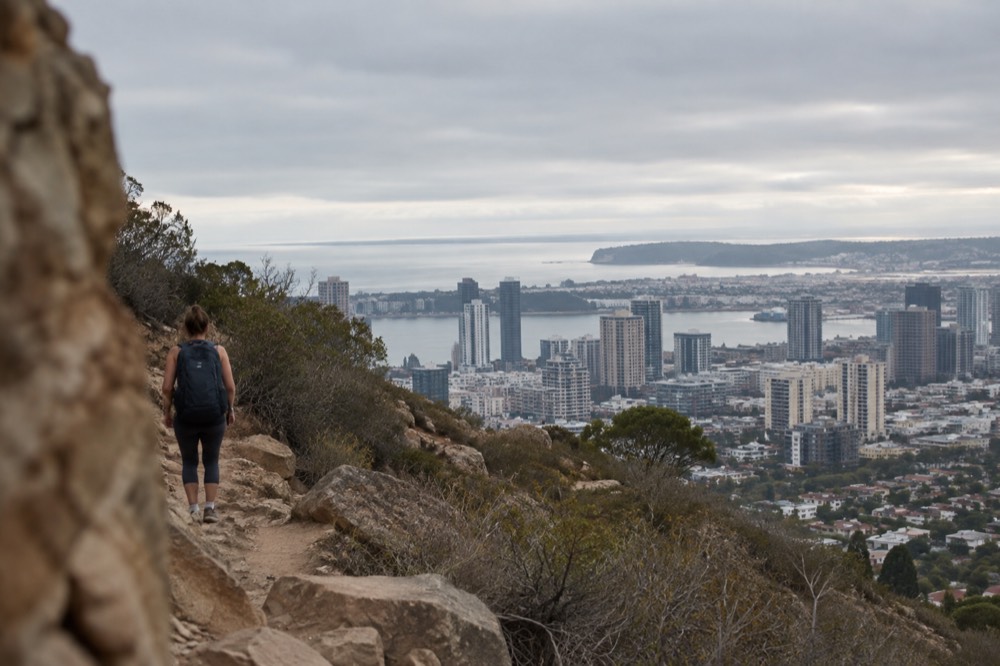
Mission Trails is the city's big interior park, with summit trails that give you a real workout plus a river valley that flattens out for easier days. It is the place locals point to when a visitor asks for "a real hike" inside city limits, and it costs nothing to enter.
Anza-Borrego, east over the mountains, is a different sport. Spring wildflower blooms turn the desert floor into a destination, and the Anza-Borrego guide covers the bloom timing and the borrego palm canyon walks. Carry more water than feels reasonable, tell someone where you are going, and treat any desert temperature above 80F as a morning-only invitation. The desert does not grade on a curve.
How Do You Get to Trailheads Without a Car?
The MTS system gets hikers to several trailheads for $2.50 one way, with a $6.00 day pass cap through the PRONTO card, and youth 18 and under ride free. The Blue Line trolley reaches UC San Diego and the La Jolla edge, buses serve Mission Trails and the coast highway through La Jolla, and there is no trolley station at the airport, so fly-in hikers should start from downtown or Old Town.
The fare structure rewards pay-as-you-go over upfront day passes. PRONTO, the region's fare system, applies fare capping: the official fare chart reads "Day Pass Earned" once your rides total the day-pass value, so there is no reason to buy a day pass in advance. A $2 physical card or the app both work. Contactless bank cards are accepted for single rides but do not cap, which matters if you plan three or more rides in a day.
| Fare (MTS bus and Trolley) | Adult | Reduced (senior 65+, disabled, Medicare, youth with ID) |
|---|---|---|
| One-way, 2-hour transfers | $2.50 | $1.25 |
| Day Pass | $6.00 | $3.00 |
| Premium services one-way / day | $5.00 / $12.00 | not published |
The practical trailhead connections worth knowing: buses run along the coast through Pacific Beach and La Jolla toward the Torrey Pines area, the Old Town Transit Center is the inland hub for eastern routes, and the Blue Line's published end-to-end time from San Ysidro to UTC is 1 hour 23 minutes, which tells you how far south the system reaches. For coastal walks, the getting around San Diego guide maps the trolley lines against the neighborhoods.
One honest limitation: the best desert and mountain hikes, Anza-Borrego, Julian and the Lagunas, have no meaningful transit. Those are car days, and the Julian guide covers the mountain drive. If you want a car-free city hiking trip, build it around Torrey Pines, Mission Trails, Cabrillo and the canyons, and leave the desert out.
If you would rather not drive at all, the narrated hop-on hop-off trolley is a workable way to see the city between walking days: it runs for two days on one ticket and covers downtown, Balboa Park and the waterfront. Check availability on the operator's live listing.
When Is the Best Season for Hiking in San Diego?
September is the best hiking month in San Diego by the temperature record: its 77.2F normal high beats July's 75.3F, rain is nearly absent at 0.12 inches, and coastal crowds thin after Labor Day. March through May is the green window after winter rain, June is the greyest month on the coast, and the desert season runs late fall through early spring, reversing entirely in summer.
The climate normals tell the story more honestly than any local folklore. June's normal high, 71.7F, is lower than October's 74.6F, and that gap is the fingerprint of the marine layer locals call May Gray and June Gloom. The grey deck sits on the coast while inland trails stay clear, so a grey June morning at the beach is often a bright June morning at Mission Trails. Plan accordingly: coastal walks in June, inland ones any month.
Rain is a winter phenomenon here. December through March carry 7.3 of the year's roughly 10 inches, and August's normal precipitation rounds to one hundredth of an inch with zero days of measurable rain. That means mud is a December-to-March problem on canyon trails and essentially never a summer one, and it means the desert bloom window, when it happens, falls in that same wet winter into spring.
| Month | Normal high | Normal low | Rain (in) | What it means for hikers |
|---|---|---|---|---|
| March | 67.0 | 54.5 | 1.46 | Green hills, occasional mud, best all-round month |
| June | 71.7 | 62.6 | 0.05 | Marine layer on the coast, clearer inland |
| July | 75.3 | 66.1 | 0.08 | Warm but not the warmest, coastal fog mornings |
| September | 77.2 | 66.2 | 0.12 | Warmest month, driest trails, thinnest crowds |
| December | 66.0 | 49.8 | 1.67 | Cool walks, wettest trails, earliest sunsets |
The counterintuitive part, and the fact most guides miss: September is also the quietest month at Cabrillo National Monument. The park's own visitation counts across 2022-24 show September as the single lowest month, 56,876 recreation visits against July's 83,999, a gap of roughly 48 percent, even though September is the warmer month. You get the best walking weather and the emptiest trails at the same time.

What Are the Rules and Safety Basics on San Diego Trails?
The safety basics that matter here are rip currents if your trail meets the ocean, alcohol prohibition on city beaches and parks, the staggered 4:00 pm trail closures at Cabrillo, and heat on exposed inland and desert routes. The city's lifeguard division staffs nine permanent oceanfront stations year round, roughly 9:00 am to dusk, and its published rip-current advice is to swim parallel to shore until the pull relaxes.
If a hike ends at a beach, and several do, the rip-current rule is the one to carry. The city's own safety page is blunt: stay calm, swim parallel to the shore until the current relaxes, then angle in, and float and wave if you cannot make it. Never swim alone, and swim near a lifeguard. That advice lives at the city's rip current page.
Two prohibitions catch visitors. Alcohol is banned on San Diego city beaches, boardwalks and parks, so a summit beer at a coastal bluff park is a citation, not a toast. And Cabrillo's trail hours are enforced, not advisory: the Bayside Trail and Oceanside Trail close at 4:00 pm, the tidepools and the whole coastal area close at 4:30 pm, and the main gate closes at 5:00 pm with everyone out. There is no public access before 9:00 am or after 5:00 pm at all, including jogging and biking. The full index of guides sits on Things to Do in San Diego.
For desert and mountain routes, the standard rules are the ones that save lives anywhere: more water than you think you need, a start before the heat, a told-someone plan, and a willingness to turn around. San Diego County is big enough that a rescue can take hours, and cell coverage in the eastern canyons is patchy.
Can You Combine Hiking with Sightseeing in One Day?
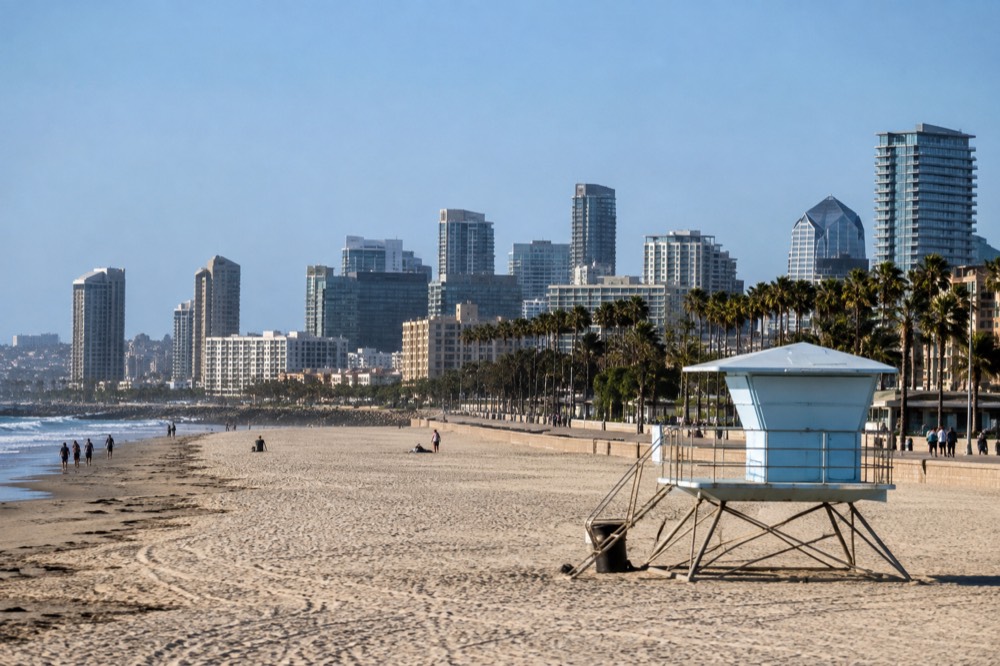
Yes, and the combination is where San Diego beats most hiking destinations: pair a morning bluff walk at Torrey Pines or Sunset Cliffs with an afternoon at the USS Midway Museum, a Balboa Park wander, or a harbor cruise, all inside one day and mostly inside one transit pass. The trick is geography, since the best walks and the biggest attractions sit on the same coastal edge.
The classic pairing is Torrey Pines in the morning, when the lot is fillable and the light is soft, then the drive or bus south to the Embarcadero. The USS Midway Museum sits at 910 N. Harbor Drive, open 10:00 am to 5:00 pm with last admission at 4:00 pm, closed only Thanksgiving and Christmas Day. Adult admission is $39 online against $41 at the door, and children 3 and under plus active duty military with ID enter free. The USS Midway Museum guide covers the ship layout.
Balboa Park works as the soft middle of a hiking day. The park grounds, gardens and trails carry no admission at all, the Botanical Building is free, and the free park tram runs 8:00 am to 8:00 pm between lots and the central mesa. If your legs still work, a Balboa Park walking tour with a local guide turns the same two hours into something with stories attached. Check availability on the operator's live listing if that appeals.
One parking note that will not survive the year unchanged: paid parking in Balboa Park runs $8 to $16 a day depending on lot and residency right now, but City Council has formally approved removing paid parking entirely effective January 1, 2027. After that date the lots go free. Any article, including this one, that states a Balboa Park parking price is stating a fact with an expiry date, so treat the dollar figures as true today and check the city page near your trip.

The city between trails rewards the curious. A two-hour GoCar tour, a small story-telling vehicle you drive yourself, covers downtown and Old Town or the beaches route, and it is a decent way to scout tomorrow's walking territory without committing your legs. It pairs naturally with a rest day between hikes, and the operator's live listing carries the current schedule and availability.
What Should You Pack for a San Diego Hike?
Pack for sun and wind rather than rain in every month except December through March: one liter of water minimum per person on coastal walks and double that inland, closed-toe shoes with grip for sandstone, a wind layer for exposed bluffs, and sun protection year round. The ocean off La Jolla averages just 58.1F in January against 68.7F in August, so a coastal breeze carries real chill even on a warm afternoon.
The layer question is the one visitors get wrong. Coastal bluff trails at Torrey Pines and Sunset Cliffs sit in wind almost continuously, and the marine layer keeps June mornings ten degrees cooler than the same afternoon inland. A light windbreaker earns its place in the pack every month. Inland and desert routes flip the problem: shade is scarce and the sun is the hazard, so a brimmed hat matters more than the jacket.
Water discipline is desert discipline anywhere east of the mountains. A useful rule from the ranger world is a liter for a short walk, two for a half day, and more than feels sensible once temperatures pass 80F. The county's eastern trails have no reliable water sources, and the coastal ones mostly have faucets only at visitor centers.
| Item | Coastal bluffs | Canyons and summits | Desert routes |
|---|---|---|---|
| Water per person | 1 liter | 2 liters | 3 liters or more |
| Footwear | Grip sole for sandstone | Trail shoe with ankle support | Trail shoe, gaiters for sand |
| Layers | Windbreaker | Sun shirt plus wind layer | Full sun coverage, hat |
| Timing | Early for parking | Early for shade | Sunrise start only in heat |
| Extras | Tide chart if tidepooling | Map, phone battery | Offline map, told-someone plan |
The tide chart matters more than people expect. Cabrillo's tidepools are the county's best, and the whole coastal area closes at 4:30 pm regardless of the tide, so a low tide after that hour is a missed opportunity. Negative low tides, the ones worth building a day around, cluster around new and full moon days, and the park's own whale watching page notes that more than 20,000 gray whales pass offshore, most visible from mid-to-late December through March, with mid-January the peak. A winter bluff walk with whales offshore is the county's best free show.
Which Hikes Work for Families with Kids?
The best family hikes are Torrey Pines' bluff loops, the Cabrillo Bayside Trail with the lighthouse and tidepools as rewards, the flat Mission Bay and Mission Beach paths, and the La Jolla Cove walk with its sea lions, all of which are short, facility-adjacent and bailout-friendly. The San Diego Zoo and Safari Park are not hikes, but they log more family steps than most trails, and the Zoo's parking is $16 per vehicle.
The family test is not distance, it is the exit. A trail a six-year-old can quit at the twenty-minute mark without a rescue is a good family trail, and Torrey Pines passes it because the loop returns to the same lot. Cabrillo passes it because the visitor center, bookstore and lighthouse give non-hiking family members something to do while the walkers walk. The fee structure helps: $20 per vehicle covers everyone, and the pass is valid seven days.
For the youngest walkers, the family beaches guide pairs short coastal strolls with lifeguarded swim spots, and the things to do with kids itinerary builds full days around low-effort walking. The La Jolla Cove guide covers the sea lion viewing that turns a half-mile walk into an hour of standing still, which, for a child, is the point.
One caution specific to La Jolla: the harbor seal pupping closure at the Children's Pool and the sea lion rules at the Cove are real, dated restrictions, and the exact dates change. Do not plan around any specific closure window you read in a guide, including this one. Check the posted signage on site, which is current by definition, and give the animals the distance the signs demand.

How Much Does a Hiking Day in San Diego Cost?
A hiking day can cost nothing: the city's canyon trails, Sunset Cliffs, Torrey Pines' beach walk and Mission Trails are free, and MTS caps a day of transit at $6.00. The paid pieces are optional: Cabrillo at $20 per vehicle, Zoo parking at $16 per vehicle, Safari Park general parking at $20, and Balboa Park's lots at $8 to $16 a day until paid parking ends on January 1, 2027.
The free list is genuinely long, and it is the honest answer to budget questions. The grounds and gardens of Balboa Park, the Spreckels Organ Pavilion's free Sunday concerts from 2:00 to 3:00 pm year round, the Sunset Cliffs walk, the canyons, Mission Trails, and the coastal sidewalks all cost zero. Our free things to do guide extends the list past walking.
Where money enters, it enters through parking and the big-ticket attractions. The Zoo began charging for parking on January 5, 2026, at $16 per vehicle, aligned with the city's Balboa Park system. Safari Park general parking is $20 per vehicle with no in-and-out privileges, though San Diego Zoo Wildlife Alliance adult members park free there. Beach and Coronado street parking has no published rate table, and the honest description is that it is free to park and very hard to find in summer, especially near Mission Beach and La Jolla.
| Cost item | Price | Notes |
|---|---|---|
| MTS one-way fare | $2.50 | PRONTO caps at day pass value automatically |
| MTS day pass cap | $6.00 | Earned automatically, no need to buy upfront |
| Cabrillo vehicle entry | $20 | Valid 7 days, up to 15 passengers |
| Cabrillo on foot or bicycle | $10 per person | Group of up to 4 capped at $20 |
| San Diego Zoo parking | $16 per vehicle | Began January 5, 2026, first come first served |
| Safari Park general parking | $20 per vehicle | No in-and-out privileges |
Transit remains the budget lever. Two children aged 5 and under ride free with a paying adult, youth 18 and under ride free entirely on the Youth Opportunity Pass, and the reduced fare for seniors 65 and over is $1.25 one way. A family of four with teenagers can reach a coastal trailhead for the price of one adult round trip, which changes the math on a week of walking.
For the days your legs need a break from trails, the entry ticket to the USS Midway Museum is a worthwhile spend at $39 online for adults, $29 online for youth 4-12, and the ship rewards two to five hours of self-guided wandering. The operator's live listing carries current availability if a rest-day visit appeals.
Planning a Full Hiking Trip: How Many Days Do You Need?
Three days covers the essential hiking in San Diego well: day one on the coastal bluffs at Torrey Pines and Sunset Cliffs, day two at Cabrillo and the Point Loma bayside plus the canyons, and day three east to Anza-Borrego or the Laguna mountains by car. A five-day trip lets you add Mission Trails properly, a La Jolla coastal morning, and one non-hiking day for the Zoo, Midway or Balboa Park.
The sequencing logic is simple: cluster the transit-friendly walks early while your legs are fresh, and save the driving days for when you want a slower morning. The three day itinerary and five day itinerary pages build exactly this shape with non-hiking days folded in, and the first time in San Diego guide is the right read if this is your opening visit.
Weather should drive the order more than the guidebook does. In June, put the coastal walks after ten in the morning when the grey deck thins, and keep the inland climbs for the bright hours. In September, everything is on the table at any hour, and the crowd data says the trails will be emptier than the postcard months. In December through March, watch the rain forecast, since canyon trails hold mud for a day or two after each storm.
Where you stay matters less for hiking than for the beach trip, because the trailheads spread across the whole county. Downtown and Old Town put you on the trolley lines with the easiest transit access, La Jolla puts you walking distance from the cove and a short hop from Torrey Pines, and anything east of the city positions you for the desert. The [where to stay](https://booking.tpk.ro/737WL7iF) guide breaks the tradeoffs down neighborhood by neighborhood.
Common Questions About Hiking in San Diego
Where are the best hikes in San Diego?
Torrey Pines State Natural Reserve for bluff trails, Sunset Cliffs for the coastal walk, Mission Trails Regional Park for real climbing inside the city, Cabrillo National Monument for the bayside trail and tidepools, and Anza-Borrego Desert State Park for the desert, about an hour and a half east.
When is the best month for hiking in San Diego?
September, by the temperature record. Its normal high of 77.2F beats July's 75.3F, rain is nearly absent, and Cabrillo National Monument's own counts show September as its least visited month, roughly 48 percent below July. March through May is the green window after winter rain.
Is hiking in San Diego free?
Mostly yes. The city's canyon trails, Mission Trails, Sunset Cliffs and Balboa Park's grounds cost nothing, and MTS caps a transit day at $6.00. Cabrillo charges $20 per vehicle, valid seven days, and the Zoo and Safari Park charge for parking at $16 and $20 per vehicle respectively.
Can you hike in San Diego without a car?
Yes for the coastal and city trails. Buses serve the coast through La Jolla toward Torrey Pines, the trolley reaches UC San Diego on the Blue Line, and PRONTO caps fares at $6.00 a day. The desert hikes in Anza-Borrego and the mountains have no practical transit and need a car.
What should I pack for a San Diego hike?
Water, one liter coastal and two or more inland, closed-toe shoes with grip, sun protection year round, and a wind layer for exposed bluffs. The ocean off La Jolla averages 58.1F in January and 68.7F in August, so coastal wind carries real chill even on warm afternoons.
Are San Diego trails safe?
The popular trails are well used and generally safe. The real hazards are rip currents where trails meet the ocean, heat on unshaded inland and desert routes, and the enforced 4:00 pm trail closures at Cabrillo National Monument. Swim near a lifeguard, carry more water than feels reasonable, and start desert walks at sunrise.