What Is the Most Beautiful Hike in San Diego?
Torrey Pines State Natural Reserve is the most beautiful hike in San Diego: rare pines, sandstone bluffs and open Pacific views, minutes from downtown. Here is how to hike it and what to pair it with.
What Is the Most Beautiful Hike in San Diego?
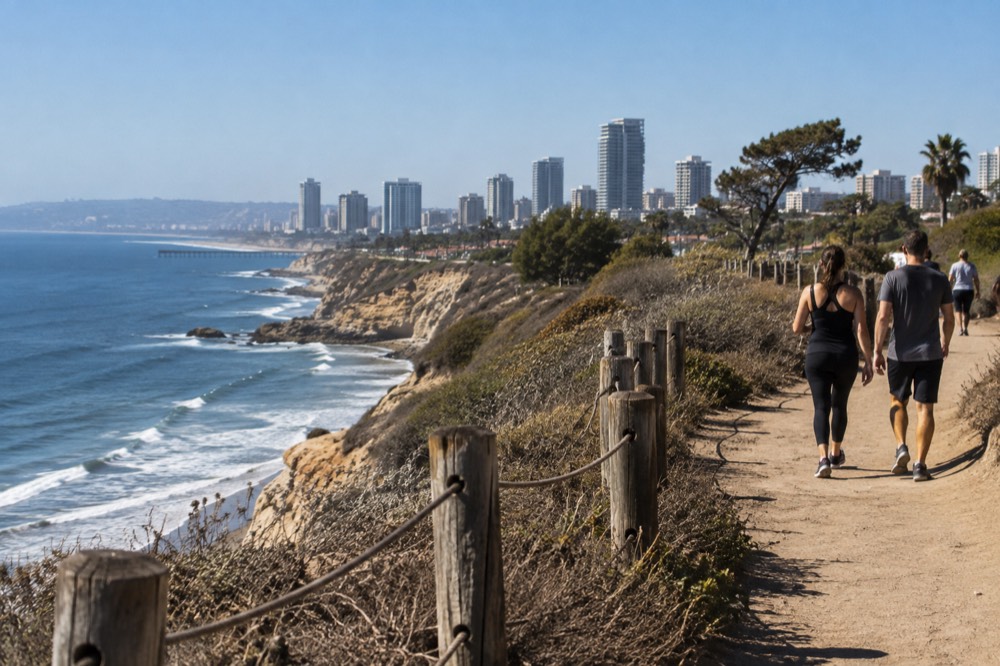
The most beautiful hike in San Diego is the bluff trail through Torrey Pines State Natural Reserve, on the coast between La Jolla and Del Mar. It is the only place on earth where the Torrey pine grows wild, the sandstone cliffs are carved into shapes that look unreal in late light, and the trail keeps handing you long, open views over the Pacific from start to finish. No other hike in the county puts a rare tree, a dramatic coastline and a wild beach in one two-hour walk.
The reserve sits on a headland that feels further from the city than it is. You leave the car at the base of the hill, climb through low coastal scrub, and the vegetation opens out onto bare sandstone terraces where the pines lean sideways away from the wind. Below you, the beach runs uninterrupted for miles in both directions. On a clear morning you can see the curve of the coastline north toward Del Mar and, south, the whole sweep past La Jolla.
What makes it beautiful rather than merely scenic is the combination. A single great view is something San Diego gives away freely at places like Sunset Cliffs. Torrey Pines strings those views together and wraps them around a tree that exists nowhere else in the wild, on bluffs eroded into fins and hollows that change color as the sun moves. Reviewers on the hiking pages we track describe it as the one walk they would repeat on every trip, and it is easy to see why.
The reserve is also honest about what it is. It is a protected natural area, not a landscaped park, so the trails are kept narrow and the vegetation is left alone. That restraint is the point. The full guide to Torrey Pines State Natural Reserve covers the reserve layout in depth, and it is the page to read before you go.
Why Does Torrey Pines Beat the Other Famous Hikes?
Torrey Pines wins because it concentrates three rare things into one short walk: the only wild population of the rarest pine in North America, eroded sandstone bluffs that look sculpted, and continuous Pacific views with a wild beach at the bottom of the trail. Potato Chip Rock has the photo, Sunset Cliffs has the sunset, but neither gives you all three elements at once, and neither holds up in the middle of the day the way the reserve does.
The honest competition is real, though. Potato Chip Rock on Mount Woodson is the most photographed slab of granite in the county, and the queue to stand on it can be longer than the walk. The full Potato Chip Rock trail guide explains the hike and what to expect at the summit. It is a great hike. It is not the most beautiful one, because the reward is a single rock and a single view rather than a landscape that keeps changing around you.
Sunset Cliffs Natural Park is the other contender, and on the right evening it comes close. The Sunset Cliffs guide covers the bluff walk and the cave arches below. Its weakness is that its beauty is time-locked: at noon the cliffs flatten out, while Torrey Pines holds visual interest from mid-morning onward because the eroded terraces carry their own texture and shadow.
If you want to compare more options, the hiking in San Diego overview maps the county's main trails by area and difficulty. But if the question is strictly about beauty, the ranking is not close.
| Hike | Why it is beautiful | Best for | The honest catch |
|---|---|---|---|
| Torrey Pines State Natural Reserve | Rare pines, carved sandstone, Pacific views, wild beach | Almost everyone, including visitors short on time | Popular lot fills early on weekends |
| Potato Chip Rock, Mount Woodson | The famous photo, wide inland views from the summit | Fit walkers who want the picture | Long climb, summit line for the photo |
| Sunset Cliffs Natural Park | Ocean arches and cliff color at golden hour | Sunset watchers, easy walkers | Plain at midday, no shade anywhere |
One thing the table cannot show is how the reserve feels in the last hour before closing, when the day-trippers have gone and the light turns the sandstone orange. That window is the closest thing San Diego has to a guarantee.
How Hard Is the Walk, and Who Can Do It?
The main bluff trail at Torrey Pines is a moderate walk of roughly an hour to an hour and a half round trip, with one steady climb from the beach lot to the terrace level and mostly gentle walking after that. It is not a scramble and needs no special gear beyond water and closed shoes, though the sandstone edges are unfenced in places, so it is a walk to keep children close on. Older visitors and casual walkers complete it regularly.
The climb from the lower beach lot to the top of the headland is the only real effort, and it is short. Once you are up, the trails along the terrace are near level, and there are several short loops, so you can lengthen or shorten the walk to suit the group. The reserve also allows you to descend to the beach and walk back along the sand, which turns the hike into a loop with a completely different character on the way down.
Footwear matters more than fitness. The sandstone is gritty and loose on the steeper sections, and it is slick in the mornings when the marine layer has dampened it. Ordinary sneakers are fine. Flip-flops are not, and the beach section at the bottom is soft sand.
If anyone in your group cannot manage the climb, there is a paid parking area near the top of the headland that removes most of the elevation gain, so the terrace trails and the best viewpoints are still reachable. Check the reserve's own signage on the day, because that lot is small and closes when it fills.
When Should You Go, and What About the Weather?
Go on a weekday morning, ideally between mid-morning and early afternoon, when the marine layer has usually burned off the coast and the weekend crowds have not arrived. September and October are the sweet spot: the ocean is at its warmest in August and September, the air stays at its summer peak into September, and the coast is often clear when it is grey in June. For whales, mid-January to February is the peak of the gray whale migration past San Diego.
The coastal cloud pattern locals call May Gray and June Gloom is the single biggest thing out-of-town hikers misjudge. The temperature normals tell the story without any guesswork: June's normal high at the airport is 71.7F, which is lower than October's 74.6F. The coast runs grey and cool in early summer while inland stays clear, and a hiker who shows up at Torrey Pines at 8:00 am in June may see nothing but fog.
The fix is timing, not cancellation. The marine layer usually thins from late morning, and a foggy start often becomes a clear, mild afternoon. August and September are the warm, dry months, with essentially no measurable rain in the normals and the warmest sea temperatures of the year, 68.7F on average in August at the La Jolla station. September is also the quietest month on the coast, which brings us to the site's favorite piece of counterintuitive data.
| Season | Coast conditions | What it means for the hike |
|---|---|---|
| May to June | Marine layer most mornings, mild and grey until midday | Start late, expect fog to thin from late morning |
| July to August | Clearest and warmest, ocean at its peak | Arrive early for parking |
| September to October | Warm, clear, quietest trails of the year | The best window overall |
| December to February | Green hills, gray whales offshore, rain possible | Bring a layer, watch the forecast |
The gray whale season is a genuine bonus for winter hikers. The National Park Service, which tracks the migration past nearby Point Loma, says more than 20,000 gray whales pass offshore each year and that mid-January is the peak, with the best viewing on calm mornings before the wind picks up. From the Torrey Pines terraces you are looking at the same stretch of migration corridor, and spotting a spout from a bluff trail is not unusual in that window.
What Should You Bring, and What Are the Rules?
Bring more water than feels necessary, closed shoes, sun protection and nothing that disturbs the reserve: no picking anything, no drones, no leaving the marked trails. The pines and the eroded sandstone are exactly what the reserve exists to protect, and the rules are enforced for good reason. There is no shade on the terraces, so a hat is not optional on a clear day.
The trail rule is the one to take seriously. The sandstone terraces look like an invitation to explore, and every footstep off the path damages a surface that took thousands of years to form. The reserve's own materials ask visitors to stay on designated trails, and the erosion you can see along the cliff edges is a visible lesson in why.
Dogs are not allowed in the reserve, including on the beach section within the park boundary, which surprises visitors who know how dog-friendly San Diego's other beaches are. If you are traveling with a dog, plan the hike for a member of your party and meet up afterward, or pick a different trail from the best beaches in San Diego guide, which notes which stretches welcome dogs.
Alcohol is prohibited on San Diego's city beaches and boardwalks, and the general beach rules, no glass, no littering, apply to the state beach at the base of the reserve. Pack out everything. The wild, unprogrammed look of the place is the reason it is beautiful, and it stays that way because most visitors respect it.
How Do You Pair the Hike with the Rest of a San Diego Day?
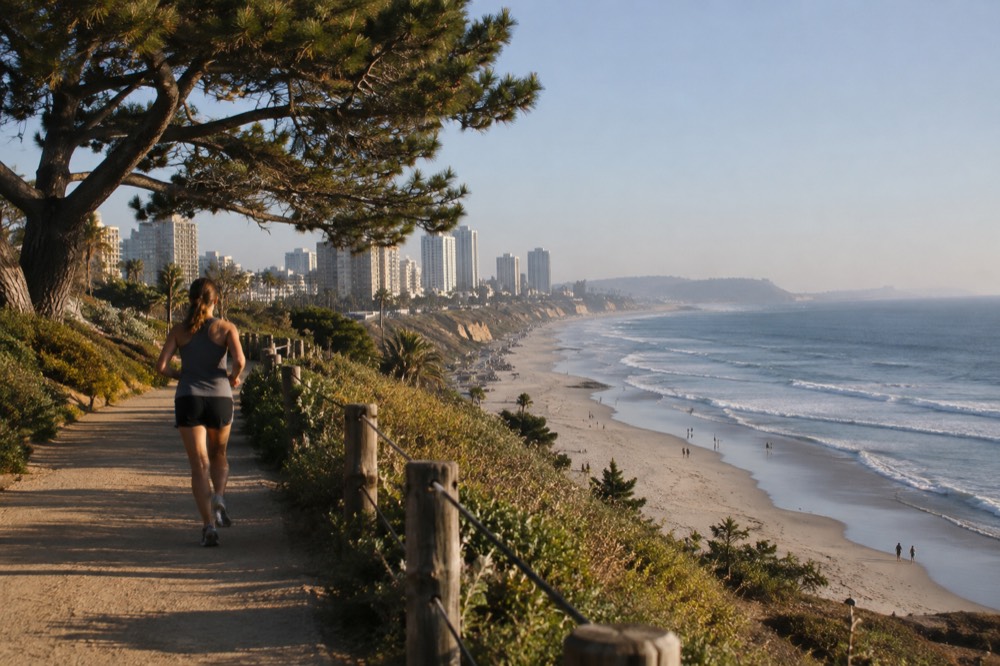
Pair the hike with a late-morning start, a beach or lunch stop in La Jolla or Del Mar afterward, and a low-effort afternoon in the city. Torrey Pines sits between the two, so it slots naturally into a coastal day, and because the walk takes under two hours it leaves the whole afternoon free. The trick is not to stack a second strenuous activity after it, which is the mistake most first-time visitors make.
The classic pairing is Torrey Pines in the morning and La Jolla in the afternoon: the Cove, the sea caves and a long seafood lunch are twenty minutes south of the reserve. If you would rather stay north, Del Mar has the county's most relaxed beach-town main street and a racetrack season worth checking the calendar for.
For the afternoon, this is where the narrated trolley earns its place. The Hop-on Hop-off Narrated Trolley Tour runs for two days and covers downtown, Balboa Park, the harbor and the beach neighborhoods, so you can rest your legs and still see the city's headline sights, jumping off wherever looks interesting. Readers consistently use it as the recovery half of an active morning, and the two-day validity means you do not need to rush.
If the group splits by energy level, the 2-Hour GoCar Tour of downtown, Old Town and the beaches lets one half of the party drive themselves around the same sights the trolley covers, while the other half takes a second walk somewhere flatter. And if the marine layer never lifts, the honest fallback is the USS Midway Museum, an indoor, weatherproof half day on the waterfront, which is why it rounds out our trio of reliable picks below.
What If You Only Have Time for One Short Walk?
If you can only fit in one short walk, do the Torrey Pines terrace loop anyway, even in a compressed hour: park at the top lot if it is open, walk the main bluff trail to the viewpoints, and turn back before the beach descent. A partial Torrey Pines walk still beats a complete version of almost anything else in the county. If the reserve lot is full or the coast is socked in, Sunset Cliffs at golden hour is the best one-hour substitute.
The compressed version works because the reserve's beauty front-loads. The first terrace viewpoints arrive within minutes of the top lot, and the pines stand along the early stretch of the trail, so even a shortened loop delivers the signature scenes. Time saved is not beauty lost here.
The Sunset Cliffs substitute is a different kind of walk, level, short and built around the final hour of daylight, and it pairs with the San Diego sunset spots guide if you want to build an evening around it. The one thing we would not recommend is rushing Potato Chip Rock: the summit queue and the climb do not compress well, and a hurried version of that hike is the worst version of it.
For a broader shortlist, the question of the county's most beautiful park has more than one answer, and our piece on the most beautiful park in San Diego makes the case for the urban option. And if you are planning around weather rather than time, our answer on the coldest month in San Diego explains why the coast never gets as cold as visitors expect.
A final thought on timing. San Diego's real summer arrives late: September's normal high of 77.2F actually beats July's, and the ocean is warmer than it was in midsummer, yet September is the quietest month on the coast. A September weekday at Torrey Pines gives you the year's best combination of warm air, warm water, clear skies and empty trail. If your dates are flexible, that is the window to chase, and it is the one thing most guides never mention. This is the kind of detail we build every page of Things to Do in San Diego around.
Common Questions About Hiking in San Diego
what is the most beautiful hike in san diego?
Torrey Pines State Natural Reserve, on the coast between La Jolla and Del Mar. It combines the only wild population of the rarest pine in North America, eroded sandstone bluffs and continuous Pacific views, with a wild beach at the bottom of the trail.
How long does the Torrey Pines hike take?
Roughly an hour to an hour and a half round trip at a relaxed pace, longer if you descend to the beach and walk back along the sand. Budget two hours with photo stops.
Is Torrey Pines good for beginners?
Yes. The only real climb is the short rise from the beach lot to the terrace level, and the top trails are near level. Wear closed shoes, bring water, and keep children close on the unfenced sandstone edges.
What is the best month to hike in San Diego?
September. The normal high of 77.2F beats July's, the ocean is near its warmest, rain is essentially absent, and coastal trails are at their quietest. Avoid early June if you dislike morning fog.
Can you see whales from the Torrey Pines trails?
Sometimes, in season. Gray whales pass offshore from mid-to-late December through March, with mid-January the peak. Calm mornings are the best conditions for spotting a spout from the bluffs.
Are dogs allowed at Torrey Pines?
No, dogs are not allowed in the reserve, including on the beach section within the park boundary. If you are traveling with a dog, choose a dog-friendly city beach instead.