Where Is the Nicest Area to Stay in San Diego?
Honest answer to where the nicest area to stay in San Diego is, comparing La Jolla, Coronado, the Gaslamp Quarter, Little Italy and North Park by vibe, walkability and price.
Where Is the Nicest Area to Stay in San Diego?
The nicest area to stay in San Diego is La Jolla if your definition of nice is coastline, Coronado if it is calm and family ease, and Little Italy if it is food and walkability on foot. The Gaslamp Quarter is the most central for first-timers but the loudest, and North Park is the best value with the best beer. There is no single answer, but there is a clear best answer per traveler, and it hinges on one trade: ocean versus downtown.
That trade is the whole decision. San Diego is a city of villages rather than one dense core, and the neighborhoods that feel nicest are the ones that hold their own waterfront, their own main street, or both. La Jolla sits on a curve of cliffs and coves twenty minutes north of downtown. Coronado is a flat, quiet island of bungalows across the bay, connected by a bridge and a ferry. Little Italy is a compact downtown-adjacent grid of restaurants and a weekly market. The Gaslamp is the nightlife block. North Park is the inland hipster strip of breweries and taco windows.
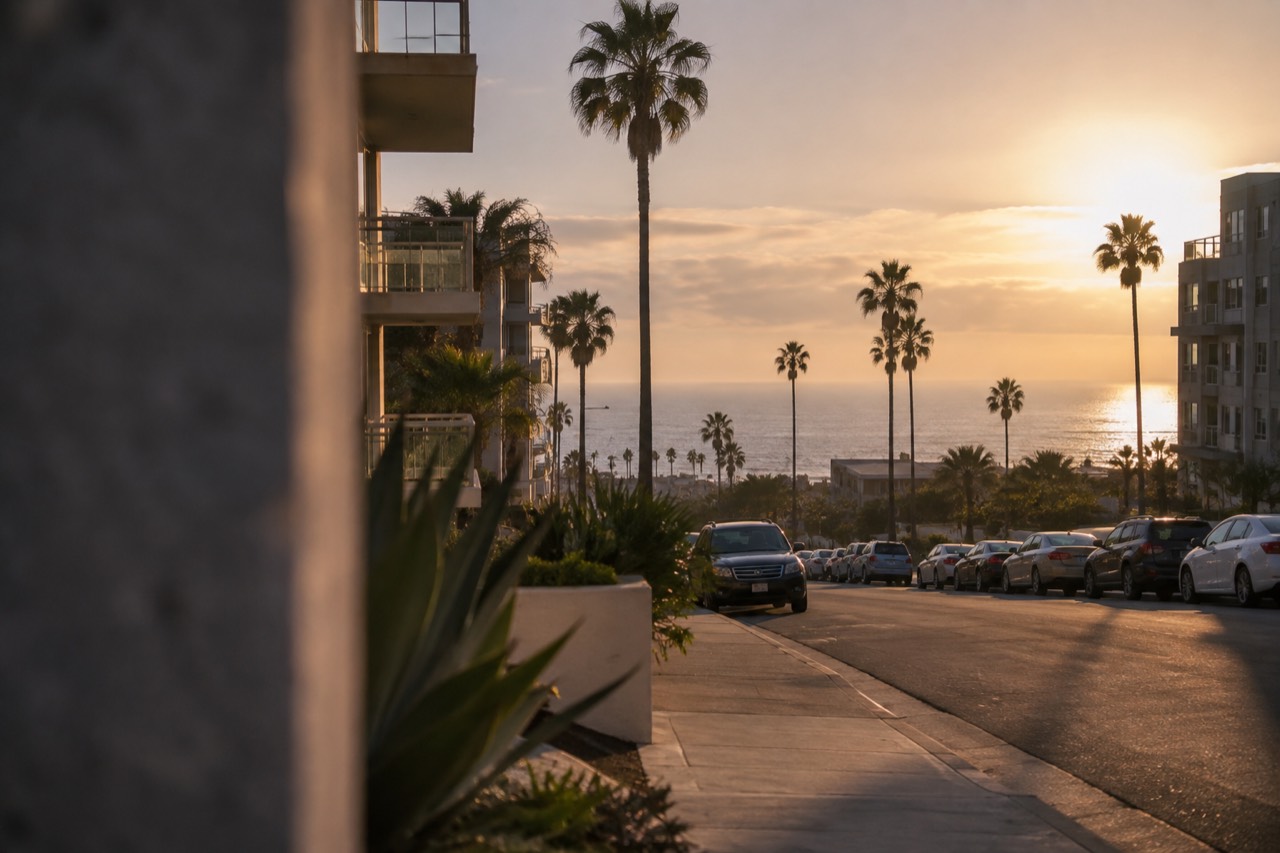
The question people are usually really asking is some version of "where do I get the San Diego I saw in photos without being stuck in a car." The photos are almost always La Jolla: sea caves, pelicans, the curve of sand at the Cove. The practical answer for a first visit, though, often ends up downtown or Little Italy, because that is where the harbor cruises, the USS Midway and the trolley lines are, and because the marine layer burns off later at the coast than inland, a pattern locals call May Gray and June Gloom. Inland North Park gets its sun earlier in the day than La Jolla does in late spring.
One more framing before the neighborhood-by-neighborhood breakdown. "Nicest" and "most convenient" rarely point at the same zip code. The most convenient base for a two- or three-day hit list is downtown, where you can walk to the Embarcadero and ride the trolley. The nicest base for a slow week is La Jolla or Coronado, where you may not want to leave, and where leaving means driving. Pick your trip shape first, and the neighborhood picks itself.
Which Neighborhood Is Best for a First Visit to San Diego?
For a first visit, Little Italy is the strongest single answer: it is walkable, it sits two trolley stops from the airport route, it has the best concentration of restaurants per block in the city, and it is quiet at night. Downtown and the Gaslamp are more central still but noisier, and Coronado is calmer but needs a bridge or a ferry to reach anything else. If you want one neighborhood that minimizes friction on a first trip, Little Italy wins.
Little Italy's advantage is that it behaves like a small town grafted onto a big city's transit spine. The neighborhood is about eight blocks long, centered on India Street, and it holds a weekly farmers market that is one of the best in the county. You can eat well without a reservation at half a dozen places, walk to the waterfront in ten minutes, and be at the Santa Fe Depot trolley interchange in fifteen. For a traveler arriving by plane, the MTS Route 992 bus from the airport stops near the trolley interchange at Broadway and Kettner, which is a short walk or one ride away.
The Gaslamp Quarter is the answer if your trip is built around nightlife or a convention. It is the loudest and most central of the downtown options, a fourteen-block historic district of restored Victorian facades filled with bars and clubs, and it sits directly between the convention center and Petco Park. The honest downside is what the honest upside is: it is busy until late. Travelers who go to bed at ten and travelers who go out at ten should not book the same street.
Downtown as a whole, including the Marina district west of the Gaslamp, is the pragmatic choice for a first-timer who wants the USS Midway, harbor cruises and Seaport Village within walking distance. It is where most of the hotel inventory is, and where the trade of convenience against charm is most visible. Our Things to Do in San Diego homepage maps the headline attractions, and most of them cluster within a mile of the Embarcadero, which is why downtown keeps winning the convenience argument.
Here is the comparison in one table, using the criteria people actually weigh: vibe, walkability, transit, noise and rough price character. Rates move constantly, so treat the price column as a relative ranking, not a quote.
| Neighborhood | Vibe | Walkability | Transit | Noise | Price character |
|---|---|---|---|---|---|
| La Jolla | Coastline, upscale, village feel | High within the village | Bus only, no trolley | Low to medium | Highest tier |
| Coronado | Flat, calm, family, beach town | High | Ferry and bus, no trolley | Low | High tier |
| Little Italy | Food, market, compact | Very high | Trolley and airport bus nearby | Low at night | Upper-middle |
| Gaslamp Quarter | Nightlife, historic facades | Very high | Trolley at doorstep | Highest | Upper-middle |
| North Park | Breweries, murals, indie | Medium | Bus only | Medium | Best value |
| Old Town | History, state park, transit hub | Medium | Trolley at doorstep | Low | Middle |
If you are staying downtown or in Little Italy, a food walk is the fastest way to learn the neighborhood on your first evening, and the short Check availability option covers the basics in half an hour. The fuller comparison of districts, including where not to stay, is in our guide to where to stay in San Diego.
Where Should You Stay for Beaches and Ocean Views?
La Jolla is the nicest area to stay for beaches and ocean views, and it is not close. The village sits above a chain of coves, the sand at the Cove and at La Jolla Shores is the best swimming in the city, and the sunsets face you rather than behind you. Coronado is the runner-up, with a wide, flat, gentle beach that is better for small children, and Mission Beach is the budget pick with a boardwalk instead of a view.
La Jolla's coastline is the image most people have of San Diego before they arrive. Prospect Street looks down on the Cove, where sea lions haul out on the rocks, and the village itself is walkable in the way a Mediterranean town is walkable: small, hilly, expensive, full of galleries and cliff paths. La Jolla Shores, a mile north, is the calm, sandy, kayak-launching beach, and it is the better base for families because the village is tight on parking and light on lawns. The trade for all of it is cost and distance: La Jolla has no trolley, so everything beyond the village is a bus or a car.
Coronado is what people mean when they say a place feels like a beach town from a film. It is flat, quiet, lined with bungalows and orange trees, and its beach faces west across a wide stretch of sand toward Point Loma. The Hotel del Coronado anchors the oceanfront, and the neighborhood around it is the most family-friendly layout in the county: you can walk to dinner, walk to the beach, and never move a car. The trade is isolation. Coronado connects to downtown by bridge, ferry and bus, and every trip off the island is a crossing.
Mission Beach and Pacific Beach are the value answer on the water. Mission Beach is a narrow sandbar with a concrete boardwalk, a roller coaster at Belmont Park, and a high share of short-term rentals rather than hotels, which makes it the cheapest way to sleep near the surf. Pacific Beach, the neighborhood just north, skews younger and louder along Garnet Avenue. Neither has the cliffs of La Jolla or the calm of Coronado, but both put you on the sand for meaningfully less, and both are on the bus network rather than the trolley.
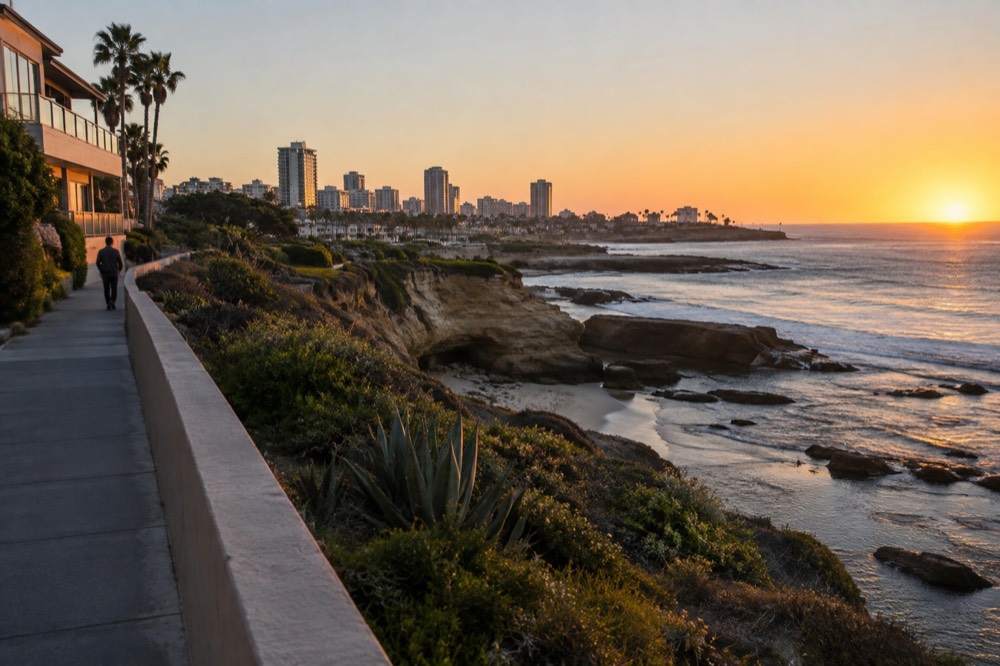
One beach-stay caution that no first page of search results will tell you: the coast is where the marine layer sits longest. The 30-year climate normals show June's average high, 71.7 degrees, is lower than October's 74.6, because the grey morning layer is thickest at the beaches in late spring. If you book a La Jolla ocean view for June expecting wall-to-wall sun, plan mornings for coffee and afternoons for the sand, and read our San Diego weather and best time to visit guide before you pick dates.
Is the Gaslamp Quarter a Nice Place to Stay or Too Loud?
The Gaslamp Quarter is nice to stay in for exactly one kind of trip: a short, central, nightlife-forward visit where you accept noise as the price of location. It is too loud for light sleepers, families with young kids, and anyone whose trip is built on mornings, because the district runs until 2 am on weekends. For a food-and-walking trip, Little Italy two blocks north delivers the same walkability without the bass.
The Gaslamp's geography is its argument. Fourteen blocks of restored Victorian commercial buildings sit between the convention center and Petco Park on one side and the rest of downtown on the other, with trolley stops at both ends. If your trip is a Padres game, a convention, or a weekend of going out, you will not move a car, and that convenience is real. Petco Park itself is one of the most walkable ballparks in the country, and our Petco Park visitor guide covers how to do a game day without a car.
The honest cost is the flip side. The Gaslamp is the nightlife district for the whole region, and on Friday and Saturday nights the streets are the party. Hotels on Fifth Avenue face it directly. Travelers who want Gaslamp convenience with Gaslamp quiet should look at the Marina district one block west, toward the harbor, or at the Little Italy boundary at the north end, where the blocks calm down quickly.
The middle path between downtown energy and coastal calm is the Embarcadero and Seaport Village stretch, which is downtown but waterfront, close to the USS Midway and the harbor cruises, and quiet at night. It is the compromise most first-timers end up happiest with: harbor views, a ten-minute walk to the Gaslamp when you want it, and none of the noise when you do not. The downtown San Diego guide breaks the sub-districts down block by block.
If you do base yourself downtown, the fastest way to see the two big adjacent green spaces is a guided loop, and you can Check availability on the e-bike version that links Balboa Park and the Gaslamp in one ride.
What Is the Best Area to Stay in San Diego on a Budget?
North Park is the best budget area to stay in San Diego that still feels like a destination: it has the city's densest brewery cluster, murals, taco windows and indie shops, at room prices well below the coast. Old Town is the budget pick with the best transit, since the trolley stops at its doorstep, and Mission Beach is the budget pick on the water, via short-term rentals rather than hotels. None of the three needs a car every day.
North Park's case is that it is the neighborhood locals actually recommend to friends under 40. University Avenue and 30th Street hold what may be the densest concentration of craft breweries in the country, plus the city's best strip of independent restaurants, and the whole thing is walkable end to end. The trade is transit: North Park is on buses, not the trolley, so downtown is a fifteen-minute ride rather than a five-minute one. For a traveler who wants food, beer and character over ocean, that trade is easy.
Old Town is the pragmatic budget answer. It is the state historic park where San Diego began, it is genuinely quiet at night, and it sits on the trolley interchange where the Blue and Green lines meet, with the airport's free San Diego Flyer shuttle also terminating at its transit center. You can reach downtown, the border and Mission Valley without a car, and the trolley fare is $2.50 one-way or $6.00 for a day pass on the PRONTO system, which caps your rides automatically once they add up to the day pass, per the official MTS fare chart. The Old Town guide covers the park and the food stops.
Mission Beach rounds out the budget trio for travelers who refuse to give up the ocean. The sandbar is mostly rentals, not hotels, which pushes prices down relative to La Jolla and Coronado, and the boardwalk means everything is walkable. The trade is the scene: it is the loudest of the three, and summer weekends fill up. For a longer breakdown of cheap sleeping and free days, the cheap things to do in San Diego guide and the free-things guide both assume a North Park or Mission Beach base.
How Do Parking and Getting Around Change Which Area Is Nicest?
Parking and transit change the answer more than price does: if you are not renting a car, stay downtown, Little Italy, Old Town or the Gaslamp, where the trolley and airport bus reach you. If you are driving, La Jolla, Coronado and North Park get better, because parking there is the hard part and having the car means day trips to Julian, Anza-Borrego and Temecula open up. The nicest area for a car-free trip and the nicest area for a road trip are different neighborhoods.
The car-free case favors the downtown cluster hard. The trolley's Blue Line runs from the border at San Ysidro through downtown to UC San Diego, the airport is served by the Route 992 bus every fifteen minutes, and the harbor, the Midway, the Gaslamp and Little Italy are all within one fare of each other. Balboa Park is the one big downtown-adjacent exception that needs a bus or a healthy uphill walk, which is why the park walking tours are popular with car-free travelers.
The car case favors the coast and the inland villages. La Jolla and Coronado are thin on both trolley and parking, but with a car you can treat them as a base and drive to the coves, to Torrey Pines and to the beach lots. Downtown parking is metered at $2.50 per hour with enforcement into the evening on many blocks, per the city's parking FAQ, and Balboa Park's lots run $8 to $16 a day for non-residents until the city removes paid parking there, which City Council has approved for 1 January 2027. Our parking in San Diego guide keeps the honest, unmonetized version of all this.
The day-trip question is the tiebreaker for drivers. Julian, Anza-Borrego Desert State Park and Temecula wine country are the three classic escapes, and none is reachable by rail, so a car converts your base from a constraint into a launchpad. The Julian and Temecula wine country guides assume you drove up. Car-free travelers should simply accept a coastal-downtown trip and skip the desert, which is what most of them do happily.
Whichever base you choose, Balboa Park sits between downtown and the coast, and the two-hour guided walk of the park with a local guide is the single easiest way to orient yourself in the city's geography on day one.
Common Questions About Where to Stay in San Diego
where is the nicest area to stay in san diego?
La Jolla for coastline and views, Coronado for calm and families, Little Italy for food and walkability, the Gaslamp for nightlife and centrality, and North Park for value and character. There is no single nicest area; pick based on whether your trip is ocean-forward, downtown-forward or budget-forward.
Is it better to stay in La Jolla or Coronado?
La Jolla has the cliffs, the coves and the better swimming, plus more restaurants per block. Coronado is flatter, quieter, safer-feeling for small children and has the better pure beach. La Jolla suits a scenic, active trip; Coronado suits a slow, restful one. Both need a car or a ride to reach anything outside the neighborhood.
Is the Gaslamp Quarter too loud for a hotel stay?
On Friday and Saturday nights, often yes: the district is the city's nightlife core and runs until 2 am. Travelers who want Gaslamp location without Gaslamp noise should book the Marina district one block west, toward the harbor, or the northern edge near Little Italy, where the blocks quiet down fast.
Can you visit San Diego without renting a car?
Yes, if you stay downtown, in Little Italy, Old Town or the Gaslamp. The trolley links downtown to Old Town, the border and UC San Diego, the airport bus runs every fifteen minutes, and the harbor attractions are walkable. La Jolla, Coronado and North Park are bus-only and noticeably harder without a car.
What is the cheapest nice area to stay in San Diego?
North Park is the best combination of cheap and genuinely nice, with breweries, murals and a walkable restaurant strip. Mission Beach is the cheapest way to stay near the water, mostly through short-term rentals. Old Town is the cheapest base with trolley access.
Where should families with kids stay in San Diego?
Coronado first: flat, calm, walkable, with a gentle beach. La Jolla Shores second, for the calm sand and kayak coves. Mission Beach third, for the boardwalk and Belmont Park. Downtown and the Gaslamp are the weakest family picks because of noise and the lack of green space at the door.