How Long Is a Car Ride from La to San Diego?
The drive from Los Angeles to San Diego usually takes about two hours in light traffic and closer to three at peak times. Here is how to plan the route, the stops, and whether you need a car once you arrive.
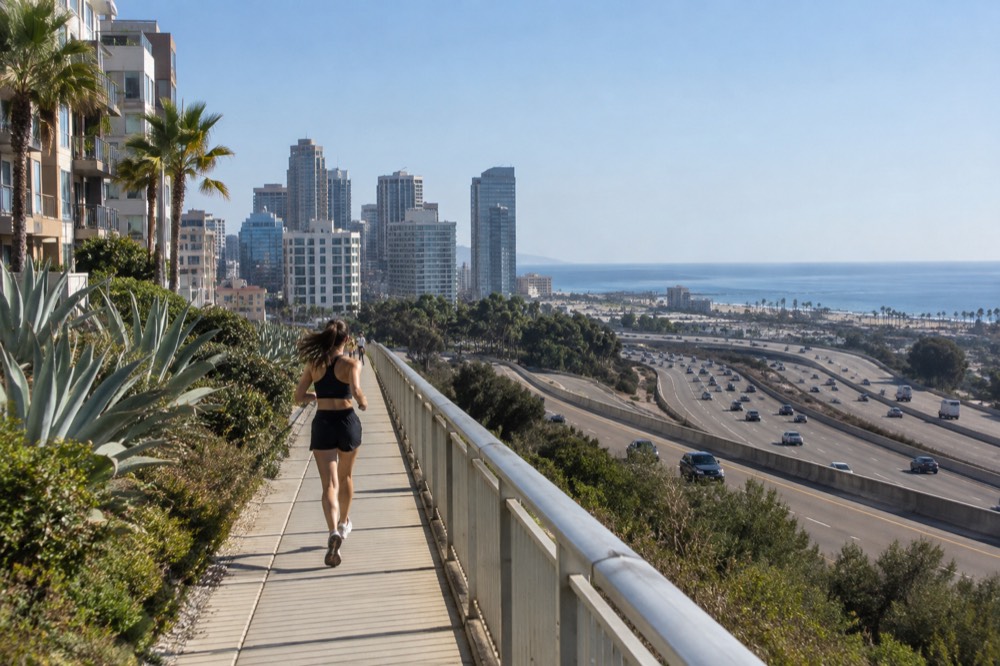
How Long Is a Car Ride from La to San Diego?
A car ride from LA to San Diego covers roughly 120 miles and usually takes about two hours in light traffic, with three hours or more a realistic plan on weekday afternoons and holiday Fridays. The fastest route is the I-5 south the whole way, and the single biggest factor in your arrival time is not distance but the hour you leave Los Angeles. Most drivers plan on two and a half hours as a working number and treat anything faster as a bonus.
That spread surprises people who have only looked at a map. On paper the trip looks like a short hop down the coast, and at two in the morning it is. The same road at 4 pm on a Tuesday can stretch the drive by an hour or more, because the I-5 threads through the densest stretch of Southern California car culture between downtown LA, Orange County and Camp Pendleton. There is no version of this drive that avoids other cars entirely.
The distance itself never changes. What changes is how much of it you spend at full speed versus at brake-light pace through Santa Ana, San Juan Capistrano and the northern San Diego suburbs. If your only question is the clock, plan on two and a half hours door to door, add buffer for any departure between roughly 2 pm and 7 pm, and check traffic before you leave rather than after. This is the kind of practical planning question Things to Do in San Diego exists to answer honestly.
What Is the Fastest Route from LA to San Diego?
The I-5 South is the fastest and most direct route, running roughly 120 miles from downtown LA to downtown San Diego in about two hours without congestion. The main alternative is the busy western bypass freeway that serves the LAX side of the metro and rejoins the I-5 in Irvine, which most drivers leaving from the west side or the airports actually end up taking, and it adds little distance but its own traffic. A coastal detour through the old beach-road towns is slower and only worth it when the drive is part of the trip.
Most trips shake out one of two ways. If you start in downtown LA, Pasadena or the eastern neighborhoods, you take the I-5 the whole way and let it carry you through Anaheim, San Clemente and Oceanside. If you start on the west side, near LAX, Santa Monica or anywhere along the airport corridor, you take the bypass south to the interchange in Irvine where it meets the I-5, and from there the drive is identical. Neither is meaningfully faster in miles; the bypass simply serves the half of the metro that the 5 does not.
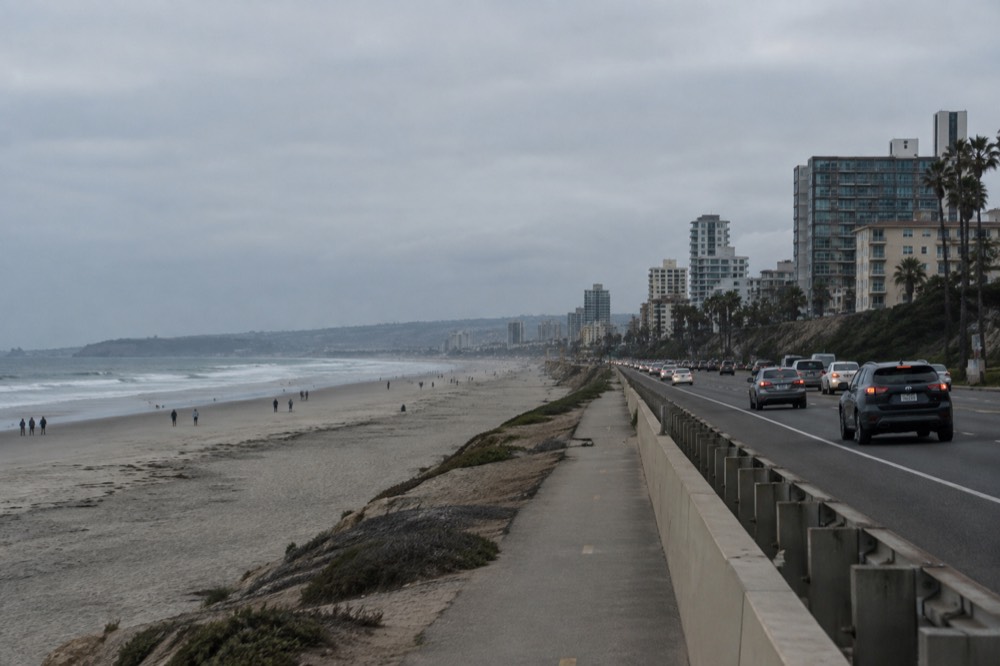
The stretch most out-of-state drivers remember is the run through Camp Pendleton, south of San Clemente. For several miles the freeway is all there is: no exits, no development, hills on one side and the ocean on the other. It is the quietest part of the drive and a good sign you are close, with roughly 40 minutes left to downtown San Diego when the military base begins.
For trip planning, the routes compare like this:
| Route | Best for | Rough character | Time without traffic |
|---|---|---|---|
| I-5 South the whole way | Downtown LA, Pasadena, eastern LA | Direct, busy through Anaheim and San Clemente | About 2 hours |
| Western bypass via Irvine | LAX, west side, South Bay | Serves the airports, heavy near the Irvine interchange | About 2 hours 10 minutes |
| I-5 with a coastal detour | Making the drive part of the trip | Beach towns, slower, more stops | Half a day or more |
When Is the Worst Traffic on the LA to San Diego Drive?
Friday afternoons and holiday weekends are the worst windows, when the drive can stretch past three hours, and weekday rush hours between 7 and 9 am and 3 and 7 pm add an hour or more through LA and Orange County. Early morning before 6 am, midday, and Sunday mornings are the most forgiving windows. The San Diego-bound direction runs against the main commuter flow for part of the trip, which softens but does not erase the peaks.
The pattern is predictable enough to plan around even though no two days match. Friday is the day locals dread, because weekend traffic stacks on top of the commuter load and the I-5 through San Juan Capistrano and Oceanside slows to a crawl by mid afternoon. Sunday flips the direction: northbound back to LA is the painful side, so southbound on a Sunday morning is one of the calmest drives you will find on this corridor.
A practical rule that locals use: if you cannot leave before the rush, leave after dinner. A 7 or 8 pm departure from LA often arrives in San Diego in close to the free-flow time, and you trade an hour of daylight for an hour of standstill. If you are heading down for a morning event, a pre-6 am start is the only window that reliably holds.
Traffic is not the only thing worth timing. The marine layer that locals call May Gray and June Gloom grey the coast in late spring while inland stays clear, and the temperature normals show it plainly: June's normal high at the airport is 71.7F, lower than October's 74.6F. If you are driving down for beach weather, the calendar does not work the way out-of-state visitors assume.
Where Should You Stop on the Drive from LA to San Diego?
The best stops sit along the final third of the drive: San Juan Capistrano for its mission and old town, San Clemente for the pier and beach trail, and Oceanside for the harbor and its long wooden pier. Leaving LA earlier gives you time for one or two of these without turning a two-hour drive into a whole-day haul. Carlsbad, just before the county line, adds flower fields in spring and the LEGOLAND exit for families.
San Clemente is the classic halfway break. The pier stretches out over a surf break, the beach trail runs along the base of the bluffs, and the town's Spanish village feel makes it an easy hour of wandering. San Juan Capistrano sits a few exits north and offers the mission, one of the oldest buildings in the California mission chain, plus a walkable Los Rios historic district with adobes and a tea house.
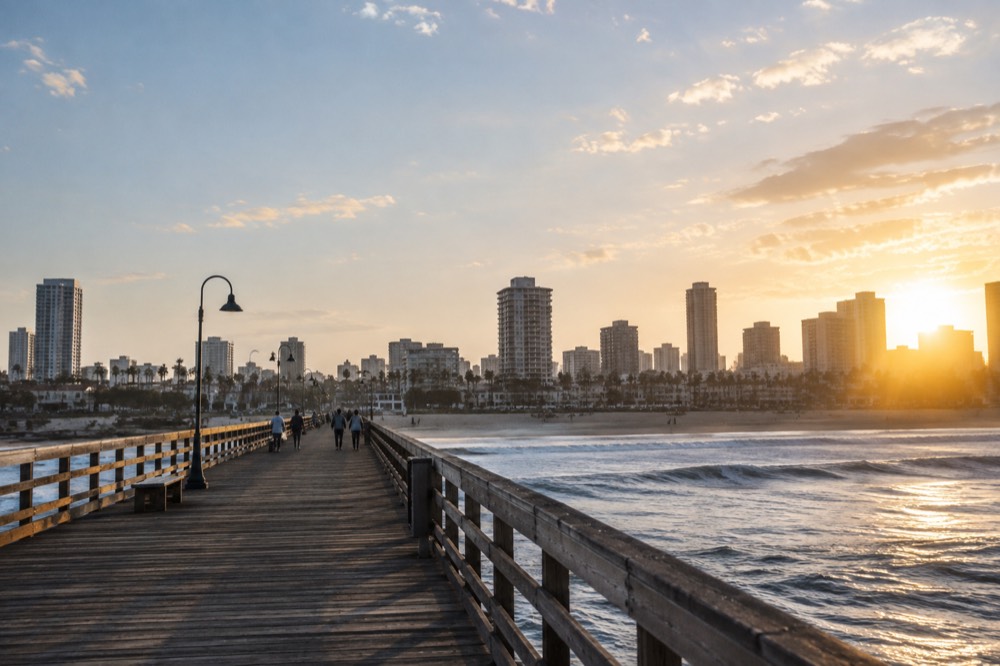
If you would rather push through and save the stops for the destination, that works too. The drive rewards patience more than sightseeing, and San Diego's own coastline from Oceanside south is worth the uninterrupted two hours. Once you are in the county, the question stops being about driving and starts being about parking, which is its own subject; our guide to parking in San Diego covers what to expect once you turn the engine off.
One stop worth planning rather than improvising is food. The corridor is taco country the whole way down, and the difference between a freeway-chain lunch and a 20-minute detour into Oceanside or Carlsbad is the difference between a chore and a memory. Budget the time honestly: two stops plus a relaxed lunch turns the drive into a five-hour day, which is a fine plan if that is the plan.
Is It Cheaper to Fly or Drive from LA to San Diego?
Driving is usually cheaper for two or more people once you count airport transfers and fares, because the drive costs little more than a tank of gas and a few hours, while flying means a fare plus getting to and from two airports. For a solo traveler booking far ahead, a cheap flight can compete, but the door-to-door time saved is smaller than most people expect. The full comparison lives in our piece on whether it is cheaper to fly or drive.
The honest accounting for a flight looks like this: the hop itself is barely an hour in the air, but you add the drive to LAX or Burbank, the security line, the boarding process, and then the fact that there is no Trolley station at San Diego's airport, so you arrive and still need a bus, shuttle or rideshare into downtown. The MTS Route 992 bus runs every 15 minutes at $2.50 one-way, and the free San Diego Flyer shuttle serves Old Town, but each is another link in the chain.
Driving lets you leave when you want, carry what you want, and arrive with a car. The trade is the traffic risk covered above and parking at the far end, which downtown meters charge $2.50 an hour for with posted time limits. For most groups the math favors the road, and for solo travelers it is close enough that the decision usually comes down to whether the driver enjoys the drive.
Do You Need a Car Once You Arrive in San Diego?
For a stay centered on downtown, the Embarcadero, Balboa Park and the Gaslamp, you do not need a car at all: the Trolley, the MTS buses and a lot of walkable blocks cover it, and parking downtown is metered and time-limited. You want a car for La Jolla, the North Park and Hillcrest restaurant strips, and any day trip to Julian, Temecula or Anza-Borrego. Many visitors drive down and then leave the car parked for days.
This is where the drive down stops paying for itself. A car that earned its keep on the I-5 becomes a liability in a downtown built before the automobile, where meters run $2.50 per hour and enforcement extends into the evening in the Hospitality Zone. The alternative is genuinely good: the Trolley's Blue Line runs from the border at San Ysidro up through downtown to UC San Diego, a one-way fare is $2.50, and the PRONTO system caps your rides at the $6.00 day pass automatically, so there is no reason to buy a day pass up front.
The two-day Hop-on Hop-off Narrated Trolley Tour is the middle path that suits most first-time visitors who arrived by car: park once near a stop, then let the narrated loop connect downtown, Balboa Park and the harbor while a guide explains what you are looking at. It removes both the parking hunt and the guesswork about which neighborhoods are worth the walk, and two days of validity is enough to cover the core of the city at a relaxed pace.
For the neighborhoods a Trolley does not reach, the car you drove down becomes useful again. La Jolla's coves, the brewery strip in North Park and a sunset at Sunset Cliffs are all easier with wheels, and the county's day trips, Julian's pie shops, Temecula's wineries and the Anza-Borrego desert, all but require one. The pattern that works: drive down, park the car for the downtown days, then take it back out for the edges.
If the trip is your first one, our first-time-in-San-Diego guide sequences the neighborhoods so you are not backtracking, and the San Diego airport guide covers the transfer options for anyone flying one leg instead.
Common Questions About the Drive from LA to San Diego
how long is a car ride from la to san diego?
About two hours in light traffic, roughly 120 miles via the I-5, and closer to three hours on Friday afternoons, holiday weekends and weekday rush hours. Plan on two and a half hours as a working number and check live traffic before you leave.
What is the fastest route from LA to San Diego?
The I-5 South the whole way from downtown LA, or the western bypass freeway via Irvine if you start near LAX or the west side. Both cover roughly 120 miles and take about two hours without congestion.
When should I leave LA to avoid traffic?
Before 6 am is the most reliable window, followed by midday and Sunday mornings. Friday afternoon is the worst departure time, and leaving after dinner, around 7 or 8 pm, often beats sitting through the evening peak.
Where should I stop on the way?
San Clemente for the pier and beach trail, San Juan Capistrano for the mission and Los Rios district, and Oceanside for the harbor. Carlsbad is the family-friendly stop for LEGOLAND.
Do I need a car in San Diego once I arrive?
Not for a downtown, Balboa Park and Gaslamp stay: the Trolley and buses cover it, a one-way fare is $2.50 and rides cap at a $6.00 day pass. You do want a car for La Jolla, North Park and day trips to Julian, Temecula or Anza-Borrego.
Is it cheaper to fly or drive from LA to San Diego?
Driving is usually cheaper for two or more people once airport transfers are counted. A solo traveler booking far ahead can find flights that compete on price, but the door-to-door time saved is smaller than it looks.