Is It Cheaper to Fly or Drive to San Diego?
A plain-English cost comparison of flying versus driving to San Diego, with the verified ground costs, parking rates, and transit fares that decide the math.
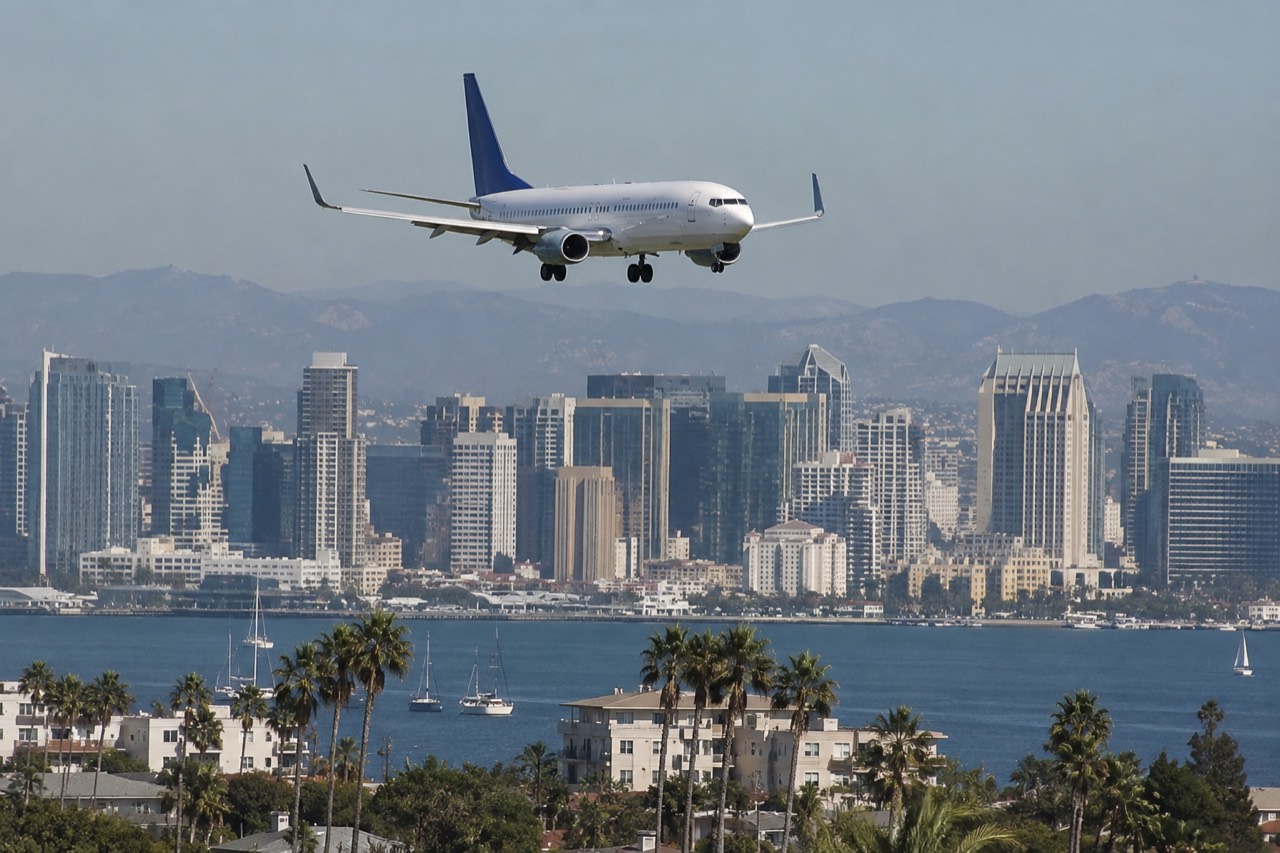
Is It Cheaper to Fly or Drive to San Diego?
For most travelers coming from beyond a few hundred miles, flying wins on total cost once you count parking, and driving wins only when you are carpooling with three or more people, hauling gear, or starting close enough that the drive is under half a day. The airfare is the visible number, but the deciding costs come after arrival: airport transit at $2.50, downtown meters at $2.50 an hour, and Balboa Park lots at $8 to $16 a day.
Add those up for your party before you book anything.
The honest answer is that the sticker price lies in both directions. A cheap fare looks unbeatable until you add the bag fees, the ride into town, and the rental car you assumed you needed. A tank of gas looks modest until you add a night each way in a motel, theme park parking at $37, and the fact that your car then sits in a paid space for five days doing nothing.
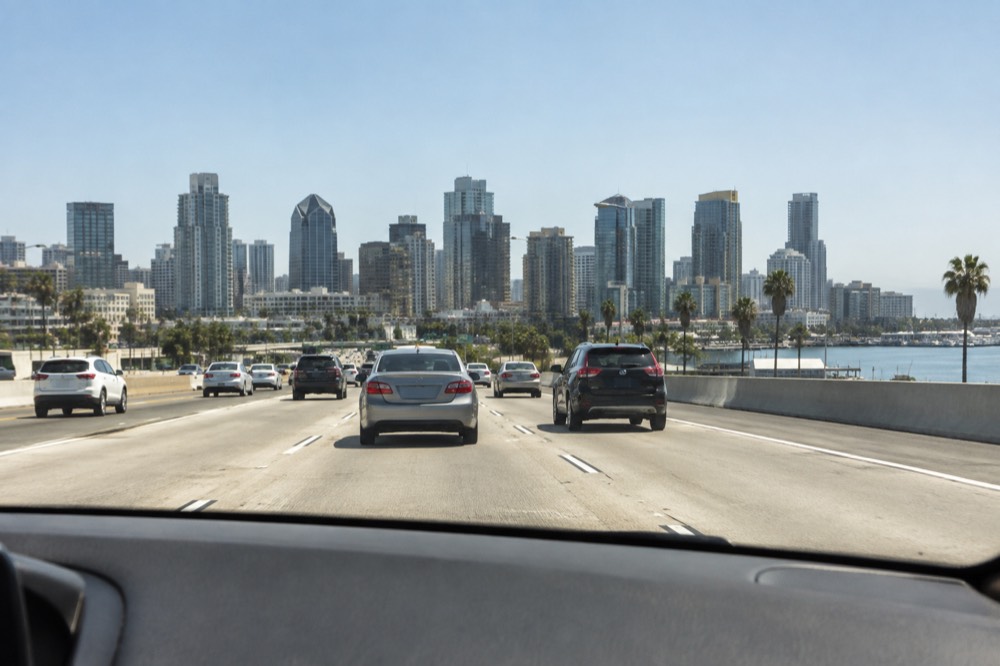
What this page does is lay out the pieces that are actually verifiable, so you can run the math for your own trip. Airfares and gas prices move daily and nobody can quote them honestly in an article, so those two stay live numbers you check yourself. Everything on the ground in San Diego, the transit fares, the parking rates, the airport shuttles, is published and stable, and that is where the real comparison lives.
One thing to know up front: San Diego is a compact destination. Downtown, Balboa Park, the Embarcadero, and the airport sit inside a few square miles, and the MTS trolley and bus network covers most of it for the price of a coffee. That fact tilts the fly-versus-drive math harder than most visitors expect, because it means a rental car is optional for a large share of itineraries.
What Does Flying Into San Diego Actually Cost Once You Land?
The flight itself is only the first line. Getting from San Diego International Airport into downtown costs $2.50 on the MTS Route 992 bus, or nothing at all on the free San Diego Flyer shuttle to Old Town, and a day of unlimited transit riding costs $6.00. A traveler who lands, rides the bus, and never rents a car can spend a full weekend in San Diego for under $20 in ground transportation, which is the number that makes flying look suddenly reasonable.
The airport piece is unusually kind here. There is no trolley station at SAN, which sounds like a gap until you meet the two workarounds. Route 992 runs every 15 minutes from about 4:30 am to 1:00 am, costs $2.50 one-way, and drops you at Broadway and Kettner, which is the trolley interchange at Santa Fe Depot. From there the Blue, Green, and Orange lines fan out across the county. The San Diego Flyer is a free shuttle from both terminals to the Old Town Transit Center, running roughly every 20 to 30 minutes from before 5:00 am to just past midnight.
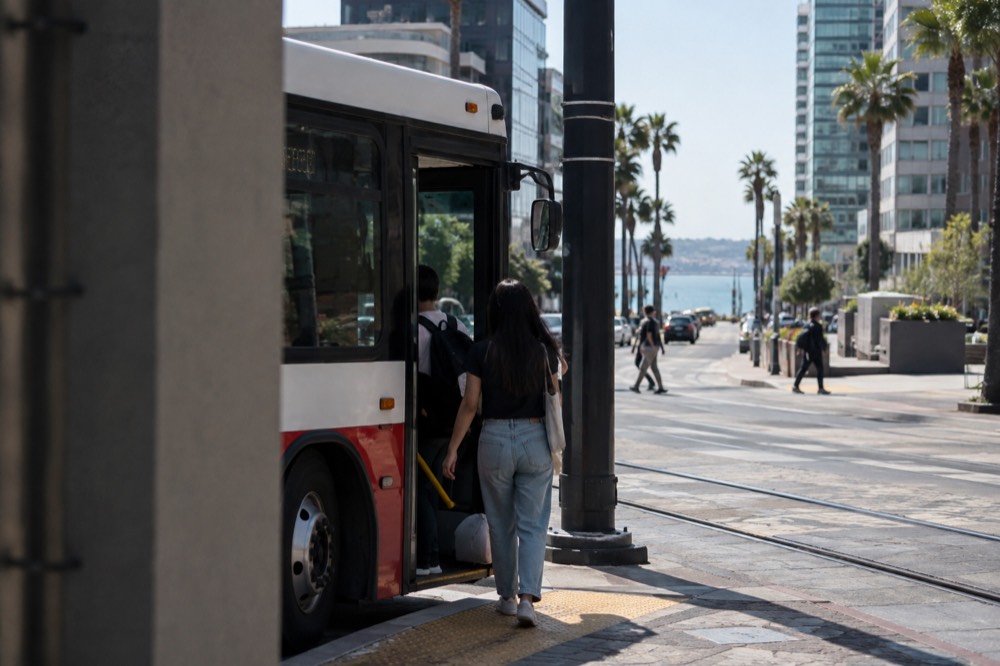
The fare system rewards laziness, in a good way. The PRONTO card, a $2 physical card or the phone app, charges you pay-as-you-go at $2.50 a ride and then stops charging you once your rides add up to the $6.00 day-pass value. The fare chart literally reads "Day Pass Earned." There is no reason to buy a day pass up front, and contactless bank cards work too, though those do not cap. The official fare chart is published at the MTS site, and it is the only fare table worth trusting: the MTS fare chart is where every number in this paragraph lives.
So the honest flying math looks like this: airfare, plus $2.50 or $0 from the airport, plus $6.00 a day if you are moving around a lot, plus nothing else if you plan around the trolley. The trap is the rental car. The moment you add one, you have re-imported most of the costs of driving, minus the interstate miles, and you are paying airport concession rates for the privilege.
If you fly in and want broad coverage of the city without a car, the narrated trolley products are the efficient substitute for a rental, and the two-day option is the best value among them.
The trolley tour above runs two days, which pairs well with a Friday-to-Sunday flight itinerary. The GoCar option covers the same core territory in two hours if your trip is shorter, and the Balboa Park walking tour handles the one district where a guide genuinely adds something. Between the airport bus and a two-day trolley pass, a car-free long weekend is not a compromise plan in San Diego, it is a normal one.
What Are the Hidden Costs of Driving to San Diego?
Driving shifts your costs from the airfare line to the parking line, and San Diego parking is not cheap: downtown meters run $2.50 an hour with enforcement that now includes Sundays in commercial zones, Balboa Park lots cost $8 to $16 a day for non-residents, the Zoo charges $16 per vehicle, and SeaWorld starts at $37. A family that drives in and visits the big parks can easily spend more on parking than on one of their airfares would have cost.
Parking is the biggest practical question a San Diego visitor has, and it deserves blunt answers. Downtown meters cost $2.50 an hour, enforced Monday through Saturday from 8:00 am, with some zones running to 8:00 pm, and Sunday is no longer reliably free since enforcement was extended into commercial areas of Downtown, Uptown, Mid-City, and Pacific Beach. Posted signs always win over any article, including this one. The City's own parking FAQ is the source for the meter rules: the San Diego parking FAQ publishes the enforcement details.
| Ground cost in San Diego | What you pay | Notes |
|---|---|---|
| MTS one-way fare, bus or trolley | $2.50 | 2-hour transfers included |
| MTS day pass (or PRONTO cap) | $6.00 | Earned automatically on PRONTO |
| Airport bus Route 992 | $2.50 | Every 15 minutes, 4:30 am to 1:00 am |
| San Diego Flyer shuttle | Free | Airport to Old Town Transit Center |
| Downtown meters | $2.50 per hour | Sunday enforcement now applies in commercial zones |
| Balboa Park lots, non-resident | $8 to $16 per day | Paid parking is scheduled to end 1 January 2027 |
| San Diego Zoo parking | $16 per vehicle | Paid parking began January 2026 |
| Safari Park general parking | $20 per vehicle | No in-and-out privileges |
| SeaWorld parking | From $37 | Date-based |
Two lines in that table deserve their own sentences. Balboa Park's paid parking, $8 a day for city residents who register in advance and $10 to $16 for everyone else, is live now but City Council has approved removing it entirely on 1 January 2027, so treat that row as perishable. And beach parking deserves honesty rather than a number: Mission Beach, Ocean Beach, La Jolla, and Coronado are street-and-lot parking that is free to park in and very hard to find in summer, and no official rate table exists, so do not plan around a figure you read anywhere. The wider set of guides lives on Things to Do in San Diego.
The other driving costs are the ones nobody prices until they are paying them. Multi-state drives mean motel nights each way, and parking at your hotel, often $40-plus a night downtown, on top of the meters. The Zoo began charging for parking in January 2026, so even the classic free-parking anchor of a San Diego road trip is gone. Drivers also inherit the fatigue cost: a long arrival-day drive eats the evening you flew-in travelers spend on the Embarcadero.
The counterweight, and it is real, is that a car unlocks the county's best day trips. Julian, Anza-Borrego, and Temecula wine country are genuinely awkward without one, and a car full of four adults splits every cost four ways. That is the arithmetic under the whole question, and the next section draws the line.
If you do land without a car and want someone else to handle the driving for an afternoon, the narrated trolley is the product that fills that gap, and you can check dates on the operator's live listing.
Do You Even Need a Car Once You Arrive?
Most first-visit San Diego itineraries do not need a car at all: downtown, the Gaslamp Quarter, Little Italy, Old Town, the Embarcadero, USS Midway, and Balboa Park all sit on or near the trolley lines, and the beaches at Pacific Beach and Mission Beach are reachable by bus. A car earns its costs only for La Jolla's awkward parking, the North County beach towns, and the inland day trips, which is why so many visitors fly in, ride transit for days, and rent a car for exactly one.
This is the fact that reframes the fly-or-drive question. You are not choosing between "fly plus rental car" and "drive your own car." You are choosing between two arrival methods and then separately deciding whether the destination requires wheels, and for a lot of itineraries it does not. The Blue Line trolley now runs all the way from the border at San Ysidro through downtown to UC San Diego, and the published end-to-end time is 1 hour 23 minutes, which tells you the spine of the county is transit-covered.
The two-day trolley pass above is the single most useful car-free purchase in the city, because it stitches together Old Town, the Embarcadero, Balboa Park, and the Gaslamp with narration instead of parking garages. Pair it with the $6.00 transit day cap for the gaps, and a car-free week is cheaper than a car week by the entire cost of the rental, the fuel, and every parking line in the table above. Our first time in San Diego guide lays out which neighborhoods pair with which transit lines, and the getting around San Diego guide goes deeper on the trolley network than this page can.
The exception list is short but firm. La Jolla is transit-reachable but its parking and street layout punish cars anyway, so that one is a wash. Torrey Pines, Del Mar, Carlsbad, and Encinitas get easier with wheels. Julian and Anza-Borrego, covered in our Julian guide, realistically require a car or a booked day tour. So the smartest structure for many travelers is the hybrid: fly, ride transit, and rent a car for one day, or book a guided day trip, rather than driving the whole way.
How Do You Decide for Your Own Trip?
Run the math in four lines: airfare times your party, versus fuel plus a motel night each way plus parking at every stop, then add the ground costs to whichever side you pick. Driving wins outright for parties of three or more from within a day's range, flying wins for solo travelers and pairs from anywhere the drive exceeds a day, and the swing factor is whether your itinerary needs a car at all.
There is also a when question hiding inside the how question. September is the sleeper month: its normal high of 77.2F actually beats July's by nearly two degrees and the ocean is near its warmest at a mean of 67.6F, yet September is the lowest-visitation month at Cabrillo National Monument across recent years, 48 percent below July. Flights and hotels in the shoulder months tend to respond to that demand curve, so the cheapest version of a San Diego trip is often a September one regardless of how you arrive.
Weather should not scare you off either half of the decision. Rain in San Diego is a winter phenomenon, with December through March carrying most of the year's inches and August averaging one hundredth of an inch. The drive or the flight is very unlikely to be weather-ruined outside of a handful of winter days. Our San Diego weather and best time to visit guide has the full monthly picture, and the San Diego trip cost guide budgets the rest of the vacation once you have chosen your arrival method.
One last practical note for drivers: if your route involves flying home from a different city, or you are an international visitor weighing a rental, remember that airport rental rates in San Diego carry concession fees that off-airport lots do not. And if your plan involves crossing into Mexico, know that San Ysidro is the busiest land border crossing in the western hemisphere, and CBP publishes live border wait times hourly, which no article can honestly predict for you.
The short version, the one to text the group chat: fly if you are one or two people and your itinerary stays in the city, drive if you are three or more or the trip is a county-wide tour, and in both cases the biggest saving available is deciding you do not need a car every day.
Common Questions About Flying or Driving to San Diego
is it cheaper to fly or drive to san diego?
Flying is usually cheaper for one or two people once parking is counted, and driving is usually cheaper for three or more people, for trips that start within a day's drive, or for itineraries built around the inland day trips. The deciding costs are on the ground: $2.50 airport transit, $6.00 capped daily transit, and parking that runs from $2.50 an hour downtown to $16 a day at the Zoo.
How do I get from San Diego airport to downtown without a rental car?
MTS Route 992 costs $2.50, runs every 15 minutes from about 4:30 am to 1:00 am, and connects both terminals to the downtown trolley interchange at Santa Fe Depot. The San Diego Flyer is a free shuttle to the Old Town Transit Center, running roughly every 20 to 30 minutes. There is no trolley station at the airport itself.
Is parking free anywhere in San Diego?
Beach neighborhoods have free street and lot parking that is hard to find in summer, and Balboa Park's paid lots are scheduled to end on 1 January 2027, but today non-residents pay $8 to $16 a day there. Downtown meters cost $2.50 an hour and Sunday enforcement now applies in commercial zones. ADA parking is free with a placard in Balboa Park lots and at meters.
Does the PRONTO day pass save money?
You do not need to buy one. PRONTO charges $2.50 per ride and automatically stops charging once your rides reach the $6.00 day-pass value, so pay-as-you-go is never worse than buying the pass up front. Contactless bank cards pay the same one-way fare but do not cap, so use the card or app if you will ride more than twice.
When is driving to San Diego clearly the better choice?
Drive when you have three or more people splitting fuel, when you are hauling surfboards or kids' gear, when you live within a day's drive, or when the trip centers on Julian, Anza-Borrego, Temecula, or the North County beach towns. Those are the places where a car genuinely pays for itself and transit gets thin.