Are House Prices Dropping in San Diego?
An honest look at what is and is not happening with San Diego home prices, and what any of it means for a visitor planning a trip.
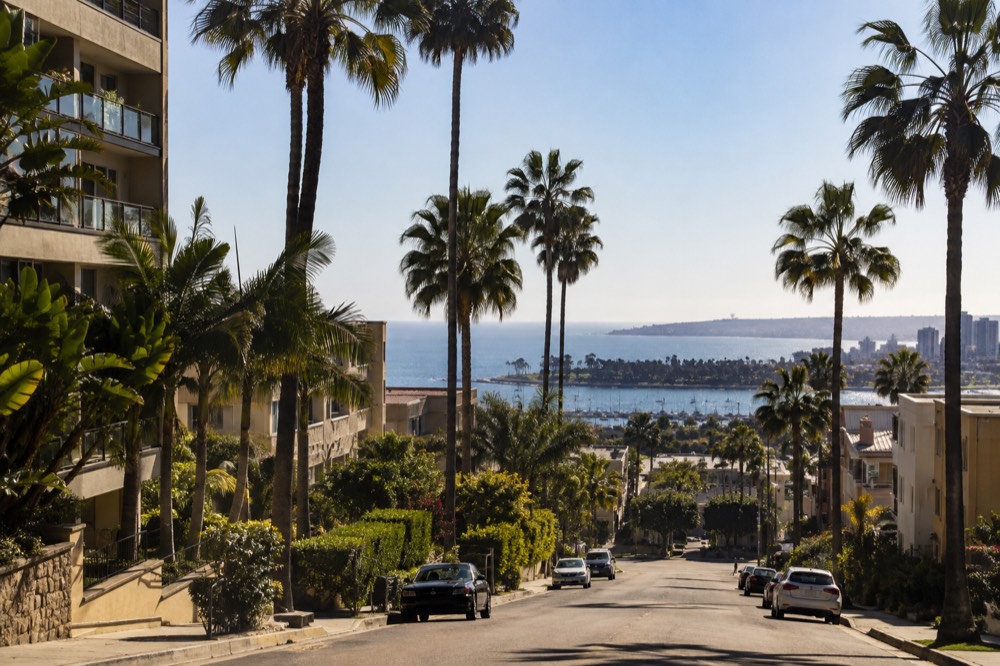
Are House Prices Dropping in San Diego?
The honest answer is that San Diego home prices have stopped climbing at the breakneck pace of the pandemic years and have softened in pockets, but nobody honest can call it a drop. Demand still outruns supply in a city hemmed in by the ocean, the border and a marine layer that keeps it livable year round. Any month-to-month wobble is noise, not a crash. If you are asking because you live here or want to, watch inventory and how long homes sit rather than one headline number, because those two signals turn before the medians do. If you are asking as a visitor, the practical effects show up in your hotel bill, not the housing pages.
It is worth being upfront about how this article handles figures. Real estate numbers go stale the moment they are printed, and this site's research pack holds verified, primary-sourced facts on trolley fares, zoo tickets and tide charts, not month-by-month median home prices. So rather than quoting a median that may be three months old by the time you read it, this piece explains the mechanics of the market, the direction of travel, and where to look for a live number. That is more useful anyway, because the mechanics barely change and the medians change constantly.
What can be said with confidence is directional. The frenzy of the pandemic years, with bidding wars and waived contingencies, is over. Higher borrowing costs cooled buyer demand nationally, and San Diego was not exempt. But San Diego's structural shortage of homes, its desirability and its steady inflow of new residents mean the correction has looked more like a plateau with soft spots than a collapse. Anyone telling you prices are crashing here is selling something. Anyone telling you they are soaring again is usually looking at one hot zip code.
What Is Actually Happening with San Diego Home Prices
Sales have slowed, inventory has crept up from historic lows, and sellers have lost most of their power to name any price they like. Homes that once drew a dozen offers now sit longer. Buyers negotiate repairs again. Some price cuts appear on listings that were pitched too optimistically to begin with. None of that adds up to falling values across the county, but it does add up to a calmer, more normal market than the one San Diego had a few years ago, and a calmer market is genuinely different news for anyone trying to buy into one.
The word "dropping" deserves a harder look. In a normal year, home values drift upward a few percent, and a flat year feels like a loss to owners. When a headline says prices "fell," it sometimes means they fell from a record, which is a bit like saying the tide dropped from a king tide. The pandemic run-up pushed values so far so fast that even a genuine softening leaves prices far above where long-time locals remember them. That framing matters more than any single percentage.
For a visitor, the clearest evidence of an expensive housing market is not a data table. It is what you see from a tour window: apartment towers going up along the waterfront, modest single-story homes near the beach carrying the posture of trophy properties, and "sold" signs sitting next to for-rent signs on the same block. The Hop-on Hop-off Narrated Trolley Tour covers two days of rides past exactly these neighborhoods, from downtown's condo canyons to the older housing stock around Balboa Park, and it gives you a ground-level read on what scarcity looks like in a city that cannot sprawl west.
The one hard number this site can responsibly attach to the broader pressure is tourism-scale, not housing-scale: San Diego County received 32.5 million visitors in 2024, roughly 18 million of them overnight, per the San Diego Tourism Authority. That scale of demand for a place puts pressure on everything scarce, hotel rooms included. Housing and hospitality draw from the same finite land, and it shows in both markets.
Why San Diego Housing Costs So Much in the First Place
San Diego is a coastal city with almost no room to grow outward, steady demand from military, biotech, universities and tourism, and a decades-long shortfall in new construction, and that combination keeps a floor under prices in almost any market condition. The Pacific blocks growth to the west. The border and the state line constrain the south and much of the east. What is left is infill, and infill is slow, contested and expensive.
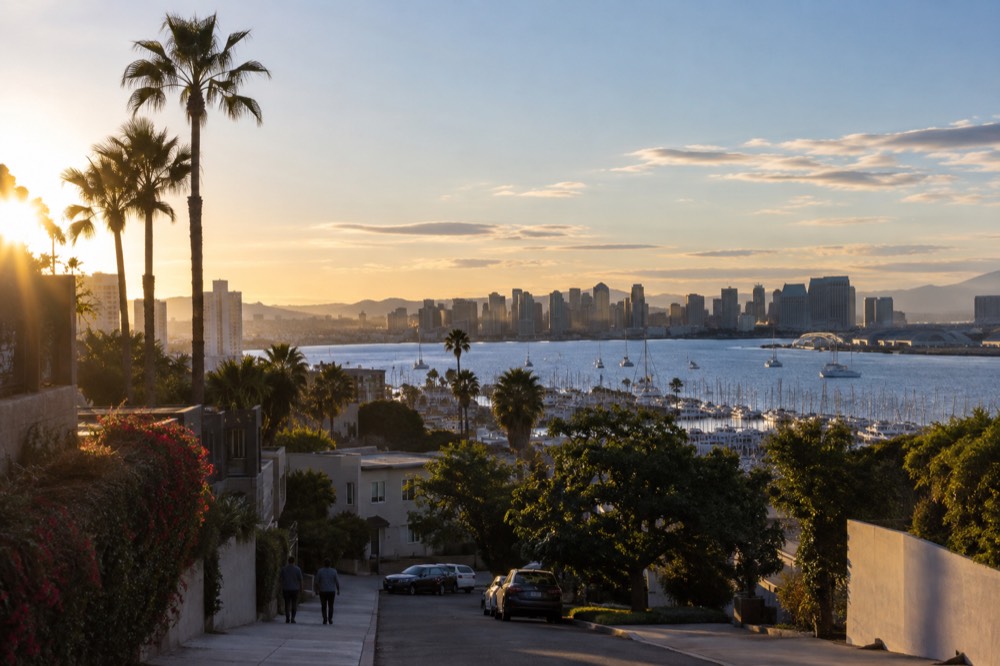
This is the part of the story that outlasts any market cycle. Even in a soft year, the physical facts do not change: a mild climate, a long and varied coastline, a deep-water port, a cluster of research institutions and one of the largest military presences in the country. The climate is worth dwelling on because it is measurable. San Diego's September normal high of 77.2F actually beats July's, and August normals to one hundredth of an inch of rain. A place where the weather almost never argues with you attracts residents the way it attracts tourists, permanently.
The structural forces break down into a short list, and none of them is going anywhere:
| Force | Effect on prices | Likely to change soon? |
|---|---|---|
| Ocean and border geography | Hard cap on outward growth | No |
| Construction shortfall | Fewer homes than households that want them | Slowly at best |
| Military and defense presence | Stable, recession-resistant local demand | No |
| Universities and biotech | High-income buyer demand in specific zones | No |
| Short-term rental conversion | Removes homes from the long-term market | Politically contested |
| Borrowing costs | Cools or heats demand quickly | Yes, and it cuts both ways |
Notice which line is the volatile one. Interest rates are the only force on that table that can swing a market within a year, which is why so much of the recent cooling traces back to borrowing costs rather than anyone falling out of love with San Diego. When rates ease, buyers who sat on the sidelines tend to come back, and the plateau firms up again. That is the mechanism to watch, and it is why "are prices dropping" has a different answer every eighteen months while "is San Diego expensive" has had the same answer for decades.
The [short-term rental](https://vrbo.tpk.ro/m2webWq9) line deserves a mention too, because it is where housing and tourism collide directly. Every home converted to a vacation rental is one fewer home for residents, and the pressure flows both ways: housing scarcity pushes owners toward rental income, and the loss of long-term units pushes rents up, which pushes more owners toward rentals. Cities up and down the coast wrestle with this in public hearings, and San Diego is no exception. A visitor does not cause this, but a visitor is one end of the knot.
What Cooling Prices Mean for Your Vacation Budget
Almost nothing directly, and a little indirectly: housing costs reach your trip through hotel rates, restaurant prices and the general cost of doing business in a high-rent city, so a softening home market will not make your vacation cheaper any time soon. Landlords do not cut rents because a few listings sat for an extra month. Hotels price against demand, not against the housing pages. What a cooling market can do is take some frenzy out of the short-term rental supply, which occasionally loosens the vacation-rental market a notch.

If you are planning a trip, the housing market is the wrong dial to watch. The right dial is timing. September is San Diego's secret: it is statistically the warmest month relative to its crowds, with a normal high of 77.2F and the warmest near-shore ocean water of the year at a mean of 68.7F off La Jolla, yet it is one of the lowest visitation months at Cabrillo National Monument. Fewer crowds competing for rooms is the discount that actually exists. Our piece on planning a San Diego trip budget breaks the costs you can control, and the best time to visit guide covers the weather math month by month.
There is also a parking angle, oddly enough, because parking is where a visitor feels a city's land prices most personally. Balboa Park's paid lots currently run $8 to $16 a day depending on lot level and residency, though City Council has approved removing paid parking there entirely from 1 January 2027, so check before you go. The San Diego Zoo charges $16 per vehicle. These are small numbers next to a mortgage, but they are the numbers a traveler actually pays, and this site's parking guide tracks them honestly.
The practical takeaway is to stop treating the housing market as a travel signal and start treating the calendar as one. A soft market will not discount your hotel. An off-peak week in a warm month might. And when you are here, the cheapest way to see the neighborhoods whose prices prompted this question is often the slowest one: on foot, or by trolley, with no car payment at all.
Which Neighborhoods Feel a Cooling Market First
Condo-heavy downtown and the new-build towers feel softness first because investors sell quickly and inventory stacks up, while scarce single-family zones near the coast hold value longest because almost nothing new can be built there. The pattern repeats in every expensive coastal city: the more substitutable the housing, the faster the price reacts. A buyer who wants a bay-view condo has options. A buyer who wants an old bungalow three blocks from a specific beach has almost none, and that asymmetry is the whole story of which streets soften and which never do.
Downtown, East Village and the newer Mission Valley towers are where a visitor sees this most clearly, because those districts are also where visitors stay. The guide to where to stay in San Diego walks through the trade-offs, and the answer on which neighborhoods to avoid is blunt about the blocks that underdeliver for the price. Neither of those judgments changes much with the market cycle, which is itself telling: the good-location premium survives soft years.
The coastal neighborhoods, La Jolla, Coronado, Point Loma and the beach strips, are a different story. There, the constraint is absolute. You cannot build more La Jolla coastline, and the city's own lifeguard division staffs nine permanent oceanfront stations covering roughly 24 miles of coast, which is roughly all the prime coast there is. Scarcity of that kind does not negotiate. It is why even the softest San Diego market year leaves beach-adjacent homes far beyond the county median, and why the question "are prices dropping" almost always has a different answer depending on which zip code is asking.
Should You Time a Visit Around Any of This?
No: the housing market and the travel market move on different clocks, and waiting for home prices to fall before you visit San Diego is a strategy with no payoff, while visiting in the shoulder months has a measurable one. Rooms, flights and crowds respond to seasonality, not to inventory data. The marine layer, the gray coastal overcast locals call May Gray and June Gloom, keeps June's normal high at 71.7F, actually cooler than October's 74.6F, and it thins the crowds for anyone willing to trade a little morning gray for warm afternoons.
The one indirect connection worth knowing is the short-term rental market. In a soft housing market, more owners list units as vacation rentals rather than sell at a discount, which can add inventory and occasionally softens rates in the condo-heavy districts. That is a marginal effect, not a windfall, but it is real, and it is the single honest sentence connecting "house prices" to "your hotel bill." Beyond that, the two markets share a coastline and nothing else.
So the answer to the question depends on who is asking. If you are a prospective buyer, the market is calmer than it was, the advantage has shifted your way a little, and the soft spots are in the substitutable inventory, not the scarce stuff near the water. If you are a traveler, ignore the housing pages entirely and book around the calendar instead. For more on what actually moves the visitor side of the city, Things to Do in San Diego is the homepage that ties all of these guides together, from tide pools to taco stands.
Common Questions About House Prices in San Diego
are house prices dropping in san diego?
Not in any way that deserves the word "dropping." The market has cooled from its pandemic peak, some listings take price cuts, and buyers have more room to negotiate than they did, but the structural shortage of homes in a geographically constrained coastal city keeps a floor under values. Watch inventory and days-on-market for a live read rather than any single headline number.
Why is housing in San Diego so expensive?
Geography caps the supply and the climate guarantees the demand. The city cannot grow west into the Pacific, the border and terrain limit the south and east, and construction has trailed household formation for decades. Add a large military presence, universities and biotech, and the result is persistent scarcity that survives market cycles.
Do San Diego home prices fall in a recession?
They soften, but less than in most cities, because the demand base is unusually stable. Military and defense employment, research institutions and tourism do not contract the way speculative markets do. Coastal single-family zones historically hold value best; substitutable condo inventory reacts fastest.
Does the housing market affect hotel prices in San Diego?
Only indirectly. Hotels price against visitor demand, not home values. The one real link is short-term rentals: in a softer market, more owners list units as vacation rentals, which can add a little inventory in condo-heavy districts. For cheaper rooms, target shoulder-season weeks like September, when the weather is at its best relative to the crowds.
Which neighborhoods hold value best in San Diego?
The scarce ones: La Jolla, Coronado, Point Loma and the beach-adjacent single-family zones. Almost nothing new can be built there, so supply cannot rescue a buyer. Downtown and Mission Valley condo towers feel market softness first because their inventory is substitutable and investor-owned.
Is San Diego still worth visiting if it is expensive to live there?
Yes, and the visitor math is friendlier than the resident math. The trolley, bus and PRONTO fare system keep getting around cheap at $2.50 a ride with fare capping, Balboa Park's grounds and gardens are free, and the best of the coastline, from Sunset Cliffs to La Jolla Cove, charges nothing at all. The expensive part is optional.