Where to Avoid Staying in San Diego?
An honest look at the parts of San Diego where a hotel can undercut your trip: noisy nightlife blocks, car-dependent sprawl, and neighborhoods that look close on the map but are not in practice.
Where to Avoid Staying in San Diego?
The short answer: no San Diego neighborhood is genuinely unsafe for visitors, but a few consistently underdeliver. The blocks immediately around the Gaslamp's club core get loud late, the far inland suburbs of Mission Valley and Hotel Circle chain you to a car and freeway traffic, and a cheap room next to a stadium or convention-center event can cost you sleep. What to avoid depends less on danger and more on whether the location matches how you travel.
San Diego ranks among the more relaxed large cities in the United States, and the standard advice on our is San Diego safe page holds: violent crime against visitors is rare, and the usual big-city precautions cover almost everything. So this article is not a crime map. It is a fit map.
The mistakes travelers make here are almost always the same three. They [book a hotel](https://booking.tpk.ro/737WL7iF) for its nightly rate without checking what surrounds it at 11 pm. They book an address that looks central on a map but sits on the wrong side of a freeway, a bay or a mesa. Or they book a strip-mart suburb because it was forty dollars cheaper, then spend that forty dollars on parking and gas every single day.
A quick note on how this city is shaped, because it explains most of what follows. San Diego is not one downtown surrounded by suburbs. It is a string of distinct neighborhoods, many of them coastal, separated by canyons, Mission Bay, the harbor and the freeway system that stitches it together. Distance on a map and drive time are two different things here. Five miles can be ten minutes on one corridor and forty on another.
Which Parts of Downtown Get Loud or Unpleasant at Night?
The Gaslamp Quarter's club core is the number one place travelers regret. Rooms on Fifth Avenue and the blocks just off it sit above bars that run past 2 am, and the noise is structural: music through walls, crowds on sidewalks, and rideshare traffic at closing time. East Village around Petco Park is quieter on most nights and deafening on game and concert nights. If sleep matters more than walking home from dinner, book a block or two outside the core rather than inside it.
None of this makes the Gaslamp a bad place, and our Gaslamp Quarter guide covers everything the neighborhood does well. It is the city's best concentration of restaurants and bars, and for a traveler whose trip is built around nightlife, staying in the middle of it is the right call. The mistake is booking it by accident, because the hotel photos show a handsome historic district and not the 1:30 am sidewalk.
Ask a practical question before you book any downtown room: what is this address next to, and what happens there at night? A hotel two blocks from the club core, toward the waterfront or up toward Little Italy, gives you the same walkability with a fraction of the noise. Little Italy in particular sits close enough to reach the Gaslamp on foot while feeling like a different city after dark.
The other downtown wildcard is the convention calendar. When a large event fills the San Diego Convention Center, hotel rates across the entire core spike and the streets fill. During Comic-Con, the whole downtown grid effectively becomes part of the event. Check what is on at the center and at Petco Park for your dates before you commit, because the same room is two different experiences in the same month.
Here is the whole downtown picture in one place, so you can see the trade-offs side by side before you book anything.
| Downtown area | What it is like at night | Who it suits | Who should skip it |
|---|---|---|---|
| Gaslamp club core (Fifth Ave blocks) | Bars and clubs run past 2 am, sidewalk crowds, rideshare traffic | Nightlife-first travelers | Light sleepers, families |
| East Village near Petco Park | Quiet most nights, loud on game and concert nights | Baseball fans, event-goers | Anyone visiting during a stadium event |
| Little Italy | Calm, restaurant-focused, early-closing streets | First-time visitors, food travelers | Travelers wanting clubs at the door |
| Waterfront / Embarcadero edge | Quiet, with harbor noise only | Couples, older travelers | Travelers who want nightlife in the lobby |
There is a smarter way to judge the area before you pay for it: ride it. The hop-on hop-off trolley loops the downtown core, the Embarcadero, Balboa Park and Old Town over two days of valid use, and a single loop shows you which blocks feel right in person.
If you would rather cover ground on your own schedule, a GoCar tour does the same scouting job for downtown and the beaches, and you steer it yourself.
Is It a Mistake to Stay Inland Without a Car?
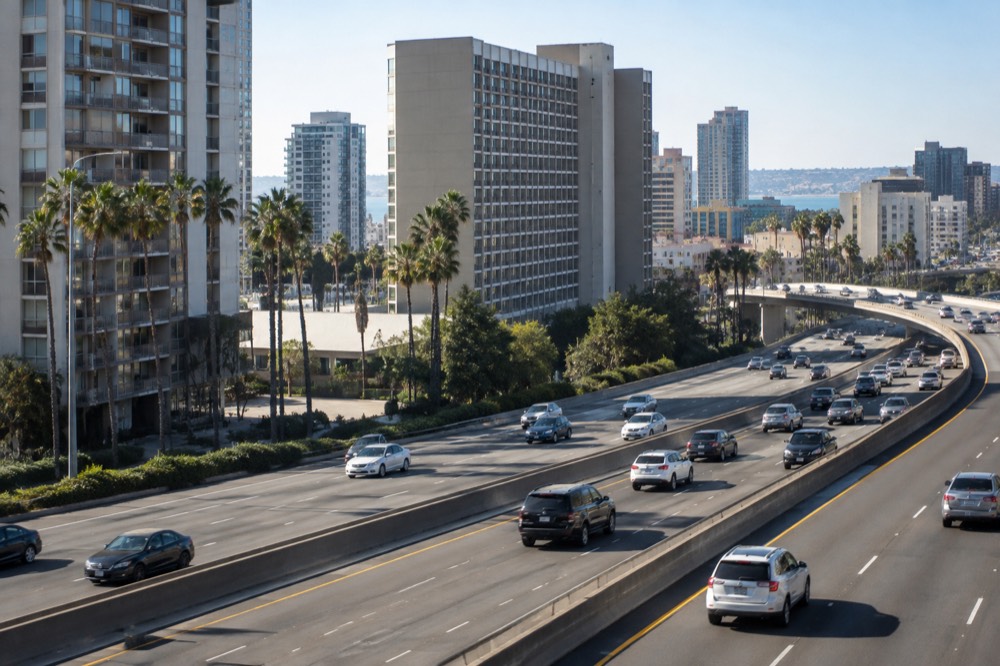
Yes, in most cases. Hotel Circle in Mission Valley and the freeway-side hotels further east are cheap because they are far from everything a visitor came for, and without a car they strand you. With a car, they trade a lower nightly rate for daily parking fees, freeway commutes and the marine layer's absence, which in summer means hotter afternoons than the coast. The savings are usually smaller than they look on the booking screen.
Mission Valley is the clearest example. It is a legitimate neighborhood where plenty of locals live happily, and our downtown San Diego guide explains how the core and the valley relate. But for a visitor it functions as a corridor of hotels beside the freeway interchanges. Nothing is walkable from most of those rooms except other hotels and mall parking lots. Every beach, every La Jolla viewpoint and every Gaslamp dinner becomes a drive.
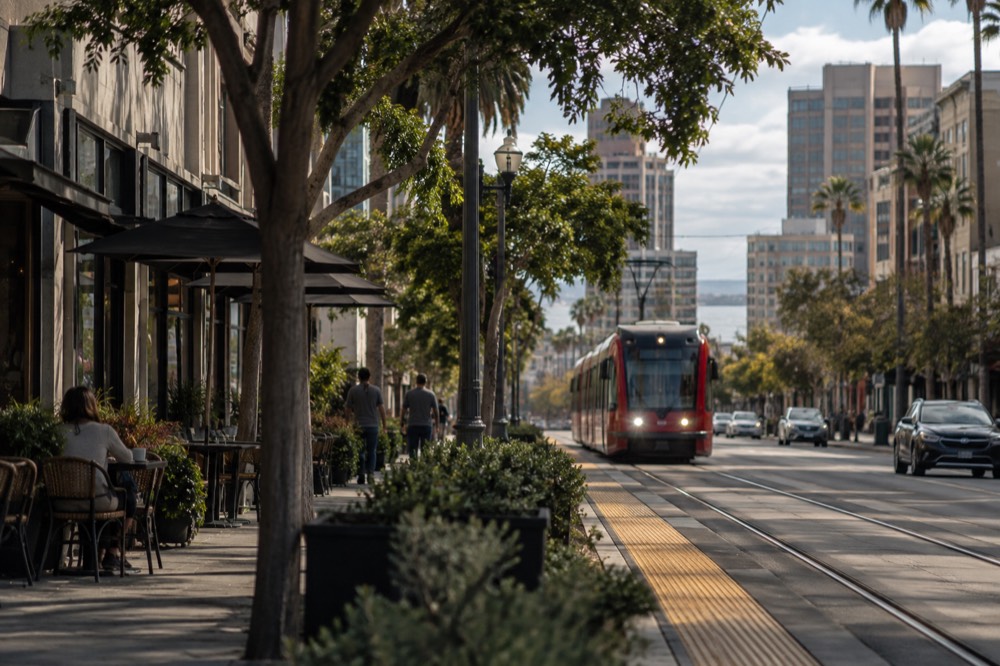
The transit math matters here, because it is the one thing that can rescue an inland booking. The MTS trolley and bus network is genuinely usable, and the fare chart shows a $2.50 one-way ride or a $6.00 day pass, with the PRONTO system capping your pay-as-you-go rides at the day-pass value automatically. If your hotel sits near a trolley station, especially on the Blue Line, the car-free version of Mission Valley works better than its reputation. If it sits beside a freeway ramp with no station in walking distance, it does not. Everything else covered here is indexed on Things to Do in San Diego.
The honest framing is this: an inland room is not a scam, it is a trade. You are trading location for rate. The travelers who get burned are the ones who did not know they were making the trade, booked Hotel Circle because it said "San Diego" in the name, and then discovered the beach was a 25-minute drive each way.
If you already booked inland, or the downtown rates are punishing you during a big convention week, there is a good middle path: anchor your days around a loop tour instead of a hotel location. A two-day trolley pass turns any hotel within reach of a stop into a workable base.
Where Should You Stay Instead?
The reliable picks are the neighborhoods that match the trip you are actually taking. Little Italy and the waterfront edge of downtown for a walkable first visit, Coronado or Mission Beach for a beach stay, La Jolla for a quieter, upscale base, and Old Town for a budget-friendly, transit-connected middle ground. Each of these trades a little convenience in one direction for a lot of quality of life, and none of them requires a car for the core sightseeing.
Our full where to stay in San Diego guide breaks this down neighborhood by neighborhood, but the pattern behind every good pick is the same: you want to be able to reach dinner, the waterfront and at least one major sight without starting an engine. Little Italy does it with restaurants and the trolley. Coronado does it with the ferry and a flat, walkable village. Mission Bay does it with a beach and a boardwalk at the door.
The one caution to carry into the "instead" list is seasonal noise, and it cuts both ways from the advice above. Pacific Beach and Mission Beach are fantastic for a young, social trip and punishing for anyone who wants to sleep before midnight in summer, for the same structural reasons as the Gaslamp. The right neighborhood is a function of your trip, not a fixed ranking.
How Can You Tell If a Hotel Deal Is Actually a Bad Location?
Run three checks before you book any discounted San Diego room. Look at the address on a map, not the neighborhood name in the listing, and measure the walk to the nearest trolley station or the waterfront in minutes, not miles. Search the hotel name plus words like "noise" and "safe" in recent guest reviews. And check the convention and stadium calendars for your dates, because a cheap room during a dead week is a great deal and the same room during a mega-event is a trap.
The map check deserves one San Diego-specific refinement. This city's canyons and freeways make straight-line distance lie. An address "two miles from the beach" can be a ten-minute drive or an impossible one depending on which side of a canyon it sits on. Drop the pin, ask your mapping app for the walking route, and trust the minutes it shows, not the miles.
The review check is where noise and location problems surface honestly. Guests complain freely about thin walls, late street noise and long walks, and those complaints are the cheapest research available. A hotel with a great rate and repeated noise complaints in reviews from the past few months is telling you exactly why the rate is great.
And the calendar check protects you from the one variable no neighborhood guide can predict. A downtown room during a quiet week in, say, a shoulder-season month is one of the best value bookings in the city. The identical room during a convention the size of Comic-Con is a different product at a different price, in a different city, for a week.
The last word on this whole subject: San Diego punishes very few booking mistakes permanently. The city is compact by California standards, the transit spine is real, and a two-day hop-on hop-off pass can rescue a mediocre location by turning your hotel into a bed rather than a base. Pick with your eyes open, and even an imperfect address becomes workable.
If your base ends up far from the waterfront, at least put the USS Midway and the Embarcadero at the top of the first day's list, because that stretch of harbor is the part of the city every visitor ends up loving whether they slept well or not.
Common Questions About Where to Avoid Staying in San Diego
Where to avoid staying in San Diego?
Avoid the Gaslamp's club core if you want quiet nights, the freeway-side Hotel Circle and Mission Valley strips if you will not have a car, and any downtown room booked blind during a major convention week. None of these are unsafe; they are just poor fits for how most visitors travel.
Is the Gaslamp Quarter a bad place to stay?
Only if you are a light sleeper or did not realize how late the clubs run. For a nightlife-first trip it is the best location in the city. Book a block or two off the core, toward the waterfront or Little Italy, to keep the walkability without the 2 am noise.
Is Mission Valley too far from everything?
Without a car, most of it is. With a car or a room near a trolley station, it becomes a workable budget base, at the cost of driving to every beach and every dinner. The $6.00 MTS day pass and the Blue Line trolley can rescue a well-placed Mission Valley booking.
Which San Diego neighborhoods are best for a first visit?
Little Italy and the waterfront edge of downtown for walkability, Coronado or Mission Beach for a beach stay, and Old Town for a budget-friendly, transit-connected base. All of them let you reach the major sights without needing to drive daily.
Do I need a car to stay in San Diego?
Not if you stay near the trolley spine or in a walkable coastal neighborhood. The trolley runs from the border at San Ysidro through downtown to UC San Diego, buses fill the gaps, and the PRONTO fare system caps your daily spending at the day-pass value automatically. A car only becomes necessary for inland hotels and day trips.