Which San Diego Restaurant Has Been Awarded Three Michelin Stars?
No San Diego restaurant currently holds three Michelin stars. Here is where the city stands in the California guide, what the star levels mean, and where to eat while the inspectors keep watching.
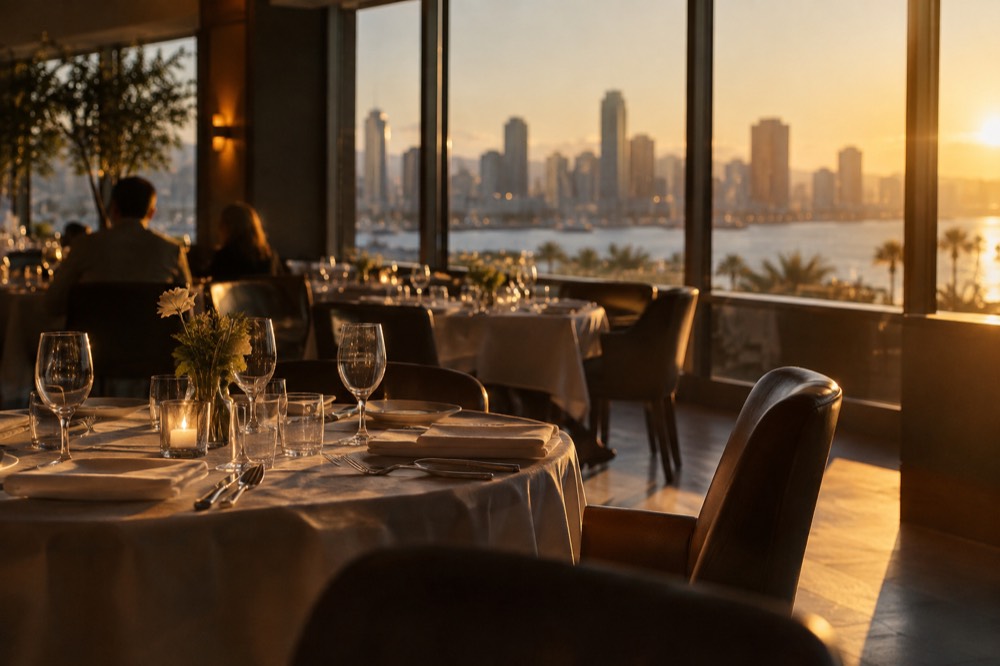
Which San Diego Restaurant Has Been Awarded Three Michelin Stars?
No San Diego restaurant has been awarded three Michelin stars. The three-star ranking, Michelin's highest honor, has never been given to a restaurant in this city, and the most recent California guide does not change that. San Diego appears in the California edition of the guide, but its name has not yet appeared at the very top of the list. If you came here looking for the city's three-star temple of gastronomy, the honest answer is that it does not exist.
That is not the same as saying San Diego has no fine dining worth traveling for. The city's restaurant scene has been on a steady climb for over a decade, and the people who cook here are doing something genuinely distinct: a coastal, cross-border California cuisine that draws on Baja techniques, local seafood, and the produce of one of the most fertile growing regions in the country. Inspectors from the Michelin Guide have been reviewing California as a single statewide guide, and San Diego restaurants are part of that coverage.
The gap between "covered by the guide" and "holding three stars" is enormous. Three stars, in Michelin's own published language, means a restaurant is worth a special journey by itself. There are only a handful of three-star restaurants in the entire United States, and they sit mostly in the Bay Area and New York. So the real question shifts: where does San Diego stand, what does it actually take to get there, and where should you eat tonight while the inspectors keep watching? This article answers all of it.
Does San Diego Have Any Michelin Recognition at All?
Yes. San Diego is part of the Michelin Guide's California edition, which covers the whole state rather than a single city, and restaurants in the county have appeared in the guide's selections and its Bib Gourmand value list over the years. What the city has not yet produced is a restaurant at the very top of the star ladder. The guide's inspectors review anonymously, pay for their own meals, and revisit constantly, so the landscape can change with any annual ceremony.
The California guide is the important structural fact. Unlike the older city guides for New York or Chicago, Michelin reviews California as one enormous region, from San Diego to the Sacramento area. That means a San Diego restaurant is not competing only against its neighbors, it is competing against the Bay Area, which holds one of the densest concentrations of starred restaurants in the country. When the annual selections are announced, San Diego's names appear alongside Los Angeles and Napa, and the bar is set by the strongest of them.
The Bib Gourmand is where San Diego has historically shone, and that should not be read as a consolation prize. The designation honors restaurants serving excellent food at a moderate price, which happens to describe this city's dining identity perfectly. A border-town taco tradition, a fish-taco culture with its own annual festivals, and a craft beer scene that treats food pairing as seriously as any wine program: these are the things San Diego does better than almost anywhere, and the value-focused end of the guide is where that kind of cooking gets noticed first.
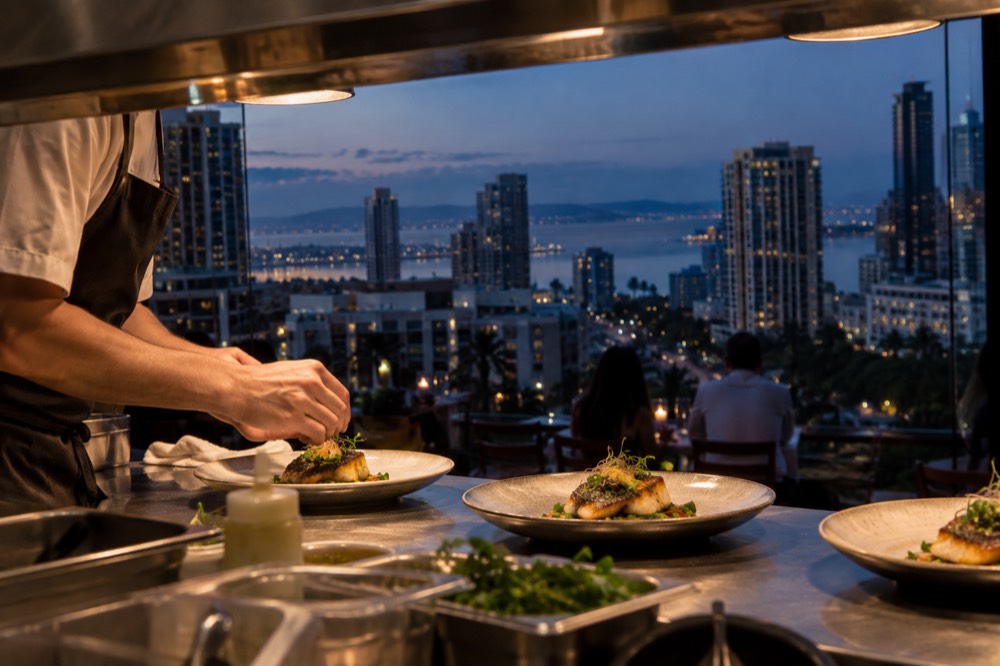
If you are planning a trip around food, the practical takeaway is this: do not come to San Diego hunting for a three-star trophy meal, because you will not find one. Come for the depth instead. The city rewards eaters who move between a fine-dining tasting menu one night, a Little Italy trattoria the next, and a taco shop the morning after that. The best restaurants in San Diego run across every price point, and the guide's own value awards keep proving it.
The easiest way to sample a whole district in one evening is a guided food walk, and two of the best cover very different ground:
The Taste of Little Italy option is the shortest of the three, a quick loop through the neighborhood's food shops and restaurants. The North Park Beerucation tour takes a different angle entirely, building a three-hour walk around the city's beer culture with tastings and food pairings, which is exactly the kind of local institution a visitor would never find alone. And the Harbor Dinner Cruise moves dinner onto the water, a three-hour seated meal with the downtown skyline sliding past the windows.
What Does Three Michelin Stars Actually Mean?
Three stars is Michelin's highest award and its published definition is uncompromising: exceptional cuisine, worth a special journey. One star means a very good restaurant in its category, two stars means excellent cooking worth a detour, and only the third star elevates a restaurant to a destination in its own right. Inspectors judge the quality of ingredients, mastery of technique, personality in the cooking, value for money, and consistency across visits, and every starred restaurant is re-evaluated continuously. A star can be, and regularly is, taken away.
The five criteria are worth knowing because they explain why San Diego's situation is what it is. Consistency is the killer. A three-star restaurant must deliver the same extraordinary meal on a random Tuesday in February as on a packed Saturday in July, across years of anonymous revisits. That requires a stable kitchen brigade, a stable ownership structure, and a supply chain that never wobbles, and it is why three stars cluster in restaurants that have been running the same exacting operation for many years.
Here is the ladder in plain terms:
| Michelin award | Published meaning | What it takes |
|---|---|---|
| Bib Gourmand | Great food at moderate prices | Quality cooking well below fine-dining prices; San Diego's strongest suit |
| One star | A very good restaurant in its category | Consistent, high-level cooking with a distinct point of view |
| Two stars | Excellent cooking, worth a detour | Near-flawless technique and a fully realized culinary personality |
| Three stars | Exceptional cuisine, worth a special journey | The top of the system; a handful of restaurants in the US hold it |
The word "journey" in the three-star definition is doing real work. It means a traveler would book a flight and a hotel primarily to eat that one restaurant's food. The Bay Area has restaurants that clear that bar. San Diego, for all its strengths, has not yet produced one that the inspectors judge to be at that level, and the city's own chefs tend to say the same thing in interviews: the scene is young, it is building, and the talent pipeline is real.
Why San Diego's Food Scene Is Built Differently
San Diego's restaurant identity is not a miniature version of San Francisco or New York, and that is precisely its strength. The city's cooking is shaped by its border with Mexico, its fishing harbor, its year-round growing climate, and a beer culture that behaves like a wine industry. Those four forces produce a dining scene whose best work happens at the casual and mid-range end, which is the opposite of the environment that typically generates three-star temples.
Start with the border. San Diego sits about twenty minutes from Tijuana by car, and the cooking of Baja California has flowed north along with the chefs who trained there. The result is a city where a taco is treated as a serious craft object, where tortillas may be made to order from heirloom corn, and where the line between "street food" and "fine dining" is deliberately blurred. Michelin can and does award stars to casual rooms, but the tasting-menu format that dominates the three-star list worldwide is a different animal from what this city's best cooks are chasing.
Then there is the harbor. Local seafood, from spiny lobster to sea urchin, shows up on menus across the county, and the fish taco tradition here has its own gravity. The beer scene is the third force: San Diego County is one of the most decorated brewing regions in the country, and its breweries employ kitchen staff, run food programs, and attract the kind of obsessive local following that fine-dining restaurants elsewhere have to fight for.
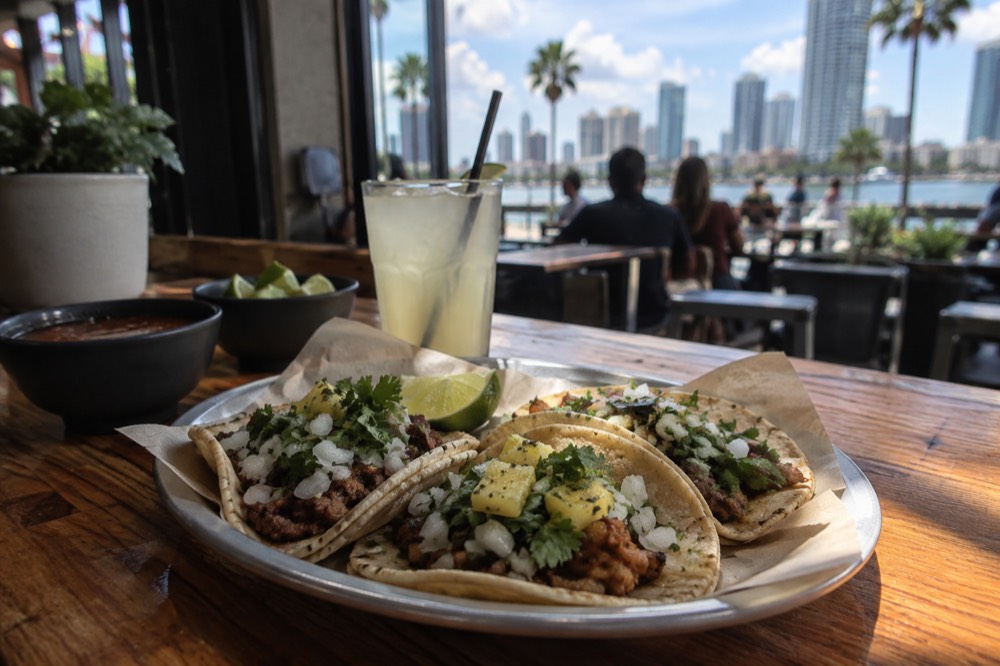
None of this means the fine-dining end is empty. La Jolla, Little Italy, and the Gaslamp Quarter all carry tasting-menu kitchens with national press, and the city's hotel dining rooms have been quietly raising their game for years. The honest framing is that San Diego's path to a first star, whenever it comes, will probably run through cooking that is unmistakably from here rather than an imported copy of a French template. That is the same lesson every other newly starred city learned.
Where Should You Actually Eat in San Diego Right Now?
Skip the star hunt and eat the city the way it wants to be eaten: Little Italy for restaurants and a market hall worth a whole afternoon, North Park for breweries and boundary-pushing casual cooking, La Jolla for seafood with a view, and Old Town for the historic end of the taco tradition. A food tour is the most efficient first move, because a good guide compresses a week of scouting into a single walk.
Little Italy is the natural starting point, and it is not a tourist trap despite the visitor traffic. The neighborhood's weekly farmers market is one of the best in the county, and the restaurant density along India Street means you can walk between a wood-fired pizzeria, a raw bar, and a modern California kitchen in five minutes. The Little Italy guide covers the district in depth.
The Taste of Little Italy tour is the shortest food walk in the city's tour lineup, a quick guided loop built around the neighborhood's restaurants and specialty shops. Because it is brief, it works well as an orientation: you eat, you learn the street layout, and you mark the places you want to return to for a full dinner.
North Park is the other neighborhood worth building an evening around. It is the heart of the craft beer district, and the Beerucation tour there is built around beer education rather than simple drinking: three hours, multiple brewery stops, tastings, and food pairings designed to explain what the city's brewers are actually doing. For a visitor who knows the beer scene only by reputation, it is the fastest education available.
If your ideal evening is seated rather than walking, the dinner cruise option puts a three-hour meal on the bay with the downtown skyline and the Coronado Bridge in rotation outside the windows. It is a different register of experience from the taco shops, and that range is the point: this city's dining strength is that the memorable meal might be a twelve-dollar plate or a three-hour cruise, and locals move between both without thinking twice.
For dessert-level planning, the Little Italy food and drink walking tour goes deeper than the short taste walk, with two and a half hours of stops across the district. And if you are pairing your eating with the rest of a first visit, the one day in San Diego itinerary shows where a serious dinner fits around the Zoo, the harbor, and the beach.
Wherever you end up eating, book the tasting-menu rooms well ahead, especially in summer, and walk into the taco shops whenever you feel like it. That mix of planning and spontaneity is the most San Diego way to dine, and it is exactly what the inspectors themselves do when they review a city anonymously. A good meal here does not need a star to be worth the trip, and the editors at Things to Do in San Diego would rather point you at the real scene than at a trophy that does not exist yet.
Common Questions About Michelin Stars in San Diego
which san diego restaurant has been awarded three michelin stars?
None. No San Diego restaurant has ever held three Michelin stars, and the current California guide does not list one. The city's restaurants appear in the statewide California edition of the guide, but the three-star tier remains out of reach for now.
Does San Diego have any Michelin-starred restaurants?
San Diego is covered by the Michelin Guide's California edition, and restaurants in the county have appeared in the guide's selections and on its Bib Gourmand value list over the years. The star announcements happen at annual ceremonies and the lineup changes, so check the guide's current California selection for the latest names rather than relying on older articles.
Why doesn't San Diego have a three-star restaurant?
Three stars demands exceptional cuisine worth a special journey, sustained consistency across years of anonymous revisits, and a fully realized culinary identity. San Diego's dining culture is younger than the Bay Area's and its best work has historically clustered at the casual and value end, where the Bib Gourmand operates, rather than in the tasting-menu format that dominates the top of the star list.
What is the Bib Gourmand that San Diego restaurants have won?
The Bib Gourmand is Michelin's award for restaurants serving excellent food at moderate prices. It is a separate designation from the stars and many chefs consider it a genuine honor, because it recognizes cooking quality rather than luxury. San Diego's taco tradition, seafood, and mid-range kitchens are naturally suited to it.
Where should I eat in San Diego if I want a special meal?
Little Italy, La Jolla, and the Gaslamp Quarter carry the city's most celebrated kitchens, and North Park is the place for brewery-driven food culture. A guided food tour is an efficient first evening: the short Taste of Little Italy loop, the three-hour North Park brewery walk, or a seated harbor dinner cruise all sample the scene quickly.