What's the Best Farmers Market in San Diego?
The honest answer for visitors: the Little Italy Mercato is San Diego's best farmers market, and here is how to plan a morning around it, plus which neighborhood markets are worth your time.
What's the Best Farmers Market in San Diego?
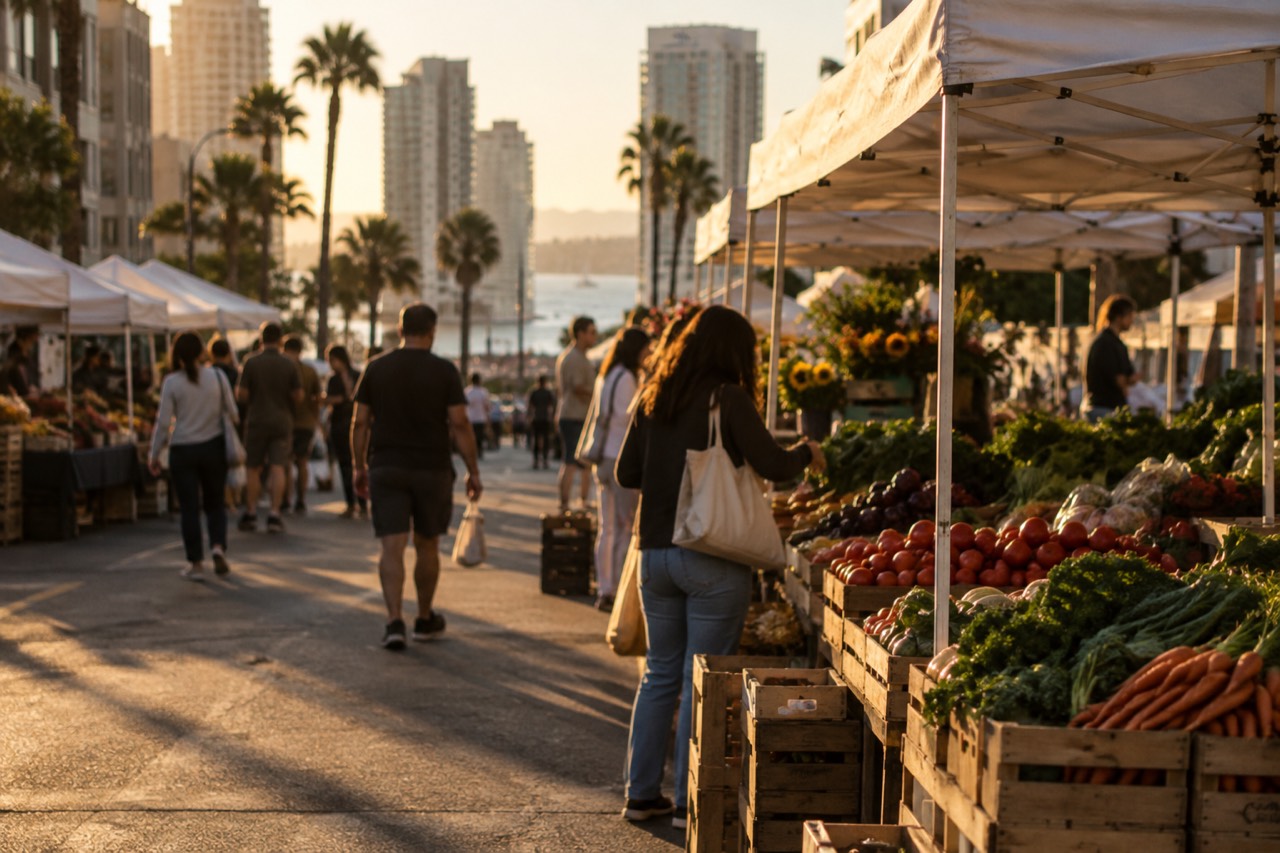
For a visitor with limited time, the Little Italy Mercato is the best farmers market in San Diego. It runs on Saturdays along West Date Street in the Little Italy neighborhood, steps from the waterfront and the trolley, and it packs more local growers, food makers and ready-to-eat stalls into one walkable street than any other market in the county. You can shop, eat a full lunch and end up two blocks from the Embarcadero, all in a single morning.
That is the short answer, and it is not a controversial one among people who write about food in this city. The Mercato, run by the same organization behind the Hillcrest and North Park markets, is the largest of the bunch and the only one that sits directly on a visitor's usual route. If your trip includes the USS Midway, Seaport Village or the Gaslamp Quarter, the market is already between two of the places you were going anyway.
The longer answer depends on what you want. San Diego's market scene is unusually strong for a city this size, and several neighborhood markets have personalities the Mercato does not. This page walks through the pick, the alternatives, how to get there without a car, and what is actually worth buying once you arrive. The team behind Things to Do in San Diego rates the Mercato first for visitors but second for locals, and the difference between those two rankings is worth understanding before you plan your Saturday.
Which Farmers Market Fits Your Trip Best?
Pick the Little Italy Mercato if you want the biggest market and the easiest logistics. Pick the Hillcrest market if you care most about produce quality over scene. Pick North Park if you want a market wrapped in a walkable neighborhood of coffee shops and record stores. Ocean Beach runs the strongest sunset-adjacent option. Each of these runs weekly, so the day of the week you have free matters as much as the market itself.
The honest framing is that San Diego does not have one great market, it has a rotation of good ones spread across the week. The trap for a visitor is treating them all as interchangeable. They are not, and the differences are mostly about what surrounds the stalls.
Here is how the main options compare for someone planning a trip rather than a weekly shop:
| Market | Neighborhood | The vibe | Best for |
|---|---|---|---|
| Little Italy Mercato | Little Italy | Big, busy, food-forward | Visitors short on time, lunch plus shopping |
| Hillcrest market | Hillcrest | Long-running, grower-heavy | Serious produce buyers |
| North Park market | North Park | Compact, young, surrounded by shops | A slow neighborhood morning |
| Ocean Beach market | Ocean Beach | Laid-back, beach-town casual | Pairing with a beach afternoon |
| La Jolla market | La Jolla | Small and polished | Combining with Cove sightseeing |
The Little Italy neighborhood guide covers the surrounding blocks in more depth, because the Mercato's real advantage is where it sits. India Street's restaurants and coffee shops start filling the moment the market does, and the waterfront is a flat five-minute walk west. Compare that with a market in a parking lot, which many of the county's smaller markets effectively are, and the case makes itself.
If your free day is not a Saturday, do not force the Mercato. The North Park market sits in one of the city's most pleasant neighborhoods to kill an hour in, and the Ocean Beach market pairs naturally with the Ocean Beach sunset. A market you can actually reach on the day you have free beats the "best" one you cannot.
How Do You Get to the Little Italy Mercato Without a Car?
Take the MTS Trolley to the County Center or Little Italy area stops and walk a few blocks, or ride the Route 992 bus if you are coming from the airport, which has no trolley station of its own. A single adult trolley or bus fare is $2.50 and a day pass is $6.00, and the PRONTO system caps your fares automatically, so there is no reason to buy a day pass up front.
The transit detail matters more here than at almost any other attraction in the city, because the whole point of a market morning is that you are carrying bags. The fare chart is published by the transit agency at sdmts.com, and the PRONTO card or app applies fare capping: once your individual rides add up to the day-pass value in a single day, the rest of the day's rides are free. Tap the same card each time and let the system do the math.
From the airport, the picture is simple. There is no trolley station at SAN, so the practical choices are the airport bus into downtown or a rideshare. The bus runs every 15 minutes for most of the day and drops at the downtown transit interchanges, from which the market is a short walk or one trolley hop. If you are staying downtown, in the Gaslamp or near the convention center, you can honestly walk to the Mercato in under half an hour, and on a Saturday morning that walk along the waterfront is better than any bus ride.
The hop-on hop-off trolley tour is the other car-free option worth naming, and for a first visit it does double duty. The narrated loop covers the downtown core and the waterfront over two days of validity, which means you can use it as transport between the Embarcadero, Old Town and the market street rather than as a standalone sightseeing splurge. Riders consistently describe the narration as the point: you learn the city's shape while you cross it. The narrated trolley tour is the one product on this site that fits a market morning this cleanly.
If you are driving instead, the honest advice is the same as for all of central San Diego: downtown meters charge $2.50 per hour and enforcement runs weekdays and Saturdays, with some zones now enforcing Sunday too, so read the posted signs rather than assuming a free day. The city's own parking guidance is at sandiego.gov/parking, and posted signs always win over anything a website told you.
What Should You Actually Buy at a San Diego Farmers Market?
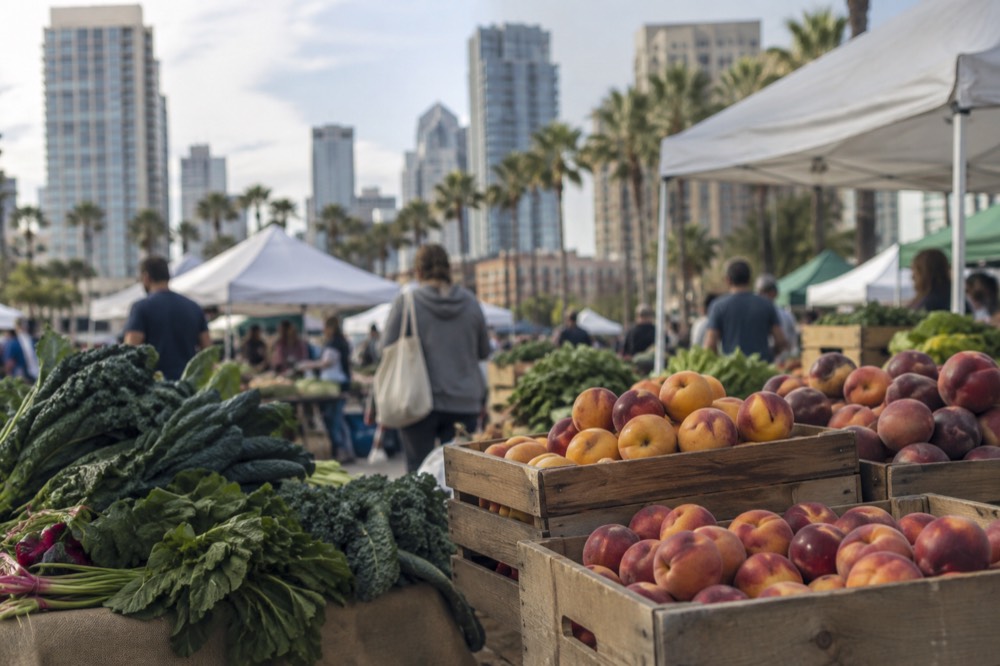
Buy what the county's climate makes unusually good: avocados, citrus, strawberries, tomatoes and cut flowers, all of which grow within a short drive of the city and taste like it. Then buy the prepared food, because the ready-to-eat stalls are where a market stops being a grocery errand and becomes the best cheap meal of your trip. Skip anything you cannot eat in two days unless you have a kitchen.
San Diego County is still agricultural in a way that surprises visitors who only see the coastline. The backcountry around Julian grows apples, the valleys to the north grow citrus and avocados, and the coastal strip grows berries and cut flowers almost year round. That is why the produce here tastes different from a supermarket's: it was picked closer to the city than most people realize.
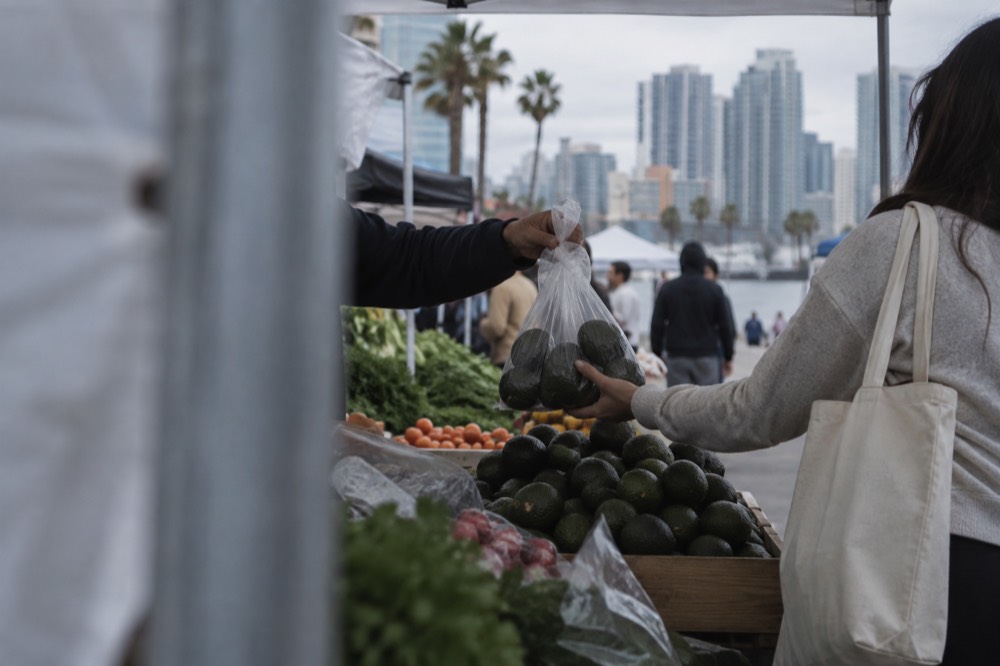
The practical rules of thumb are simple. Shop early for the best selection, because the good stone fruit goes first and the crowd thickens by late morning. Bring cash in small bills even though most stalls take cards, because the card reader at the one stall you want will be down. And if you are staying in a hotel without a kitchen, buy the things you can eat on a bench: bread, cheese, fruit, a container of whatever the tamale stall is selling.
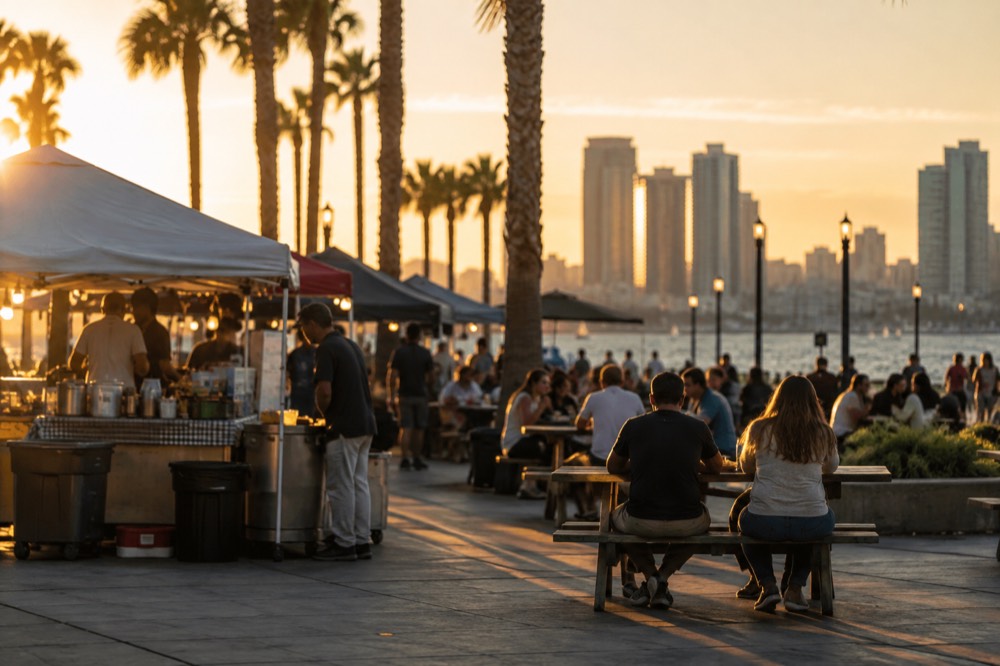
The prepared-food stalls deserve a specific warning: they will derail your lunch plans. The Mercato in particular has enough hot food, baked goods and coffee to constitute a full meal, and many people treat it exactly that way. If you were planning to eat your way through the city's taco scene, which has its own guide, a market lunch and a taco afternoon can coexist, but barely.
Are San Diego Farmers Markets Good for a Full Meal?
Yes, and at the bigger markets the meal is arguably the main event. The Little Italy Mercato and the North Park market both carry enough prepared food, baked goods and coffee that locals routinely treat them as a standing brunch plan, not a produce run. Budget the same amount of time you would give a casual restaurant, and go hungry rather than after another meal.
The meal question is where the visitor experience and the local experience converge. A local buys a week of vegetables and leaves. A visitor buys nothing perishable at all, eats two things on a bench, drinks a third, and leaves happier than the local. There is no wrong version, but know which one you are doing before you arrive, because it changes when you should show up.
Coffee deserves a mention of its own. San Diego takes its coffee seriously enough that the city's coffee shops have their own following, and the roasters who sell at the markets are often the same ones with lines down the block on Sunday. A market coffee plus a pastry is the correct opening move at any of the five markets in the table above.
One planning note that applies to the whole page: market days and hours shift with seasons and holidays, and this page deliberately does not print a schedule for that reason. Check the market's own listing for the week you are in town, especially around the winter holidays, when several markets pause or move.
Common Questions About Farmers Markets in San Diego
what's the best farmers market in san diego?
The Little Italy Mercato, for most visitors. It is the largest market in the city, it sits on a downtown street within walking distance of the waterfront, and it combines serious produce with enough prepared food for a full lunch. If your free day is not a Saturday, the Hillcrest, North Park or Ocean Beach markets are strong alternatives on other days of the week.
Is the Little Italy Mercato open on Sundays?
No, the Mercato is a Saturday market. If your only free day is Sunday, look at the Ocean Beach market or one of the other neighborhood markets that run that day, and check the market's own current schedule before you go, since days occasionally shift with the season.
Do San Diego farmers markets take credit cards?
Most vendor stalls at the bigger markets take cards, but not all of them, and the card reader at the one stall you want will sometimes be down. Bring some cash in small bills. If you are riding transit to the market, the same PRONTO card or app that pays your fare is separate from your shopping money.
Which farmers market is closest to the San Diego airport?
Little Italy is the closest market neighborhood to the airport, a short ride or a longer walk away. There is no trolley station at the airport itself, so the practical route is the airport bus into downtown followed by a walk or a trolley hop, or a quick rideshare straight to the market street.
Are dogs allowed at San Diego farmers markets?
Rules vary by market, and several markets restrict or discourage dogs on their vendor streets for health-code reasons. Service animals are always permitted. If a market morning with your dog is the plan, check the specific market's rules before you commit the morning to it.