What Is a Famous Park in San Diego?
Balboa Park is San Diego's most famous park: 16 museums, free gardens, the San Diego Zoo and Sunday organ concerts. Here is what to see, what costs money and what is free.
What Is a Famous Park in San Diego?
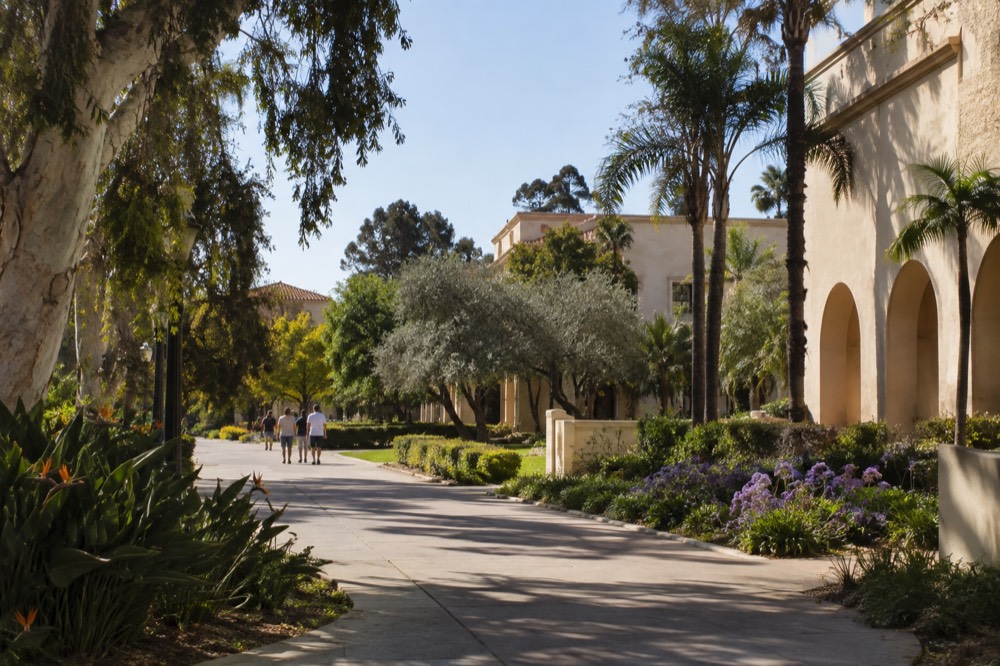
The famous one is Balboa Park, the cultural park at the north edge of downtown that holds the San Diego Zoo, more than a dozen museums, gardens, trails and the Spreckels Organ Pavilion. It is the reason most travelers picture San Diego as a museum city rather than a beach city, and unlike most famous parks, a large share of it costs nothing to enter: the grounds, the gardens, the Botanical Building and the Timken Museum of Art are all free.
Balboa Park is not a single lawn with a fountain. It is a working cultural district, and that is what separates it from every other green space in the city. You can spend an entire day inside its boundaries without running out of things to do, and many visitors do exactly that, then come back the next day for the parts they missed. The park sits immediately north of downtown, close enough that the downtown San Diego guide treats it as a walkable add-on rather than a separate trip.
The honest framing is this: the park itself is the famous thing, but what people actually remember is a specific corner of it. For some it is the Zoo, for others the Spanish Colonial architecture along El Prado, for others the free Sunday organ concert. This page breaks the park into those pieces so you can decide which version of it you want, and what each one costs.
Why Is Balboa Park the One Everyone Names?
Balboa Park earned its fame by packing a zoo, 16 museums, performing arts venues and planted gardens into one park at the edge of a major downtown, which almost no other American city can claim. The San Diego Zoo alone draws global attention, and the museum cluster gives the park a density of attractions a normal city park simply does not have. Free grounds and free gardens mean the fame is accessible: you can experience the park's core without buying a ticket.
The park's own FAQ page is blunt about what costs nothing: the grounds, gardens and trails carry no admission, and that includes the restored Botanical Building and Lily Pond, open roughly 10:00 am to 4:00 pm daily except city holidays, and the Timken Museum of Art. The weekend Lawn Programs at the House of Pacific Relations International Cottages are free as well. That is a genuinely unusual deal for a park this well known, and it is worth planning around rather than stumbling into.
Then there is the organ. The Spreckels Organ Pavilion, the park's outdoor bandshell, hosts free one-hour concerts every Sunday from 2:00 to 3:00 pm, year round, rain or shine, on one of the world's largest outdoor pipe organs. Locals treat it as a standing appointment. A traveler with a free Sunday afternoon gets a concert, a garden and a museum-grade building for the price of showing up, and the Balboa Park guide covers the full layout for anyone building a day around it.
For visitors who want the highlights without the logistics of driving and parking, the narrated trolley is the standard answer, and the trio below covers the three most common ways to see the park and the city around it.
How Much Does It Cost to Visit Balboa Park?
The grounds, gardens, Botanical Building and Timken Museum are free, while the Zoo and the individual museums charge separately: Zoo 1-day adult admission runs $76 on Any Day and $73 on Value Days online, and the Explorer Pass covers the museum cluster at $66 for a 1-day Limited adult pass or $78 for a 7-day Parkwide pass. No single ticket includes both the Zoo and the museums, so your cost depends entirely on how deep you go into the buildings.
The Explorer Pass tiers are worth understanding before you buy anything, because the structure is not obvious. The 1-day Limited pass ($66 adult, $43 youth 3-11) covers one admission to up to four participating venues on the day of first use, including one IMAX documentary at the Fleet Science Center. The 7-day Parkwide pass ($78 adult, $52 youth) covers one admission to each of 16 venues across seven consecutive days, which is the better buy for anyone staying a while. An annual pass exists at $149 for adults. None of these include the Zoo, which sells its tickets entirely separately.
| Balboa Park Explorer Pass tier | Adult | Youth 3-11 | What it covers |
|---|---|---|---|
| 1-day Limited | $66 | $43 | Up to 4 participating venues in one day, one IMAX documentary at Fleet included |
| 7-day Parkwide | $78 | $52 | One admission to each of 16 venues, 7 consecutive days |
| Annual | $149 | $109 (ages 3-17) | Unlimited general admission to 16 venues for 365 days |
One honesty note that matters: most of the Balboa Park museums, including the Fleet Science Center, the Air and Space Museum, the San Diego Museum of Art, the Museum of Us and theNAT, are not sold through this site at all. Their tickets are bought at the gate or on the venues' own pages, and no booking widget here will change that. The Explorer Pass, sold by the park's own association, is the practical way to bundle them.
The resident free-day rotation is a separate thing entirely, and it is widely misread. Free Tuesdays in Balboa Park are for residents of the City and County of San Diego plus active military and their dependents, with photo ID showing an address required, and the rotation shifts by week: Fleet and theNAT on first Tuesdays, the Air and Space Museum on second, the Museum of Art and Japanese Friendship Garden on third, the Automotive Museum and Museum of Us on fourth. A visitor from out of town does not qualify, so do not build an itinerary around it. The park publishes the full rotation on its official resident free days page.
How Do You Get to Balboa Park, and Where Do You Park?
Parking in Balboa Park is paid right now, at $8 to $16 a day depending on the lot and your residency, but City Council has approved removing paid parking entirely on 1 January 2027, so any advice here has a clock on it. The free park tram runs 8:00 am to 8:00 pm and connects the outer lots to the museum core. The narrated hop-on hop-off trolley stops at the park and removes the parking question altogether for a two-day window.
The lot structure matters more than most guides admit. The premium Level 1 lots closest to the museum core, including Space Theater, Casa de Balboa and the Organ Pavilion lots, run $16 a day for non-residents and $8 for San Diego residents who have registered online in advance. The general Level 2 and 3 lots run $10 a day for non-residents, with Lower Inspiration Point giving the first three hours free. Residents get their discount only by registering ahead of time online; it is not available at the kiosk. ADA parking is free with no time limit in every lot.
The tram is the piece that makes the outer lots painless. It circles the park from 8:00 am to 8:00 pm, so parking at Inspiration Point and riding in costs the lot fee and nothing else. The broader parking in San Diego guide covers downtown garages and meter rules for anyone combining the park with the Gaslamp or the waterfront in one day.
The trolley tour is the cleanest alternative to all of this. The Hop-on Hop-off Narrated Trolley Tour is valid for two days, includes Balboa Park among its stops, and lets you board near your hotel downtown instead of hunting a lot. For a first visit built around the park and the Embarcadero, it removes the single most annoying part of the day.
What Other Parks in San Diego Are Famous?
Cabrillo National Monument on Point Loma is the runner-up famous park, a National Park Service site with the Old Point Loma Lighthouse, tidepools and one of the best harbor views in the county, at $20 per private vehicle valid for seven days. Mission Bay Park and Old Town's state park land are also well known, but neither carries the museum weight of Balboa. For a second famous park with a completely different character, Cabrillo is the one to add, especially in gray whale season.
Cabrillo earns its reputation with geography. The park sits at the tip of Point Loma high above the ocean, and the National Park Service's own whale watching page records that more than 20,000 gray whales pass offshore each year, with most passing San Diego in late December, January and February and mid-January the peak of the migration. The Kelp Forest Overlook and the Old Point Loma Lighthouse are the park's named viewing points. The tidepools close at 4:30 pm and the trails at 4:00 pm, an hour before the main gate, which catches visitors out every day.
The fee structure at Cabrillo is straightforward: $20 per private vehicle, $15 per motorcycle, $10 per person on foot or bicycle, all valid for seven days, and the America the Beautiful pass is accepted. The park prefers card payment and has said it will go cashless with no timetable set. The full breakdown, including the staggered closing hours, is in the Cabrillo National Monument guide.
Old Town deserves a mention because it is a state historic park as much as a neighborhood, and it is where many visitors spend a half day between Balboa and the waterfront. The Old Town guide covers the state park land and the food scene around it, and the free Wild West Stories walking tour listed on GuruWalk is a pay-what-you-want way to get the history from a guide rather than a plaque.
How Should a First-time Visitor Plan a Day Around Balboa Park?
Plan one full day for the park and split it: a museum block in the morning, the free gardens and El Prado architecture at midday, and either the Zoo or the Sunday organ concert in the afternoon, depending on the day of the week. Buy Zoo tickets online in advance for the Value Day price of $73 rather than the $76 Any Day rate, and do not plan to drive between lots, use the tram. Pick two museum buildings at most and leave the rest for a second visit.
The mistake first-timers make is trying to do the Zoo and three museums in one day. The Zoo alone is a full experience with hours that run 9:00 am to 6:00 pm, and no timed entry or reservation is required, so the constraint is stamina, not tickets. A realistic day is the Zoo in the morning, lunch on the park grounds, then the Botanical Building and one museum in the afternoon. Anyone pairing the Zoo with its sister property should read the San Diego Zoo vs Safari Park comparison before booking, since the two parks are an hour apart and the 2-Visit Pass at $128 adult changes the math.
Weather is on your side almost any month. San Diego's climate normals show August and September as the warm months, with September's normal high of 77.2F actually beating July's, and rain is a winter phenomenon concentrated from December through March. The marine layer locals call May Gray and June Gloom can grey the coast in late spring, but Balboa Park sits far enough inland that a grey morning often burns off by the time the museums open. The San Diego weather and best time to visit guide has the month-by-month detail.
For the traveler who wants the famous park and the famous waterfront in the same two days, this site, Things to Do in San Diego, lays out full itineraries that already account for the tram, the trolley and the parking clock, and the selection below covers the three products that fit a first visit best.
Common Questions About Famous Parks in San Diego
what is a famous park in san diego?
Balboa Park. It is the cultural park just north of downtown that holds the San Diego Zoo, 16 museums, gardens and the Spreckels Organ Pavilion, and its grounds, gardens, Botanical Building and Timken Museum of Art are all free to enter.
Is Balboa Park free to visit?
The park grounds, gardens, trails, the Botanical Building and Lily Pond, and the Timken Museum of Art are free. The Zoo and the individual museums charge separately, and the Explorer Pass bundles the museums starting at $66 for a 1-day Limited adult pass.
Are the Balboa Park museums free on Tuesdays?
Only for residents of the City and County of San Diego plus active military and their dependents, with photo ID showing an address required. The free-day rotation is a residency benefit, not a visitor perk, and out-of-town travelers should not plan around it.
How much does parking cost at Balboa Park?
Paid parking currently runs $8 to $16 a day depending on the lot, with resident discounts requiring advance online registration. City Council has approved removing paid parking entirely on 1 January 2027, so check the current status before your visit. The free park tram runs 8:00 am to 8:00 pm.
What is the second most famous park in San Diego?
Cabrillo National Monument on Point Loma, a National Park Service site with the Old Point Loma Lighthouse, tidepools, harbor views and gray whale viewing in winter. Entry is $20 per private vehicle, valid for seven days.
Can you see Balboa Park without a car?
Yes. The narrated hop-on hop-off trolley stops at the park and runs on a two-day ticket, and the free park tram connects the outer lots and museum core from 8:00 am to 8:00 pm, so even drivers park once and ride.